

 Lena
Lena
You probably don’t realize that indie sleaze’s signature look—those deliberately unwashed American Apparel disco pants, aggressively tight skinny jeans, and $2 thrift store band tees—wasn’t just fashion rebellion, but Brooklyn’s direct response to Manhattan’s post-9/11 exodus and the death rattle of analog culture. The aesthetic emerged from Williamsburg dive bars between 2003 and 2009, capturing something darker than nostalgia: a generation caught between film cameras and flip phones, processing anxiety through studied dishevelment and basement shows.
Subculture Origins
Indie sleaze didn’t spring fully formed from the greasy floors of Brooklyn warehouse parties like some skinny-jeaned Athena—it emerged gradually, messily, from the collision of several distinct cultural currents that converged in New York City between roughly 2003 and 2007.
You’d the DIY music scene transplants from art school, the post-9/11 Manhattan refugees seeking cheaper rent, and the last generation raised on analog photography before Instagram turned everyone into brand managers.
Underground venues like Death by Audio, Monster Island Basement, and Silent Barn became incubators where garage rock revivalism met electroclash decadence, where you’d dance until 4 AM covered in beer and someone else’s cigarette smoke (yes, people still smoked indoors then), clutching a PBR and pretending your parents’ credit card wasn’t funding this whole authentic experience. The uniform was unmistakable: ripped black leggings paired with oversized graphic tees and worn-in sneakers, a look that screamed deliberate dishevelment while somehow still feeling effortlessly cool.
Aesthetic Characteristics
Aesthetic Characteristics
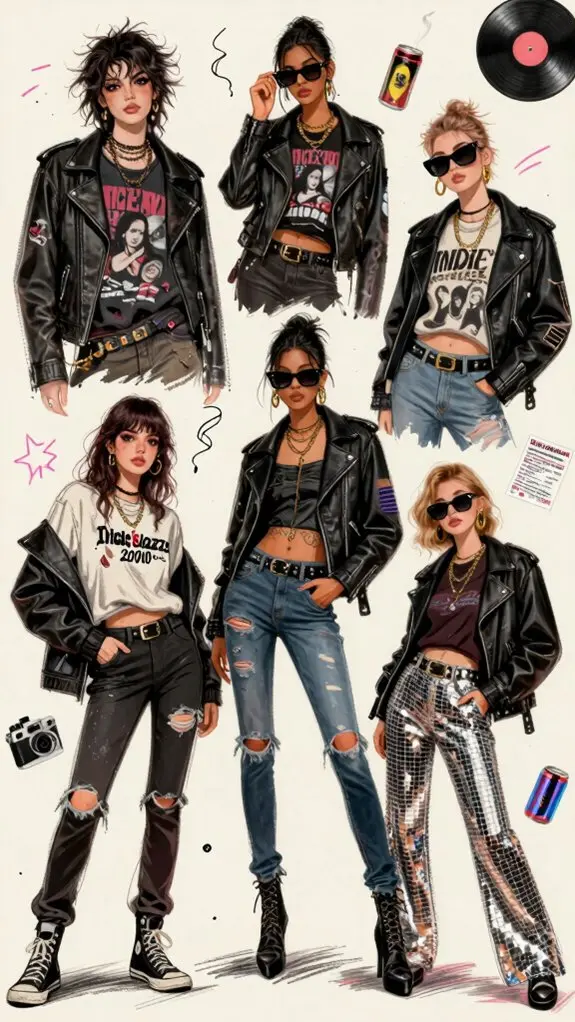
The aesthetic was fundamentally about looking like you’d just rolled out of someone’s bed after a three-day bender, except it took forty-five minutes of careful calculation to achieve that studied dishevelment—American Apparel disco pants paired with a thrifted band tee from a group you’d never actually listened to, neon accessories clashing with deliberately ugly vintage inspired accents, the whole look topped off with ratty hair you hadn’t washed in four days because “natural oils.” Bandanas became essential accessories, whether tied around the neck as an instant upgrade or worn as headbands channeling that 90s-inspired vibe.
Flash photography was everything, those harsh, overexposed party pics shot on disposable cameras or early digital point-and-shoots that washed everyone out into pale, red-eyed ghouls caught mid-cigarette drag, mid-dance-floor makeout, mid-ironic pose. That lo fi photographic style wasn’t accidental—it signaled authenticity, spontaneity, a rejection of the polished perfection already creeping into social media’s early days.
Signature Elements
Signature Elements
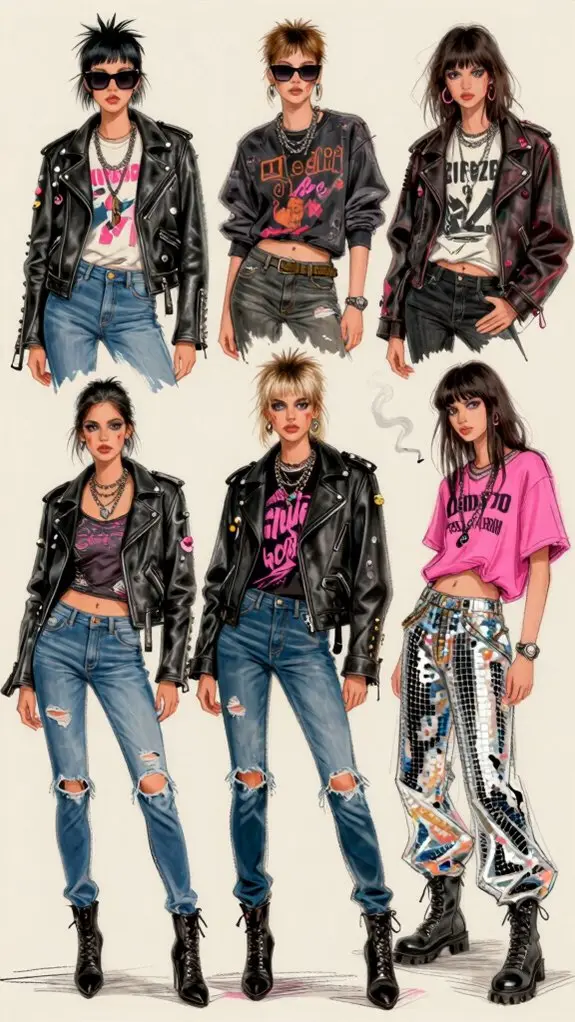
You couldn’t walk through Williamsburg in 2007 without spotting the uniform: those aggressively tight skinny jeans (often women’s jeans on men, because regular men’s cuts weren’t sufficiently leg-strangling), vintage band tees from groups you may or may not have actually listened to, and that deliberately disheveled hair that somehow required both expensive product and studied nonchalance.
The look wasn’t aspirational in the traditional sense—it screamed “I woke up like this” while clearly requiring significant effort, a contradiction that perfectly captured the era’s commitment to performed authenticity. Thrift store finds mixed with American Apparel basics created an aesthetic that was simultaneously accessible and exclusive, cheap in materials but expensive in cultural capital. Girls paired those skinny jeans with black skirts in mini lengths and layered accessories, creating silhouettes that dominated every warehouse party and dive bar in the neighborhood.
Skinny jeans
Nothing defined a generation’s silhouette quite like denim that required a fifteen-minute struggle to pull past your thighs. You’d pair those impossibly tight jeans with thrifted apparel from Beacon’s Closet, creating looks that screamed “I don’t care” while actually caring immensely. The tighter, the better—circulation be damned.
| Fit Style | Cultural Meaning |
|---|---|
| Drain-pipe legs | Rejection of baggy 90s aesthetics |
| Low-rise waist | Deliberate discomfort as authenticity |
| Dark wash | Versatility for DIY venues to bodega runs |
Your eclectic accessories—studded belts, vintage scarves—complemented the restrictive denim. These jeans weren’t just clothing; they were commitment, a physical manifestation of belonging to Brooklyn’s Williamsburg scene. You suffered for your aesthetic, quite literally cutting off blood flow to prove your indie credentials.
Band tees
Authenticity dripped from every frayed collar and faded logo, transforming ordinary cotton into social currency worth more than the $8 you’d spent at Buffalo Exchange. Your Velvet Underground banana tee wasn’t just a shirt—it was a thesis statement, a conversation starter, proof you’d excavated something real from the thrift store ruins of Williamsburg.
The vintage graphics had to look legitimately worn, not Urban Outfitters-manufactured distressed, and oversized silhouettes were non-negotiable, hanging off your frame like borrowed clothes from an older sibling’s cooler friend. Joy Division, The Smiths, Sonic Youth—bands you’d actually listened to, obviously, because getting called out at a party for wearing poseur merch was social death.
The hierarchy was strict: authentic vintage trumped reissues, obscure B-sides crushed mainstream hits.
Messy styling
While Instagram would eventually train an entire generation to curate their dishevelment with algorithmic precision, indie sleaze thrived on styling that genuinely looked like you’d gotten dressed in the dark after three hours of sleep on someone’s futon. You weren’t aiming for effortless, you were actually effortless, which paradoxically required zero effort at all.
The essential elements included:
- Tousled hair that hadn’t seen a brush since Tuesday
- Smudged makeup from last night bleeding into this morning
- Vintage tees worn over long sleeves, creating random, accidental layers
- Jeans so skinny they cut off circulation, paired with scuffed boots
Nothing matched intentionally. Your aesthetic emerged from genuine disorganization, hangovers, and the beautiful chaos of being twenty-three in Williamsburg, chronically broke but culturally rich.
Cultural Context
The early 2000s marked a specific cultural inflection point where several forces—9/11’s anxious aftermath, the Iraq War’s mounting casualties, Bush-era political disillusionment, and the final gasps of pre-smartphone analog life—converged to create what you might call a perfect storm of creative desperation in Brooklyn. Underground venues became pressure valves for this anxiety, spaces where you’d sweat out your political rage alongside strangers who got it. The local music scene wasn’t escapism—it was processed trauma set to distorted guitars. This era’s fashion transcended the flower-crown clichés that would later dominate festival culture, instead reflecting genuine individual style born from necessity and attitude.
| Cultural Pressure | Creative Response |
|---|---|
| Post-9/11 anxiety | Raw, urgent performances |
| Iraq War protest | Political lyrics, benefit shows |
| Economic uncertainty | DIY ethos, cheap beer |
| Digital shift | Analog nostalgia, film cameras |
| Bush administration | Ironic detachment as coping |
Revival Trends
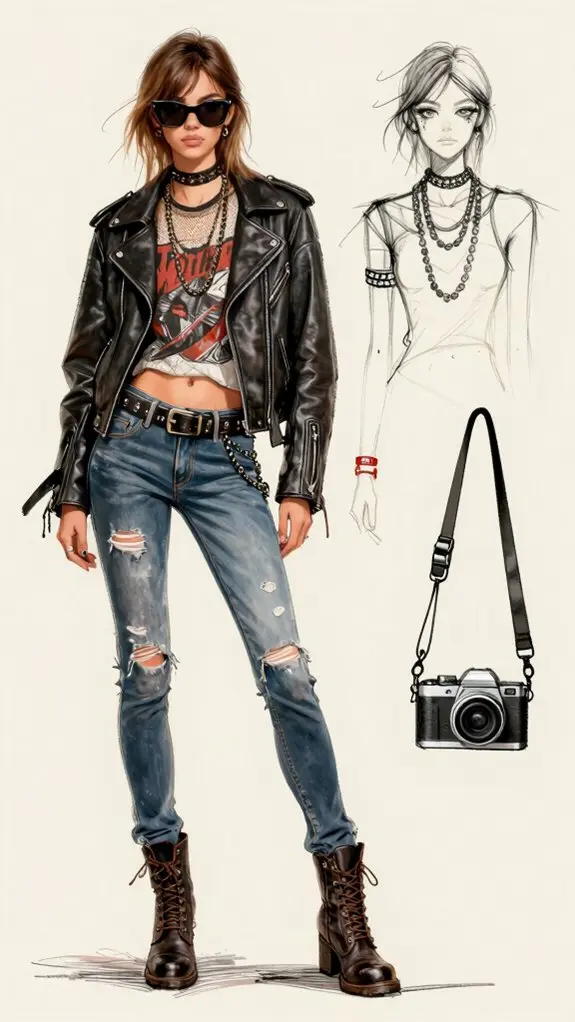
Around 2016, something weird started happening on Instagram—Gen Z kids who’d been in elementary school during indie sleaze‘s actual heyday began posting grainy, flash-photography selfies that looked ripped straight from a 2006 Cobra Snake gallery. Individuals have likely observed the aesthetic creeping back through TikTok, where teenagers romanticize the diy music scene they never experienced firsthand.
The revival manifests in predictable ways:
- Thrifted American Apparel leggings becoming grails again
- Underground dance parties styled after 285 Kent Avenue shows
- Bands like Wet Leg channeling Yeah Yeah Yeahs energy
- That specific messy eyeliner you thought you’d left behind
This cyclical return mirrors how Gen Z’s renewed appreciation for hyper-feminine details has driven the coquette aesthetic’s modern resurgence through the same social media platforms. It’s nostalgia as performance art, really—Gen Z mining Brooklyn’s sweaty past for authenticity while documenting everything their predecessors would’ve considered deeply uncool to photograph.
Frequently Asked Questions
What Specific Brooklyn Neighborhoods Were Most Associated With Indie Sleaze Culture?
You’d find the heart of the party culture scene in Williamsburg, obviously, where venues like Monster Island and Vice magazine’s office parties defined the aesthetic.
Bushwick emerged later, around 2007, as rents climbed and warehouse spaces became the new frontier. Greenpoint hosted overflow crowds, while DUMBO occasionally attracted the finance-adjacent pretenders.
These Brooklyn neighborhoods weren’t just locations—they were incubators for a specific kind of hedonistic, flash-photography-saturated nightlife that valued authenticity (or at least performed it convincingly).
Which Bands or Musicians Best Represent the Indie Sleaze Sound?
The disco ball became your altar, reflecting LCD Soundsystem’s frantic synthesis of punk anxiety and dance-floor catharsis. You worshipped James Murphy’s neurotic perfectionism, The Rapture’s bass-heavy convulsions, and Yeah Yeah Yeahs’ raw sexuality.
Crystal Castles brought experimental electronic soundscapes drenched in glitch and aggression, while Klaxons merged rave nostalgia with art-school pretension. Holy Ghost! channeled underground house music influences through indie filters, creating anthems for your 4 a.m. cigarette breaks, when everyone looked beautiful and damaged.
Where Can I Buy Authentic Indie Sleaze Clothing Today?
You’ll find the best pieces at vintage fashion thrift stores like Buffalo Exchange, Beacon’s Closet, or local spots in Brooklyn and LA. Scour Depop and eBay for authentic American Apparel, Urban Outfitters circa 2008, and band tees.
DIY clothing brands like Praying or newer labels doing distressed basics work too. Honestly, raiding your older sibling’s closet might yield gold—skinny jeans, leather jackets, oversized flannel. The aesthetic’s about looking effortlessly wrecked, not perfectly curated.
How Did Indie Sleaze Differ From Hipster Culture of the Same Era?
You’d spot indie sleaze kids stumbling out of Santos Party House at 4 AM, while hipsters were still curating their PBR consumption for Instagram. The aesthetic sensibilities diverged sharply: hipsters embraced ironic vintage thrift and artisanal authenticity, whereas indie sleaze reveled in trashy American Apparel, smeared makeup, and unapologetic hedonism.
Media representation cemented this split—Vice documented sleaze’s debauchery, while Brooklyn Magazine lionized hipster coffee shops. One culture performed coolness; the other actively destroyed it.
What Bars and Venues Were Popular Indie Sleaze Hangout Spots?
You’d find yourself at Santos Party House, Death by Audio, or Glasslands—grimy DIY event spaces where the lo fi music scene thrived on cheap beer and cheaper cover charges.
285 Kent was your sweaty basement cathedral, while Cakeshop and Silent Barn hosted the kind of chaotic nights you’d scarcely recollect. These weren’t polished venues; they were art spaces, warehouses, and literal basements where you’d uncover your new favorite band before they inevitably sold out.
Conclusion
You’ll resurrect this look eventually, scrolling through your parents’ Facebook albums, gasping at their audacity to wear jeans that tight without irony. You’ll claim it’s “vintage” and “authentic,” ignoring that they were just broke twentysomethings who couldn’t afford better lighting. The cycle continues: what’s embarrassing becomes endearing, what’s dated becomes discovered. Your American Apparel leggings are waiting in a landfill, patient as archaeology.
Have any thoughts?
Share your reaction or leave a quick response — we’d love to hear what you think!
-
 0
0 -
 0
0 -
 0
0 -
 0
0 -
 0
0 -
 0
0