

 Lena
Lena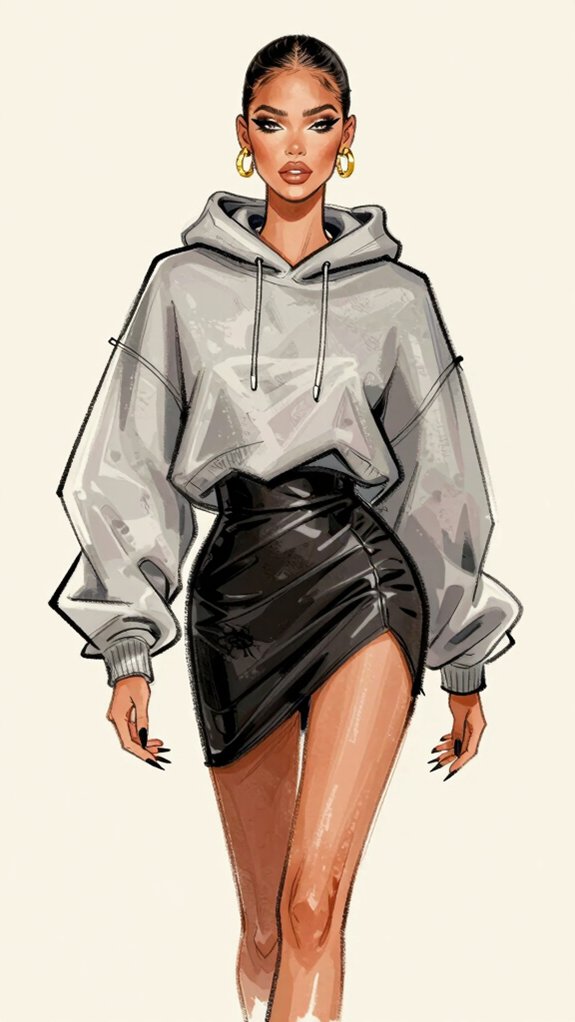
You’ve scrolled past her a thousand times: that girl with the contoured cheekbones, the bodysuit hugging every curve, the winged eyeliner sharp enough to cut glass. She’s not just hot—she’s a brand, a carefully curated aesthetic that emerged from Instagram’s algorithmic demands between 2016 and 2018. But here’s what most people miss about the baddie look: it’s less about beauty and more about the performance of confidence, wealth, and an almost aggressive femininity that refuses to apologize. So what’s really being sold here?
Social Media Influence
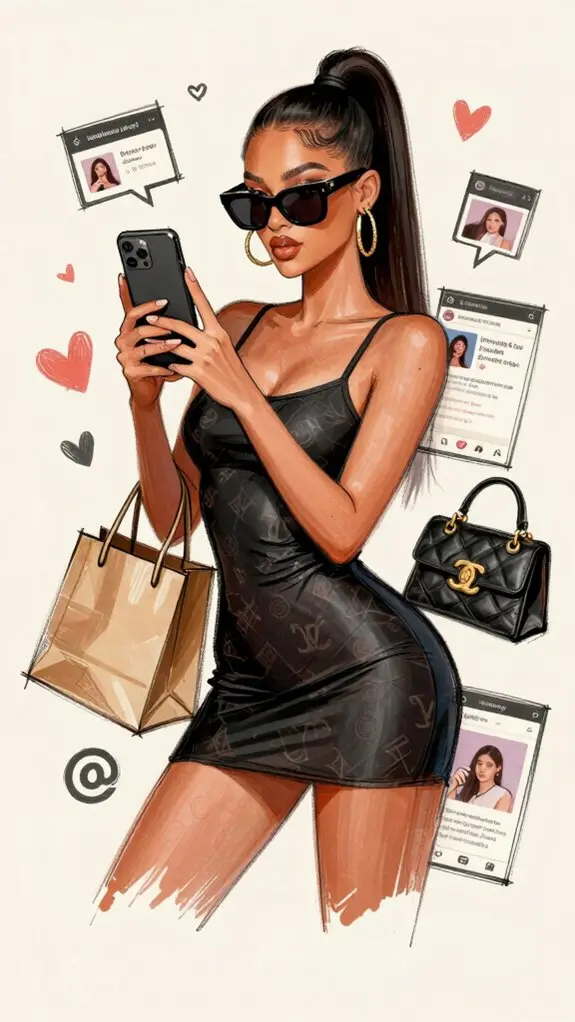
The baddie aesthetic didn’t materialize out of thin air—it exploded across Instagram, TikTok, and Pinterest between 2016 and 2018, propelled by influencers like @_jazzybum, Bernice Burgos, and the entire Kardashian-Jenner industrial complex who transformed “looking expensive while doing absolutely nothing” into a legitimate career path.
You’ve watched this unfold: viral marketing campaigns disguised as “candid” mirror selfies, influencer partnerships with Fashion Nova and PrettyLittleThing that made bodycon dresses and oversized hoops accessible to anyone with $29.99.
The algorithm loved these posts—high contrast makeup, perfectly arched brows, glossy lips catching ring light—rewarding consistency with engagement, engagement with sponsorships, sponsorships with legitimacy. Social media didn’t just reflect the baddie aesthetic; it manufactured, monetized, and mainstreamed it, turning aspiration into attainable brand identity. This same digital ecosystem has since fueled contrasting trends like the coquette aesthetic, proving Gen Z’s appetite for aesthetics that swing between bold confidence and delicate femininity.
Style Definition
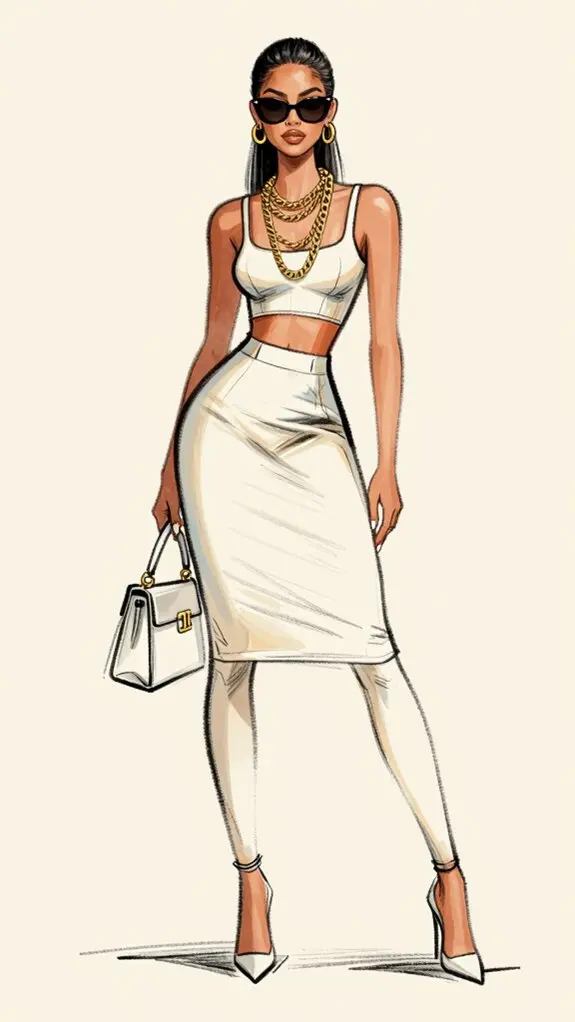
Snatched waists, sculpted contours, and an almost weaponized confidence—that’s the baddie aesthetic distilled to its visual essence, a highly curated look that prioritizes flawless makeup (think full-coverage foundation, razor-sharp winged liner, nude or glossy lips), form-fitting clothing that emphasizes curves (bodycon dresses, high-waisted jeans, crop tops), and accessories that scream “I’m aware you’re looking” (acrylic nails, gold jewelry, designer bags real or convincingly fake).
You’re not just throwing on an outfit; you’re constructing visual storytelling through every detail, broadcasting luxurious elegance whether your bank account agrees or not. The aesthetic demands precision—your eyebrows can’t just be filled, they need architectural integrity. It’s performative femininity cranked to maximum volume, borrowing from hip-hop video vixens, Instagram influencers, and runway glamour simultaneously, creating something distinctly twenty-first century. Even the resurgence of bubble dress silhouettes gets the baddie treatment, with influencers styling the sculptural shape in monochromatic black or high-contrast color blocking to maintain that sleek, body-conscious appeal.
Key Features
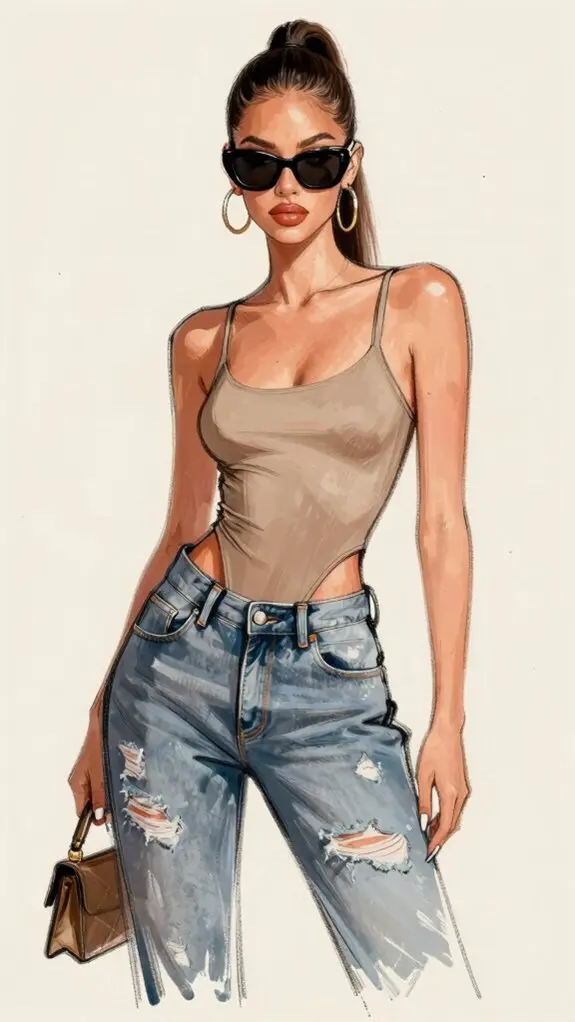
You’ll recognize the baddie aesthetic immediately by its holy trinity: curve-hugging bodycon dresses and tops that treat subtle tailoring like a personal insult, makeup looks so bold they could double as editorial art (think razor-sharp winged liner, sculpted contours that redefine facial geometry, and lips glossed to an almost aggressive shine), and strategic designer details—whether that’s a Chanel bag, Yeezy sneakers, or just the prominent logo placement that screams “I know what costs money and I’m wearing it.”
The aesthetic operates on maximum impact, minimum modesty, turning everyday outfits into carefully curated displays of confidence, sex appeal, and aspirational spending power. It’s not about blending in; it’s about commanding attention through a calculated combination of body-conscious silhouettes, face-as-canvas artistry, and the kind of brand-name accessories that telegraph status even in a grainy Instagram story. For festival appearances, baddies often incorporate statement corsetry and structured tops that offer both support and style while maintaining that signature curve-conscious appeal.
Bodycon pieces
Bodycon pieces form the structural foundation of baddie fashion, clinging to curves with an unapologetic confidence that borders on confrontational. You’re not hiding anything in these form fitting silhouettes—you’re broadcasting your body like it’s breaking news, and honestly, that’s the entire point. These curve enhancing fabrics work overtime to sculpt, smooth, and showcase.
The bodycon hierarchy breaks down into three essential categories:
- Mini dresses that barely qualify as coverage, strategically placed to maximize impact
- Two-piece sets featuring crop tops and midi skirts that create deliberate segmentation
- Jumpsuits offering full-body compression wrapped in Instagram-worthy packaging
Each piece demands confidence you mightn’t naturally possess, which is why you’ll fake it until the likes validate your existence.
Bold makeup
Bold makeup transforms faces into high-definition canvases where subtlety goes to die, replaced by a calculated maximalism that photographs better than it exists in natural light. You’re not wearing foundation; you’re constructing architecture with contour kits that could double as paint sets. The baddie aesthetic rejects natural tones and subtle accents entirely, demanding sharp winged liner that could cut glass, lashes dense enough to create wind resistance, and highlight so intense you’ll confuse yourself with a disco ball.
| Feature | Application | Effect |
|---|---|---|
| Cut crease | Precise shadow line | Dimensional drama |
| Overlined lips | Pencil beyond borders | Fuller pout illusion |
| Strobing highlight | Cheekbones, nose bridge | Instagram-ready glow |
Every element screams intentionality, transforming your face into algorithmic perfection.
Designer details
Your designer details checklist:
- Monogrammed bags positioned at strategic angles for maximum logo exposure
- Belt buckles large enough to double as reflective surfaces
- Sunglasses with temple logos readable from across a crowded restaurant
It’s peacocking for the algorithm, really. Each branded detail tells Instagram’s AI you’re worth promoting, that your aesthetic merits visibility.
The question isn’t whether you can afford it—it’s whether your audience believes you can.
Confidence Styling
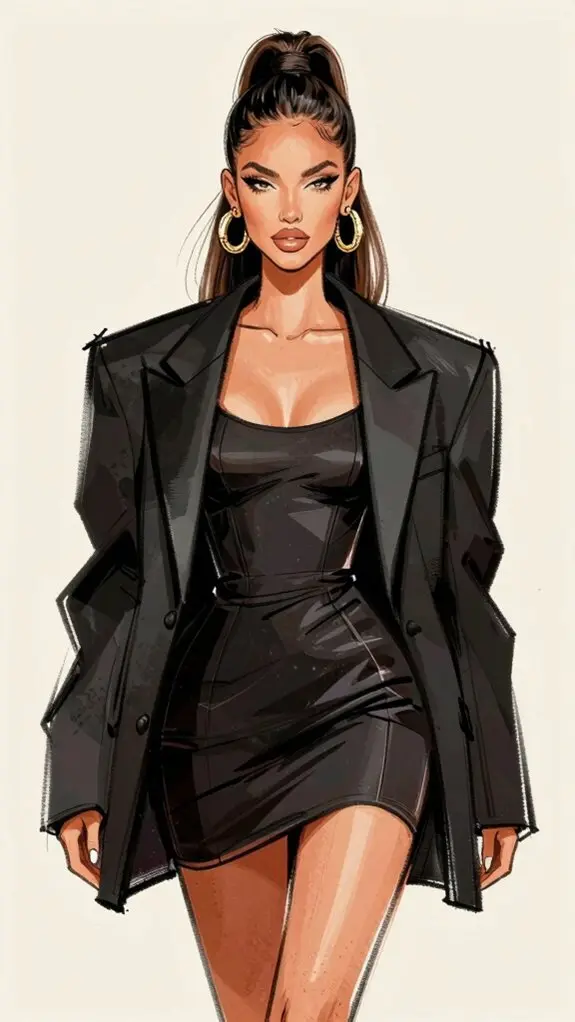
Confidence isn’t something you can fake with a smoky eye and a pair of thigh-high boots, but the baddie aesthetic operates on the principle that looking intimidatingly put-together can actually manufacture that inner steel over time. You’re fundamentally reverse-engineering self-assurance, letting the armor become the weapon.
This approach to elevating self esteem isn’t new—think of how corporate power suits transformed women’s professional presence in the ’80s, or how red lipstick became wartime defiance. The baddie look functions similarly, cultivating inner radiance through external presentation until the boundary between performance and reality dissolves. Great style is ultimately about finding pieces that make you feel confident rather than blindly following trends.
You walk differently in six-inch heels, hold eye contact longer with perfectly applied liner, speak more deliberately when you know your outfit could stop traffic. Eventually, you’re not pretending anymore.
Platform Trends
Instagram algorithms have turned fashion trends into frantic horse races, but platform shoes remain the baddie aesthetic’s most enduring foundation—literally. While influencer culture churns through micro-trends weekly, platforms transcend digital consumption cycles because they’re fundamentally practical. You’re not just buying into a look—you’re investing in physical elevation.
The platform’s persistence stems from three strategic advantages:
- Height without heels’ discomfort, letting you tower over photos for hours
- Chunky silhouettes that photograph dramatically, creating bold visual statements algorithms favor
- Versatility across seasons, from sneakers to boots to sandals
Chunky Salomon sneakers paired with wide-leg pants create a balanced silhouette that’s particularly flattering and camera-ready. Platforms survived Y2K nostalgia, weathered minimalism’s threat, and emerged stronger. They’re the rare trend that serves both your feed and your actual life, which explains why every baddie owns multiple pairs despite claiming she’s “not really into fashion.”
Frequently Asked Questions
What Makeup Brands Are Best for Achieving the Baddie Aesthetic Look?
You’ll want Fenty Beauty, Anastasia Beverly Hills, and Morphe in your arsenal. Fenty’s matte foundation formulas deliver that flawless, airbrushed base you’re craving, while ABH’s contour kits sculpt like nobody’s business.
Don’t sleep on Morphe’s highlighter palette essentials—they’re affordable yet give you that blinding glow for days. MAC and Huda Beauty round out the roster with bold lip colors and dramatic lashes. These brands understand the assignment: creating that unapologetically confident, Instagram-ready face that stops scrollers mid-swipe.
How Much Does It Cost to Build a Complete Baddie Aesthetic Wardrobe?
You’re looking at $2,000-$5,000 minimum for a solid foundation, though luxury clothing items and designer accessories can push that to $10,000+.
Fast fashion dupes (Fashion Nova, Shein) keep costs lower, around $500-$1,000, but they won’t last.
You’ll need bodysuits, bike shorts, oversized hoodies, distressed denim, and statement pieces. Designer bags, especially Louis Vuitton or Gucci, add serious expense.
It’s an investment that demands maintenance, constant updates, and honestly, dedication to the aesthetic.
Can the Baddie Aesthetic Work for Different Body Types and Sizes?
Absolutely, babe—inclusive body representation is finally becoming central to baddie culture, though fashion brands still have work to do.
You’ll find accessible fashion options across sizes now, from Fashion Nova Curve to PrettyLittleThing’s extended ranges, because confidence, sharp winged liner, and that “I know I look good” energy transcend measurements.
The aesthetic adapts to you, not the other way around. Crop tops, bodysuits, bike shorts—they’re all yours to claim, regardless of size, because baddie is a mindset first.
What Photo Editing Apps Do Baddie Influencers Use for Instagram Posts?
Like daguerreotype photographers of old, you’re obsessed with the perfect shot—but your tools are apps like Facetune2, Lightroom, and VSCO. These aren’t just filters, babe; they’re your whole vibe.
You’ll master lighting techniques through Facetune’s whitening and brightening features, while VSCO presets handle that moody aesthetic. Lightroom’s your secret weapon for photo composition adjustments—crop, straighten, enhance those contours.
Most baddies layer multiple apps because one simply won’t capture that flawless, unattainable (yet somehow relatable) Instagram perfection you’re chasing.
How Do I Start a Baddie Aesthetic Instagram Account From Scratch?
Start by building a cohesive theme—pick your color palette, filters, and vibe before posting anything. You’ll want 9-12 photos ready so your grid looks intentional, not random.
Study accounts like @dollskill or @fashionnova for inspiration, then find your angle. Leveraging influencer collaborations early, even micro-influencers, gets you noticed faster than grinding alone.
Engage authentically in comments, use trending sounds on Reels, and post consistently. Your aesthetic needs discipline, babe—random won’t cut it.
Conclusion
You’ve mastered the contour, perfected the pose, and curated your grid—but here’s the thing: the baddie aesthetic isn’t just about looking expensive. It’s about commanding attention in a world that scrolls past mediocrity. You’re balancing haute couture aspirations with fast-fashion reality, vulnerability with an untouchable persona. Whether you’re flexing designer dupes or authentic luxury, you’ve transformed yourself into a brand, a moment, an algorithm-approved icon.
Have any thoughts?
Share your reaction or leave a quick response — we’d love to hear what you think!
-
 0
0 -
 0
0 -
 0
0 -
 0
0 -
 0
0 -
 0
0