

 Lena
Lena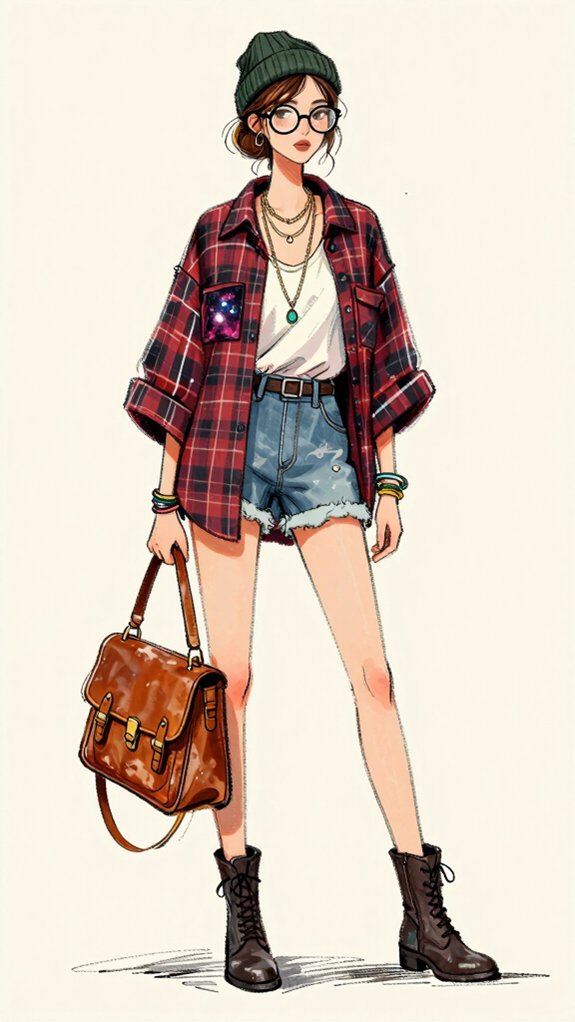
Look, you might think the 2010s Tumblr aesthetic died with the NSFW purge of 2018, but its DNA still haunts your Instagram feed, your Pinterest boards, even your carefully filtered TikTok FYP. Those pastel gradients, that manufactured “authenticity,” the whole soft-grunge contradiction—they didn’t vanish, they evolved, metastasized into cottage-core, dark academia, and whatever microaesthetic Gen Z’s currently obsessing over. The real question isn’t whether Tumblr’s hipster revival mattered, but why we’re still desperately repackaging its visual language.
Digital Culture Influence
While most social media platforms spent the 2010s chasing algorithmic feeds and engagement metrics, Tumblr cultivated something entirely different: a digital sanctuary for the aesthetically obsessed, the culturally marginal, and anyone who thought Instagram’s filters were trying way too hard. You weren’t scrolling for likes—you were curating an identity, reblogging grainy photos of vintage typewriters, Arctic Monkeys lyrics overlaid on sunset gradients, and that one picture of a girl in a beanie drinking coffee that somehow encapsulated an entire worldview.
Before influencer marketing commodified authenticity into sponsored content and affiliate links, Tumblr users were pioneering meme inspired fashion through ironic normcore fits and flower crown selfies, building subcultures that felt genuinely collaborative rather than transactional. The platform’s dark academia aesthetic emerged as literary references and vintage-inspired layered looks found their visual home among users romanticizing intellectual pursuits. The dashboard became your mood board, your manifesto, your carefully constructed self.
Aesthetic Components
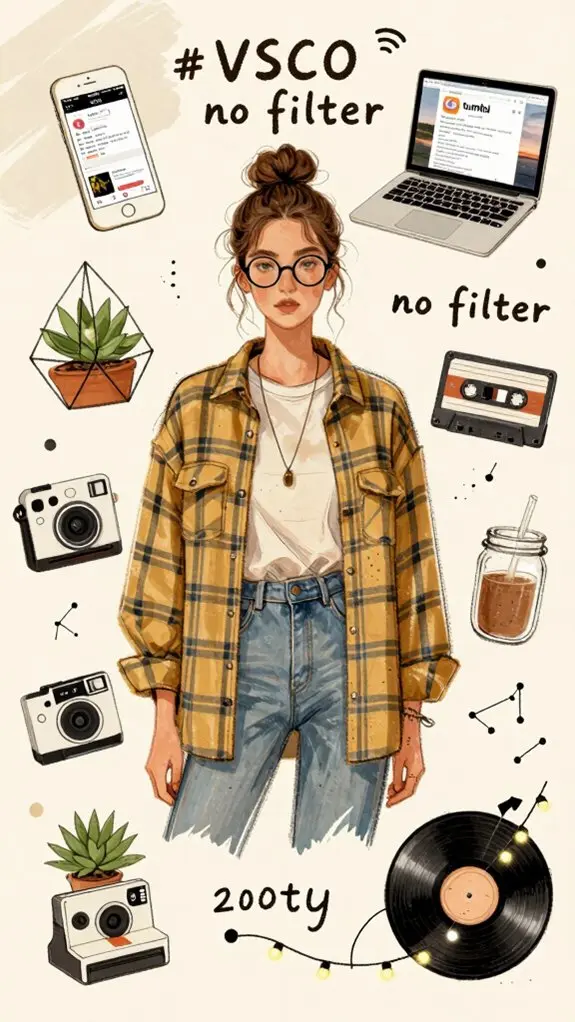
What exactly made a photograph “Tumblr aesthetic” when nearly every image on the platform looked like it’d been filtered through collective melancholy and a VSCO preset? You’d recognize it instantly: pastel color palettes governed everything, transforming ordinary coffee cups and flower arrangements into objects of wistful contemplation.
Minimalist design elements stripped scenes to their emotional essentials—a single plant against white walls, an unmade bed bathed in morning light, polaroids scattered artfully on hardwood floors. The composition relied on negative space, soft focus, and that signature washed-out quality that made 2014 feel like a faded memory even while it was happening.
Geometric shapes, Edison bulbs, and carefully curated “messiness” completed the visual vocabulary. This aesthetic foundation of cohesive neutral color palettes mixed with subtle pops of color through accessories continues to influence today’s minimalist fashion movements. It wasn’t just photography; it was visual shorthand for a very specific kind of curated authenticity.
Signature Items
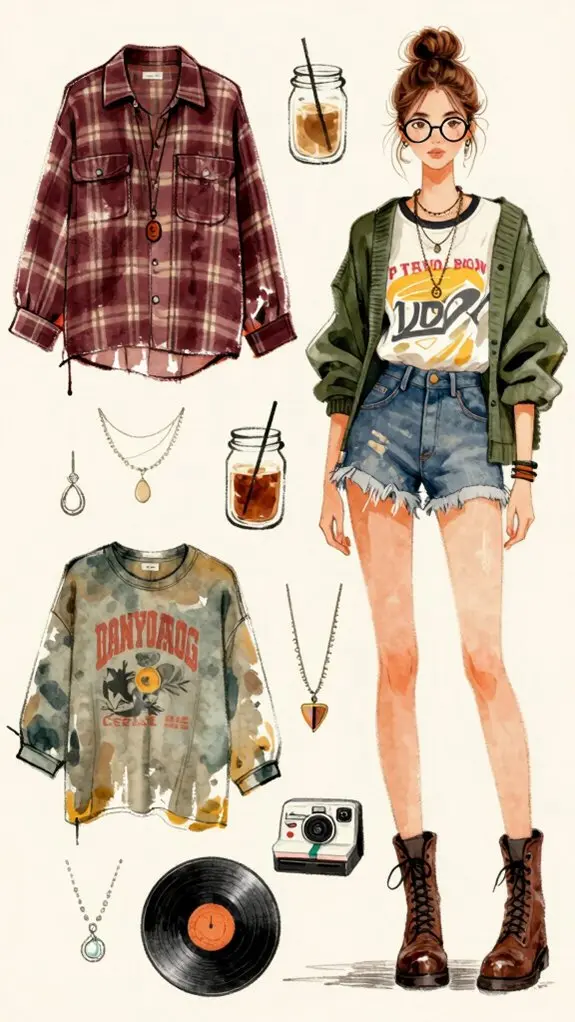
You can’t talk about Tumblr’s hipster aesthetic without acknowledging the holy trinity: vintage band tees (preferably thrifted, definitely pre-distressed), high-waisted shorts that your mom probably wore in 1987, and those insufferable floral crowns that turned every music festival into a Coachella wannabe convention. These weren’t just clothes—they were cultural signifiers, visual shorthand that screamed “I discovered The Smiths before they were cool” even though Morrissey peaked in 1984 and everyone knew it.
The combination created a uniform so specific, so widely adopted between 2011 and 2014, that you could spot a Tumblr girl from three blocks away, her flower crown wilting in the summer heat while she clutched her iced coffee and pretended not to care about likes. The look relied heavily on textured fabrics like crochet and lace layered over everything, adding that handmade artisanal quality that distinguished the truly committed from casual trend followers.
Vintage band tees
The faded Nirvana tee hanging in your closet—or more accurately, the one you paid $38 for at Urban Outfitters last week—represents one of fashion’s most successful marketing inversions, transforming genuine counterculture artifacts into mass-produced status symbols. You’d pair it with oversized jean jackets and platform combat boots, creating a carefully constructed “effortless” look that required considerable effort and expense.
| What You Believed | The Reality |
|---|---|
| Supporting underground music | Enriching corporate retailers |
| Expressing authentic taste | Following algorithmic trends |
| Honoring rock history | Wearing bands you’ve never heard |
| Building unique identity | Purchasing mass conformity |
The irony? Your “vintage” Ramones shirt probably generated more revenue than the band’s entire CBGB residency, yet you’ve never listened to *Rocket to Russia*.
High-waisted shorts
Denim cutoffs, strategically frayed and hemmed just below the cheek, became the unofficial uniform of 2012-2016 Tumblr, worn so high they effectively transformed your torso into an optical illusion—all legs, all the time. You’d pair them with cropped tops, naturally, because why show just one sliver of skin when you could showcase two?
The look capitalized on crop top trends that overshadowed every Urban Outfitters and thrift store rack, creating that coveted hourglass silhouette through sheer geometry rather than genetics. Brands like American Apparel and Levi’s vintage cuts became currency, though the real status symbol was DIY destruction—you took scissors to perfectly good jeans, channeling some imaginary festival-going persona.
The higher the waist, the more authentically “alternative” you appeared, defying low-rise 2000s trauma one aggressive button-fly at a time.
Floral crowns
Nobody asked for Renaissance faire cosplay to infiltrate everyday fashion, yet between 2013 and 2015, flower crowns colonized every profile picture, festival ground, and awkward bedroom photoshoot with the persistence of invasive species. You couldn’t scroll through Tumblr without encountering someone’s carefully constructed “natural” look, complete with these bohemian accessories perched atop strategically tousled hair.
The appeal was obvious: instant whimsy, photographable ethereality, and a vague connection to Coachella culture without actually attending. DIY tutorials exploded across Pinterest, promising you could achieve this look with wire, floral tape, and grocery store carnations. The flower crown became shorthand for a specific aesthetic identity—free-spirited, artsy, aggressively feminine—though wearing one to class definitely meant you were trying way too hard. Still, we all considered it.
Styling Approach
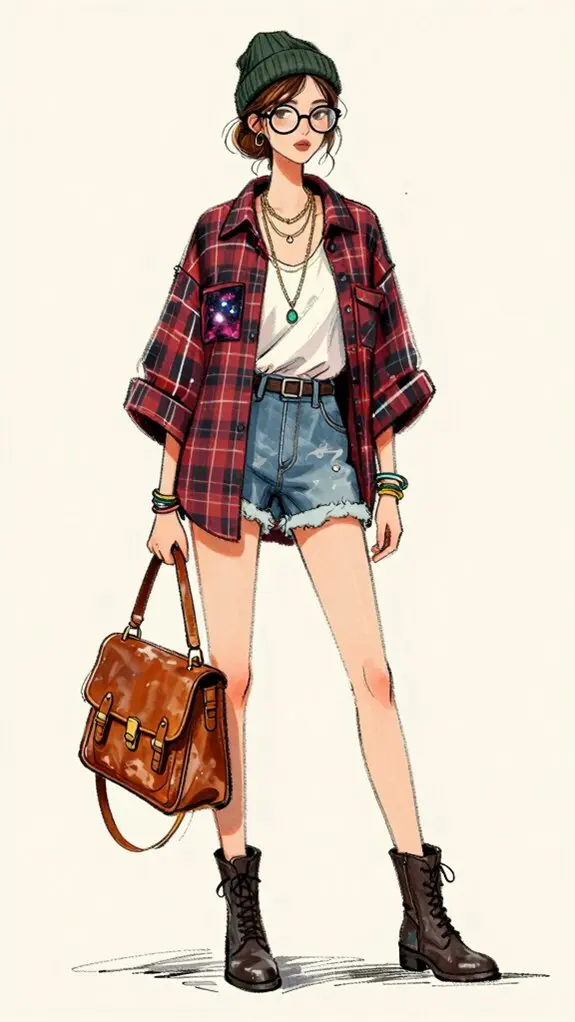
Layering defines everything about hipster revival styling—it’s less about individual pieces and more about how you stack, drape, and combine them into something that looks effortlessly curated but probably took twenty minutes to arrange.
The art of looking accidentally perfect: twenty minutes of careful arrangement disguised as effortless morning chaos.
You’d build your outfit in strategic stages:
- Base layer: Vintage band tee or striped shirt, preferably thrifted
- Middle layer: Oversized sweaters, flannel, or denim jackets worn simultaneously (yes, both)
- Bottom half: High-waisted shorts over tights, or skinny jeans cuffed to show ankle
- Finishing touches: Minimalist accessories like delicate gold chains, leather bracelets
The goal? Looking like you stumbled out of a Brooklyn coffee shop circa 2013, totally unbothered. Everything had to appear accidental, even though you’d photographed seventeen different combinations before posting. This same philosophy of layering with purpose carries into modern styling, where adding dimension through strategic combinations creates that thoughtful, constructed aesthetic.
Evolution and Legacy
By 2016, the hipster revival aesthetic had peaked so completely that it circled back to becoming the very mainstream trend it originally rebelled against—Urban Outfitters was mass-producing “vintage” band tees, your mom was asking about flannel, and suddenly everyone’s Instagram looked identical.
The aesthetic’s downfall came from its own success: social media influence transformed underground coffee shop culture into algorithm-optimized content. Mainstream acceptance killed what made it special.
Today’s legacy lives in Gen Z’s Y2K revival, which learned the pivotal lesson that authenticity can’t survive mass replication. The hipster aesthetic taught us that counterculture commodifies fast in the digital age, that Tumblr’s curation spawned today’s TikTok microtrends, and that nothing stays underground when everyone’s posting it online. This pattern mirrors how Korean ulzzang style emerged from early 2000s social media culture before evolving into a widely recognized aesthetic.
Frequently Asked Questions
What Celebrities Were Most Associated With the Tumblr Hipster Aesthetic?
You’d constantly see Zoey Deschanel, with her bangs and vintage dresses, alongside Alexa Chung‘s effortless cool-girl style dominating your dashboard. These prominent hipster celebrities became Tumblr fashion influencers whether they intended to or not.
Lana Del Rey’s melancholic Americana, Sky Ferreira’s grunge-meets-glam aesthetic, and even Florence Welch’s bohemian goddess vibes defined the era. Don’t forget Ezra Koenig from Vampire Weekend, whose preppy-intellectual look inspired countless outfit grids, mood boards, and those inevitable “get the look” posts.
How Much Did Typical Hipster Wardrobe Pieces Cost During This Era?
You’d proudly announce you bought that vintage flannel for $8 at Goodwill—the frugality itself became status currency. Average prices of thrifted clothing items ranged from $5-15 per piece, with vintage band tees commanding up to $20.
A typical budget for a full hipster outfit hovered around $50-80 if you hunted smart, mixing thrift finds with Urban Outfitters splurges. Paradoxically, you’d spend hours finding “cheap” pieces, making poverty cosplay your most expensive investment.
Which Cities Were Considered Hipster Capitals in the 2010S?
You’d find the densest hipster population growth in Brooklyn’s Williamsburg, Portland’s Pearl District, Austin’s East Side, and San Francisco’s Mission District—artsy neighborhoods where vintage stores, craft coffee shops, and fixed-gear bikes multiplied like rabbits.
Seattle’s Capitol Hill, LA’s Silver Lake, and Chicago’s Wicker Park weren’t far behind. These cities became synonymous with handlebar mustaches, ironic trucker hats, and artisanal everything, transforming formerly industrial areas into Instagram-worthy backdrops where you couldn’t throw a PBR without hitting someone in thick-rimmed glasses.
What Music Genres Defined the Tumblr Hipster Movement?
You lived and died by indie pop trends—Vampire Weekend, MGMT, and Tame Impala soundtracked your carefully curated playlists.
Folk music influences ran deep, with Bon Iver, Fleet Foxes, and The Lumineers providing that authentic, stripped-down aesthetic you craved. You’d throw in some chillwave (Washed Out), dream pop (Beach House), and lo-fi bedroom recordings because production quality was, paradoxically, both everything and nothing.
Arctic Monkeys and The 1975 completed your Spotify wrapped, naturally.
How Did Hipster Culture Differ Between Early and Late 2010S?
Early 2010s hipster culture thrived on obscurity—you’d discover bands through vinyl hunts, not algorithms. By the late decade, everything shifted: the rising popularity of indie films on streaming platforms democratized access, while the influence of social media on hipster trends transformed authenticity into performance art.
Instagram replaced thrift stores as your cultural compass. What was once genuinely underground became carefully curated content, turning counterculture into mainstream aesthetic. Your vintage flannel became a sponsored post.
Conclusion
You’ve witnessed how Tumblr’s aesthetic revolution transformed digital culture, but here’s what’s wild: by 2014, Tumblr hosted over 200 million blogs, with fashion and aesthetic content dominating the platform’s most reblogged posts. That’s not just nostalgia, it’s documented cultural shift. The pastel minimalism, ironic normcore, and curated authenticity you scrolled past didn’t just fade away—they infiltrated mainstream fashion, Instagram feeds, and even your current Pinterest boards. The aesthetic never left; it just rebranded itself.
Have any thoughts?
Share your reaction or leave a quick response — we’d love to hear what you think!
-
 0
0 -
 0
0 -
 0
0 -
 0
0 -
 0
0 -
 0
0