

 Lena
Lena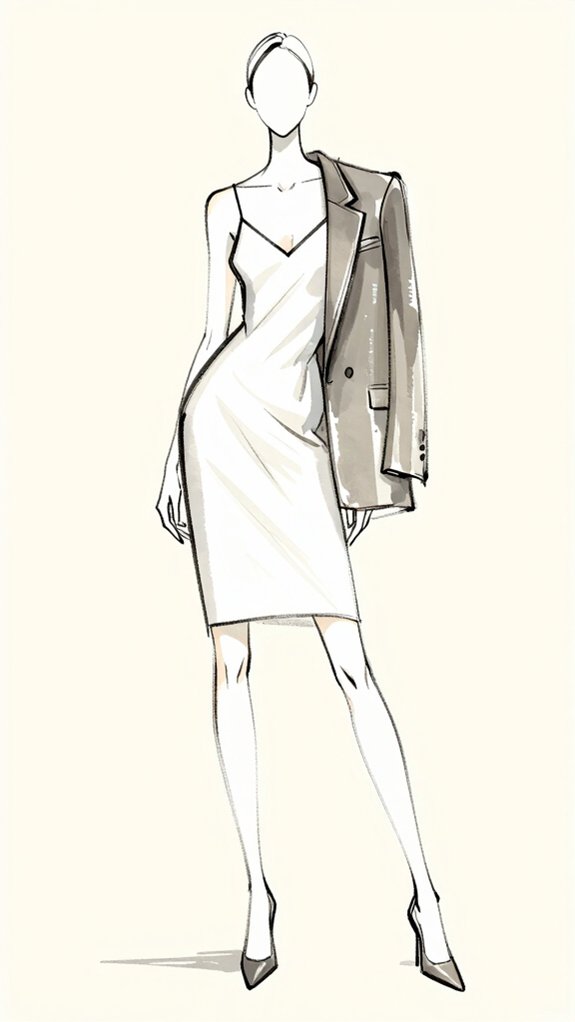
You may have scrolled past a dozen Instagram posts today featuring the exact aesthetic Calvin Klein perfected in 1993, though you might not realize it. That slip dress, those tailored trousers, the monochrome everything—it’s all lifted straight from his minimalist playbook, when fashion collectively decided excess was exhausting and simplicity was the ultimate flex. But here’s what most people miss about why this movement actually mattered, beyond just looking effortlessly expensive.
Movement Background
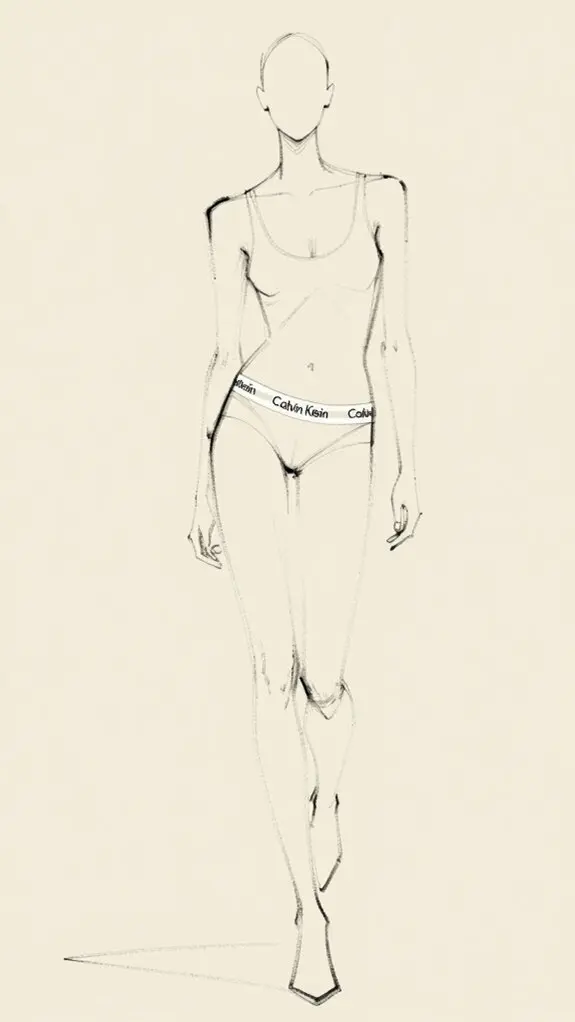
While the 1980s had been drowning in excess—power suits with shoulder pads that could knock someone unconscious, logos screaming from every surface, colors so bright they practically demanded sunglasses indoors—the early 1990s arrived with a collective cultural hangover and a desperate need for visual silence.
You witnessed fashion’s pendulum swing violently toward restraint, stripping away ornamentation like someone Marie Kondo-ing their entire wardrobe in one cathartic weekend. This wasn’t just about clothes; it reflected broader economic anxiety following the 1987 stock market crash and growing disillusionment with conspicuous consumption.
Understated elegance became revolutionary, a radical rejection of “more is more” philosophy. The movement embraced subtle sophistication—clean lines, monochromatic palettes, architectural silhouettes—transforming simplicity from boring afterthought into aspirational lifestyle. Minimalism meant intentionality, not deprivation. This foundational shift paved the way for today’s minimalist aesthetic, which continues to champion neutral palettes, simple silhouettes, and quality basics over trend-driven excess.
Design Philosophy
Calvin Klein didn’t just remove embellishment—he weaponized absence, turning empty space into a design statement as deliberate and calculated as a chess grandmaster’s opening gamut.
You’d think stripping everything away would be easy, but Klein’s reductive aesthetics demanded surgical precision. His understated elegance wasn’t accidental—it was architecture.
| Traditional Design | Klein’s Philosophy | Impact |
|---|---|---|
| Add decoration | Subtract everything | Visual clarity |
| Hide the body | Reveal the form | Honest sexuality |
| Complex construction | Clean lines | Modern luxury |
| Seasonal trends | Timeless pieces | Longevity |
| Maximize fabric | Minimize excess | Functionality |
He understood that neutrals—taupe, cream, black—weren’t boring, they were canvases. Each garment became a study in proportion, fit, and negative space, proving that what you don’t see matters just as much as what you do. His philosophy echoed Coco Chanel’s belief that simplicity is the keynote of true elegance, where monochrome dressing maximizes style impact through deliberate reduction.
Defining Characteristics
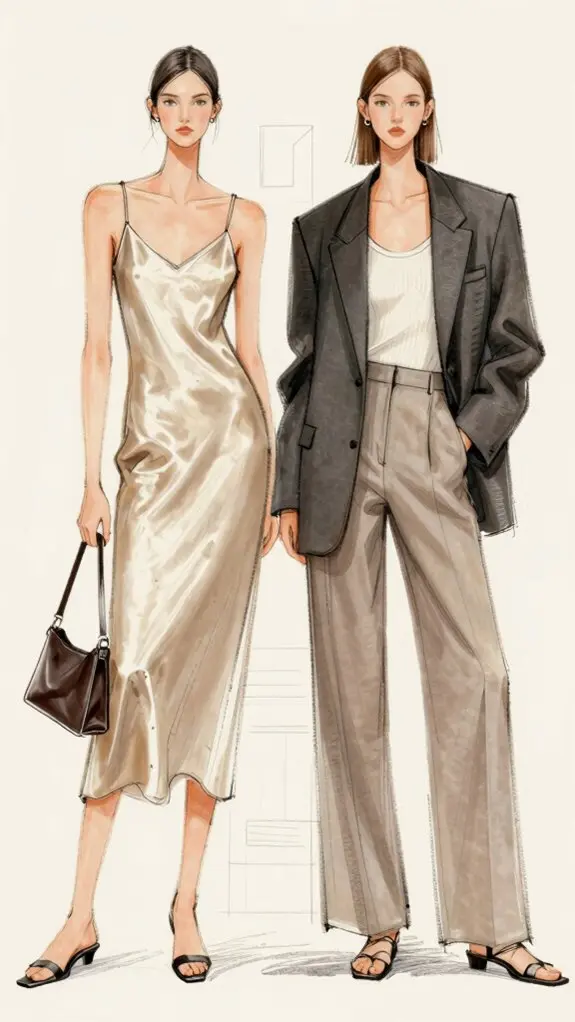
You’ll recognize Calvin Klein’s 90s minimalism the moment you see it—those razor-sharp clean lines that made everything from slip dresses to men’s suits look like they’d been designed with a ruler and serious attitude. The monochrome palette, ruled by black, white, gray, and the occasional beige (which Klein elevated to an art form, somehow making it sexy), stripped fashion down to its bare essentials, rejecting the excess and logo-mania that had defined the 80s.
Simple silhouettes became the uniform of the decade’s fashion elite, with Kate Moss’s 1992 campaign for Klein’s underwear line proving that you didn’t need embellishment, pattern, or even much fabric to make a cultural statement. The minimalist black slip dress became the ultimate cool-girl uniform during this era, with Carolyn Bessette-Kennedy emerging as its most iconic ambassador.
Clean lines
As the fashion world lurched from the excess of the 1980s—power shoulders, neon everything, patterns clashing with abandon—minimalism emerged with a geometric precision that felt almost architectural in its restraint.
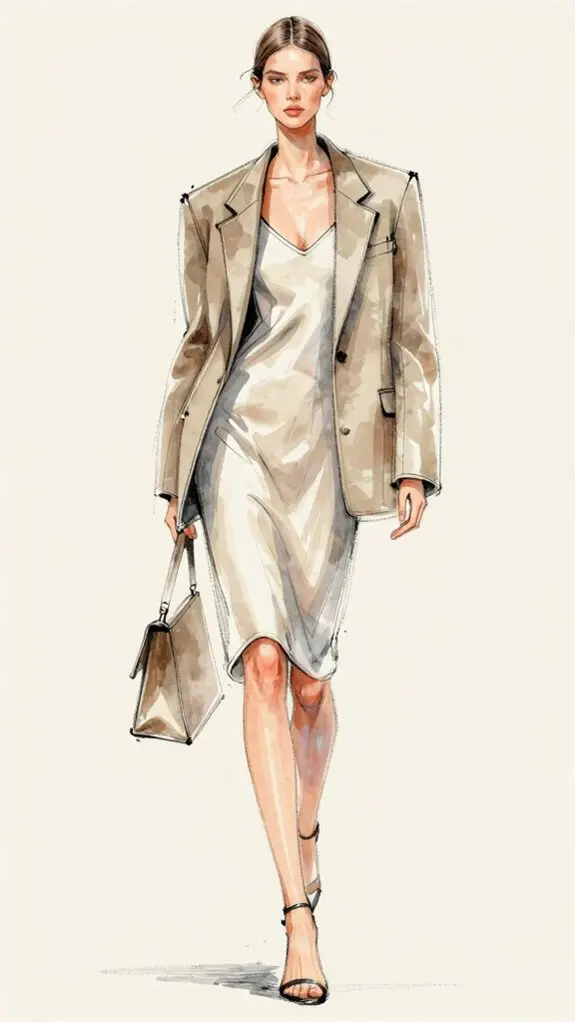
Calvin Klein understood that clean lines weren’t just about simplicity; they were about understated luxury that whispered rather than shouted. You’d see it in those iconic slip dresses that skimmed the body without clinging, in tailored blazers with knife-sharp edges, in trousers that fell in perfect vertical folds.
This wasn’t boring—it was sophisticated elegance refined to its purest form. Every seam mattered, every silhouette counted. The cut became the statement, turning garments into studies in proportion, balance, negative space. Fashion finally learned that sometimes the most powerful thing you can do is subtract.
Monochrome palette
When the 90s minimalist movement stripped fashion down to its essence, color became the next casualty—or perhaps its greatest triumph. Calvin Klein’s genius wasn’t eliminating hue—it was weaponizing restraint. You’d find black, white, gray, beige, and occasionally taupe if someone felt particularly rebellious. These neutral tones weren’t boring; they were strategic, transforming garments into architectural statements that didn’t need neon to scream sophistication.
Kate Moss in that slip dress, Carolyn Bessette-Kennedy in her bias-cut sheaths—they understood what maximalists couldn’t grasp: color distracts from form. This monochrome palette created timeless aesthetics that outlasted every trend-chasing competitor. While other designers played with chartreuse and fuchsia, Klein proved that eliminating chromatic noise amplified everything else—cut, drape, body, attitude. Sometimes less isn’t just more; it’s everything.
Simple silhouettes
Strip away the color and you’re left with shape—and that’s where Calvin Klein’s minimalism truly rewrote fashion’s rulebook. You didn’t need embellishment when the cut itself became the statement.
Klein championed relaxed forms that skimmed rather than clung, treating the body as architecture instead of something to be cinched, corseted, or complicated. His slip dresses from ’94, those bias-cut numbers that Kate Moss made iconic, proved you could seduce with subtraction. The beauty was in what wasn’t there—no frills, no fuss, no apologies.
This was understated elegance at its most radical, turning simplicity into luxury (which, let’s be honest, only works when the fabric costs more than most people’s rent). Clean lines, easy proportions, garments that whispered rather than shouted—that was the revolution.
Essential Pieces
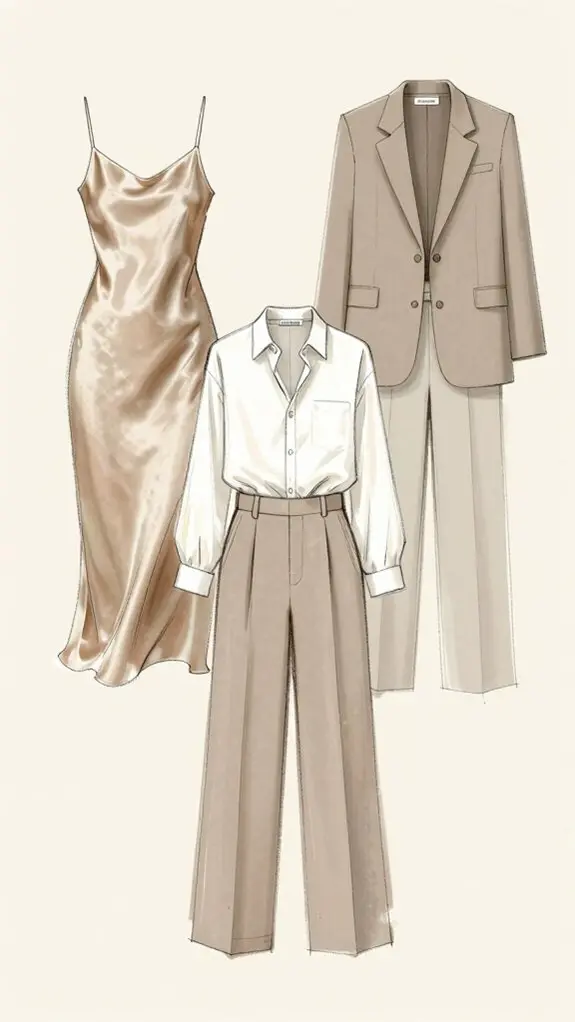
A white T-shirt sounds simple until you realize Calvin Klein built an empire on making you pay $40 for what amounts to eight ounces of cotton. But here’s the thing: those versatile essentials actually worked. You needed maybe ten pieces total, all in neutral colors, and suddenly you’d accessed an entire wardrobe.
| Top Shelf | Bottom Half | Layers |
|---|---|---|
| White tee | Black trousers | Slip dress |
| Tank top | Dark jeans | Blazer |
| Mock turtleneck | Midi skirt | Cashmere sweater |
The genius wasn’t complexity—it was reduction. Kate Moss made millions wearing these same combinations, proving you didn’t need variety when you’d perfected the formula. Everything mixed, matched, repeated without anyone noticing you’d worn that exact outfit three times this month. The high-contrast black and white pairings created an undeniable impact that became the era’s signature aesthetic.
Modern Application
Modern Application
The capsule wardrobe industrial complex has monetized 90s minimalism into something Klein himself wouldn’t recognize—$300 “investment pieces” from startups with names like Everlane and Cuyana, all promising you’ll finally achieve that effortless Kate Moss thing if you just buy their specific beige trench coat.
Here’s the irony: true understated elegance doesn’t require a mood board or seventeen newsletter subscriptions. You don’t need to rebrand your shopping habit as sustainable fashion when you’re buying the same white t-shirt in five colorways.
The real lesson from 90s minimalism wasn’t about acquiring the perfect capsule; it was about rejecting the constant churn of trends entirely. Klein’s genius was subtractive, not additive. Modern minimalism, conversely, demands you purchase your way into simplicity, which is either brilliant marketing or completely missing the point. Today’s smart casual landscape proves we’ve strayed far from that ethos, with neutral elegance now requiring coordinated two-tone ballet flats and carefully curated minimal accessories rather than genuine simplicity.
Frequently Asked Questions
What Was Calvin Klein’s Personal Net Worth During the 90S Minimalism Peak?
You’re looking at Calvin Klein’s personal net worth hovering around $300-400 million during the mid-90s minimalist peak, though pinning exact figures is tricky.
His lifestyle during this minimalist peak reflected the aesthetic he sold: sleek Manhattan townhouse, understated luxury, strategic art collecting. Calvin Klein’s personal investments extended beyond fashion into real estate, specifically prime New York properties, and he famously maintained homes in the Hamptons.
The irony? His “less is more” philosophy generated massive wealth, proving minimalism could be incredibly, almost absurdly, profitable.
How Did 90S Minimalism Affect Calvin Klein’s Advertising Budget and Marketing Costs?
You’d think minimalism would’ve slashed Calvin Klein’s marketing costs, right? Wrong. The 90s aesthetic actually demanded *more* strategic spending on brand positioning—those stark black-and-white campaigns with Kate Moss, the controversial jeans ads, they weren’t cheap.
Klein invested heavily in consumer perceptions, understanding that less product meant more message. His advertising budget ballooned to maintain that “effortlessly cool” illusion, because minimalism, ironically, requires maximum investment to look authentically simple and aspirational.
Which Celebrities Wore Calvin Klein Minimalist Pieces to Major Award Shows?
You’ll recollect Gwyneth Paltrow’s iconic 1996 Oscars moment in that pale pink slip dress, basically underwear as eveningwear, right?
Then there’s Carolyn Bessette-Kennedy, who made Klein’s sleek bias-cut gowns her signature at every gala. These memorable minimalist red carpet looks defined an era.
Kate Moss championed Klein’s pioneering gender neutral fashion designs, wearing those sharp suits that blurred lines beautifully. Even Courtney Love cleaned up in his streamlined column dresses, proving minimalism’s universal appeal.
Did Calvin Klein Face Any Controversies During the 90S Minimalism Era?
You’d better believe Calvin Klein courted serious controversy during this era. The brand’s notorious 1995 campaign featuring underage models in basement-like settings drew FBI scrutiny and public outrage, forcing Klein to pull the ads entirely.
Earlier, the provocative 1992 Brooke Shields spots, when she was just fifteen, sparked fierce debate about sexualizing youth. These controversial ad campaigns, while generating massive buzz and cementing Klein’s rebellious image, repeatedly crossed ethical lines that made parents, advocacy groups, and lawmakers understandably furious.
What Were the Retail Prices of Iconic Calvin Klein Minimalist Pieces?
You’d find Calvin Klein’s minimalist slip dresses retailing around $800-$1,200, while his iconic white shirts hit $300-$500—steep prices that built his empire on retail sales figures showing 30-40% profit margins.
The production costs breakdown? Surprisingly modest: basic cotton pieces cost maybe $50-$80 to produce, meaning you were paying for the label, the lifestyle, the aspiration. Those clean lines, that effortless aesthetic, came with a hefty markup that defined luxury minimalism’s economic reality.
Conclusion
You’ve seen how Klein’s ’90s minimalism stripped fashion down to its essentials, like peeling away layers to reveal architecture’s bones. Today, you’re still chasing that effortless aesthetic—those clean lines, neutral palettes, and investment pieces that transcend seasonal trends. The movement wasn’t just about rejecting ’80s excess; it fundamentally rewired how you think about building a wardrobe. That’s why, decades later, you’re still reaching for the same timeless silhouettes Klein perfected.
Have any thoughts?
Share your reaction or leave a quick response — we’d love to hear what you think!
-
 0
0 -
 0
0 -
 0
0 -
 0
0 -
 0
0 -
 0
0