

 Diana
DianaJapan in spring is one of those trips that genuinely lives up to the hype, but packing for it is trickier than people expect. The sakura windows are short — sometimes just ten days — and the weather swings wildly between a crisp 50°F morning and a surprisingly warm 65°F afternoon. You will be walking everywhere: train stations, shrine staircases, cobblestone alleys in Kyoto’s Higashiyama district, and then a convenience store detour because you need an onigiri immediately.
The styling challenge is real. You want to look intentional for photos in front of the blossoms, but you also need to be able to slip your shoes off at temple entrances without breaking your stride, survive six hours on your feet, and still feel like yourself at dinner. That balance — comfortable but considered — is exactly what the outfits in this guide are built around.
Layers are the non-negotiable foundation. A leather jacket, a trench coat, a couple of light knits, and one or two statement pieces is honestly all you need. Neutral bases with a few spring pops of pink, yellow, or coral let you mix and match without your suitcase turning into a disaster. Japan also has an incredibly refined casual dress code — people are put-together even running errands — so leaning slightly more polished than your instinct pays off.
I’ve pulled together sixteen outfits that actually work for the reality of a spring trip: the cherry blossom viewings, the long transit days, the neighborhood wandering, and the occasional nice dinner. Each one is built on pieces that pack well, rewear easily, and photograph beautifully against sakura-pink backdrops.
What To Wear in Japan in Spring: Essential Outfit Formulas
Grey Denim Jacket, Asymmetric Wrap Skirt, and Mary Janes for Harajuku Days
This is the outfit that nails the casual-but-intentional sweet spot Japan rewards. A grey oversized denim jacket handles the cool morning air while staying relaxed enough to move in all day, and the black asymmetric wrap skirt adds real visual interest — that uneven hem catches the light and looks great in motion. Black Mary Janes with white socks are the shoes to reach for here: according to Who What Wear’s travel style guide, Mary Janes with socks are having a genuine moment in Japanese street style and deliver way more walking comfort than their delicate appearance suggests.

The baseball cap does double duty — sun protection and a casual counterweight to the skirt’s dressier silhouette. A crossbody bag is the only sensible choice for navigating Harajuku’s crowded takeshita-dori or weaving through Osaka’s Shinsaibashi-suji. Keep your hands free; you will need them for your camera, your IC card, and approximately sixteen snacks.
The asymmetric hem is genuinely flattering in motion and photographs with a lot more interest than a straight hemline. This whole look is understated enough that it reads polished at a shrine but relaxed enough for a full afternoon of browsing vintage shops.
Oversized Dark Denim Shirt Over a White Maxi Dress with Leopard Loafers
The genius of this combination is built-in temperature control. A flowing white maxi dress gives you that ethereal, feminine energy that looks absolutely stunning against cherry blossoms, and the oversized dark denim shirt layered on top handles the cooler parts of the day — wear it open when the afternoon warms up, button it closed when you step into shade. Leopard print loafers add personality without sacrificing comfort, and a brown crossbody bag keeps everything accessible during the chaos of navigating busy train stations. This is exactly the kind of outfit worth wearing to gardens in Kyoto or strolling the Meguro River during peak sakura season.
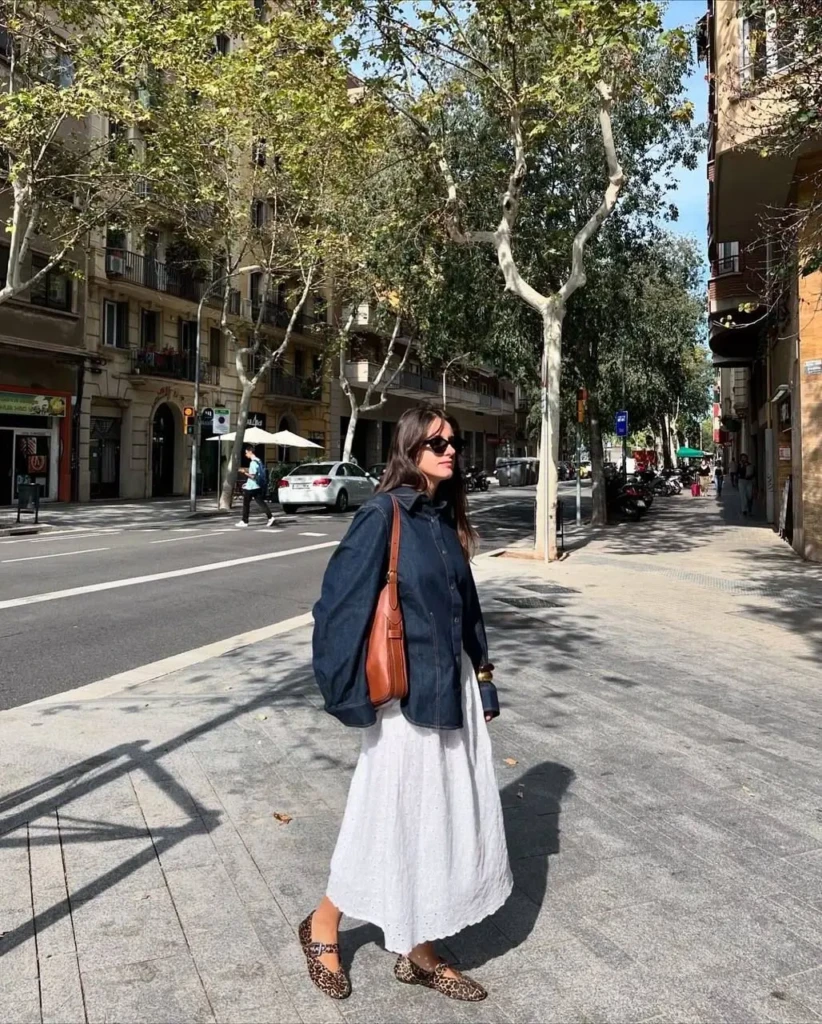
White dresses photograph unbelievably well against pink blossoms — the contrast is almost editorial — but they do show dirt, so choose a fabric that’s easy to spot-clean, like a cotton-poly blend or a treated linen. Having a tide pen tucked in that crossbody is not paranoid; it’s just smart.
The maxi length is also practical at temple visits, where shorter hemlines can feel out of place. You get the pretty dress moment and the cultural consideration in one piece, which is the kind of effortless double-duty dressing that makes a trip genuinely enjoyable.
Leather Jacket Options: What To Wear in Japan in Spring
Brown Leather Jacket, White Tee, and White Wide-Leg Jeans for Urban Tokyo
Sometimes the most effective travel outfit is the simplest one. A brown leather jacket brings warmth, edge, and the kind of polish that makes everything underneath it look more deliberate — pair it with a white tee and crisp white wide-leg jeans and the whole look lands somewhere between effortlessly cool and actually stylish. The brown leather bag ties the palette together without trying too hard. According to Elle’s spring travel guide, a leather jacket is a genuine essential for spring in Japan, and I’d agree — it handles cool mornings, air-conditioned spaces, and evening temperature drops without adding much suitcase weight.
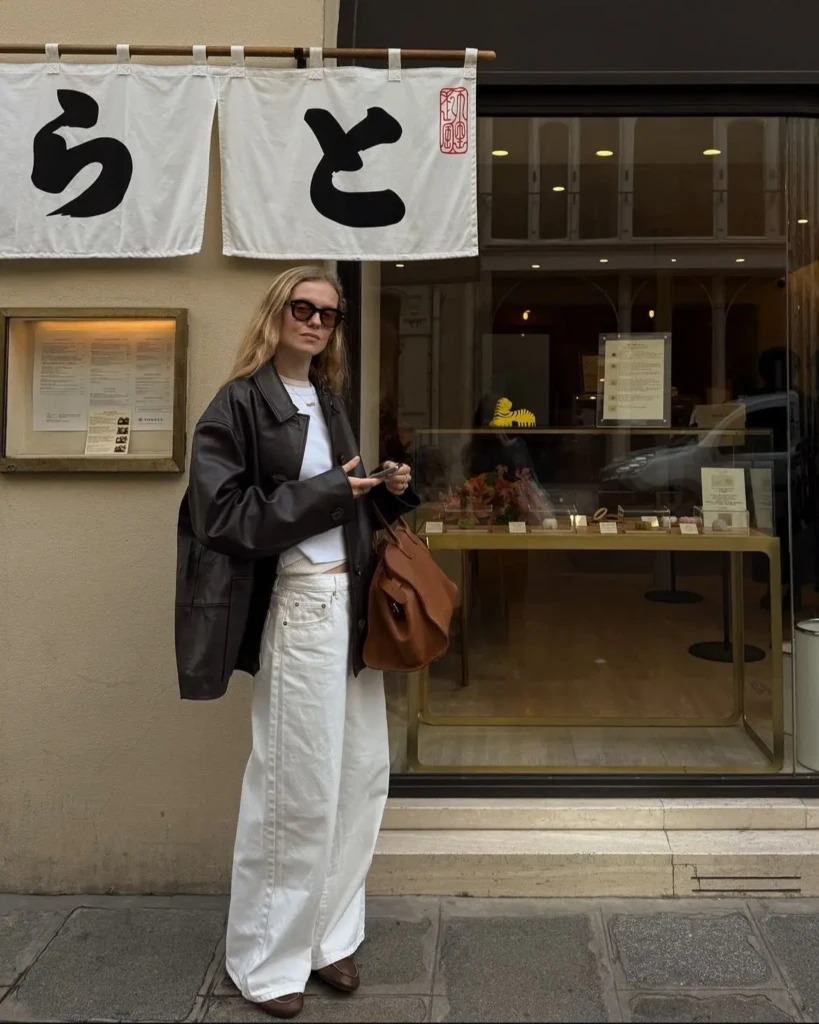
White jeans might feel counterintuitive for a trip with a lot of ground to cover, but they photograph beautifully and actually hide light-colored dust and concrete grime better than dark denim shows its own dirt. The key is a fabric with a slight structure — not too thin, not too stiff — so they hold their shape across a long day.
This silhouette reads well in Shibuya and Shinjuku, where the aesthetic is more fashion-forward and a little more curated. The wide leg balances the fitted jacket, and the all-neutral palette means you can rewear the pieces separately across the whole trip without anyone noticing.
Black Leather Jacket with Crop Turtleneck, Blue Jeans, and Yellow Pointed-Toe Shoes
This look is built for Japan’s fashion-forward neighborhoods, where playing it too safe actually stands out more than taking a risk. A black oversized leather jacket creates structure and grounding, worn over a black crop turtleneck that shows just enough skin to feel intentional without crossing into territory that reads as inappropriate for a day that might include a temple. Classic blue jeans keep the look approachable, and the yellow pointed-toe shoes are the whole point — they’re cheerful, they photograph against cherry blossoms like they were made for it, and they pull together an otherwise monochrome outfit with real personality.
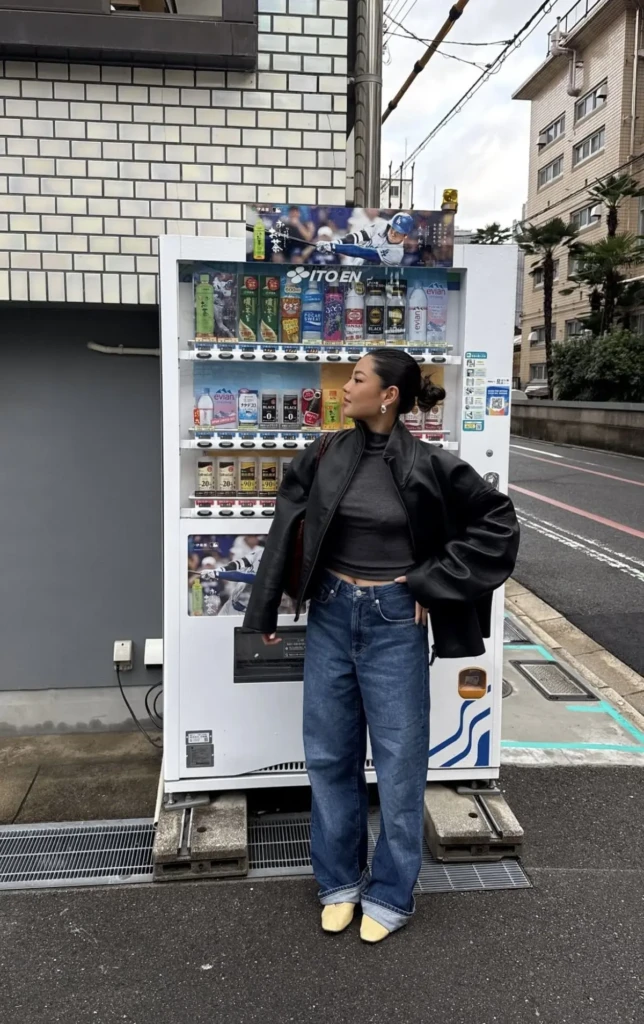
The crop top works in spring specifically because the jacket is doing the covering. You get the visual interest of the layered lengths without being underdressed for more conservative spots. Just check that your jeans have a comfortable waistband — high-rise works well here — because you will be wearing this outfit for eight or more hours.
A slightly rolled hem on the jeans draws attention to the shoes, which is exactly the move. This outfit is made for Shimokitazawa’s vintage market circuit or a Daikanyama afternoon, where people actually notice what you’re wearing and the streets themselves are photogenic enough to make a considered outfit worthwhile.
Sporty-Chic: What To Wear in Japan in Spring
Black Leather Bomber, Olive Pleated Mini Skirt, and Yellow Sneakers for Street Style Days
This is playful and purposeful at the same time. A black leather bomber jacket brings cool-girl energy, and pairing it with a white tee and an olive pleated mini skirt creates that sporty-feminine contrast that Japanese street style does better than anywhere else. Yellow sneakers are both the practical and the fun choice here — Harper’s Bazaar reports that sneakers are completely accepted in Japan and genuinely the smarter call for a day of serious sightseeing over any kind of heel. White socks and a studded black bag finish the look with the right amount of edge.
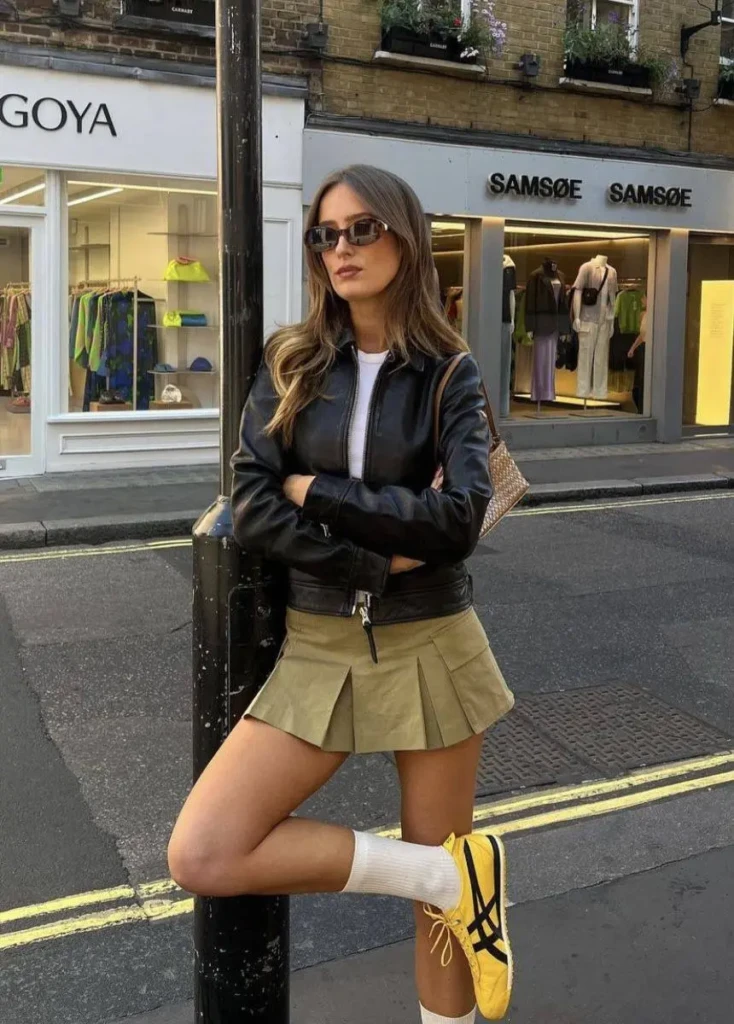
The pleated skirt is a workhorse piece. It has enough movement to look dynamic in photos and enough structure to stay put while you’re climbing stairs or navigating crowded platforms. Olive is a great spring neutral — more interesting than black, less expected than beige, and it doesn’t show wrinkles from being packed.
This outfit makes real sense for Akihabara, teamLab Borderless, or a full Harajuku day — places where the environment itself is visually busy and you want your outfit to hold its own without competing. The color pop from the shoes does that work efficiently.
Butter Yellow Cardigan Under a Beige Trench with White Wide-Leg Pants for Shrine Visits
This is expert layering for spring’s unpredictable temperature swings, and it’s the kind of outfit that transitions seamlessly from a cool shrine courtyard to a warm afternoon in a garden. The butter yellow cardigan is a cheerful spring color that coordinates beautifully with cherry blossoms, and layering it under a classic beige trench gives you genuine warmth and visual sophistication. White wide-leg pants keep the palette light and spring-appropriate, while the leopard print bag adds just enough personality to stop the all-neutral outfit from reading too quiet.
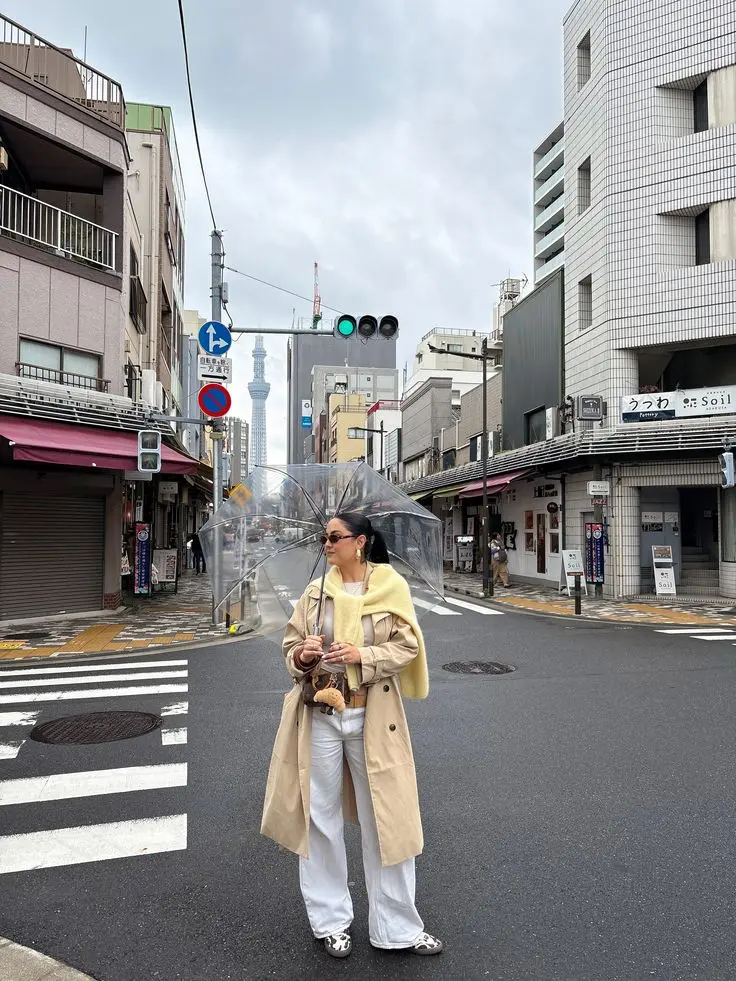
The double-layer strategy — cardigan under the trench — is smarter than it sounds. You can remove the trench when the afternoon warms up and still have a cardigan for the aggressively air-conditioned restaurants and shops. Both layers are light enough to stuff into a tote if you end up carrying them.
The overall silhouette here is polished enough for a more formal day of sightseeing — a tea ceremony, a visit to one of Kyoto’s major shrines, or a meal somewhere that has a dress code. White pants and a trench read intentional without being overdressed, which is a genuinely useful calibration to have in your outfit arsenal.
Polished Casual: What To Wear in Japan in Spring
Grey Pinstripe Blazer, Wide-Leg Cream Pants, and a Yankees Cap for Downtown Cool
The blazer-with-baseball-cap combination sounds contradictory and looks completely right. A grey pinstripe blazer layered over a grey v-neck sweater and white tee creates sophisticated dimension through tonal layering, while cream wide-leg pants hold the neutral palette together. The Yankees cap keeps the sun off your face during outdoor sightseeing and adds a downtown-cool edge that stops the blazer from reading too corporate. According to Vogue’s Japan travel guide, this combination is increasingly popular for spring dressing in Japan, and a chain necklace and grey shoulder bag finish it cleanly.
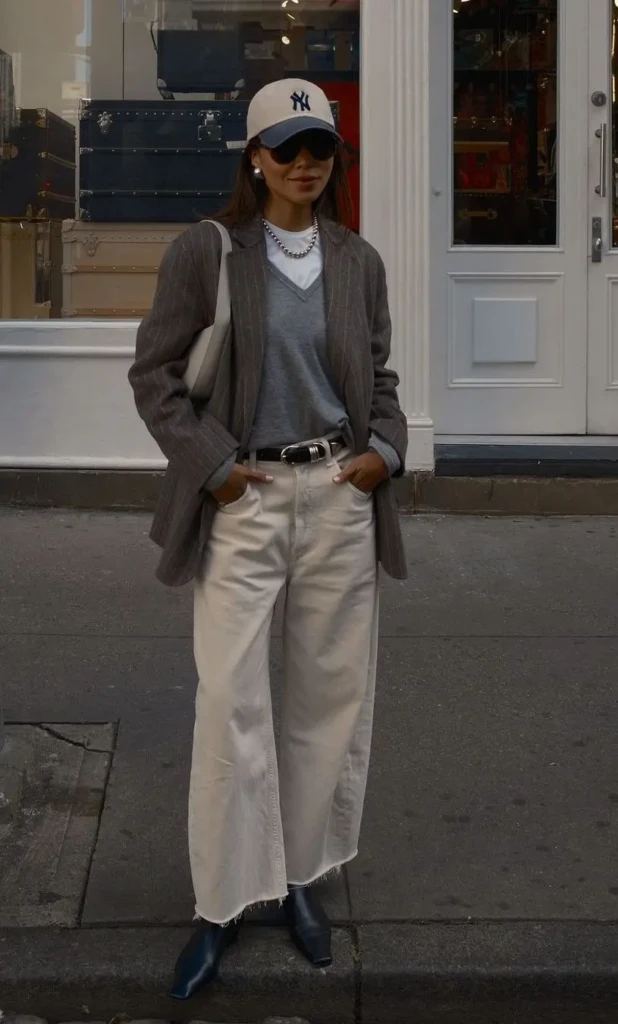
Neutral tones are one of the most practical choices for a Japan trip because they coordinate with literally any background — the red torii gates of Fushimi Inari, the green of Shinjuku Gyoen, the grey concrete of Shibuya. You never have to think about whether your outfit will clash with where you’re standing.
The layering here also provides real flexibility. The v-neck sweater adds warmth in the morning, the blazer handles professional-feeling spaces, and the cap manages outdoor afternoon sun. It’s a lot of functionality for a look that photographs as casually put-together.
Navy Sweater Vest Over a Balloon Sleeve Shirt with a Black Mini Skirt and Burgundy Loafers
This outfit is preppy with a modern edit, and it’s one of those combinations that looks more complicated to put together than it actually is. A navy sweater vest adds structure and warmth without any of the bulk of a full knit, layered over a white shirt with dramatic balloon sleeves that bring real feminine flair — the sleeves photograph beautifully when they catch air in motion. A black mini skirt keeps the proportions youthful and the overall silhouette interesting. Loafers with socks are incredibly comfortable for walking and very on-trend in current Japanese fashion, especially with white socks.
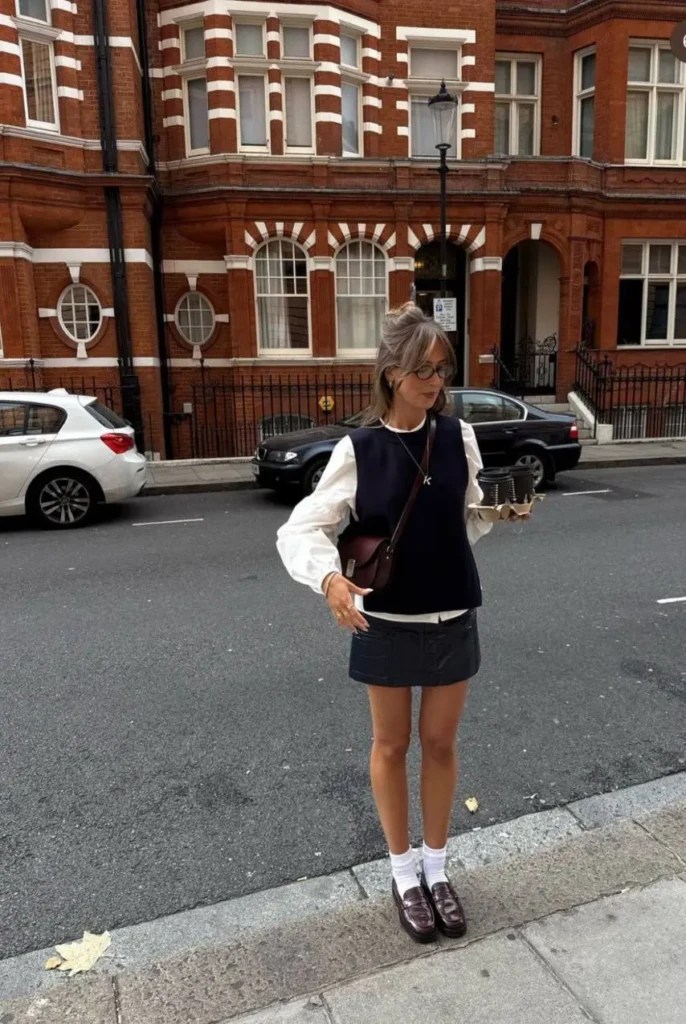
The sweater vest layer is genuinely smart for Japan’s spring — it adds warmth over your core without making you overheat, and it’s easy to pull off and stuff in a bag if the afternoon turns warm. Burgundy is rich enough to feel intentional without demanding a lot of attention, so the shoes feel like a considered choice rather than a statement.
Balloon sleeves can feel fussy for a travel day, but as long as the fabric isn’t too delicate they’re actually practical — they don’t feel restrictive, they add visual interest in photos, and they make a simple white shirt significantly more interesting. This is a great outfit for areas like Daikanyama or Shimokitazawa, where the crowd is stylish and a thoughtful outfit is quietly noticed.
Elevated Options: What To Wear in Japan in Spring
Burgundy Leather Jacket with a White Crop Top, Beige Wide-Leg Pants, and a Plaid Bucket Hat
A rich burgundy leather jacket is the kind of piece that works as a neutral while feeling far more interesting than basic black. Paired with a white crop top and flowing beige wide-leg pants, the outfit hits a sophisticated, wanderlust-ready note that works equally well for an art museum morning or an upscale Ginza afternoon. The plaid bucket hat is doing real work here — it adds a playful, slightly streetwear-adjacent detail and provides genuine sun protection for long outdoor stretches. A designer bag at the finishing layer brings the whole look into elevated territory.
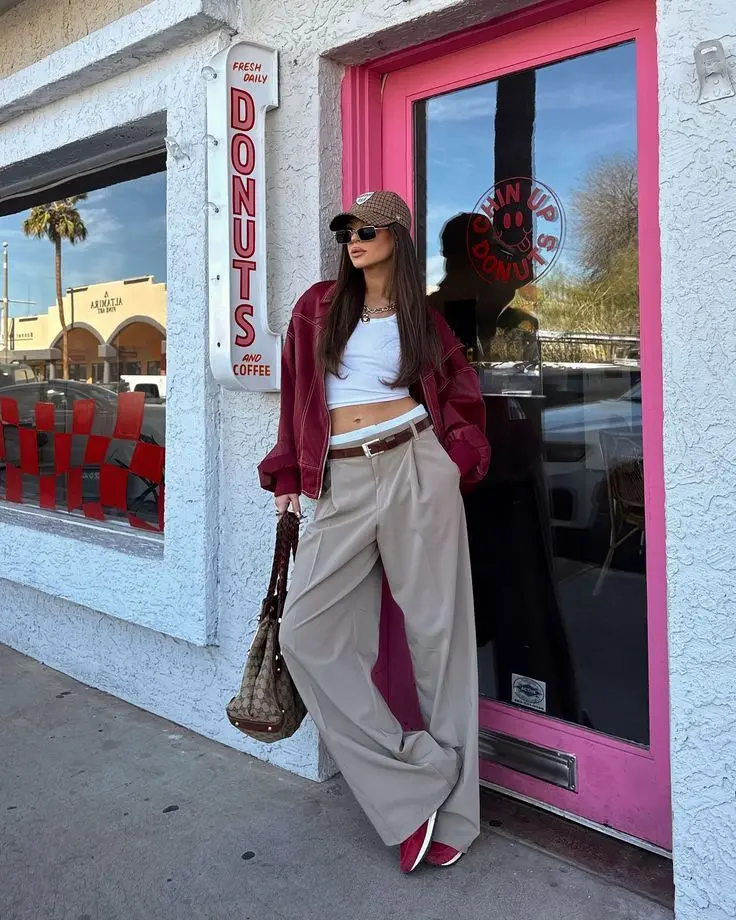
Wide-leg pants are one of the best travel choices you can make. They’re comfortable for long train rides, they look intentionally stylish rather than sloppy, and they pack without the crease issues that straight-leg trousers can develop. The beige tone here keeps the palette warm and cohesive with the burgundy jacket.
Bucket hats have moved well past trend status into genuinely useful accessory territory for a Japan trip, where outdoor sightseeing in spring can involve hours of unshaded walking. Choosing one in a plaid or pattern keeps it from looking purely functional. This outfit handles the transition from daytime sightseeing to dinner without needing a change.
Beige Trench Coat Over a White Tee with Blue Wide-Leg Jeans and Brown Oxfords
This look is relaxed sophistication in the most useful form — the kind of outfit you can wear on a day trip to Nara without overthinking it. A beige trench coat over a simple white tee creates easy layering that adjusts to whatever the day brings temperature-wise, and blue wide-leg jeans add comfortable elegance without any effort. Brown oxford-style shoes bring polish and real support for long walks, and the black shoulder bag with gingham detail adds a small thoughtful touch. Marie Claire’s spring 2026 guide notes that wide-leg jeans in a classic wash are one of the most versatile spring choices for Japan because they’re comfortable, look intentional, and adapt to a wide range of activities.
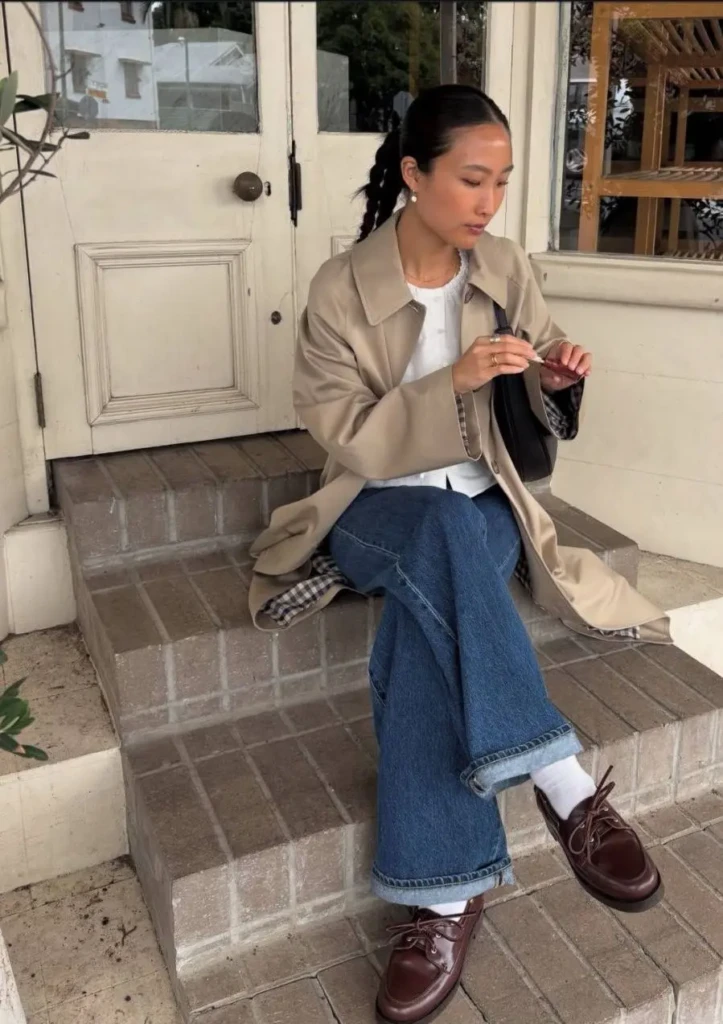
The neutral palette here — beige, white, blue, brown — is a combination that coordinates with every background Japan has to offer and photographs without any unexpected clashes. You can stand in front of a vermillion shrine gate or a cherry blossom canopy and the outfit just works.
Oxfords earn their place here over loafers for the extra ankle support on uneven stone paths, which Kyoto and Nara have in abundance. Make sure they’re broken in before the trip — new leather shoes on cobblestone is a mistake you only make once.
Colorful Choices: What To Wear in Japan in Spring
Vibrant Coral Bomber with White Tee, Tan Jeans, and Red Sneakers for Active Sightseeing Days
This outfit is built for the days with the longest itinerary — Tokyo Skytree in the morning, Ueno Park at midday, a day trip to Mt. Fuji in between. A vibrant coral bomber jacket makes a bold, happy statement and photographs against cherry blossoms in a way that’s almost unfairly good. A white tee and tan jeans keep the base utilitarian and unfussy, while red sneakers coordinate with the jacket without being too matchy — it reads intentional rather than costume-y. The patterned bag adds a final layer of playful detail without cluttering the look.

Coordinating your shoe color to your jacket is one of those small styling decisions that makes an outfit look considered rather than grabbed-off-the-chair. The red-to-coral relationship here has enough tonal difference to feel intentional rather than identical, which is the sweet spot.
A statement jacket in a cheerful spring color is one of the most photogenic packing choices you can make for Japan. It adds personality to simple basics and means you can rewear the white tee and tan jeans as a base with a completely different jacket and create a whole new outfit. Efficient packing and good photos: both wins.
Burgundy Knit Vest Over a White Tee with Navy Wide-Leg Jeans and Black Mary Janes
This is the outfit for mixing a trend piece with absolute classics and having it look more put-together than either would alone. A burgundy knit vest over a white tee layers warmth and visual interest without adding bulk, while navy wide-leg jeans are a step more interesting than basic blue without being harder to style. Black Mary Janes bring the polished-casual balance home and keep the footwear comfortable for a long neighborhood walk. This combination is ideal for exploring Nakameguro or wandering through Kamakura’s temples.
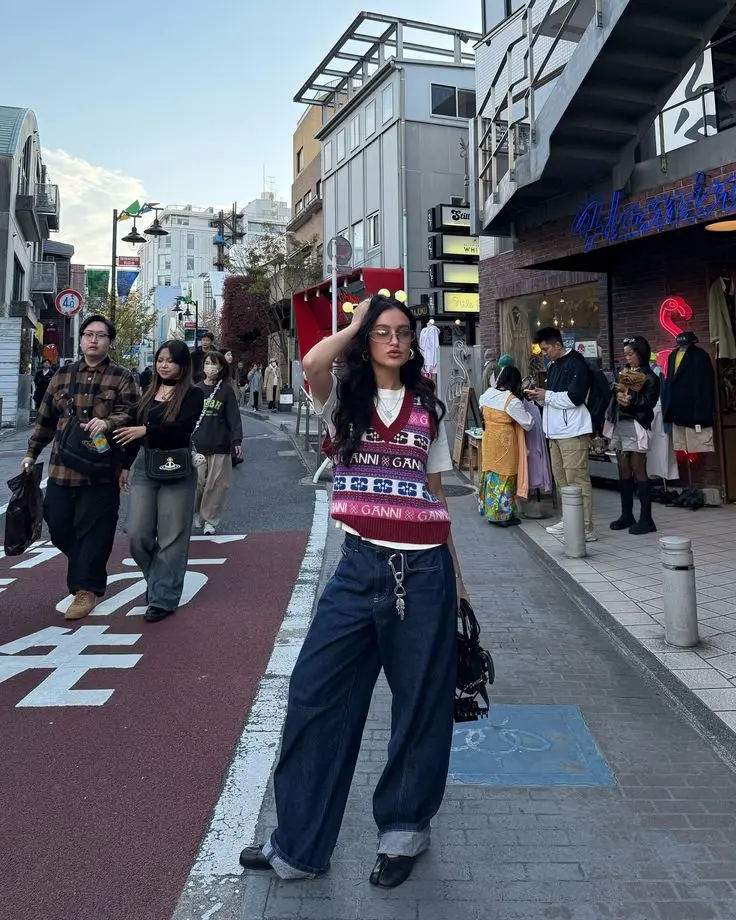
Knit vests are genuinely one of the smarter spring layering pieces because they add warmth over your core without making your arms overheat — useful when the weather can shift between chilly and warm several times in a single day. The burgundy reads rich and photogenic in a way that plain beige or grey doesn’t.
Navy wide-leg jeans are worth owning separately from your standard blue jeans. The deeper color reads more refined, works well with the burgundy and black palette here, and photographs with more depth. The whole outfit can be re-worn in pieces across the trip without looking repetitive.
Neutral Palettes: What To Wear in Japan in Spring
Black Trench Coat with Olive Tailored Pants and Brown Loafers for Versatile Minimalism
Minimalist sophistication is always the right answer when you want an outfit that works everywhere without any advance planning. A black trench coat creates structure and warmth in a way that’s immediately polished, and pairing it with olive tailored pants shifts the neutral palette away from the predictable black-and-grey toward something more considered. Brown loafers are the specific right shoe choice here: they slip on and off quickly — genuinely useful in Japan, where removing shoes at traditional spaces happens frequently — while looking intentional, not casual. A woven crossbody bag adds textural interest without any color competition.
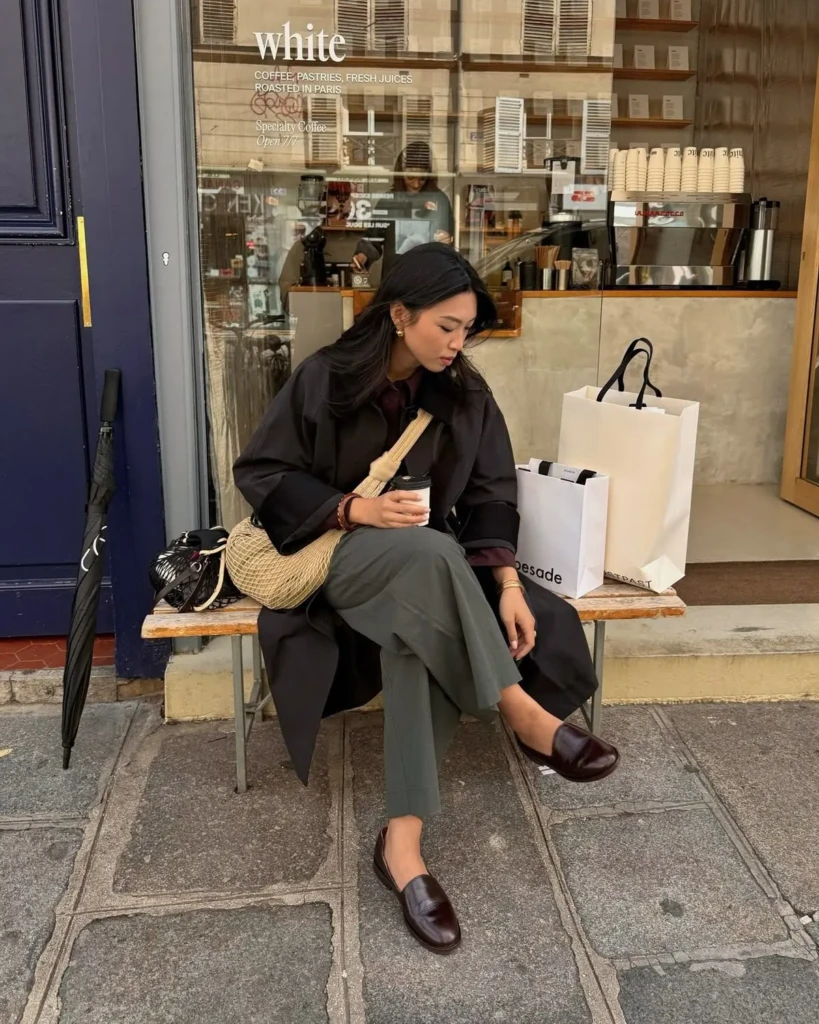
The all-neutral palette is one of the smartest travel choices you can make because every piece coordinates with every other piece. Olive pants with a black trench and brown loafers is a combination that photographs well against both the traditional architecture of Kyoto’s gardens and the urban geometry of Tokyo streets.
This outfit’s real strength is its rewearability. The trench works over a completely different outfit tomorrow; the olive pants pair with a different top the day after. Packing pieces that do multiple jobs is always the goal, and this combination delivers it.
Soft Pink Oversized Shirt with Grey Wide-Leg Pants and White Sneakers for Comfortable Full Days
This is the outfit I’d reach for on the days with the most ground to cover — Philosopher’s Path in Kyoto, a full afternoon at Shinjuku Gyoen, a long train day between cities. A soft pink oversized shirt is genuinely one of the best color choices for spring in Japan: it coordinates with cherry blossoms almost too well, stays breezy when the afternoon warms up, and photographs with a softness that feels like the season. Grey wide-leg pants bring sophisticated ease that reads as intentional even after hours on your feet, and white sneakers are essential — Japan involves significantly more walking than most people expect before they arrive.
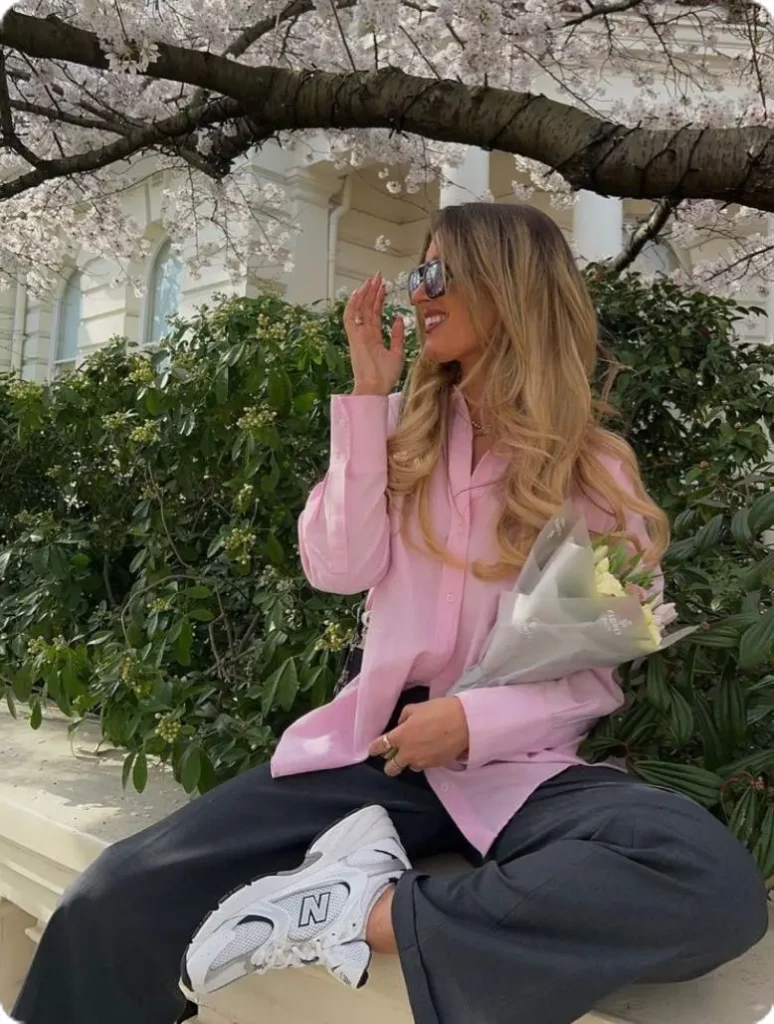
The oversized shirt is doing a lot here. It keeps things comfortable and relaxed, it layers easily over a basic tee if the morning is cool, and it gives the outfit a slightly effortless quality that reads well in candid photos. The pink-to-grey combination is soft without being boring.
White sneakers are the right call for this particular outfit rather than loafers or Mary Janes — the relaxed vibe of the shirt asks for something casual at the foot. Clean, leather-upper sneakers are what make the difference between this looking like a travel day outfit and looking like a comfortable-but-considered one.
Statement Pieces: What To Wear in Japan in Spring
Camel Blazer with a Red Knit Accent, White Tee, and Blue Wide-Leg Jeans for Everything
A camel blazer is one of the most reliable travel investments in a wardrobe — it coordinates with any color, elevates anything underneath it, and handles everything from casual sightseeing to a dinner reservation without breaking a sweat. Here it’s worn over a white tee and classic blue wide-leg jeans, which is a clean, easy base that needs very little thought. The red knit sweater is the genius layer: it adds personality, provides real warmth for cool mornings or air-conditioned train carriages, and creates visual interest in photos against a sakura backdrop without clashing with any of the other colors in the outfit.

The wide-leg jeans balance the structured blazer proportionally — a slimmer silhouette underneath would feel more formal and corporate, while the wider leg keeps the whole look relaxed and travel-appropriate. Blue and camel together have a quietly classic quality that photographs well everywhere.
This outfit adapts remarkably well across different contexts. Walk through a market in the morning, visit a shrine at midday, sit down at a nice dinner in the evening — the blazer handles all of it without requiring a change. Pack one blazer, wear it five different ways: that’s the goal.
Brown Tan Jacket with a Polka Dot Midi Skirt, Loafers, White Socks, and a Yellow Quilted Bag
This outfit brings playful sophistication that’s perfectly calibrated for cherry blossom season. A brown tan jacket creates casual structure without heaviness, and pairing it with a white and black polka dot midi skirt adds feminine charm that feels genuinely spring-like rather than trying too hard. Black loafers with white socks are the specific right combination here — comfortable enough for hours of walking through sakura viewing spots and traditional neighborhoods, and on-trend in exactly the way that Japanese street style has been moving. A yellow quilted bag adds a cheerful accent that lifts the brown-white-black palette without disrupting it.
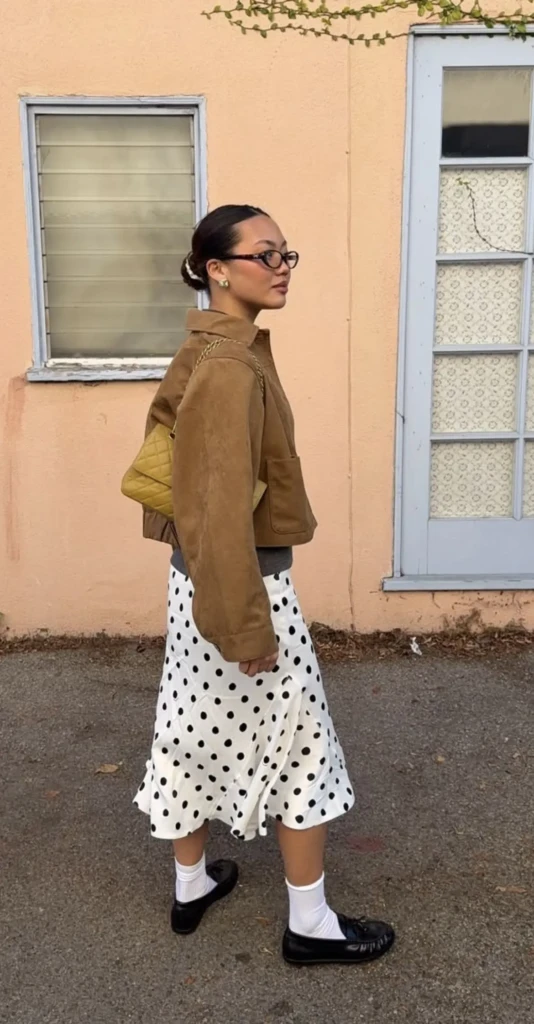
The polka dot midi skirt is one of the more practical patterned skirt choices for travel: the print hides minor stains and the midi length works for shrine visits, garden walks, and outdoor festivals without any adjustment needed. Pattern also disguises the slight wrinkling that comes from being packed, which is a genuine bonus.
Brown and white together create a soft, warm palette that photographs beautifully against both cherry blossom pink and the greens of traditional Japanese gardens. The yellow bag is the detail that makes the whole outfit feel considered rather than assembled — it’s the kind of small color decision that elevates an otherwise simple look into something memorable.
How to Pack for Spring in Japan Without Overpacking
The most useful packing framework for a Japan spring trip is the capsule approach: neutral bases, one or two statement pieces, and layers that do double or triple duty. One leather jacket, one trench coat, two light knits or cardigans, three pairs of bottoms (jeans, wide-leg trousers, and one skirt or dress), and five versatile tops will get you through ten days with room to breathe. Add one or two spring accent pieces — a pink shirt, a coral jacket, a yellow bag — and you have enough variety to create fifteen or more distinct combinations.
Shoes are where most people overpack and then regret it. Two pairs is genuinely enough: one comfortable walking shoe (white leather sneakers or loafers) and one slightly more polished option (Mary Janes, oxfords, or a second pair of loafers). You will remove your shoes frequently at temples and traditional spaces, so anything with complicated buckles or laces becomes genuinely annoying by day three. Broken-in shoes only — Japan’s daily step count will find every blister.
Colors are worth thinking about deliberately before you pack rather than just grabbing your usual wardrobe. Soft pinks, whites, yellows, and neutrals like beige and grey photograph beautifully against cherry blossoms and don’t compete with the visual richness of temple architecture. Overly bright neons or large graphic prints can clash with backgrounds you can’t control. A base of neutrals with one or two spring colors gives you the flexibility to look intentional in every photo.
Fabrics matter more on a trip this active than they do at home. Look for pieces that don’t wrinkle badly in a suitcase, don’t show light dust, and can be spot-cleaned in a hotel sink. Cotton-poly blends, treated linens, and ponte knits are reliable choices. Leave anything dry-clean-only or very delicate at home — you’ll spend the whole trip worrying about it instead of enjoying it.
Your Spring Japan Wardrobe, Sorted
The common thread across all sixteen of these outfits is that they’re built around real trip conditions: temperature swings, long walking days, frequent shoe removal, and the genuine desire to look good in cherry blossom photos. Layers, comfortable shoes, neutral bases with spring color accents — those three principles will serve you better than any single trend piece. Check out spring minimalist outfits for more outfit inspiration and casual spring looks for packing essentials that travel well in a carry-on.
Spring in Japan is one of those experiences that exceeds expectations even when you’ve set them deliberately high. Your outfit should be the least stressful part of the day — something you pulled together with confidence before walking out into the most beautiful season in one of the most stylish countries in the world. Pack smart, wear what you love, and leave room in your bag for everything you’ll buy while you’re there.
FAQ
What should I pack for a spring trip to Japan?
Focus on versatile layers: one leather jacket, one trench coat, two light knits, three pairs of bottoms, and five mix-and-match tops. Keep your color palette neutral with one or two spring accent pieces like soft pink or yellow. Two pairs of broken-in shoes — one casual, one slightly polished — is genuinely enough.
What are the best shoes to wear in Japan in spring?
Comfortable loafers, Mary Janes, and white leather sneakers are the top three choices — you’ll walk 15,000+ steps daily and remove your shoes frequently at temples and traditional spaces. Avoid heels and anything with complicated fastenings. Loafers with white socks are both practical and very much in line with current Japanese street style.
How cold is Japan in spring, and how should I layer?
Early April temperatures typically range from 50–65°F (10–18°C), with cool mornings and warmer afternoons. The most effective approach is a base layer plus a light knit or cardigan, topped with either a leather jacket or a trench coat. Buildings are often aggressively air-conditioned, so keeping a cardigan accessible matters even on warm days.
What colors work best for cherry blossom season photos?
Soft pinks, whites, yellows, and warm neutrals like beige and grey photograph beautifully against sakura backdrops. Pink and white create an almost editorial coordination with the blossoms, while neutral bases give you the flexibility to wear the same pieces across multiple days and settings. Avoid overly bright neons, which can clash with backgrounds you can’t control.
Can I wear shorts in Japan during spring?
It’s better to skip shorts — temperatures are still cool (50–65°F) and shorts aren’t common in Japanese spring fashion. Wide-leg trousers, midi skirts, and maxi dresses are more comfortable, more practical for temple visits, and more in keeping with Japan’s quietly polished casual dress culture.
Do I need a rain jacket for spring in Japan?
Yes — spring in Japan includes rainy spells, particularly in April. A stylish trench coat that doubles as a rain layer is more versatile than a separate packable raincoat, though having a compact poncho tucked in your bag for sudden downpours doesn’t hurt. Many travellers find a trench coat handles 90% of the rain they encounter.
What should I avoid wearing in Japan during cherry blossom season?
Skip overly revealing clothing, athletic wear as streetwear, loud logos, flip-flops, and tank tops worn alone. Japanese casual style has a noticeably polished baseline even in relaxed settings, and dressing slightly more intentionally than your usual tourist mode will feel more comfortable and appropriate across the range of places you’ll visit.
How many outfits should I pack for a week in Japan?
Seven to ten versatile pieces that create ten to fifteen combinations is the sweet spot. Prioritize mix-and-match neutrals with two or three statement pieces rather than packing a completely separate outfit for each day. Japanese culture is accepting of outfit repeating, so quality and versatility matter far more than sheer quantity.
Are wide-leg pants practical for sightseeing in Japan?
Very practical — they’re comfortable for long train rides and full walking days, they look intentionally stylish rather than sloppy, and they pack reasonably well in a suitcase. Choose a fabric with enough weight to drape properly and hold its shape. Wide-leg styles in cream, navy, or grey are some of the most rewearable pieces you can bring.
Have any thoughts?
Share your reaction or leave a quick response — we’d love to hear what you think!
-
 0
0 -
 0
0 -
 0
0 -
 0
0 -
 0
0 -
 0
0