

 Lena
Lena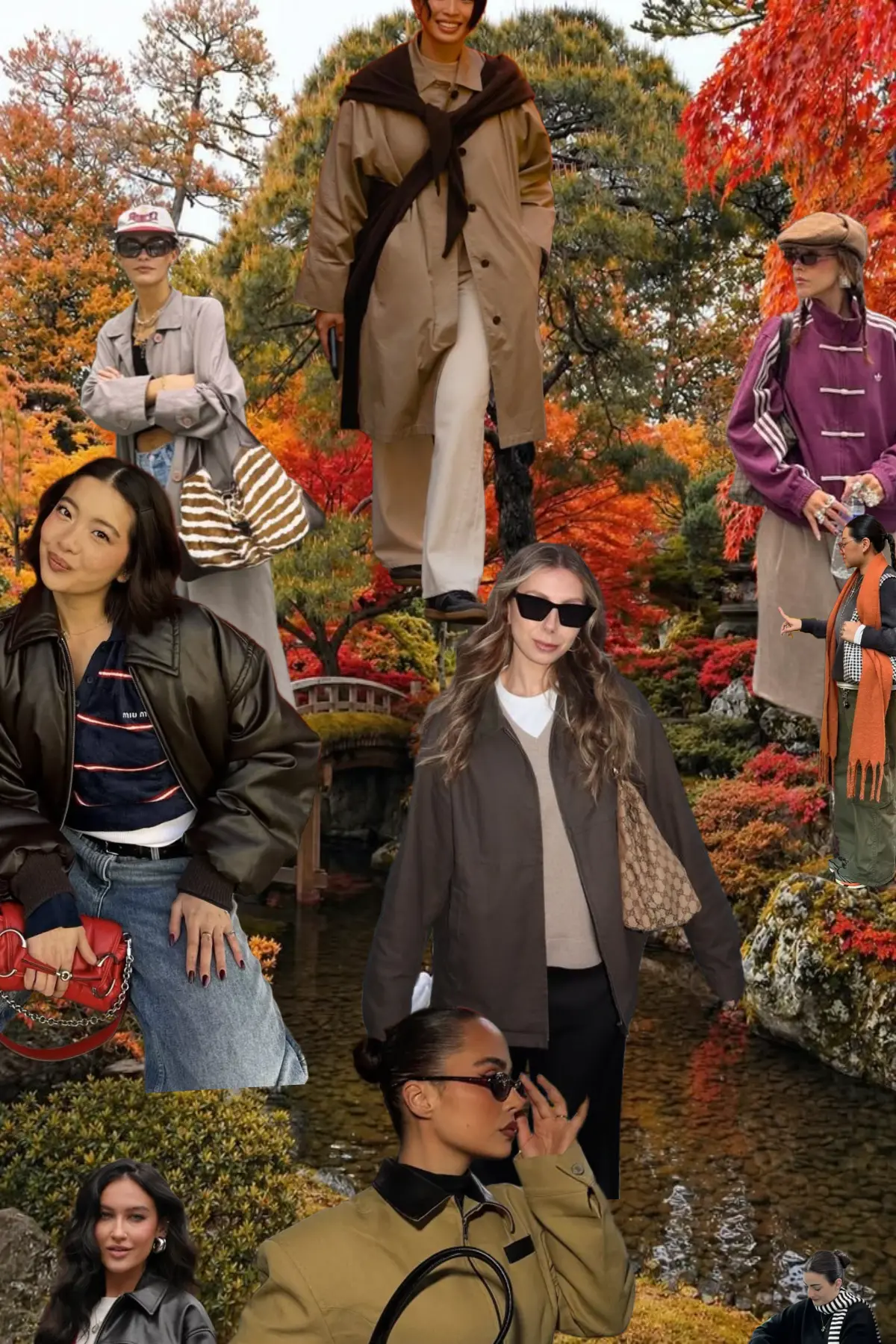
Japan in autumn is one of those trips where the weather genuinely keeps you on your toes. Tokyo in late September can feel almost summery by midday, then drop fifteen degrees by the time you’re hunting for ramen at 9pm. Kyoto in November is a different story entirely — crisp mornings, golden light through the maples, and a chill that makes you grateful for every layer you packed.
The packing challenge is real. You’re moving between train stations, temple courtyards, izakayas, and department store basements, often all in one day. What you wear has to handle shoe removal at shrines, air conditioning that could freeze a polar bear, and sudden rain showers that don’t care about your plans. It’s a lot to ask of one suitcase.
These twenty outfits are built around that reality. Nothing here requires a checked bag or a separate dry-cleaning drop. Every look layers, packs reasonably flat, and works hard across more than one kind of day — because on a Japan trip, your days are never just one thing.
I’ve organized them by occasion and temperature window so you can mix, match, and steal pieces across looks. Pack the coat, pack the boots, pack the one good blazer — and let the rest be mix-and-match building blocks you’ll actually reach for.
This post contains affiliate links. If you buy through these links I may earn a small commission at no extra cost to you.
Images used in this article are sourced from social media for inspiration purposes only. If you are the owner of any image and would like it removed, please contact me at [email protected] and I will take it down promptly.
Burgundy Toggle Coat Over Basics for Mid-October Districts
Toggle coats hit the sweet spot for unpredictable autumn weather — easy to unbuckle when a temple interior gets stuffy, put-together enough for upscale Ginza streets or a kaiseki dinner. The burgundy toggle coat paired with wide-leg trousers is exactly the kind of combination that gets you through a long day moving between neighborhoods without looking like you’re trying too hard. Mid-October, when temperatures sit between 60 and 70°F, is the perfect window for this coat weight — warm enough in the morning, not suffocating by afternoon.
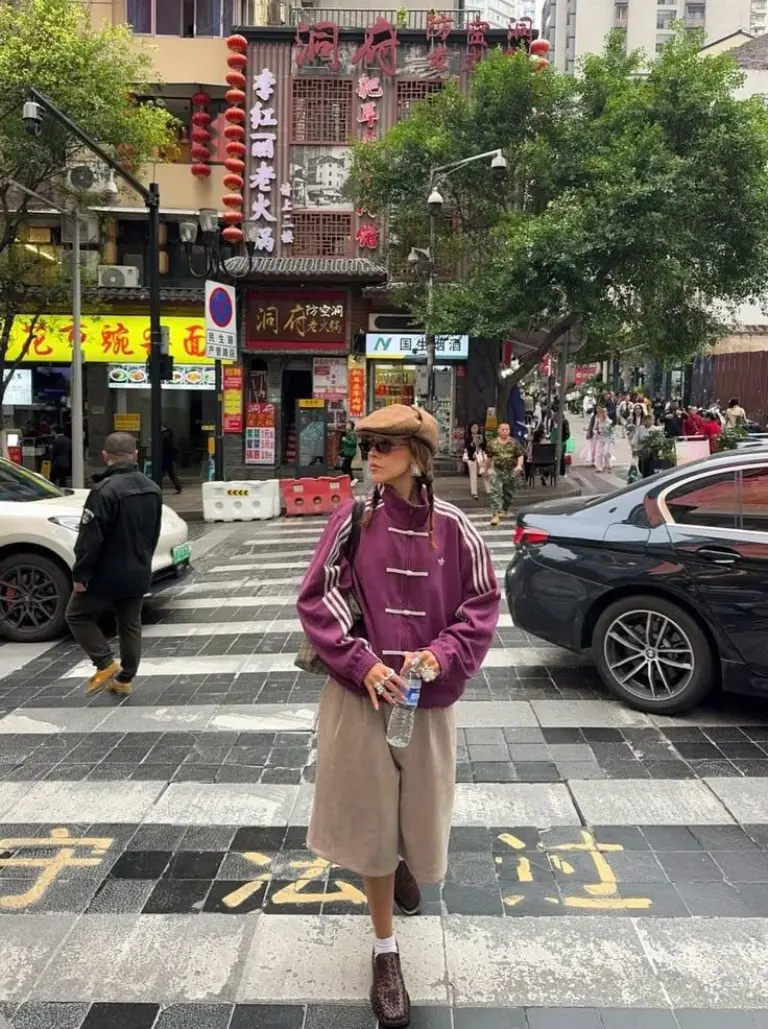
Toggle closures are genuinely more practical than buttons when you’re layering up and down all day — one tug and you’re done, no fumbling at a shrine entrance. The silhouette is relaxed enough to work over a chunky knit but tailored enough that you won’t look sloppy in a nicer restaurant.
Burgundy is one of those autumn colors that plays beautifully against Japan’s foliage — maple leaves, red torii gates, the warm tones of wooden temples. Avoid dry-clean-only fabrics here; a wool-blend that you can spot-clean and hang-dry is your best friend on a two-week trip.
Oversized Blazer and Relaxed Jeans for Trendy Neighborhood Days
There’s a specific kind of effortlessness that Tokyo locals have nailed, and an oversized blazer over relaxed jeans comes closer to it than almost any other combination a tourist can pull off. This oversized beige blazer over easy denim reads as intentional without looking like you planned it for an hour, which is exactly the energy you want in Shimokitazawa or Daikanyama. The zebra-print tote adds personality and keeps things from sliding into boring, while being genuinely practical for a full day of wandering — late September, when it’s still warm enough for lighter layers, is the sweet spot.
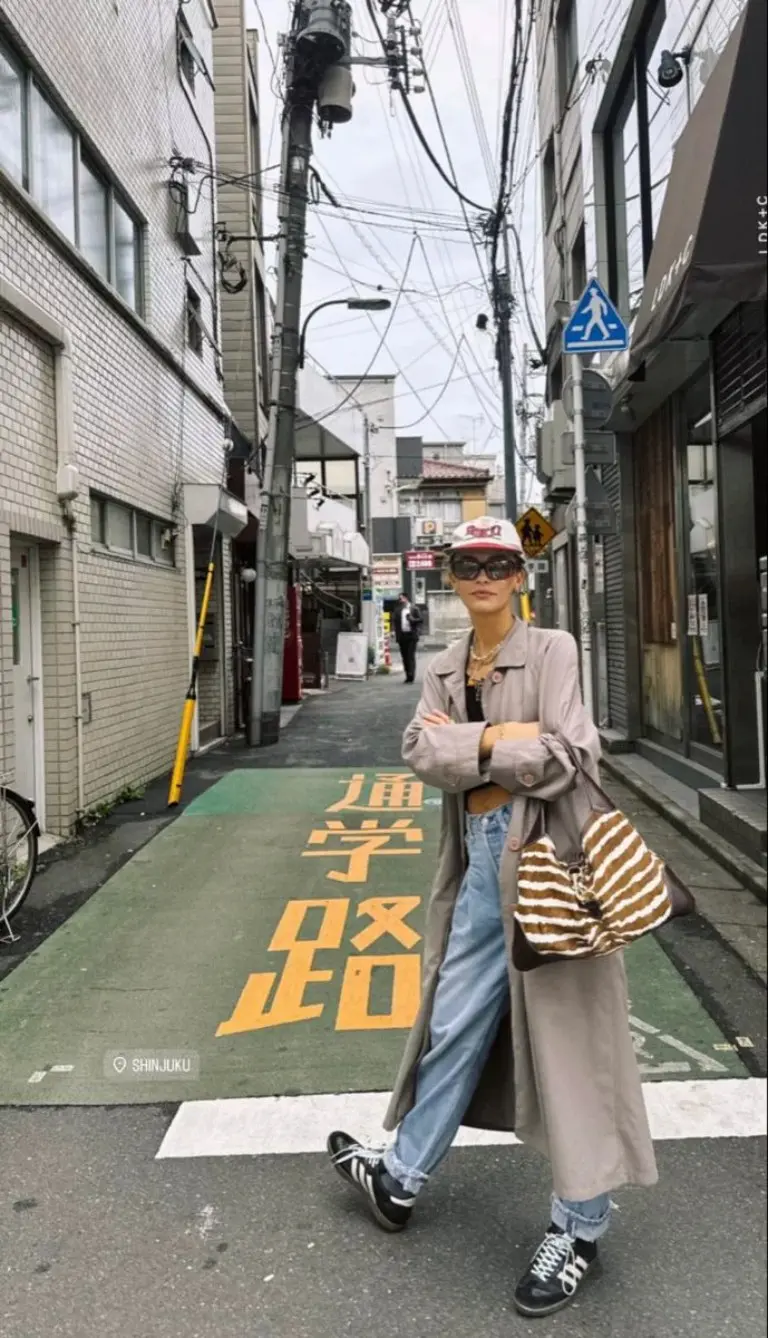
An oversized blazer flatters most body types because the structure does the work — it gives shape without clinging, and the relaxed jeans balance the volume up top. If you run warm, this works without anything underneath; if you run cold, a thin turtleneck tucked in gives you an extra layer.
Look for a blazer in a stable fabric like a ponte or a textured crepe — something that won’t wrinkle catastrophically in a train seat for two hours. Avoid linen for this one; it looks great for about forty minutes and then turns into a paper bag.
Polka Dot Wide-Leg Trousers and Warm Top for Shrine Visits
Wide-leg polka dot pants are one of the most underrated travel pieces for Japan specifically — they cover your legs respectfully for temple and shrine visits, move freely when you’re climbing stone steps or sitting cross-legged on a tatami, and look deliberately stylish rather than accidentally modest. The black bomber jacket layered on top handles early November temperatures when you need warmth but will absolutely need to shed something the moment you step inside. This outfit works especially well at cultural sites where conservative dressing is genuinely appreciated, not just tolerated.
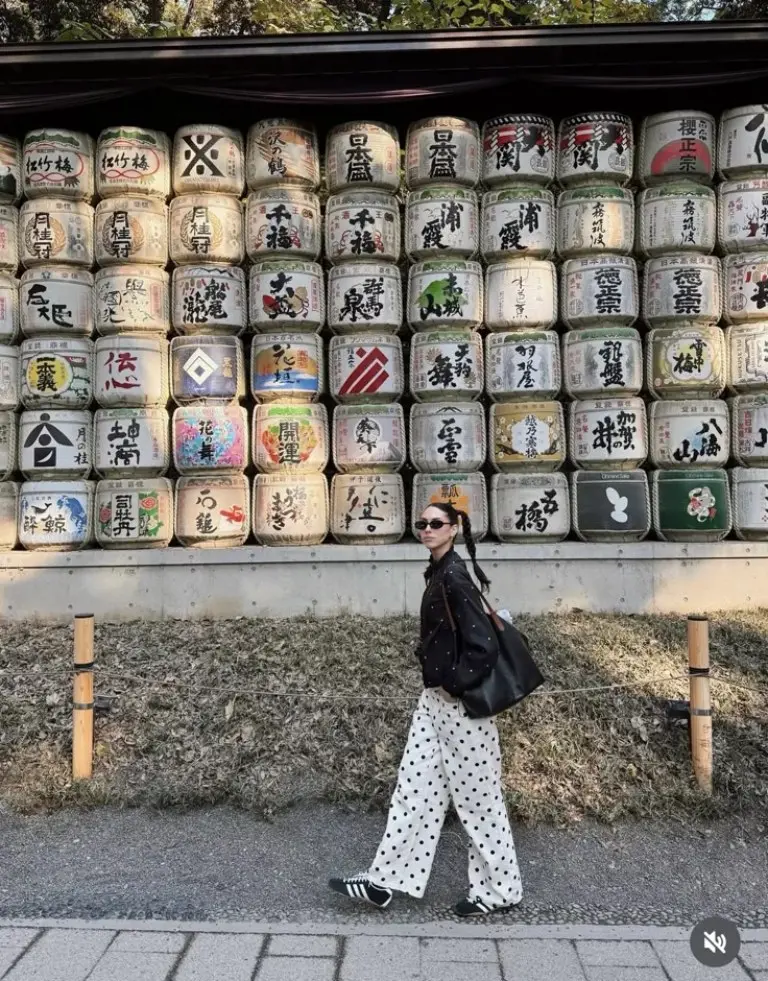
Wide-leg silhouettes suit most figures well because the volume is balanced — nothing is tight, nothing pulls, and you can walk for eight hours without the waistband making you regret your choices. A polka dot print adds visual interest without competing with the architecture behind you in photos.
Look for a fabric with some weight to it — a crepe or a heavy cotton blends movement with structure. Avoid anything too flowy in a true wide leg; it reads as pyjamas once the wind picks up near an open temple courtyard.
Knit Base Layer Under Puffer Jacket for Mountain Excursions
Mountain day trips are a different weather proposition entirely, and this outfit takes them seriously. A beige hoodie under a lightweight jacket gives you genuine layering options for places like the Mount Fuji area in October, where the morning can genuinely be 45°F and the afternoon climbs to 65°F — that twenty-degree swing will punish anyone who packed only one layer. The wide-leg sweatpants carry you through the long travel days that bookend these excursions, comfortable enough for hours on a highway bus but presentable enough for a mountain town restaurant.
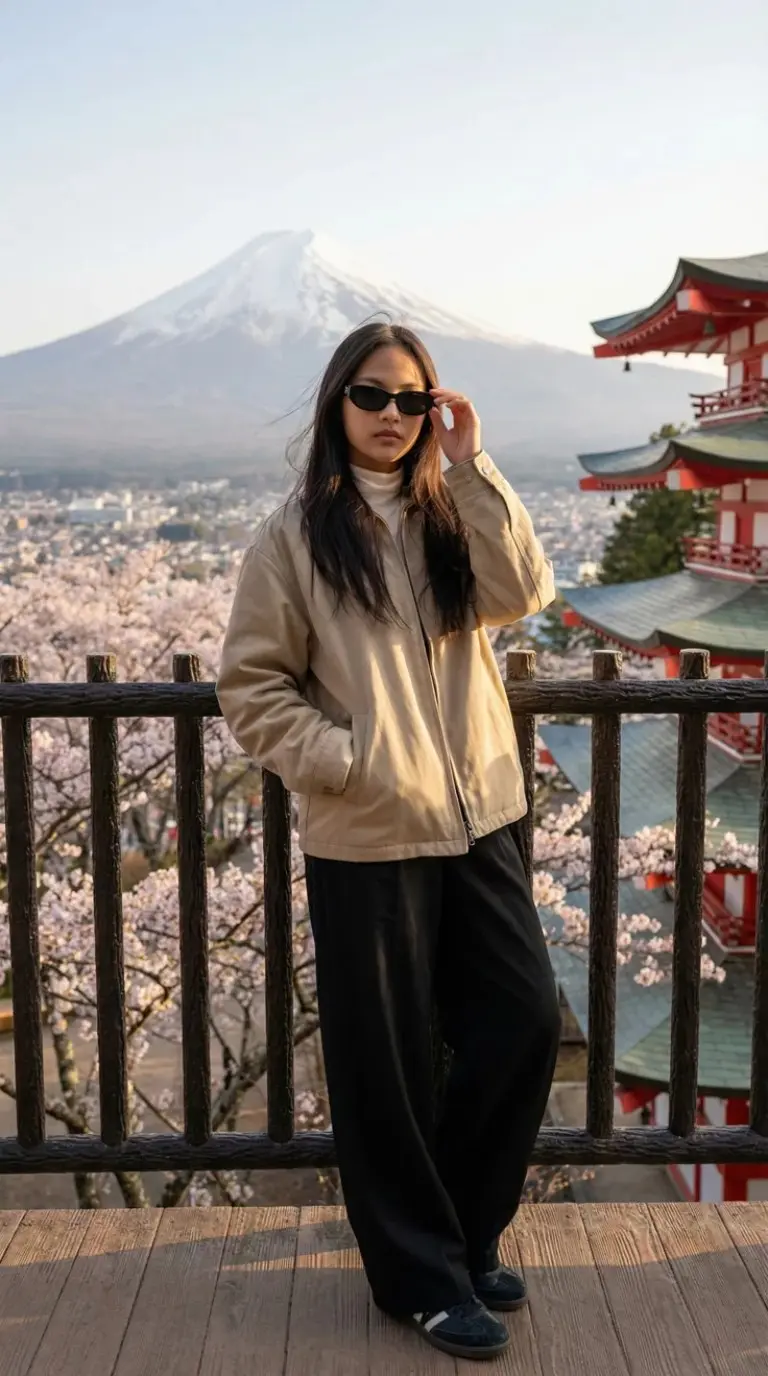
A knit base layer is the workhorse of this system — it traps heat without adding bulk, and a fine-gauge merino won’t make you look like you’re wearing a sleeping bag. The puffer goes over the top and can be packed into its own pocket if the afternoon turns warm.
For footwear on mountain excursions, prioritize grip and weatherproofing over style. The paths around scenic viewpoints can be wet and uneven, and a clean white sneaker will be brown by the second photo stop.
Quilted Vest Over Long Sleeve Tee for Bookshop Wandering
The quieter cultural districts — the ones with independent bookshops, small galleries, and tea houses tucked between residential streets — deserve a different energy than the busy tourist circuits, and this look matches it. A quilted vest over a cream midi dress is warm enough for mid-October mornings without being so heavy that you’re overheating by the time you’ve browsed three floors of imported books. The white sneakers are non-negotiable for those cobblestone temple areas; you’re covering ground all day, and your feet will remind you if you made the wrong call.
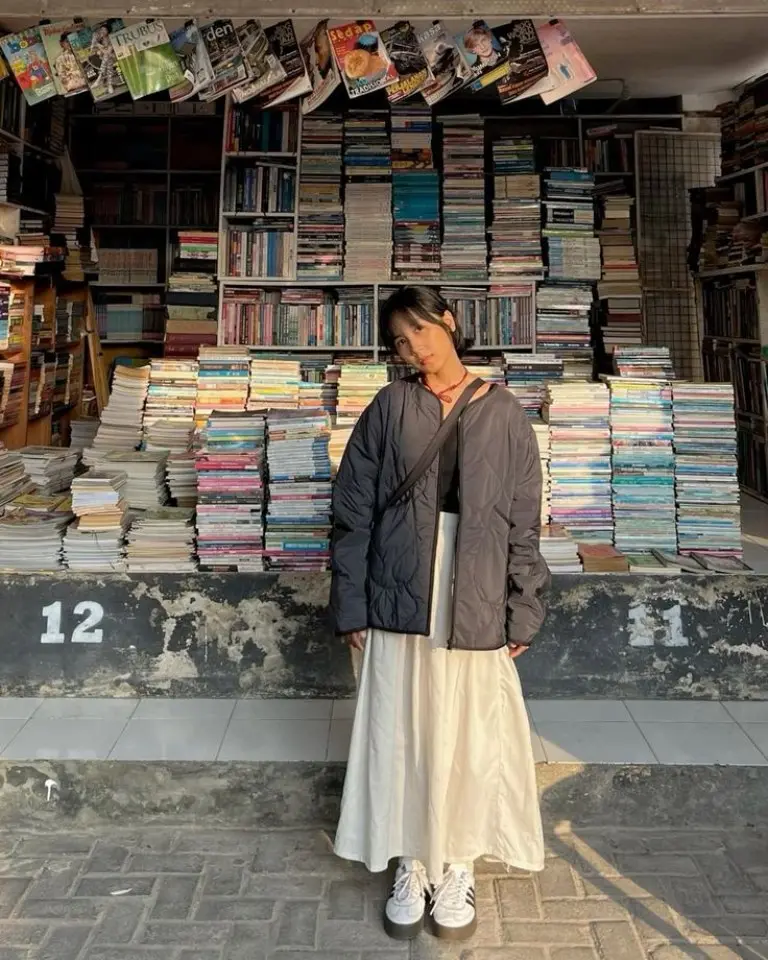
A quilted vest is a genuinely smart packing choice because it adds serious warmth to the core without restricting arm movement, and it compresses down to almost nothing in a bag. Shed it by midday and tie it around your waist or stuff it in your daypack — it earns its weight in your suitcase.
This silhouette works especially well on smaller frames because the vest adds visual interest at the torso without adding bulk to the shoulders. On taller figures, try a slightly cropped vest to keep proportions balanced.
Grey Monochrome Coat and Trousers for Formal Cultural Sites
Some cultural sites in Japan demand a certain polish — the kind of places where showing up in activewear feels genuinely disrespectful, even if no one says anything. A grey wool cape with matching bucket hat creates an elegant, considered silhouette that photographs beautifully against traditional architecture and signals that you took the visit seriously. The coordinating wide-leg trousers keep you comfortable through long temple visits where there’s a lot of standing, slow walking, and standing again — November, when you need substantial warmth, is the ideal season for this level of layering.
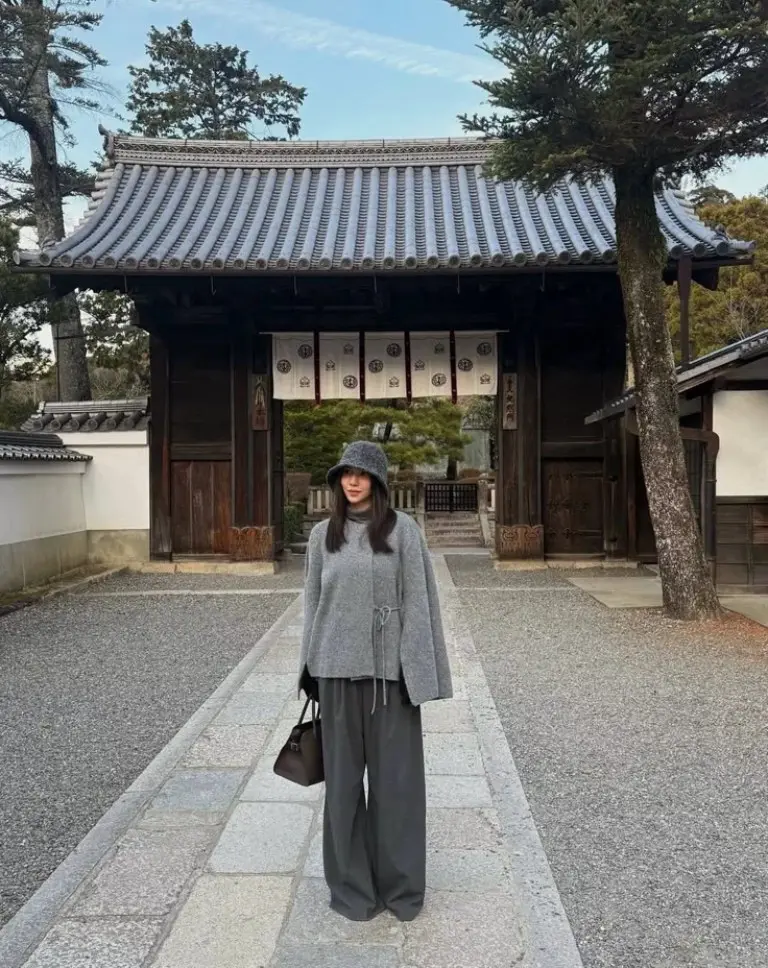
Monochrome dressing has a quiet authority that works especially well in spaces where the architecture is doing all the talking. Grey specifically is flattering on a wide range of skin tones and doesn’t compete with the warm ochres and reds of traditional Japanese buildings the way black can.
Look for a matching set in a medium-weight wool blend — it drapes well, holds its shape after hours of wear, and the coordinated pieces mean you can swap the coat for a lighter jacket on warmer days without the trousers looking orphaned.
Cardigan and Easy Pants for Long Train Commute Days
The train system is genuinely magnificent and also genuinely relentless — you will spend more time sitting in transit than you expect, and what you wear for those hours matters. This black sweater vest over white shirt stays comfortable through the kind of long transit days where you’re on five different trains and the temperature swings between freezing air conditioning and stuffy platforms. The cream wide-leg pants are the right call for this; busy stations have a way of finding every light-colored surface, and you don’t want to spend the day worrying about it. September is the trickiest month for this — the air conditioning on Shinkansen cars is arctic.
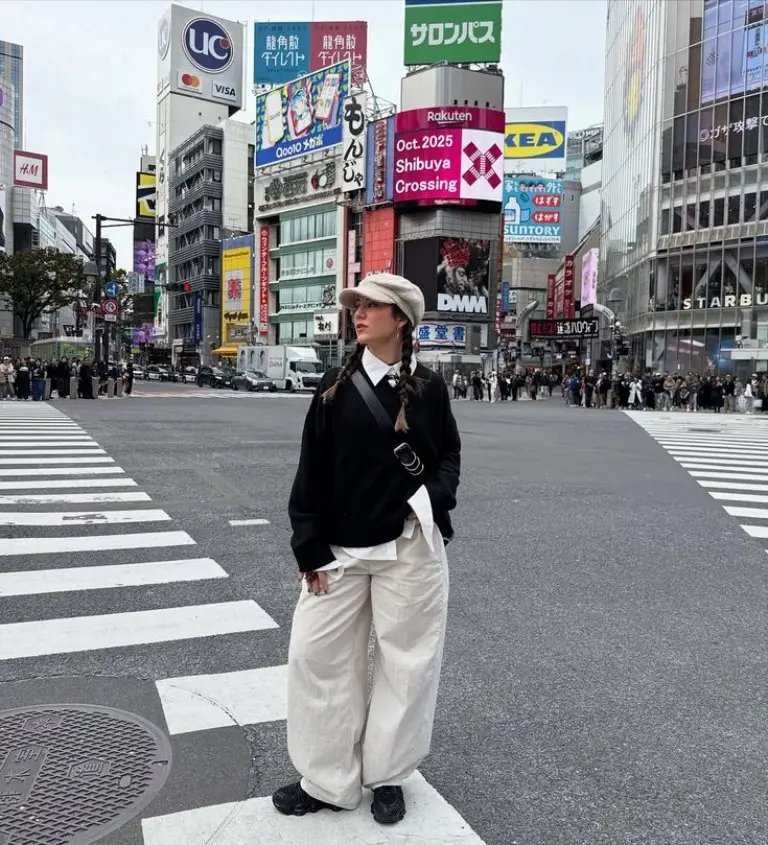
The key to comfort on long train journeys is avoiding anything that digs in when you’re seated for two hours straight — no stiff waistbands, no structured jackets that force you to sit rigid. A soft cardigan you can pull around yourself like a blanket when the carriage gets cold is worth its weight.
Darker, mid-tone colors hide the inevitable transit grime and still read as put-together when you emerge at your destination. A cardigan in a substantial knit also doubles as a pillow cover in a pinch, which sounds ridiculous until it’s a three-hour overnight bus.
Jacket Over Jeans With Practical Footwear for Crowded Shopping Areas
Popular shopping districts like Harajuku’s Takeshita Street or Osaka’s Shinsaibashi require a very specific kind of outfit — something you don’t mind being jostled in, with pockets you can actually use, and footwear that won’t destroy your feet after five hours on hard floors. This black oversized cardigan over navy midi skirt handles the crowd and the temperature swings that come with spending a full day moving in and out of air-conditioned stores in October. The black oxford shoes handle the walking without looking like you came from a gym class — that balance matters when you’re in one of the most fashion-conscious shopping environments on earth.
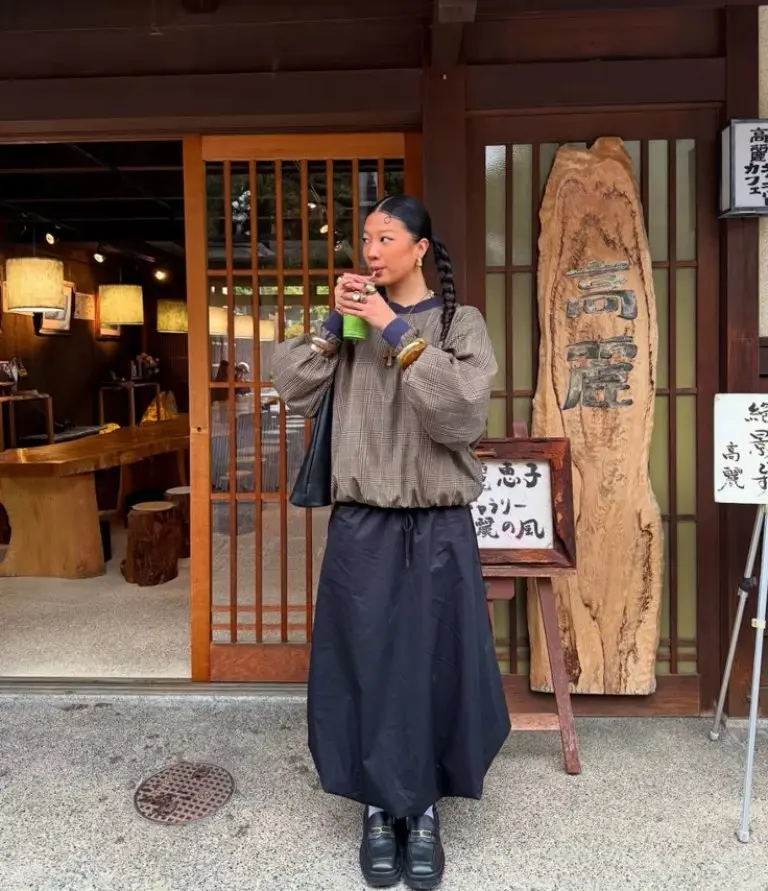
October in the shopping districts hovers around 65°F, which is genuinely comfortable for most people but turns cold fast once the sun drops — having a jacket you can pull on quickly without breaking stride is more useful than it sounds.
Pockets are underrated as a travel requirement. Anything you’d normally reach for — phone, transit card, lip balm, folded map — should be accessible without opening a bag, especially in tight crowds where a bag swing can knock over a display.
Silk Blouse and Slim Trousers for Traditional Tea House Visits
Tea house visits and formal cultural experiences call for a level of care in dressing that rewards the effort — you’ll feel more present and more respectful in clothes that match the occasion. This brown plaid skirt with black denim jacket balances genuine style with the kind of modesty that traditional settings appreciate, without tipping into costume territory. The black sneakers are the practical anchor of this whole look; any cultural site where you’ll remove shoes frequently requires footwear that comes off and goes back on in about four seconds flat. Late October is ideal for this layering weight.
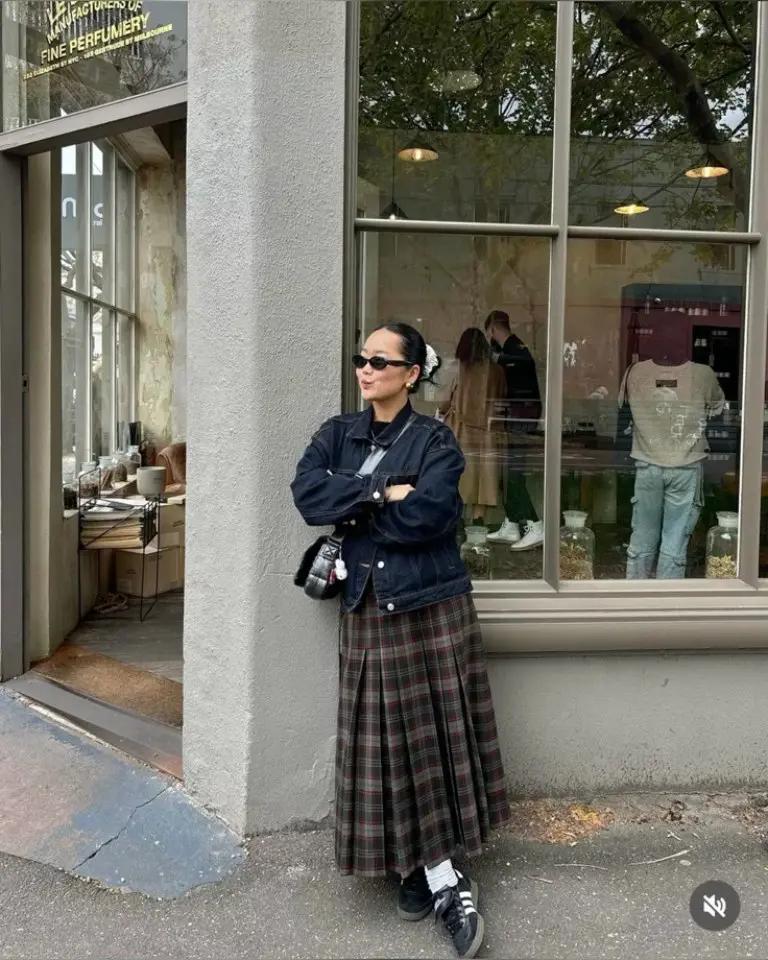
Slim trousers work well at traditional cultural sites because they move quietly — no swishing wide legs, no fabric catching on low doorframes. They also tuck neatly into whatever footwear you’re rotating through without creating a bulk situation.
A silk or silk-blend blouse photographs with a beautiful luminosity and feels elevated without being overdressed. Look for one with a modest neckline so you’re not reaching for a scarf every time you enter a shrine — convenience matters when you’re doing this six times in a day.
All-Black Turtleneck and Wide-Leg Trousers for No-Think Exploration Days
Some days you wake up in a hotel room, look at your suitcase, and just need to not think about what you’re wearing. That’s what this is for. The all-black ensemble — black bomber jacket and midi skirt — is your reliable, pull-on-and-go look for long exploration days in busy shopping districts and food markets, where you’re making ten decisions an hour about where to eat and what to buy and you can’t spare mental energy for outfit anxiety. The strappy sandals work well in early autumn when it’s still mild enough that you won’t overheat; late September in particular is this look’s sweet spot.
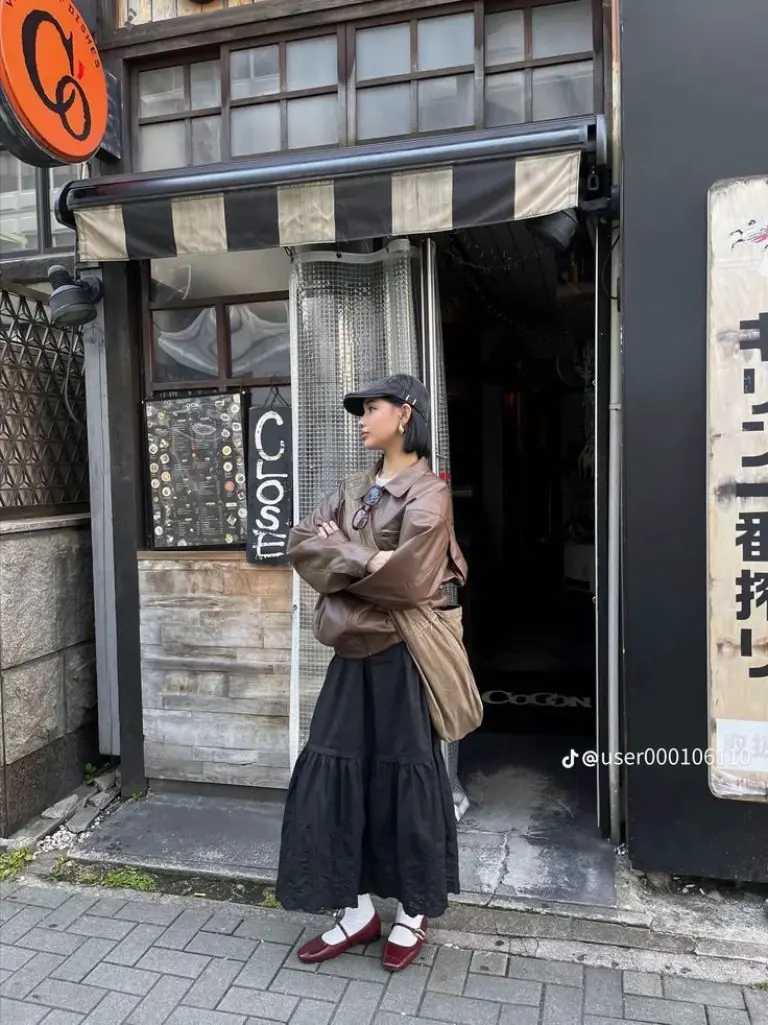
All-black dressing has a particular advantage in Japan — it reads as intentional and even slightly fashion-forward rather than boring, because monochrome is genuinely popular with local style. You’ll blend in more than you’d expect, which is its own kind of comfort.
A turtleneck does a lot of work for the warmth-to-bulk ratio — it covers your neck and keeps you significantly warmer without adding a scarf to manage. In the food markets especially, fewer dangling accessories is just safer around open grills and soup stalls.
Leather Jacket Over Midi Dress for Historic Neighborhood Wandering
Historic neighborhoods like Yanaka in Tokyo or Gion in Kyoto have a specific visual character that rewards dressing with a little consideration — the preserved wooden storefronts and narrow stone lanes look extraordinary in photos, and what you’re wearing in those photos will matter to you later. This brown leather jacket over a black midi dress strikes the right balance between personal style and the slightly elevated vibe these neighborhoods carry. The brown loafers handle cobblestones and uneven stone paths without the ankle-rolling anxiety of heels while still looking deliberately polished. November’s 50-60°F range is exactly what a leather jacket is made for.
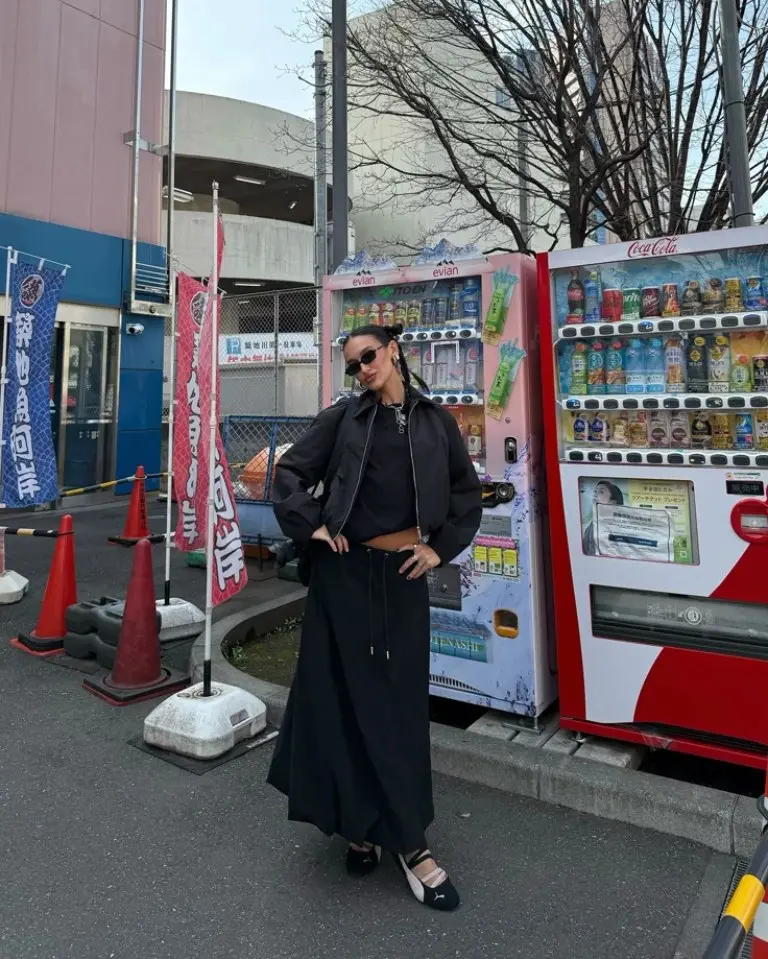
Leather jackets are one of the most efficient packing pieces for autumn Japan because they add warmth, wind resistance, and a finished look without taking up much real estate in a suitcase. A classic black moto or a caramel-toned biker both work here; avoid anything too structured or boxy.
A midi dress under a leather jacket is one of those combinations that photographs well from almost every angle — the length adds elegance, the jacket adds edge, and the proportions tend to work across a range of heights and builds.
Chunky Knit Sweater Under Longline Coat for Scenic Mountain Trains
Scenic mountain train routes — the Hakone Tozan, the Sagano Romantic Train through the bamboo — are worth every minute of the journey, but those morning departures can be genuinely cold. A striped turtleneck under a long black coat provides real warmth without the puffiness that makes seated hours uncomfortable, which matters when you’re on a train for most of the excursion. The bright sneakers add a fun pop of color that works brilliantly for the kind of photographs you’ll be taking — October mountain scenery with a burst of color in the foreground is a classic for a reason.
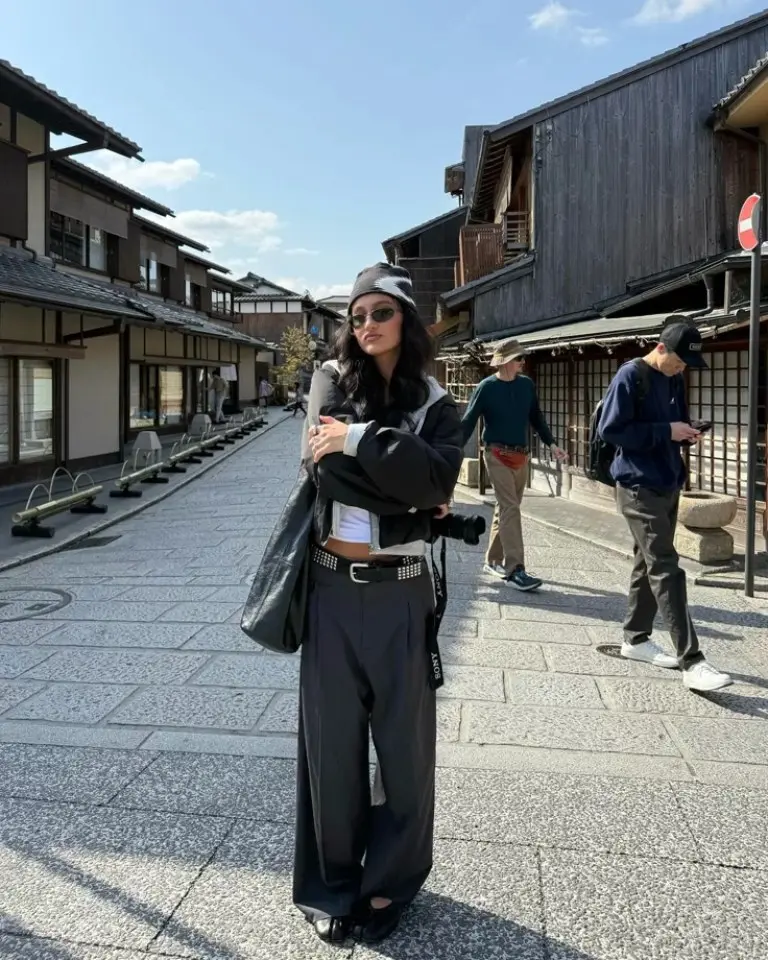
A chunky knit has a tactile warmth that thinner layers can’t replicate, and it photographs with a lovely texture against mountain backgrounds. Choose one in a neutral base — oatmeal, cream, charcoal — so it reads as versatile across the rest of the trip.
A longline coat over a bulky knit works best when the coat has clean, simple lines — avoid lots of hardware, belts, or fussy detailing, which can make the layered silhouette feel chaotic. Let the knit do the texture work and the coat do the structure.
Colorful Scarf Over Neutral Outfit for Street Food Market Exploration
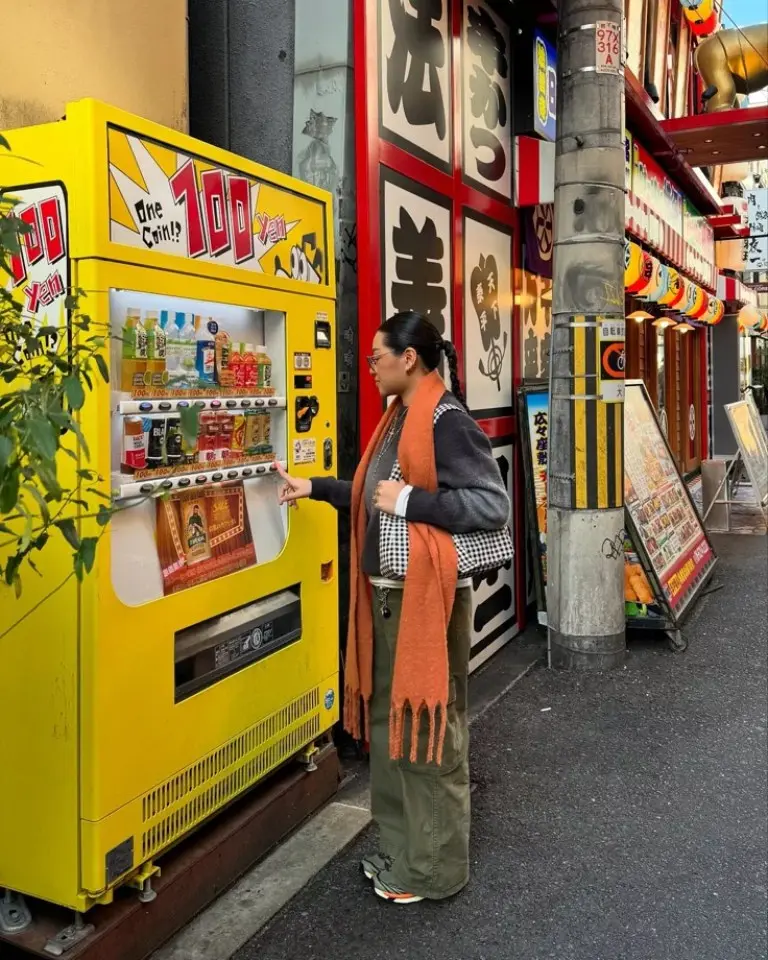
Street food markets are full-sensory experiences and they are also, frankly, a bit smoky — if you’ve ever stood near a yakitori grill for forty minutes, you know that your clothes will carry the memory of it. This bright orange scarf over neutral tones is the smart move here: the scarf protects against cooking smoke and adds a pop of color for photos, and it’s infinitely easier to deal with the scarf than an entire jacket. The olive utility pants with white sneakers are the right base for hours of standing and walking on uneven market floors, and the neutral tones mean the whole outfit washes without ceremony. September through October is peak outdoor market season.
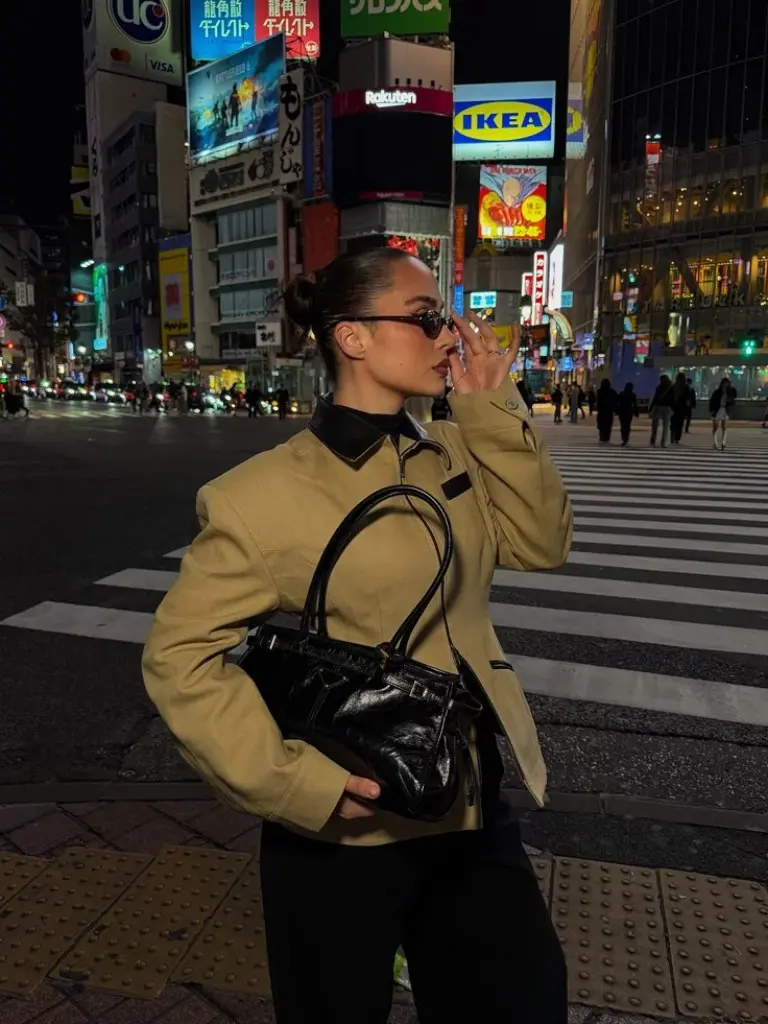
A colorful scarf is one of the single best packing decisions you can make for Japan — it’s lightweight, adds warmth around the neck when temperatures drop, and can double as a wrap or a bag liner. Pick a color that works with most of what you’ve packed rather than one showstopper that only goes with one thing.
Quick-dry, washable fabrics are essential for food market days. Anything requiring special care will just stress you out; cotton blends and synthetic-cotton mixes come back clean after a cold-water rinse and dry overnight in most hotel rooms.
Dark Coat Over Layers and Leggings for Late-Season Foliage Photography
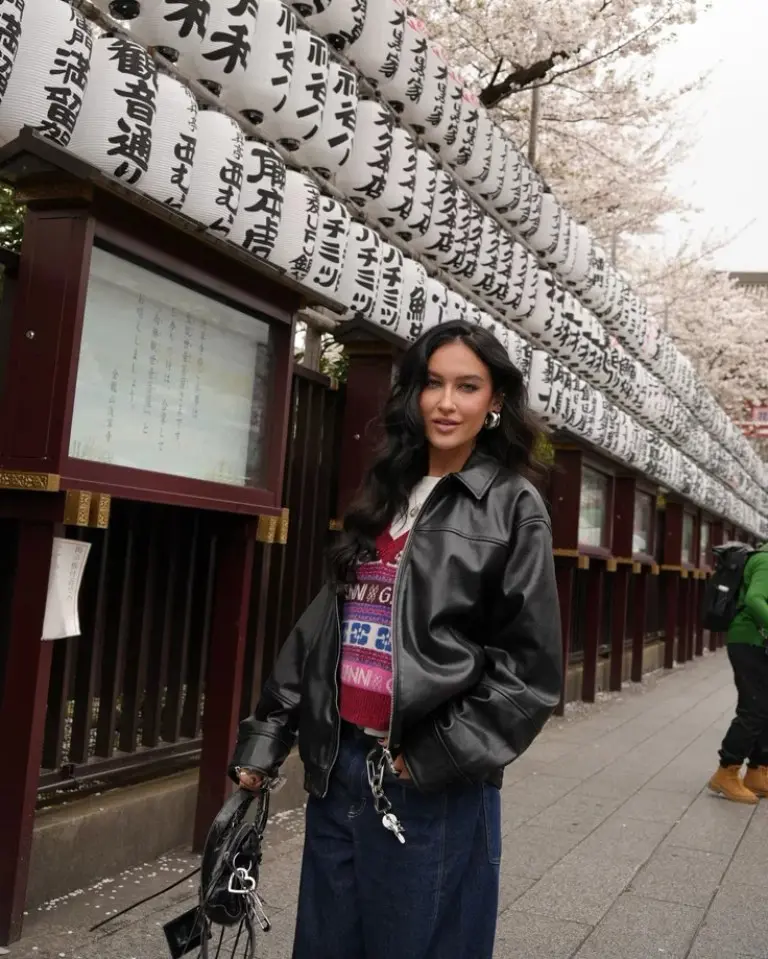
Late-season foliage photography requires patience, early mornings, and layers you can stand in for an hour without complaining. This black leather jacket over striped sweater and denim skirt creates a strong, dark silhouette that contrasts beautifully against pink or golden foliage — whether you’re catching a surprise late-blooming cherry variety or the full maple display, the outfit won’t compete with what’s behind you. The black tote earns its space in this outfit; camera gear and snacks for a long golden-hour session add up quickly, and a proper bag distributes the weight without destroying your posture. November mornings when some varieties still bloom call for this level of warmth.
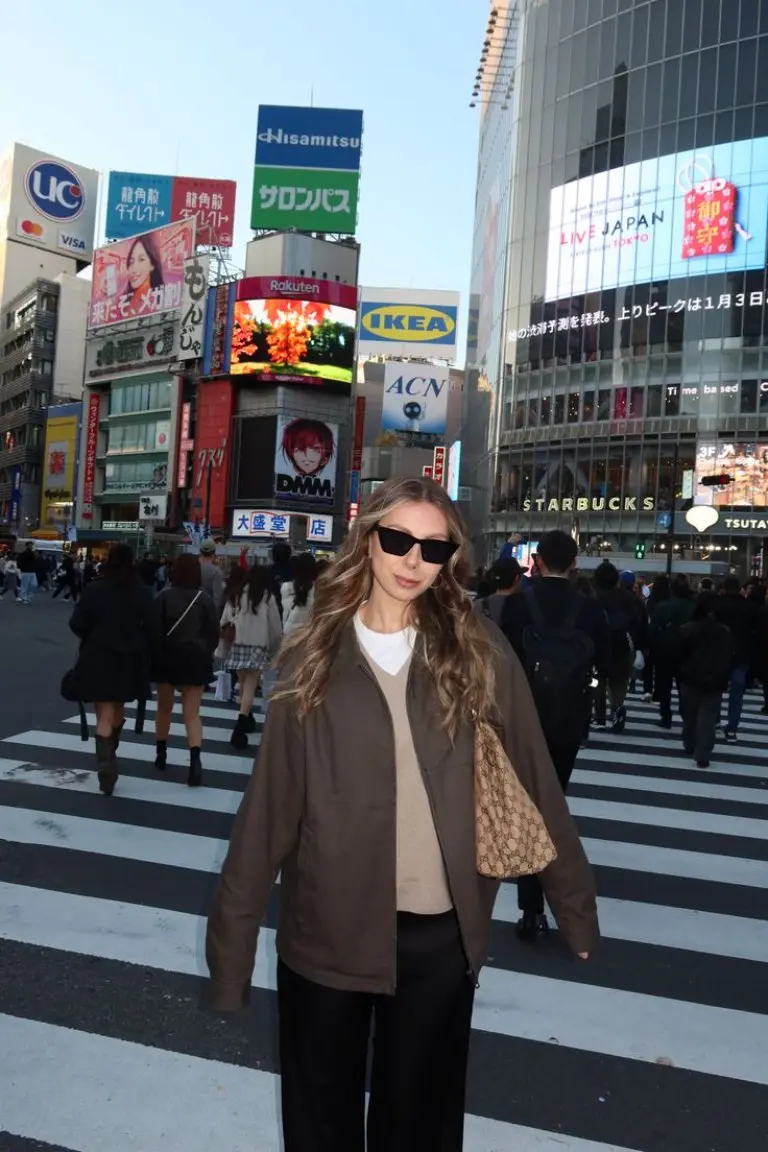
For serious photography sessions, consider what you’re wearing from the perspective of the photo, not just comfort — a coat with a strong, simple silhouette reads better in images than a busy layered look. Dark neutrals let the foliage be the star.
Leggings under a longer coat add significant warmth without visible bulk, which is exactly what you need for standing still in a cold garden at 6am waiting for the light. Layer thermal leggings under regular ones for genuinely cold November mornings.
Bomber Jacket Over Dress and Tights for Museum Days
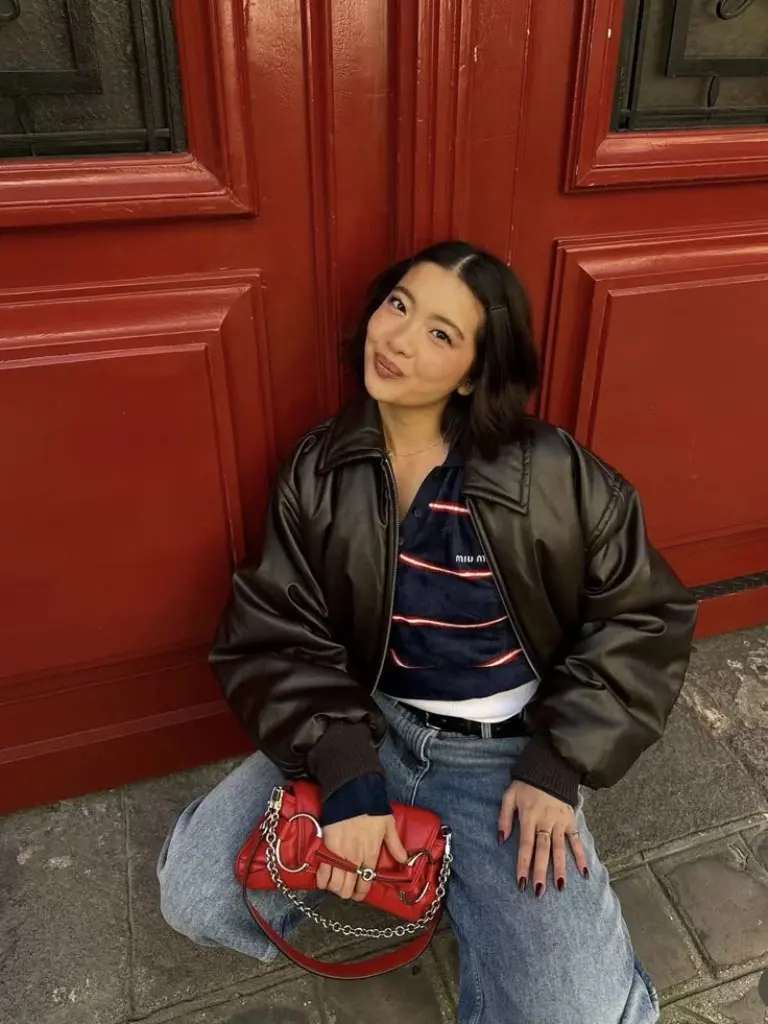
Museums and cultural centers in Japan are a particular pleasure — they’re quiet, beautifully curated, and often climate-controlled to a temperature that requires at least one layer. This red bomber jacket over navy striped tee and straight-leg jeans works perfectly for days spent mostly indoors, where you want to look intentional without overdressing. The matching red bag keeps your essentials accessible without the bulk of a large bag — museum security checks go faster, and you’re not juggling a tote through every exhibit room. October is the right month for this weight; the bomber ties around your waist easily when you step between venues in the afternoon sun.
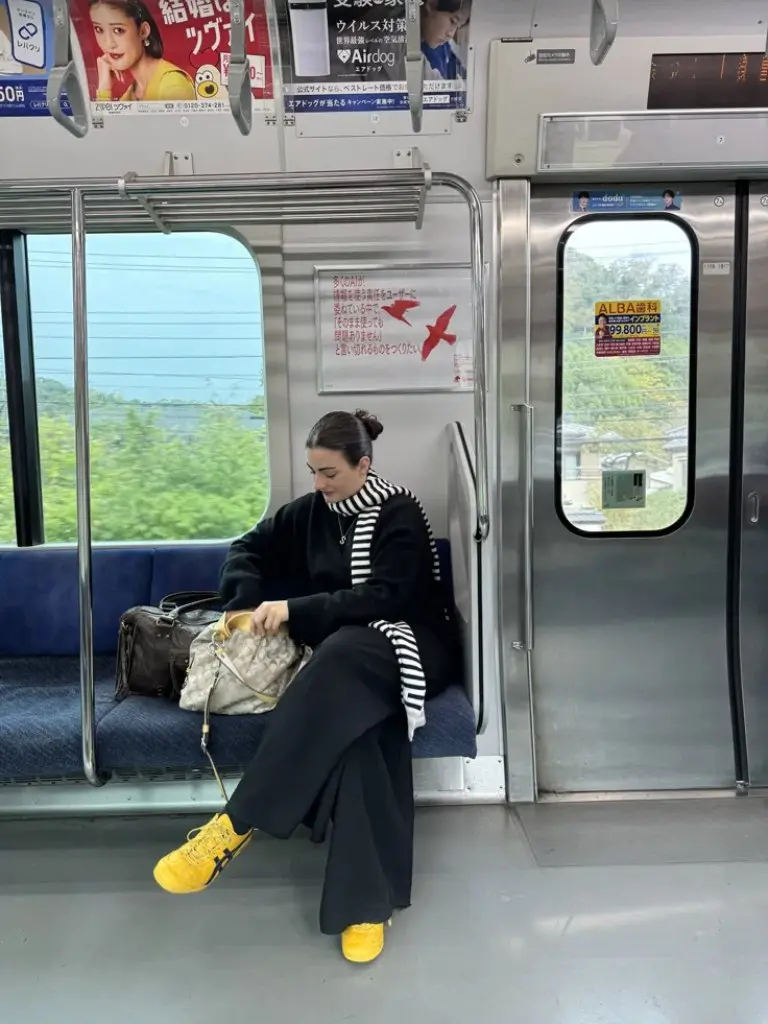
A bomber jacket is one of the most proportionally versatile pieces you can pack — it works over dresses, jeans, and even slightly dressier pieces without looking incongruous. Choose one in a neutral or muted color so it doesn’t visually clash with whatever’s underneath.
Tights under a dress add warmth and coverage for any cultural site with dress-code expectations, while keeping the overall silhouette lighter than trousers. Keep a backup pair in your bag; snags happen on October afternoons when you’re moving fast between exhibitions.
Structured Coat Over Blouse and Trousers for Business-and-Tourism Days
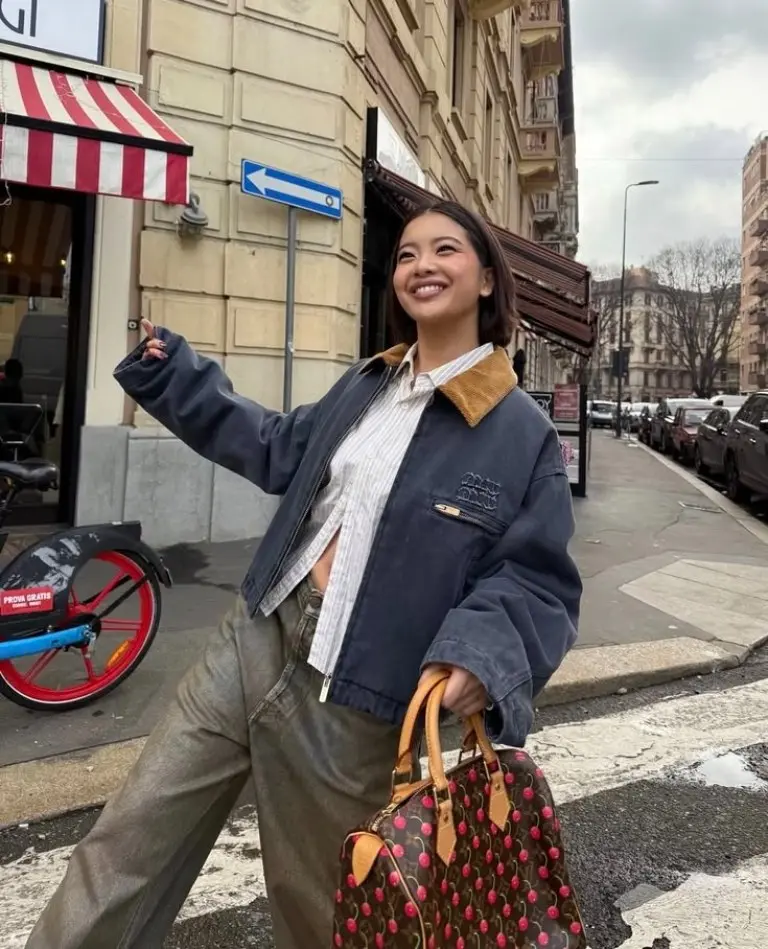
Business trips to Japan often come with this particular scheduling puzzle: a morning meeting in a corporate building, then a free afternoon that you absolutely refuse to waste on a Shinkansen to nowhere in particular. This navy work jacket over pinstripe shirt and olive cargo pants bridges that professional-to-tourist transition without requiring a hotel room change. The patterned tote adds the personality that makes the outfit feel like yours rather than a uniform — it’s the kind of detail that reads as intentional in a boardroom and interesting in a temple courtyard. November business trips especially benefit from this kind of double-duty dressing.
The key to an outfit that works in both professional and tourist settings is keeping the structure in the coat and the interest in the accessories — the coat does the formal lifting, and you can adjust the vibe by swapping between a statement piece and something quieter depending on the next appointment.
Trousers with a clean cut and a slight drape are the backbone here — they sit right in a meeting chair and still look good after four hours of walking. Avoid anything too relaxed-fit for the professional context, but stiff tailoring will make the sightseeing miserable.
Trench Coat Over Neutral Knit and Trousers for Traditional Gate Photography
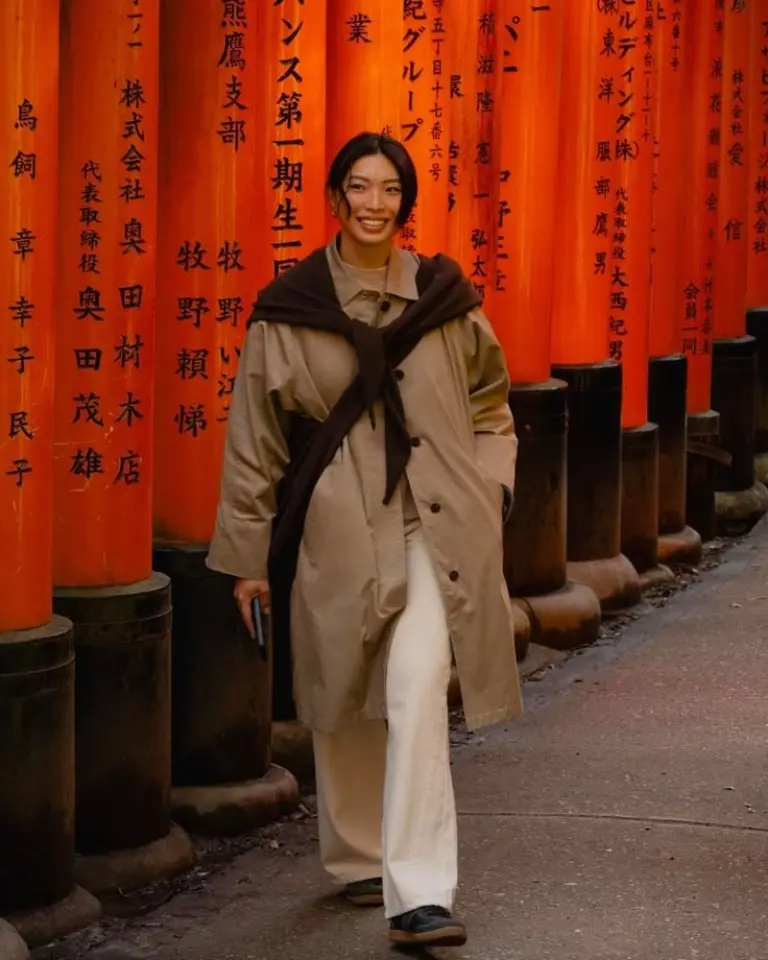
Traditional gate architecture — the towering wooden torii of Fushimi Inari, the painted gates of Nikko — deserves an outfit that doesn’t fight with it. This beige trench coat over cream sweater and matching pants creates a sophisticated, neutral silhouette that photographs quietly and elegantly against ornate, colorful backgrounds. The neutral palette recedes in the image so the gate does its job without your jacket arguing with it. November mornings at these sites require real warmth — the trench provides it while also functioning as genuine rain protection for those sudden November showers that arrive without any particular announcement.
A trench coat is one of the most consistent travel investments you can make — it works across a temperature range from about 45°F to 65°F with the right layers underneath, handles rain, and never looks wrong for the occasion. A classic camel or stone color reads as understated against traditional architecture in a way that’s hard to beat.
For photography specifically, a belted trench gives the silhouette a defined waist that reads clearly in images even when you’re standing in front of a busy background. Unbelt it for the warmth of a full wrap on cold mornings.
Blazer Over Slip Dress for Neon District Evenings
The neon districts — Shinjuku’s Golden Gai, Shibuya’s scramble crossing area, Osaka’s Dotonbori — look extraordinary at night, and the photographs you take there will be some of your best from the trip. This camel trench coat over black turtleneck creates a classic silhouette that reads as genuinely put-together under the kind of dramatic artificial lighting these districts provide. The quilted handbag keeps valuables secure in the kind of crowded evening spaces where bags get jostled and attention wanders — October and November nights when temperatures drop to 50°F still warrant warmth, and a blazer over a dress delivers it with the polish these neighborhoods reward.
A slip dress under a blazer is a combination that photographs with a particular sleekness under neon and city lights — the fabric of the dress catches light in a way that’s flattering rather than flat. Choose a slip in a neutral or jewel tone rather than white, which can behave unpredictably under artificial lighting.
For evening outings in Japan, security in crowded spaces matters practically as well as aesthetically. A crossbody bag or structured clutch that closes properly is worth every bit as much consideration as what you’re wearing — Shinjuku on a Friday night is genuinely dense.
Longline Cardigan Over Basics for All-Day Shopping District Comfort
A proper shopping marathon in Tokyo or Osaka is a full-body commitment — you’re walking kilometers across multiple floors, trying on shoes, carrying bags, ducking into basement food halls, and doing all of this for six to eight hours. This brown oversized cardigan over black wide-leg pants puts comfort first without giving up the style credibility you need to feel right in those environments. The brown oxfords handle hours of walking on the hard stone and tile floors that make up most of these retail spaces — your feet will thank you specifically, and at length. September through October, when stores are running arctic air conditioning but the street outside is warm, means the cardigan is the perfect adjustable layer.
A longline cardigan is one of the single most efficient packing pieces for Japan because it adds warmth, coverage for cultural sites, and a pulled-together look without requiring anything structured underneath. Choose one with pockets if you possibly can — shopping day pockets are not optional.
Keep your shopping day outfit in darker or mid-tones that won’t show the dust from fitting room carpets or the inevitable spill in the basement food court. This is practical vanity, and Japan’s impeccably clean streets will make you feel slightly judged if you’ve got a white tee by hour three.
Wool Coat Over Knit and Slim Pants for Complex Multi-Transport Days
The days when you’re combining express trains, local buses, and a lot of walking between them require an outfit that can hold its dignity through all of it — wrinkle-resistant, comfortable in a seat, and polished enough for the traditional neighborhoods you’re ending the day in. This beige oversized blazer over black wide-leg pants delivers exactly that: warmth, a clean silhouette, and the kind of low-maintenance composure that makes a long November travel day feel manageable rather than exhausting. The brown crossbody bag keeps your hands free for navigating busy stations with a phone in one and a paper map in the other, which sounds retro until you’re offline in a rural train station.
A well-chosen wool coat is the hardest-working piece in an autumn Japan wardrobe — it handles everything from 45°F mountain mornings to breezy city afternoons, and it looks right in both a bullet train car and a traditional inn lobby. Invest in one good one rather than three mediocre options.
Slim pants in a ponte or a textured stretch fabric are the traveler’s best friend for multi-transport days — they don’t wrinkle, they sit comfortably for hours, and they photograph as proper trousers rather than the soft pants they secretly are. Nobody needs to know.
How to Build an Autumn Japan Capsule That Actually Packs Light
The single most useful framework for packing for Japan in autumn is thinking in three temperature bands: late September through early October is 70-80°F with humidity, mid-October is that ideal 60-70°F window, and November drops to 50-60°F with real chill by evening. Most trips span at least two of these bands, so you need pieces that work across them — not a separate outfit for each temperature bracket.
Build around three or four anchor pieces that layer easily: one good coat or jacket, one structured blazer, two or three knit mid-layers, and a solid set of bottoms in neutral tones. Bottoms are the hardest to pack light with, but dark wash jeans, one pair of slim trousers, and a midi skirt or wide-leg pants will cover almost every occasion you’ll encounter. Everything else — color, print, personality — comes in through tops and accessories, which pack flat and wash easily.
Shoes are where most people over-pack for Japan and also where they make the most painful mistakes. You genuinely need two pairs: one comfortable slip-on sneaker or walking shoe for temple days and long walking circuits, and one slightly dressier option for evenings and nicer restaurants. Anything more is weight you’re carrying for no reason. Make sure both pairs are broken in before you land; blisters on day two in Kyoto are a specific kind of miserable.
The fabric choices you make will determine how often you’re handwashing in a hotel sink. Merino wool layers are worth every penny because they resist odor, dry overnight, and look as good on day five as day one. Quick-dry synthetic blends work for base layers and anything touching skin directly. Avoid linen unless you specifically enjoy looking like you slept in your clothes — it photographs beautifully for the first hour and then gives up entirely.
Pack Smart, Layer Well, and Actually Enjoy the Trip
Twenty outfits for one trip sounds like a lot, and it is — these are ideas to steal from and mix together, not a prescription to pack all twenty looks. The goal is showing up in Japan with clothes that handle the real variables: temperature swings, shoe-removal requirements, long walking days, evenings in neon-lit neighborhoods, and early mornings at fog-covered temples. If every piece you pack does more than one job, you’re ahead. Check out pieces that handle unexpected weather for more specific packing lists built around these looks, and layering techniques for the gear and accessories worth adding to the foundation.
Autumn in Japan is genuinely one of the most beautiful times to travel anywhere, and what you wear there affects how you experience it — not because fashion matters more than presence, but because being comfortable and feeling right in your clothes means you’re spending your energy on the maple leaves and the ramen and the view from the train window rather than on a blister or a coat you can’t figure out how to remove at a shrine entrance. Pack thoughtfully, build in flexibility, and let the trip be the main event.
FAQ
What should I wear in Japan in September during autumn weather?
September temperatures range from 70-80°F with high humidity, so lightweight layers are your best approach — cotton cardigans, breathable trousers, and a thin rain jacket that compresses into a bag pocket. You don’t need a heavy coat yet, but you absolutely need something for the air conditioning on trains and in shops, which can be aggressively cold regardless of what it’s doing outside.
How do I layer clothes for Japan’s autumn temperature changes throughout the day?
The three-layer system works reliably: a breathable base layer like a thin tee or tank, a mid-layer like a cardigan or light knit, and an outer layer like a jacket or coat. This setup handles the 15-degree daily temperature swings common in October without requiring you to carry extra pieces — you’re just adding or removing what’s already on your back.
What are the best shoes for walking in Japan during fall?
Comfortable slip-on sneakers or walking shoes with easy fastenings are essential, since you’ll remove footwear frequently at temples and traditional restaurants. Prioritize shoes that are already broken in, weatherproof enough for sudden rain, and supportive enough for eight to ten kilometers of daily walking — heavy boots and anything with fussy laces will make your days harder than they need to be.
What should I avoid wearing at Japanese temples and shrines in autumn?
Skip sleeveless tops, very short shorts, and anything too low-cut for religious sites. Always pack a cardigan or scarf you can use to cover bare shoulders and arms quickly at shrines — it takes ten seconds and makes a genuine difference in how you’re received.
Do I need a coat for Japan in October?
Yes — October temperatures range from 60-70°F with cool mornings and evenings that can dip noticeably after sunset. A medium-weight jacket or coat is essential, and layering underneath it means you can adjust throughout the day without being cold or overheated.
What’s the temperature like in Tokyo and Kyoto in November?
Tokyo in November averages 50-60°F with crisp, clear days that are genuinely beautiful for sightseeing. Kyoto runs three to five degrees cooler and has more dramatic foliage — pack slightly warmer layers for Kyoto, especially if you’re planning early morning temple visits when the chill is real.
Should I pack rain gear for an autumn Japan trip?
Absolutely — September and October can bring sudden heavy showers and occasionally typhoons, and even November has its wet days. A compact umbrella and a lightweight rain jacket that folds into a bag are non-negotiable; quick-dry fabrics throughout your packing mean a wet morning doesn’t ruin the rest of the day.
What colors photograph best against Japan’s autumn architecture and foliage?
Neutral tones like camel, cream, stone grey, and deep olive photograph quietly against both traditional architecture and autumn foliage, letting the background do its work. Burgundy and deep rust can be striking against maple leaves and red torii gates, but avoid busy patterns that compete visually with ornate temple carvings or dense foliage.
What are the best fabric choices for autumn Japan’s humidity and occasional rain?
Merino wool is exceptional for layering pieces because it resists odor, manages moisture well, and dries overnight. Cotton-synthetic blends work for bottoms and base layers, and a light technical fabric for any dedicated rain layer is worth the investment. Avoid anything requiring dry cleaning or that stays damp for more than a few hours after a soaking.
Have any thoughts?
Share your reaction or leave a quick response — we’d love to hear what you think!
-
 0
0 -
 0
0 -
 0
0 -
 0
0 -
 0
0 -
 0
0