

 Lena
Lena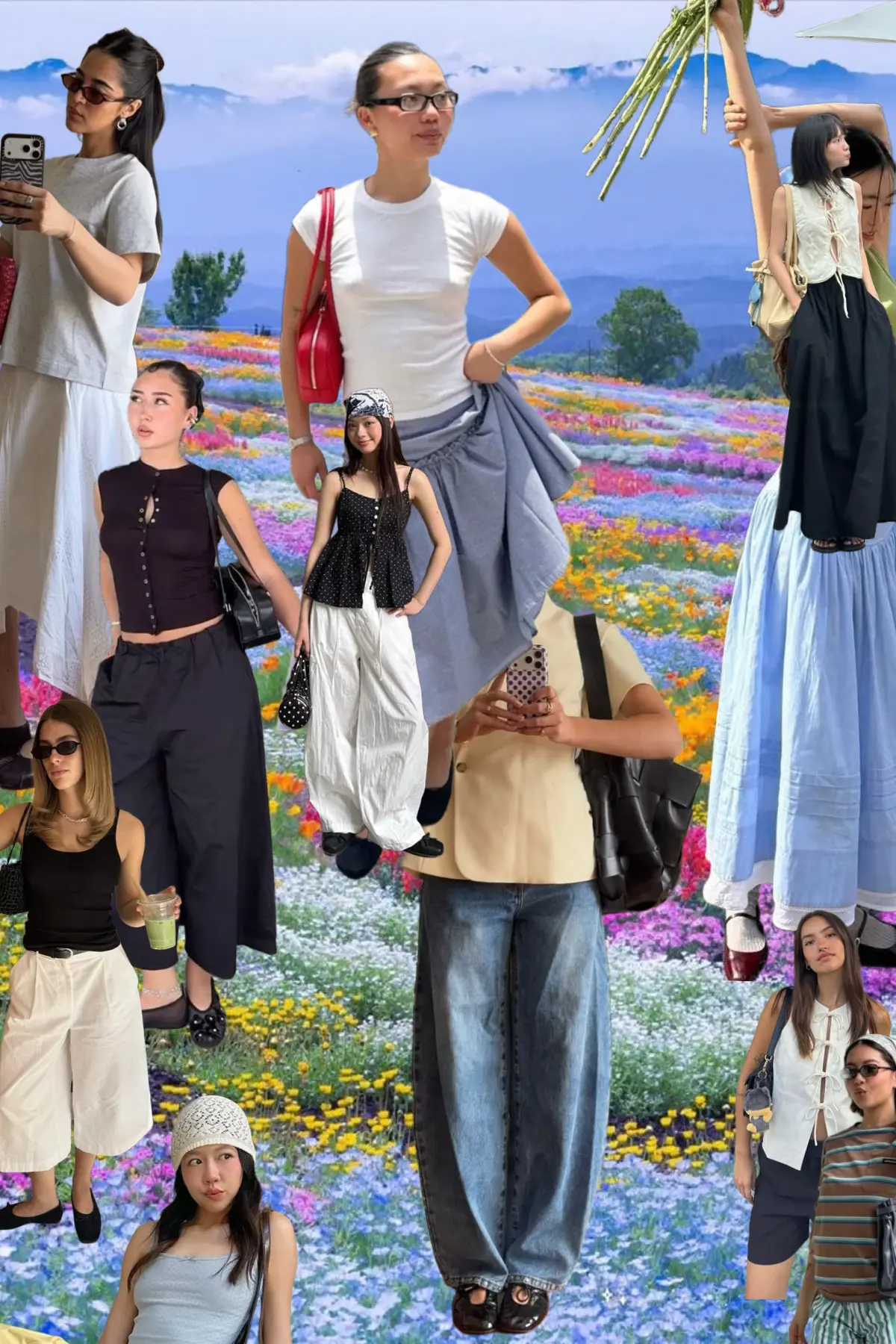
Japan in summer is genuinely brutal — we’re talking 35°C with humidity that makes your phone fog up the second you step outside. I did two weeks in July last year, and the outfits I thought would work absolutely didn’t. That flowy dress I packed for ‘tropical vibes’ stuck to me by 9 AM on day one.
The trick isn’t just packing light fabrics — it’s thinking through the full day. You’ll go from blazing outdoor shrines to absolutely arctic convenience stores and department stores, back out into the heat, then into a dim izakaya with questionable AC. Your outfit needs to handle all of that without looking wrecked in photos by noon.
There’s also the shoe situation. Japan is a walking country — I averaged 18,000 steps a day without trying — and you’re taking your shoes off constantly at temples, some restaurants, traditional accommodations. Anything with complicated laces is a slow, sweaty nightmare. Slip-ons that look good and have actual support are worth every yen.
These 19 outfits are built around that reality: humidity, distance, dress codes, and the fact that you will want to look cute in Harajuku even when it’s 34 degrees. Every one of them has been thought through for actual Japan summer conditions, not just aesthetic.
This post contains affiliate links. If you buy through these links I may earn a small commission at no extra cost to you.
Images used in this article are sourced from social media for inspiration purposes only. If you are the owner of any image and would like it removed, please contact me at [email protected] and I will take it down promptly.
Cafe Hopping in Harajuku
Harajuku is dense, loud, and relentlessly photogenic — you want to look like you belong there without melting into the pavement. The ribbed tank is the hero piece here because it moves air even when you’re sandwiched between tourists on Takeshita Street, and the tiered yellow skirt gives you the range of motion you need for ducking into tiny vintage shops or climbing the steps to Meiji Shrine nearby. That knit beanie looks like a style choice but it’s genuinely doing UV work — your scalp burns faster than you think, and Harajuku has zero shade.
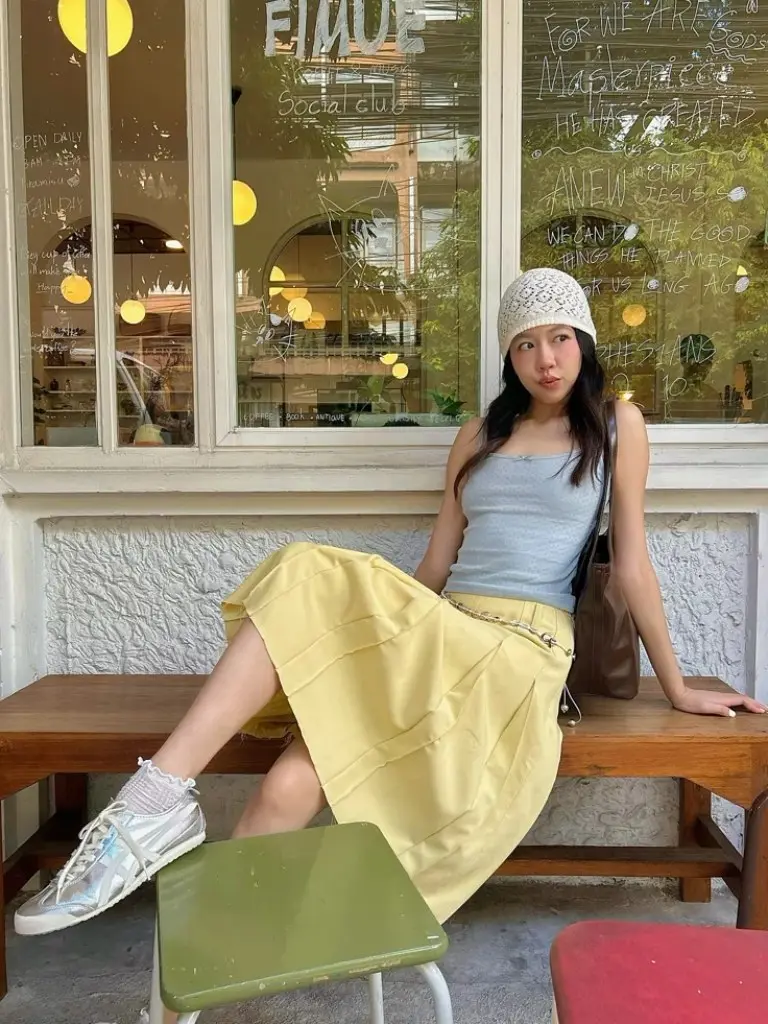
This combo works for anyone who runs warm, because neither piece traps heat against your skin. If you tend to layer anyway, a thin cotton cami underneath means you can tie the top piece around your waist when you duck into an air-conditioned cafe without feeling underdressed.
The hat also compresses flat into a tote or day bag, which matters when you’re shopping and don’t want to carry it on your head through every store. Look for a brim of at least 3 inches — anything narrower is decoration, not sun protection.
Temple Visits in Cotton Comfort
Temples have an unspoken dress code that’s less about strict rules and more about reading the room — bare shoulders and very short hemlines feel genuinely out of place at Fushimi Inari or Sensoji. This lime green crop top and flowing blue skirt combination covers you without making you suffer for it, since natural cotton actually breathes instead of just claiming to. The real non-negotiable here is the slip-on loafers — you will remove your shoes at least a dozen times, and fumbling with laces in a crowded genkan while people queue behind you is exactly as stressful as it sounds.
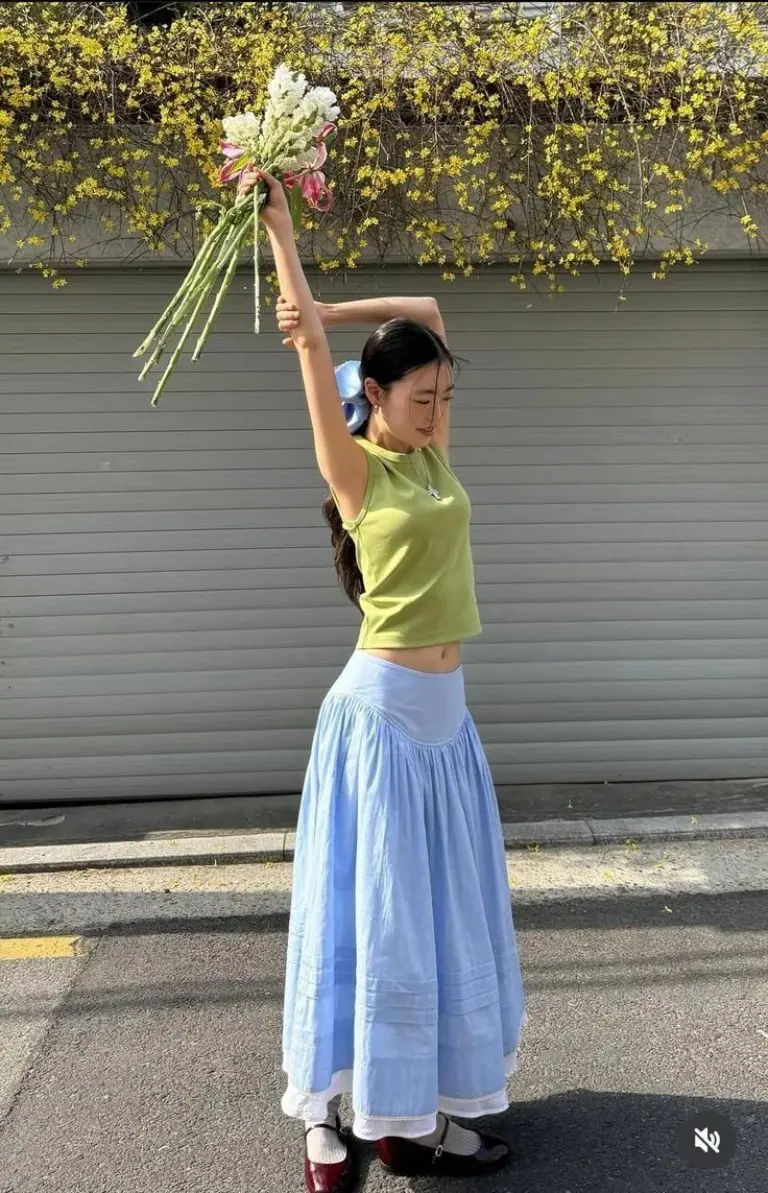
This silhouette suits most body types because the volume sits away from your body — there’s no fabric clinging to your back when you’ve been walking uphill to a shrine gate. If you’re petite, look for a midi length that hits at the calf rather than the ankle so you’re not swimming in fabric.
Cotton wrinkles, yes, but it also recovers faster than you’d think in humidity — a quick hang in your ryokan bathroom while you shower and it’ll look presentable again. Aim to visit temples between 7 and 9 AM when the stone paths are cooler underfoot and the light is genuinely beautiful.
Kyoto Street Food Tour
Nishiki Market is narrow, crowded, and smells incredible — you want your hands completely free and your outfit simple enough that a drip of tamagoyaki doesn’t end your day. A cream linen vest worn open over a black maxi skirt gives you that effortless layered look that photographs brilliantly against the wooden shopfronts and hanging lanterns, and linen specifically handles the press of bodies around you better than cotton because it gets softer and cooler as it heats up. Bring a canvas tote because you will absolutely buy more snacks than your pockets can hold — matcha mochi, pickled plums, fresh yuba, all of it.
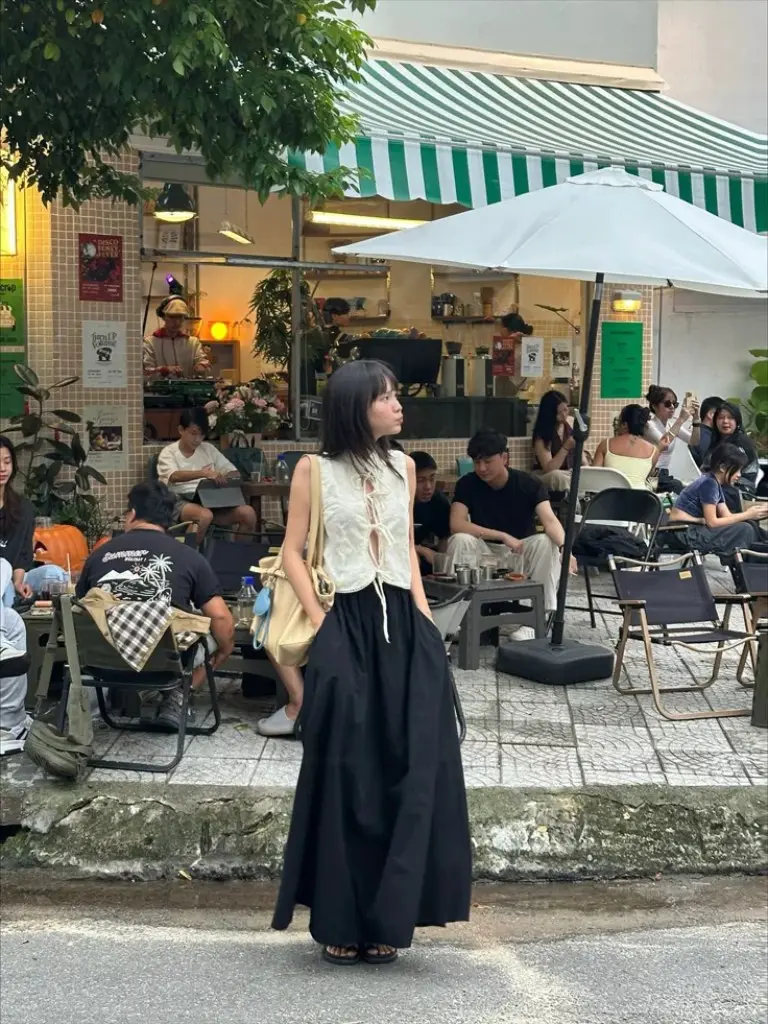
The neutral linen palette is genuinely flattering in the warm, golden light of Kyoto’s old districts, and it won’t clash with whatever colorful food you’re holding for photos. Taller frames can wear an oversized linen shirt as a dress belted at the waist — it’s a completely different look with zero additional packing.
Linen does crease, so accept it or lean into it — the slightly rumpled look actually reads as intentional in this context. A crossbody or market tote keeps both hands free, which you’ll need when you’re navigating chopsticks, a phone, and a paper bag of fresh-baked mochi simultaneously.
Downtown Shopping Districts
Ginza and Omotesando have a different energy than Harajuku — there’s money in the air and the shops have doormen. You don’t need to be formally dressed, but showing up in beachwear feels wrong. This white cotton tee and chambray skirt combo is the right call: polished enough to browse a flagship store without getting the slow look-over from staff, but breathable enough that you’re not drenched by the time you reach the third floor. The red crossbody bag earns its place here because your hands need to be completely free — you’ll be holding shopping bags, scanning QR codes at registers, and digging for your IC card at the station.
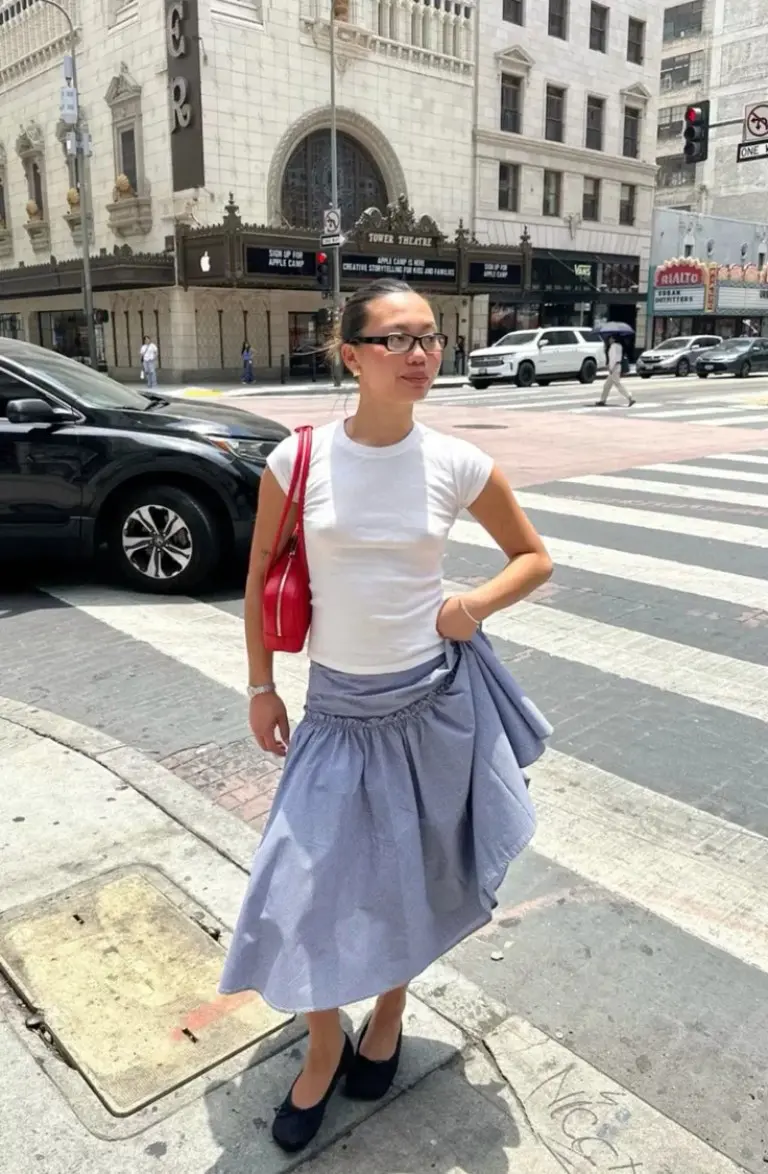
Wide-leg trousers work especially well in this context because they read as intentional and put-together even when your blouse is slightly wilted from the heat. If you’re shopping seriously, wear a heel you can actually walk in rather than a fashion heel — Omotesando alone is a kilometer of beautiful pavement.
The crossbody sits flat enough that it doesn’t catch on clothing racks, which sounds minor until you’ve knocked over a display of ¥80,000 ceramics. A smaller structured bag in a neutral tone will feel more consistent with the neighborhood’s aesthetic than a canvas tote, even if the tote is more practical.
Museum Days in Air Conditioning
Japanese museum AC is set to ‘meat locker’ — I’m convinced the curators are cold-blooded. You step in from 34 degrees and immediately feel your sweat turn to ice. The oversized gray tee and white midi skirt layered look solves this: you have the tee for the outdoor queues and the top layer for the glacial interiors, and you can adjust without drama. Small bags are practically required at major museums — bags above a certain size get checked at the entrance and given a locker number, so a slim crossbody or nothing larger than a small tote is your best option.
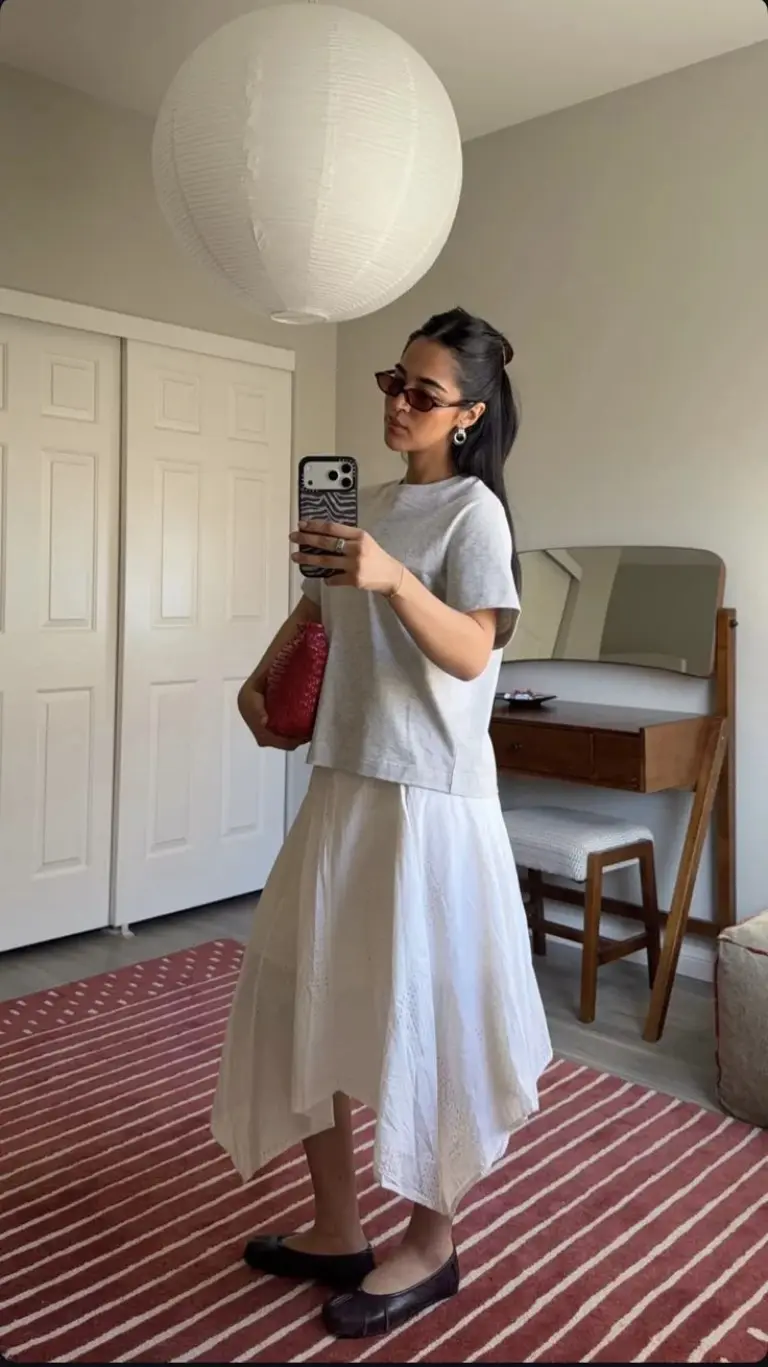
The layering principle is honestly the most useful habit you’ll build in Japan — something light to add when you go indoors, something that compresses small enough to stuff in your bag. A linen shirt, a lightweight button-down, or even a large cotton scarf all work as the outer layer depending on your style.
For long museum days, prioritize shoes with actual cushioning since you’ll be standing on hard floors for hours — most Japanese museums have enormous permanent collections and you’ll want to see them properly. Soft-soled sneakers or cushioned loafers are both acceptable and they’ll thank you by hour three.
Casual Neighborhood Exploration
Shimokitazawa is the kind of neighborhood where every second person looks like they’re in a band and everything is slightly vintage — the aesthetic bar is relaxed but real. This butter yellow blazer and relaxed jeans hit that casual-cool note without trying too hard: the linen blazer is light enough for outdoor markets but polished enough for the tiny restaurant that only has six tables and takes walk-ins if you’re dressed right. Patent loafers are the practical win here because Tokyo summer afternoons have a habit of producing sudden, warm downpours — waterproof or water-resistant shoes mean you can keep walking instead of frantically sheltering.
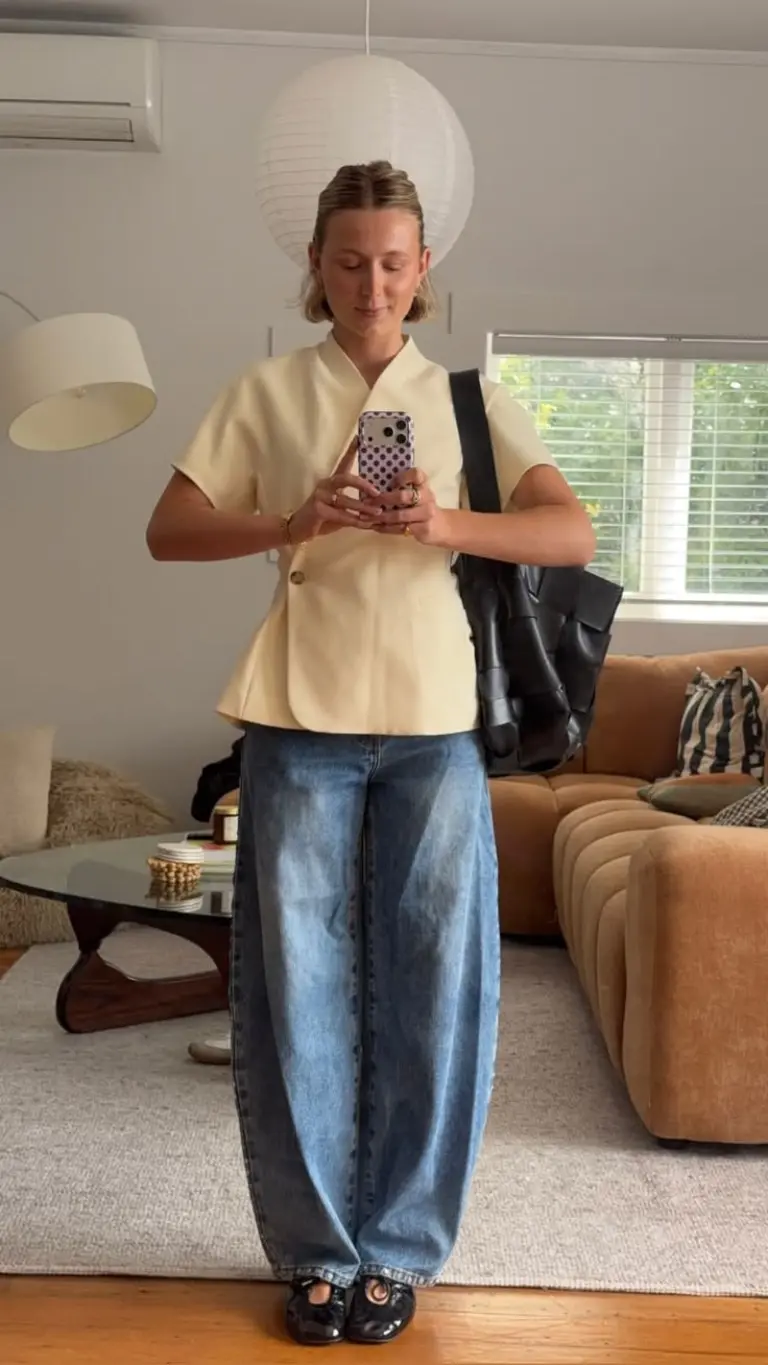
A linen blazer specifically is worth its weight because it’s the piece that moves you between dress codes without needing to change — throw it on for dinner, drape it over your bag during the market browse. If it wrinkles, that’s fine; linen is supposed to look lived-in.
Shimokitazawa’s streets are uneven in places — old residential lanes repurposed into shopping alleys — so a shoe with a low block heel or a thick flat sole handles the texture better than a stiletto or a completely flat sandal. Comfort footwear that photographs well is the specific brief.
Trendy Coffee Shop Meetings
Daikanyama third-wave cafes are genuinely beautiful spaces — all raw concrete and ceramic cups and single-origin cards on the menu — and people there look like they got dressed with some thought. This black ribbed tank and beige wide-leg trousers combination hits the right register: interesting without being costume-y. The oval sunglasses and structured bag add the finishing detail that takes it from ‘comfortable tourist’ to ‘I know what I’m doing’ — small accessories do a lot of heavy lifting in a minimal outfit, and Japanese fashion culture rewards that kind of attention to the little things.
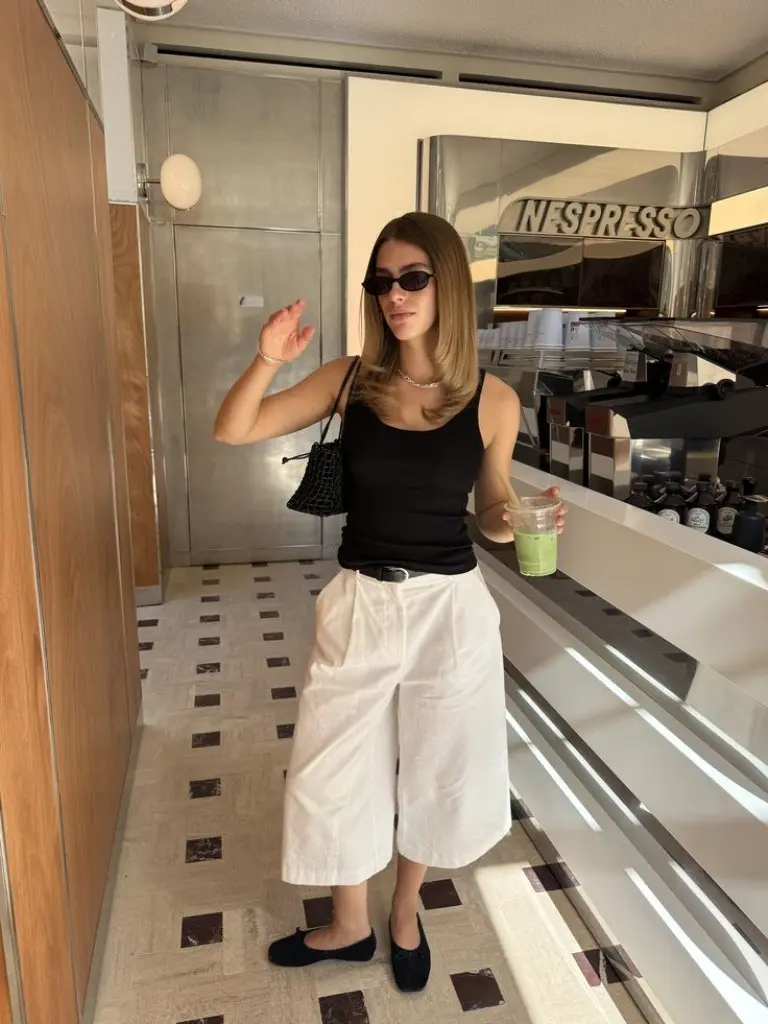
This look translates well from coffee to a casual dinner without needing anything extra, which is genuinely useful when you’re on a full day out and don’t want to go back to the hotel to change. The key is keeping the palette cohesive — too many competing tones and the small accessories lose their effect.
If you run warm, choose fabrics with a loose weave for the shirt rather than a tight poplin — you want air moving through, especially since Daikanyama involves more walking between locations than you might expect. The neighborhood is hilly in a gentle way, and the best cafes are never quite on the main road.
Osaka Food District Crawl
Dotonbori at 8 PM is one of the most chaotic, delicious, loud places I’ve ever been — neon reflections in the canal, takoyaki smoke in the air, everyone slightly damp from the heat. This sleeveless black top with cropped wide-leg pants lets air circulate when you’re pressed up against a grill counter waiting for your kushikatsu, and the outfit still looks pulled together for photos against the giant Glico sign. The chain crossbody is not optional — Dotonbori and Shinsaibashi are pickpocket territory by international standards, and keeping your phone and cards in a bag that closes properly is just common sense in a crowd that dense.
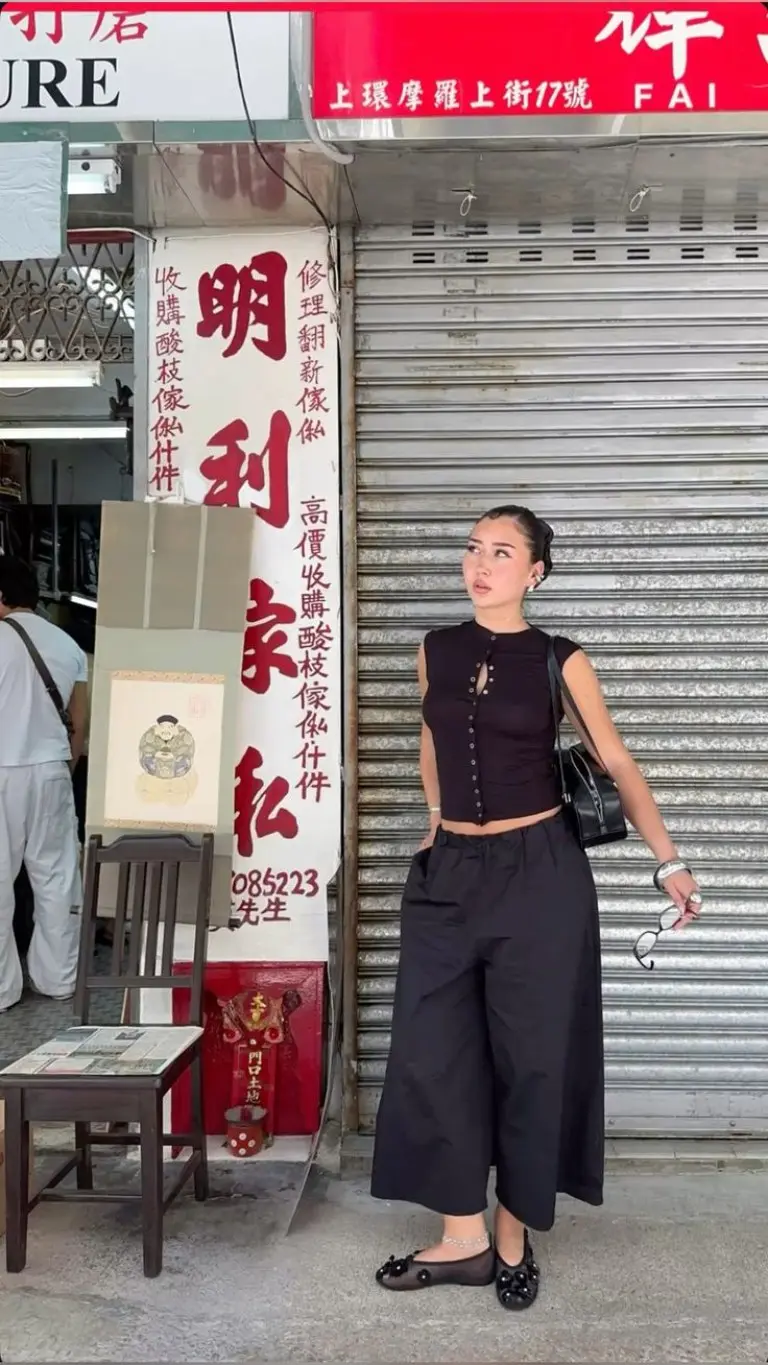
Evening food crawls are the right call in Osaka — temperatures drop just enough after 7 PM that you’re not actively suffering while you eat, and the neon light makes everything look incredible in photos. Dark colors are quietly smart for this activity since takoyaki sauce is real and it travels.
The silhouette matters for practical reasons too: anything very loose-fitting can catch on crowded stall corners or street furniture in tight alleys, so a more fitted bottom paired with a looser top gives you movement without fabric incidents. Keep your bag zipped and worn in front when the streets get genuinely packed.
Traditional Garden Strolls
Kinkaku-ji is one of those places where the reality actually exceeds the photos, which I did not expect — the gold leaf catches light differently depending on the angle and time of day. This white linen shirt and knee-length shorts respect the context without sacrificing comfort: covered shoulders, modest length, nothing that reads as beach-casual in a space that’s been a sacred site for six centuries. The crossbody bag is important for photographers — bulky accessories or complicated silhouettes create visual noise when you’re trying to get a clean shot of architecture, and a streamlined look means the garden is the subject, not your outfit.
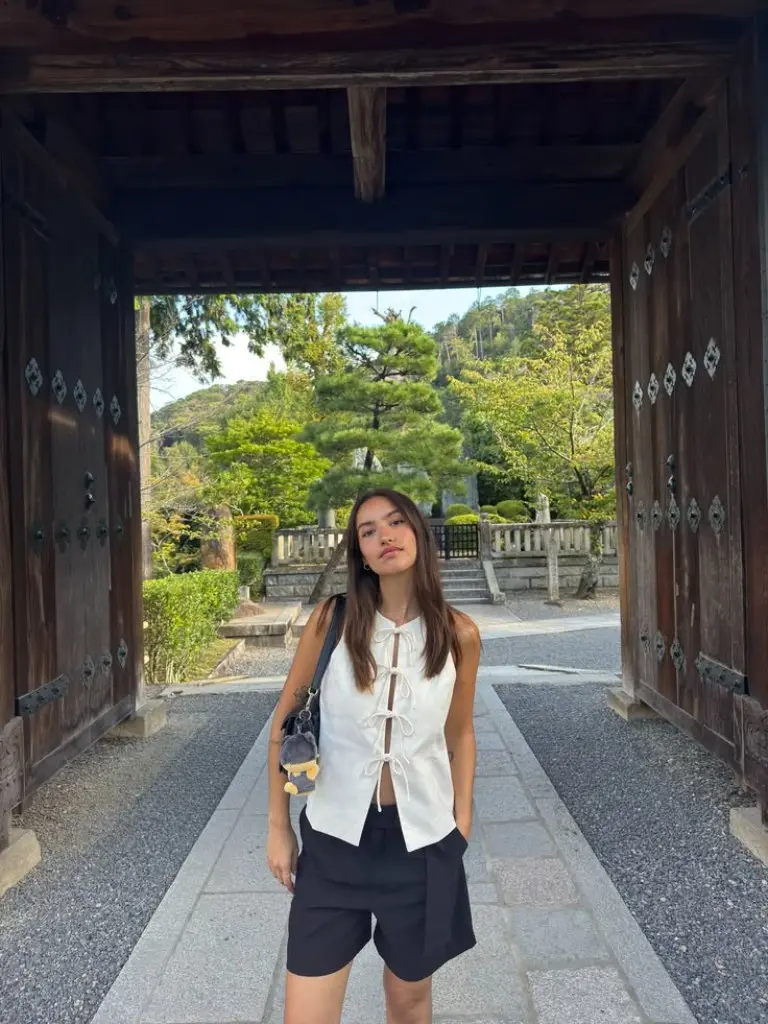
Garden paths are mostly gravel and compacted earth, which means a flat shoe with grip works better than anything with a thin sole — you’ll feel every stone through a ballet flat after an hour. A low-profile sneaker or leather sandal with a strap sits comfortably in the context of a traditional garden without looking out of place.
The 8 AM opening strategy is genuinely worth the early alarm — you’ll have sections of the path almost to yourself, the light is soft and angled perfectly for photography, and the air is still cool enough that you’re not working up a sweat just standing. Most popular gardens fill dramatically by 10 AM.
Train Station Navigation
Shinjuku Station has over 200 exits and moves three million people a day — it is not the place to discover that your shoes hurt or your bag keeps sliding off your shoulder. This basic white tee and denim bermuda shorts won’t restrict movement when you’re striding through underground concourses or taking stairs three at a time to make a connection, and the bright sneakers give you real cushioning on hard platform floors while being easy to spot in a crowd when you’ve agreed to meet someone and everyone is wearing neutral tones. The canvas bag is the practical piece that holds your JR Pass and phone card without adding bulk to your pockets or requiring you to dig through a full-sized bag at a ticket gate.
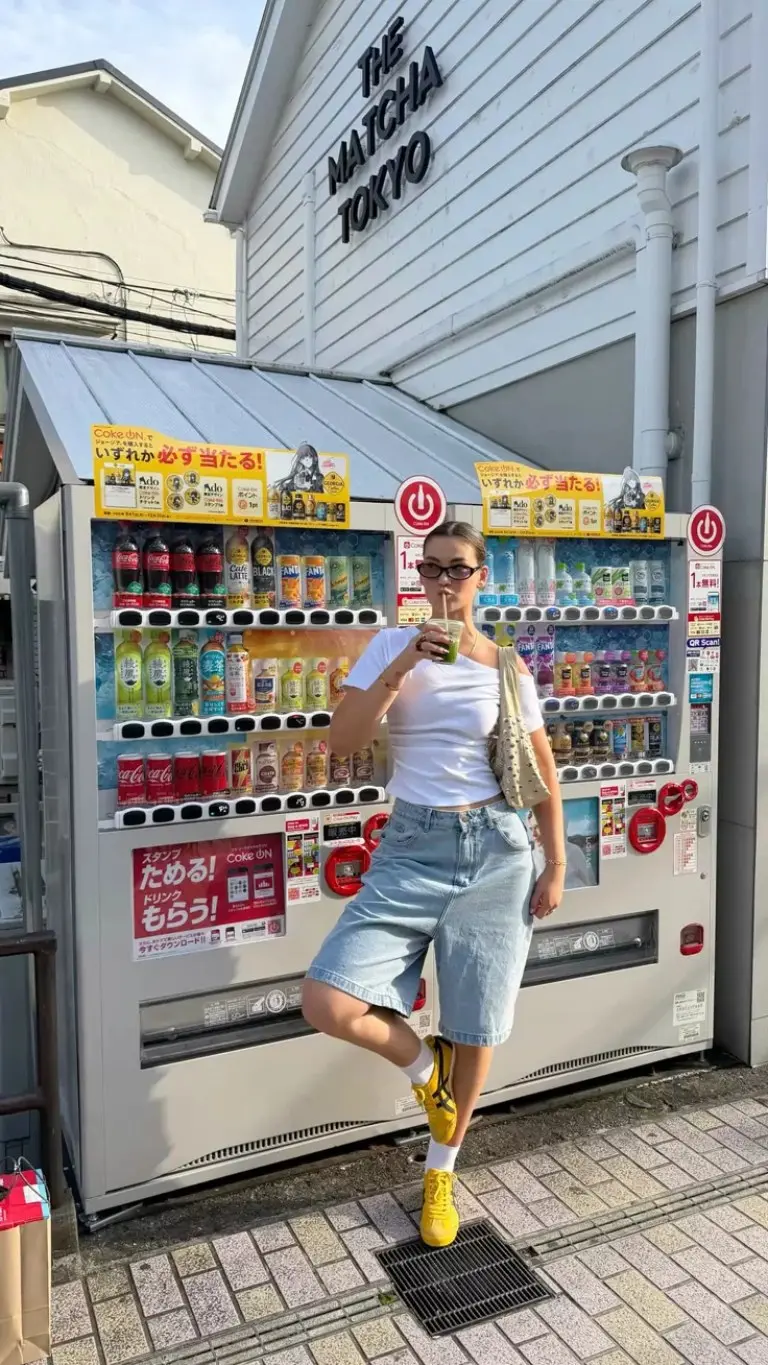
The thing about major Japanese train stations is that they’re also shopping centers — you could spend an hour in the basement food hall of Shinjuku Station alone — so comfort that photographs well actually matters here too. A clean, coordinated outfit in a tight transit environment looks intentional even in motion.
Avoid bags with only a top handle when you’re navigating rush hour — you need both hands free for barriers, escalator rails, and overhead grips on crowded trains. A crossbody that sits flat against your body is consistently the best format for transit-heavy days.
Beachside Enoshima Day Trip
Enoshima is a day trip that feels like a different country — shrine gates, fresh seafood, a beach, and a candle-lit sea cave all within the same few kilometers. The deceptive part is that ocean breezes make the temperature feel manageable when you’re walking the shore, but the train back to Tokyo will be warm and crowded and you’ll wish you had something to change into. This oversized striped tee and coordinating shorts cover both scenarios: the breezy beach walk and the sweaty return journey. The metallic tote handles sandy, wet items without the anxiety of putting them in a nice bag, and navy sneakers grip on wet coastal rocks and slippery stone shrine steps far better than sandals do.
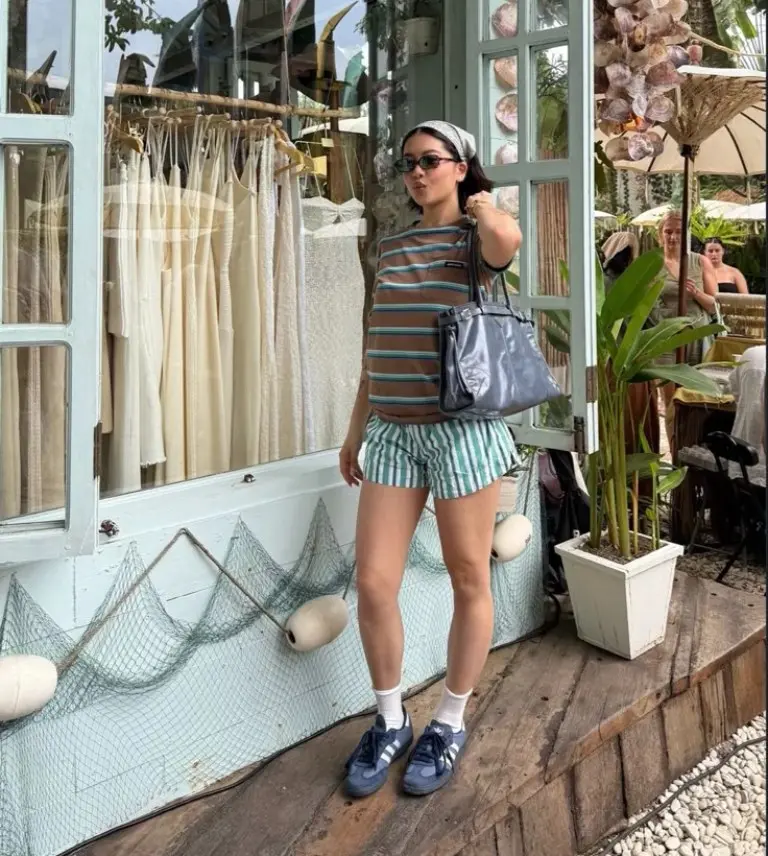
Enoshima’s island section involves a lot of stairs — the observation tower, the shrine, the path to the caves — so a sole with real grip is doing actual work, not just looking sporty. Anything you wouldn’t wear for a moderate hike should probably stay at the hotel for this particular day trip.
The layering logic applies here too: ocean breezes can drop the temperature surprisingly fast after 5 PM, especially on the train platform waiting for the Odakyu line back. A light long-sleeve layer in your bag means you’re comfortable the whole journey rather than just the beach part of it.
European Quarter Lisbon Vibes
Some neighborhoods in Japan — parts of Kobe’s Kitano district, certain corners of Yokohama — have this strange and beautiful European architectural overlay that makes your outfit choices feel different. The red v-neck top and white eyelet skirt work with that setting because the silhouette is clean enough to let the backdrop do the work in photos. Strappy sandals with actual ankle support handle uneven historic pavement far better than flip-flops or thin sandals — cobblestone and tile are lovely to look at and genuinely treacherous underfoot. The bright canvas bag is the piece that distinguishes your photos from every other tourist in the neighborhood — something with visual interest or color that stands out against the muted stone backdrops.

Architecturally interesting neighborhoods reward slower walking — the details are in the doors, the ironwork, the way light hits a tiled facade at 4 PM — so comfortable shoes aren’t just practical, they’re what makes that kind of tourism enjoyable rather than something to endure. Your feet will tell you immediately if you got this wrong.
The bright canvas bag also gives photographers something to work with compositionally — a bright or patterned piece creates a focal point in otherwise busy architectural shots, and the contrast between modern clothing and historic buildings is genuinely interesting when it’s done deliberately.
Night Market Adventures
Night markets in Japan open just as the worst of the heat breaks, around 6 PM, and the combination of vendor lights, food smells, and summer evening air makes them some of my favorite hours of any trip. This oversized white tee and pleated black skirt allow air to circulate even when you’re standing in a queue three people deep waiting for yakisoba — the specific misery of summer festival crowds is that body heat compounds the air temperature and you need fabrics that work in that condition. Knee-high boots protect your legs from accidental contact with crowded stall infrastructure and spilled food, while the small crossbody keeps valuables secure when you’re focused on holding your food and can’t monitor your bag closely.
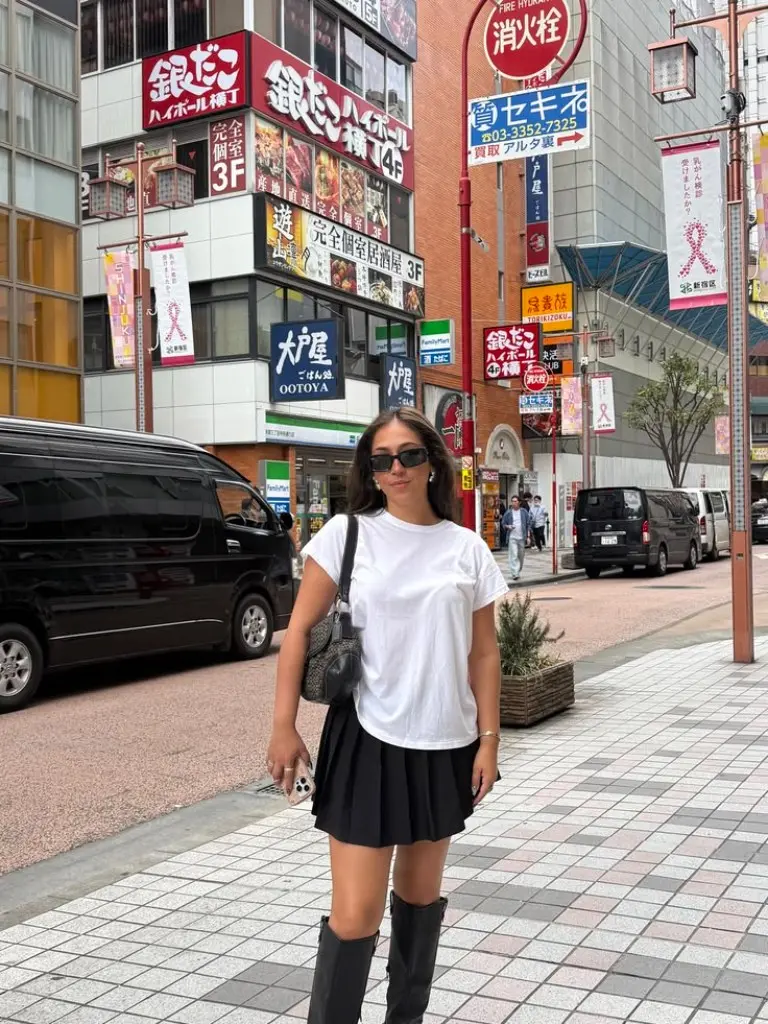
Night markets at summer festivals (matsuri) often have a specific visual culture — yukata, paper fans, lanterns — and a light, slightly festive outfit fits into that aesthetic better than anything that reads as purely sporty or urban. This doesn’t mean you need to wear traditional clothing, just that a little color or texture in your look feels right.
The closing zip or buckle on your bag is genuinely important at night markets — not because Japanese markets are unsafe, but because you’ll have both hands occupied with food and drink and your attention on what to try next. A bag that stays closed on its own rather than requiring you to close it is the practical choice.
Vintage Shopping in Koenji
Koenji is where Tokyo goes when it wants to feel bohemian — the vintage shops here are curated, the staff have opinions, and showing up in a generic tourist outfit feels like wearing a suit to a record shop. This ribbed white tank and flowing black pants create exactly the right blank canvas: enough neutrality that whatever vintage pieces you try on in the fitting room make sense, enough style that you’re clearly there on purpose. The structured shoulder bag adds the polish that signals you’re a serious browser rather than a casual passer-through, while Mary Jane flats handle hours of shop-hopping on narrow streets without your feet staging a protest by mid-afternoon.
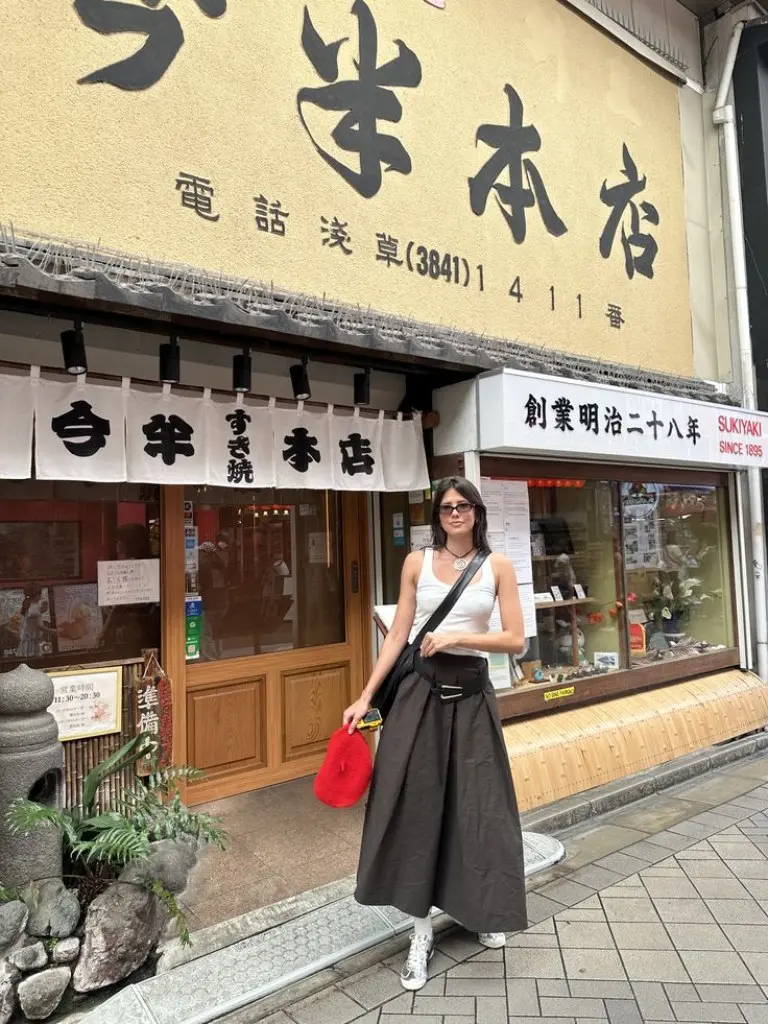
The blank canvas principle is genuinely strategic in vintage districts — you want to be able to try on a 1970s Japanese varsity jacket, an embroidered blouse, or a structured blazer and immediately see if it works with what you’re wearing, rather than everything clashing with a busy print. Neutral tones and simple silhouettes are the shopping outfit.
Koenji’s shop inventory changes faster than anywhere else in Tokyo — the best pieces go in days — so committing to a few hours of real browsing rather than a quick pass-through is worth it. Comfortable shoes specifically designed for extended walking and standing make that commitment a lot easier.
Train Platform Chic
Long-haul train journeys in Japan — Shinkansen to Osaka, the limited express to Nikko — are genuinely comfortable but you’ll still be sitting for two-plus hours and then walking immediately on arrival. This white shirt with bow detail and pleated black mini are exactly the balance you want: cute enough that arrival photos on the platform look good, but genuinely comfortable to sit in without constant readjusting. The large tote holds your travel essentials — Shinkansen ticket, passport, earbuds, the snacks you definitely bought at the station convenience store — and a bow detail or any small interesting element on the bag adds character to photos without requiring accessories you might lose.
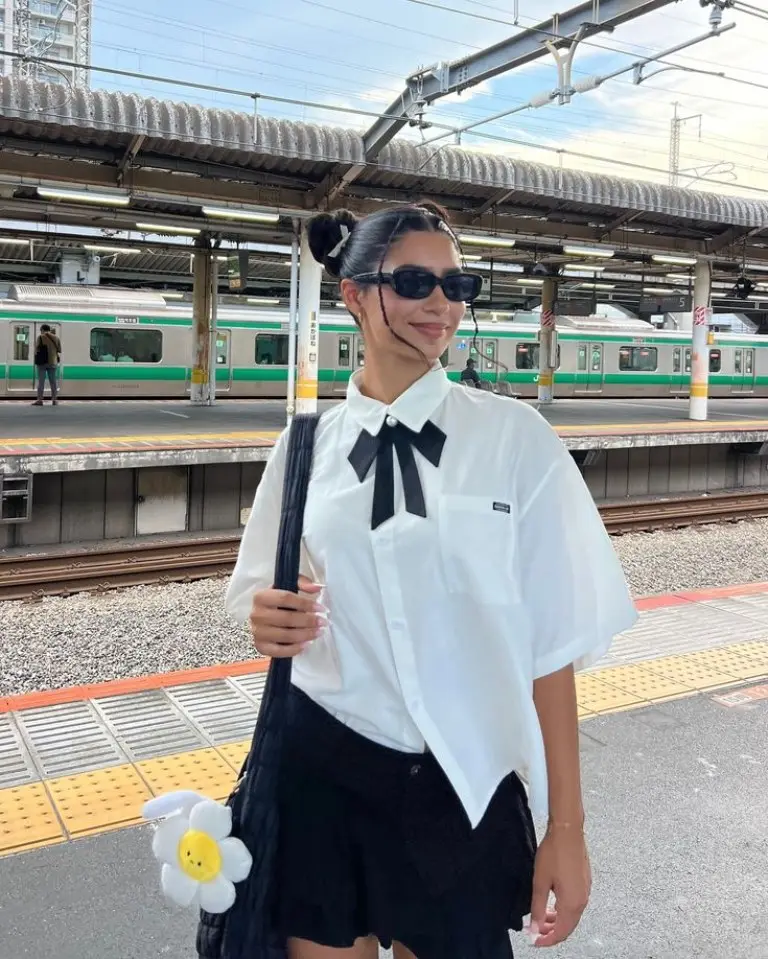
Peak travel hours on Japanese trains are 7–9 AM and 5–7 PM, and those windows are legitimately uncomfortable — plan your long journeys outside them if possible and the experience is completely different, with seats to spare and a calm you didn’t expect. If you’re catching a Shinkansen, reserve your seat rather than relying on the unreserved cars.
The practical thing about a cute-but-comfortable train outfit is that it’s also your walking outfit for wherever you arrive — you’re not changing in a train station bathroom, you’re stepping off the platform and immediately exploring. Plan the look around the first activity at your destination, not just the journey.
City Park Picnics
Ueno Park in summer has massive lotus ponds, outdoor beer gardens, and enough shade trees that it’s genuinely pleasant if you find the right corner — it’s not just a transit point between the zoo and the museums. This Japan graphic tee and tiered white skirt work for actual grass-sitting without the anxiety that comes with wearing something dry-clean-only or very pale, and breathable fabrics mean you’re not sticking to yourself when you settle on a bench or a picnic mat. The canvas bag carries everything a park day requires — a convenience store bento, a cold Pocari Sweat, a light layer for when you head inside the museums — while slip-on sneakers handle the mix of paved paths, grass, and occasional traditional sitting areas where shoes come off.
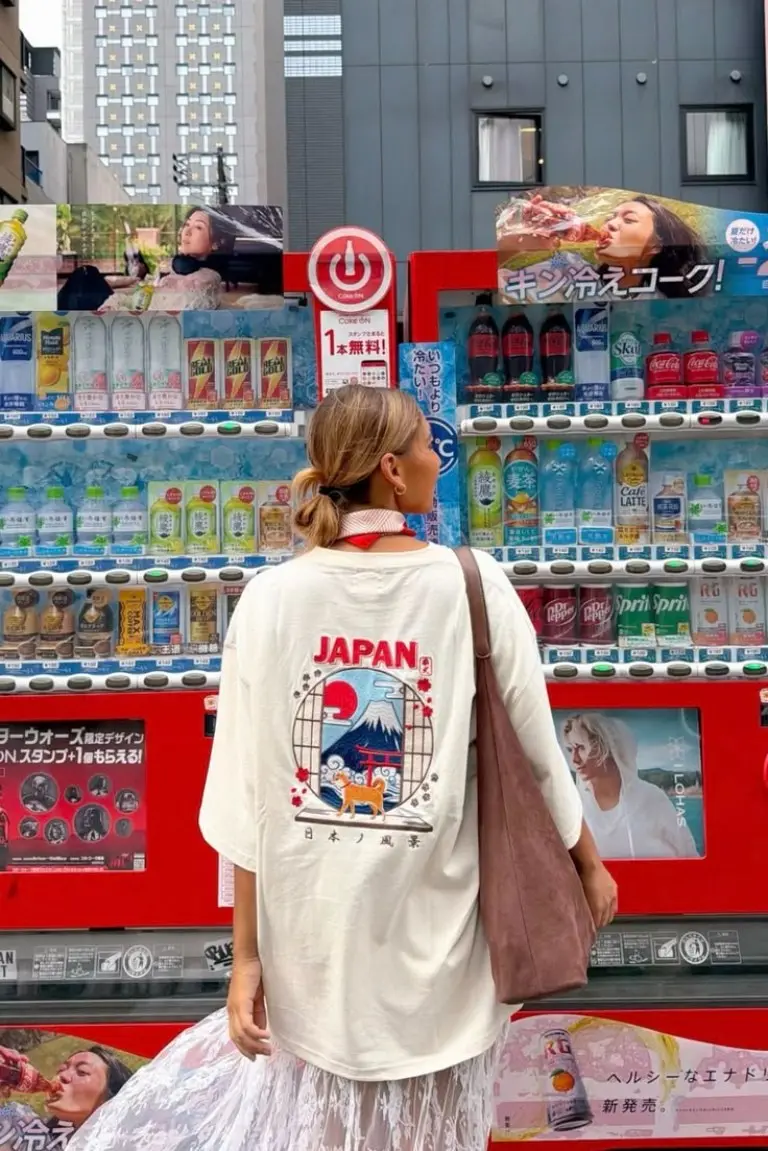
Park picnics reward an outfit with some color or print — you’ll be photographed against green backdrops, open sky, and the occasional spray of lotus flowers, and a completely neutral look can disappear into the scene. A single color or simple pattern gives photos a focal point.
Japanese parks often have designated sitting areas near traditional structures where removing your shoes is expected — sandals or slip-on shoes mean you can do this naturally without making it a production. Keep anything you don’t want grass stains on in your bag rather than set down beside you.
Pop Culture District Exploration
Akihabara rewards commitment — half-measures in your outfit feel weirder here than going all-in, because the neighborhood is built around people who care intensely about aesthetics. This white tee with red bandana print and polka dot midi skirt nod to the visual language of the district — color, playfulness, deliberate detail — without requiring you to be in costume. Red Mary Janes add that playful dimension that reads right in Akihabara’s context, and the matching red bag completes the coordinated look in a way that feels considered rather than random. Arcade marathons are real exercise — multiple floors of machines, stairs, sometimes a queue — so comfort is not optional here.
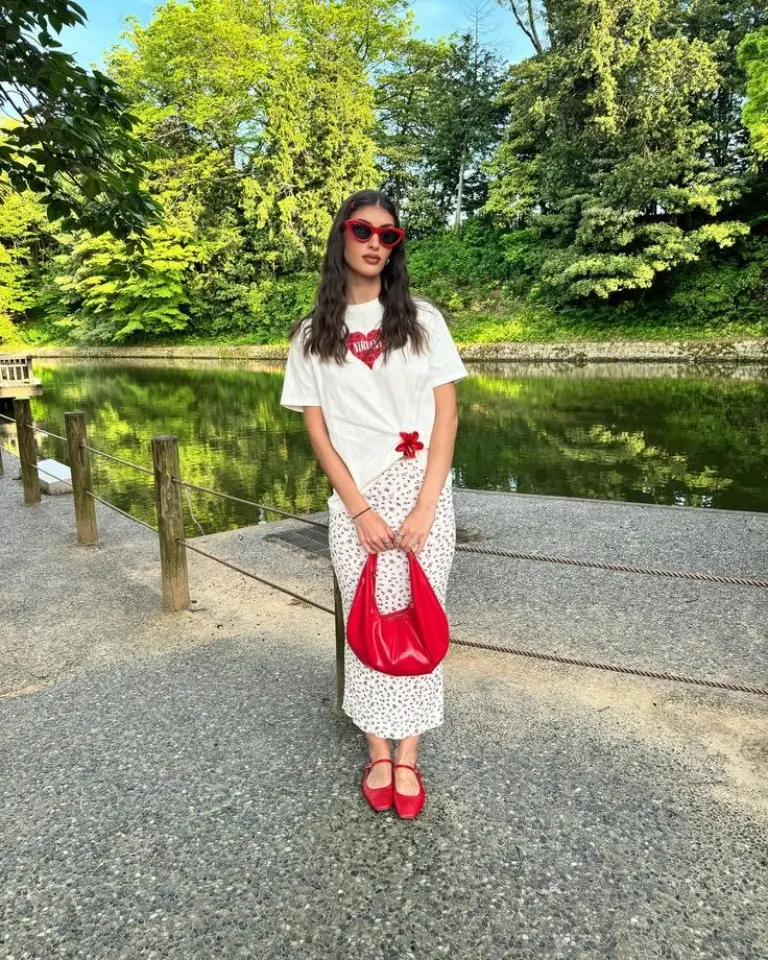
The key with pop culture district dressing is that the boldness needs to be cohesive — matching tones within the outfit, or a clear color story, rather than multiple competing statement pieces. One interesting element anchored by simpler pieces around it reads as intentional; everything shouting at once reads as lost.
Akihabara specifically has a lot of multi-story buildings with narrow staircases, and some of the best shops are on the upper floors — practical shoes with a flat sole or low heel make the building-to-building navigation significantly less tiring. You’ll walk more than you plan to.
Underground Shopping Complexes
Tokyo’s underground shopping networks — Shinjuku’s underground corridor, the interconnected shops under Shibuya — are air-conditioned, sprawling, and mirror-lined, which means you’ll see yourself constantly from angles you didn’t choose. This black cap-sleeve top and fitted gray mini work well in that temperature-controlled, well-lit environment where you’re not fighting weather, just navigating. The bright yellow sneakers genuinely help you orient yourself in the mirrored storefronts and reflective surfaces — a distinctive element in your outfit means you can spot yourself in a reflection and confirm which direction you’re actually facing. The crossbody bag keeps hands free for escalator rails and holds a new purchase without requiring you to juggle multiple bags.
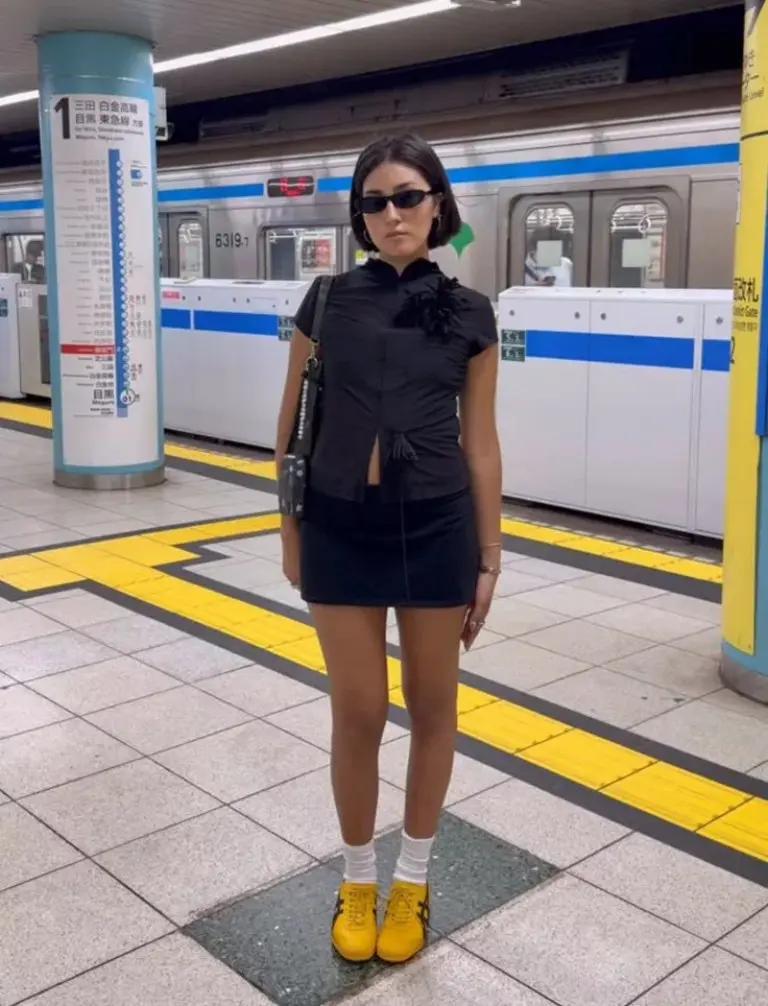
Underground complexes are where Japanese retail really shows its specificity — independent accessories shops, tiny food counters, stationery brands you won’t find anywhere else — and the best approach is to walk the full length before buying so you don’t miss something further in. Going back to the beginning is a longer walk than it looks.
Closed-toe shoes are quietly the right call underground — you’re in a shopping environment where other people’s bags and rolling luggage are at ankle height, and an open-toe sandal collects more contact than you’d expect. Comfort and coverage in footwear is the practical brief here.
Traditional Craft District Browse
Asakusa on a weekday morning has a completely different energy than the weekend tourist rush — you can actually watch craftspeople work and have real conversations with shop owners if you’re dressed in a way that communicates respect and genuine interest. This polka dot camisole and white wide-leg pants do exactly that: modest coverage, clean lines, nothing that signals you’re purely passing through. The matching headband keeps hair neat in Asakusa’s particular combination of summer humidity and the breeze off the Sumida River, which sounds minor until you’re trying to bow politely while your hair blows across your face. ballet flats are the practical essential — workshop visits and craft demonstrations often involve traditional seating arrangements where shoes come off, and something you can slip off gracefully matters.
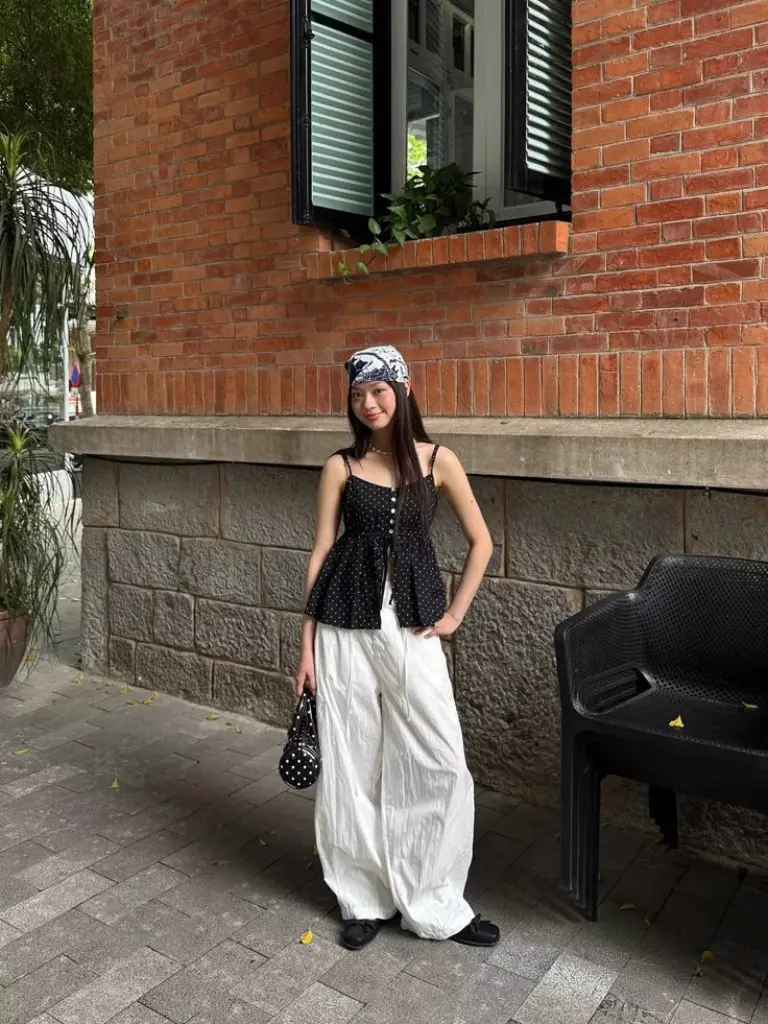
The coverage question in craft districts like Asakusa is genuinely about reading the context — you’re in a neighborhood where traditional crafts, local shrine culture, and working artisans coexist with tourism, and modest dressing communicates that you’re taking the non-tourist parts seriously. It costs you nothing in comfort and gains you in how people interact with you.
Asakusa is best explored slowly — the side streets away from Nakamise shopping street have the real finds, and comfortable shoes that you can wear for two or three hours of genuine wandering are what let you discover them. A bag with space for wrapped purchases is useful here since traditional craft items often come in beautiful, bulky packaging.
How to Build a Japan Summer Packing List That Actually Works
The packing mistake most people make for Japan summer is volume — bringing too many pieces instead of the right ones. Seven outfits for a seven-day trip sounds logical but becomes chaotic quickly when you’re living out of a suitcase in a small hotel room. A better framework is five or six core pieces that work in multiple combinations, plus two or three statement items that rotate through. Japan has excellent laundry facilities at most hotels and laundromats everywhere, so a mid-trip wash is realistic and means you genuinely need less than you think.
Fabric is the real decision point for Japan summer specifically. The humidity is the issue, not just the heat — 35 degrees with 80% humidity in Tokyo in August is a different physical experience than dry desert heat at the same temperature. Cotton and linen are the fabrics that actually handle this well because they absorb moisture, release it, and don’t hold body heat. Synthetic blends that advertise ‘moisture-wicking’ for athletic use are not the same thing in a fashion context — many of them trap warmth and feel clammy after an hour in humid outdoor conditions.
The layering system matters more in Japan than almost anywhere else I’ve traveled, because the temperature differential between outdoors and indoors can be 15 degrees. A light linen shirt, a large cotton scarf that doubles as a wrap, or a thin knit cardigan takes up almost no space and makes every outfit work across the full range of environments you’ll move through in a single day. Pack one of these for every day of your trip rather than leaving it to chance.
Shoes are where the trip gets made or broken — this is not hyperbole. Plan for a maximum of three pairs: one comfortable walking shoe or trainer with cushioning for high-mileage days, one slip-on that looks good for temples and traditional experiences, and one slightly more elevated option for nice dinners or upscale districts. Anything more than three pairs is weight and space you’ll regret, and anything less risks the specific misery of wearing the wrong shoe for the wrong context.
Dress for the Japan You’re Actually In
Japan summer dressing is a real exercise in practical creativity — you’re solving for heat, humidity, dress codes, walking distances, and the very specific photography conditions of some of the most beautiful urban and traditional environments in the world. The outfits that work are the ones that were thought through before you left, not assembled in a panic at the hotel. Check out lightweight cardigans for a deeper dive into specific fabric choices, and slip-on shoes covers the temple and shrine dress code questions in more detail if you’re planning a heavily traditional itinerary. For full seasonal packing lists including what to bring for the June–July rainy season transition, moisture-wicking basics has everything organized by trip length.
The underlying principle across all 19 outfits is the same: comfort and context-awareness are not at odds with looking good. Japan as a country has an extraordinary relationship with clothing — the attention to detail, the care about how things fit and coordinate — and matching that energy, even a little, makes the trip feel different. You’re not just surviving the heat; you’re dressed for the version of Japan you actually want to experience.
FAQ
What should I wear in Japan during summer as a tourist?
Choose breathable cotton or linen in light colors, and prioritize slip-on shoes since you’ll be removing footwear constantly at temples, traditional restaurants, and some accommodations. Always pack a light layer for aggressively air-conditioned indoor spaces — the temperature differential between outside and inside can be 15 degrees. Modest coverage at shoulders and knees is appreciated at traditional sites and costs nothing in terms of comfort.
What are the best fabrics for Japan’s humid summer?
Cotton and linen are consistently the best performers in Japan’s humid summer heat because they absorb moisture and release it instead of holding it against your skin. Avoid synthetic blends that claim to wick moisture for athletic use — they behave differently in a fashion context and often feel clammy after prolonged outdoor wear. Loose-weave natural fabrics that allow air circulation are what you want.
Can tourists wear shorts in Japan in summer?
Knee-length or Bermuda shorts are completely acceptable in summer, and many locals wear them too — Japan is not as conservative about tourist clothing as some guidebooks suggest. The exception is temple complexes and more traditional settings where knee coverage is respectful, which is easy to handle with a light wrap or longer shorts. Very short hemlines feel genuinely out of place at sacred sites.
How do you stay cool while sightseeing in Japan’s summer heat?
Wear light-colored, loose-fitting cotton or linen, carry a portable fan, and plan outdoor heavy activities for early morning or after 5 PM — the 11 AM to 3 PM window is brutal and best spent in museums, department stores, or underground shopping complexes with strong AC. Japanese convenience stores are legitimately good rest stops: cold drinks, air conditioning, and a place to sit. Staying hydrated is more important than it sounds when humidity makes you sweat without always feeling like you’re sweating.
What should I pack for Japan’s rainy season in June and July?
A compact umbrella is essential — the collapsible ones sold at Japanese convenience stores for a few hundred yen are perfectly functional if you forget yours. Quick-dry fabrics are worth the investment since you’ll be damp regularly, and waterproof or water-resistant shoes prevent the specific misery of wet feet in a shoe that won’t dry overnight. Avoid white clothing during rainy season since rain splash and humidity staining show immediately.
Are tank tops okay to wear in Japan in summer?
Tank tops are fine for casual sightseeing, shopping districts, and most tourist areas — locals wear them too. Bring a lightweight cover-up for temples, traditional restaurants, and more formal or traditional neighborhoods where bare shoulders feel out of place. Spaghetti straps specifically are worth covering in formal contexts, but a normal tank top with a light layer thrown over works everywhere.
How do Japanese women dress in summer heat?
Light cotton dresses, loose blouses paired with cropped trousers, and UV-protective long sleeves in very lightweight fabrics are all common — there’s a strong culture of sun protection that means covered arms are not unusual even in summer. Sun umbrellas (parasols) are genuinely widespread and serve a real function rather than being a fashion statement. Pastels and whites are popular specifically because light colors reflect heat rather than absorbing it.
What’s the best sun protection clothing for Japan summer?
UPF-rated lightweight shirts and long sleeves are worth looking for — they’re specifically designed to block UV rays while remaining breathable, and Japan’s summer UV index is genuinely high from late May through September. A wide-brimmed hat with at least a 3-inch brim provides real scalp and face protection that sunscreen alone doesn’t match during extended outdoor days. Light colors across all clothing choices reflect heat rather than absorbing it, which makes a measurable difference in how you feel after a full day outside.
How important are slip-on shoes for a Japan trip?
They are extremely important and consistently underestimated by first-time visitors — you’ll remove your shoes at temple interiors, traditional restaurants, some ryokan common areas, changing rooms, and occasionally at craft workshops or cultural experiences. Anything with complex lacing or multiple buckles creates a bottleneck at every entrance and the cumulative frustration is real. A slip-on that has actual support and walks well all day is the single most practical footwear investment for a Japan summer trip.
Have any thoughts?
Share your reaction or leave a quick response — we’d love to hear what you think!
-
 0
0 -
 0
0 -
 0
0 -
 0
0 -
 0
0 -
 0
0