

 Lena
Lena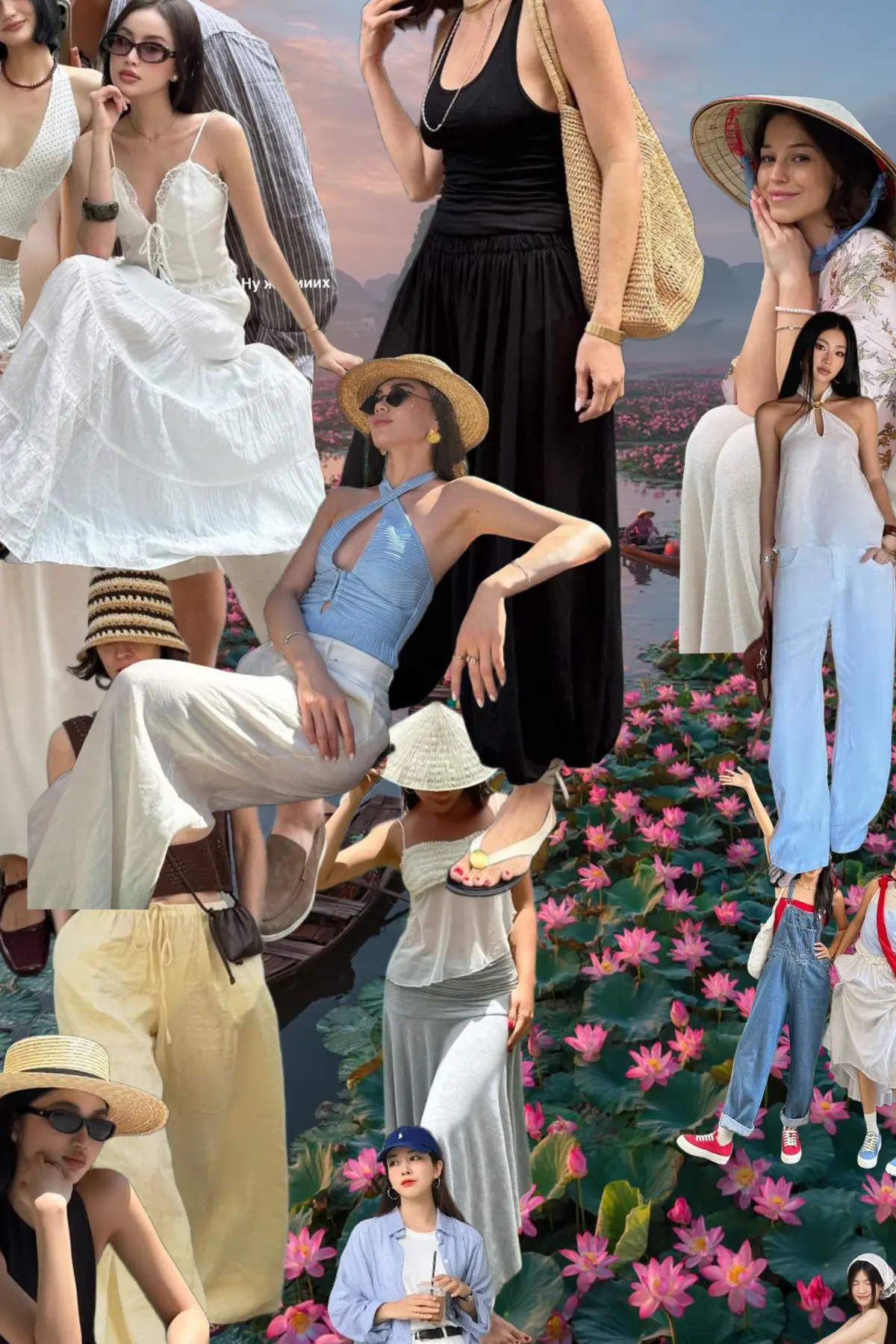
Vietnam in summer is genuinely punishing — I’m talking 90°F by 9am with humidity that makes your clothes feel damp before you’ve left the guesthouse. You need outfits that actually work for the heat, not just look cute in flat-lays on a bedroom floor. Every piece has to earn its place in your bag.
The mistake most first-timers make is packing like they’re going to Barcelona — flowy dresses, cute sandals, maybe one linen shirt. Then they hit Ho Chi Minh City in July and spend three days sweating through everything they own. Fabric choice is everything here: cotton and linen dry overnight, moisture-wicking synthetics pull sweat away, bamboo blends feel almost cool against your skin.
There’s also the temple question, the market question, the boat-tour question — Vietnam has so many different contexts in a single trip that you’re essentially packing for five different climates and dress codes at once. Sapa can be legitimately cold in January while Da Nang is still beach weather. The 20 looks below cover all of it, from 6am market runs to dinner cruises on the Mekong.
I’ve worn variations of every one of these outfits across three trips to Vietnam, and I’ve made the mistakes so you don’t have to. White jeans at Ben Thanh Market, a sundress at a Hoi An temple, wedge heels on Hanoi’s Old Quarter cobblestones — all genuinely bad calls. What follows is the edited, practical version.
This post contains affiliate links. If you buy through these links I may earn a small commission at no extra cost to you.
Images used in this article are sourced from social media for inspiration purposes only. If you are the owner of any image and would like it removed, please contact me at [email protected] and I will take it down promptly.
Black Tank and Striped Trousers for Early-Morning City Walks
A black tank tucked into striped trousers is the move for exploring neighborhoods before the heat becomes oppressive — we’re talking 8am walks through Bui Vien or the backstreets of District 3. The straw hat is non-negotiable here, not a style accessory; Vietnam’s UV index is brutal even in the early morning hours. Those double-strap sandals will save you on Ho Chi Minh City’s sidewalks, which crack and tilt in ways that make even a small block heel treacherous.
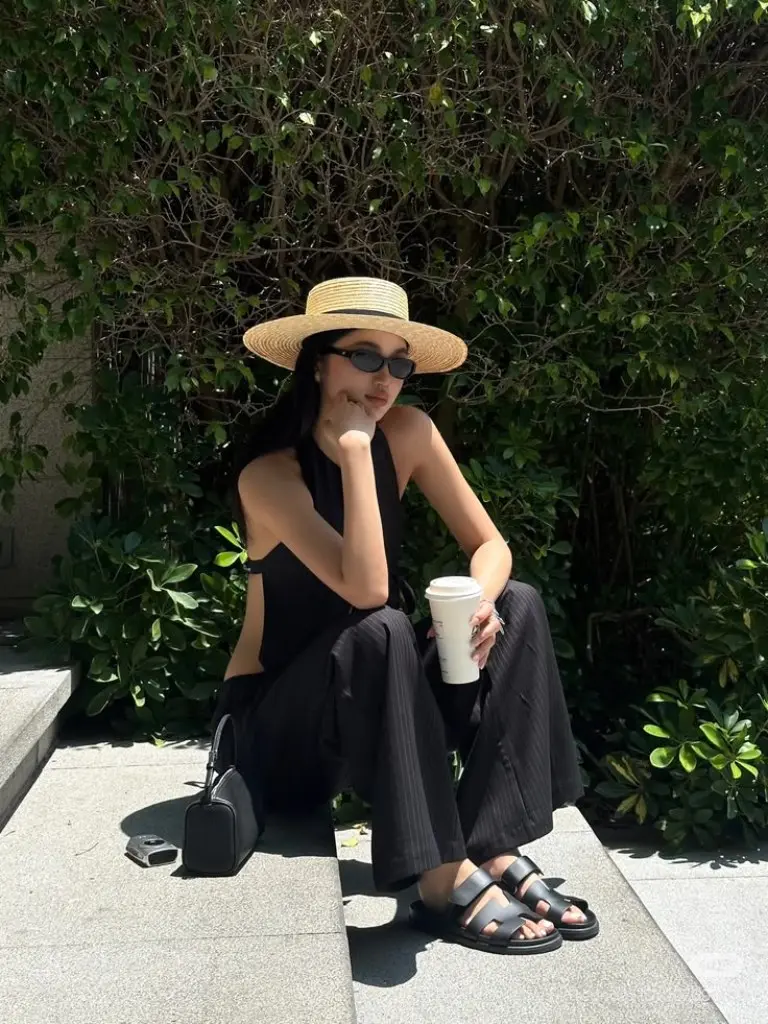
Striped trousers in a cotton or linen blend are genuinely ideal for city exploring because they look put-together in photos but feel like pajamas to wear — that’s the balance you want at 35°C. Dark colors like black and navy absorb more heat in direct sun, so if you’re going to be outside for hours, choose lighter stripes in the trouser rather than a fully dark bottom.
The flat shoe situation in Vietnam is worth taking seriously before you travel. Broken pavement, open drains, and sudden steps up into shophouses mean you want a sole with actual grip, not just a smooth fashion flat. Anything that can get wet and dry quickly is a major bonus for the inevitable afternoon downpour.
Blue Ribbed Halter and Shorts for Halong Bay Boat Days
Island-hopping days on Halong Bay or Phu Quoc require clothes you can genuinely move in — you’re climbing between boats, scrambling on rocks, and sitting on wet surfaces. This blue ribbed halter paired with white wide-leg pants ticks every box: free range of motion, quick drying, and light enough that you won’t overheat on deck. A straw hat with a chin cord beats a baseball cap in sea wind, which is something you only learn the first time your cap disappears into the water.
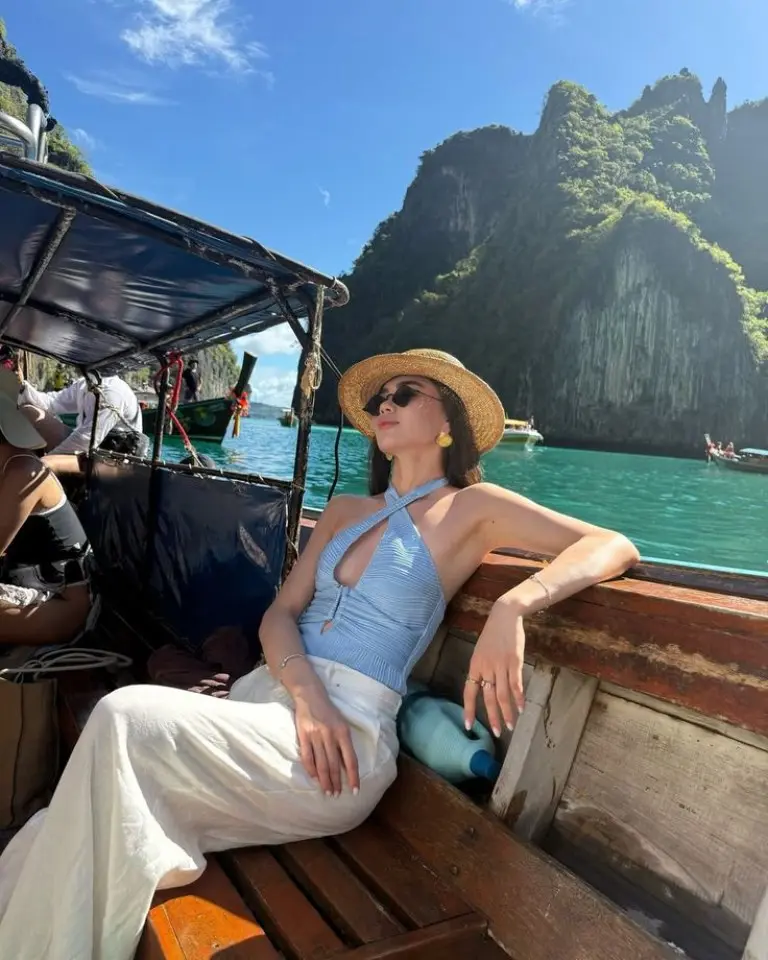
Ribbed fabric is a smart choice for boat trips because it holds its shape even when wet and doesn’t cling uncomfortably the way a smooth jersey does. Light blue also hides salt-water splashes far better than white, which turns see-through the second a wave hits the bow.
Book island tours between November and April if you have any flexibility at all — monsoon season boat trips are rough, wet, and occasionally cancelled at the last minute. In peak dry season you’ll still want this kind of light, packable outfit because there’s nowhere to stow a heavy layer on a crowded tour boat.
Black Tank and Wide-Leg Pants at Ben Thanh Market
Black is genuinely the right call for market days — it hides sweat marks, street food splashes, and the general chaos of a busy Vietnamese market in a way that beige absolutely does not. This tank and flowy pants combo breathes better than a dress when you’re crouching down to look at goods or weaving through tight stalls. The mesh bag is a smart add: vendors read it as you having nothing to conceal, and open-weave fabric dries almost instantly if it catches a water splash.
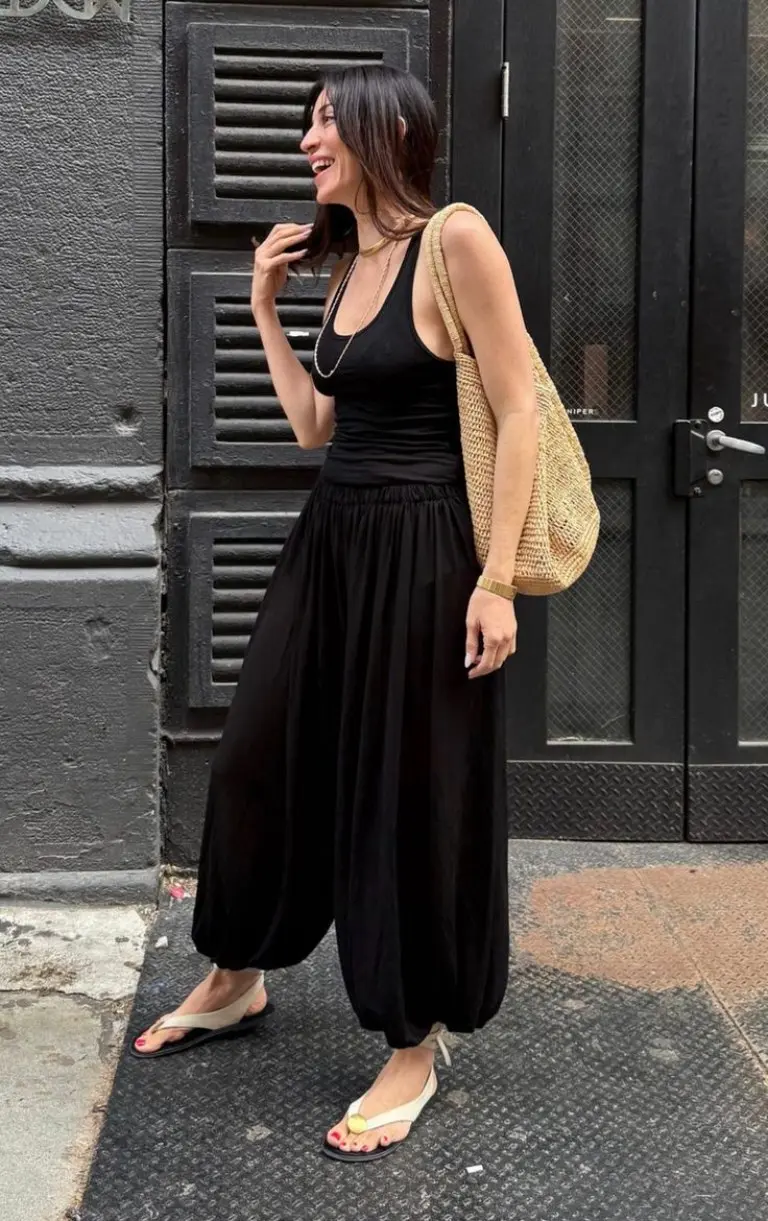
Wide-leg pants at a market might sound counterintuitive — more fabric, more heat — but they actually catch more airflow than fitted trousers when you’re walking, and the extra coverage protects your legs from accidental contact with hot surfaces and street-food oil. Go for a natural fiber like cotton or a cotton-linen blend rather than anything synthetic.
Ben Thanh gets genuinely crowded by 10am, so arriving early means cooler temps and less jostling. An open tote or mesh bag is practical for carrying purchases without overfilling a backpack in the heat, and it signals to vendors that you’re a relaxed shopper rather than someone trying to get in and out quickly — which, counterintuitively, sometimes gets you better prices.
Brown Knit Vest Over Linen Pants for Temple Visits
Temple dress codes in Vietnam require covered shoulders and knees without exception, and this brown knit vest layered over beige linen pants handles both requirements while still feeling like you’re not wearing a sleeping bag in the heat. Linen is the fabric for this specific situation — it covers what needs covering but moves air like nothing else. A bucket hat reads respectful rather than touristy, and Vietnamese temples rarely have enough shade to skip it.
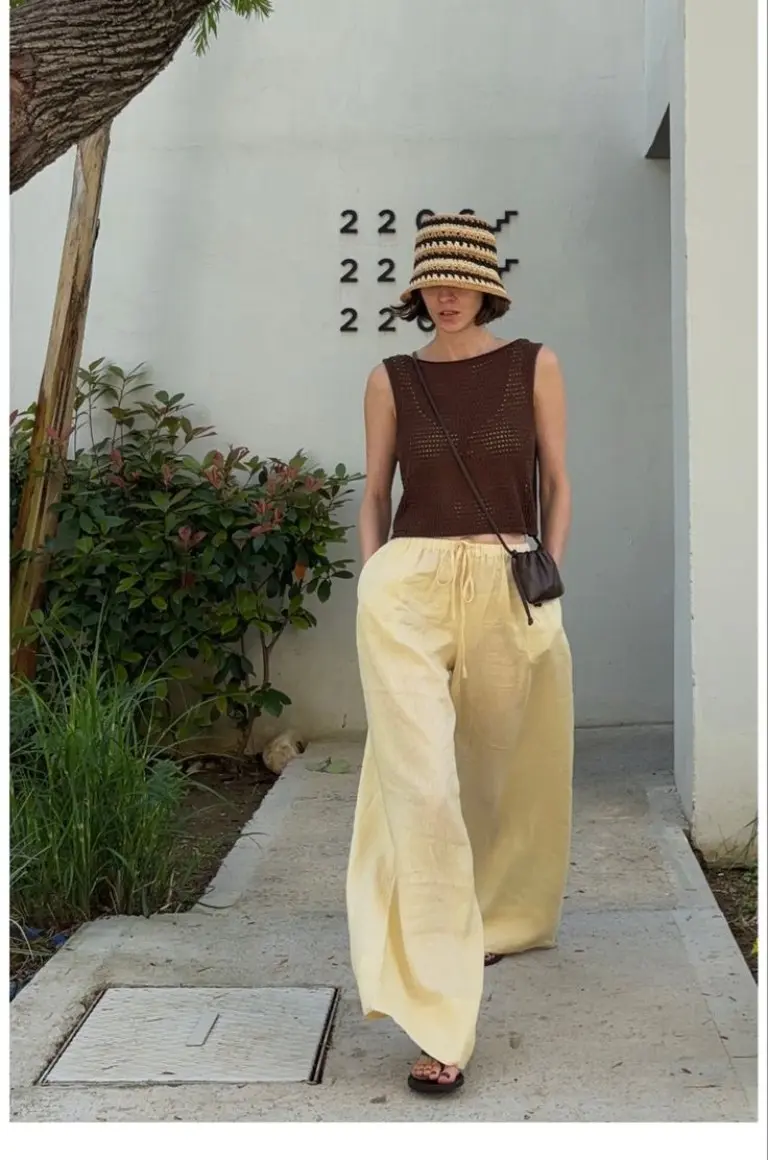
The vest-over-linen combination works because you get coverage without a full sleeve, and a knit vest in a neutral earth tone photographs beautifully against the terracotta and gold of most Vietnamese temple architecture. Avoid anything with print or pattern that might read as disrespectful — solids and muted tones are always the safer call.
Visit temples between 6am and 8am if you can possibly manage it. The light is better for photos, the air temperature is ten degrees cooler than midday, and you’ll have the courtyards largely to yourself before tour groups arrive. The linen won’t have a chance to stick to your skin in that window, which makes the whole experience genuinely pleasant rather than something you’re enduring.
Flowy Cotton Dress for Cycling Through Hoi An’s Rice Paddies
Hoi An bike tours are one of the best things you can do in Vietnam, but the outfit has to work with the bike rather than against it. This white eyelet dress stays cool in motion and a fuller skirt won’t snag in the chain the way straight hems sometimes do — just tuck the front slightly if you’re nervous. A headscarf tied under the chin keeps sweat out of your eyes and looks genuinely charming in cycling photos against the green paddy backdrop.
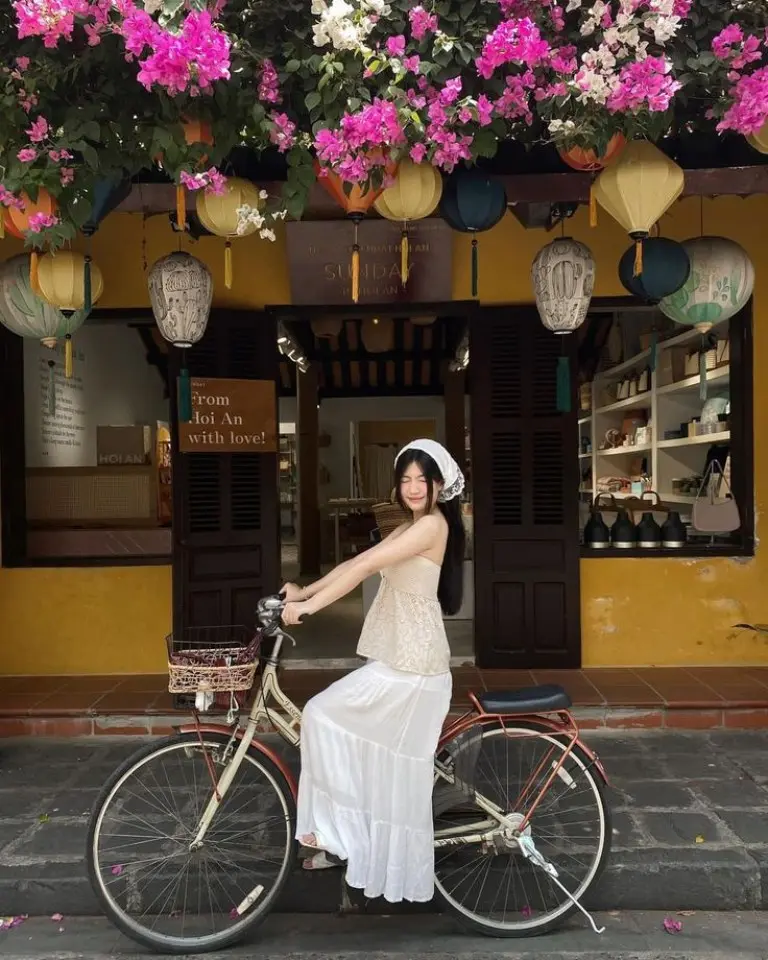
Midi and maxi skirts on bikes are a real concern, so look for a dress with enough fullness that you can gather it easily, or one cut specifically with movement in mind. A lightweight cotton or cotton-voile fabric is ideal: breathable, fast-drying, and soft enough that it won’t chafe on a two-hour ride.
Time your bike tour carefully — midday cycling between June and August is medically inadvisable, not just uncomfortable. Most reputable tour operators in Hoi An offer early morning slots starting at 7am or late afternoon slots from 4pm onward, and the golden-hour light on the paddies in the late afternoon makes for far better photos anyway.
Silk Slip Dress with Mule Sandals for Hanoi’s Old Quarter at Night
Hanoi’s Old Quarter restaurants range from no-frills plastic-chair spots to genuinely lovely heritage buildings, and this nude tank with a floral scarf tied as a belt works across most of them. Pair it with white skirt that give you some height without committing to a heel, and choose burgundy flats you can slip off at the door — some traditional restaurants still ask guests to remove shoes, and fumbling with laces while everyone waits is its own kind of embarrassing.
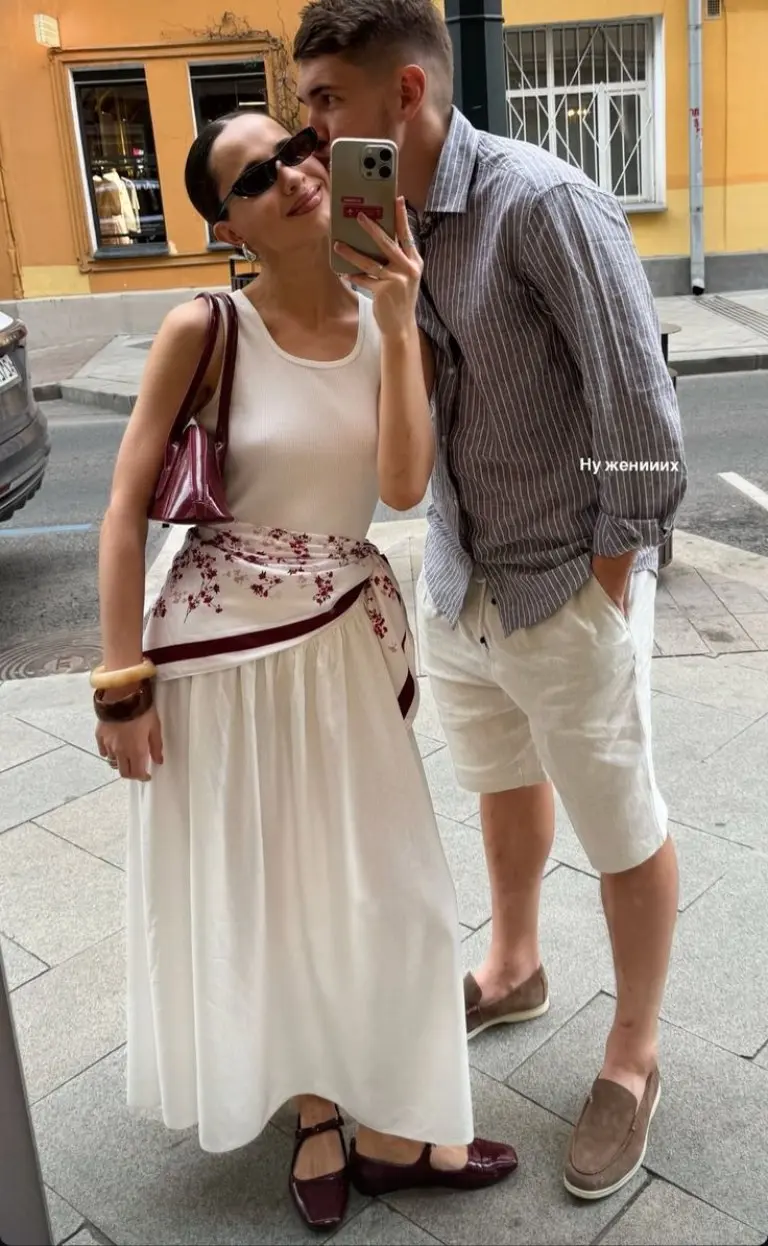
Silk and satin-finish fabrics are actually good choices for humid evenings because they don’t absorb sweat the way cotton does — they stay smooth and cool against your skin even in a warm restaurant. The risk is wrinkling in transit, so roll rather than fold and shake it out when you arrive at your destination.
Bring a lightweight cardigan in your bag for dinner. Hanoi restaurants that do have AC often run it at Arctic levels to compensate for the outdoor heat, and the temperature difference between street and dining room can be genuinely shocking. The cardigan also doubles as shoulder coverage if you end up visiting a temple the following morning.
Lightweight Blazer and Trousers for Sapa Mountain Towns or Long-Haul Flights
Sapa and the northern mountain towns sit at altitude and can drop to genuinely cool temperatures even in summer — this oversized shirt over white shorts with a baseball cap covers the range from chilly morning trekking to mild afternoons. If you’re doing the Seoul-Vietnam route, this same outfit handles the Incheon Airport AC, which is intense enough to make you question your entire packing strategy the moment you step off the jetway.
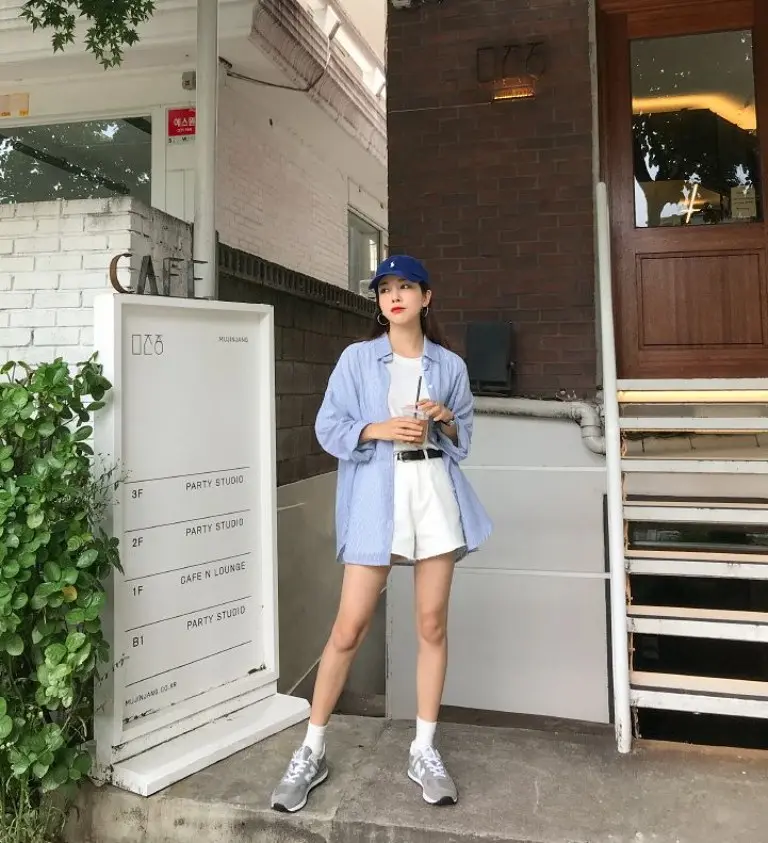
A lightweight blazer in a travel-friendly fabric — think unstructured linen or a thin ponte — is one of the hardest-working pieces you can pack for Vietnam because it bridges the city-to-mountain temperature gap without taking up much space. Roll it rather than folding to keep the shoulders from creasing.
Korean Air and most international carriers to Vietnam keep their cabins cold enough that you’ll want a proper layer, not just a pashmina. Boarding in this outfit means you arrive comfortable rather than stiff and rumpled from sitting in inadequate clothing for twelve hours.
Wide-Leg Pants and Linen Top for Hanoi Book Café Afternoons
Hanoi’s book café scene is genuinely worth a half-day — stacked shelves, strong Vietnamese iced coffee, and a general atmosphere of quiet studiousness that feels miles from the street chaos outside. These white mini dresses photograph beautifully in those interiors, all warm wood and afternoon light, and they stay cool in rooms where the AC is more suggestion than fact. The leopard flats are essential for the walking between stops — café hopping in Hanoi means a lot of pavement, and your feet will know by the third spot.
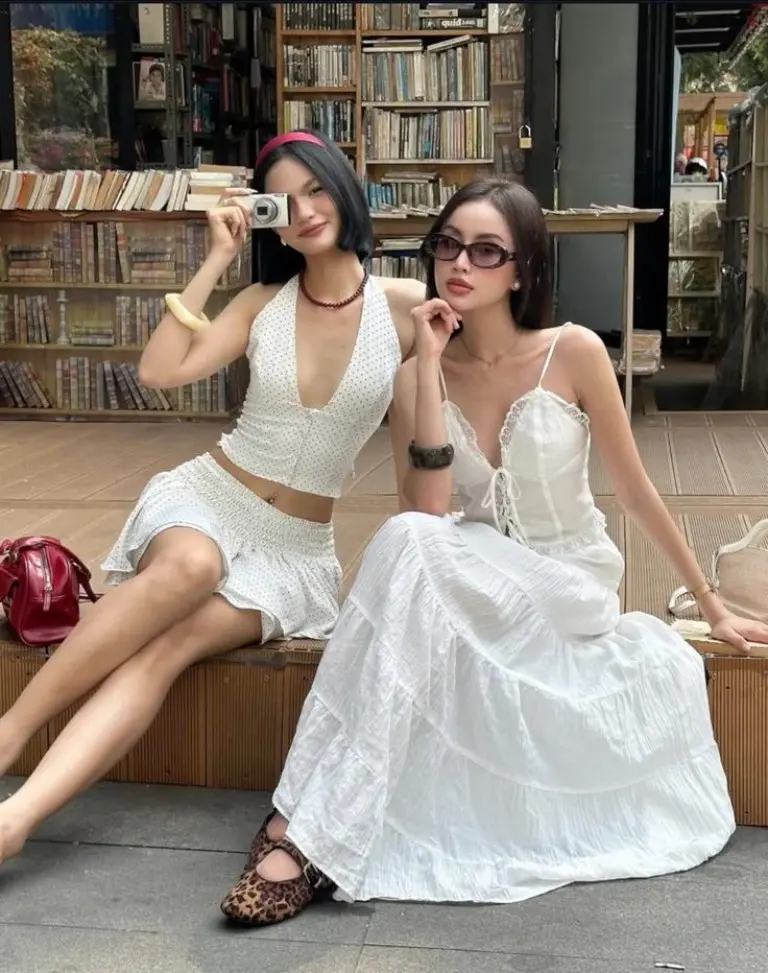
Linen-cotton blends are perfect for long, slow café afternoons because they look intentional and put-together even after hours of sitting, which heavy cotton sometimes doesn’t. A neutral palette — sand, ivory, soft terracotta — reads elegantly in the warm-toned light these cafés tend to favor.
Keep your bag small and cross-body for book café days. The tables really are tiny, and you’ll want both hands free for coffee, a book, or your phone camera. A tote bag hanging off the back of a small wooden chair is a disaster waiting to happen — something that sits securely on your body is the move.
Linen Overalls and Closed-Toe Shoes for Mekong Delta Tours
The Mekong Delta is extraordinary and genuinely mosquito-dense, which changes your packing calculus completely. This denim overall and white tank combination with canvas sneakers gives you leg coverage that a dress or shorts simply can’t, while still being light enough to survive the humidity. Closed-toe shoes are non-negotiable on Delta boat tours — the wooden surfaces get slippery and the edges are rough enough to cut bare feet.
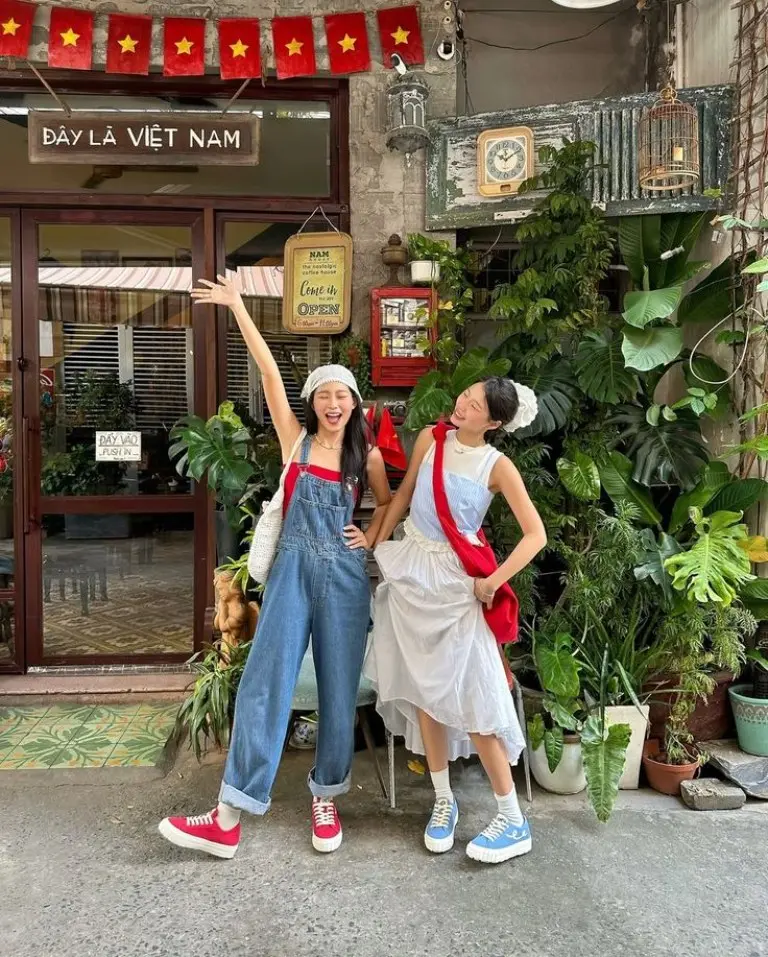
Overalls made from linen or a lightweight cotton canvas are ideal for Delta days because the bib adds an extra layer of protection for your torso without requiring a separate shirt — and you need every advantage you can get against insects in low-lying wetland areas. Tuck the legs into your socks if you’re walking into any areas with heavy vegetation.
Visit between December and April when water levels are lower and the boat access to smaller canals is better. The Mekong in monsoon season is a different, murkier experience, and the outfit practicality shifts — you’d be in full rain gear rather than breezy linen, which changes the whole aesthetic and comfort equation.
Wrap Dress or Maxi Cover-Up for Poolside to Resort Dining
Da Nang and Nha Trang have some genuinely beautiful high-end resorts, and the dress code question comes up constantly — most resort restaurants want something beyond a wet bikini. This white halter jumpsuit solves that transition cleanly: elegant enough for an open-air dining room with a sunset view, but lightweight enough that you won’t be overdressed sitting at the pool bar. The silhouette photographs extraordinarily well against an ocean backdrop, which is worth saying plainly.
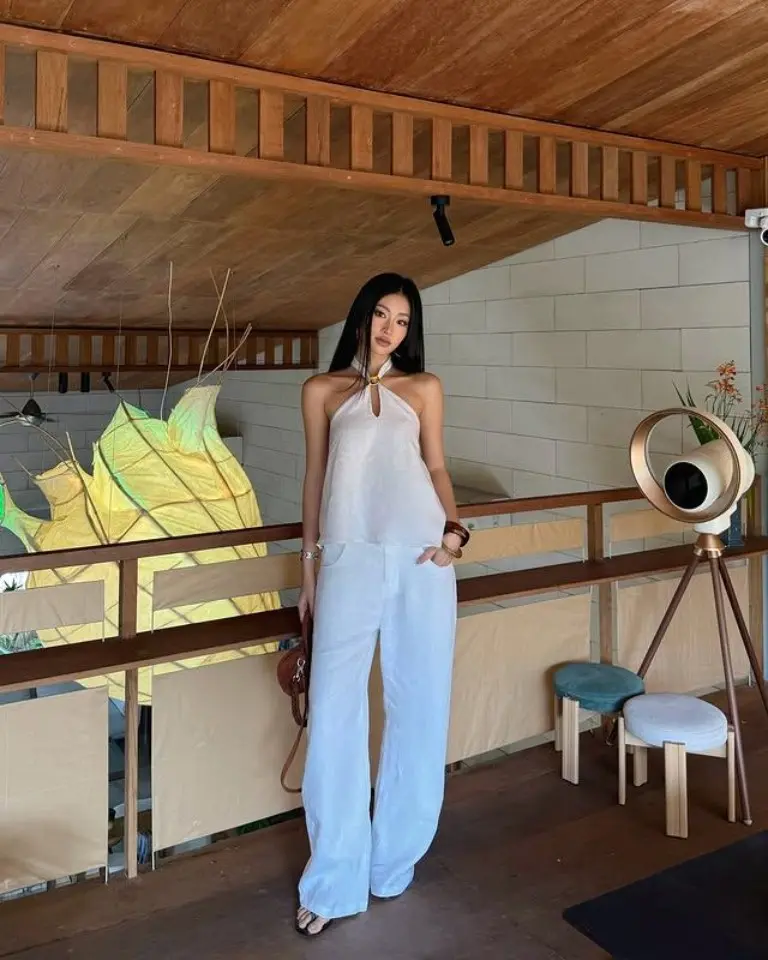
Look for resort dresses in fabric that won’t show water spots — a structured cotton or a matte crepe is far more forgiving than anything shiny or silk-like when you’re moving between pool and restaurant. The cut matters too: something with a wrap or tie waist adjusts to that bloated-from-lunch feeling without you having to change.
Pack this toward the top of your bag since you’ll want it accessible on check-in day when you go straight from airport to pool. Resort check-ins in Vietnam often happen mid-afternoon, which is peak heat, and having this ready to change into immediately rather than digging through a fully packed suitcase is a small but genuine quality-of-life improvement.
Linen Set and Conical Hat for All-Day Halong Bay Limestone Karst Tours
Six to eight hours on a Halong Bay tour boat means sustained sun exposure with minimal shade, and this white bandeau and gray maxi skirt combination keeps you cool while providing enough coverage to avoid a serious burn. The conical hat is not a prop for photos — it does real work, casting shade on your face and neck in ways that a baseball cap brim simply doesn’t reach. Book overnight cruises between November and March when the temperature on deck is comfortable rather than punishing.
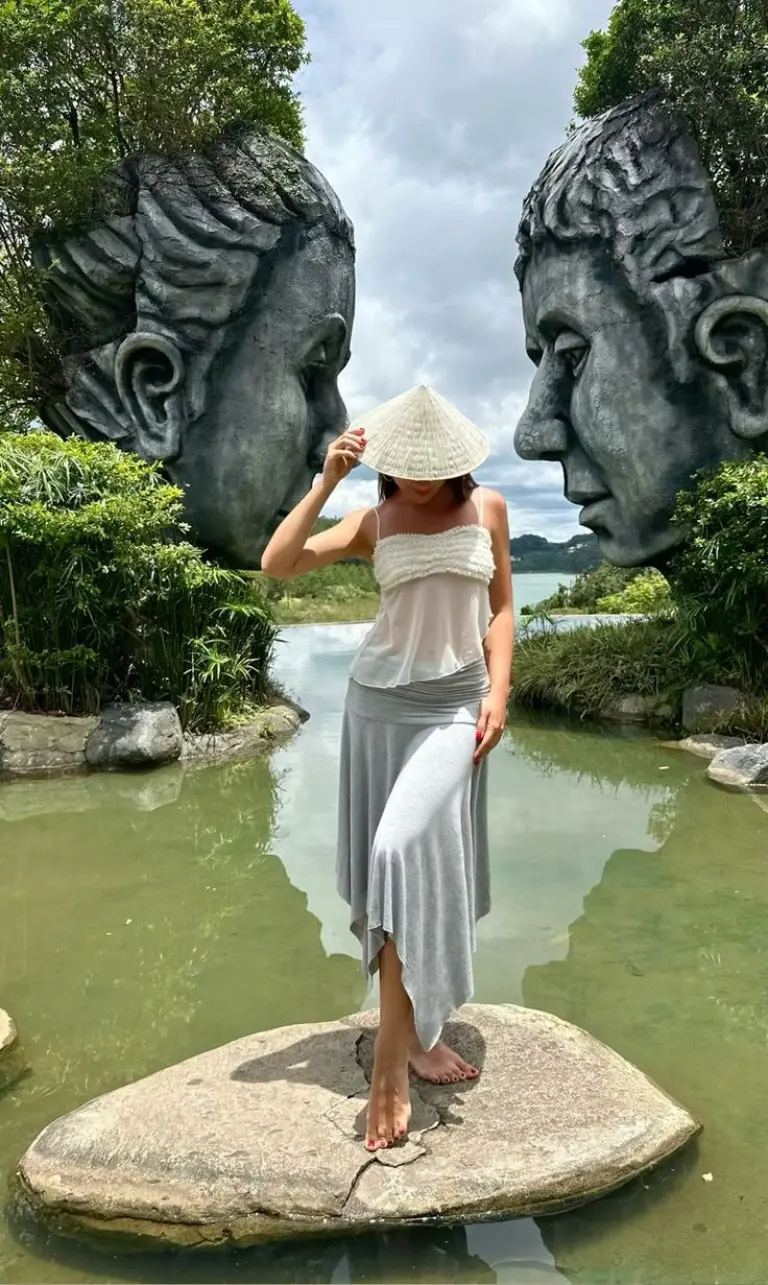
A linen matching set is one of the most versatile things you can pack for Vietnam because it reads as an actual outfit rather than separates, which matters on a day when you want to look polished in photos at every limestone peak and floating fishing village. Both pieces should be the same weight of fabric so the color stays consistent as the day goes on.
The conical hat, or nón lá, is genuinely available everywhere in Vietnam for a few dollars, so if you forget to pack one or don’t want to travel with it, picking one up at your first stop is easy. Just make sure the one you choose has a chin cord or can be tied — Halong Bay sea winds are unpredictable and you don’t want it blowing into the water mid-photo.
Embroidered Blouse and Wide-Leg Trousers for a Mekong Dinner Cruise
Mekong and Red River dinner cruises lean a little dressier than a daytime boat tour, and this floral kimono-style top with wide-leg pants and a conical hat finds exactly the right register — festive without being overdressed, practical without looking like you packed for a hiking trip. The longer sleeves earn their place on an evening cruise when the river breeze picks up after sunset and the air temperature drops a few degrees. Wide-leg trousers are brilliant for boat seating because they don’t stick to plastic chairs the way fitted pants do in humid conditions.
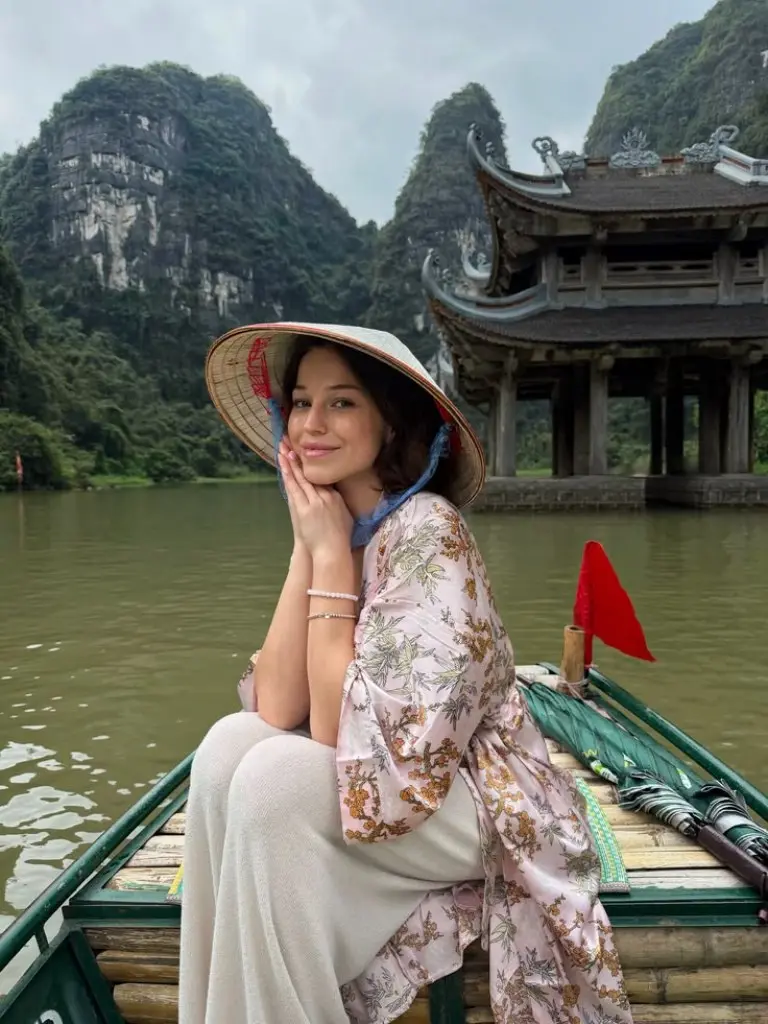
An embroidered or embellished blouse in a light fabric is the kind of piece that photographs like you made a real effort even though it weighs nothing in your suitcase and takes up almost no space. Vietnam has incredible textile markets where you can find similar pieces locally, but having one you already know fits well is worth packing from home.
Evening cruises usually run two to three hours and often include live traditional music, which means you’ll be sitting for much of it — comfort in the seat matters more than you’d expect. A flowy trouser that doesn’t wrinkle and gives you freedom to move when you want to stand at the railing for photos is exactly what this occasion calls for.
Linen Romper and Sandals for Mai Chau Bamboo Eco-Lodge Stays
Eco-lodges and bamboo resorts in places like Mai Chau have a specific aesthetic that rewards natural fabrics and earthy tones — synthetic fast-fashion looks wrong in those settings in a way that’s hard to explain but immediately visible. This white halter and olive wide pants combination feels appropriate to the environment and handles the cooler mountain air that hits when the sun goes down. The flat sandals are genuinely necessary: bamboo flooring is uneven and slightly springy, and sandals with a molded footbed navigate it far better than flat flip-flops.

Mountain eco-lodges in northern Vietnam can sit 10 to 15 degrees cooler than Ho Chi Minh City, which sounds like a relief until you’ve packed only tank tops and shorts. A romper in a medium-weight linen covers enough skin that the cooler evenings feel comfortable rather than cold, and if temperatures do drop further, it layers easily under a light zip-up.
Earth tones — terracotta, sage, sand, warm ivory — photograph beautifully in the green and brown natural textures of a bamboo resort setting. Save the brights and prints for city days; in a setting this visually rich, wearing something quiet lets the landscape do the work in your photos.
Cream Co-Ord Set and Slip-On Sneakers for Bangkok–Vietnam Connections
The Bangkok-to-Vietnam route is one of the most common in Southeast Asia, and layover outfits need to handle both Suvarnabhumi’s aggressive AC and the wall of heat that hits you stepping out of arrivals in Ho Chi Minh City. This cream pleated mini with espadrille wedges works for both: polished enough for airport photos and hotel lobbies, comfortable enough for a long transit. Cream hides travel wrinkles better than white, which shows every crease and every shadow — useful knowledge after an overnight flight.
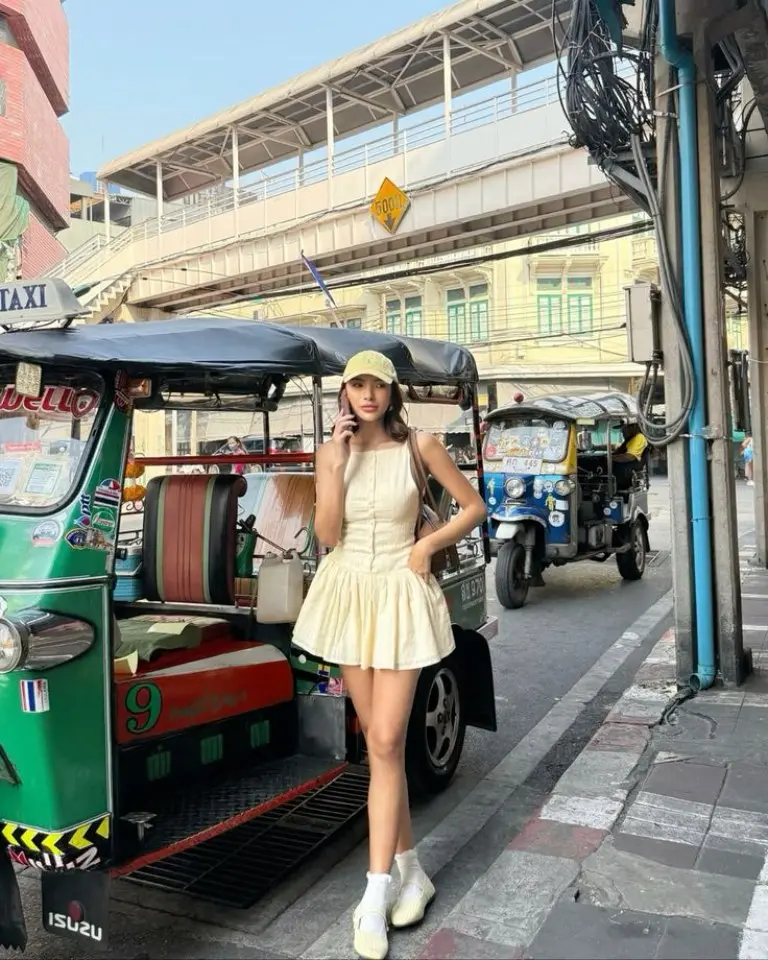
Slip-on sneakers or loafers make airport security in Southeast Asia significantly faster, since you’ll be removing shoes at both Thai and Vietnamese airports routinely. A sneaker with a clean white sole and minimal hardware looks intentional as part of a travel outfit rather than purely functional.
Thai airports blast AC at levels that make a light cardigan mandatory rather than optional — pack a light cardigan in your carry-on where you can reach it without unpacking everything. The same piece will work on the flight and on those first mornings in Vietnam when you’re in an over-air-conditioned breakfast room wondering why you didn’t bring more layers.
Knit Cardigan, Wide-Leg Pants, and Loafers for Hong Kong Stopover to Vietnam
Hong Kong connections to Vietnam mean moving between two extremes in a matter of hours — Chek Lap Kok Airport and every mall in the city run AC cold enough to see your breath, and then you land in Hanoi or Ho Chi Minh City and immediately understand what humidity actually means. This oversized white shirt with red mini skirt and platform sneakers is the packing answer to that specific problem: layer up for Hong Kong, strip back a layer for Vietnam, carry the rest. The pieces work together as a system rather than as separate outfit choices.
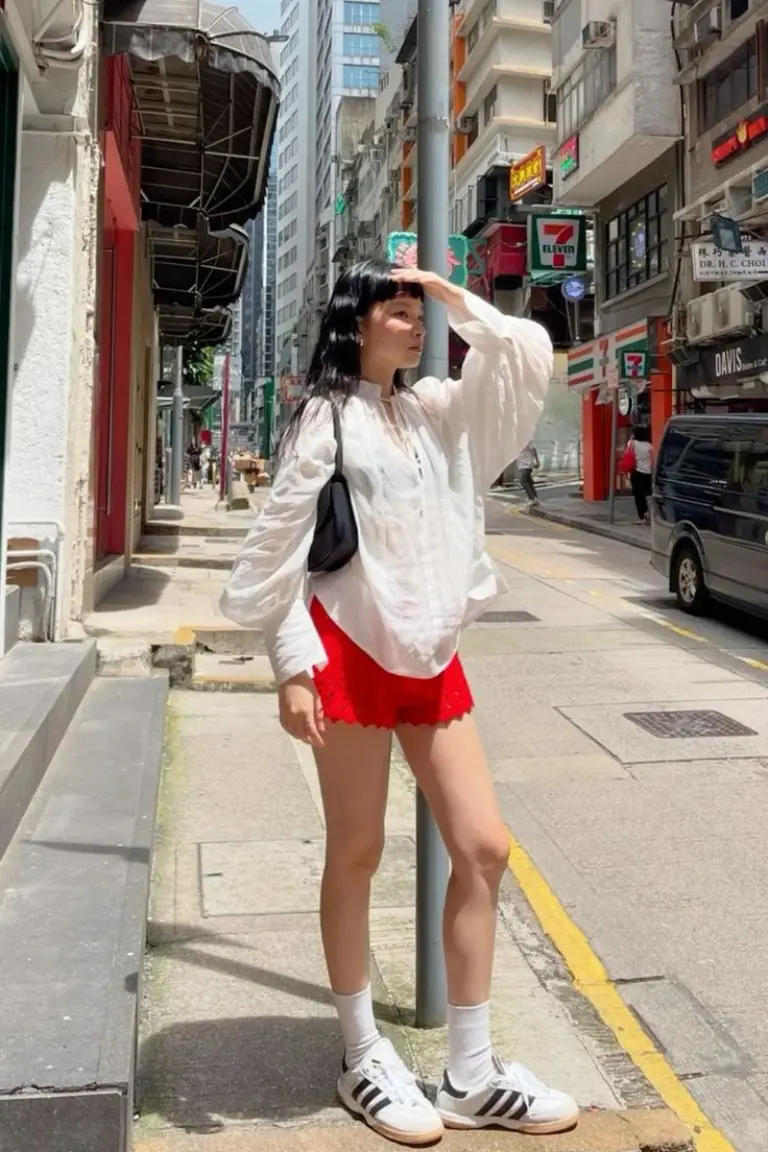
A knit cardigan in a fine gauge — merino or a cotton-linen blend — packs flat, unrolls without major creasing, and provides genuine warmth in air conditioning without being too heavy to carry in your bag when you’re walking in Vietnam heat. It’s the single most useful layering piece for this kind of multi-climate itinerary.
Wide-leg pants in a fluid fabric bridge the formality gap between a Hong Kong airport terminal where you might want to look polished and a casual Vietnamese café where you want to blend in. Avoid anything structured or heavy — the goal is a trouser that moves well in both contexts and doesn’t fight you after eight hours of sitting on a plane.
Linen Midi Dress and Sneakers for Browsing Hanoi’s Indie Bookstores
Hanoi has a surprisingly rich indie bookstore and stationery culture concentrated in a few walkable streets, and spending a few hours browsing with an iced coffee is one of the better ways to spend a slow afternoon. This white camisole with a tiered beige skirt keeps you comfortable in small, often minimally ventilated shops while looking like you made a conscious outfit choice rather than just reaching for the first clean thing. The black flats are essential — you’ll cover more ground than you expect between shops, and a blister on day two of a ten-day trip is genuinely trip-disrupting.
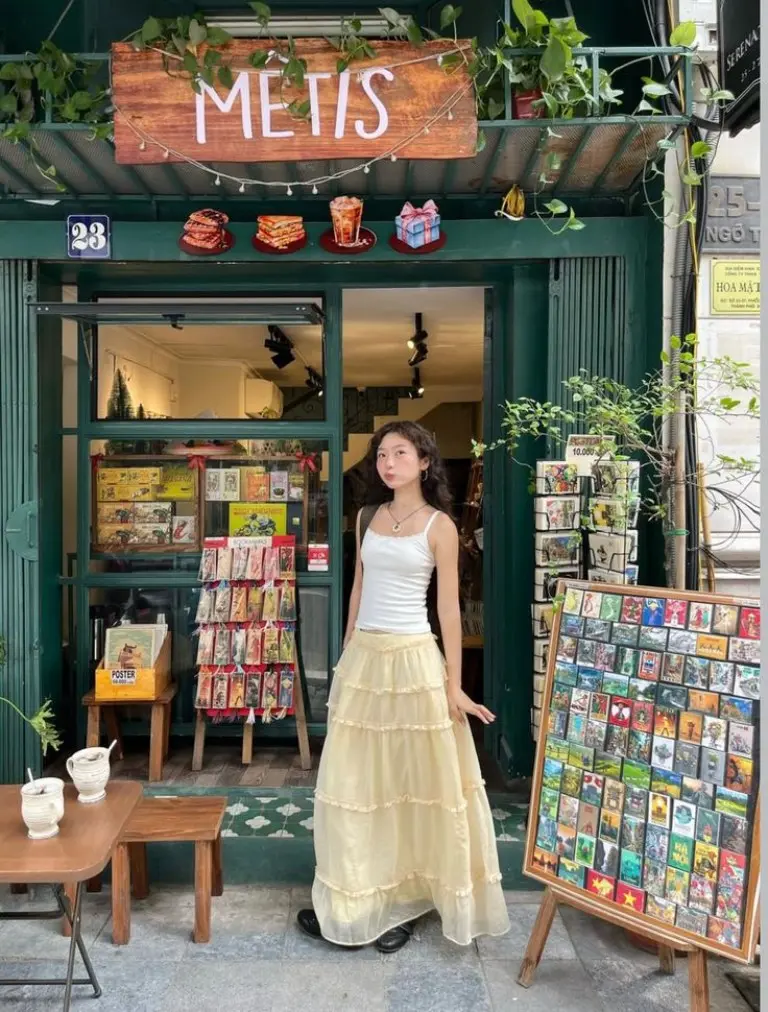
A midi dress hits the sweet spot for this kind of day because it’s long enough to respect the occasional temple or pagoda you might pass and duck into on impulse, but light enough to keep you from sweating through a quiet afternoon. Look for a style with pockets — Hanoi bookstore browsing means carrying small purchases in your hands, and pockets save you from buying a bag you don’t need.
A tote bag or canvas shopper is the right accessory for a book-browsing afternoon in Hanoi — practical for carrying purchases without looking like you’ve arrived ready to clear out the shop. Many of the best indie stores in Hanoi also stock beautifully designed notebooks and prints that make excellent lightweight souvenirs, so having a bag with room to spare is planning ahead.
Long Linen Shirt and Wide Trousers at the Temple of Literature
The Temple of Literature is one of Hanoi’s most photographed sites and one of its stricter dress codes — shoulders and knees covered, no exceptions, and staff at the entrance gate will turn you away rather than loan you a sarong. This white peplum halter with light blue wide-leg pants meets every requirement while still being light enough that you won’t overheat walking the five courtyards in late morning sun. The key is fabric weight: a sheer or semi-sheer linen over wide trousers moves air in a way that a fitted cotton shirt simply doesn’t.
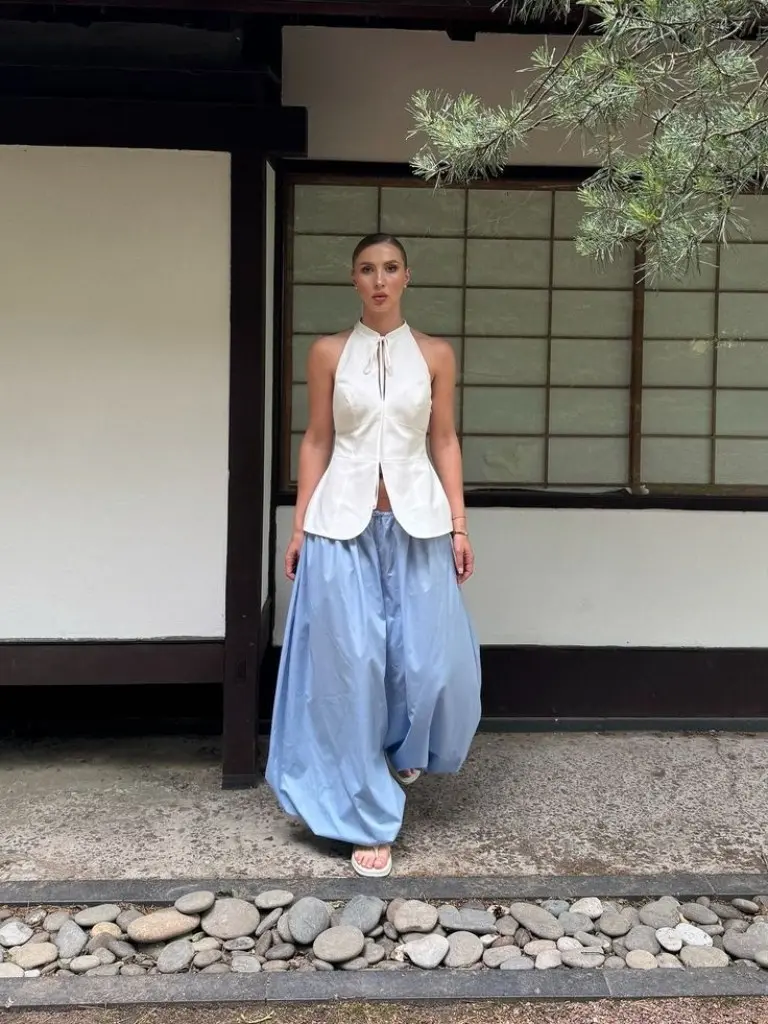
Light neutrals — white, stone, pale grey — reflect heat at outdoor temple complexes far better than darker colors, but they show every smudge and water mark. Sand and pale terracotta are the practical middle ground: warm enough in tone to look intentional against temple stone, light enough in color to stay relatively cool. A loose, relaxed silhouette photographs better against formal architectural backgrounds than anything fitted anyway.
Wide linen trousers at this kind of site are both practical and respectful — they stay cool in the open courtyards, they don’t wrinkle into a disaster when you sit on the stone steps for photos, and they give you freedom of movement when you’re stepping over raised door thresholds, which are a feature of almost every Vietnamese temple gate. Comfortable, breathable footwear that you can slip off easily is the final piece of this equation.
White Maxi Dress with Slides and a Hat for Phu Quoc and Con Dao Beach Resorts
Upscale beach resorts in Phu Quoc and Con Dao exist in a specific elegance category — they’re not just beach clubs, they’re full resort properties with proper dining rooms and sunset bars. This white tank with white maxi skirt and red beaded necklaces moves cleanly from beachside lounging to an early dinner without changing. All-white reflects heat efficiently and a flowing fabric won’t adhere to sweaty skin the way fitted clothes do in coastal humidity. Pack a woven clutch that won’t be ruined by sand — wicker and canvas totes handle beach environments far better than leather.
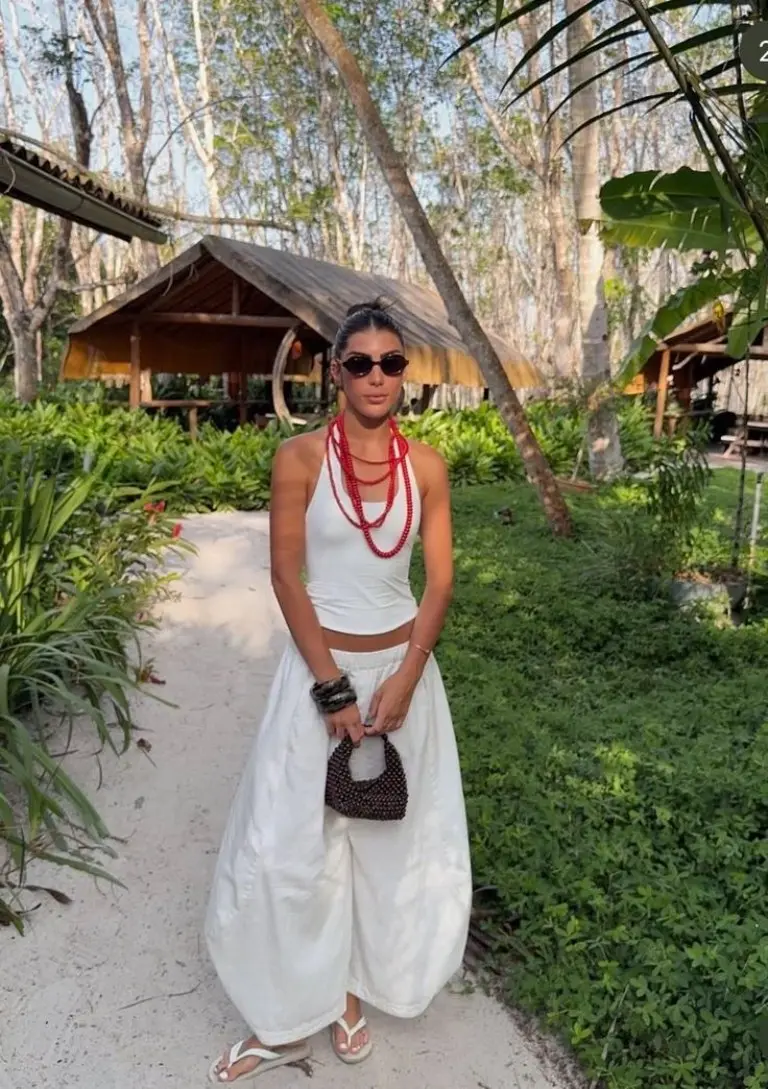
A maxi dress in white or off-white is the quintessential beach resort piece, but the fabric has to be right. Look for cotton voile, linen gauze, or a similar open-weave fabric that stays opaque even when wet — a white dress that goes see-through in sea spray defeats the purpose of wearing something elegant. A sewn-in lining through the bodice and skirt is worth prioritizing.
The bag you carry at a beach resort does as much work as the clothes in terms of overall aesthetic. A structured rattan or wicker tote handles sun, sand, and accidental splashes without developing the stains and watermarks that fabric bags pick up quickly. It also reads polished in the resort dining context, which matters if the restaurant has a loose dress code expectation.
Dark Print Top and Easy Pants at Ben Thanh or Dong Xuan Night Markets
Night markets in Vietnam are spectacular and chaotic, and your outfit choices should reflect that reality before you dress for the occasion. This black halter crop with black wide-leg pants hides the inevitable food-oil splash and sweat of an evening spent eating bánh mì and navigating tight rows of vendors. The flip-flops are the right call for night market floors, which are often wet from street washing or spilled drinks and need footwear you can rinse off at the hotel without drama. The mesh bag signals transparency to vendors and dries in minutes.
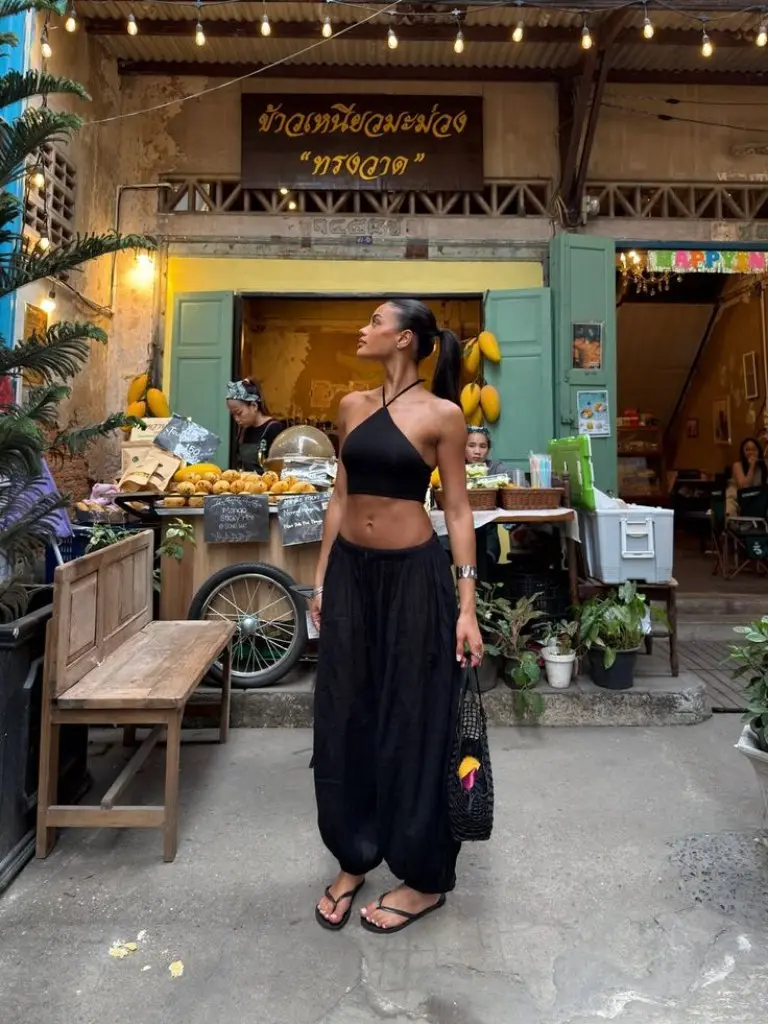
Dark prints — florals, geometrics, anything with a busy pattern — are genuinely strategic at night markets because they absorb and camouflage the minor disasters that happen when you’re eating at a standing-room-only stall. A solid dark color works too, but print adds an extra margin of forgiveness for anything that gets on you.
Easy, straight-cut pants in a lightweight fabric are better than shorts at night markets because the vendor stalls are densely packed and warm from cooking equipment — full leg coverage protects you from accidental heat contact and the occasional splash from a wok. They also let you sit comfortably on the low plastic stools that appear at every street food stall, which shorts sometimes don’t manage gracefully.
Relaxed Linen Set and Platform Sandals for Authentic Pho Restaurants
Real pho spots in Vietnam are low plastic stools, communal tables, and steaming bowls of broth that arrive at your face level when seated — it’s one of the best meals you’ll have and one of the messier ones. This rust-colored tank dress with platform sandals and beaded necklaces is built for exactly this setting: the color hides the inevitable broth splash, and platforms or flatforms keep your feet off floors that range from damp to genuinely wet from morning cleaning. Comfort in that low-seated position is worth planning for — a restrictive waistband becomes a real problem over a long, leisurely pho breakfast.
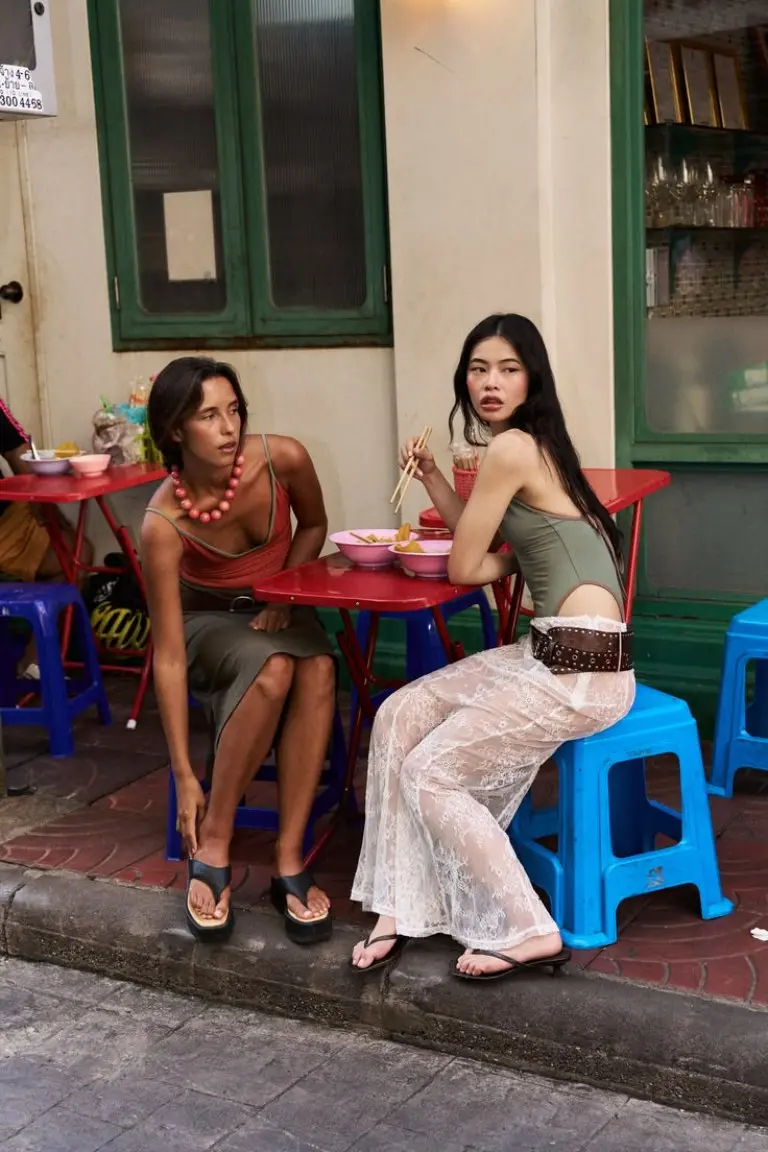
A relaxed linen set — matching top and pants or a shirt-dress style — in a warm neutral or muted color is the kind of outfit that looks like you thought about it but feels like you didn’t. It’s also culturally appropriate for the neighborhood pho spots that open at 6am and close when the broth runs out, which is often the sign of the best ones.
Platform sandals or flatform slides make practical sense in Vietnamese street restaurants because they add a few centimetres between your foot and the floor without requiring any balance or skill to walk in. Look for a style with an adjustable ankle strap so they actually stay on when you’re climbing into a low seat, and choose a waterproof or water-resistant material that can handle a rinse without going to pieces.
How to Pack Smartly for Vietnam’s Heat, Temples, and Monsoons
The core packing principle for Vietnam is a capsule of ten to twelve pieces that cover four specific situations: city heat, temple visits, evenings out, and one active day. Every piece needs to work in at least two of those contexts or it’s not earning its spot in the bag. A linen midi dress, for example, handles temple visits with a cardigan, evening dinners without one, and book café afternoons with sandals swapped for something more comfortable.
Fabric is the single most important decision you’ll make. Cotton, linen, bamboo blends, and moisture-wicking synthetics all work in Vietnam’s heat — anything else is a gamble. Test your fabrics before you travel: wash and hang-dry them overnight to see if they’re actually ready for the next morning. In Vietnam’s humidity, polyester-heavy blends can take two days to dry properly, which breaks your packing rotation fast on a two-week trip.
Temple coverage doesn’t have to mean a dedicated temple outfit that only works for one situation. A light linen button-up shirt, a long scarf that can double as a shoulder cover or makeshift skirt, and any trouser that hits below the knee covers you at every religious site in the country. These pieces also work as layers in overly air-conditioned restaurants and on cold flights, so they’re genuinely multi-purpose rather than single-use packing weight.
For monsoon season travel (May through October in the south, June through August in the north), add one packable rain jacket and a pair of waterproof sandals to your list. Avoid full rubber flip-flops that give you zero grip on wet tiles — a sandal with a textured sole and a back strap is far safer on the slippery surfaces that appear the moment it rains in Vietnamese cities. Pack a compact umbrella rather than a poncho if you’re doing city days, since ponchos trap heat in ways that make the rain almost worse.
Vietnam Packing Is About Editing, Not Adding
Every outfit in this list is doing real work — cooling you down, meeting a dress code, keeping you comfortable on a boat or a bike or a plastic stool at a pho counter. The temptation is to pack more, but Vietnam rewards light bags. You can buy almost anything you forgot in the markets, and local cotton and linen pieces are often better quality and better suited to the climate than what you’d pack from home.
Focus on fabric, fit, and a color palette that travels well together, and you’ll be comfortable and photographable from Sapa to Phu Quoc without checking a bag. The best Vietnam travel outfit is the one you barely think about because it’s working so well — that’s the goal every time you’re packing for somewhere this hot, this varied, and this worth showing up for.
FAQ
What should I wear while traveling in Vietnam in August?
August is peak monsoon season in most of Vietnam — expect 90°F with daily afternoon downpours that soak everything in seconds. Pack quick-dry cotton and linen, a lightweight packable rain jacket, and waterproof sandals with grip. Leave heavy denim and non-breathable synthetics at home; they won’t dry overnight and will be genuinely miserable to wear wet.
What belongs on a Vietnam packing list for women?
Core pieces are breathable tank tops, linen or cotton wide-leg trousers, a midi dress or two, comfortable flat sandals, a straw or bucket hat, and a light cardigan for cold AC. Add one outfit with knee and shoulder coverage for temples, and a pair of shoes that can get wet. Ten to twelve pieces covers most two-week itineraries without checking a bag.
What are the best fabrics for Vietnam’s humidity?
Linen, cotton, bamboo blends, and moisture-wicking performance fabrics all work well. Linen breathes best in dry heat; moisture-wicking synthetics outperform in active situations. Avoid heavy polyester, thick denim, and anything that doesn’t wash and dry in under 24 hours — your laundry turnaround depends on it.
How should I dress for temples and religious sites in Vietnam?
Covered shoulders and knees are required at every temple and pagoda without exception — staff will turn you away at the gate if you arrive in a tank top or shorts. A light linen shirt and trousers, or a midi dress with a scarf, covers every situation. Remove shoes before entering the main hall, and keep clothing non-revealing even if it technically meets the length requirements.
What should I avoid wearing in Vietnam?
Camouflage patterns are illegal in Vietnam, which catches more tourists off-guard than you’d expect. Avoid revealing clothing at temples and religious sites, heavy denim that won’t dry overnight, and expensive visible jewelry in crowded markets and night markets. White clothing is also a practical mistake — it shows every splash, stain, and sweat mark within the first hour.
What footwear works best for Vietnam travel?
You need at least three types: breathable flat sandals for city days, closed-toe shoes for boat trips and wet environments, and something you can slip off easily for temples and some restaurants. Avoid heels entirely on Hanoi and Hoi An’s cobblestones. Everything should be capable of getting wet and drying quickly — rain arrives without warning.
Should I pack jeans for Vietnam?
Standard heavy denim is not worth the bag space — it traps heat, takes two days to dry when wet, and isn’t more comfortable than a good linen trouser in any Vietnam scenario. If you want denim, pack a lightweight denim or cotton-blend style that breathes better and dries overnight. Most travelers who bring full denim jeans stop wearing them after day two.
How does packing differ for Ho Chi Minh City versus Hanoi?
Ho Chi Minh City is consistently hot and humid year-round — your lightest fabrics, always. Hanoi has a genuine winter from December to February where temperatures can drop to the low 60s°F, so a light knit layer or jacket becomes necessary rather than optional. Both cities have monsoon seasons, but they run on different schedules, so check the timing against your specific travel dates.
What’s the best rain jacket for Vietnam’s monsoon season?
Look for a lightweight, packable rain jacket that compresses into its own pocket — anything bulky is too much to carry in heat. Ventilation zippers under the arms make a significant difference in comfort when you’re wearing a rain layer at 85°F. A compact folding umbrella is worth adding alongside it, since ponchos trap body heat in ways that make a warm rainstorm feel worse than just getting wet.
Have any thoughts?
Share your reaction or leave a quick response — we’d love to hear what you think!
-
 0
0 -
 0
0 -
 0
0 -
 0
0 -
 0
0 -
 0
0