

 Lena
Lena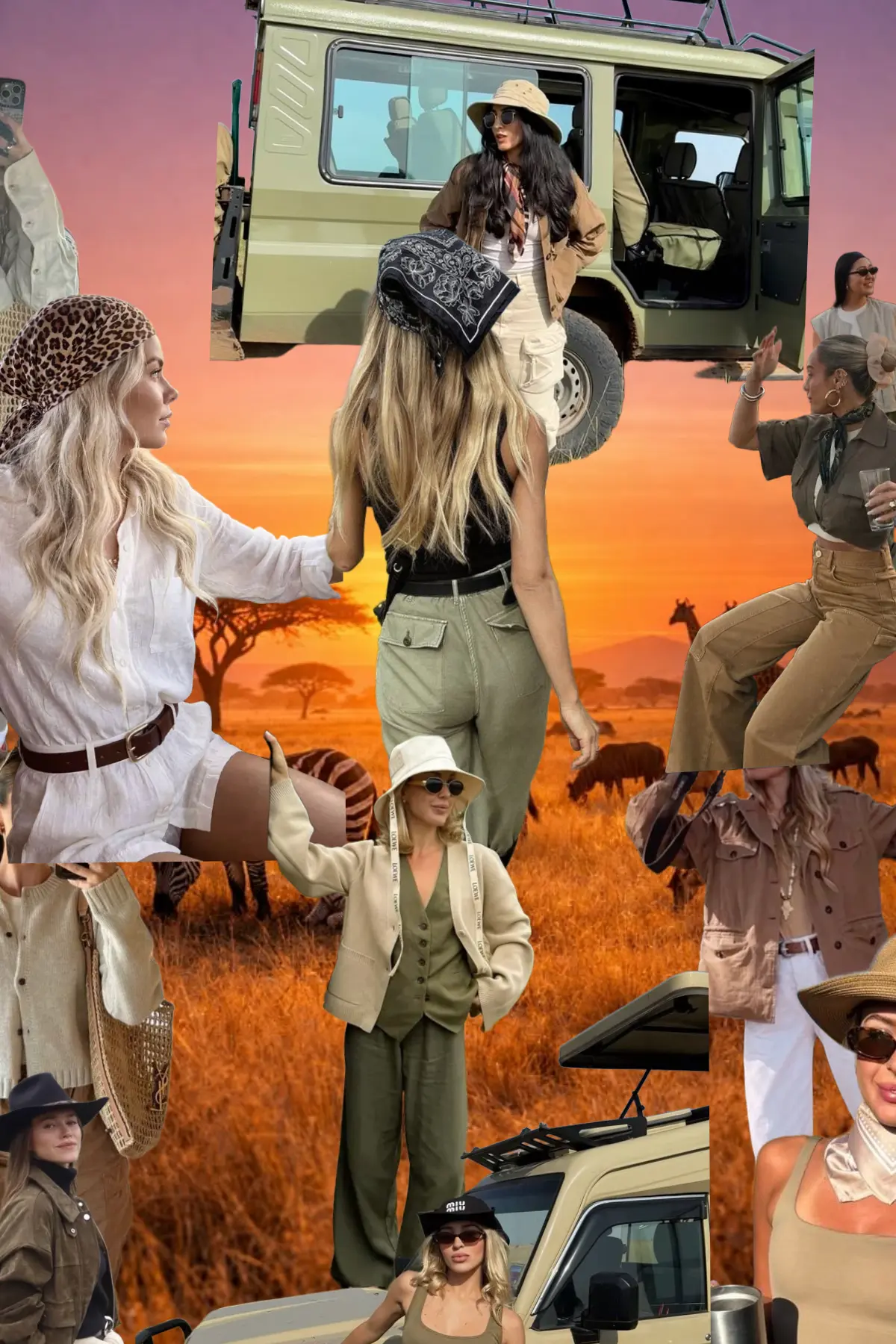
Quick Takeaways
The safari style formula: neutral base + one intentional piece. That’s it. Olive cargo pants + white tank + utility vest. Beige cargos + tee + wide-brim hat. Restraint is the whole secret.
Colors that work: khaki, olive, beige, tan, white, brown. Avoid dark blue and black — tsetse flies (present across East and Central Africa) are attracted to those colors specifically.
Layering is non-negotiable. Morning game drives in Kenya, Tanzania, and South Africa can drop to 10–12°C before sunrise. You will want a warm layer you can shed by 9am.
Best footwear: closed-toe, every time. Lace-up combat boots are the MVP — ankle support, dust protection, look good from jeep to sundowners.
Best fabric: linen and cotton twill for warm hours, merino wool for cold mornings. Both look better rumpled, which is convenient.
One accessory that does everything: a silk or cotton neckerchief. Sun protection, dust filter, style piece. Bring two.
The Real Conditions You’re Dressing For
Most safari packing guides skip this part, but understanding what’s actually happening helps you make smarter choices:
Morning game drives start early — 5:30–6am — and it’s cold. Genuinely cold, especially in East Africa and Southern Africa in winter (June–August). Temperatures can hit 10°C on an open vehicle before sunrise.
Midday is the opposite: hot and dry (savannah and bush regions) or hot and humid (certain East African areas). By 10am you’ll be shedding layers fast.
Dust is constant on game drives. Light colors show it more, but they don’t attract insects. Darker colors hide dust but carry their own risks (see: tsetse flies above).
Bumpy roads, long hours. You’re sitting in an open vehicle for 3–4 hours at a stretch. Tight jeans, stiff waistbands, and anything you can’t move freely in are a mistake you’ll notice by hour two.
Evening sundowners are a different vibe entirely — often at a viewpoint or lodge terrace, golden light, drinks. This is the moment for something a little more intentional. Not formal, just pulled-together.
What Colors Should You Wear on Safari?
Neutral tones are the right answer, but the reasons go beyond aesthetics:
Avoid dark blue and black. Tsetse flies are scientifically documented to be attracted to dark blue and black clothing. This applies to shirts, pants, and bags — especially in Kenya, Tanzania, Uganda, Zambia, and Zimbabwe. Olive, khaki, and sandy beige are genuinely the safer choices.
White works. It photographs beautifully against the landscape and doesn’t attract insects. The trade-off: dust shows immediately. If your lodge has laundry service (most do at the luxury tier), white is completely doable. Save it for days when you’re not doing a 4-hour dusty game drive.
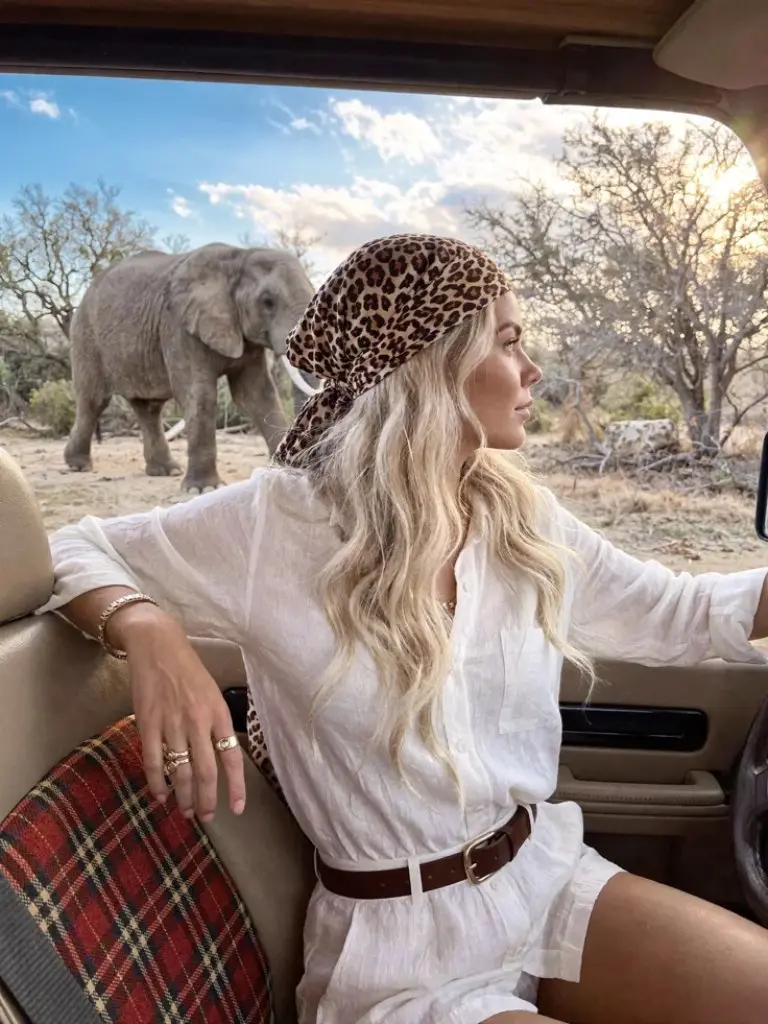
Animal print as an accent reads well — one leopard print headscarf or neckerchief, not a full look. It sits naturally in the safari context without tipping into costume.
Avoid neon, bright red, and anything highly saturated. It can unsettle wildlife and looks jarring in the landscape.
Should I Wear Long Sleeves on Safari?
Yes, and also no — the answer is a layering system.
Long sleeves matter for sun protection (UV is intense, especially at altitude), insect protection at dawn and dusk, and warmth on cold morning drives. But you’ll want them off by mid-morning.
The solution that shows up across all the best safari outfit references: the overshirt or shacket worn open over a tank, then tied at the waist or stuffed in a bag as the day heats up. It’s a single piece that functions as jacket, sun cover, and extra layer depending on the hour. Linen overshirts, lightweight cotton button-downs, and utility shackets all do this job well.
19 Safari Outfits Worth Copying
1. The Minimalist Neutral
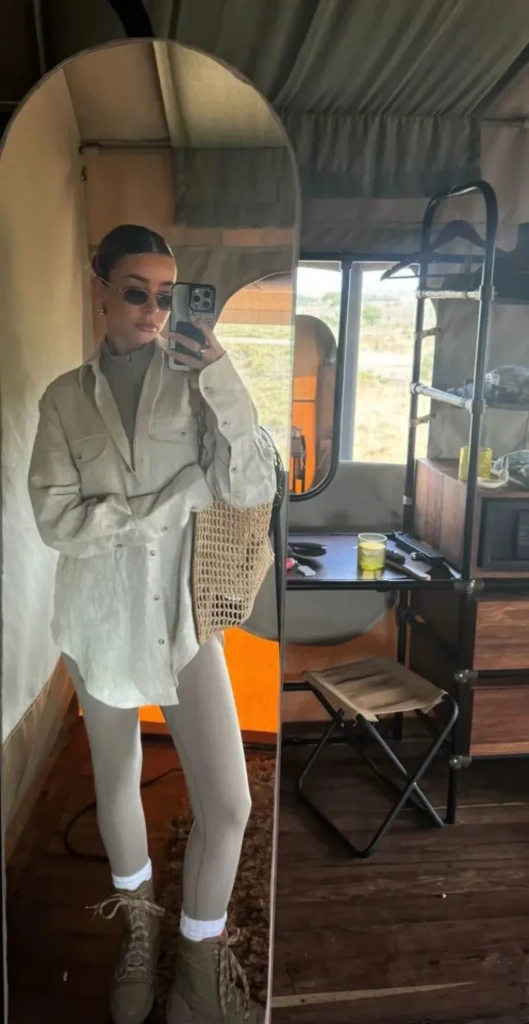
Oversized linen overshirt in sage + ribbed light grey top + cream leggings + khaki sneakers + woven tote bag. Monochrome neutral palette, no effort visible. The crochet bag adds texture without bulk — lightweight enough to carry on the jeep, structured enough to hold everything. Linen shacket on Amazon →
2. The Glamping Morning
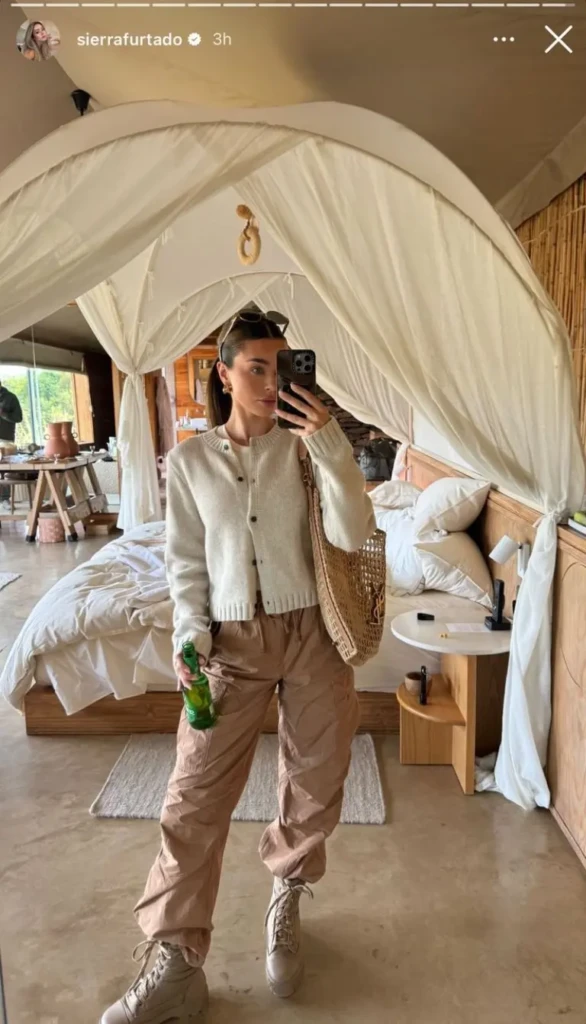
Cream chunky-knit cardigan + beige cargo pants + sand-colored combat boots + woven shoulder bag. The morning-in-camp outfit: coffee, incredible scenery, and you look like you belong in a travel editorial. The key is keeping every piece within one warm-beige family — no contrast, no clash. Chunky knit cardigan →
3. The Cool Adventurer
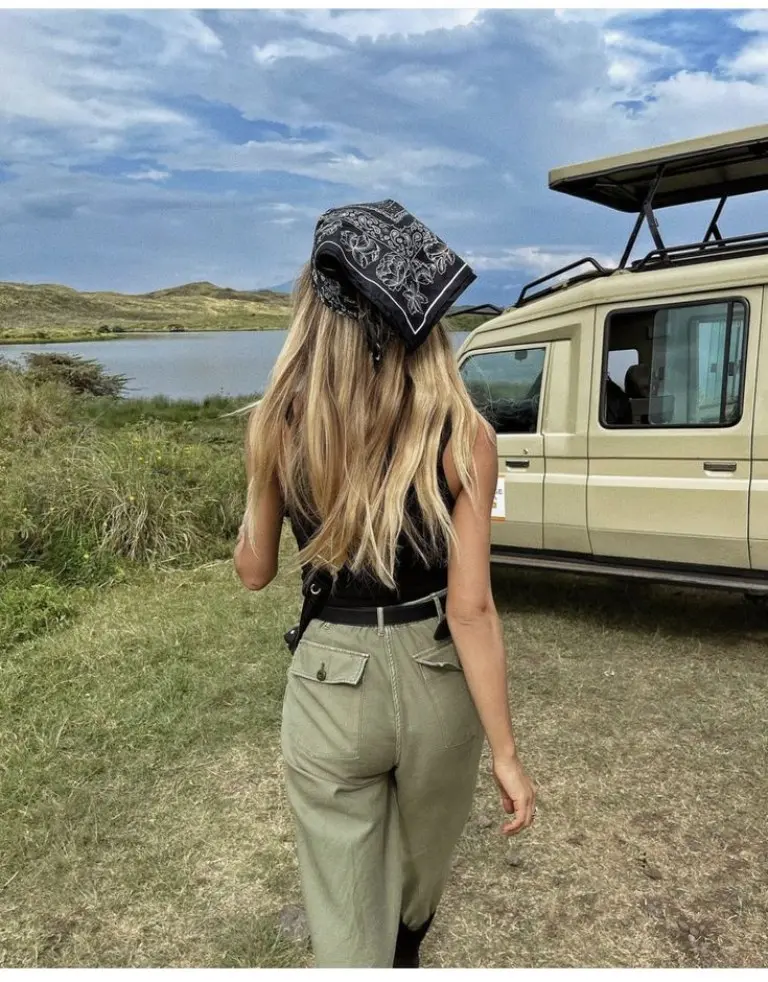
Black fitted tank + olive cargo pants + black leather belt + black bandana tied at the crown. The bandana does double duty: keeps hair out of your face in a moving vehicle and protects your scalp on dusty stretches. One of the few places black works — as a single accent piece, not a full outfit. Bandana headscarf →
4. The Romantic in the Wild
White linen shirt dress + brown leather belt + leopard silk headscarf + gold jewelry. White against a dry African landscape with a leopard print scarf is the classic safari image for a reason. The linen shirt dress is breezy, covers your shoulders for sun protection, and looks intentional with a belt at the waist. White linen shirt dress →
5. The Morning Drive Classic
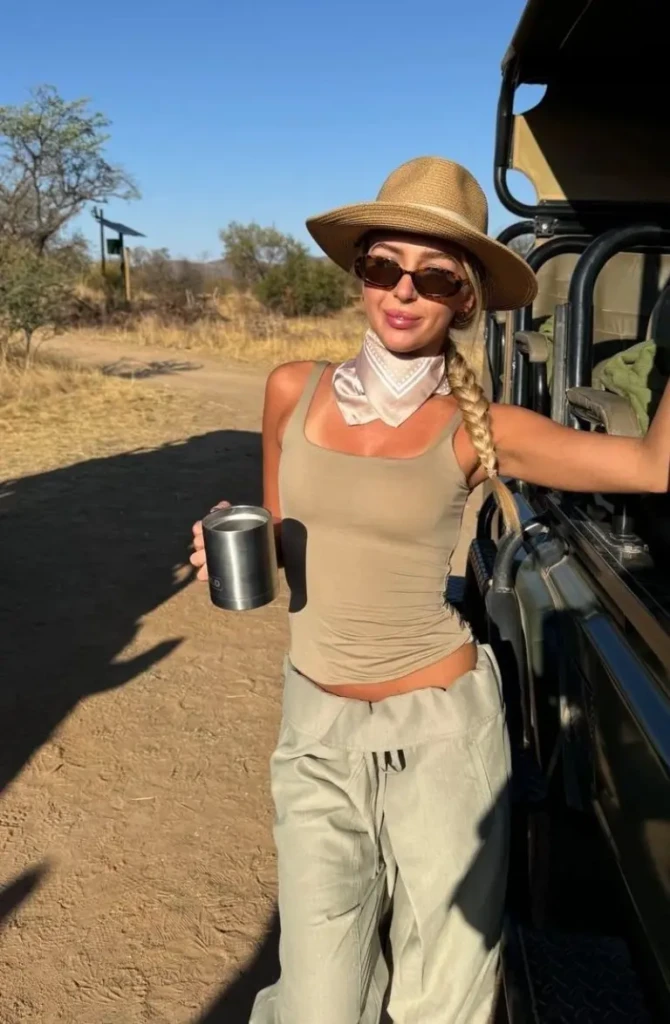
Tan fitted tank + sage linen cargo pants + wide-brim straw hat + neutral silk neckerchief + brown wraparound sunglasses. This is the outfit that appears on every safari mood board for a reason. The neckerchief at the throat covers skin, blocks dust, and looks chic — all at the same time. Straw safari hat →
6. The Editorial Safari
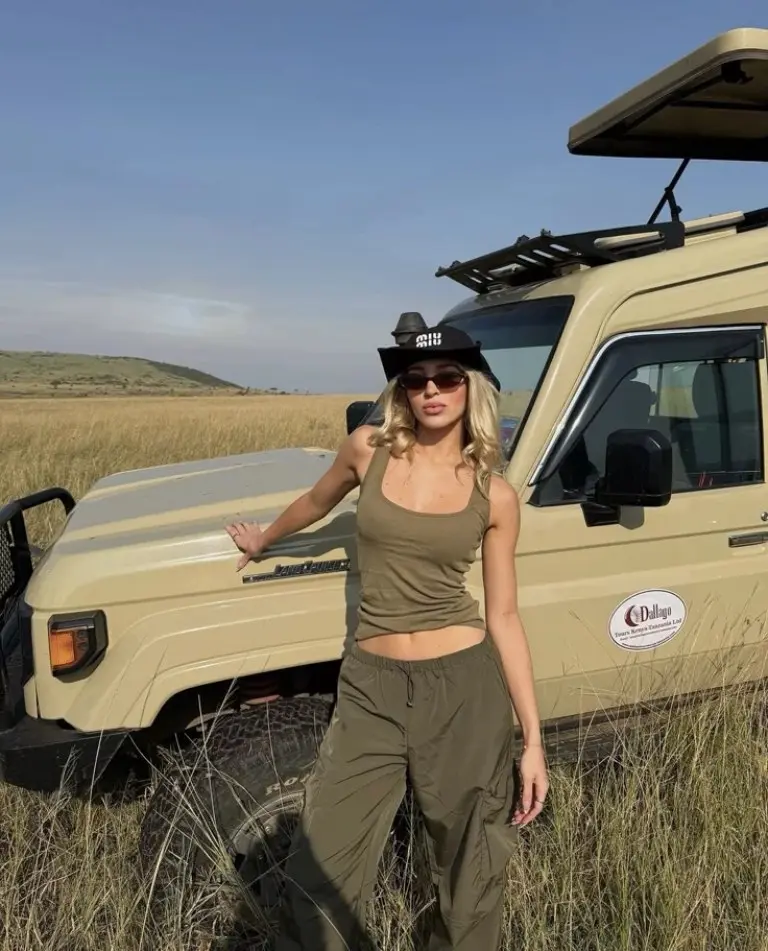
Olive ribbed crop tank + olive cargo parachute pants + black cowboy hat + small oval sunglasses. Matching olive-on-olive reads as deliberate, not an accident. This is the fashion-forward take on safari dressing — same functional palette, sharper silhouette. Olive cargo pants →
7. The Layered Cool-Weather Look
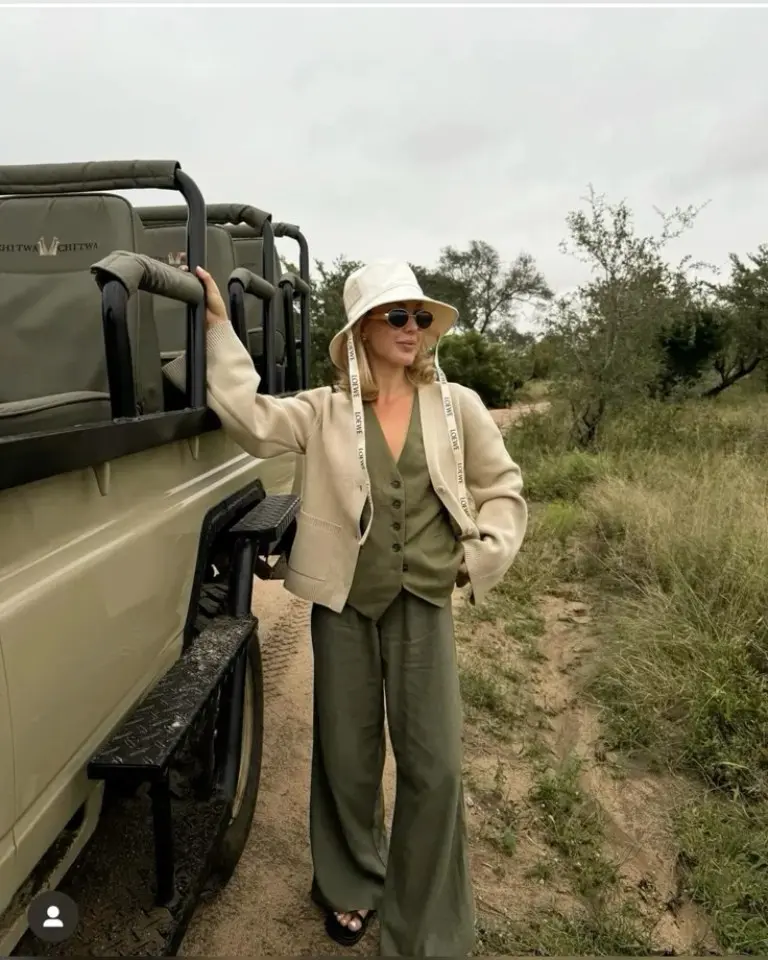
Olive wide-leg linen pants + olive button-front vest top + cream oversized cardigan + white bucket hat + crossbody bag. This one is built for a cooler day — winter months in South Africa, a rainy morning anywhere. Monochromatic olive with a cream outer layer is understated and polished. Linen wide leg pants →
8. The Utility Vest Outfit
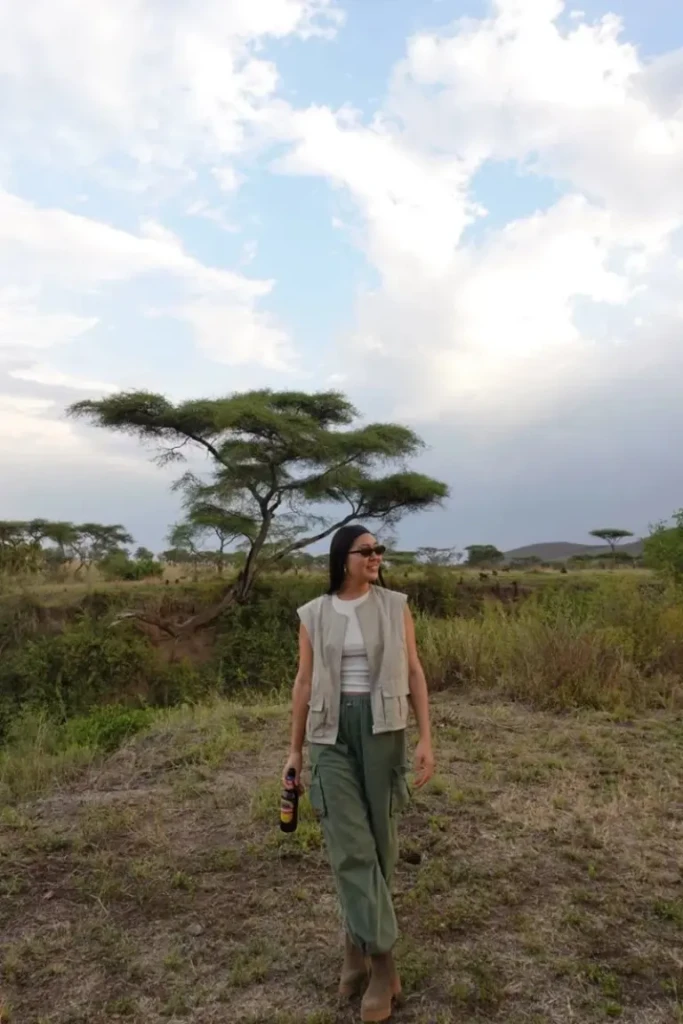
White ribbed crop top + sage cargo pants + beige multi-pocket utility vest (sleeveless) + suede ankle boots + oval sunglasses. The utility vest is the single most practical piece for a safari, and worn over a simple crop top it looks genuinely intentional. Pockets handle lens caps, lip balm, sunscreen, and phone without needing a bag. Safari utility vest →
9. The White Pants Move
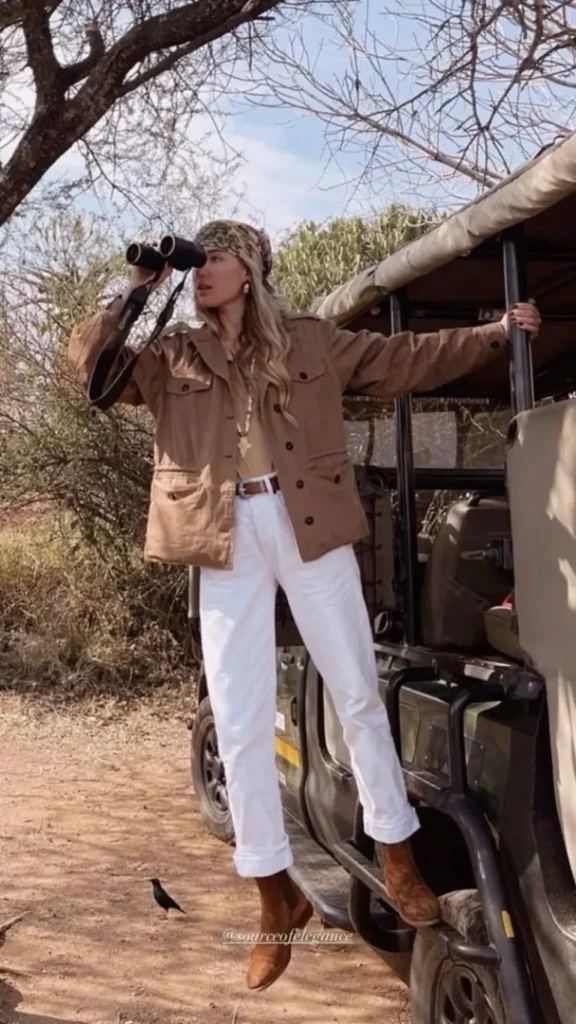
White straight-leg pants (cuffed) + tan layering top + khaki safari jacket + leopard print headscarf + brown cowboy boots. The most traditional safari aesthetic, done well. Tan-and-white contrast is crisp, the boots elevate it into evening territory, and the leopard scarf ties the whole thing to its setting. White straight leg pants →
10. The Sundowner Outfit
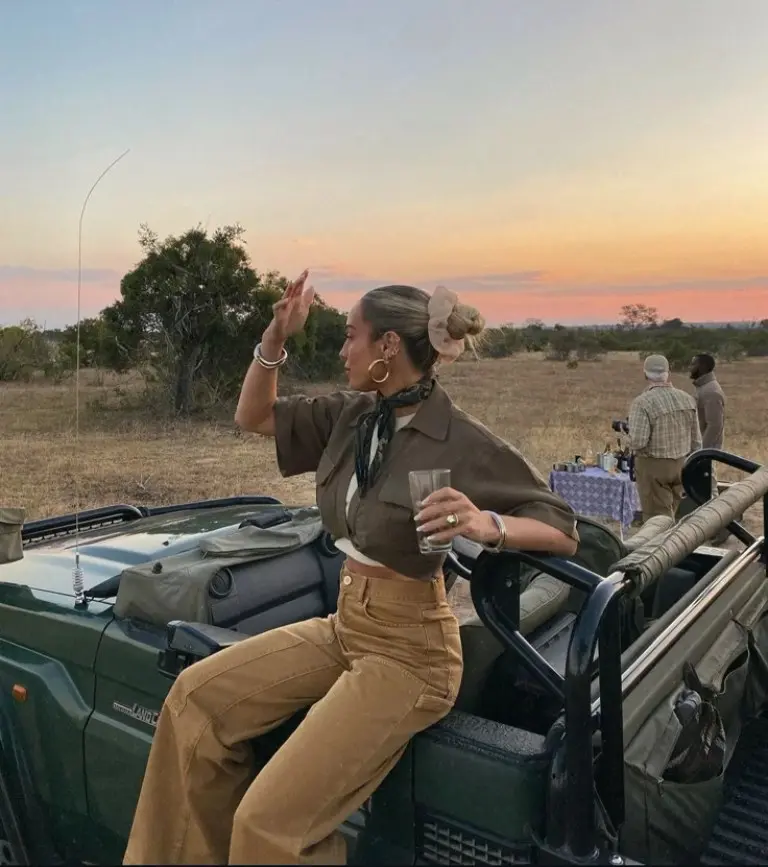
Caramel wide-leg pants + khaki cropped military jacket + green bandana at neck + gold hoop earrings + silk hair scrunchie. Warm tones that mirror golden hour. This is the evening look: dressed up from the daytime game drive outfit without changing everything. The bandana transitions easily from functional neck cover to styled accent. Caramel wide leg pants →
11. The Full Cargo Uniform
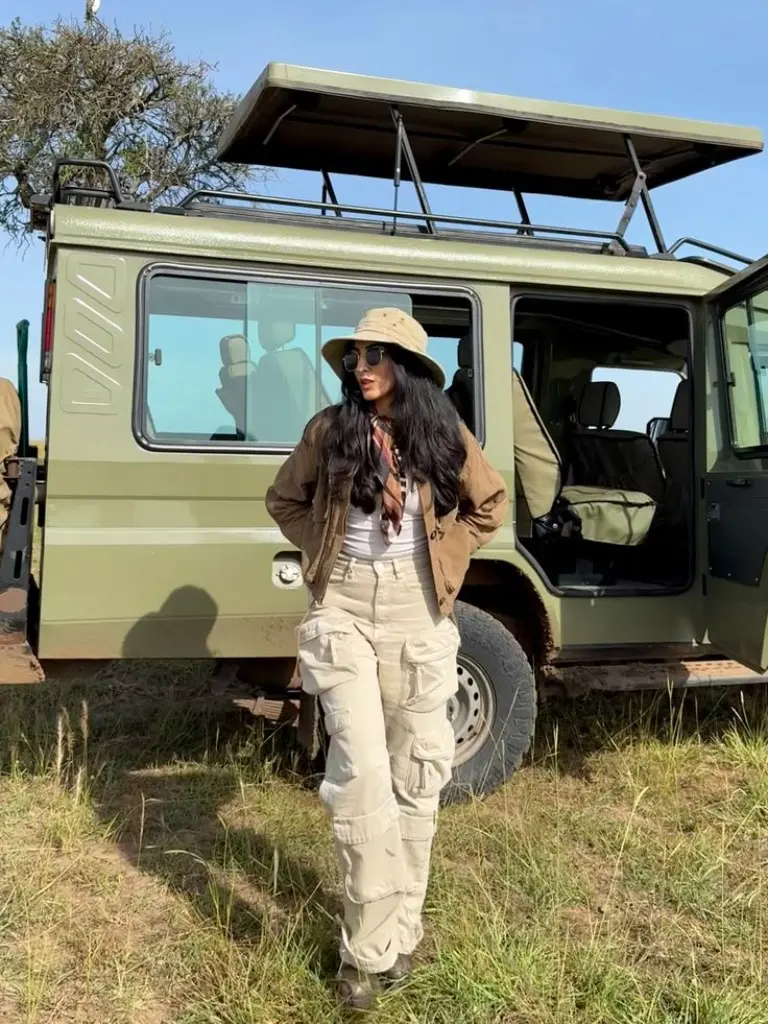
White tank + brown cropped jacket + cream multi-pocket cargo pants (relaxed fit) + bucket hat + printed neckerchief + round sunglasses. Maximum practicality that reads as a deliberate style choice because the palette is so tight. Everything within the sand-and-brown family. Cream cargo pants →
12. The Shorts Option
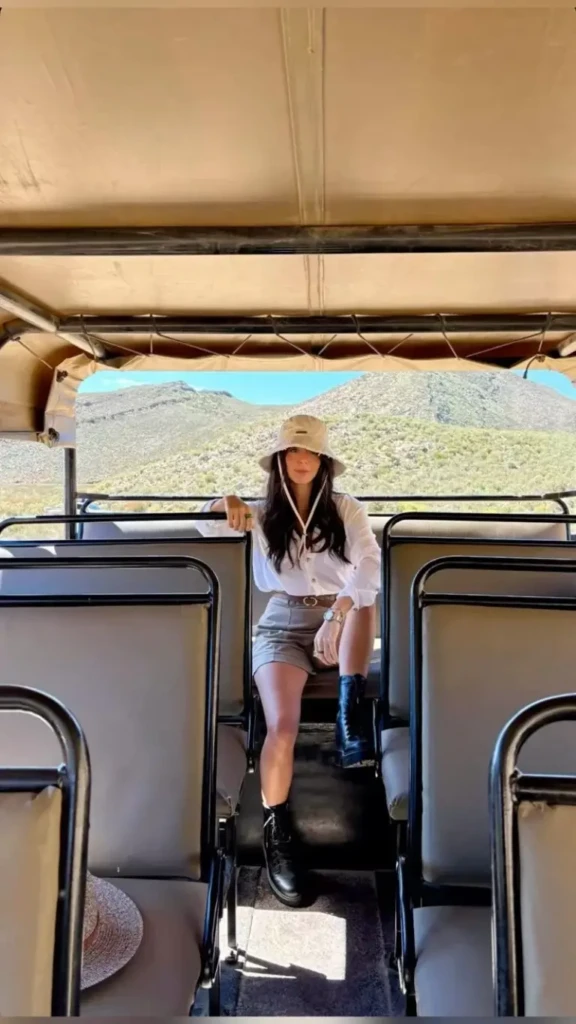
White crisp button-down shirt + light grey mini shorts + brown belt + bucket hat + black combat boots. A shorts works on safari — especially for game drives (you’re seated) and lodge time. The combat boots keep it grounded and practical. Skip this for bush walks; go for it on jeep days.
13. The Romper Pick
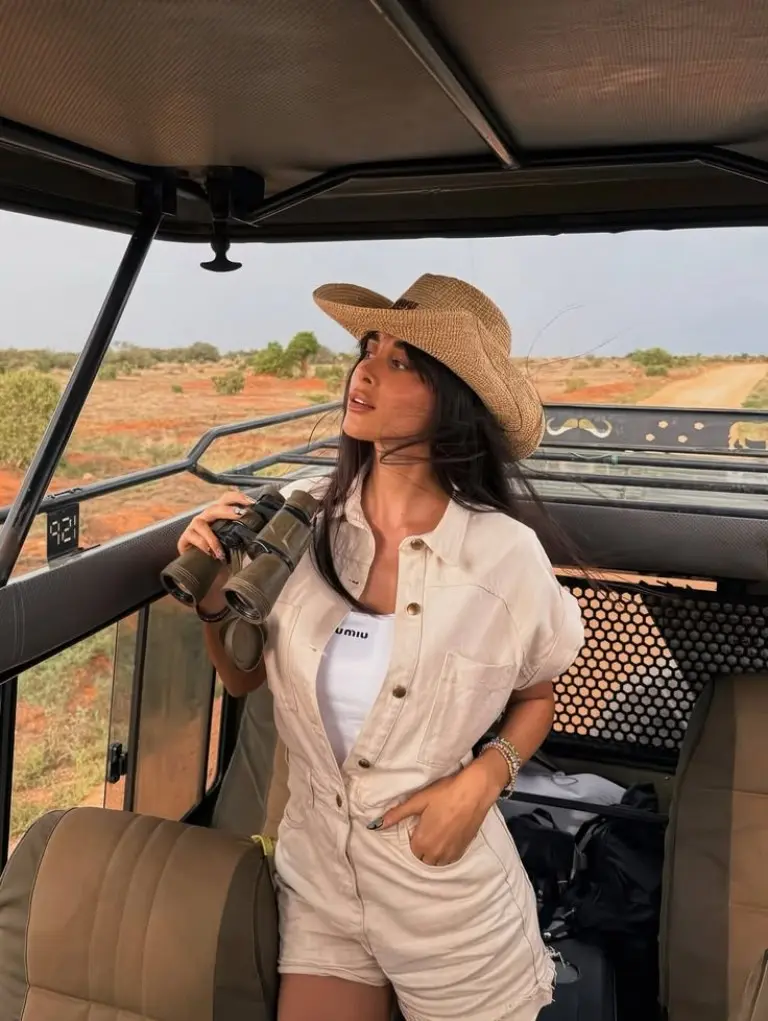
Cream button-front short romper + wide-brim straw hat. One-piece dressing eliminates morning decisions entirely. Go for linen or cotton twill in sand, khaki, or olive — the fabric matters more than the silhouette here. Best for day trips where you won’t need heavy layering. Linen safari romper →
14. The Vest + Leggings System
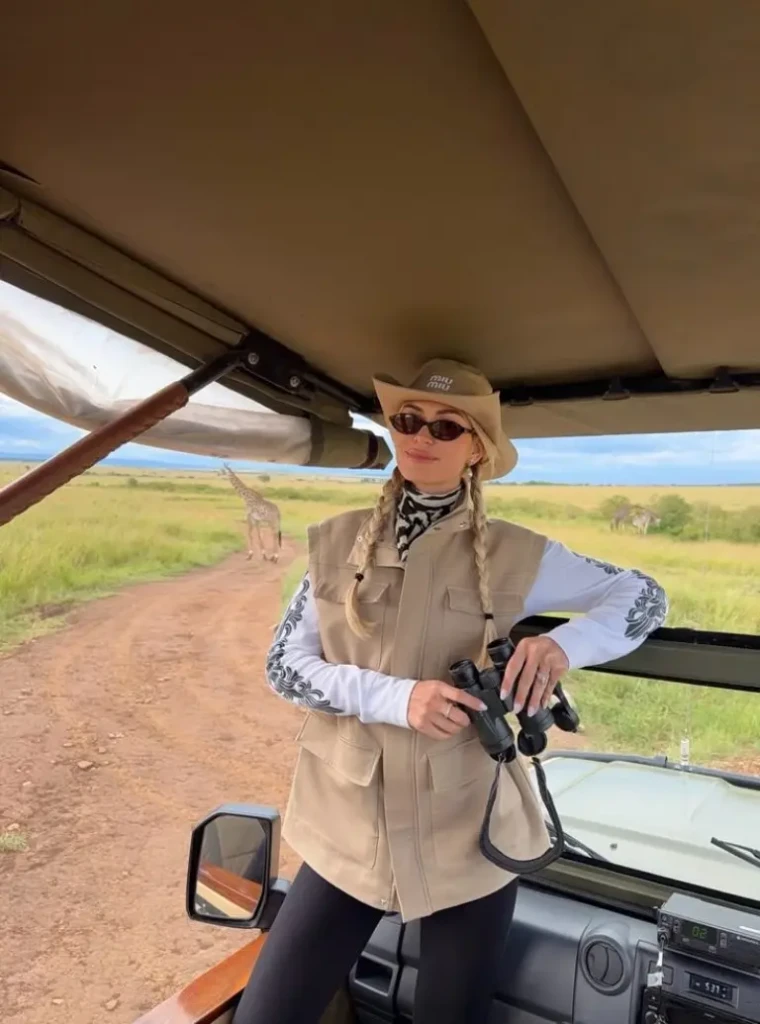
Black leggings + white printed long-sleeve top + beige multi-pocket safari vest + wide-brim hat + sunglasses. Excellent for cold mornings — the leggings layer under cargo pants if needed, or work alone once it warms up. The printed sleeve showing beneath the vest is a small style detail that makes the outfit feel considered. Safari photojournalist vest →
15. The Mixed Pattern
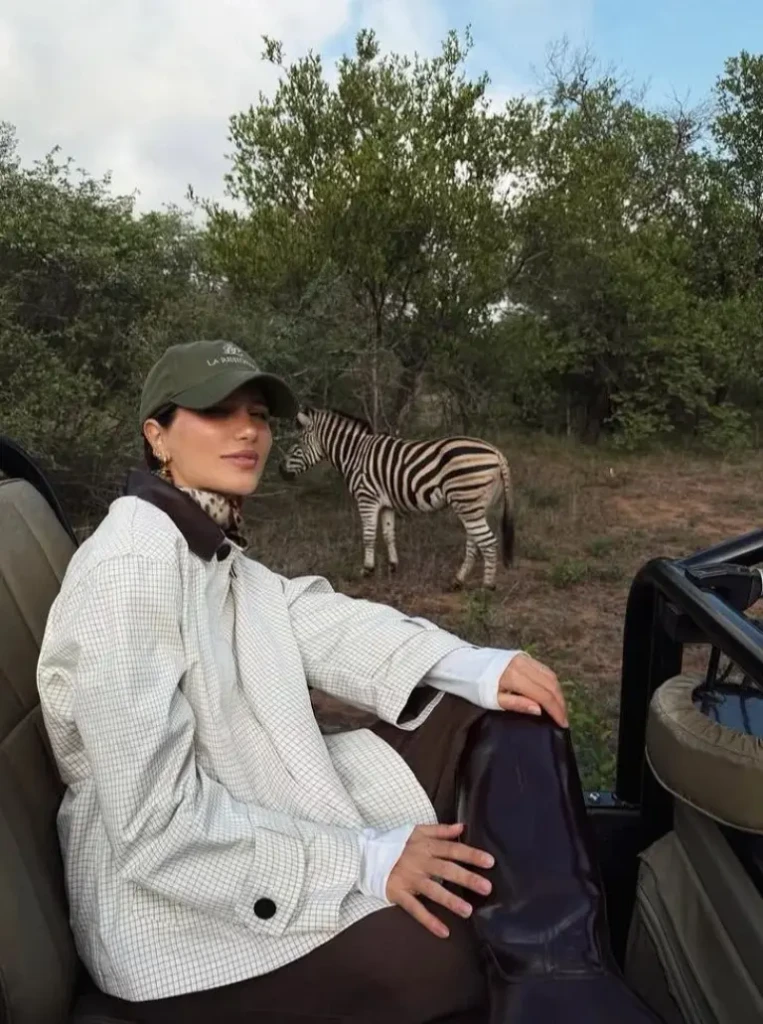
Grid-check white overshirt + dark chocolate brown wide-leg pants + green cap + leopard neckerchief. Two patterns that work together because the palette is controlled — earthy tones only, nothing bright. Dark brown bottoms are underrated for safari: they don’t show dust and look intentional. Check overshirt women →
16. The Desert Safari Edit
White mini skirt + white button-down (worn open as a layer) + olive oversized jacket + white bandana + black platform combat boots + oval sunglasses. This works specifically for desert safari contexts — Wadi Rum, Sahara-adjacent experiences, red rock landscapes. The contrast between a delicate hem and chunky platform boots is the defining move. Platform combat boots →
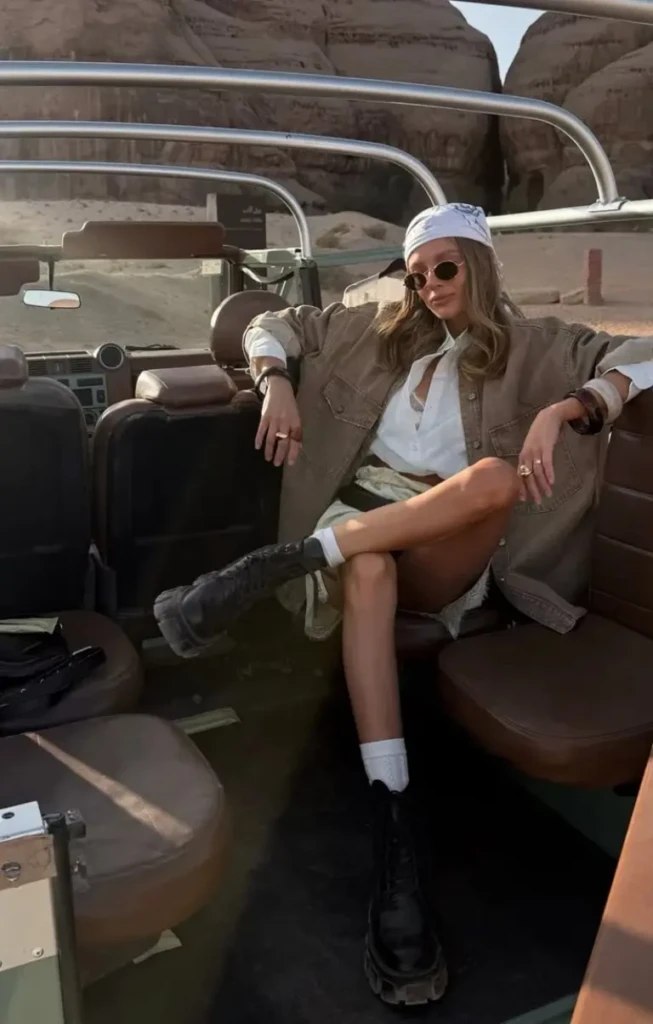
17. The Clean Classic
White fitted tank + sand tapered cargo pants + wide-brim straw hat + crossbody mini bag + black lace-up combat boots. The most wearable outfit on this list — easy to replicate, works on most proportions, genuinely practical. Crossbody bag keeps hands free on the vehicle. Tapered cargo pants khaki →
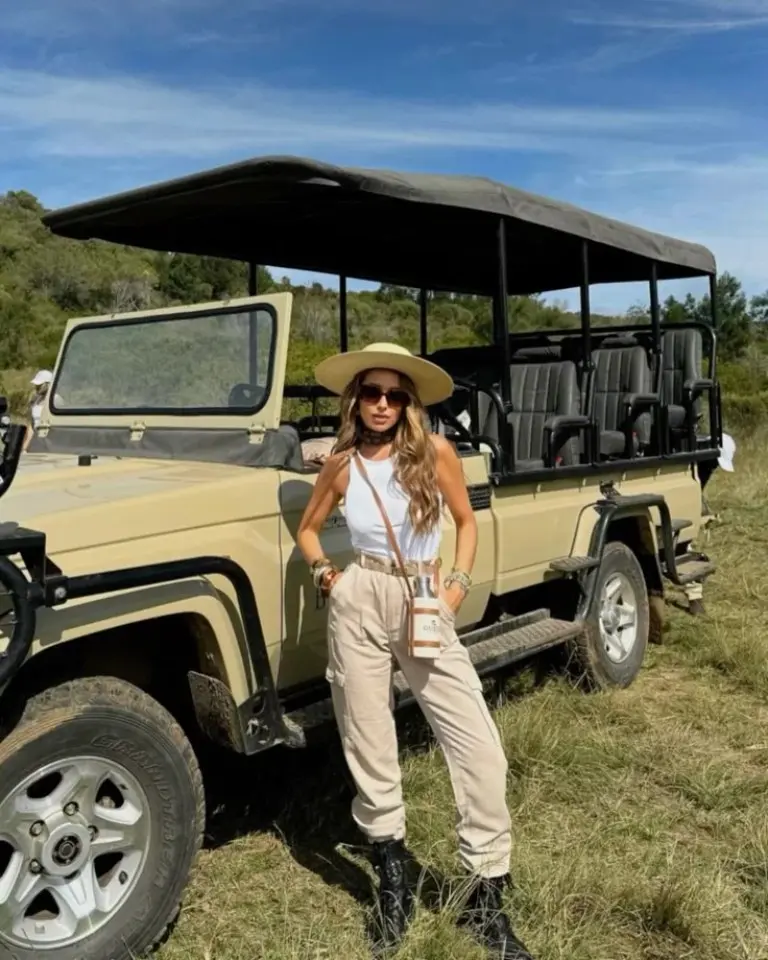
18. The Group Safari Look
White linen tops + black or cream wide-leg pants + black combat boots + wide-brim black hats. When four people coordinate without matching, the trick is a shared palette with individual pieces. Cream and black tones, all linen or cotton, everyone in sturdy boots. Wide brim hat women black →
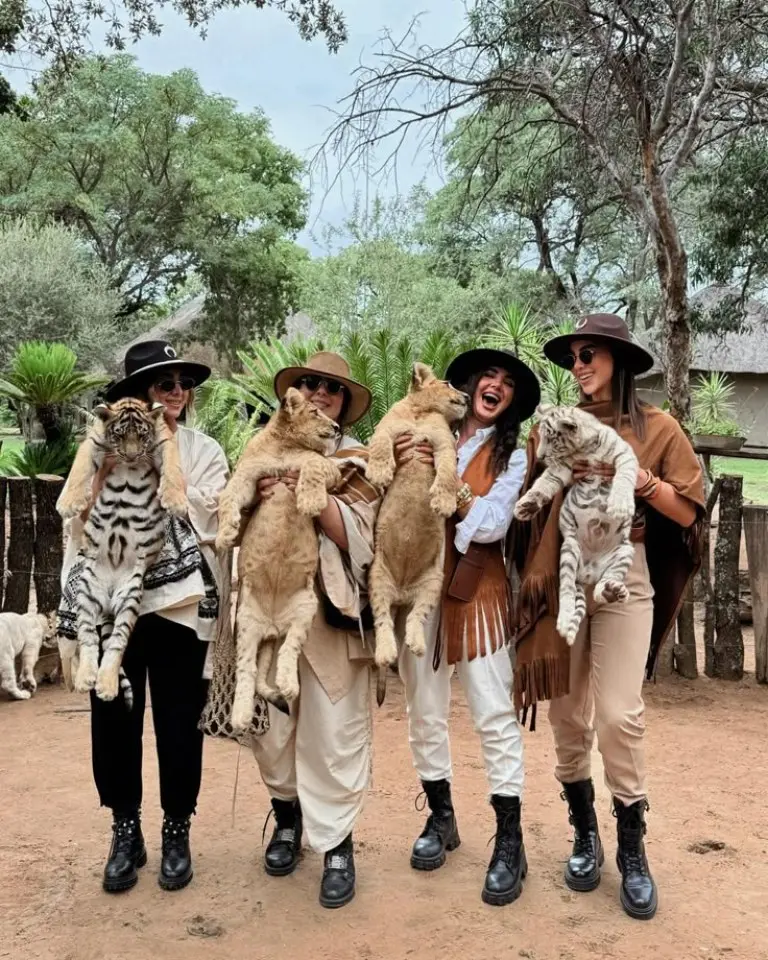
19. The Fringe Statement
Beige fringe safari jacket + olive wide-leg trousers + crochet shoulder bag + khaki wide-brim hat + black lace-up boots. The fringe jacket is the one statement piece; everything else is pulled back to let it read. This is the outfit for someone who wants to lean into the adventurer aesthetic and make it unmistakably fashion. Fringe jacket women →
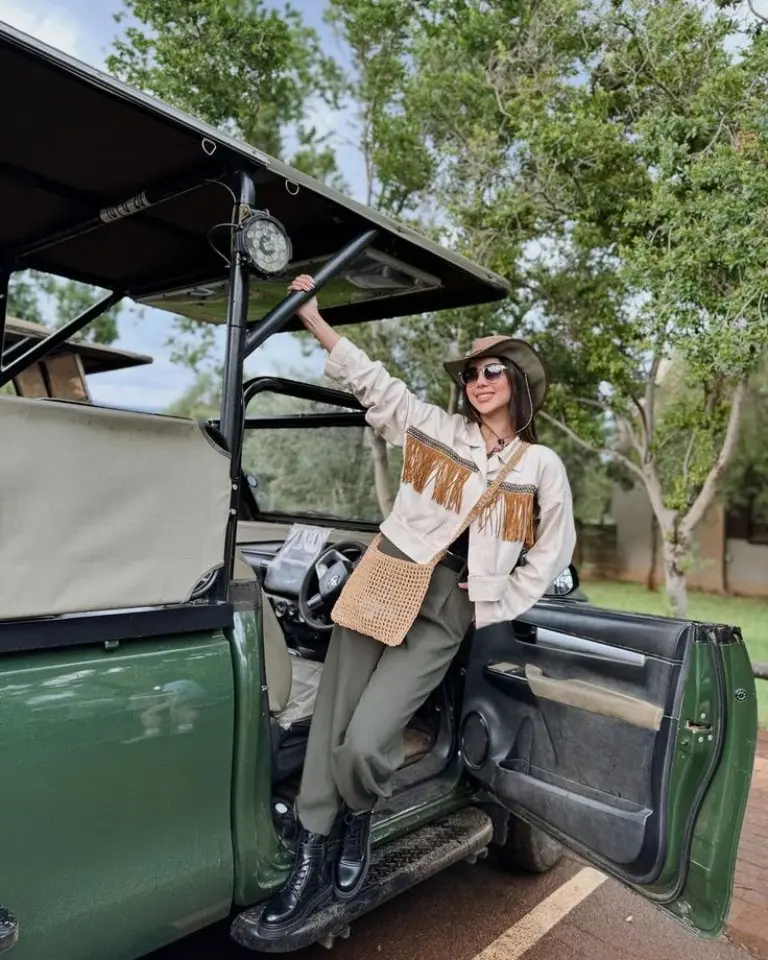
Safari FAQ: The Questions That Actually Matter
What to wear on safari in Kenya?
Hot days, cold mornings. The Maasai Mara can drop to 10–14°C before sunrise on morning drives. You need a warm layer (merino cardigan or fleece) that you’ll shed by 9am, a linen midlayer, and a tank or tee as a base. Avoid dark blue and black — tsetse fly territory. Neutral tones across the board.
What to wear on safari in Tanzania?
Similar to Kenya — the Serengeti has the same temperature swings. Lightweight layering system is the answer. June through October (dry season, peak safari time) means cooler nights and mornings. Linen during the day, merino or fleece at dawn.
What to wear on safari in South Africa?
Winter months (June–August) in Kruger and surrounding areas can get genuinely cold — frost is possible at night, temperatures near 5°C before sunrise. A proper fleece or packable down vest is worth it. Summer (November–February) is hot and can be rainy; quick-dry fabrics matter. South African luxury lodges tend to have good laundry facilities.
What colors should you wear on safari?
Khaki, olive, beige, tan, cream, brown. White works with practical caveats (dust shows). Avoid dark blue, bright colors, and neon. One animal print accent is fine.
Should I wear long sleeves on safari?
Bring both. The system that works: a tank or fitted tee as a base, a lightweight long-sleeve layer (linen overshirt, shacket, or utility vest) that you can remove and tie around your waist. Long sleeves matter for sun protection, cold mornings, and insect hours at dawn/dusk.
What shoes to wear on safari?
Closed-toe for all game drives and bush walks. Lace-up combat boots are the most versatile option — they handle dust, provide ankle support, and work for evening at the lodge. Trail sneakers or sturdy hikers also work. Sandals are fine inside the camp or lodge only.
Can you wear white on safari?
Yes. It photographs beautifully, doesn’t attract tsetse flies, and reads as intentional rather than careless. Practical note: white shows dust quickly, so it’s best for lodges with laundry service, or for days when game drives are shorter or on good roads.
What to wear on a night safari?
Cold, dark, dusty. A dark olive or dark brown fleece over a long-sleeve top, with closed shoes. Avoid light-colored or reflective accessories — they catch light and can disturb wildlife. This is functionality-first dressing.
What to wear on a desert safari?
The desert safari context (Wadi Rum, Morocco, UAE, Namibia) is different from bush safari. Looser silhouettes, lighter layers, more relaxed about strict neutrals. White and cream tones work well. A bandana or headscarf is essential for dust. Platform or chunky-sole boots work here in a way they wouldn’t in the bush.
Safari jumpsuit vs separate pieces — which is better?
For single-day trips: a jumpsuit is elegant and low-effort. For multi-day safaris with temperature variation: separate pieces with a layering system will serve you better. The exception is a linen jumpsuit you can throw a cardigan over — that covers both bases.
Best fabric for safari clothes?
Linen and cotton twill for warm hours (breathable, packable, look good wrinkled). Merino wool for cool morning layers (temperature-regulating, odor-resistant). Avoid heavy synthetics in dry heat — they trap warmth unpleasantly. Nylon or parachute fabric cargo pants work if the fit is right, but can feel warm in high humidity.
The Packing List
Two pairs of cargo pants (one olive, one khaki or sand) — 3–4 neutral tanks or fitted tees — one linen overshirt or shacket — one cardigan or fleece — one utility vest (optional but highly recommended) — one wide-brim hat — two silk or cotton neckerchiefs — good sunglasses — combat boots or sturdy lace-up shoes — one evening piece that’s more intentional than your game drive outfit — a crochet or woven tote bag that can handle a jeep.
Safari dressing works when practical requirements and style intersect. The conditions — dust, temperature swings, long hours in a vehicle — make a lot of fashion choices irrelevant and make a few specific ones obvious. Cargo pants, layering, closed shoes, neutral palette, one silk scarf for everything. That’s the framework. Everything else is personal.
Have any thoughts?
Share your reaction or leave a quick response — we’d love to hear what you think!
-
 0
0 -
 0
0 -
 0
0 -
 0
0 -
 0
0 -
 0
0