

 Lena
Lena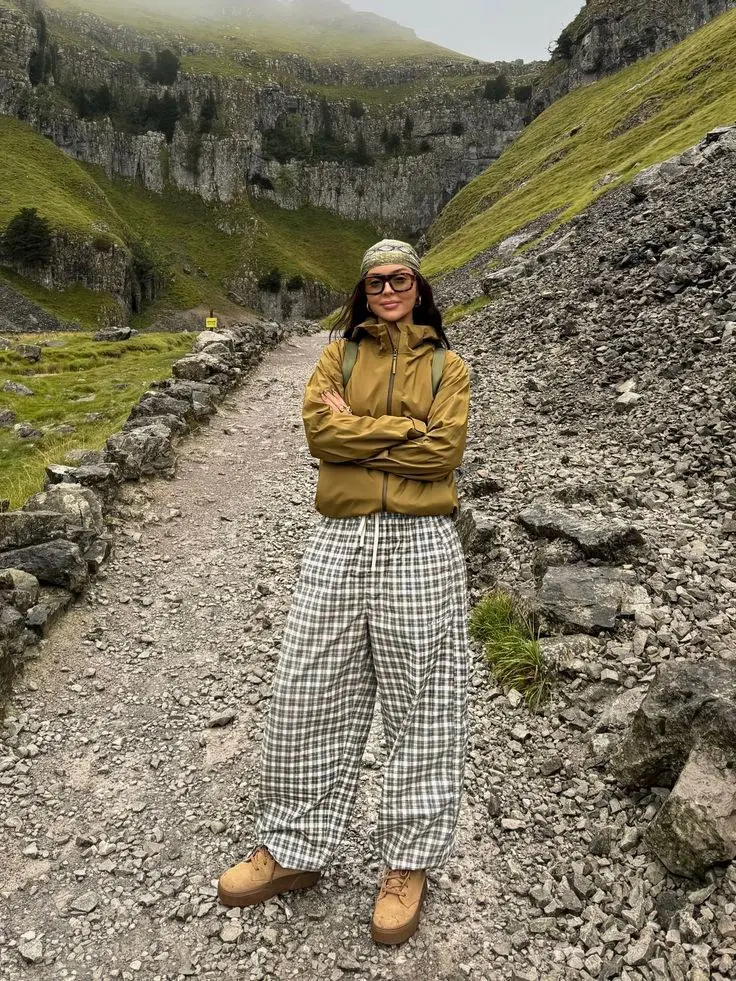
What to wear on a fall hike is one of those questions that sounds simple and then immediately isn’t. You’re cold at the trailhead, sweating by mile two, and underdressed for the windy summit — all in the same afternoon. And unlike dressing for a dinner or a workday, the stakes are slightly more physical: wrong shoes mean blisters, wrong jacket means a miserable descent, wrong pants mean you’re soaked through by the first muddy section.
The anxiety is real: do I look like I’m playing dress-up in expensive gear I don’t know how to use? Am I too casual for an actual trail? Are these leggings going to embarrass me or let me down? I searched through hundreds of real-woman hiking photos to find the 22 outfits that genuinely solve something — not just looks that photograph well against foliage, but combinations that answer a specific problem you might actually have. Here’s what I found.
This post contains affiliate links. If you buy through these links I may earn a small commission at no extra cost to you.
In this article
- The All-Black Puffer and Leggings: For When You Just Want to Go
- The Puffer Vest + Biker Shorts: For Warm Fall Days When You’ll Work Up a Sweat
- The Flannel-Over-Graphic-Tee: For Casual Trails Where the Vibe Matters
- The Technical Base Layer + Rain Pants: For When You Need to Actually Move
- The Shell Jacket + Wide Cargo Pants: For the Hiker Who Wants to Look Put-Together at the Summit
- The White Windbreaker + Wide Olive Trousers: For Warm-Weather Mountain Hikes
- The Technical Shell + Olive Rain Pants: For Cold, Wet, Unpredictable Days
- The Oversized Sweatshirt + Leggings: The Entry-Level Hike Answer
- The Fleece Pullover + Teal Leggings: For the Color-Confident Hiker
- The Black Athleisure Set + Green Fleece Wrapped: For the Styled Walk Along the Water
- The Olive Shell + Plaid Wide-Leg Pants: For the Hiker Who Wants Personality
- The Sherpa Vest + Layered Fleece: For Cold, Rainy Days at Altitude
- The Two-Person Shell + Cargo Formula: The No-Fail Hiking Duo
- The Fitted Crop Half-Zip + Cargo Pants: For Hot-Start Trails
- The White Hood-Up Shell + Wide Black Technical Pants: For Committing to the Rain
- The Sherpa Fleece Jacket + Athleisure Shorts: For Short, Warm-Ish Fall Days
- The Mauve Puffer + Olive Cargo Pants: The Color Combination That Works Better Than It Should
- The Fleece Quarter-Zip + Wide Cream Trousers: For the Reflective Lakeside Hike
- The Duck Vest + Graphic Sweatshirt + Leggings: The Layering Classic
- The Pale Yellow Puffer + Striped Wide Trousers: The Fashion Hiker
- The Striped Sweatshirt + Dark Shorts: The Warm-Climate Hike Solution
- The Full Technical Shell + Cream Parachute Pants: The Summit-Ready Kit
The All-Black Puffer and Leggings: For When You Just Want to Go
This is the outfit for the person who doesn’t want to think. Black leggings, a black puffer jacket, white socks, chunky sneakers — it’s a monochrome athleisure formula that works for short, well-maintained trails, countryside walks, and any situation where you’re not expecting technical terrain. The problem it solves: decision fatigue before an early morning hike.
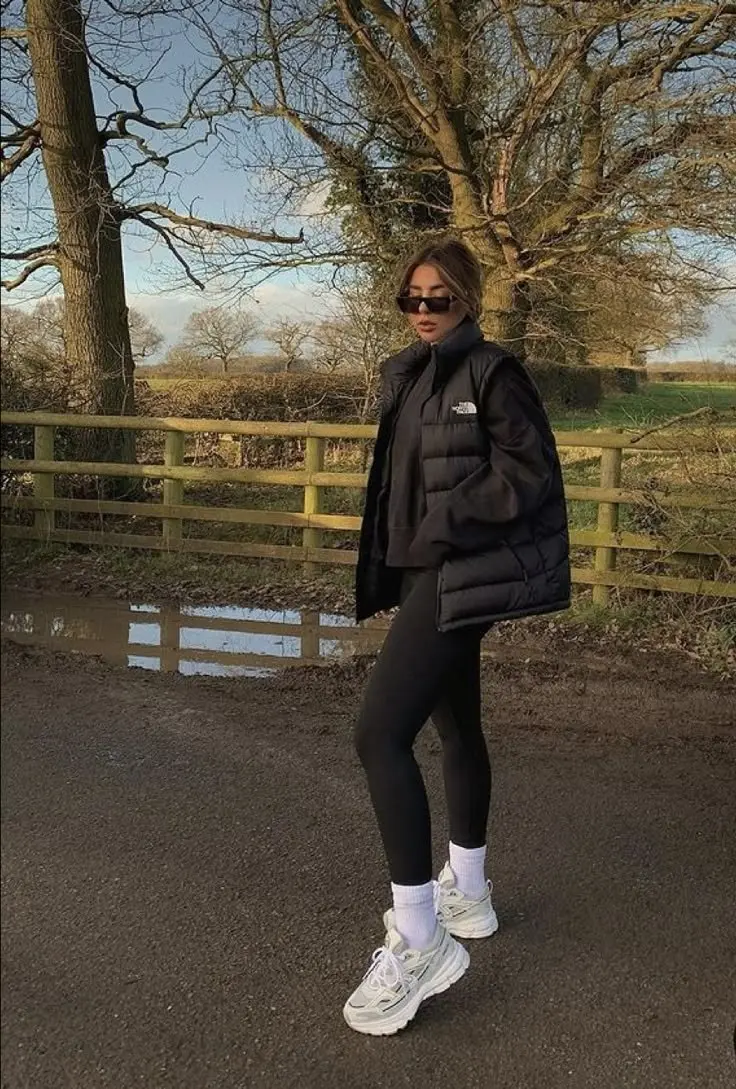
The full-zip puffer does serious work here — it blocks wind, packs heat without bulk, and looks intentional rather than thrown-together. An oversized zip-up puffer in black is the core investment for this look. The chunky trainer finish is doing a lot of styling work too, pulling the monochrome into something more current than just ‘gym clothes outside.’
The weak point is trail-readiness: chunky fashion sneakers are fine on dry, packed gravel, but they won’t handle mud or roots safely. Keep this one for walks under 4 miles on clear paths. The upside is that it goes directly from trail to coffee shop with zero adjustment.
The Puffer Vest + Biker Shorts: For Warm Fall Days When You’ll Work Up a Sweat
This one solves a specific fall problem: what to wear when the air is crisp but you know the first thirty minutes are going to be hard cardio. A cropped puffer vest over a base layer, biker shorts, and chunky trail sneakers reads intentionally athletic without trapping heat. It’s the outfit for sunny fall afternoons on moderate elevation trails.
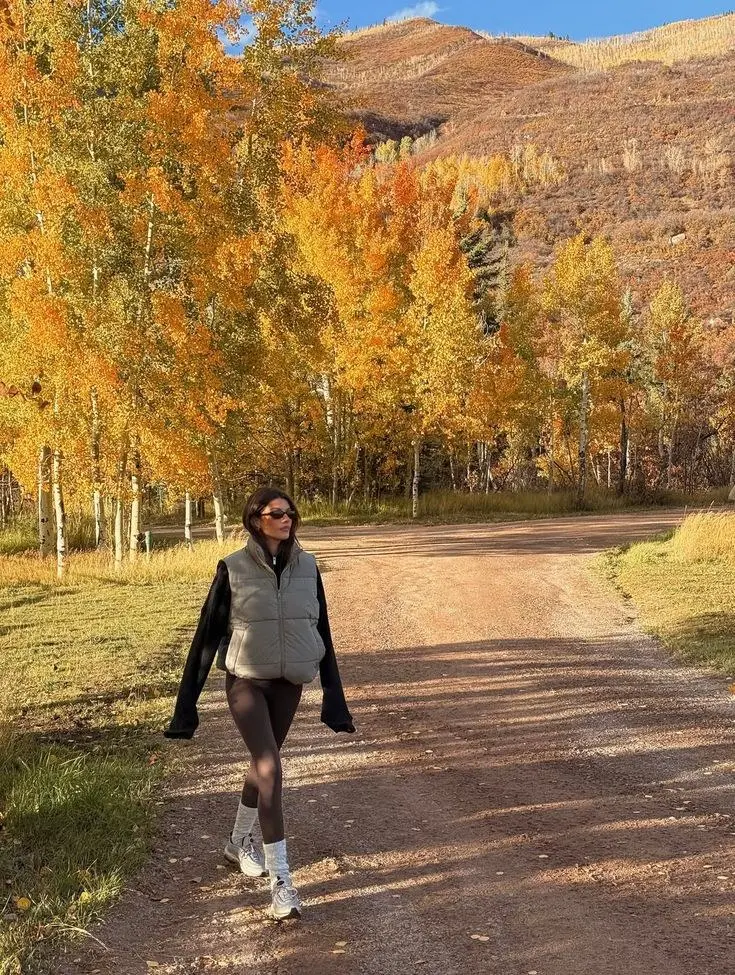
The genius move here is the black jacket carried over one arm — it’s the real-world version of layering advice. You start warm, shed layers as you heat up, and have coverage ready when you stop for a break. A cropped puffer vest in a neutral tone earns its keep across multiple seasons.
The sheer tights under shorts is a move I found on multiple accounts — it adds a layer of warmth on bare legs without switching to full pants, which matters when you’re doing a loop that gets shadier toward the end. Practical and visually interesting at the same time.
The Flannel-Over-Graphic-Tee: For Casual Trails Where the Vibe Matters
The anxiety this solves: not wanting to look like you bought your outfit specifically for outdoor recreation when you’re hiking with a mixed group who range from serious to barely-outdoorsy. An oversized flannel shirt worn open over a graphic tee, with black leggings, hiking boots, and a baseball cap, hits a tone that feels natural rather than performed. It’s the most accessible fall hiking outfit in this entire roundup.
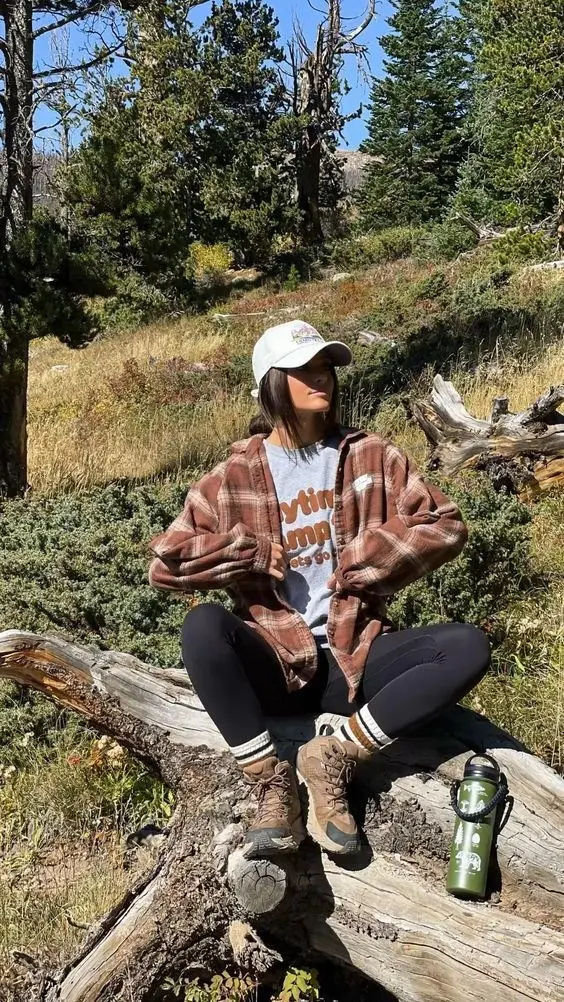
The flannel functions as a midlayer when the trail is cold and an open shirt when it warms up — which is exactly what a good midlayer should do. A heavyweight oversized plaid flannel in brown or rust tones hits the autumn palette without trying too hard. Lug-sole hiking boots in tan are the right shoe here — grippy, warm-adjacent in color, and visually grounding against the dark leggings.
A wide-brim or structured cap keeps sun and wind out of your face on exposed sections. This outfit does require real hiking boots underneath — the flannel casualness can make people reach for sneakers, but the terrain demands grip. Don’t let the relaxed top half fool you into underpreparing the bottom half.
The Technical Base Layer + Rain Pants: For When You Need to Actually Move
This one is pure function first. A fitted green long-sleeve base layer paired with wide black waterproof pants and trail shoes is the outfit for humid, dense-canopy trails where you will encounter wet vegetation, uneven roots, and shifting temperatures. The problem it solves: feeling like you have full freedom of movement while staying protected from brush and moisture.
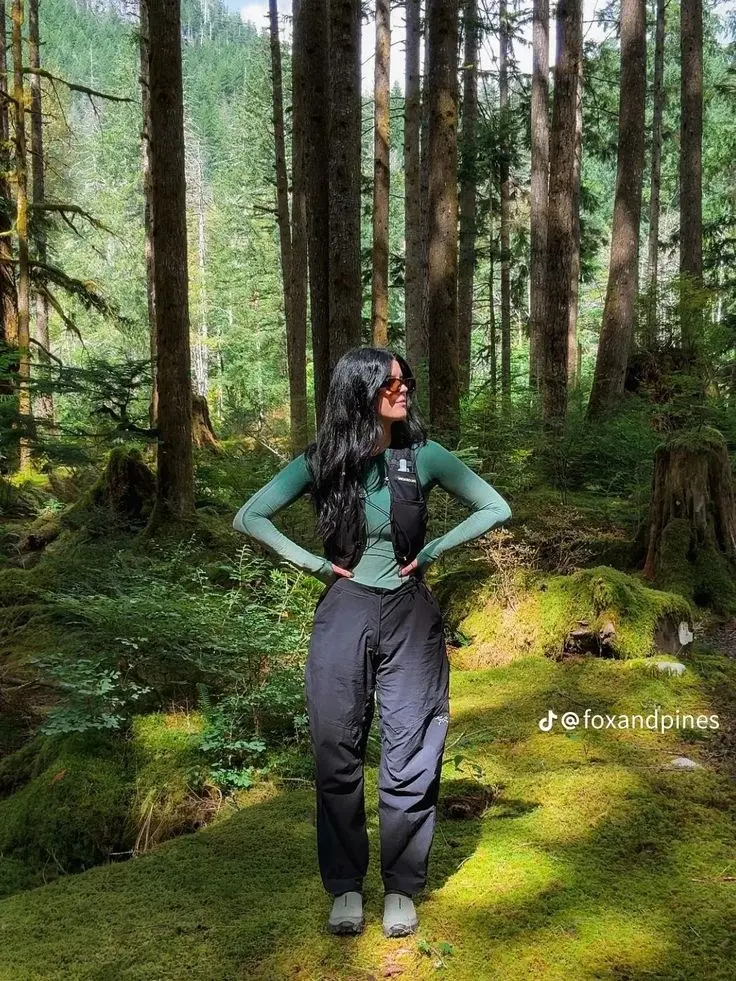
The form-fitted base layer tucked into wide technical pants is a silhouette that’s having a genuine moment in outdoor style right now — it works because the contrast between fitted top and relaxed bottom is visually balanced, and it’s also correct from a function standpoint: nothing loose near your legs to catch on underbrush. A zip-neck moisture-wicking long-sleeve in a forest green or olive is the key piece.
The wide-leg waterproof pant paired with low trail shoes or approach shoes keeps you agile on technical ground. This combination was spotted via @foxandpines and it’s worth taking seriously — the color coordination between muted green and black feels cohesive, not accidental. If you’re the type who hikes to actually push yourself, this is the silhouette to study.
The Shell Jacket + Wide Cargo Pants: For the Hiker Who Wants to Look Put-Together at the Summit
The specific anxiety: arriving at a scenic summit or viewpoint and feeling like your outfit reads as an afterthought in every photo. This steel-blue shell jacket with wide khaki pants, trail runners, and a white beanie solves that. It’s one of the more considered fall hiking outfits I found — it photographs beautifully but it’s also genuinely functional for exposed, windswept terrain.
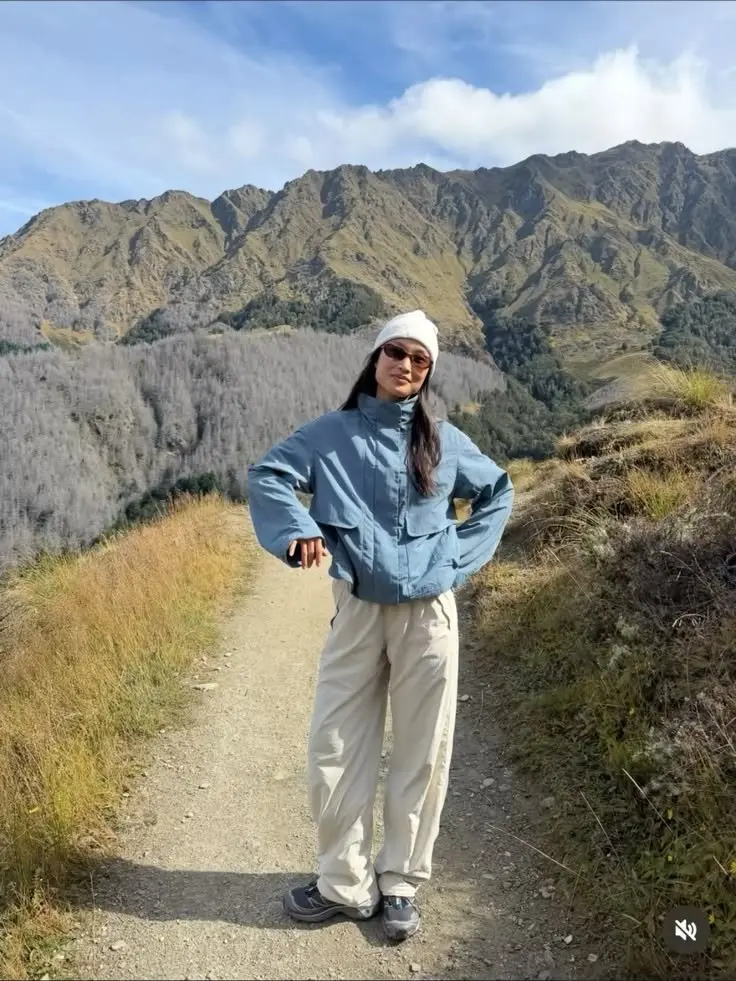
The shell jacket is doing the real work: blocking wind and light rain while remaining packable. A women’s windproof shell jacket in slate blue or dusty teal is an underrated color choice for fall — it reads differently than the standard black or red, and it plays beautifully against autumn landscape tones. The wide khaki pants keep the look relaxed and are far more comfortable on long descents than slim-fit alternatives.
The white knit beanie is a small but important detail — it keeps ears warm on exposed ridgelines and adds a clean visual break at the top of the outfit. Trail runners over hiking boots make sense here if the terrain is moderate; they’re lighter and faster, which matters on longer mileage days. This is the outfit I’d build around for a full-day fall hike that ends with group photos.
The White Windbreaker + Wide Olive Trousers: For Warm-Weather Mountain Hikes
This solves a problem that doesn’t get talked about enough: what to wear on a fall hike when it’s actually warm — warm enough that a puffer or fleece would be oppressive, but you still need something with structure for wind and UV. A clean white zip windbreaker over wide olive parachute-style trousers, with low trail shoes, is the answer. It’s the most editorial-looking outfit in this edit, and it’s genuinely appropriate for temperate mountain trails.
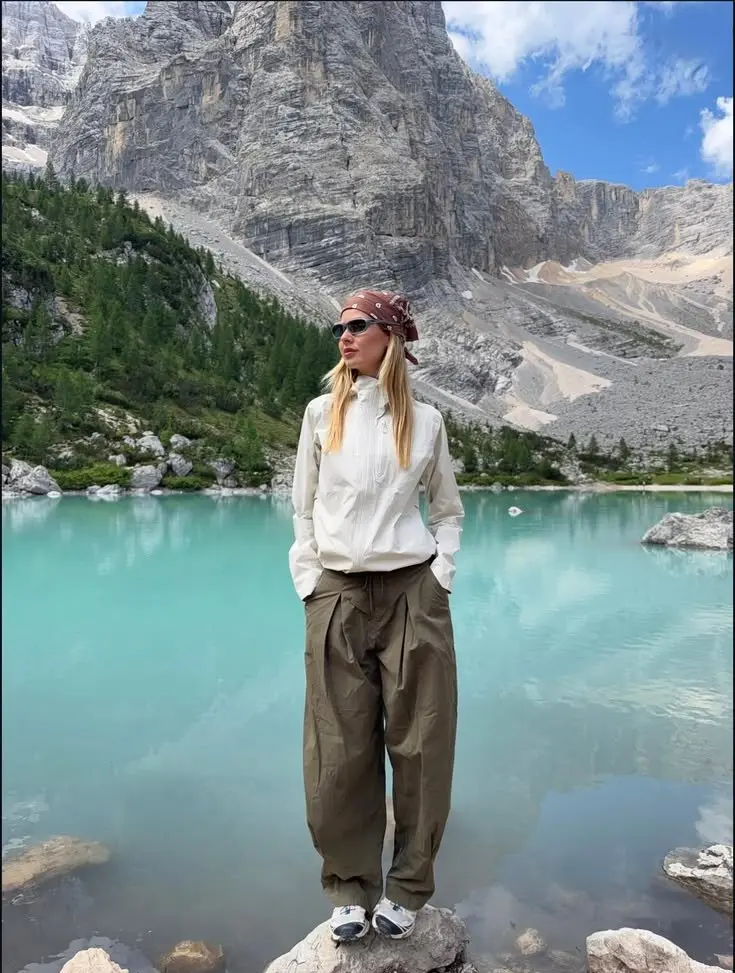
The parachute trouser in olive or dark khaki is one of the most useful recent additions to outdoor dressing — it’s loose enough for full stride range, the fabric dries quickly, and the wide leg creates a visual balance against a fitted or cropped jacket. A wide-leg parachute cargo trouser in olive or khaki belongs in any fall outdoor wardrobe.
The printed bandana worn as a headscarf keeps hair off the face and adds a personal detail without requiring any extra effort. This combination — white technical top, earth-toned wide pants, subtle accessories — is also one of the more transferable looks here: it works as well on a scenic walk as it does on a genuine mountain trail. If you care about your hiking photos, this is a strong reference.
The Technical Shell + Olive Rain Pants: For Cold, Wet, Unpredictable Days
The problem this solves is the hardest one in fall hiking: you genuinely don’t know what the weather will do. A pearl-white packable shell jacket over olive-green waterproof wide-leg pants, worn with a green knit beanie and a technical backpack, is the outfit that handles everything. Rain, wind, cold — this kit covers it without looking like you borrowed gear from a much taller man.
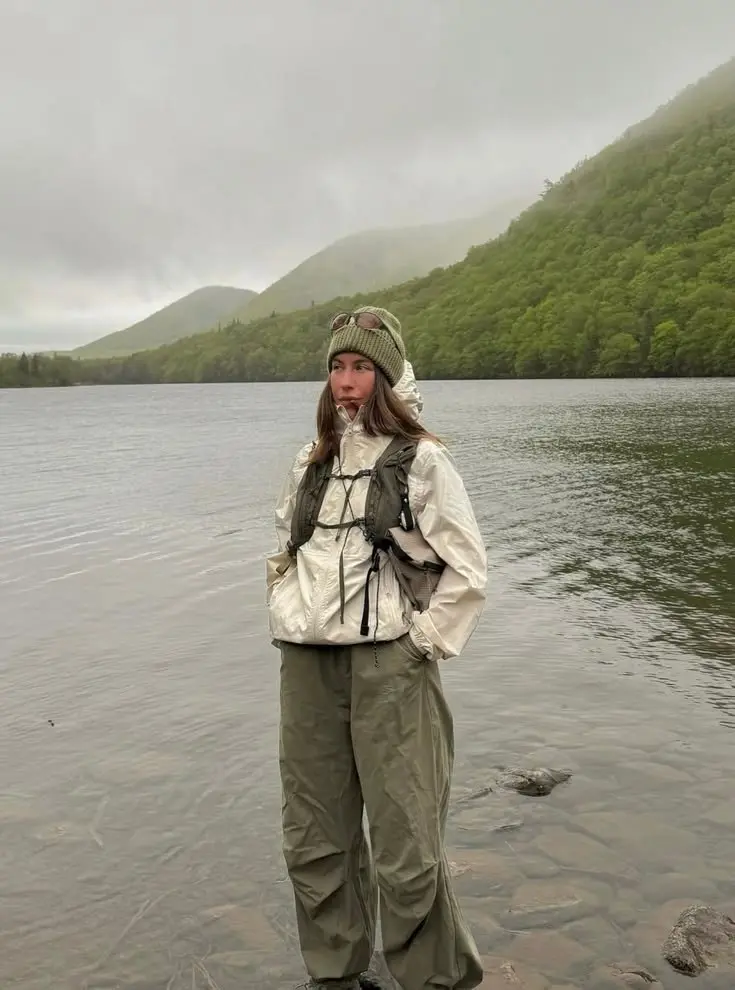
The olive and cream color story is one of the more intentional outdoor palettes I came across — it doesn’t read as an accident, it reads as someone who thought about it. The waterproof wide-leg hiking pant in olive is a key item for fall specifically — it deals with wet trail surfaces while the silhouette stays relaxed and modern rather than stiff and utilitarian.
The technical backpack with a chest strap is correct here — on genuinely wet or technical terrain, a pack that sits close to your body and doesn’t shift is important. The sunglasses-on-beanie move is practical (you need them for open sections, not for tree cover) and adds a layer of visual ease to an otherwise fully geared-up look. This one is trail-ready in every real sense.
The Oversized Sweatshirt + Leggings: The Entry-Level Hike Answer
Not every fall hike is a summit push. Some are a couple of miles on a well-marked path with a scenic overlook at the end — and for those, a powder-blue oversized sweatshirt over dark leggings with chunky white sneakers and white crew socks is exactly right. The problem this solves: feeling overdressed in gear for a casual outdoor outing.
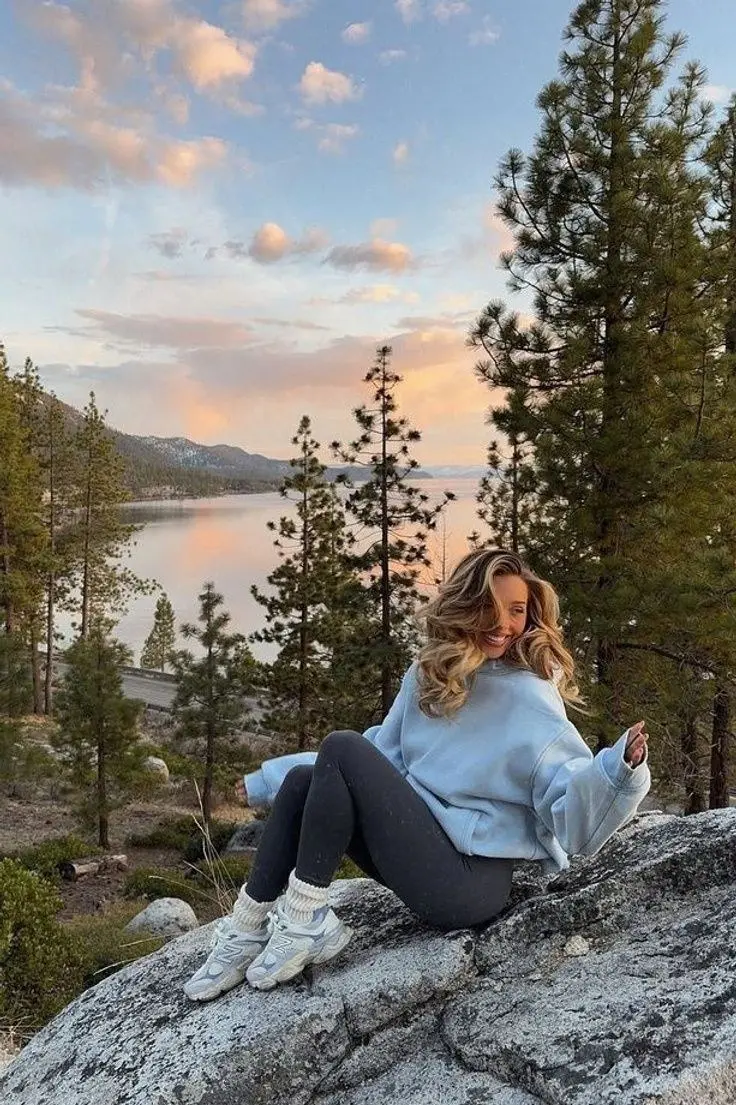
The key to making this look intentional rather than accidental is proportion — the sweatshirt should be genuinely oversized, hitting mid-thigh or lower, and the leggings should be fitted and opaque. A heavyweight oversized crewneck sweatshirt in a cool pastel or neutral does the work here. If you’re going for New Balance sneakers specifically, check our full guide on how to style New Balance sneakers — they’re a natural pairing for this silhouette.
The caveat is practical: this outfit has a narrow weather and terrain window. It works on dry, mild days with well-maintained paths. Add wind and it falls short; add mud and the sneakers become a problem. Keep it in rotation for golden-hour walks with good friends where the point is the view, not the mileage.
The Fleece Pullover + Teal Leggings: For the Color-Confident Hiker
Most fall hiking outfits default to black, olive, and grey. This one doesn’t — and it’s better for it. A grey fleece zip pullover with teal performance leggings, a snapback hat, and proper hiking boots in a warm neutral creates a look that’s bright and deliberate without being neon-orange trail-runner territory. The problem it solves: looking forgettable on a trail you’ve been excited about for weeks.
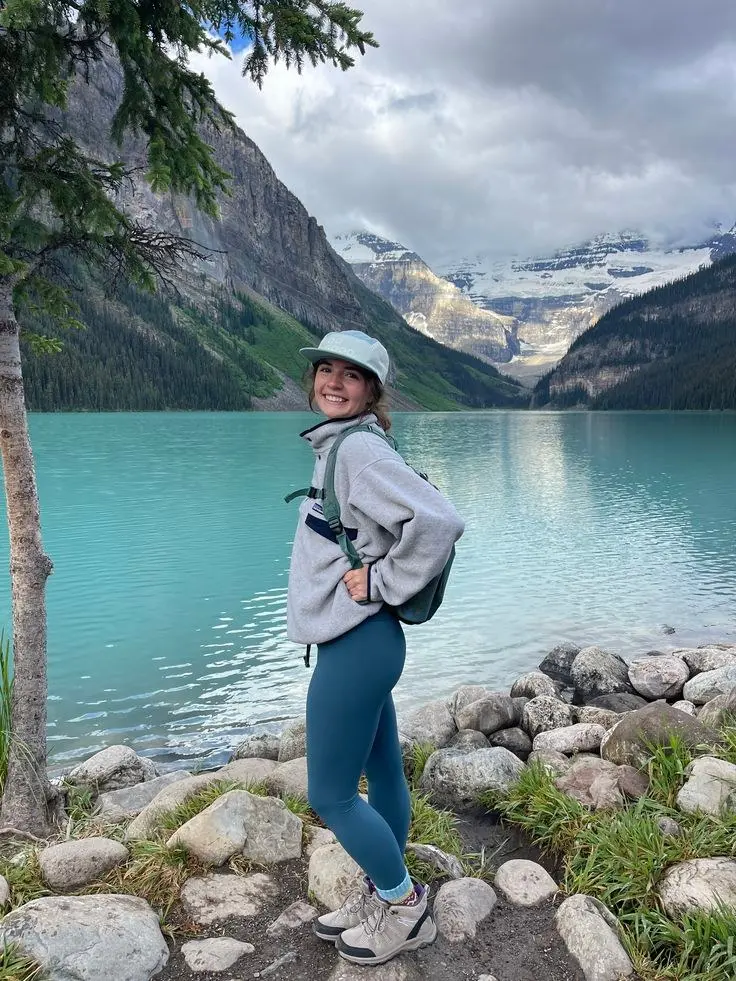
The fleece pullover is one of the most versatile layers in outdoor dressing — it provides real warmth mid-layer, it’s breathable on the move, and it packs small enough to tie around your waist when you stop needing it. A half-zip fleece pullover in stone or cream works here as a color anchor against brighter bottoms.
The small technical backpack and hiking boots are what make this trail-appropriate rather than just gym-appropriate. This look rewards a bit of color planning — the teal, grey, and warm brown boot combination is cohesive in a way that doesn’t happen by accident. For more ideas on activewear that works beyond a single context, the roundup on activewear and athleisure outfit ideas is worth a look.
The Black Athleisure Set + Green Fleece Wrapped: For the Styled Walk Along the Water
This is the outfit for when the hike is really more of a scenic walk — a waterfront path, a flat lakeside loop, something that starts and ends at a lodge or a café. Black leggings, a black fitted long-sleeve base layer, a forest green fleece tied at the waist, a white sports headband, sunglasses, and silver trail sneakers. The problem it solves: you want to look good in photos but you’re not actually doing technical terrain.
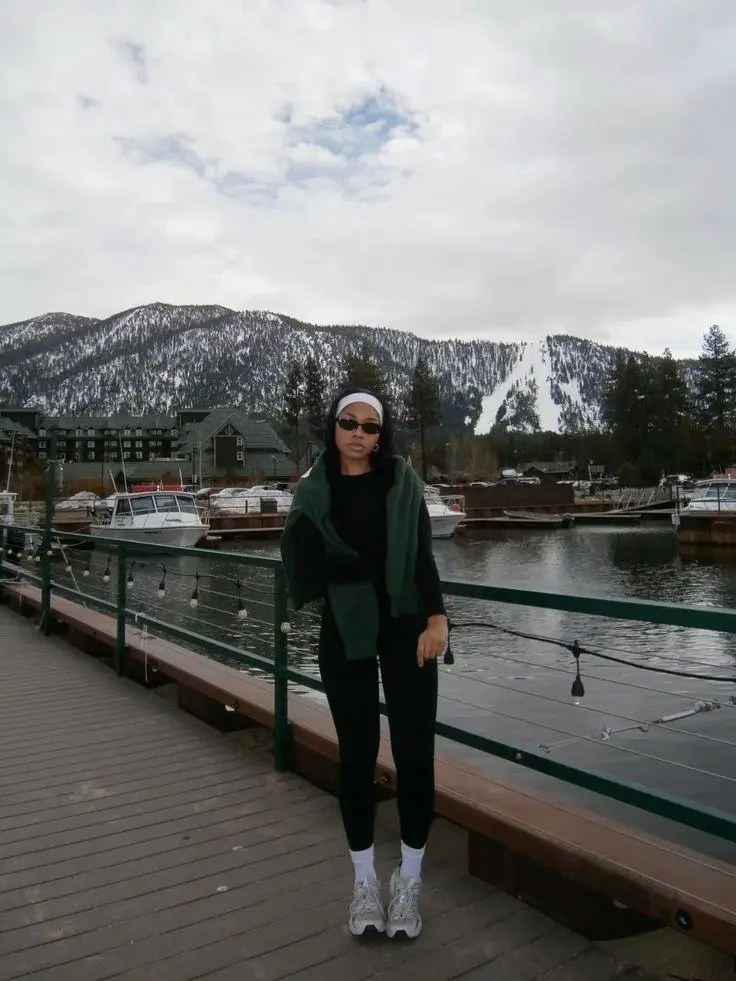
The fleece-around-the-waist move is practical (it’s there when you need warmth, out of the way when you don’t) and it adds a pop of color against the all-black base. A deep forest green zip-up fleece jacket in this shade reads rich and expensive against black — it’s a combination worth remembering.
The silver or metallic-toned trail sneaker is a specific choice that elevates the entire look from generic athleisure to something more considered. This outfit has zero technical capability for real trails, but it’s exactly right for the kind of ‘hiking’ that involves scenic backgrounds and minimal elevation gain. Know which kind of day you’re actually having, and dress accordingly.
The Olive Shell + Plaid Wide-Leg Pants: For the Hiker Who Wants Personality
The anxiety this solves is a subtle one: feeling like all outdoor gear looks the same. A moss-green shell jacket over oversized plaid wide-leg trousers, worn with a patterned knit beanie, chunky lug-sole boots, and thick-framed glasses is an outfit with a clear point of view. It looks like a person who dresses intentionally even when they’re outdoors — which, honestly, is the whole challenge of fall hiking outfits.
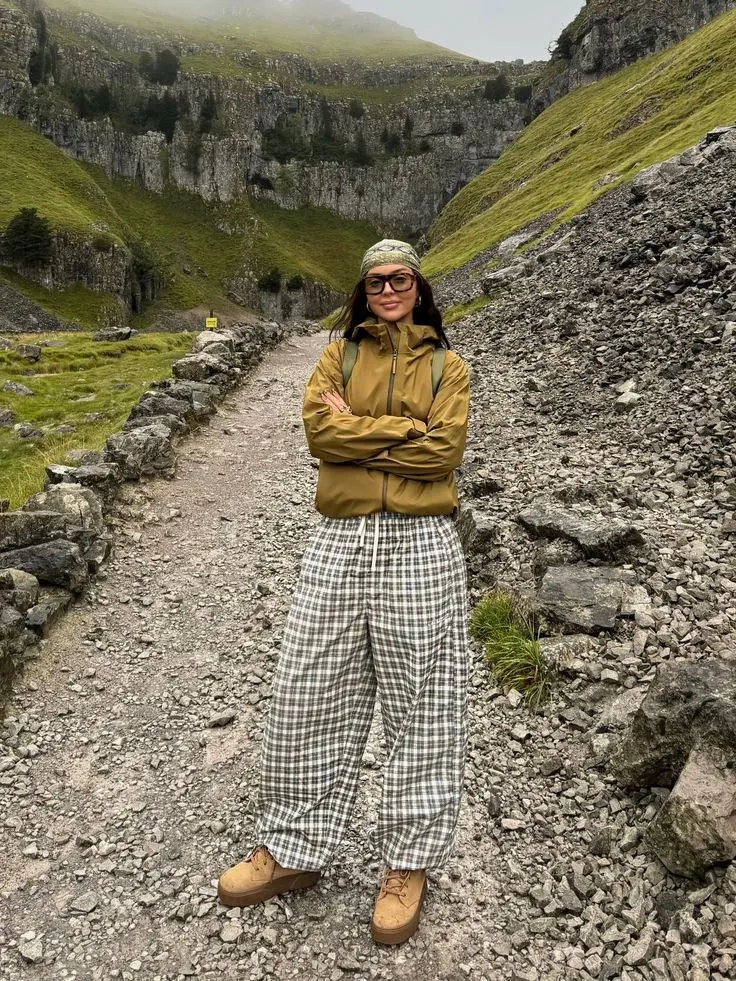
The plaid wide-leg trouser is the star here. It’s not a hiking pant in any technical sense, but if the trail is dry and well-maintained, a relaxed woven trouser in a heavyweight fabric can absolutely work — especially if the jacket is doing the weather-protection job. A wide-leg plaid trouser in olive or forest tones is the piece to hunt for here. For more ideas on how to build full outfits around this silhouette, the wide leg trousers outfit guide is a useful reference.
The lug-sole boot is doing real work — it provides grip and ankle support without being a traditional hiking boot, which keeps the look in its fashion lane. This is an outfit for a very specific type of trail: scenic, dry, moderate. But for that occasion, it’s the most interesting thing I found in this entire research session.
The Sherpa Vest + Layered Fleece: For Cold, Rainy Days at Altitude
This is the most weather-serious look in the warm-toned category. A cream base layer long-sleeve under a tan fleece zip-up, topped with a brown sherpa vest, worn with wide olive waterproof trousers and serious hiking boots — all of it wrapped around a thermos. The problem it solves: you’re doing a full day in genuinely cold, wet conditions and you need every layer to count.
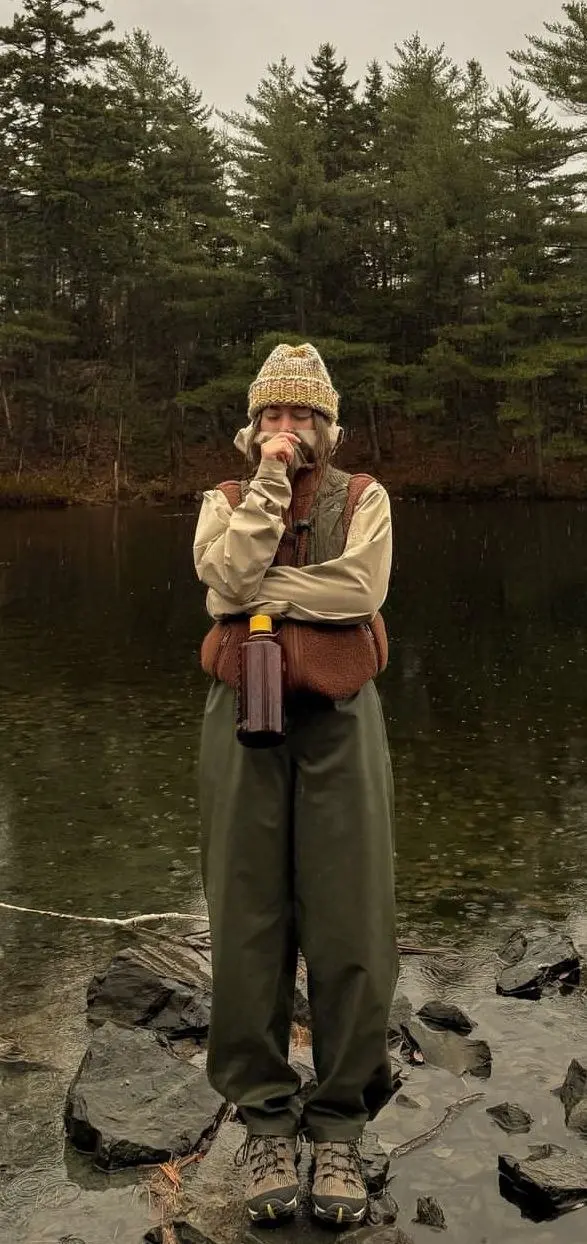
The sherpa vest over fleece combination is excellent layering logic — the fleece provides insulating warmth, the vest blocks wind and adds another thermal layer on the core without restricting arm movement. A women’s insulated sherpa vest in brown or rust is one of those pieces that photographs like a styling decision but earns its keep on a cold, exposed trail.
The multi-tone speckled knit beanie in warm yellow-brown tones is the single accessory that ties all the earth tones together. The hiking boots visible here are substantial — they’re the right call for wet, rocky lakeside terrain. This look says ‘I know what I’m doing out here’ in the best possible way.
The Two-Person Shell + Cargo Formula: The No-Fail Hiking Duo
This double photo is useful because it shows two versions of the same foundational formula side by side: a shell jacket (one grey-blue, one neutral) over wide-leg technical trousers (one black, one white cargo). What’s interesting is how different they read — one feels more serious, one more sporty — but both are correct for a moderate forested trail. The problem this solves: needing a formula you can replicate without overthinking it.
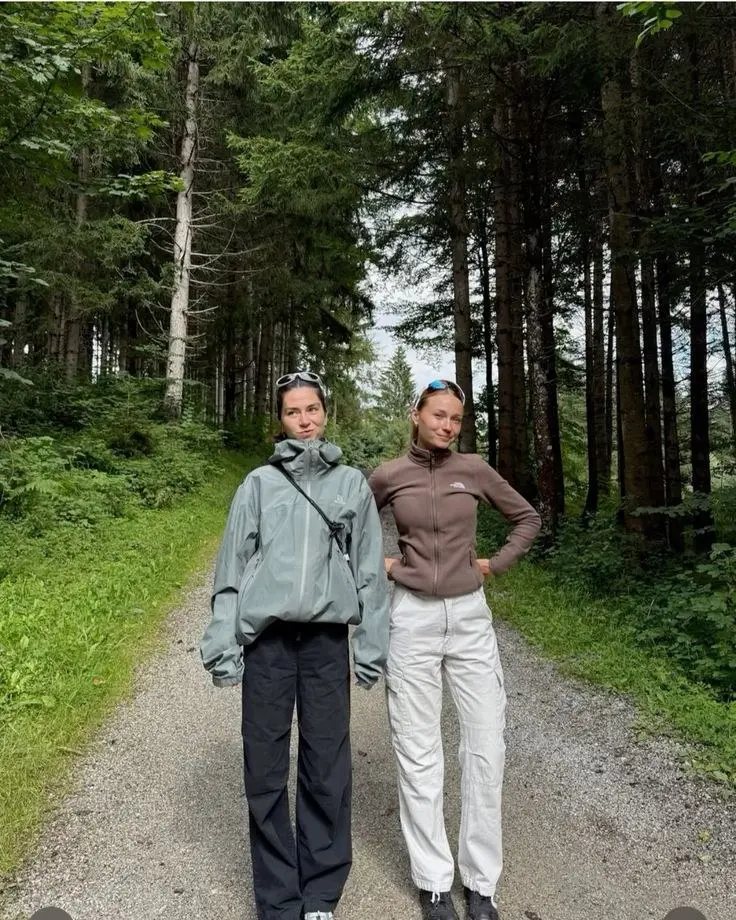
The formula is: technical outer shell + wide relaxed bottom + sport sunglasses pushed up on the head. That’s it. The shell provides wind and water protection, the wide pants allow movement and dry quickly, and the sunglasses-up detail signals someone who’s actually in nature rather than posing in front of it. White cargo-style wide-leg outdoor trousers are a versatile option if you want the lighter, more active variation.
The cross-body strap detail on the grey jacket is worth noting — it’s a technical element (pack stabilization) that functions as a visual element too. If you’re buying one shell jacket for fall hiking, look for something in a slate or sage tone rather than always defaulting to black: it photographs better against autumn foliage and reads as more intentional.
The Fitted Crop Half-Zip + Cargo Pants: For Hot-Start Trails
The specific problem here is temperature regulation on trails where you start hard. A cream fitted half-zip long-sleeve crop top with khaki cargo jogger pants, a baseball cap, and chunky hiking boots is the answer for warm fall mornings that require a technical first push. It’s form-fitted on top for breathability and heat management, relaxed on the bottom for range of motion. This combination comes up constantly in hiking content targeted at women who actually move fast.
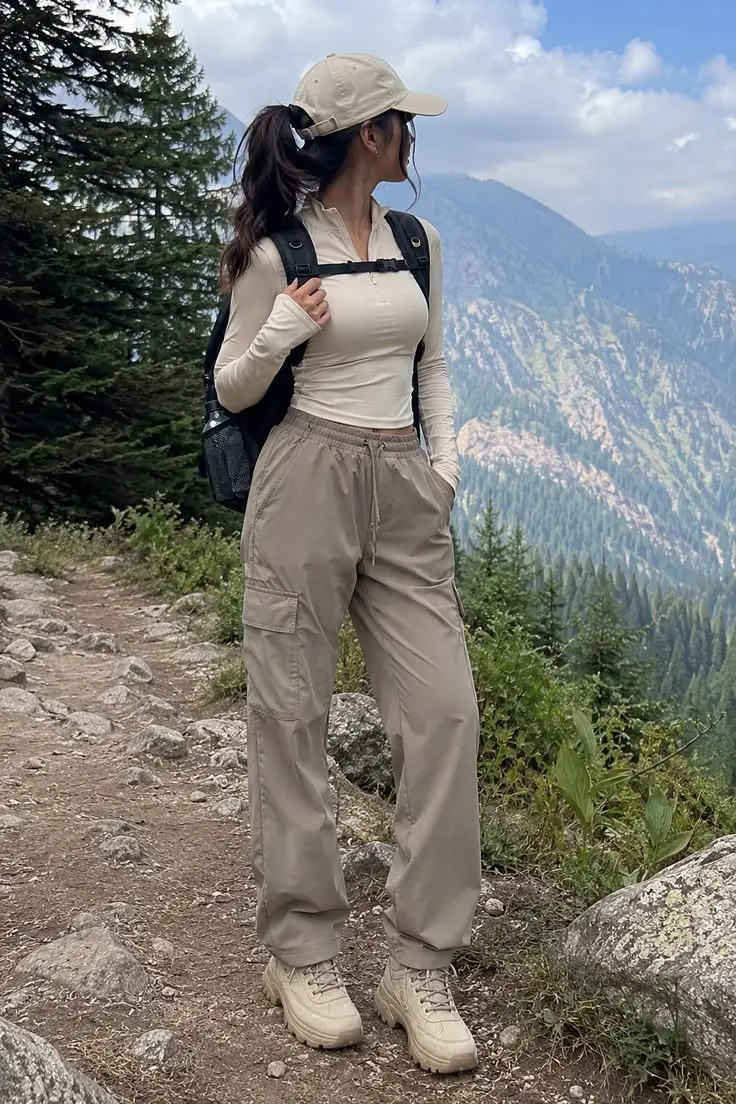
The cargo hiking jogger is the correct bottom here — not a fashion cargo pant, but a technical one with an elastic waistband, real pockets, and a fabric that breathes and dries quickly. A women’s cargo hiking jogger in khaki or tan is one of the most versatile outdoor bottoms you can own: it works for actual trail miles and looks put-together at the trailhead parking lot.
The fitted half-zip base layer is a detail worth investing in — it manages sweat, stays in place during dynamic movement, and the half-zip means you can vent without fully removing the layer mid-climb. This is a high-function outfit that also happens to be stylish, which is the hardest combination to find in outdoor dressing.
The White Hood-Up Shell + Wide Black Technical Pants: For Committing to the Rain
The problem this solves is the one most people avoid thinking about: what if it actually rains, the whole time, and I still need to finish the trail? A cream hooded shell jacket with the hood up, wide black technical pants, and white trail sneakers is the outfit for that day. It’s not about looking stylish — it’s about being warm, dry, and still functional when conditions are genuinely bad.
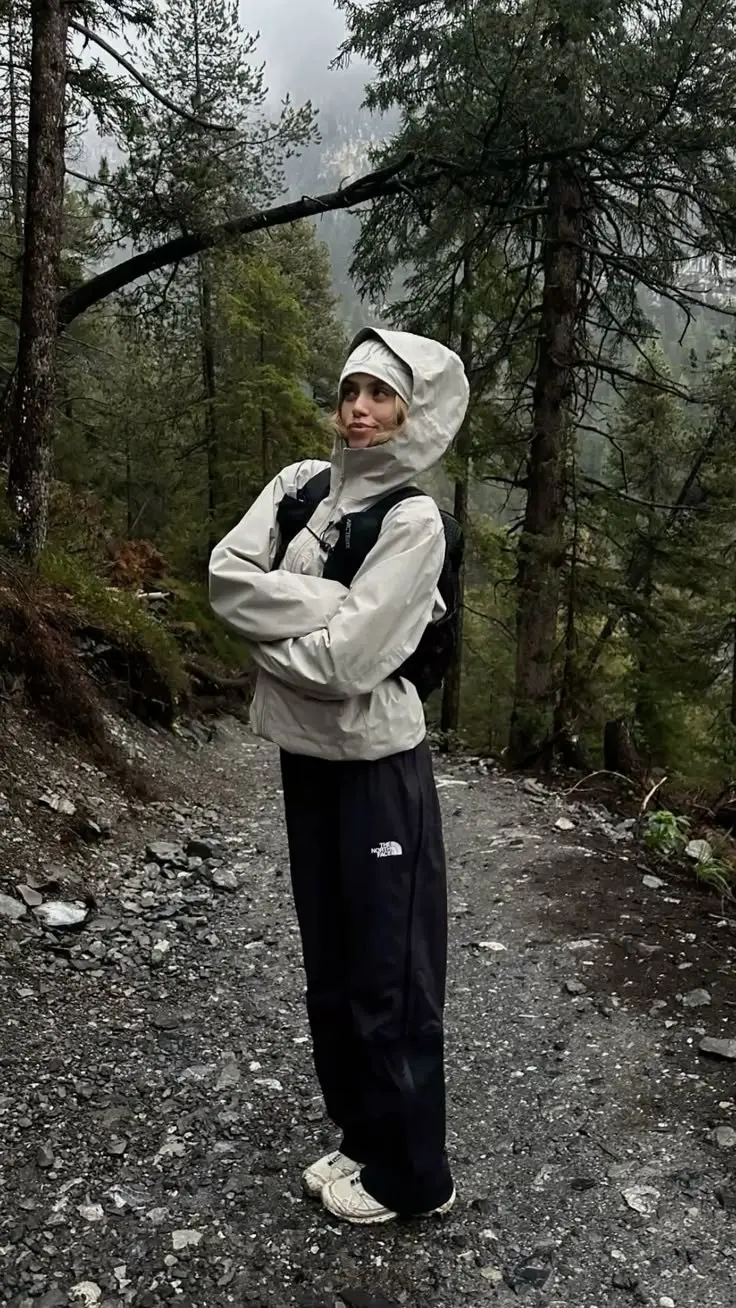
A fully seam-sealed, waterproof shell with an adjustable hood is non-negotiable for this scenario. The hood-up styling that reads as fashionable here is actually just correct rain management — a good hood should sit close to the face without blocking peripheral vision. A women’s seam-sealed hooded rain shell is worth spending real money on if you hike in shoulder seasons.
The wide black technical pant under the shell creates a relaxed silhouette that still moves freely and repels water. The white trail shoe is a bold choice in wet conditions — practically, you’d want something darker — but the aesthetic logic is clear: the clean white grounds the look and stops it from reading as entirely utilitarian. This is an outfit that commits to bad weather without apologizing for it.
The Sherpa Fleece Jacket + Athleisure Shorts: For Short, Warm-Ish Fall Days
This one raised an eyebrow when I first found it — shorts and a sherpa jacket? But it actually makes sense for a specific scenario: a sunny fall morning under 3 miles, where your core gets cold but your legs are working hard enough to stay warm. A sage green hoodie under a cream-and-oat sherpa jacket, with olive sweat shorts and bright sneakers, is a weekend morning look that earns its place in the fall hiking category.
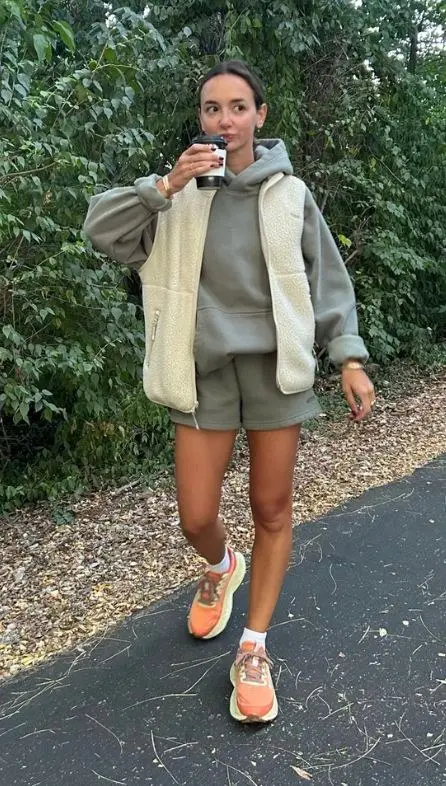
The sherpa jacket as outerwear is a strong move for mild fall days — it’s warmer than it looks, it’s not waterproof (so don’t bring it into a storm), and it photographs wonderfully. A sherpa zip jacket in cream or oatmeal is one of those pieces that sells fast every fall season for good reason.
The colorful sneaker — orange, yellow, green — is the one detail that makes this an actual outfit rather than a random combination. If your outerwear is textural and neutral, a bright shoe grounds everything with energy. This is a look for the walk that starts with coffee and ends with a view, not the one that starts before dawn with trekking poles.
The Mauve Puffer + Olive Cargo Pants: The Color Combination That Works Better Than It Should
The anxiety this solves: wanting your hiking outfit to feel like yours, not like borrowed gear. A cropped mauve or dusty rose puffer jacket with wide olive cargo pants, a pink knit beanie, matching sunglasses, and lavender chunky sneakers is confident outdoor dressing. It’s also fully functional — the cropped puffer provides core warmth, the wide cargo pants handle movement and wind, and the beanie covers ears on exposed sections.
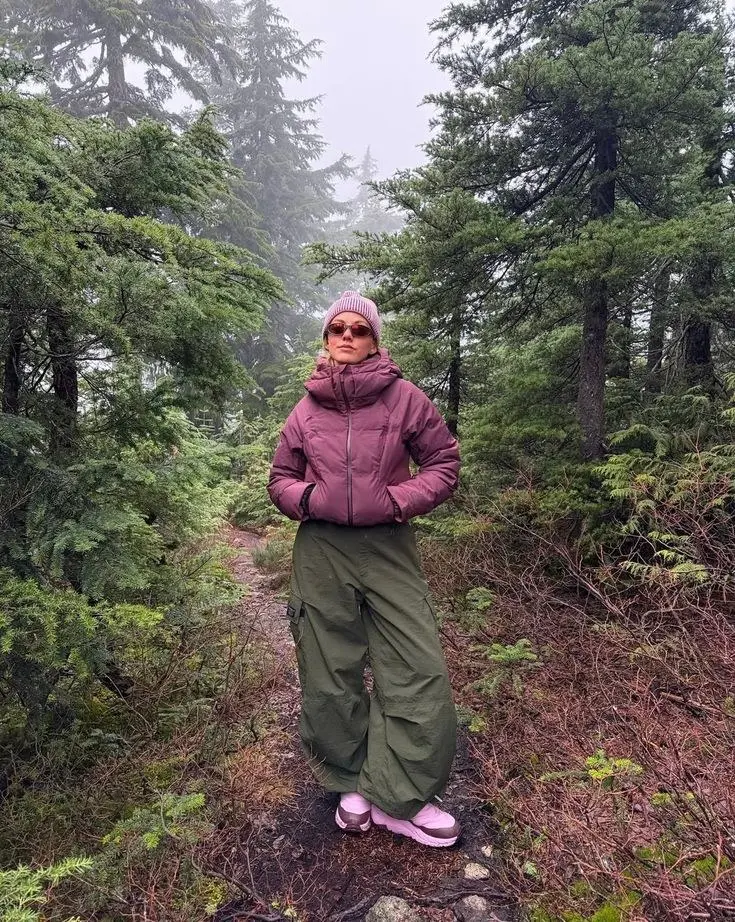
The pink-plus-olive combination sounds like it shouldn’t work outdoors and yet it photographs perfectly against grey mist and evergreen trees. A cropped puffer jacket in mauve or dusty rose is the piece to look for — the crop length is deliberate here, allowing the wide cargo pant to be the visual weight of the silhouette.
The matching beanie and sunglass tones are doing serious styling work — they’re the kind of detail that looks effortless but is actually a decision. This outfit proves that fall hiking outfits don’t have to live in a narrow palette of black, olive, and navy. Sometimes the most interesting choice is the unexpected one. It’s also fully layerable: a base layer underneath handles the cold, and the whole kit packs into a small bag.
The Fleece Quarter-Zip + Wide Cream Trousers: For the Reflective Lakeside Hike
This is the outfit for when the hike itself is gentle but the scenery deserves to be taken seriously. A camel-tone fleece quarter-zip pullover with wide cream parachute-style trousers, a brown crossbody bag, and white trail sneakers is the most cohesive tonal look in this entire edit. The problem it solves: you want your photos to look as good as the landscape behind you.
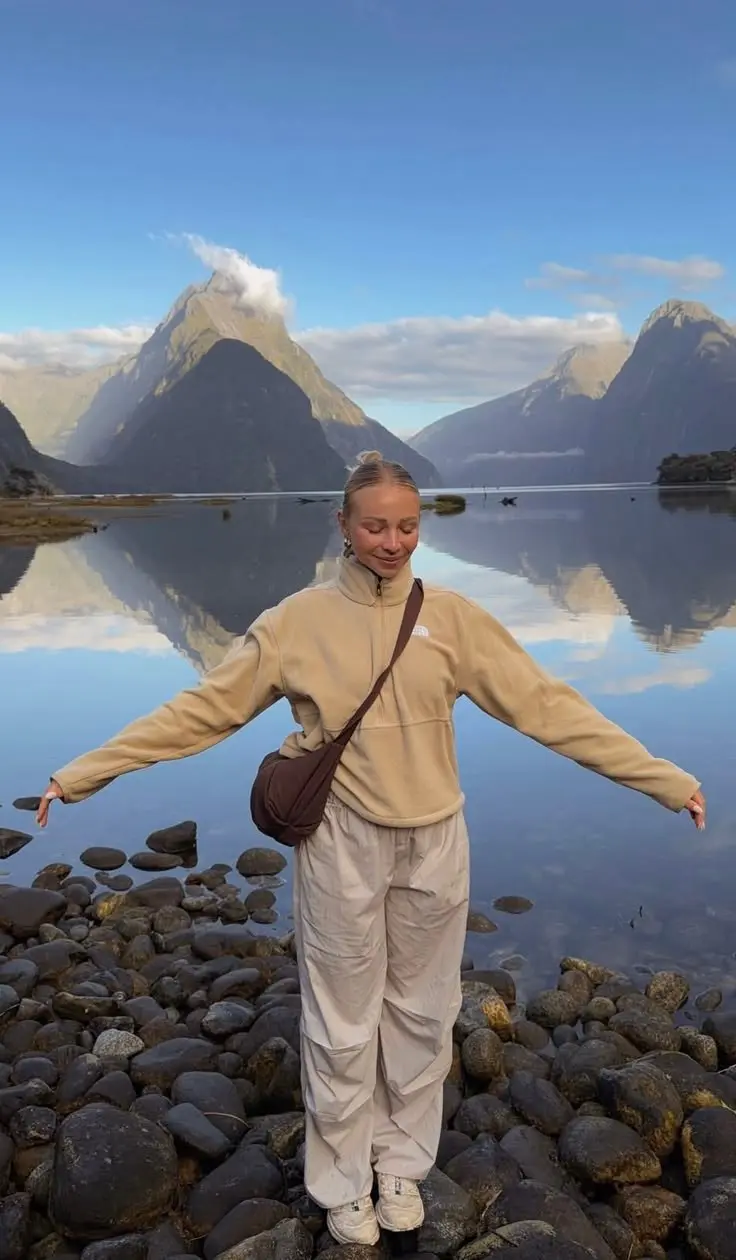
The all-beige and warm-cream palette works specifically because it doesn’t compete with dramatic natural backgrounds — mountains, water, sky. It becomes part of the palette rather than fighting it. A quarter-zip fleece in camel or warm tan is the anchor piece. The North Face logo on a cream fleece has become a visual shorthand for a certain type of well-traveled, aesthetically-considered outdoor woman — warranted or not, it communicates something.
The brown crossbody bag carried over the fleece is a styling decision that pulls this out of pure sportswear into something more considered. If the trail is flat and the terrain doesn’t require a backpack, a small crossbody is actually practical — it keeps essentials accessible without the weight of a full pack. This is an outfit that lives in the grey area between hiking and outdoor leisure, and it’s honest about that.
The Duck Vest + Graphic Sweatshirt + Leggings: The Layering Classic
A Carhartt-style waxed canvas vest over a grey graphic sweatshirt, with taupe or brown leggings, hiking sneakers with pink laces, and a white pom beanie — this is the outfit that gets saved most on hiking mood boards because it looks exactly like what you imagine when someone says ‘cute fall hiking outfit.’ The problem it solves: wanting something genuinely warm and casual without overthinking it.
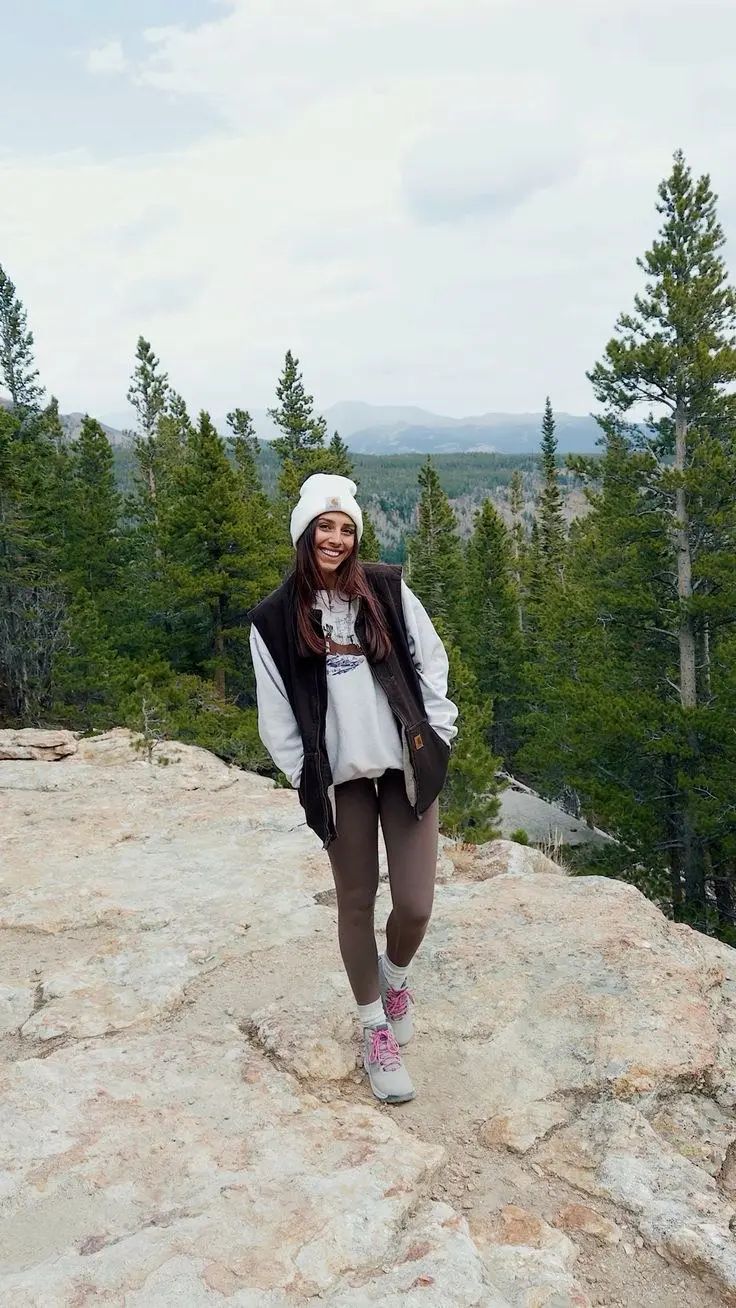
The duck canvas vest is a legitimate insulating layer — it blocks wind on the core while leaving arms free for movement and temperature regulation. A women’s insulated canvas vest in brown or black is the kind of piece that works from the trail to a casual fall afternoon without changing. It’s also one of the few outdoor pieces that genuinely looks like it belongs in a fashion edit.
The graphic sweatshirt underneath is doing layering work and personality work simultaneously — it’s visible at the collar and hem, adding texture and color. The pink lace detail on an otherwise neutral hiking shoe is a tiny decision that rewards the whole look. This is the outfit that most of the women reading this probably already have 80% of in their closet — which is exactly the point.
The Pale Yellow Puffer + Striped Wide Trousers: The Fashion Hiker
This is the most unexpected outfit in the collection and the one that rewired how I think about fall hiking outfits. A pale lemon-yellow cropped puffer jacket over wide pinstripe trousers in cream and taupe, with a printed silk bandana headscarf, small sunglasses, olive trail sneakers, and a dark olive backpack — it’s the outdoor equivalent of looking like you got dressed for something else and ended up on a trail anyway. Which is a very specific compliment.
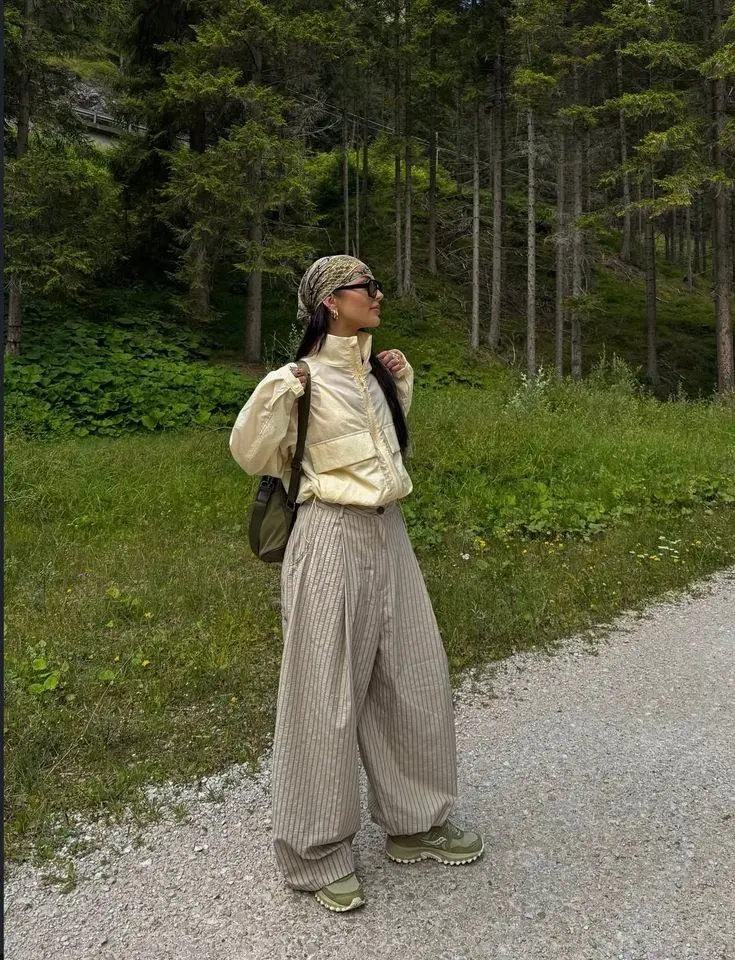
The pinstripe wide trouser is not a hiking pant, but on dry gravel paths and woodland trails it works fine — it moves well, it’s not restrictive, and the visual payoff is significant. For a trail-appropriate version of the wide-leg idea, wide-leg pinstripe trousers in neutral tones are worth searching. If you love the wide-leg silhouette in general, the wide leg trousers outfit ideas guide covers it across every occasion.
The pale yellow jacket in this context reads as an intentional color story against the forest green background — it’s the kind of outfit that makes you look like you planned it, even if you didn’t. The bandana headscarf keeps hair managed without the formality of a cap and adds a print detail against the otherwise tonal palette. This look has a clear perspective, and that’s the hardest thing to manufacture.
The Striped Sweatshirt + Dark Shorts: The Warm-Climate Hike Solution
For fall hikes in warmer climates — the American South, California, desert regions — full cold-weather layering is overkill. A striped grey-brown long-sleeve sweatshirt over dark brown biker shorts, with proper hiking shoes and white crew socks, is exactly right for mild fall conditions where the trail demands grip but not insulation. The problem it solves: dressing for a fall hike in a climate that doesn’t cooperate with the aesthetic.
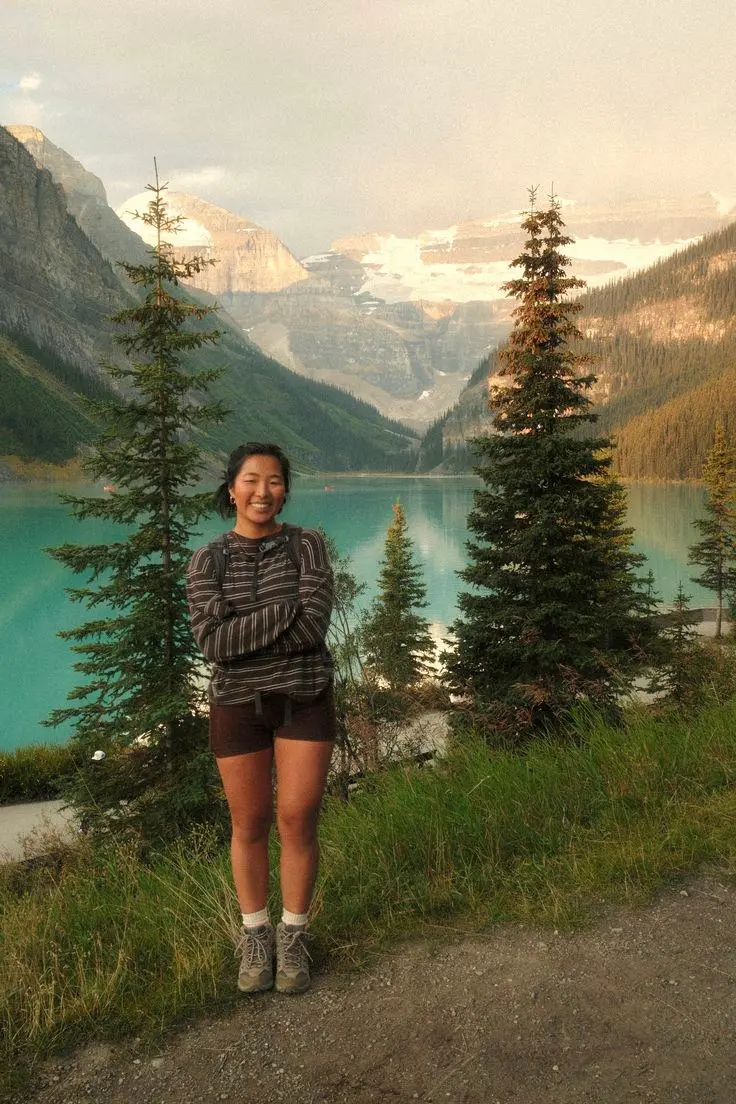
The striped sweatshirt is doing temperature work here — thick enough to handle a mild chill, breathable enough for actual trail effort. A striped oversized cotton long-sleeve in earth tones is one of the easiest layering pieces to pack and wear across multiple contexts. The look works on trails and transfers to post-hike stops without any effort.
The hiking shoe choice here is important — it’s a proper approach shoe or light hiker, not a sneaker. Even in warm conditions, technical trails need grip and ankle awareness. This is an honest outfit: it looks like someone who actually hikes regularly rather than someone who bought new gear for a single outing. Sometimes that’s exactly the energy you want to project.
The Full Technical Shell + Cream Parachute Pants: The Summit-Ready Kit
The last outfit solves the most serious problem: a real hike, exposed terrain, genuinely unpredictable conditions. A black Gore-Tex shell jacket with a large technical backpack with chest and hip straps, wide cream parachute pants, white oval sunglasses, and trail runners — this is what actual commitment to a mountain hike looks like. It’s also, unexpectedly, very stylish in the way that fully functional things often are.
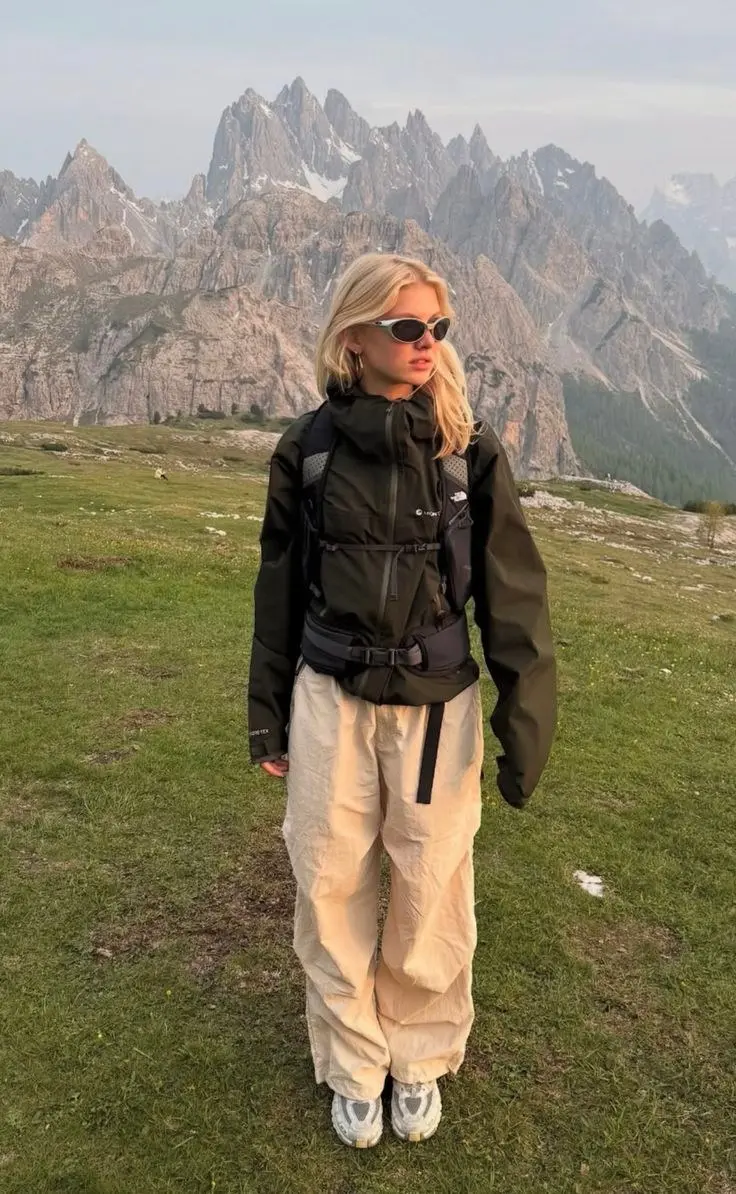
The black technical shell against cream-white pants is a high-contrast palette that looks intentional even when it’s purely practical. A Gore-Tex or fully waterproof shell jacket in black is the top of the investment pyramid for outdoor outerwear — buy it once, use it for a decade. The wide cream parachute pant keeps range of motion complete on technical ascents.
The technical pack with hip belt is non-negotiable for hikes where you’re carrying real gear — water, food, first aid, emergency layers. The oval sport sunglasses are a small but considered detail in an otherwise functional kit. This outfit proves that the most prepared you can be on a trail and the best you can look are not mutually exclusive goals. Everything here serves a purpose, and the result is a look that holds up both on the mountain and in the memory card. For outfits that balance function and style in other active contexts, the activewear and athleisure guide is a strong companion read.
How to Actually Build a Fall Hiking Outfit
The single piece of advice that simplifies every fall hiking outfit decision is this: dress for mile two, not the trailhead. At the trailhead you’re standing still in cold air and you’ll want to pile everything on. By mile two you’re working and everything that seemed necessary starts to feel excessive. The trail is always warmer than the parking lot. Build your outfit around what you’ll want when you’re moving, and pack the rest.
The layering system that actually works for fall has three components. The base layer manages moisture — this should be synthetic or merino wool, never cotton, because wet cotton stays cold and heavy. The mid layer provides insulation — a fleece, a puffer vest, or a sherpa pullover depending on temperature. The outer layer handles wind and water — a shell jacket that packs small and fits over everything else. You don’t need all three for every hike, but you should have all three available and know which combination today’s trail needs.
Bottoms are where most fall hiking outfits go wrong. The choice isn’t binary between leggings and hiking pants — it’s about the specific trail. For maintained paths under 5 miles in mild conditions, leggings are fine. For technical terrain, longer mileage, or wet conditions, you want a dedicated hiking pant with water resistance and real pocket space. The wide-leg technical pant that appears throughout this edit is genuinely useful: it moves as freely as leggings but handles trail conditions that leggings can’t. It also photographs significantly better, which matters if you’re being honest with yourself.
Footwear is the non-negotiable. Every other element of a fall hiking outfit can be adjusted, improvised, or substituted — footwear cannot. For any trail with technical terrain, loose rock, roots, or significant elevation change, you need grip and ankle coverage. That means a proper trail runner or hiking boot, not a fashion sneaker regardless of how good it looks. For flat, maintained paths, a chunky sneaker with decent traction gets you through. But if you’re unsure about the trail, default to the hiking boot. Blisters and turned ankles are worse than wearing boots that were slightly too serious for the terrain.
The One Principle That Simplifies Every Future Hiking Outfit Decision
After going through 22 real fall hiking outfits, the principle that emerges is this: choose your bottom half based on the trail, choose your top half based on the weather, and let one personal element — a bandana, a colored beanie, a non-neutral shoe — make it yours. Every complicated outfit question reduces to those three decisions. The trail determines whether you’re in leggings, cargo joggers, or waterproof wide-leg pants. The weather determines whether you’re in a shell, a puffer, a fleece, or all three layered. And then one deliberate detail separates ‘I just threw this on’ from ‘I actually got dressed.’
For the outfit investments worth making: a packable waterproof shell jacket, a mid-weight fleece pullover, one pair of proper hiking boots, and a pair of wide-leg technical pants in olive or khaki. Those four pieces cover the majority of fall hiking situations you’ll actually encounter. Everything else — the socks, the beanies, the bandanas, the trail sneakers — is iteration on top of a functional foundation. For reference on how these foundational pieces translate to everyday dressing, the guide on activewear and athleisure outfit ideas shows how the same pieces move between contexts. And if you’re looking at your airport packing with the same kind of efficiency lens, the comfy airport outfit ideas roundup applies a lot of the same logic. The through-line in all of it: buy for function, style follows naturally.
FAQ
What should you wear hiking in the fall?
For most fall hikes, the foundation is a moisture-wicking base layer, a mid-layer like a fleece or puffer vest, and a windproof or waterproof shell jacket on top. Pair that with hiking pants or performance leggings, proper hiking boots or trail runners, and a warm hat. The specific combination depends on temperature, trail difficulty, and expected precipitation — build for the conditions, not just for the trailhead.
How do you layer a fall hiking outfit?
Layer in three zones: a base layer that manages sweat (synthetic or merino, never cotton), a mid layer that provides warmth (fleece pullover, puffer vest, or sherpa), and an outer shell that handles wind and rain. The key is to be able to remove or add layers quickly as your body temperature changes on the trail. Pockets and packability matter — your mid layer should fit into your pack when you don’t need it.
Is it OK to wear leggings hiking in the fall?
Yes, with conditions. Leggings work well for maintained, well-marked trails in mild weather. They provide good range of motion and are comfortable for distances up to about 5-6 miles on non-technical terrain. For rocky, rooty, or wet trails, or for hikes over 5 miles with significant elevation, a dedicated hiking pant with better abrasion resistance and wind protection is a smarter choice.
What kind of jacket is best for fall hiking?
A packable windproof shell jacket is the most versatile single outer layer for fall hiking — it fits over any mid layer, blocks wind, repels light rain, and packs small for easy carrying. If temperatures are consistently cold (below 40°F), a puffer jacket adds real warmth. For wet climates or shoulder-season unpredictability, a fully seam-sealed waterproof shell is worth the investment.
Should you wear hiking boots or trail runners in the fall?
Both work, and the right choice depends on the trail. Hiking boots provide more ankle support and are better for rocky, uneven, or muddy terrain. Trail runners are lighter and faster for well-maintained paths with moderate conditions. In fall specifically, wet leaves and mud add unpredictability to otherwise easy trails, so if you’re unsure, default to a mid-cut hiking boot with decent traction.
What fabrics should you avoid wearing on a fall hike?
Avoid cotton in any layer. Cotton absorbs moisture and stays wet, which becomes a serious temperature management problem when you stop moving or when the weather changes. This applies to cotton t-shirts, jeans, and hoodies. Stick with synthetic fabrics (polyester, nylon) or merino wool for any layer that will be close to your skin or handling moisture.
How do you dress for a fall hike when temperatures change throughout the day?
The layering system handles this: dress for mile two, not the trailhead. Start with slightly less than you think you need and carry the rest. A base layer, a puffer vest or fleece that can be tied at your waist, and a shell that packs into your bag covers most fall temperature swings. Pack a beanie even if you think you won’t need it — a cold summit after a warm climb is a common fall scenario.
What are the best base layers for fall hiking?
Merino wool and synthetic polyester are both good options. Merino regulates temperature slightly better and resists odor on multi-day hikes, but it dries more slowly than synthetic. Synthetic base layers dry faster and are usually less expensive, making them a good choice for day hikes. Whatever you choose, look for a fitted cut that doesn’t bunch under mid layers and a half-zip option for venting on hard climbs.
What accessories do you need to complete a fall hiking outfit?
A warm hat (beanie or knit cap) is non-negotiable for fall — exposed summits and shaded trails can drop temperature quickly. Gloves are worth packing even if you don’t expect to need them. Sunglasses protect on open terrain. A moisture-wicking buff or neck gaiter handles the gap between collar and hat. A baseball cap or brimmed hat works for sunny fall days with UV exposure. Wool or synthetic hiking socks complete the foot system.
What should women wear on a fall hike to stay warm and stylish?
The combination that does both jobs best: a fitted or cropped puffer jacket in a non-default color (dusty rose, slate blue, pale yellow) over wide-leg technical trousers in olive or khaki, with trail runners and a knit beanie. It’s fully warm, it moves well on trail, and it photographs significantly better than all-black standard hiking gear. The one personal detail — a printed headscarf, a colored shoe, a matching beanie — is what makes it feel intentional.
Are hiking pants or leggings better for fall hikes?
Hiking pants are better for technical, longer, or wetter fall hikes — they provide more protection against brush, wind, and moisture. Leggings are fine for short, maintained, mild-weather trails. Wide-leg technical pants have become a strong middle option: they move like leggings, protect more like hiking pants, and look significantly better in photos. If you’re investing in one new bottom for fall hiking, a relaxed-fit waterproof hiking trouser covers the most ground.
Do you need waterproof gear for fall hiking?
In most cases, yes — at least partially. Fall weather is genuinely unpredictable, and even a light rain on a cool day can become uncomfortable quickly. A water-resistant or waterproof shell jacket is the minimum. Waterproof pants are worth it if you hike in wet climates or regularly encounter muddy trails. At minimum, pack a packable rain jacket even on clear days — it weighs almost nothing and covers a scenario that would otherwise end your hike early.
Have any thoughts?
Share your reaction or leave a quick response — we’d love to hear what you think!
-
 0
0 -
 0
0 -
 0
0 -
 0
0 -
 0
0 -
 0
0