

 Lena
Lena
You’ve seen it on Instagram, coveted it in shop windows from Nørrebro to Vesterbro, maybe even attempted to recreate it with that overpriced linen shirt collecting dust in your closet. Copenhagen’s aesthetic isn’t just another trend cycle destined for the donation bin—it’s a whole philosophy about how you dress, what you value, and why most of your wardrobe probably misses the mark. Here’s what separates genuine Scandinavian minimalism from its watered-down imitators.
Nordic Design Influence
While the rest of Europe was busy gilding everything in sight during the mid-20th century, Scandinavian designers looked at their long, dark winters and decided that what people really needed was clean lines, natural light, and furniture that didn’t make you feel like you’d stumbled into a baroque nightmare. This radical simplicity, born from necessity and Nordic pragmatism, transformed Copenhagen into a design mecca where form actually follows function.
You’ll find natural materials like oak, beech, and wool dominating interiors, not because they’re trendy, but because they work. Light filled spaces aren’t just aesthetic choices here—they’re survival mechanisms against seasonal darkness. Arne Jacobsen, Hans Wegner, and Børge Mogensen understood something profound: beauty doesn’t require ornamentation when you’ve got honest craftsmanship and materials that age gracefully. This design philosophy has seamlessly translated into fashion, where Stockholm’s clean girl aesthetic prioritizes quality over quantity and timeless pieces over fleeting trends.
Aesthetic Principles
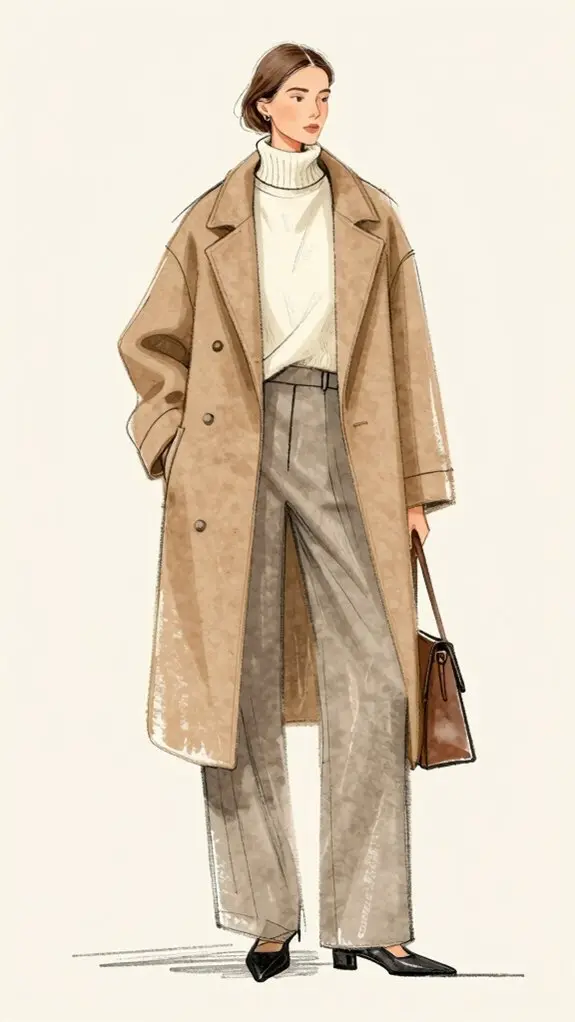
The philosophy behind Nordic design isn’t some mystical Scandinavian secret—it’s a codified set of principles that Copenhagen’s designers have been refining since the 1950s, when Kaare Klint started measuring human bodies to determine ideal furniture dimensions rather than just eyeballing it like everyone else.
You’ll find three non-negotiables here: function dictates form (not the other way around), materials should look like what they actually are (no fake wood grain), and everything needs to earn its place in your space.
This creates timeless elegance without the pretension—no gold-leafed nonsense or unnecessary flourishes. Much like the Scandinavian preference for white in fashion, where minimalism and confidence merge to create effortless sophistication, this design approach strips away the unnecessary to reveal what truly matters. The result is balanced simplicity that doesn’t sacrifice comfort for aesthetics, which is why you’re not wincing every time you sit in a Danish chair designed seventy years ago.
Key Characteristics
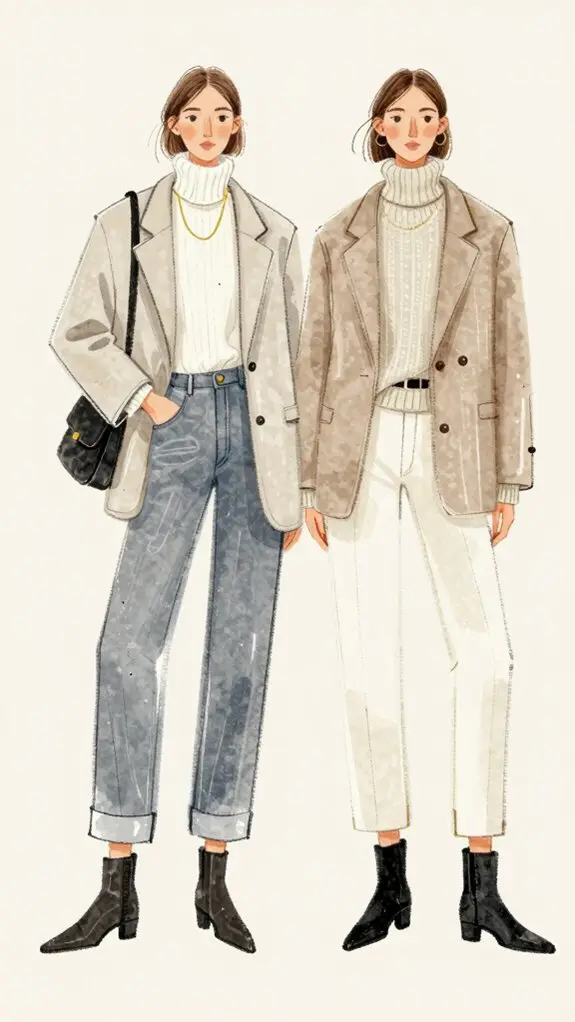
You’ll recognize Copenhagen style by its signature elements: those impossibly clean lines that somehow never look boring, a color palette that makes beige feel revolutionary, and fabrics so well-made they’ll outlast your entire Zara collection twice over.
The Danes have mastered what fast fashion brands keep failing at—they’ve proven that minimal doesn’t mean cheap, neutral doesn’t mean bland, and quality actually matters more than quantity (groundbreaking, right?).
These three pillars work together like a well-edited capsule wardrobe, each element supporting the others to create that effortless, I-woke-up-like-this aesthetic that takes, ironically, quite a bit of intentionality to pull off. This philosophy aligns perfectly with earthy monochromatic dressing, where tonal harmony creates sophistication without relying on bold patterns or colors.
Minimalist cuts
Clean lines define Copenhagen fashion more than any other element, stripping away ornamentation until only the essential silhouette remains. You’ll notice how Danish designers like Cecilie Bahnsen and Ganni favor uncluttered silhouettes that celebrate the body’s natural form rather than drowning it in excess fabric, ruffles, or unnecessary details.
This isn’t minimalism for minimalism’s sake—it’s intentional, thoughtful restraint. The streamlined aesthetics you see on Copenhagen streets reflect a broader cultural philosophy: lagom, the Swedish concept of “just enough,” borrowed and perfected by their Danish neighbors.
Why add a third button when two suffice? These cuts prioritize proportion, fit, and architectural precision over embellishment, creating garments that feel modern without being trendy, sophisticated without screaming for attention.
Neutral tones
Those streamlined silhouettes wouldn’t work half as well without Copenhagen’s signature palette—a spectrum so subdued it makes monochrome look loud. You’ll find yourself drowning in greige, sand, oatmeal, and that peculiar shade of off-white that somehow costs three times more than actual white. It’s soothing monochrome taken to religious extremity, a deliberate rejection of pattern and print that borders on ascetic.
But here’s the thing: it works. Those cozy textures—chunky knits, brushed wool, raw linen—create depth where color refuses to tread. The Danes understand something we’ve forgotten: neutrals aren’t boring when they’re layered with intention. A cream turtleneck under a camel coat over beige trousers shouldn’t function, yet it does, transforming you into a walking meditation on subtlety.
Quality fabrics
Strip away the minimalist aesthetic and Copenhagen fashion reveals its actual foundation: fabrics so exceptional they justify those eye-watering price tags. You’re not just buying a sweater—you’re investing in merino wool that’ll outlast your Netflix queue, cashmere that doesn’t pill after three wears, and linen that actually gets softer over time.
Danish brands like Ganni and Baum und Pferdgarten have made sustainable textiles their entire personality, sourcing organic cotton, recycled polyester, and deadstock materials with the fervor of Silicon Valley optimizing user engagement. Ethical manufacturing isn’t marketing speak here; it’s standard practice, with transparent supply chains and fair wages baked into production costs.
The fabric quality transforms Copenhagen style from disposable trend-chasing into something resembling actual wardrobe building, which, honestly, is revolutionary in 2024’s fast-fashion hellscape.
Wardrobe Building
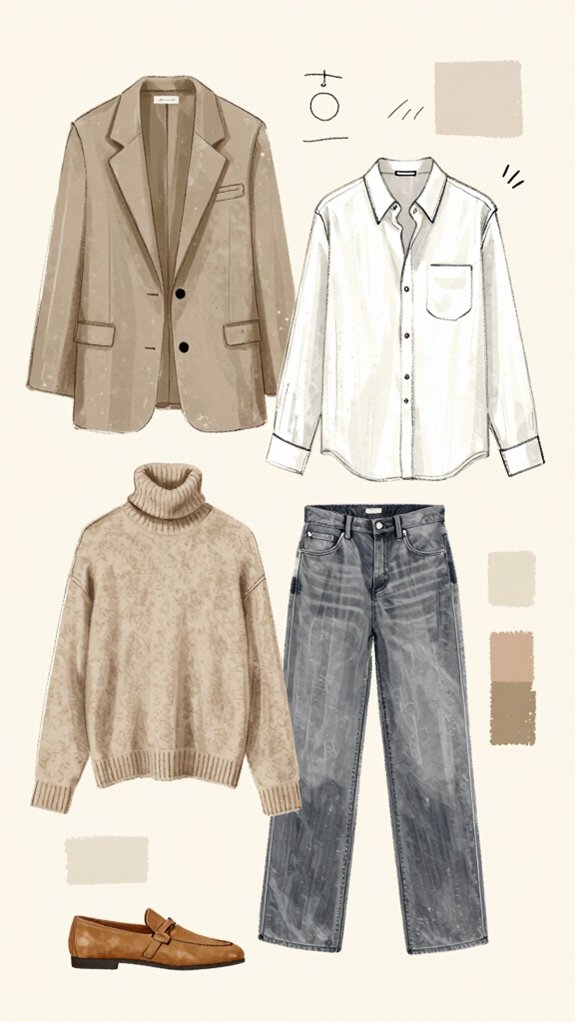
Wardrobe Building
Building a Scandinavian wardrobe isn’t about buying everything at once or dropping your paycheck at COS during a weak moment—it’s about accumulating pieces deliberately, methodically, like you’re assembling a capsule collection for someone who actually has to live in the real world.
Start with neutrals: black, gray, navy, camel. Add one well-cut blazer, two perfect white tees, dark denim that fits like it was tailored. Essential accessories matter here—a leather belt, minimal jewelry, one structured bag that’ll outlive your next relationship.
Master versatile layering: turtlenecks under everything, cardigans that work open or closed, that Scandinavian sweater you’ll wear three times weekly. You’re creating a uniform, basically, but make it chic. Think Phoebe Philo-era Céline meets IKEA’s design philosophy. While trends like the Coquette Aesthetic embrace lace and pastel colors, Scandinavian style remains committed to clean lines and understated sophistication.
Functional Fashion

Function shapes every choice:
- Deep pockets that actually hold your phone, keys, wallet
- Water-resistant fabrics from sustainable materials like recycled polyester
- Layering systems that adjust to fluctuating indoor-outdoor temperatures
- Reflective details for those 3pm winter sunsets
- Timeless silhouettes that move seamlessly from cycling to café meetings
You’re not sacrificing style for utility—you’re recognizing that true style emerges from solving real problems. That perfectly tailored wool coat looks better because it’s designed for actual weather, not Instagram fantasies.
Form follows function, then becomes beautiful.
Frequently Asked Questions
Where Can I Buy Authentic Copenhagen Fashion Brands Online?
You’ll find authentic Copenhagen brands through Goods We Love, Norse Store, and Très Bien, sites that specialize in quality Scandinavian fabrics and curate selections from popular Copenhagen boutiques like Wood Wood, Ganni, and Stine Goya.
Many Danish brands, including Han Kjøbenhavn and Samsøe Samsøe, ship directly from their own websites, offering you better prices, seasonal drops, and pieces that haven’t been picked over by influencers hunting that effortless Nordic aesthetic everyone’s suddenly obsessed with.
How Much Does It Cost to Build a Scandinavian-Inspired Wardrobe?
the average Scandinavian owns just 37 clothing items, yet spends 15% more per piece than Americans. Building your own cost of scandinavian minimalist capsule runs $1,500–3,000 for quality basics—think Arket tees at $35, Ganni knits pushing $200, and those coveted Acne Studios jeans at $300.
Budgeting for scandinavian wardrobe staples means prioritizing fewer, better pieces that’ll outlast fast fashion’s three-wash lifespan. You’re investing in longevity, not quantity.
What Copenhagen Fashion Influencers Should I Follow for Style Inspiration?
You’ll want to follow Pernille Teisbaek, Jeanette Madsen, and Emili Sindlev—they’re the trinity of Copenhagen streetwear style, mastering that effortless-but-calculated aesthetic.
Thora Valdimars and Sophia Roe bring fresh perspectives on Danish fashion trends, mixing minimalism with unexpected textures, colors that actually pop. These women aren’t just posting #OOTD garbage; they’re documenting a genuine cultural movement, proving Scandinavian style isn’t all beige and boring—it’s architectural, playful, and honestly, more wearable than Paris runways.
Are There Sustainable Copenhagen Brands That Ship Internationally?
You’ve got solid Copenhagen based ethical brands with delivery options worldwide. Ganni ships everywhere and actually backs up their sustainability claims with rental programs, circular initiatives.
Samsøe Samsøe’s got international shipping, certified fabrics, transparent supply chains. Wood Wood delivers globally, focuses on responsible production, though they’re pricier.
Rotate Birger Christensen does rental luxury, ships to most countries. These aren’t greenwashing operations—they’re legit sustainable fashion delivery options you can access from wherever you’re located.
How Do Danes Style Their Outfits Differently in Summer Versus Winter?
Danes practically invent themselves anew between seasons. You’ll notice they master minimalist layering techniques year-round, but winter transforms them into textile architects—base layers, wool sweaters, structured coats, all in monochromatic color schemes of black, grey, and navy.
Summer strips it down: linen shirts, wide-leg trousers, same neutral palette but breathable. They don’t abandon their aesthetic philosophy; they adapt it. Think of it as seasonal editing, not reinvention—fewer pieces, same unfussy confidence, whether it’s minus-ten or twenty-five degrees.
Conclusion
Think of your wardrobe as a Nordic forest—each piece stands tall, purposeful, and built to weather seasons. You’re not chasing trends; you’re cultivating a landscape where quality roots run deep, where every garment earns its place through function and form. Copenhagen cool isn’t about restriction—it’s liberation from excess, from fashion’s relentless noise. You’re not building a closet; you’re architecting a life, one intentional choice at a time.
Have any thoughts?
Share your reaction or leave a quick response — we’d love to hear what you think!
-
 0
0 -
0
-
0
-
0
-
0
-
0


