

 Lena
LenaYou’ve seen the dress code on a hundred invitations, scrolled past it in company handbooks, maybe even panicked about it the night before an important meeting—but what does “smart casual” actually mean? It’s fashion’s most maddeningly vague directive, a sartorial Rorschach test that somehow expects you to nail the exact intersection of “I care” and “but not too much.” The truth is, most people get it wrong because they’re missing the fundamental principle that makes the whole thing work.
Dress Code Definition
Smart casual sits in that maddening gray zone between “I could’ve worn this to mow the lawn” and “Did I accidentally overdress for brunch?” The term itself emerged in the 1980s when corporate America started having identity crises about power suits and realized that maybe, just maybe, workers could think clearly without Windsor knots cutting off circulation to their brains.
Today’s smart casual balances casual expectations with smart presentation—think tailored chinos instead of distressed jeans, leather loafers rather than your beloved (but objectively disgusting) tennis shoes. You’re aiming for “I care about this occasion” without screaming “I’m trying too hard.” The dress code respects context while rejecting stuffiness, demanding you look intentional, pulled-together, yet approachable enough that people won’t assume you’re interviewing for their boss’s job. The key lies in mastering pieces that transition seamlessly, like a tailored black blazer that moves effortlessly from daytime meetings to evening events.
Interpretation Guide
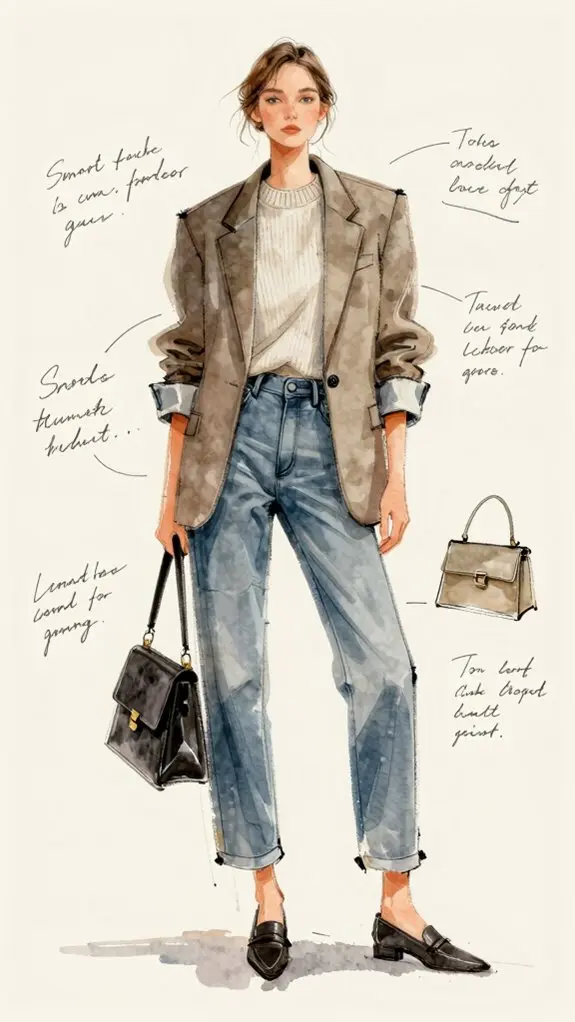
The interpretation nightmare begins when you realize that “smart casual” means something completely different at a tech startup in Austin (where the CEO wears Allbirds to investor meetings) versus a law firm’s Friday happy hour in Manhattan (where partners judge your pocket square choices).
You’ll need a smart style approach that reads the room before you walk in, decoding social cues, industry norms, and regional expectations like some fashion anthropologist. Consider seasonal outfit inspiration as your strategic framework: lightweight chinos and linen button-downs for summer networking events, darker denim with merino sweaters for winter gatherings. For footwear that bridges the casual-polished divide, classic loafers can anchor your look while working seamlessly across these varied settings and seasons.
The key? Always dress one level above your gut instinct, because underdressing creates awkwardness you can’t undo, while slight overdressing just makes you look like you care, which, honestly, isn’t the worst reputation to cultivate.
Essential Components
Individuals have most likely stood in front of their closet wondering what “smart casual” actually means, and here’s the truth: it’s built on three fundamental pieces that bridge the gap between your weekend wear and Monday morning meetings.
Tailored jeans—not the distressed pair from 2019 with strategic rips, but dark-wash denim that fits like you meant it—form the foundation, while a casual blazer, whether it’s unstructured linen or a soft knit, instantly elevates whatever you’re wearing underneath without making you look like you’re about to pitch a corporate merger. Cigarette jeans paired with a brown or sage blazer create that perfect office-to-weekend chic balance that smart casual demands.
The whole thing falls apart, though, if you’re wearing beat-up sneakers, which is why refined footwear matters more than most people realize (think leather loafers, clean minimal sneakers, or Chelsea boots that have seen a polish cloth at least once).
Tailored jeans
Finding jeans that actually fit properly shouldn’t feel like archaeological fieldwork, yet here we are. You need dark indigo or black denim, tailored through the leg, free from distressing that screams “I peaked in 2009.”
The fit matters more than brand mythology, though Levi’s 511s and similar slim cuts offer reliable starting points. Look for mid-to-high rises that won’t expose your underwear during normal human movement, and hems that break cleanly at your shoe without pooling into denim puddles.
These become your foundation for dressed up denim scenarios, paired with oxford shirts, blazers, leather belts that match your shoes. Skip the denim accessories—one denim piece per outfit unless you’re auditioning for a Wrangler commercial. Strategic tailoring transforms mall jeans into wardrobe workhorses.
Casual blazers
Casual blazers occupy that frustrating space between investment piece and wardrobe chameleon, and most men completely misunderstand their purpose. You’re not buying a suit jacket’s younger brother—you’re acquiring structural intelligence that transforms everything underneath it.
Unstructured fabrics like cotton, linen blends, or jersey knits eliminate that boardroom stiffness, creating silhouettes that breathe with your movements rather than against them. The smart casual sweet spot lives in layered textures: think chambray shirts under tobacco-colored cotton blazers, lightweight knits beneath unlined wool.
Skip rigid shoulders and canvas interlining entirely. Your casual blazer should feel like wearing advanced architecture, not corporate armor. Pair it with those tailored jeans, add minimal leather sneakers, and you’ve cracked the code that eludes most men fumbling through business-casual purgatory.
Refined footwear
Most footwear fails smart casual because it commits too hard in one direction—leather dress shoes that scream resignation letter, or sneakers so aggressively casual they belong at a skate park, not a dinner reservation.
You need the Goldilocks zone: sleek loafers that acknowledge adulthood without cosplaying as your dad’s accountant, comfortable mules that slip on effortlessly, suede derbies that understand texture matters. The goal isn’t formality—it’s *polish*.
| Too Formal | Just Right | Too Casual |
|---|---|---|
| Patent oxfords | Suede loafers | Running shoes |
| Wingtips | Leather drivers | Flip-flops |
| Cap-toe balmorals | Minimalist sneakers | Crocs |
| Monk straps | Chelsea boots | Slides |
Your shoes telegraph whether you understand the assignment. Choose ones that whisper sophistication rather than shout corporate dystopia or weekend slacker.
Styling Formula
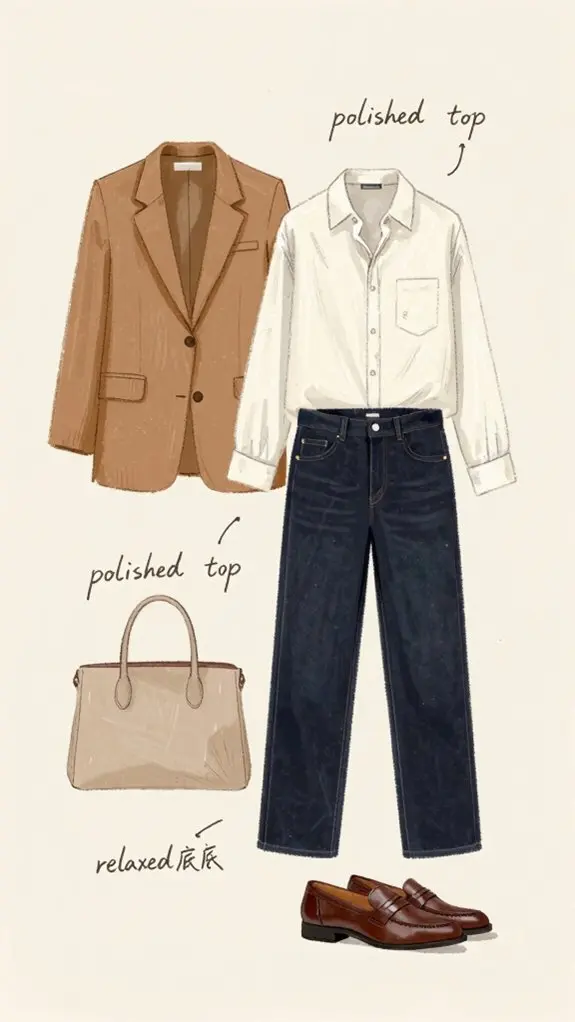
Breaking down smart casual into a workable formula keeps you from second-guessing every outfit choice, because let’s face it, “polished but relaxed” means absolutely nothing when you’re staring at your closet on a Monday morning.
The equation’s straightforward: one tailored piece plus one casual staple equals success. Pair chinos with a blazer, jeans with an Oxford shirt, or trousers with a quality sweater. This combination delivers the polished aesthetic employers expect without suffocating your personality.
Layer in those refined shoes we discussed, add a watch that wasn’t purchased at a gas station, and you’re done. The trick isn’t overthinking proportion or obsessing about rules written by menswear bloggers in 2014. When incorporating wider silhouettes like wide-leg trousers, a fitted top balances the voluminous pants and creates flattering proportions. Maintain a relaxed mindset, trust the formula, and adjust based on your specific environment.
Versatility Tips
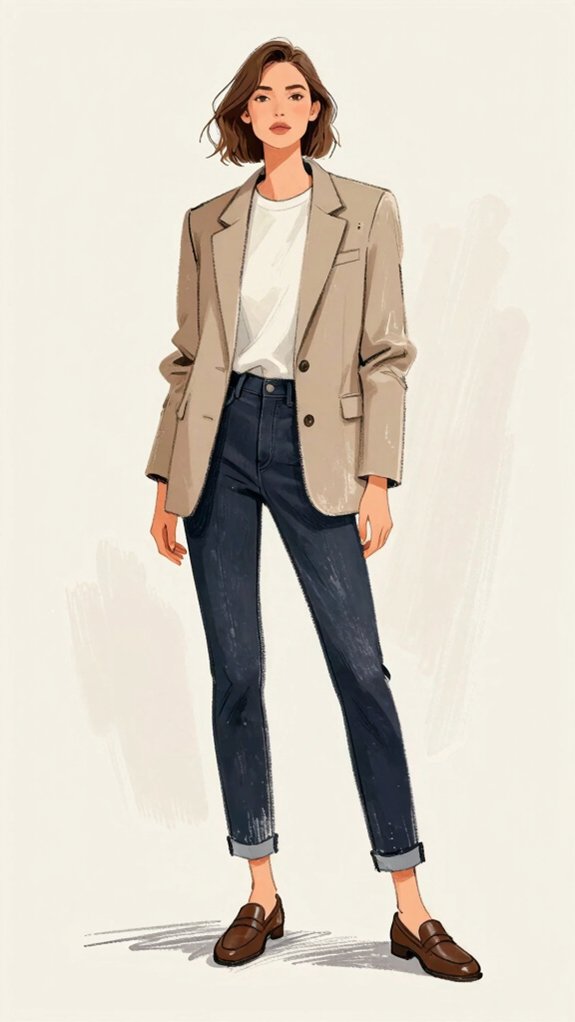
While everyone’s hunting for the perfect outfit, they’re missing the actual prize: a closet where pieces multiply your options instead of limiting them. You’ll open this when you master layering techniques—that white tee transforms under a blazer, adds edge beneath a leather jacket, grounds a statement cardigan.
Your navy chinos? They’re lunch-meeting appropriate with loafers, weekend-ready with sneakers, date-night sharp with Chelsea boots. This is where accessory selection becomes your superpower: swap the belt, change the watch, add a scarf, and you’ve created three distinct looks from identical base pieces. Light-blue jeans serve as the perfect neutral canvas for bold accessories and statement pieces, making them one of the most hardworking items in any versatile wardrobe.
The math works beautifully—five versatile items generate fifteen combinations, while five trendy pieces fixed into specific contexts give you, well, five outfits and buyer’s remorse.
Frequently Asked Questions
Can I Wear Sneakers With Smart Casual Attire?
You can wear sneakers with smart casual, but here’s the catch: they need to be *clean*, minimal, and sophisticated—think white leather court styles or sleek low-tops, not your grass-stained running shoes.
Honestly, comfortable loafers or minimalist leather shoes often work better because they read as more intentional, more put-together. Sneakers walk a fine line between effortlessly cool and trying too hard, so choose wisely, keep them pristine, and you’ll nail that polished-relaxed balance everyone’s chasing.
Are Jeans Acceptable for Smart Casual Dress Code?
Yes, you can wear jeans for smart casual—but here’s where dress code variations get tricky. Dark-wash, tailored denim without distressing works best; think Levi’s 511s or AG Adriano Goldschmied, not your weekend yard-work pair. Appropriate denim styles mean no rips, fading, or overly relaxed fits.
Pair them with leather shoes, a crisp button-down, and maybe a blazer. Light-wash or heavily worn jeans? Save those for actual casual settings where nobody’s judging your professionalism.
What Accessories Work Best for Smart Casual Occasions?
You’ll want minimal jewelry pieces that whisper sophistication rather than scream for attention—think a classic watch, delicate chain, or simple studs that won’t compete with your outfit.
Statement handbag options become your power move here, whether it’s a structured leather tote or sleek crossbody that says you’ve got your life together (even if you don’t).
A quality belt elevates everything, while clean sneakers or loafers ground the look without trying too hard.
How Does Smart Casual Differ Between Seasons?
Smart casual demands serious wardrobe adjustments as temperatures shift. You’ll swap lightweight linen, cotton poplin, and breathable chambray in summer for wool flannel, cashmere blends, and heavier twills come fall.
Fabric considerations matter more than you’d think—that merino sweater layered over an Oxford works in October, but you’ll look ridiculous wearing it poolside in July.
Winter adds structured outerwear, while spring allows you to experiment with intermediate garments like unlined blazers and lighter knits.
Can Smart Casual Be Worn to Job Interviews?
Traversing smart casual interviews depends entirely on company culture—you’ll want to investigate beforehand. Tech startups, creative agencies, and modern workplaces often embrace it, making smart casual versatile interview options that show you’ve done your homework.
However, traditional industries like finance, law, or corporate settings? You’re better off erring formal. When in doubt, ask the recruiter directly about dress expectations. It’s not awkward; it’s strategic.
Smart casual works when the environment already operates that way, otherwise you’ll look unprepared, frankly.
Conclusion
Picture yourself traversing Monday’s conference room in pressed chinos and a blazer, then Friday’s rooftop happy hour in those same pants paired with pristine white sneakers. That’s smart casual’s superpower—you’re not trapped in the straitjacket of formal wear or slouching in weekend sweats. You’ve cracked the code where polish meets personality, where you’ll command respect without sacrificing comfort. Master this balance, and you’ll own every room.
Have any thoughts?
Share your reaction or leave a quick response — we’d love to hear what you think!
-
 0
0 -
0
-
0
-
0
-
0
-
0


