

 Lena
Lena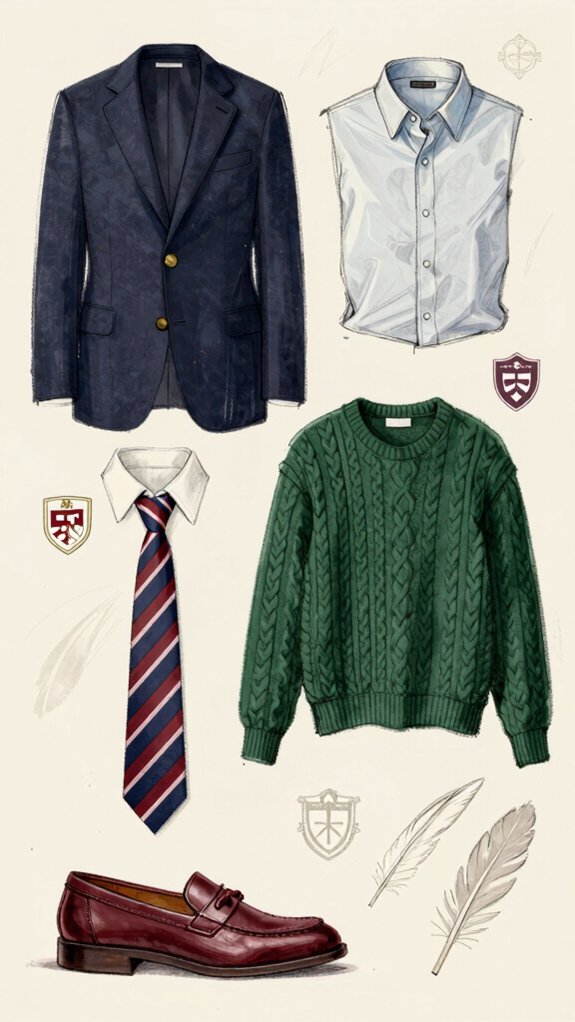
You’ve seen it in every college admissions brochure, that carefully curated tableau of boat shoes, cable-knit sweaters, and studied nonchalance—but here’s what they don’t tell you about American prep. This wasn’t some fashion designer’s fever dream or marketing committee’s invention. It emerged from actual Ivy League campuses between the 1920s and 1950s, where old money whispered its codes through Oxford cloth and khaki, creating a visual language that still dictates who belongs and who’s merely trying. The question is: can you crack it?
East Coast Tradition
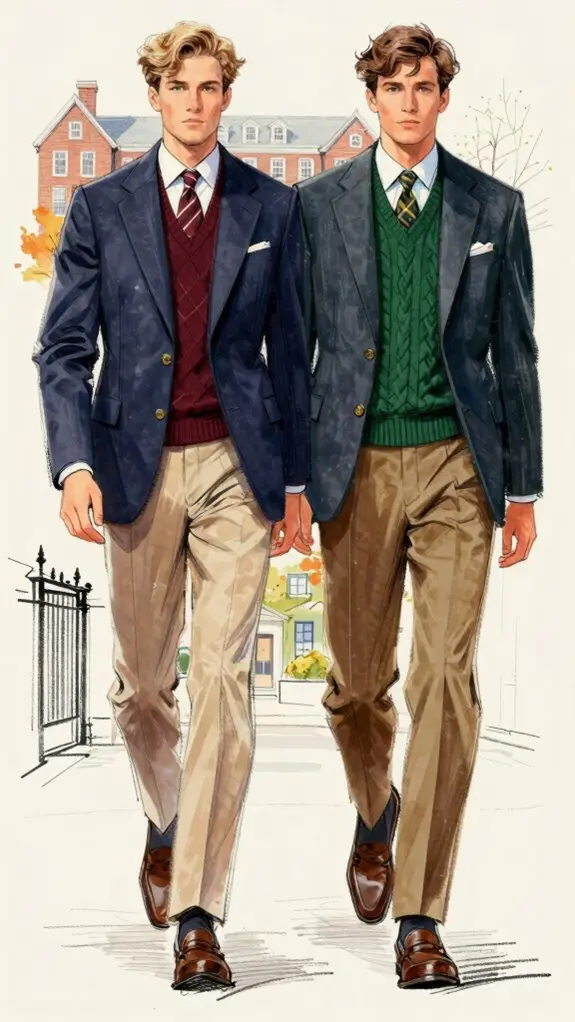
The preppy aesthetic didn’t materialize out of thin air in some Madison Avenue boardroom—it emerged from the actual wardrobes of northeastern boarding schools and Ivy League campuses, where students in the 1920s through 1950s developed a uniform that signaled belonging without trying too hard.
You’ll find its DNA in the social atmosphere of institutions like Andover, Exeter, and eventually Harvard, Yale, and Princeton, where old money met new ambition. These weren’t fashion statements—they were tribal markers, subtle codes that separated insiders from aspirants.
The collegiate aesthetics of button-downs, rep ties, and khakis weren’t about looking expensive; they communicated effortless inheritance, the kind of casual confidence that comes from never questioning whether you belong in the room. This philosophy of understated elegance mirrors the French approach to dressing, where classic Breton stripes and quality basics signal sophistication without overt effort.
Style Heritage
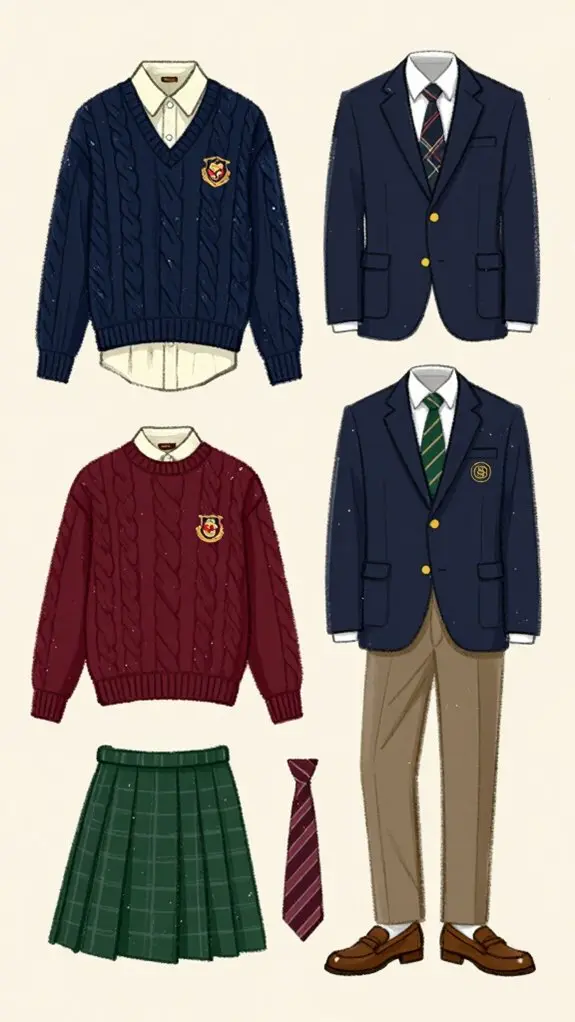
While those East Coast institutions established the social boundaries, the actual clothing came from somewhere far more pragmatic—athletic fields, sailing clubs, and the functional demands of privileged leisure. You’re looking at garments born from necessity, not fashion editors’ whims. The oxford cloth button-down? Originally a polo shirt collar design Brooks Brothers adapted in 1896. Those boat shoes? L.L. Bean created them because wet deck shoes were legitimately dangerous.
| Garment | Original Function |
|---|---|
| Cable-knit sweater | Fishermen’s warmth layer |
| Khaki chinos | Military tropical uniform |
| Penny loafers | Norwegian fishing footwear |
This timeless elegance wasn’t planned—it emerged accidentally when wealthy students appropriated working-class practicality, transforming utility into classic aesthetics. Much like today’s brown suede jacket, which channels that same 70s-meets-now energy when styled with modern pieces, these garments evolved from function to fashion statement. You’ve inherited their cosplay, except now it’s “heritage.”
Essential Items
The Ivy League wardrobe isn’t built on trends or seasonal whims—it’s constructed from three foundational pieces that’ve remained virtually unchanged since Brooks Brothers started dressing Princeton men in the 1920s.
You’ll need proper button-down Oxford cloth shirts (the collar points button to the shirt, a detail that separates authenticity from mall-brand imposters), flat-front khaki trousers in cotton twill, and leather penny loafers worn, vitally, without socks in warm weather.
These aren’t fashion statements but rather uniform components, pieces that signal membership in a particular tribe that values understatement, old money discretion, and the kind of confidence that comes from knowing your grandfather wore the exact same outfit to his college interviews.
For summer months, crisp white jeans from brands like Frame offer 70s-inspired minimalist elegance that complements the prep aesthetic while maintaining that essential understated sophistication.
Button-down shirts
Button-down shirts—specifically the Oxford cloth button-down, or OCBD in menswear circles—remain the undisputed backbone of Ivy League style, a position they’ve held since Brooks Brothers introduced the collar design to America in 1896 after company president John Brooks spotted polo players fastening their flapping collaps during a match in England. You’ll want at least three in your rotation, mixing collar styles and fabric blends thoughtfully.
| Color | Occasion | Emotional Weight |
|---|---|---|
| White | Job interviews, weddings | Confidence, authority |
| Light blue | Class, coffee dates | Approachability, ease |
| Pink | Garden parties, brunch | Courage, distinction |
The roll collar—that subtle curve where the fabric naturally bends—separates authentic OCBDs from department store imposters. It’s intimacy through detail, recognition among those who understand.
Khaki trousers
Versatility makes khakis the platonic ideal of American casual dressing, though somewhere between Kennedy’s Cape Cod weekends and your local Target’s menswear section, we’ve collectively forgotten that “khaki” refers to a color (from the Urdu word for “dust”), not a pant style.
The timeless silhouette you’re after comes from proper chinos—flat-front, slightly tapered, sitting naturally at your waist without requiring a belt to keep them there. Brooks Brothers and Bill’s Khakis understood this in their heyday, cutting trousers that actually fit human bodies instead of geometry textbook cylinders.
Versatile styling means pairing them with Oxford cloth button-downs, loafers, and navy blazers for interviews, then switching to beat-up Sperrys and rolled hems for weekend sailing. They’re not complicated, they’re not trendy, and that’s precisely the point.
Loafers
No shoe better encapsulates prep’s entire philosophy—effortless privilege wrapped in studied nonchalance—than the penny loafer, which emerged from Norway’s farmlands, got adopted by Manhattan’s elite, and somehow ended up on every suburban dad’s feet by the 1980s.
You’ll want Bass Weejuns in burgundy cordovan, the originals that launched in 1936, though Alden’s slip on styling runs a close second if you’ve got deeper pockets. Forget tasseled accents—that’s trying too hard, screaming country club aspirant rather than old money assurance.
The beauty lies in wearing them sockless during summer, leather molding to your foot until they’re practically orthopedic extensions of your anatomy. They’re simultaneously formal and casual, appropriate for classes, cocktails, or Cape Cod weekends.
Preppy Codes
Preppy Codes
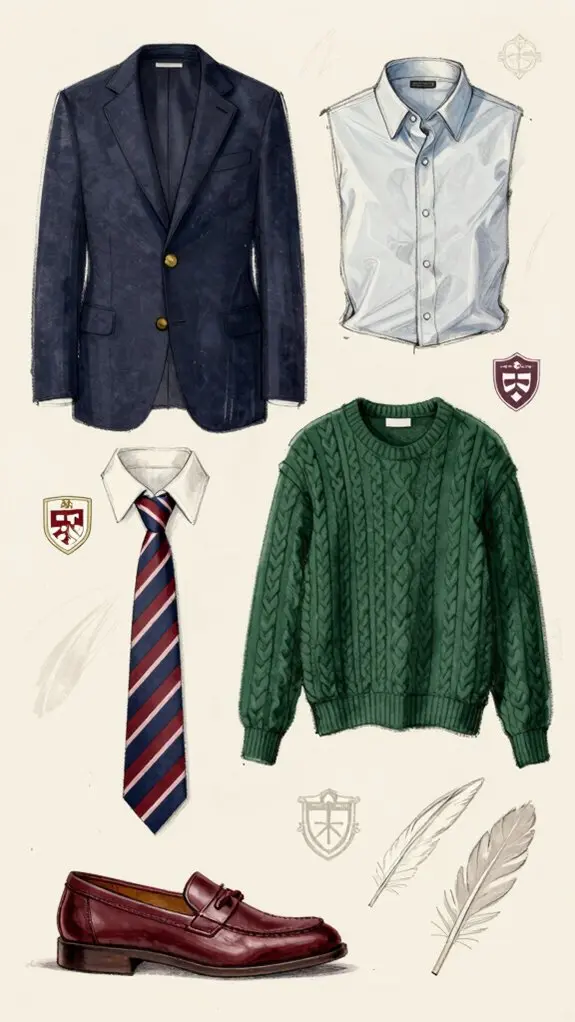
The thing about preppy style is that it’s never been just about clothes—it’s a complete visual language, a semaphore system of subtle signals that separates those who know from those who don’t. You’ll recognize the classic colors immediately: navy, kelly green, Nantucket red (which isn’t really red at all, but faded salmon), butter yellow. These shades telegraph old money, summer houses, sailing knowledge you’ve absorbed through osmosis rather than lessons.
Then there are the signature patterns—grosgrain ribbon belts with tiny embroidered whales, madras that’s properly bleeding its dyes, tattersall checks on button-downs, cable knit sweaters that reference actual maritime utility. The real insiders know it’s about restraint, about wearing one statement piece while keeping everything else quietly expensive, perfectly worn-in, deliberately understated. The aesthetic originated from prep schools and Ivy League universities in the Northeast, where quality fabrics and polished presentation became markers of belonging.
Contemporary Updates
While traditionalists clutch their pearls at the thought of corrupting sacred prep codes, contemporary designers have been quietly revolutionizing the aesthetic without losing its soul. You’ll notice brands like Noah, Rowing Blazers, and Aimé Leon Dore infusing streetwear sensibilities, diverse influences from Japanese workwear to Caribbean cricket clubs, into classic button-downs and blazers.
Ralph Lauren himself—yes, the godfather—has embraced sustainable trends, launching earth-conscious collections that prove you don’t need virgin cashmere to look distinguished. The prep aesthetic’s newest iteration welcomes everyone to the yacht club, not just legacy admissions. Thrifted Brooks Brothers oxfords pair seamlessly with vintage Levi’s, creating a democratized version of exclusivity that would’ve scandalized your grandfather. The barn jacket’s corduroy collar perfectly bridges this gap between workwear heritage and polished prep, offering an elevated touch that feels both authentic and accessible.
It’s evolution, not betrayal, and honestly? The style’s never looked more alive.
Frequently Asked Questions
What Is the Typical Price Range for Authentic Ivy League Prep Clothing?
You’ll spend $80-300 per piece for authentic Ivy League prep from heritage brands like Brooks Brothers, J.Press, and Ralph Lauren. Sure, that’s steep compared to fast fashion’s affordable fabrics, but these garments last decades, not seasons.
Think Oxford cloth button-downs at $90, wool blazers around $400, chinos at $120. Seasonal style trends don’t matter here—you’re investing in timeless pieces that’ll outlive whatever’s trending on TikTok. Quality costs, but you’re buying into a legacy, not disposable fashion.
Can Prep Style Work for Different Body Types and Sizes?
Absolutely—prep works for everyone if you’re strategic. You’ll find versatile fabric options like stretch cotton, wool blends, and forgiving knits that actually move with your body, not against it. The key’s choosing flattering silhouette choices: tailored blazers that nip at your waist, straight-leg chinos instead of slim fits, v-neck sweaters that elongate your torso.
Brooks Brothers, J.Press, and Ralph Lauren all offer extended sizing now, because privilege shouldn’t be one-size-fits-all, right? It’s about proportion, not conformity.
Where Do Celebrities Shop for Preppy Clothing Items?
You’ll find celebrities gravitating toward the same preppy clothing brands your dad’s been buying for decades—Ralph Lauren, Brooks Brothers, J.Crew, and Vineyard Vines. They’re not exactly secretive about it, either, thanks to celebrity endorsements splashed across Instagram.
Taylor Swift rocks her Polo cardigans, while the Kennedys have literally made Nantucket Reds a political uniform. Here’s the thing: these stars shop where you do, they just have stylists doing the heavy lifting.
How Do I Avoid Looking Costume-Like in Preppy Outfits?
You’ll want to balance colors carefully—skip the head-to-toe pink-and-green explosion that screams “yacht club extra.” Mix your preppy staples with modern basics, like pairing your Brooks Brothers oxford with dark jeans instead of madras shorts.
Accessorize strategically: one statement piece (cable knit sweater, pearls) works better than layering every preppy signifier simultaneously. The goal isn’t costume accuracy, it’s looking like you actually live this way, not like you’re attending an 80s theme party.
Is Prep Style Appropriate for Professional Workplace Environments?
When Sarah wore her Brooks Brothers blazer to her finance interview, she got hired—prep screams competence in certain industries.
Your success depends entirely on corporate culture influences and professional attire expectations at your specific workplace. Law firms, consulting groups, and financial institutions? You’re golden. Tech startups with ping-pong tables? You’ll look wildly out of touch.
The prep aesthetic originated in professional environments, so it translates naturally to conservative offices where tailored clothing, structured silhouettes, and quality fabrics signal seriousness and credibility.
Conclusion
You’ve inherited the playbook—Oxford shirts, dock shoes, that Kennedy-compound ease. But here’s the thing: preppy’s evolved beyond Gatsby’s lawn parties and Harvard Yard. Today’s iteration, championed by brands like Ralph Lauren, weaves sustainability into those chinos without sacrificing the insider codes. You’re not just wearing clothes; you’re carrying forward a tradition that’s learned to adapt, proving old money can, surprisingly, learn new tricks.
Have any thoughts?
Share your reaction or leave a quick response — we’d love to hear what you think!
-
 0
0 -
 0
0 -
 0
0 -
 0
0 -
 0
0 -
 0
0