

 Lena
Lena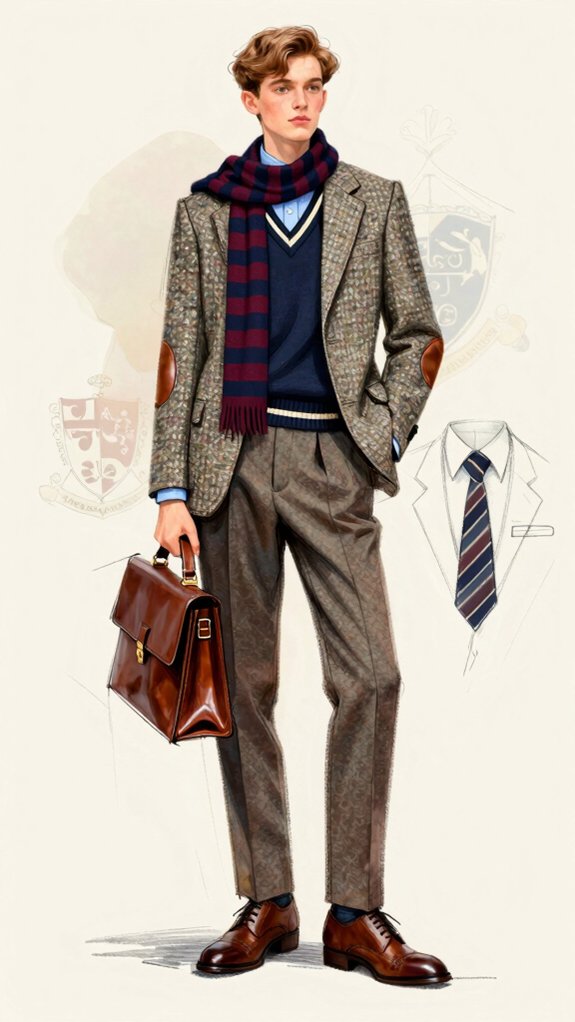
You’ve seen it in every Netflix period drama set at Cambridge, worn by characters who casually drop Latin phrases and row at dawn—but British preppy isn’t costume design, it’s a living dialect of class signaling that’s evolved since the 1920s. Those cricket sweaters, worn brogues, and perfectly rumpled Oxford shirts aren’t trying to impress you, which is precisely the point. The question isn’t whether you can afford the look, it’s whether you can decode what it’s really saying.
Academic Origins
Academic Origins
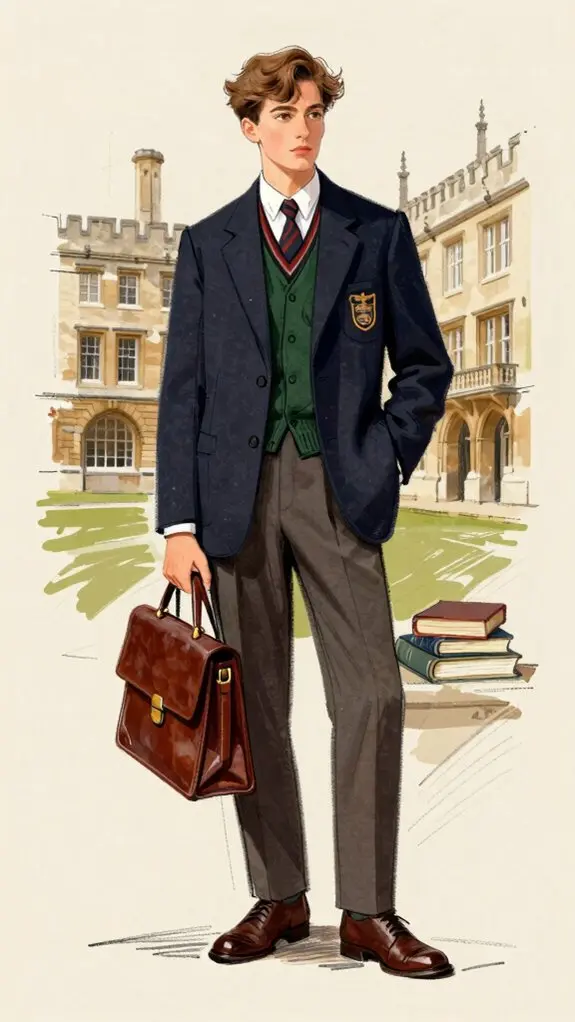
When you hear “Oxbridge style,” you’re invoking more than just a fashion aesthetic—you’re summoning centuries of institutional culture that’s been distilled into a remarkably specific look. Cambridge and Oxford, those twin pillars of British education since the 13th century, didn’t just shape minds—they shaped wardrobes.
The uniforms weren’t arbitrary. They reflected scholarly pursuits that demanded practicality: tweed for drafty libraries, wool for perpetually damp courtyards, scarves in college colors for identification across quads. These intellectual influences created a dress code that signaled membership in an elite circle, one where your rowing blazer or subfusc (that formal academic dress) announced your credentials before you’d spoken a word.
The trench coat emerged as another essential, its structured silhouette and weather-resistant design perfect for navigating rainy British campuses while maintaining that polished yet relaxed aesthetic.
The clothes became shorthand for erudition, privilege, and a very particular kind of British refinement.
Traditional Elements
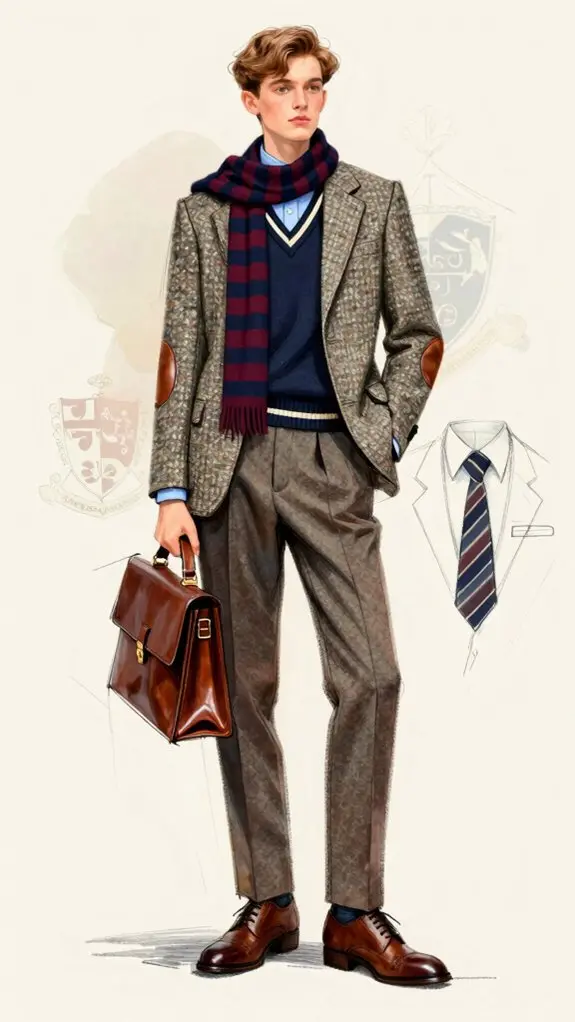
The wardrobe itself is surprisingly finite—a greatest hits collection that’s remained stubbornly consistent since the interwar period. You’re looking at Oxford shirts in white or blue, cricket jumpers with their unmistakable cable knit, tweed jackets that smell faintly of tobacco and old libraries, chinos in khaki or navy, and those infernal boat shoes that somehow survived the 1980s.
These timeless accents don’t evolve because they don’t need to—they’re the sartorial equivalent of received pronunciation, signaling membership through careful repetition rather than innovation. The enduring influences stem from rowing clubs, debating societies, and garden parties where champagne flows freely but social mobility doesn’t. Much like their American Ivy League counterparts, the British preppy aesthetic prioritizes quality fabrics like cotton and linen that breathe in the rare English heat while maintaining that polished, understated look. It’s deliberate uniformity masquerading as effortless taste, each piece a cultural shorthand you’ve either learned or you haven’t.
Signature Pieces
You’ll recognize authentic Oxbridge style through three wardrobe staples that’ve endured since the 1920s, pieces that signal academic heritage without screaming “I summer in the Cotswolds” (though you probably do): the tweed blazer with its distinctive herringbone or houndstooth pattern, the chunky cable knit sweater that’s kept generations of philosophy students warm during punting season, and the wingtip brogues that clack authoritatively across cobblestones from lecture hall to library.
These aren’t fashion statements so much as practical necessities that became cultural markers, items originally designed for rural Scottish estates and Irish fishermen before being adopted by students who needed durability, warmth, and just enough formality to appease tradition-obsessed dons. The beauty here isn’t that these pieces look expensive—it’s that they’re meant to last decades, acquiring character through patches, darns, and the kind of worn-in dignity that fast fashion can’t replicate. For transitional weather, a barn jacket with corduroy collar complements these heritage pieces perfectly, offering the same blend of functionality and understated elegance that defines the Oxbridge aesthetic.
Tweed blazers
| Tweed Type | Best For | Price Range |
|---|---|---|
| Harris Tweed | Durability, authenticity | £300-600 |
| Donegal | Textured, casual vibe | £250-500 |
| Herringbone | Formal occasions | £200-450 |
| Saxony | Softer, less structured | £180-400 |
Pair yours with oxford shirts, never polo necks (that’s trying too hard), and accept you’ll look professorial—embrace it.
Cable knit sweaters
Every British university rowing club, debate society, and classical music ensemble seems to have issued cable knit sweaters as unofficial uniforms since roughly 1952, and there’s something simultaneously endearing and insufferable about this consistency.
You’ll find these cozy textures draped over collared shirts at Trinity formal halls, cricket matches, and pretentious wine tastings where everyone pretends to distinguish Burgundy from Bordeaux. The appeal lies in versatile layering—toss one over an Oxford shirt, under a Barbour jacket, perhaps with those inevitable chinos we’ve discussed. Cable knits telegraph “I’m intellectually serious but approachable,” which explains their popularity among philosophy students who’ve read exactly three Camus novels.
They’re practical, yes, but they’re also armor, a knitted declaration that you belong to something older than yourself.
Brogues
While other shoes whisper their intentions, brogues announce them through precisely punched perforations that originally drained water from Scottish bog-crossings but now drain your bank account at Church’s or Tricker’s. You’ll want:
- Full brogues (wingtips) with their characteristic M-shaped toe cap and wingtip details that scream “I’ve read Burke’s Peerage”
- Quarter brogues for when you’re pretending to be subtle about your class signaling
- Longwing derbies that split the difference between American Ivy and British formality
The leather soles matter more than you think—rubber’s for tourists who haven’t learned that slipping on cobblestones is part of the aesthetic. You’ll resoling them twice before admitting they’re uncomfortable, because that’s what tradition demands.
Color Palette
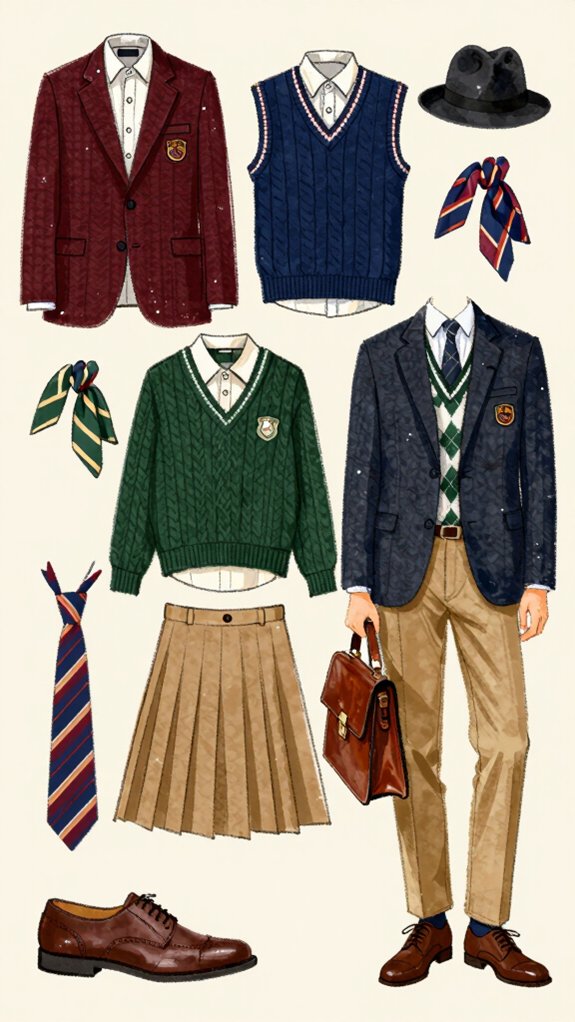
The distinctive color palette of Oxbridge style doesn’t announce itself with garish primaries or trendy pastels—it whispers through centuries-old stone, worn leather, and the particular patina that only institutional longevity can produce.
True elegance accumulates through decades of wear rather than arriving fully formed from any shop window.
You’ll find your wardrobe gravitating toward muted tones: charcoal grays, deep navies, rich burgundies, and those particular shades of brown that suggest libraries rather than runways. Cream and ivory replace stark white, softening the formality without sacrificing sophistication.
When pastel hues do appear—a pink Oxford cloth shirt, perhaps, or a lavender tie—they’re faded, almost apologetic, as if they’ve been washed a thousand times in college sinks. Forest green surfaces in ties and sweaters, referencing rowing blazers and cricket pavilions. This commitment to neutrals as the foundation aligns perfectly with the old money aesthetic, where understated elegance always trumps bold statement-making.
It’s a palette that photographs beautifully in overcast light, which is convenient.
Modern Prep
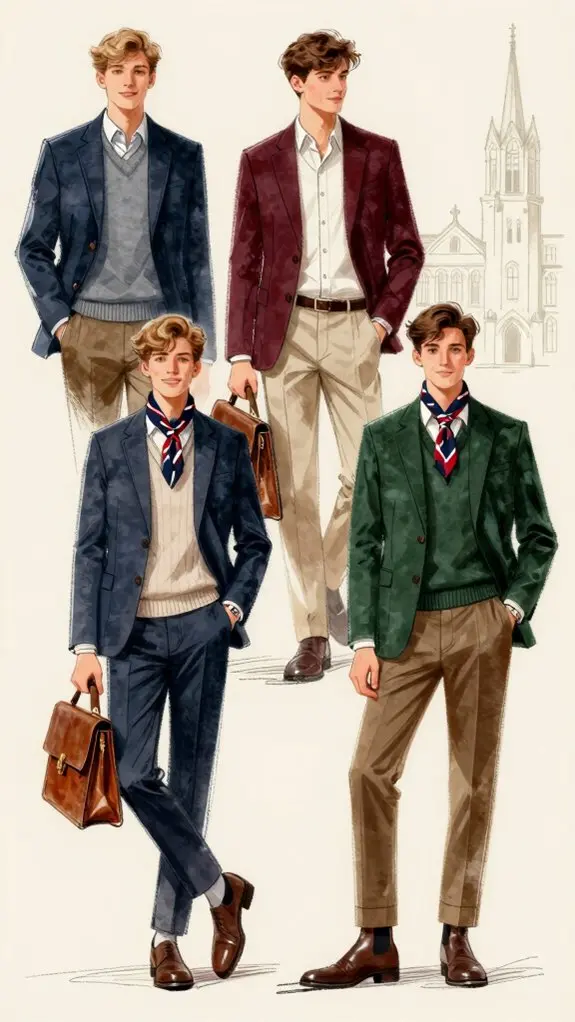
Somewhere between Ralph Lauren’s aspirations and the reality of student debt, modern prep emerged as something both more democratic and infinitely more complicated than its Oxbridge ancestor.
You’ll find it morphed into casual wear that ditches the formality while keeping the bones. The tweed blazer’s optional now, replaced by a minimalist style that borrows from Scandinavian design, Japanese streetwear, and whatever’s on sale at Uniqlo.
Modern prep looks like:
- Oxfords with rolled chinos (navy, always navy) and a plain white tee
- Cable-knit sweaters over technical fabrics because you’re hiking to class, not the library
- Vintage pieces mixed with fast fashion because authenticity’s expensive and Instagram doesn’t care
The silhouette’s evolved too, with wide-leg trousers replacing slim-cut khakis as the unexpected new prep staple.
It’s prep without the country club membership, the legacy admission, or frankly, the point.
Frequently Asked Questions
How Much Does a Typical British Preppy Wardrobe Cost?
You’re looking at £2,000-5,000 minimum for authentic Oxbridge prep, though some manage on less through vintage hunting.
The typical budget for preppy accessories—scarves, belts, cufflinks—runs £300-600, while the average price range for preppy shoes sits between £200-400 per pair (Church’s, Tricker’s).
Quality blazers cost £400-800, chinos £80-150, and those essential Oxford shirts? £60-120 each. It’s investment dressing, not fast fashion, so you’ll need patience and, frankly, decent credit.
Where Can I Buy Authentic Oxbridge-Style Clothing?
Like hunting for treasure in your grandfather’s attic, you’ll find authentic pieces at specialty vintage Oxbridge shops scattered throughout Cambridge and Oxford—think Ryder & Amies or Ede & Ravenscroft, establishments that’ve dressed scholars since the 1800s.
Online, you can browse The Rake or Drake’s for unique Oxford style blazers that capture that worn-in academic elegance. Don’t overlook eBay’s vintage section either; it’s surprisingly rich with genuine collegiate pieces at reasonable prices.
Is British Preppy Style Appropriate for Job Interviews?
You’ll absolutely nail interviews in British preppy—if you’re targeting creative industries, startups, or academic positions where personal style preferences matter. But here’s the catch: traditional corporate sectors, finance, law? They demand conservative professional attire considerations.
Your Oxford cloth button-down and navy blazer work perfectly for tech companies or publishing houses, yet investment banks expect plain charcoal suits. Read the room, assess company culture beforehand, and you’ll know whether your heritage tweeds signal “cultured professional” or “overdressed outsider.”
Can Women Wear British Preppy Style as Easily as Men?
Why wouldn’t you have the same access to cricket sweaters and blazers? You’ll actually find British preppy offers flattering fits for women through tailored pieces like fitted blazers, pleated skirts, and structured trousers that celebrate rather than hide your form.
The real advantage lies in versatile accessories for British preppy—silk scarves, leather satchels, brogues—that you can mix endlessly. Think Kate Middleton’s polished looks; she’s practically built a career on it.
What’s the Difference Between American Preppy and British Preppy?
American preppy’s all about yacht clubs, lacrosse, and those perky New England traditions—think Brooks Brothers and country clubs. British preppy, though? That’s quintessential British upper class style rooted in Oxbridge, where you’ll find classic British tailoring that’s more restrained, more properly structured.
Americans go bright and optimistic with their pastels; Britons prefer navy blazers, heritage tweeds, and that effortlessly aristocratic vibe. It’s the difference between enthusiastic college spirit and centuries-old institutional confidence—one’s aspirational, the other’s inherited.
Conclusion
You’ve absorbed the syllabus: tweed blazers, cream chinos, those brogues that whisper “trust fund” without saying a word. Now you’re equipped to signal intellectual superiority through cable knits alone, because nothing says “I read philosophy” like a £200 sweater from Cambridge. Whether you’re actually punting down the Cam or just cosplaying privilege at your local coffee shop, you’ve mastered the uniform. Congratulations—you’ve bought into centuries of class signaling, one pastel Oxford shirt at a time.
Have any thoughts?
Share your reaction or leave a quick response — we’d love to hear what you think!
-
 0
0 -
0
-
0
-
0
-
0
-
0


