

 Lena
Lena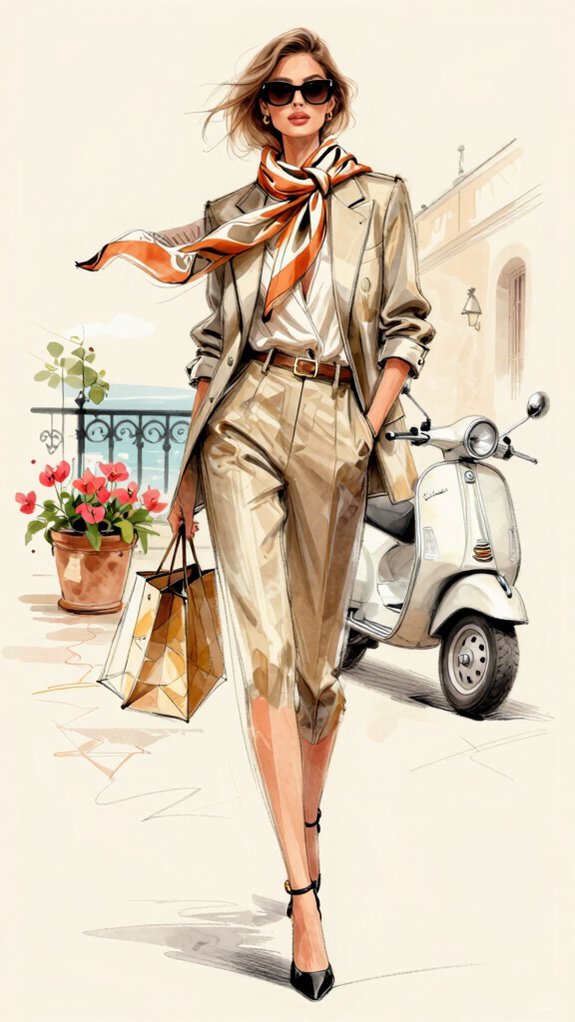
Most individuals have likely never noticed that Marcello Mastroianni wore the same style of suit throughout “La Dolce Vita”—dark, narrow lapels, perfectly proportioned—because Italian elegance isn’t about having more, it’s about having *right*. While French style whispers “I’m effortless” through calculated disorder, Italian elegance declares “I know exactly what I’m doing” through impeccable structure that somehow never feels stiff. That distinction matters more than one might think.
Cultural Fashion Context
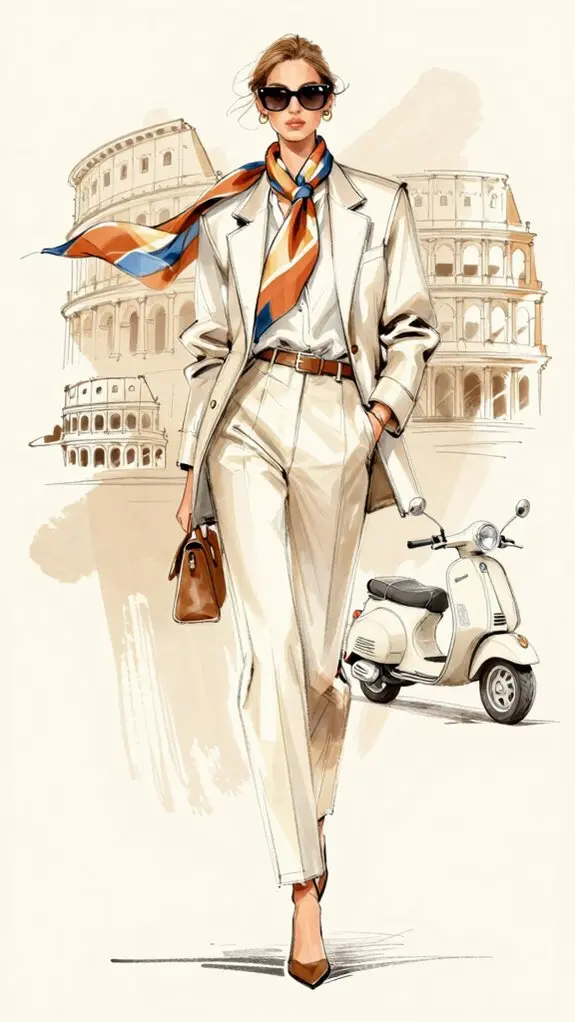
Three words changed everything for Italian fashion: Federico Fellini’s 1960 film *La Dolce Vita*. You’ve seen the imagery, whether you know it or not—Anita Ekberg in that strapless black gown, wading through the Trevi Fountain at dawn, creating a blueprint for sophisticated aesthetics that designers still chase today.
But here’s what’s remarkable: Italian style didn’t need Hollywood validation. The country’s timeless traditions, from Milanese tailoring to Florentine leather craftsmanship, had already established Rome as fashion’s alternative capital. Fellini simply gave the world permission to obsess over what Italians had perfected for centuries—that effortless balance between structure and sensuality, formality and freedom.
The film didn’t create Italian elegance; it just made everyone else desperately want it. While Italian fashion celebrated bold drama and sculptural silhouettes, French style across the border was mastering the timeless trench coat and understated sophistication that would become equally iconic.
Style Characteristics
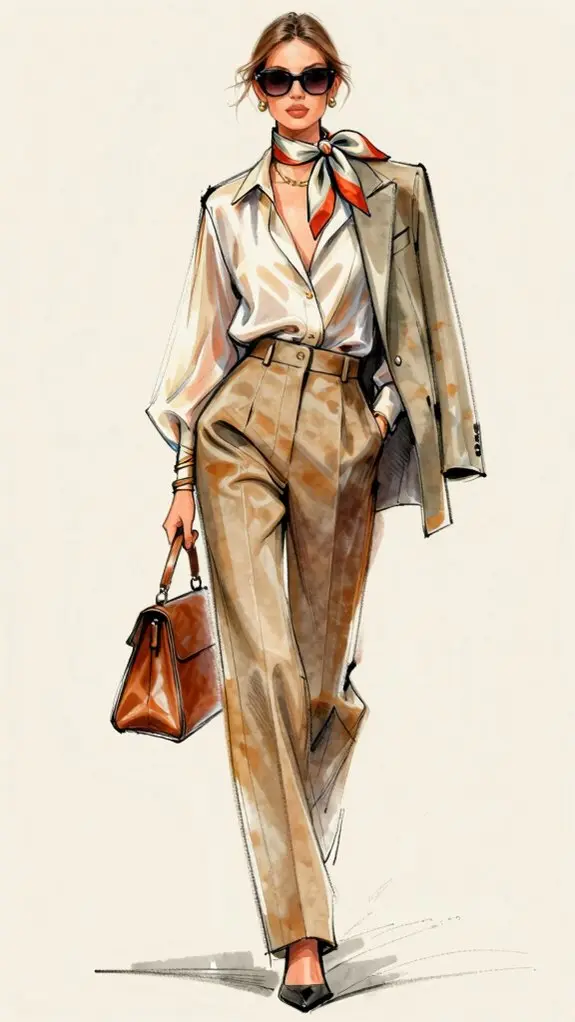
That obsession translated into something tangible, something you can spot across a crowded piazza or subway car—the Italian approach to clothing operates on principles that seem deceptively simple until you try to replicate them. It’s refined aesthetics without the pretension, understated glamour that doesn’t announce itself.
| Element | Italian Execution |
|---|---|
| Fit | Tailored but never tight, skimming your frame |
| Color | Neutral foundations with strategic pops |
| Fabric | Natural materials that breathe, drape, age well |
| Accessories | Fewer pieces, higher quality, deliberate placement |
| Overall Effect | Effortless coordination that required actual effort |
You won’t find logos screaming for attention. The details—a perfectly rolled cuff, leather that’s been conditioned properly, shoes that actually match your belt—create cohesion without trying too hard. Milan’s best-dressed master the art of mixing high and low elements, pairing luxury blazers with colorful Adidas Gazelle sneakers to create striking proportional contrast.
Key Elements
You’ll recognize true Italian style by three non-negotiables: sumptuous fabrics that whisper wealth (think cashmere, silk, virgin wool), accessories that command attention without screaming desperation, and tailoring so precise it makes off-the-rack American mall brands look like they’ve given up entirely.
These aren’t just aesthetic choices—they’re cultural statements rooted in centuries of Italian craftsmanship, from Milan’s fashion houses to Florence’s leather workshops.
Master these elements, and you’re not just dressing well; you’re channeling a philosophy that treats personal presentation as both art form and social contract. A lightweight cashmere wrap epitomizes this approach, serving as scarf, shawl, or sarong while adding that essential layer of effortless sophistication.
Luxe fabrics
Since the postwar economic miracle of the 1950s and ’60s, Italian fashion has built its reputation on one non-negotiable foundation: the fabric itself. You’ll find sumptuous textures that transform simple silhouettes into statements—silk from Como’s historic mills, cashmere so fine it feels like breathing luxury, wool from Biella that drapes like liquid architecture.
Italian designers don’t just use fabric; they worship it, source it obsessively, treat it like the star it is. Why settle for ordinary cotton when you can have exotic materials like vicuña, guanaco, or sea island varieties that cost more per yard than most people’s monthly rent? The tactile experience matters here. Run your fingers across genuine Italian cloth, and you’ll understand why knockoffs, however convincing visually, always fail the touch test.
Bold accessories
While other fashion cultures whisper their luxury through subtle logos and quiet branding, Italians shout theirs with accessories that command attention from across the piazza. You’ll spot oversized sunglasses perched atop heads like crowns, chunky gold chains layered without restraint, and scarves twisted in ways that defy physics yet somehow work.
These statement pieces aren’t meant to blend—they’re designed to overwhelm, control, and captivate your entire look, turning simple white shirts into editorial moments. The magic lies in eclectic layering: mixing grandmother’s vintage brooch with contemporary leather cuffs, stacking delicate rings alongside bold cocktail numbers. It’s maximalism with purpose, calculated chaos that demonstrates you understand fashion deeply enough to break its rules.
Why settle for one bracelet when seven tell a better story?
Tailored fits
Italian tailoring operates on a deceptively simple principle: clothes should follow your body’s natural lines, not disguise them under shapeless fabric or suffocate them in restrictive cuts. When you invest in perfectly tailored silhouettes, you’re not just buying clothes—you’re commissioning wearable architecture that enhances what’s already there.
Notice how Italian men own three impeccable suits rather than ten mediocre ones? That’s the philosophy you’ll want to adopt. The difference between off-the-rack and tailored isn’t subtle; it’s the gap between wearing clothes and inhabiting them. Even a simple cotton shirt, when properly fitted at the shoulders, waist, and sleeves, radiates effortless sophistication that no designer label can fake.
Your tailor becomes your collaborator, not just your vendor.
Essential Pieces
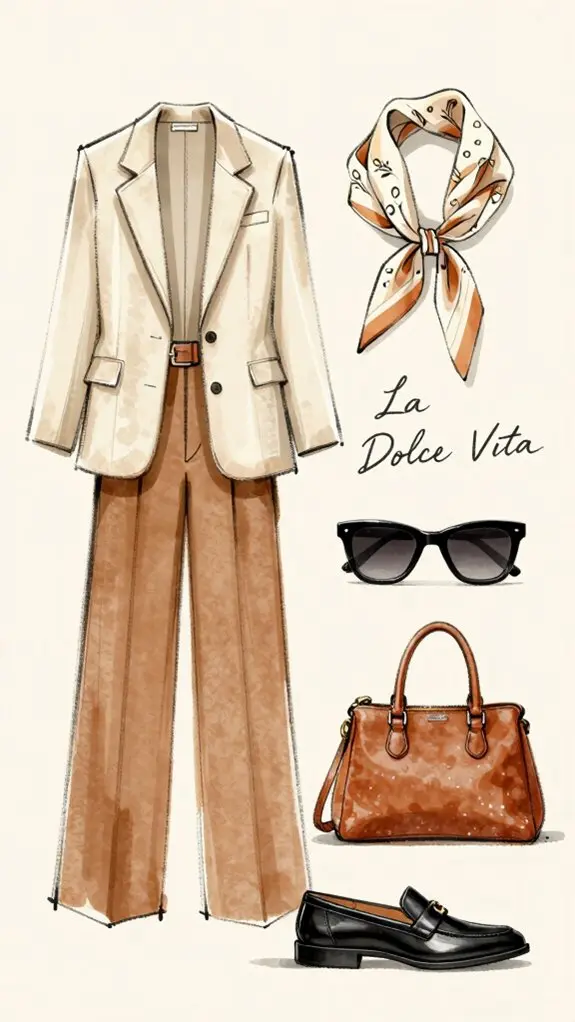
Your wardrobe essentials should include:
- A perfectly tailored navy blazer that moves from aperitivo to dinner
- Crisp white shirts in Egyptian cotton, because synthetic blends are frankly depressing
- Dark denim that actually fits your body, not some designer’s imaginary proportions
These investment pieces form your foundation, the reliable anchors around which everything else revolves. Think Marcello Mastroianni in La Dolce Vita (1960), effortlessly elegant because he understood restraint. When building a monochrome palette, remember that ill-fitting pieces will stand out more than in other color combinations, so tailoring is non-negotiable.
You don’t need fifty items when ten exceptional ones’ll serve you better.
Styling Confidence
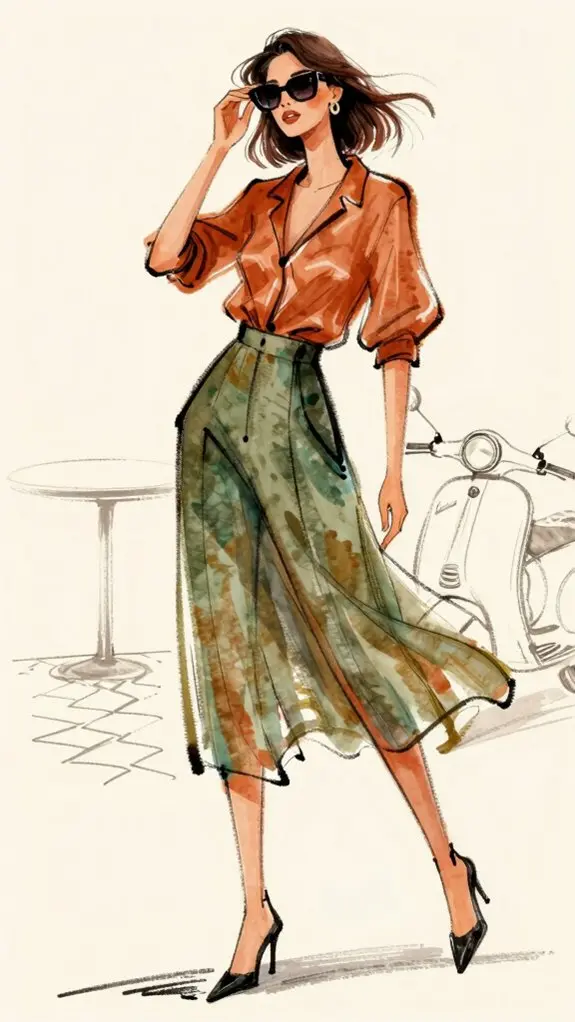
Having the right pieces means nothing if you’re wearing them like a costume from a regional theatre production of *The Godfather*. Italian style isn’t about peacocking through your neighborhood like you’re auditioning for *Jersey Shore*. It’s about poise and grace, the kind that makes people wonder if you summer in Portofino even when you’re just grabbing espresso at your local café.
True effortless sophistication comes from understanding proportion, fit, and restraint. Your tailored trousers should drape, not strangle. That linen shirt needs room to breathe, buttons undone just enough to suggest confidence without screaming desperation. You’re channeling Marcello Mastroianni in *La Dolce Vita*, not Tony Soprano at a strip club.
The secret? Wear your clothes like you’ve owned them forever, like they’re extensions of yourself rather than borrowed plumage. Consider how a rich chocolate brown suede bag can add warmth and textural interest to even the simplest neutral ensemble without demanding attention.
Frequently Asked Questions
What Italian Fashion Brands Best Represent the La Dolce Vita Aesthetic?
You’ll find la dolce vita’s essence in Brunello Cucinelli’s cashmere elegance, Max Mara’s iconic coats, and Loro Piana’s understated luxury. These brands master timeless silhouettes without screaming for attention, unlike flashier houses.
Bottega Veneta, especially under Daniel Lee’s tenure, perfected effortless sophistication through craftsmanship over logos. Giorgio Armani built an empire on this exact philosophy, those fluid jackets embodying Italian ease. Why complicate what works? These labels understand that true style whispers, never shouts, capturing that sun-drenched Roman afternoon energy you’re craving.
How Much Should I Budget for an Italian-Inspired Wardrobe?
You’ll want to budget $2,000-5,000 for genuine Italian-inspired wardrobe transformation, though quality over quantity considerations matter more than raw spending. Think three to five ideal wardrobe investment pieces—a Loro Piana cashmere sweater, perfectly tailored trousers, buttery leather loafers—rather than a closet stuffed with fast fashion approximations.
The Italians understand that one impeccable blazer from Brunello Cucinelli beats ten mediocre jackets. Start small, buy deliberately, and let your wardrobe evolve organically.
Where Can I Shop for Authentic Italian Clothing Outside Italy?
You’ll find authentic pieces at designer boutique selections in major cities—think Matches Fashion, SSENSE, or Farfetch online. These curators source directly from Milan, Rome, and Florence workshops.
For high quality fabric sources, try specialty stores like B&J Fabrics in New York or The Cloth Shop in London, where Italian mills, Loro Piana and Ermenegildo Zegna specifically, supply their gorgeous materials.
Don’t sleep on eBay’s vintage Italian finds either—they’re surprisingly legit.
Which Italian Fashion Icons Should I Follow for Style Inspiration?
You’ll want to follow Giovanna Battaglia Engelbert for her fearless mixing of timeless italian fashion with contemporary edge, and Veronica Ferraro, who embodies that elegant italian lifestyle without trying too hard.
Chiara Ferragni remains relevant despite the influencer fatigue, honestly.
Don’t sleep on Diletta Bonaiuti either—she’s a street style photographer who actually understands proportions, heritage tailoring, and how Italians wear luxury casually, not like they’re attending a wedding every damn day.
Are There Seasonal Differences in Italian Elegant Dressing?
Like Hepburn swapping Vespa scarves for winter coats, you’ll notice Italians master seasonal color palettes with religious devotion. Summer brings crisp whites, nautical stripes, and airy linens along the coast, while autumn ushers in rich burgundies, camel, and structured wool.
Regional fashion traditions matter too—Milan’s sleek winter layers differ from Rome’s textured approach. You’re not just changing clothes; you’re adapting to Italy’s distinct seasonal moods, each demanding its own sophisticated uniform.
Conclusion
You won’t find la dolce vita in fast fashion’s revolving door, that much is certain. Italian elegance demands patience, investment, and the kind of self-knowledge that comes from actually paying attention to what works on your body. Think of it as your Roman Holiday—except instead of a fleeting tourist moment, you’re building a wardrobe that’ll outlast trend cycles, diet culture, and whatever Milan declares essential next season.
Have any thoughts?
Share your reaction or leave a quick response — we’d love to hear what you think!
-
 0
0 -
 0
0 -
 0
0 -
 0
0 -
 0
0 -
 0
0