

 Lena
Lena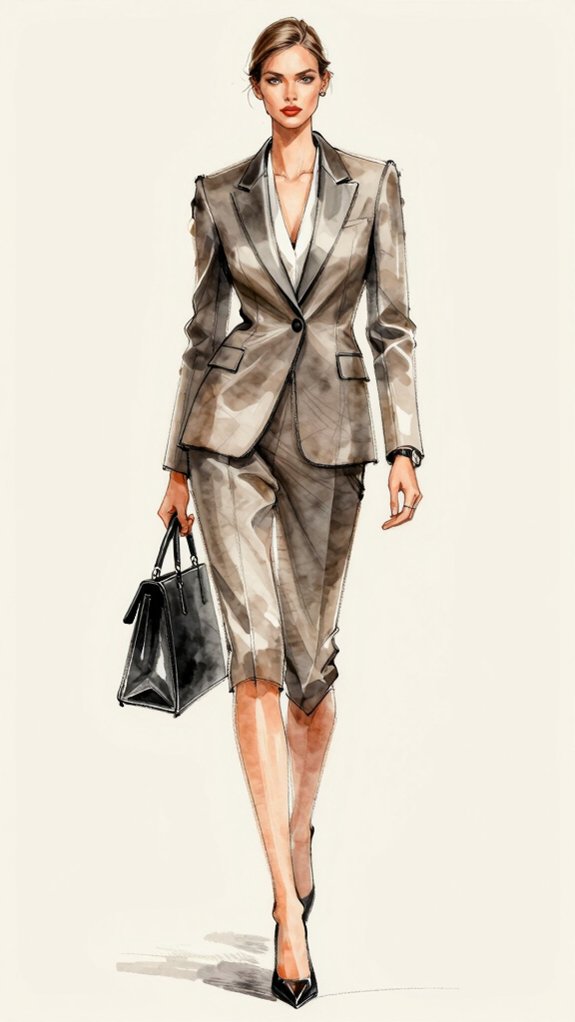
Individuals have likely observed how the corner-office populace no longer dresses like their grandfather’s executives—no more boardroom uniforms or Brooks Brothers conformity from the 1980s. Today’s power dressing is subtler, more personal, yet somehow more strategic. It’s about creating what designers call “executive presence” through deliberate choices that signal competence without screaming for attention. The question isn’t whether your clothes communicate authority; it’s whether you’re controlling that conversation or letting outdated rules speak for you.
Historical Context
Historical Context
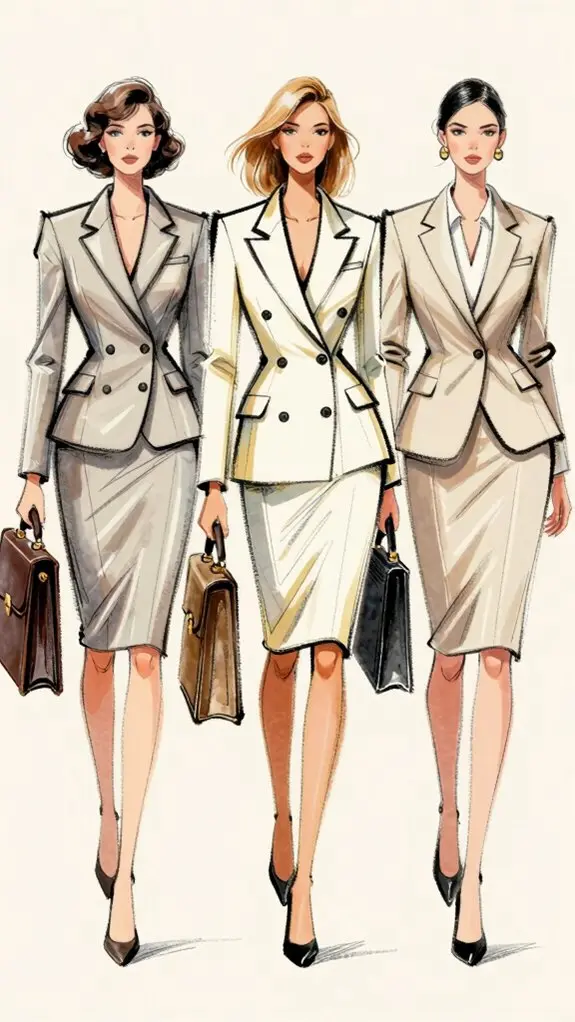
The power suit didn’t emerge from a vacuum—it evolved from centuries of sartorial signaling, where clothing served as an instant, non-negotiable indicator of social rank, occupation, and authority.
Clothing has always been a language of power—one that speaks before you ever open your mouth.
You can trace the lineage directly back to Victorian fashion influences, when starched collars, tailored jackets, and precisely cut trousers communicated one’s position in the social hierarchy. These weren’t mere aesthetic choices—they were social status signifiers that determined whether doors opened or remained firmly shut.
Men’s business attire crystallized during the Industrial Revolution, when bankers, lawyers, and merchants needed visual shorthand to distinguish themselves from laborers. Women, predictably, had to fight their way into this coded language, adapting masculine silhouettes to claim space in boardrooms. Coco Chanel revolutionized this transition by championing effortless sophistication through tweed jackets and streamlined designs that gave women both authority and freedom of movement.
The rules were rigid, exclusionary, and maddeningly effective at maintaining power structures.
Modern Interpretation
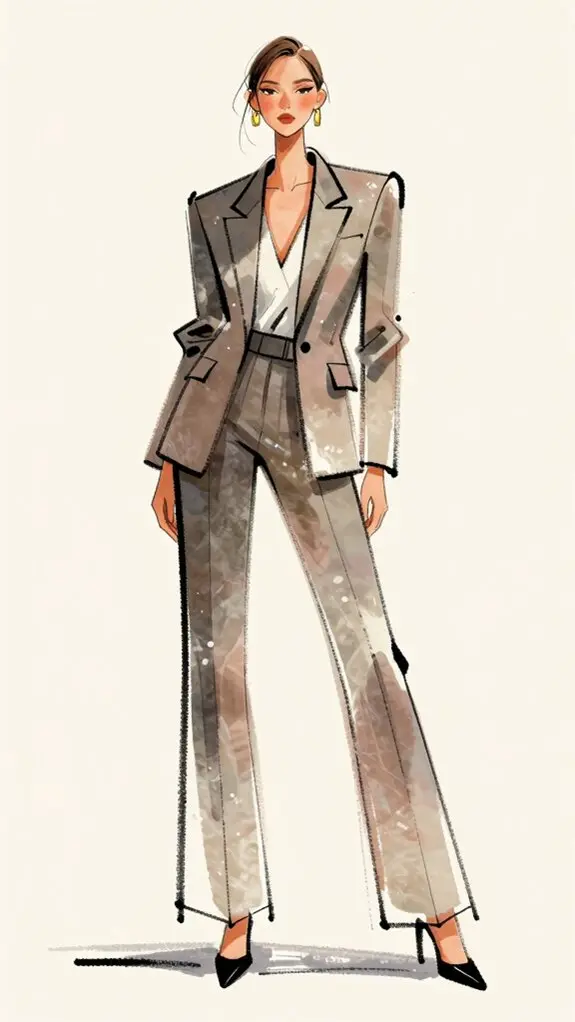
Fast-forward to today, and the power suit’s stranglehold on professional credibility has loosened—but it hasn’t disappeared, it’s just shape-shifted into something harder to pin down. You’re now maneuvering an era where executive presence demands tailored minimalism over effortless sophistication trumps obvious authority signals.
Think Phoebe Philo’s Céline, not Gordon Gekko’s pinstripes. The rules haven’t vanished—they’ve become encrypted. You’ll notice today’s leaders master the art of looking expensive without trying too hard, wielding Brunello Cucinelli sweaters and Armani trousers like weapons disguised as weekend wear.
It’s trickier now, honestly, because you can’t just buy the uniform and call it done. Modern power dressing requires genuine taste, cultural fluency, and enough confidence to reject the costume altogether when necessary. Victoria Beckham exemplifies this evolution perfectly, pairing plunge detail power suits with monochrome precision to achieve evening sophistication without sacrificing authority.
Signature Elements
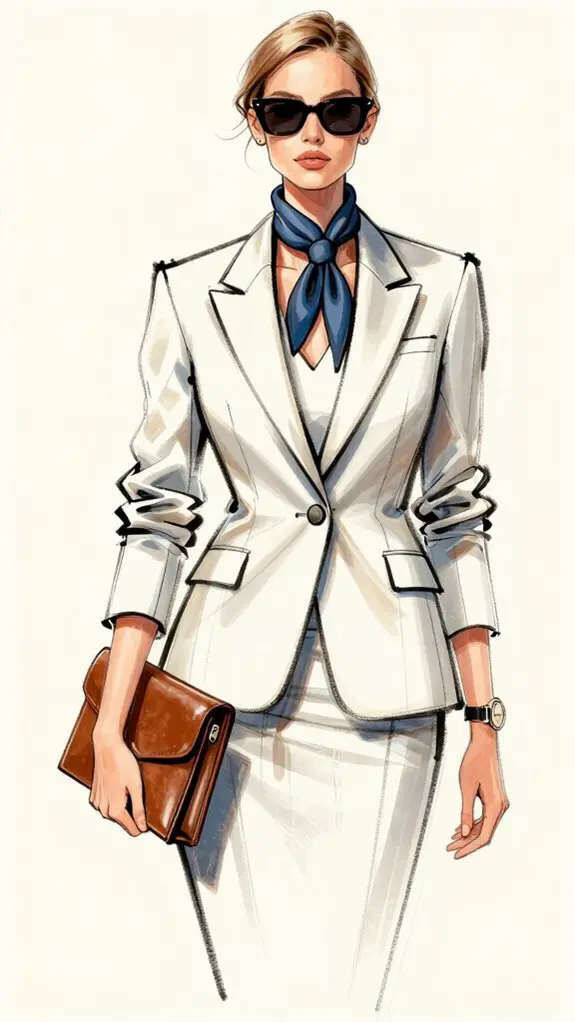
Your executive wardrobe isn’t complete without three non-negotiables: structured suits that command attention through sharp tailoring and architectural lines, bold accessories (think statement watches, silk scarves, distinctive jewelry) that signal confidence without screaming for it, and silhouettes that project authority whether you’re standing at a podium or sitting in a boardroom.
These signature elements work because they’re rooted in decades of psychological research showing that visual cues account for 55% of first impressions, which means your clothes are talking before you even open your mouth.
The office siren aesthetic takes this foundation further by incorporating slim rectangular glasses and pointed-toe pumps that add intellectual sophistication to your power presence.
The trick isn’t wearing power pieces—it’s wearing them like you’ve never questioned your right to be in the room.
Structured suits
When you slide into a structured suit, you’re not just getting dressed—you’re engineering your silhouette into something that commands attention before you’ve said a word. Refined tailoring does the heavy lifting, literally sculpting your frame with shoulder pads, darts, and canvas interlinings that create architecture from fabric.
Here’s what elevated minimalism demands:
- Sharp shoulders that extend your frame without veering into ’80s linebacker territory
- Nipped waist that defines proportion, even if you’re working with a straight-cut jacket
- Crisp lapels that lie flat, never rolling or buckling
- Quality construction with canvassed fronts that mold to your body over time
This isn’t about following trends—it’s about understanding that structure creates presence, that good bones matter more than flashy details.
Bold accessories
A statement watch, an architectural ring, a leather briefcase worn soft from years of use—these aren’t afterthoughts you grab on your way out the door. They’re calculated choices that signal authority before you’ve said a word. Bold accessories create visual anchors that people recall long after the meeting ends.
| Accessory Type | Executive Impact |
|---|---|
| Statement jewelry | Demands attention, shows confidence |
| Luxury timepiece | Signals punctuality, achievement |
| Distinctive eyewear | Creates intellectual authority |
| Quality leather goods | Demonstrates attention to detail |
| Signature pen | Old-school power move |
Choose polished finishes that catch light without screaming for it. Your accessories should whisper wealth and competence, not announce desperation for validation. Think fewer pieces, better quality—investment items that’ll outlast fast-fashion trends and disposable corporate culture.
Confident silhouettes
Because the fashion industry profits from constant reinvention, they’ve convinced executives that their wardrobe needs seasonal overhauls—but the leaders who actually command rooms understand that power lives in repetition.
Your signature silhouette becomes visual shorthand for competence. Consider these foundations:
- Structured shoulders that create architectural presence without apology
- Sleek minimalism in cuts that prioritize clean lines over trendy details
- Sophisticated textures like wool gabardine, double-faced cashmere, that whisper expense
- Consistent proportions you’ve tested, refined, perfected through actual board meetings
Steve Jobs didn’t cycle through styles—he owned his uniform. You’re not building a costume collection; you’re establishing visual authority through deliberate repetition. When people recognize your silhouette before seeing your face, you’ve transcended fashion’s hamster wheel and entered something far more valuable: memorability.
Building Authority
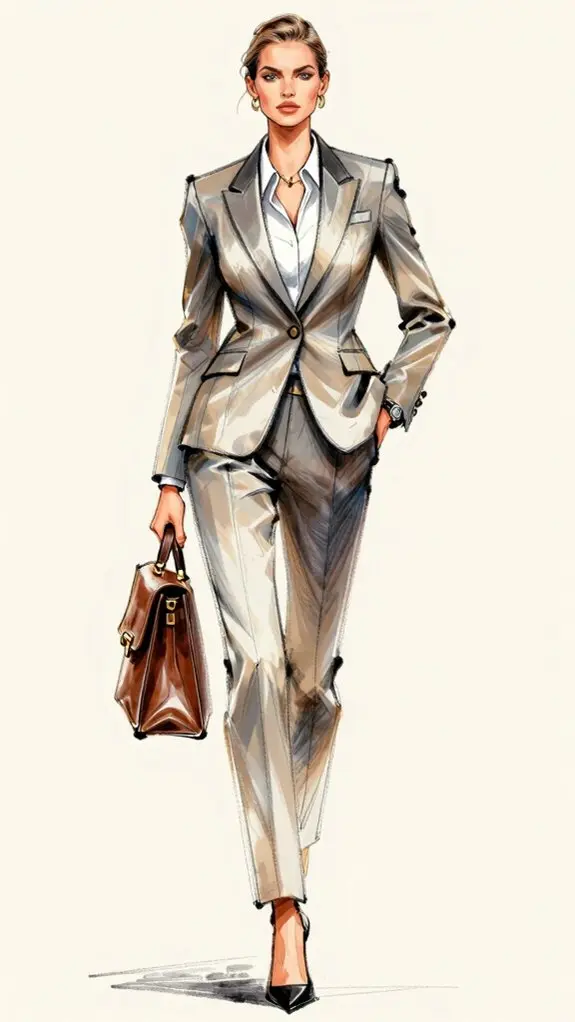
Authority isn’t something you’re born with—it’s something you build, piece by piece, through deliberate choices about how you present yourself to the world. You’ve seen it: the executive who commands attention without raising her voice, whose polished grooming signals she’s already three steps ahead. That’s executive composure in action, and it’s available to you right now.
Start with the non-negotiables: impeccably maintained clothing, strategic color choices that photograph well in meetings, accessories that whisper rather than shout. Remember that an inexpensive suit that fits perfectly will always look better than designer pieces that are poorly tailored, making alterations one of the smartest investments in your professional image. Your goal isn’t perfection—it’s consistency, reliability, the sense that you’ve got everything under control even when you don’t.
Because here’s the truth: people follow those who look like they know where they’re going.
Contemporary Approach
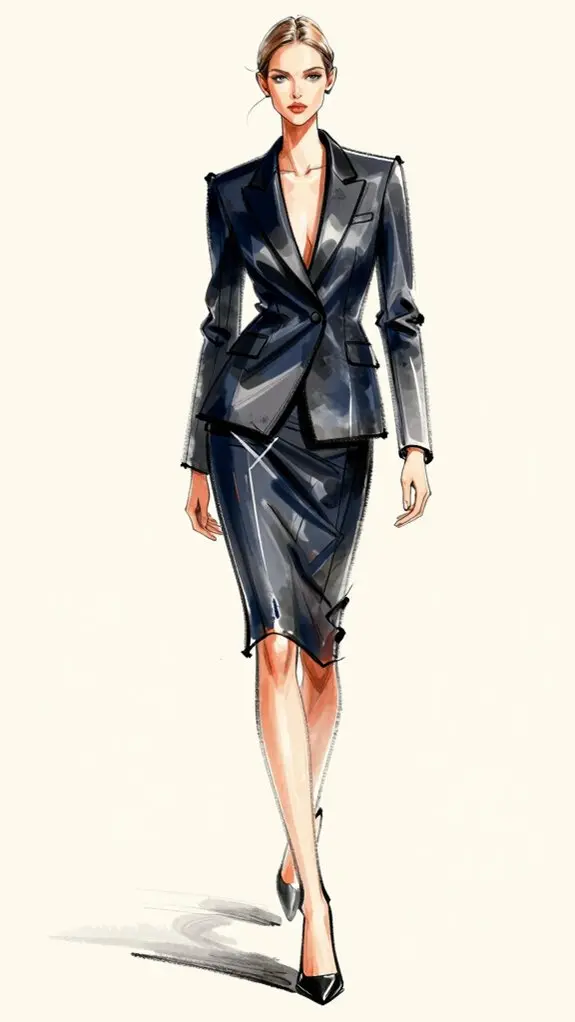
Contemporary Approach
While the old guard still clutches their pearls over “casual Fridays,” the reality is that executive presence has undergone a seismic shift in the past decade—and if you’re still dressing like it’s 2010, you’re already behind.
Today’s power players understand that concise messaging extends beyond your email signature to your wardrobe choices. Personalized styling isn’t vanity; it’s strategic communication.
The modern executive toolkit includes:
- Tech-appropriate formality (nobody trusts a CEO in a three-piece suit at a startup pitch)
- Investment pieces that telegraph quality without screaming luxury
- Adaptive wardrobes that morph seamlessly from Zoom calls to boardrooms
- Intentional casualness that reads confident, not careless
You’re not abandoning professionalism—you’re evolving it beyond outdated signifiers that no longer resonate. Consider how well-constructed vests can add instant structure and sophistication to your summer work outfits while allowing comfortable movement throughout the day.
Frequently Asked Questions
What Colors Should I Avoid When Power Dressing for Important Meetings?
You’ll want to skip neon brights and busy patterns that scream “look at me” rather than “listen to me.” Think of Anna Wintour’s power uniform, neutral tones that command attention through cut, not chaos.
Overly vibrant oranges, hot pinks, or clashing prints distract from your message, making you the spectacle instead of the authority. Save those bright colors for creative industries or casual Fridays.
In boardrooms, subtlety wins every time, letting your ideas, not your attire, control the conversation.
How Much Should I Budget for a Professional Power Wardrobe?
You’ll need roughly $2,000-5,000 to build a foundation that won’t embarrass you, though honestly, that’s just entry-level credibility.
Focus on investment pieces first: two killer suits, three quality shirts, leather shoes that don’t scream “mall clearance.”
Your wardrobe staples shouldn’t look like you’re cosplaying success. Can you stretch it over six months? Absolutely. But skimping on fabric quality, fit, tailoring—that’s where people spot the difference between actual power and borrowed confidence.
Can Power Dressing Work in Casual or Creative Workplace Environments?
Absolutely—you’ll just need to recalibrate what “power” means in your specific context. Adaptable power pieces like structured blazers worn over band tees, tailored trousers paired with sneakers, or quality leather jackets signal intentionality without screaming “boardroom.”
Casual power styling respects your environment’s vibe while demonstrating you’ve got your act together. Think less Gordon Gekko, more Steve Jobs: deliberate choices that communicate competence, creativity, and confidence without alienating your hoodie-wearing colleagues.
What Are Common Power Dressing Mistakes That Undermine Executive Presence?
You’re sabotaging yourself with improperly fitted clothing that screams “I don’t know my actual size.” Lack of attention to detail—scuffed shoes, loose threads, wrinkled fabric—tells colleagues you can’t manage basics, so why trust you with bigger responsibilities?
Wearing trendy pieces that don’t align with your industry’s culture makes you look disconnected. And here’s the thing: overdoing it with logos, accessories, or overly formal attire when everyone else dresses down creates distance, not authority.
How Do I Maintain Power Dressing on a Limited Clothing Budget?
You’ll master power dressing affordably by building a versatile capsule wardrobe—think three neutral blazers, quality trousers, and classic shirts that mix endlessly.
Start thrifting high-quality clothing at consignment shops where last season’s Brooks Brothers and Theory pieces hide among the chaos.
Focus on timeless cuts over trends, invest in tailoring (a $15 hem transforms everything), and keep in mind that confidence sells the look harder than any price tag ever could.
Conclusion
Your power—and presence—depends on personal principles, not prescribed patterns. Master minimalist moves: perfectly placed pieces, precisely pressed pants, purposefully picked palettes. You’re building a bold, balanced brand that bridges boardroom battles and beyond. Ditch dated dress codes, embrace elevated execution, and craft clothing choices that command confidence. This isn’t about following fashion formulas—it’s about forging your fierce, focused identity through intentional investment in impeccable, individualized image-building that inspires instant influence.
Have any thoughts?
Share your reaction or leave a quick response — we’d love to hear what you think!
-
 0
0 -
0
-
0
-
0
-
0
-
0


