
 Lena
LenaThe necktie’s slow death mirrors corporate America’s broader identity crisis—you’ve watched it happen in real time. What started as Silicon Valley rebellion, all hoodies and sneakers in 11990s boardrooms, has become everyone’s baseline. Now you’re supposed to dress “professionally casual,” whatever that means, maneuvering this weird limbo between your grandfather’s three-piece suit and Mark Zuckerberg’s gray t-shirt uniform. The question isn’t whether business casual evolved, it’s whether anyone actually knows what it means anymore.
Workplace Dress Code Changes
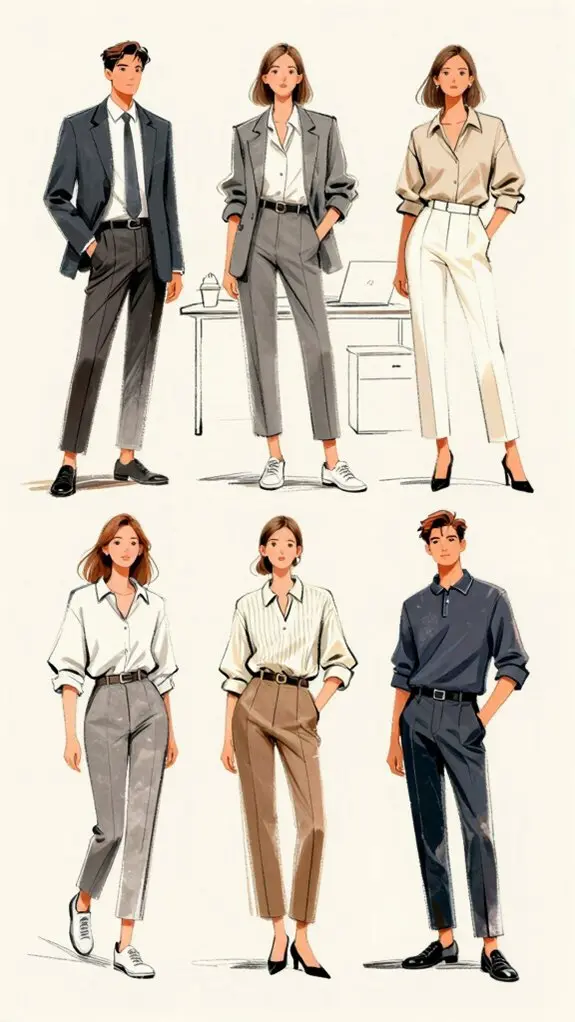
The corporate uniform has undergone more transformations in the past three decades than a pop star’s image between album cycles, and yet somehow we’re still arguing about whether khakis count as “professional.” What your grandfather wore to the office in 1955—that full suit, starched shirt, fedora perched just so—remained fundamentally unchanged until the 1990s, when tech companies started the slow-motion revolution that would eventually convince even law firms (law firms!) that maybe, just maybe, employees could think clearly without a Windsor knot cutting off circulation to their brains.
Today’s relaxed attire reflects something deeper than comfort: it’s about authenticity, productivity, and the realization that creativity doesn’t require costume jewelry. The shift toward minimalist aesthetics—clean lines, neutral colors, quality fabrics—proves you’ve been overthinking this entire wardrobe situation for years. Modern professionals are discovering that monochromatic palettes create sophisticated impact while eliminating the daily stress of coordinating busy patterns and competing colors.
Contemporary Definition
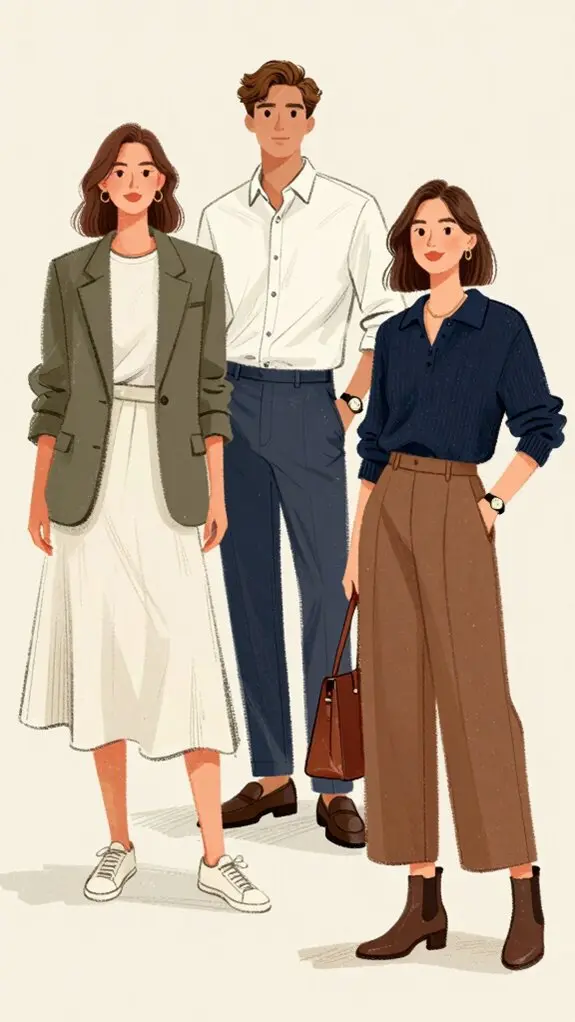
Ask any HR professional what “business casual” means and you’ll get a definition so vague it could describe anything from a blazer with dark jeans to a polo shirt that’s seen better days, which explains why Chad from accounting keeps showing up in cargo shorts despite three separate emails from management.
Modern interpretations vary wildly between industries, companies, and even departments within the same building. Tech startups interpret business casual as “anything without visible stains,” while law firms treat it as “formal attire minus the tie.”
These evolving standards reflect broader cultural shifts about professionalism, authenticity, and what actually matters in workplace performance. The key to navigating this ambiguity lies in finding the intersection between traditional authority and personal authenticity. You’re traversing a dress code that changes depending on who’s looking, creating confusion that somehow persists despite decades of supposed clarity.
Essential Pieces
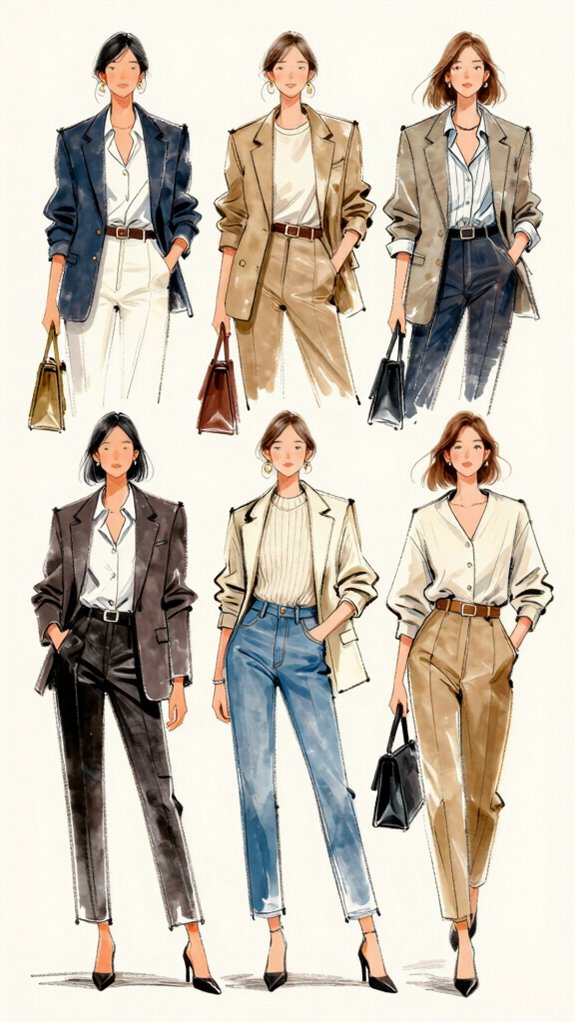
Building a business casual wardrobe isn’t rocket science, but it does require understanding which pieces actually work across different office contexts. You’ll need smart trousers that bridge the gap between denim and formal suiting—think chinos, wool blends, or structured cotton pants that communicate “I’m professional” without screaming “corporate drone.”
Pair these with quality blouses, refined knits, and at least one versatile blazer that can transform your look from coffee run to client meeting, and you’ve got the foundation that’ll carry you through most workplace situations without breaking a sweat (or your budget, if you shop strategically). For footwear, quality leather loafers offer unbeatable comfort while maintaining the polished aesthetic your professional wardrobe demands.
Smart trousers
Smart trousers occupy that peculiar middle ground between formal dress pants and actual jeans, a sartorial Switzerland that’s proved remarkably difficult to get right. You’re looking for tailored silhouettes that read professional without screaming “court appearance,” fabrics with enough structure to hold their shape through morning meetings yet comfortable enough for lunch runs. The key? Fit trumps everything, minimal accessories needed when the cut does the talking.
| Fabric | Best For |
|---|---|
| Wool-blend | Year-round versatility, natural drape |
| Cotton chino | Summer months, relaxed offices |
| Tech fabric | Travel, wrinkle resistance |
| Wool flannel | Winter weight, textured interest |
| Linen-blend | Warm weather, creative industries |
Think Bonobos, Everlane, or Theory—brands that’ve cracked the code on modern proportions without the corporate stuffiness your dad endured.
Blouses and knits
While men’s workwear has coasted on the “button-up shirt” formula for decades, women’s office tops exist in this exhausting multiverse of collars, necklines, sleeve lengths, and fabrications—each carrying its own unspoken dress code implications.
You’re expected to navigate shell tanks, pussybow blouses, three-quarter sleeves, and the perpetually confusing question of whether your shoulders are “too distracting.”
The modern solution? High-quality knits that blur professional and comfortable. Cozy sweaters in merino wool or cashmere blends read as polished when paired with structured trousers, especially in neutral tones like camel, navy, or charcoal.
They’re also perfect canvases for statement accessories—a chunky necklace or silk scarf elevates the look without requiring you to button yourself into restrictive cotton poplin. Finally, tops that don’t require constant tucking adjustments.
Versatile blazers
The blazer remains the single most powerful garment in the business casual wardrobe—a truth so obvious it’s almost boring, except for the fact that most people still get it completely wrong.
You need exactly three: one in navy, one in charcoal, one in something interesting (camel, olive, even burgundy if you’re feeling bold).
The key lies in comfortable fabrics—wool blends with stretch, performance knits, even ponte—that won’t suffocate you during actual work.
Forget those boxy relics your father wore. Modern stylish silhouettes should actually fit your body, with tailored waists, functional sleeves you can push up, and shoulders that don’t require structural engineering.
A good blazer transforms everything beneath it, which is precisely why you’ve been investing in those quality basics.
Styling Guidelines
Styling Guidelines
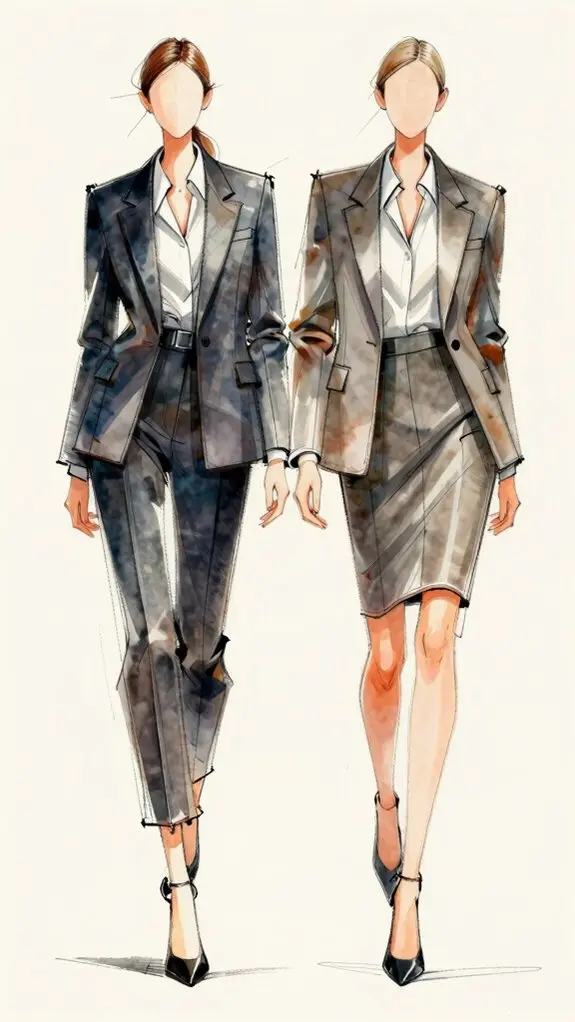
Traversing business casual successfully requires understanding that you’re fundamentally dressing for a workplace that can’t quite decide what it wants to be—professional but approachable, polished but not stuffy, serious about work but rigid hierarchies. Accessory coordination becomes your secret weapon here: leather belts match leather shoes, metals stay consistent (no silver watch with gold cufflinks), and bags remain purposeful rather than statement-making. Seasonal changes demand strategic layering—lightweight knits for spring, breathable linens for summer, textured wools for fall. When incorporating wide-leg trousers into your business casual rotation, pairing them with a navy blazer and white sneakers adds a contemporary edge while maintaining polish.
| Element | Execution |
|---|---|
| Fit | Tailored but comfortable, not vacuum-sealed |
| Colors | Neutrals anchoring, one accent maximum |
| Patterns | Subtle textures over loud prints |
Think curated wardrobe, not costume party. You’re projecting competence without cosplaying corporate America.
Professional Polish
Beyond selecting the right pieces lies the harder work: making them look intentional rather than accidental. You’ll need clothes that actually fit—not the size you hope to be, not what’s left on the rack. Tailoring transforms cheap blazers into refined formality; hemming prevents you from looking like you’re borrowing dad’s pants.
Elevated minimalism demands attention to details most people ignore: clean shoes, pressed collars, functioning buttons. Iron your damn shirt, or at least hang it properly. Invest in a steamer if you’re allergic to ironing boards. Your outfit’s polish emerges through maintenance, not just purchase price. That crumpled linen situation you’re calling “effortless” reads as careless, and everyone knows it. Building a foundation with classic neutral palette pieces like navy, charcoal, and beige ensures your well-maintained wardrobe remains versatile across any professional setting.
Frequently Asked Questions
Can I Wear Sneakers With Business Casual Attire?
You can absolutely wear sneakers with business casual—if you’re strategic about it. Modern offices have embraced sneaker styles that blur professional boundaries, but you’ll need to choose dress sneaker options carefully.
Think leather Allbirds, minimalist Common Projects, or sleek Cole Haans, not your gym-worn Nikes. Pair them with tailored chinos, a button-down, maybe a blazer, and you’re golden. The key’s intentionality: your sneakers should whisper sophistication, not scream weekend errands.
Context matters, obviously—client meetings demand more polish than casual Fridays.
Are Jeans Ever Acceptable for Business Casual?
You’ll find jeans work for business casual in creative industries, tech companies, and casual Fridays—but it’s tricky. Dark-wash, well-fitted jean styles without distressing are your safest bet. Skip the ripped skinny jeans you’d wear to brunch.
While casual jean options have expanded thanks to Silicon Valley’s influence, many traditional offices still consider them too informal. Read your workplace culture carefully, notice what managers wear, and when in doubt, choose chinos instead. Context matters more than any universal rule here.
How Does Business Casual Differ Between Industries?
You’ll notice industry specific trends drastically reshape what’s acceptable: tech startups embrace hoodies and sneakers, while finance demands blazers and closed-toe shoes.
Cultural norms influence everything—creative agencies reward bold fashion risks, law firms punish them. Your engineering colleagues might rock graphic tees, but good luck trying that in consulting.
Healthcare, education, hospitality—each field creates its own unwritten dress codes based on client expectations, workplace hierarchy, and whether you’re customer-facing or buried behind screens.
What Should I Wear to My First Day at Work?
Think of your first day as your personal runway debut—you’ll want to nail it. You’ve got to dress one notch above the stated dress code, showing you’re taking this seriously. Invest in proper grooming habits, because a sharp outfit means nothing if you’re disheveled.
Mix and match outfits that reflect the company culture you researched, erring conservative until you’ve decoded the unspoken rules. You’re making a first impression that’ll stick, so dress like you already belong there.
Is Business Casual the Same for Remote Versus In-Office Work?
No, they’re not the same, and here’s why you need to care: hybrid work dynamics have split business casual into two distinct species. In-office, you’re still dressing waist-to-shoes because Karen from accounting *will* notice your scuffed loafers.
Remote work? Dressing for videoconferences means you’re camera-ready from collar to sternum—hello, blazer over pajama pants. The bottom half doesn’t exist anymore, philosophically speaking, which honestly feels like the workplace evolution we deserved all along.
Conclusion
you’re not dressing for success anymore—you’re dressing for *yourself*. The theory that relaxed workwear kills professionalism? Completely backward. Business casual’s evolution proves we’ve finally separated competence from conformity, performance from pinstripes. Your tailored chinos and quality knit aren’t compromises; they’re declarations that you can deliver results without cosplaying as a 1950s executive. Authenticity won. The suit-and-tie gatekeepers lost. Your wardrobe reflects that victory daily.
Have any thoughts?
Share your reaction or leave a quick response — we’d love to hear what you think!
-
 0
0 -
 0
0 -
 0
0 -
 0
0 -
 0
0 -
 0
0