

 Lena
Lena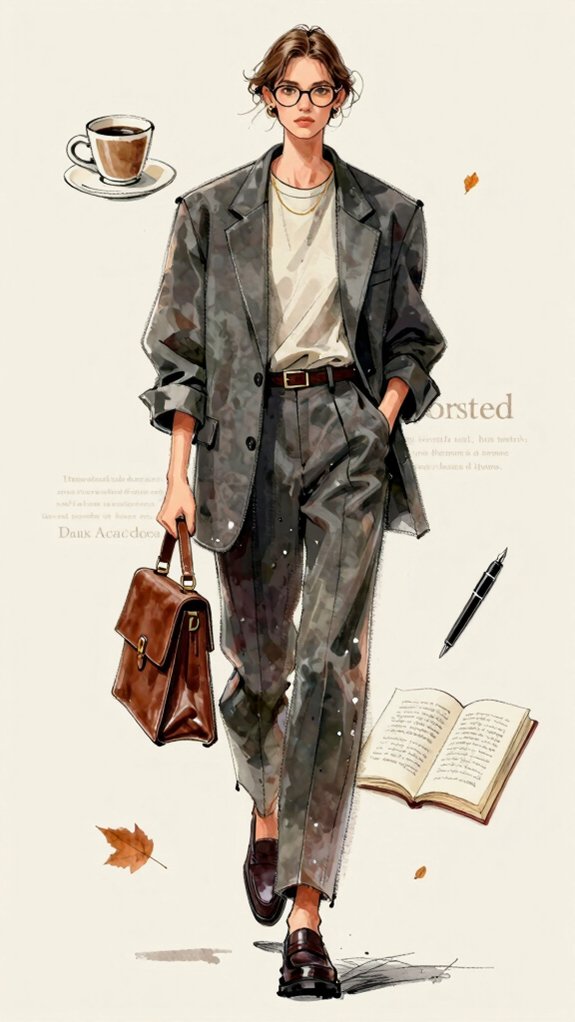
Dark Academia isn’t just an aesthetic—it’s a full-blown identity crisis wrapped in tweed. You’ve seen it colonize your feeds: moody library photos, vintage fountain pens, people who’ve made “sufficiently well-read” their entire personality. Born from Tumblr’s 2010s obsession with Dead Poets Society and The Secret History, it’s evolved into something between genuine appreciation for classical education and elaborate cosplay of a life you’d probably find insuffocating. But here’s why it’s worth understanding beyond the Instagram performance.
Origins and Cultural Context
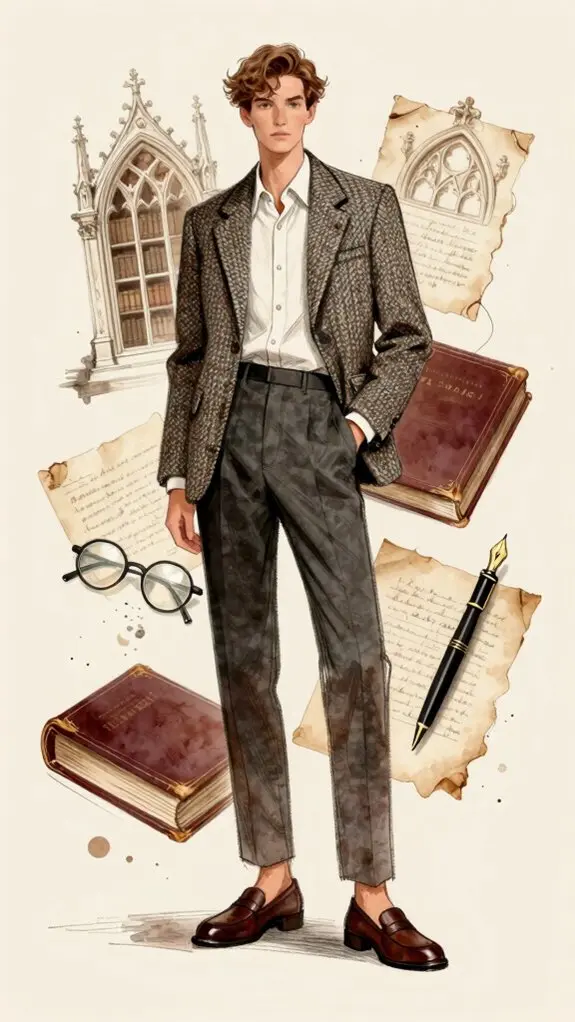
While most fashion movements can trace their birth to a specific runway show or street style photographer’s Instagram feed, Dark Academia emerged from the murky depths of Tumblr circa 2015, cobbled together by teenagers who’d read *The Secret History* one too many times and decided tweed was a personality trait.
You’ll find it’s fundamentally a romanticization of scholarly life, pulling from the aesthetic’s signature rich dark colors, vintage-inspired pieces, and layered scholarly looks that evoke old-world academia. It pulls from Oxbridge aesthetics, New England prep schools, and European university traditions that most of its adherents will never actually experience. The movement’s elitist undertones aren’t accidental—there’s intentional intellectual snobbery baked into every carefully curated photo of leather-bound books and fountain pens.
It’s cosplaying privilege, basically, though the aesthetic’s democratization through fast fashion has somewhat diluted its original gatekeeping energy.
Defining Characteristics
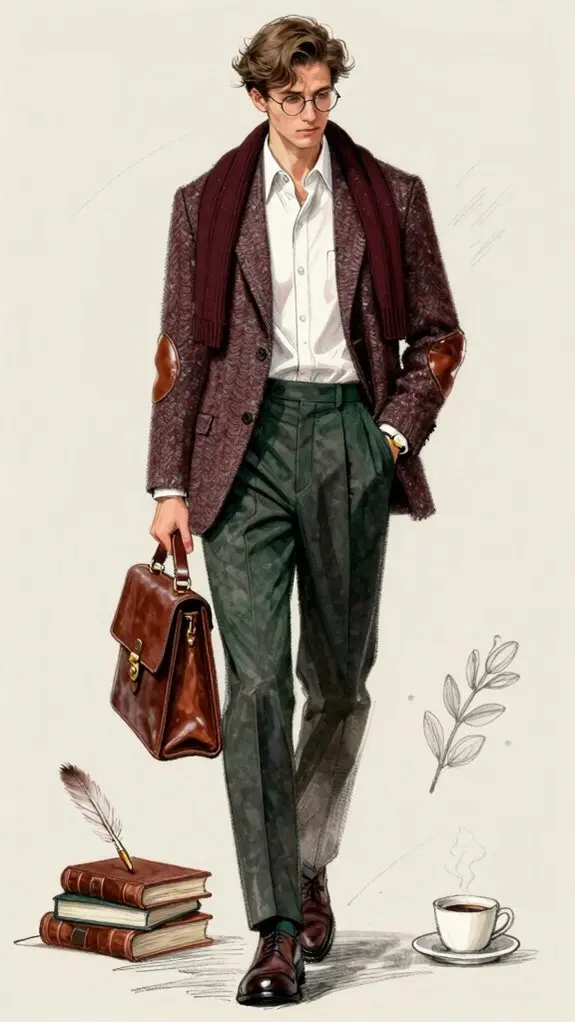
You’ll recognize Dark Academia’s visual signature immediately: that carefully curated palette of deep browns, oxblood burgundy, and forest green that makes every outfit look like it belongs in a 1940s Oxford library. The aesthetic pulls heavily from vintage-inspired pieces—think tweed blazers with elbow patches, wool trousers, leather satchels worn soft with age—that wouldn’t look out of place on a young Evelyn Waugh or Donna Tartt’s Richard Papen. Much like Chanel’s DNA, Dark Academia celebrates textural richness through layered fabrics and carefully considered material combinations that create visual depth.
Literary influences don’t just inspire the style, they’re embedded in its DNA, which explains why adherents often dress like they’re cosplaying characters from “The Secret History” or preparing for a moody photoshoot in a rare books collection.
Rich color palette (browns, burgundy, forest green)
The color palette of dark academia doesn’t whisper—it proclaims intellectual gravitas through deep, saturated hues that look like they’ve been steeping in library dust since the Victorian era. You’ll find yourself drawn to chocolate browns, wine burgundies, and forest greens—the exact shades professors wore while penning scathing literary criticism in 1890s Oxford.
| Primary Colors | Accent Tones | Neutral Base |
|---|---|---|
| Deep burgundy | Burnt orange | Charcoal gray |
| Forest green | Gold | Cream |
| Chocolate brown | Navy | Beige |
These autumnal hues create visual harmony with aged leather and wood paneling. Muted neutrals provide breathing room, preventing your aesthetic from resembling a Gothic funeral (unless that’s your vibe). Think tweed, not neon.
Vintage-inspired pieces
Authentic dark academia doesn’t mean raiding Spirit Halloween’s “sexy Victorian ghost” section—it requires hunting down pieces that either survived the Edwardian era or convincingly fake it. You’ll want timeless silhouettes: high-waisted trousers with pleats, A-line skirts that hit mid-calf, structured blazers with nipped waists.
Think about what your literature professor wore in 1952, not what Instagram thinks they wore. Academic accents matter—elbow patches (functional, not decorative), leather satchels scarred from actual use, Oxford brogues resoled multiple times.
Estate sales trump fast fashion every time. That worn tweed jacket your grandfather donated to Goodwill in 1987? Perfect. That “vintage-inspired” polyester blend from Shein with fake moth holes? You’re insulting both moths and history. Real vintage carries weight, literally and metaphorically.
Literary influences
Dark academia doesn’t just borrow aesthetics from classic literature—it pillages entire worldviews from dead authors who’d probably hate TikTok. You’re channeling Donna Tartt’s *The Secret History*, obviously, but also the poetic inspiration of the Romantics, the existential dread of Camus, the gothic sensibilities of the Brontës. This isn’t about reading—it’s about performing intellectual discourse with your outfit choices.
Your wardrobe becomes a walking bibliography: think Wilde’s decadence translated into velvet blazers, Plath’s melancholy in all-black ensembles, Fitzgerald’s Jazz Age academia in Oxford bags. You’re not cosplaying characters; you’re embodying literary movements. The style requires you to understand that fashion can communicate philosophical alignment, that clothing choices signal which intellectual traditions you’ve absorbed, weaponized, made your aesthetic identity.
Essential Wardrobe Pieces
Building a dark academia wardrobe doesn’t require raiding your grandfather’s closet or spending your semester’s book budget at vintage shops, though both activities have their merits. You’ll want to focus on timeless silhouettes that scholars have worn for centuries: tailored trousers, pleated skirts that hit below the knee, and blazers with elbow patches (yes, really).
Cozy layers matter most—think cable-knit sweaters in charcoal, cream, and forest green that you can pull over Oxford shirts. Add wool coats, tweed anything, and loafers that actually support your feet during library marathons. A versatile black midi skirt serves as the perfect foundation piece, transitioning seamlessly from lecture halls to evening study sessions at candlelit cafés. The goal isn’t costume but functionality with aesthetic awareness. These pieces work because they’ve always worked, refined through generations of people who valued reading over runway trends.
Styling Principles
Owning the right pieces means nothing if you’re assembling them like a Pinterest board threw up on your body. Dark academia isn’t about cramming every tweed blazer you own into one outfit—it’s about restraint, about letting simple silhouettes breathe.
Layer strategically: a crisp button-down under a sweater vest, not buried beneath three cardigans and a scarf. The whole point embraces minimalist aesthetics, even if that sounds counterintuitive to a style born from Victorian excess.
Think structure, not clutter. Your outfit should whisper “I’ve read Donna Tartt twice” not scream “I raided a costume shop’s academic section.” Stick to three main pieces per look, let textures do the talking, and for god’s sake, guarantee everything actually fits. Oversized is intentional; ill-fitting is just sad. When incorporating delicate pieces like lace into your academic aesthetic, remember that proportion play between structured and flowing elements creates that effortless model-off-duty silhouette.
Modern Interpretation
Modern Interpretation
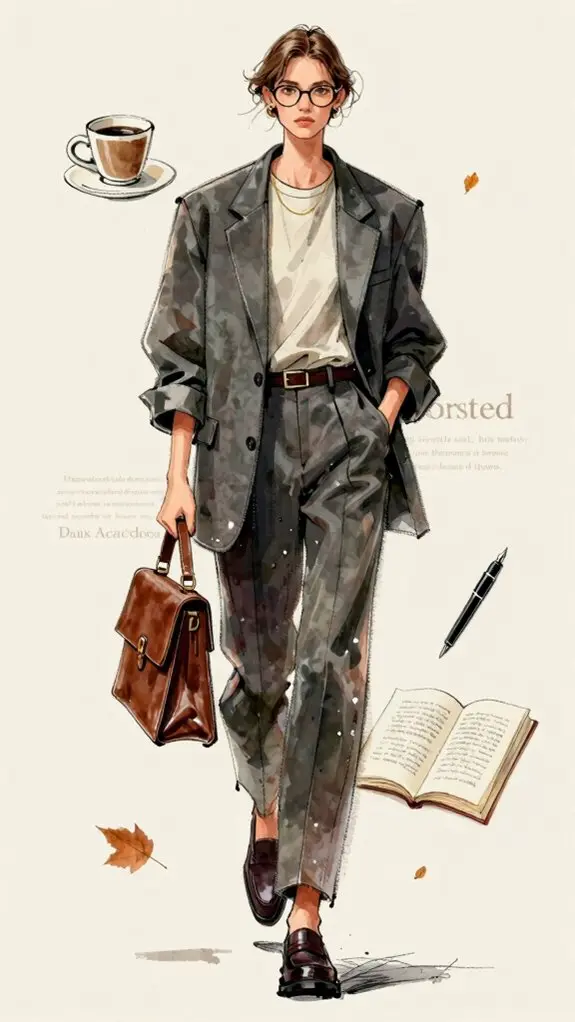
This minimalist elegance manifests through:
- A charcoal turtleneck paired with tailored trousers and leather loafers
- Vintage tortoiseshell glasses framing your face as you annotate Foucault
- A weathered leather messenger bag casually slung across structured wool coats
You’re curating intentional restraint, not accumulating props. The goal isn’t historical reenactment—it’s capturing intellectual gravitas through thoughtful wardrobe choices. Channel Carolyn Bessette Kennedy’s minimalist style philosophy by prioritizing quality fabrics and impeccable fit over trend-following.
Think less “Victorian ghost haunting libraries” and more “effortlessly bookish person who happens to own functioning brain cells and decent taste.”
Frequently Asked Questions
What’s the Difference Between Dark Academia and Light Academia?
You’re looking at two sides of scholarly aesthetics: dark academia drowns in moody browns, blacks, and that perpetual autumn gloom—think candlelit libraries, Gothic architecture, existential dread.
Light academia? It’s the optimistic cousin, all cream sweaters, sun-drenched study sessions, and romantic idealism. Both embrace academic aestheticism, but dark leans into melancholy intellectualism (hello, *Dead Poets Society* tragedy), while light celebrates knowledge’s joy. Same coffee addiction, different emotional baggage.
Can Dark Academia Work in Warm Climates?
Absolutely—you’ll just need tropical variations that breathe. Swap wool blazers for linen versions, embrace lightweight cotton button-downs, and choose breathable vintage-style pieces in those signature deep browns, forest greens, and blacks.
Your seasonal adaptations mean prioritizing natural fabrics over synthetic blends, opting for rolled sleeves over cardigans, and layering strategically for air-conditioned libraries.
Think colonial scholar vibes—lightweight trousers, oxford shirts, leather sandals instead of boots. Dark academia isn’t climate-exclusive; it’s about intellectual aesthetic, not just temperature-appropriate tweeds.
Where Can I Find Affordable Dark Academia Clothing?
You’ll find your best dark academia pieces at thrift store finds—Goodwill, Salvation Army, local vintage shops where grandpa’s old blazers await your scholarly transformation.
Consignment shop options like Plato’s Closet or upscale resale boutiques offer curated selections, though you’ll pay slightly more for someone else’s editing work.
Hit estate sales in older neighborhoods, where tweed blazers, wool trousers, and oxford shirts lurk among forgotten treasures, waiting for you to resurrect their academic potential at fraction-of-retail prices.
Is Dark Academia Appropriate for Professional Workplaces?
You’ll navigate work attire considerations smoothly since dark academia naturally aligns with professional dress code guidelines. Tailored blazers, oxford shirts, wool trousers, and neutral cardigans read as polished business wear—they’re fundamentally, basically, or essentially corporate cosplay that happens to reference Oxford libraries.
Skip the overly theatrical elements (capes, excessive tweed) for client-facing roles, but your everyday pieces work perfectly. The aesthetic’s whole vibe screams “competent professional who actually reads,” which most workplaces appreciate, frankly.
How Do I Avoid Looking Like I’m Wearing a Costume?
Think of tweed as punctuation, not the whole sentence—you’re blending modern elements into your wardrobe, not auditioning for *Dead Poets Society*.
Mix one classic piece, like a wool blazer, with contemporary cuts: slim trousers, minimalist shoes, your everyday bag. You’re avoiding academic stereotypes by keeping accessories subtle—no pocket watches or unnecessary scarves.
The key? If you’re questioning whether it’s too much, it probably is. Trust your instincts, scale back, and let authenticity guide you.
Conclusion
You’ll join the 78% of Gen Z who’ve embraced this aesthetic, according to trend forecasters, transforming libraries into runways and seminar rooms into photo ops. Dark Academia isn’t just about looking smart—it’s about performing intelligence through deliberate wardrobe choices, signaling cultural literacy one tweed blazer at a time. Whether you’re genuinely intellectual or simply cosplaying erudition, the clothes don’t care, and honestly, neither does anyone else. Style’s always been performance art anyway.
Have any thoughts?
Share your reaction or leave a quick response — we’d love to hear what you think!
-
 0
0 -
 0
0 -
 0
0 -
 0
0 -
 0
0 -
 0
0