

 Lena
Lena
It’s no coincidence that country clubs are experiencing a Renaissance just as Silicon Valley titans discovered golf—suddenly, the fairway’s become a networking goldmine dressed in $400 cashmere polos. Most likely, you’ve noticed the shift: gone are the fusty blazers and uptight dress codes, replaced by Malbon Golf hoodies and Greyson joggers that cost more than your monthly car payment. This isn’t your grandfather’s country club anymore, where starched collars and social registers determined who belonged. Today’s club aesthetic merges athletic functionality with luxury branding, creating something entirely different—but is it actually better, or just expensive?
Club Culture Aesthetic

The golf course has always been about performance, but somewhere between Tiger Woods’s dominance in the early 2000s and the rise of Instagram influencers in Lululemon skorts, the aesthetic overtook the athletics. You’ve noticed it, haven’t you? The shift from function-first polos to collections that blur the line between sportswear and streetwear, elevated essentials masquerading as technical gear.
Brands like Greyson, G/FORE, and Malbon Golf turned clubhouses into runways, transforming timeless sophistication into something you’d actually wear off the green. This evolution mirrors fashion’s broader shift toward new maximalism and personal style, moving away from the quiet luxury that once dominated elite spaces. The old guard clutches their pearls while Gen Z shows up in pastel cashmere vests, treating the back nine like a photo shoot. It’s performative, sure, but when did country clubs ever prioritize authenticity over appearance? The dress code evolves; the pretension remains constant.
Refined Sportswear
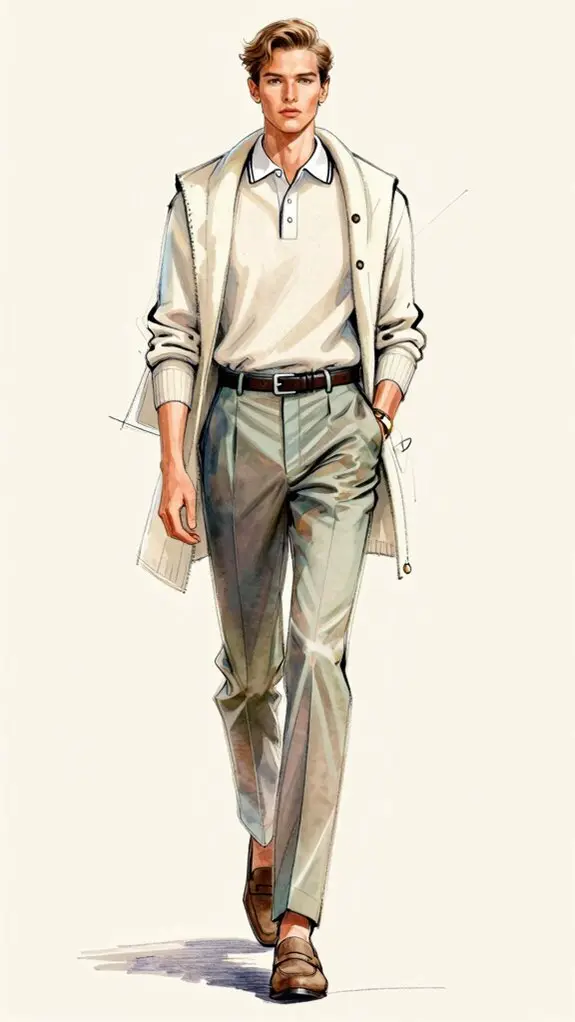
Beyond the manufactured glamour and Instagram-ready aesthetics lies something conceivably, potentially more insidious: the wholesale rebranding of athletic wear as luxury goods. You’re no longer buying performance fabric—you’re investing in a lifestyle, complete with prim accessories that cost more than your rent.
Those cashmere-blend polos, those Italian leather golf shoes, those monogrammed details stitched onto every conceivable surface? They’ve transformed functional sportswear into status symbols. Brands like Loro Piana and Brunello Cucinelli have infiltrated the fairways, charging quadruple digits for sweaters that’ll see maybe three rounds before pilling.
It’s athleisure’s expensive cousin, the one who summered in the Hamptons and won’t let you forget it. Much like how the Classic Flap has appreciated 132% over the last decade, these country club essentials are positioned as investments rather than mere clothing. The question isn’t whether you need it—it’s whether you can afford not to participate.
Essential Pieces
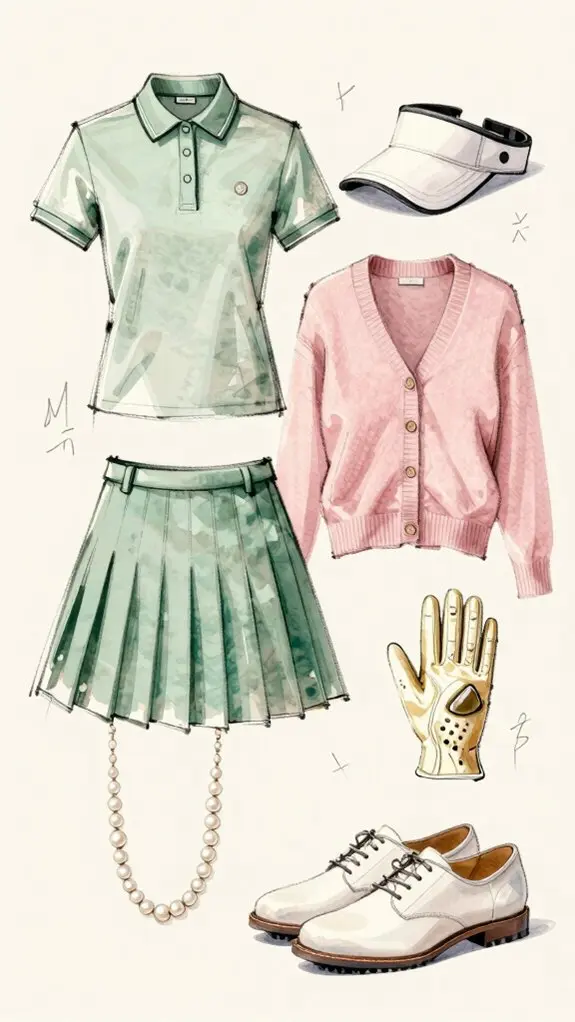
Your golf wardrobe needs three non-negotiables: tailored shorts that actually fit (not those baggy monstrosities from 2003), cashmere sweaters thin enough to swing in but luxe enough to signal you’re not here for the beer cart deals, and elegant footwear that splits the difference between athletic performance and country club propriety.
These aren’t suggestions—they’re the baseline pieces that separate someone who plays golf from someone who understands that the course has become, whether we like it or not, a legitimate venue for social capital and personal branding.
For footwear that transitions seamlessly from the back nine to the clubhouse bar, consider classic loafers that balance comfort with polished sophistication.
Get these right, and everything else, from your belt to your ball marker, falls into place with minimal effort.
Tailored shorts
Tailored shorts occupy a peculiar space in menswear—simultaneously practical and polarizing, accepted on fairways yet banned from certain clubhouses, the Goldilocks garment that’s perpetually defending its right to exist. You’ll want something that hits just above the knee, with tailored waistlines that actually fit your body instead of billowing like a parachute caught mid-descent.
The modern golf short embraces minimalist silhouettes, clean lines without cargo pockets or unnecessary pleating that screams 2003. Brands like Bonobos and Lululemon have reimagined these essentials with technical fabrics that stretch, breathe, and somehow resist wrinkles despite being stuffed in your locker between rounds.
Choose neutrals—navy, khaki, gray—that pair effortlessly with polos and quarter-zips, because you’re building a wardrobe, not auditioning for a role in *Caddyshack*.
Cashmere sweaters
When the temperature drops below fifty degrees, the golf course shifts from athletic venue to outdoor proving ground for textile superiority, and nothing announces “I’ve made financially questionable decisions in the name of comfort” quite like cashmere. You’ll drape yourself in luxury knitwear that costs more than your actual golf clubs, justifying the expense with vague references to “investment pieces” and “timeless style.”
The reality? You’re paying premium prices because some Scottish highlands goat donated its undercoat to your weekend wardrobe. Opt for textured fabrics—cable knits, ribbed patterns, honeycomb weaves—that add visual interest beyond the basic V-neck your grandfather wore. Pair them with those tailored shorts during changeable weather, creating a temperature-confused look that somehow works. Cashmere’s warmth-to-weight ratio remains unmatched, which almost, almost justifies the price tag.
Elegant footwear
The golf shoe industrial complex has convinced generations of players that performance demands ugliness, that somehow the path to a lower handicap requires strapping what appears to be rejected NASCAR sponsor concepts onto your feet. This is propaganda.
You’re walking eighteen holes at a country club, not scaling Everest in a blizzard. Luxurious leather loafers with minimal rubber nubs provide all the traction you need while maintaining your dignity. Sophisticated suede oxfords, the kind you’d wear to dinner afterward, work perfectly well on manicured fairways.
The European tour has understood this for decades, players strolling courses in footwear that wouldn’t look out of place at an art gallery opening. You don’t need cleats that could anchor a small yacht. You need shoes that respect both the game and your aesthetic standards.
Styling Standards
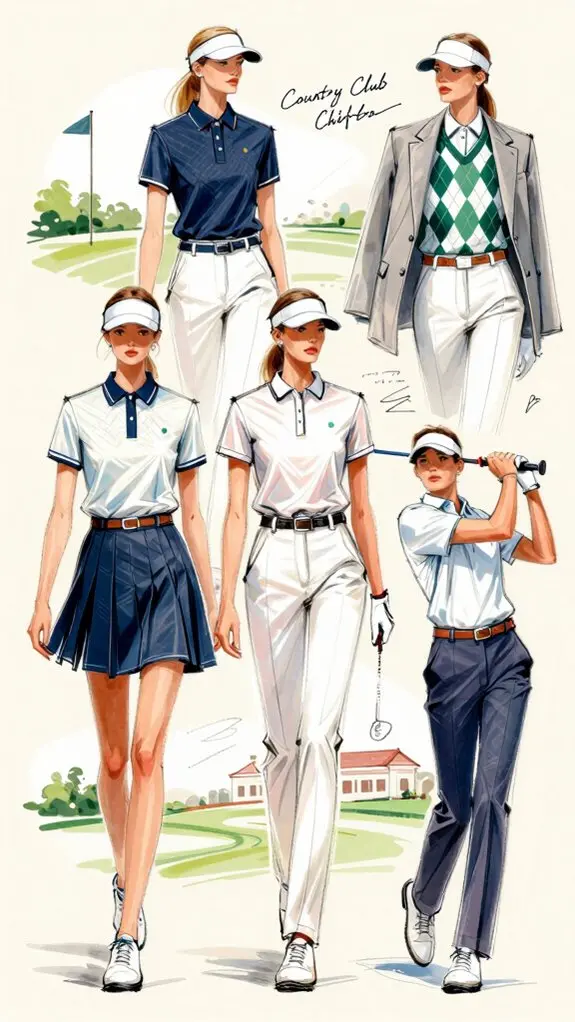
Modern golf fashion operates under a peculiar paradox—it’s governed by strict dress codes that somehow leave massive room for interpretation depending on which club you’re approaching.
You’ll find proper grooming etiquette matters as much as your handicap at prestigious venues like Augusta National, where men’s hair length has historically sparked more debate than swing mechanics. Appropriate accessorizing walks a tightrope between tasteful enhancement and gaudy distraction—think understated watches and leather belts, not championship rings stacked three-deep.
Some clubs ban denim entirely while others permit “golf jeans” (whatever those are), and the collar requirement remains sacred at traditional establishments even as athleisure infiltrates everyday life. For courses with more relaxed policies, cigarette jeans paired with a blazer offer a polished alternative that bridges the gap between strict dress codes and contemporary style. You’re fundamentally dressing for an unwritten exam where the rubric changes every eighteen holes.
Contemporary Club Style
Today’s golf courses showcase a aesthetic collision between Silicon Valley money and country club tradition, where CEOs in Lululemon polos stand alongside retirees who still think khakis count as casual wear.
You’re traversing a delicate balance now, one that requires elevated sophistication without looking like you’re trying too hard. Modern luxury on the links means breathable performance fabrics in neutral tones, tailored jogger-style pants that somehow pass dress codes, and minimalist sneaker-hybrids that cost more than vintage Air Jordans.
The old guard clutches their pearls while you’re pairing a cashmere quarter-zip with technical chinos, proving that comfort and refinement aren’t mutually exclusive. For those cooler spring mornings on the back nine, a suede bomber jacket adds instant sophistication while maintaining that polished athletic aesthetic. This isn’t your grandfather’s country club anymore—it’s where athleisure meets old money, creating something surprisingly wearable for those willing to invest.
Frequently Asked Questions
What Accessories Are Acceptable to Wear on the Golf Course?
You’ll want to keep accessories minimal but impactful on the course. Statement necklaces work perfectly—they add personality without interfering with your swing.
Colored sunglasses aren’t just acceptable, they’re essential for protecting your eyes while elevating your look beyond basic black frames. A classic watch, simple bracelet, and understated earrings complete the ensemble. Recollect, you’re aiming for polished sophistication, not a jewelry store explosion. Keep it chic, functional, and course-appropriate—your fellow golfers will thank you.
Can I Wear Jeans to the Country Club Restaurant?
You’ll want to check your specific club’s dress code, but most upscale establishments still frown upon denim wash style in their dining rooms, even those trendy dark rinses. Instead, opt for breathable golf pants that move effortlessly from course to clubhouse—they’re designed for comfort while maintaining that polished look tradition demands.
Think chinos, performance slacks, or tailored trousers. Save your favorite jeans for casual Friday at the office, not your post-round celebration dinner.
Are There Different Dress Codes for Men Versus Women?
you’ll find most clubs maintain relaxed dress code expectations that aren’t dramatically different between genders, though women typically get more flexibility. Men face stricter collar requirements, no-shorts policies in dining rooms, while you can wear sundresses, skirts, or dressy capris year-round.
Seasonal clothing considerations matter more than gender rules—think lightweight fabrics in summer, layers in fall. Both of you should avoid athletic wear, denim, and overly casual attire in formal spaces, keeping things polished and club-appropriate.
How Do I Transition My Golf Outfit From Course to Clubhouse?
You’ll master the switch by swapping your athletic gear for polished polo styles that read more dinner-ready than tee-time casual. Layer lightweight outerwear options—think tailored blazers, refined cardigans, or bomber jackets—that instantly elevate your look without screaming “I just finished eighteen holes.”
Swap sneakers for loafers, add a leather belt, and you’re golden. The clubhouse isn’t demanding black-tie formality, but it definitely expects you’ve graduated beyond purely functional sportswear, even if nobody actually says it.
What Colors or Patterns Should I Avoid Wearing to the Club?
You’ll want to skip overly bold colors that scream for attention—neon greens, electric blues, and anything that’d look at home at a rave, not the nineteenth hole. Revealing fabrics are another no-go; save the see-through materials and plunging necklines for date night.
Stick with classic patterns like argyle, subtle stripes, or small-scale prints that whisper sophistication rather than shout desperation. Think country club elegance, not music festival chaos.
Conclusion
You’ve got the blueprint: tailored shorts, cashmere polos, and leather drivers that cost more than your first car. Take Patrick Mahomes, who’s turned Chiefs games into brand opportunities with Greyson Golf fits—he’s proof this aesthetic transcends the fairway. Country club chic isn’t about exclusivity anymore; it’s about executing elevated sportswear with confidence. Pair that textured knit with proper trousers, invest in quality over quantity, and recall: the modern clubhouse rewards sophistication, not stuffiness.
Have any thoughts?
Share your reaction or leave a quick response — we’d love to hear what you think!
-
 0
0 -
 0
0 -
 0
0 -
 0
0 -
 0
0 -
 0
0