

 Lena
Lena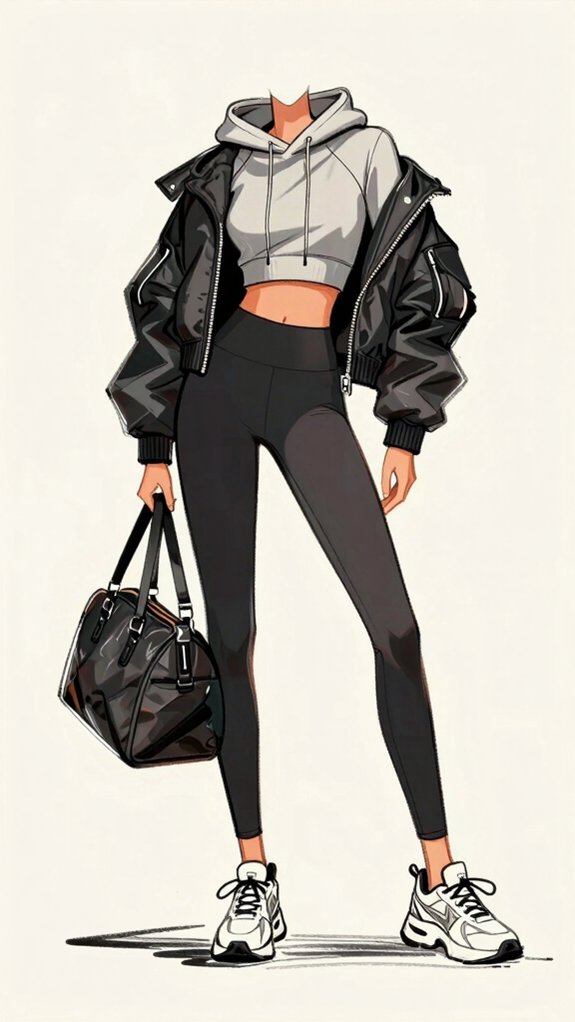
You probably didn’t realize that athleisure spending surpassed denim sales back in 2017, marking fashion’s quiet surrender to spandex supremacy. What started as yoga pants sneaking into Whole Foods has morphed into a $300 billion industry where “elevated basics” somehow justify $128 leggings, and you’re suddenly expected to own multiple matching sets that work for both downward dog and downtown brunch. The question isn’t whether you’ve bought into this lifestyle—it’s how much you’ve spent convincing yourself it’s an investment.
Trend Evolution
While yoga pants have existed since the 1970s, it wasn’t until Lululemon opened its first standalone store in Vancouver in 2000 that activewear began its transformation from purely functional gear into aspirational lifestyle fashion.
Lululemon didn’t just sell yoga pants—it sold the idea that your workout gear could be your identity.
You’ve watched this evolution accelerate dramatically over two decades, haven’t you? The luxury appeal emerged when high-fashion houses realized women weren’t changing out of their workout clothes anymore—they were wearing them to brunch, meetings, school pickup.
Designer collaborations became inevitable: Stella McCartney partnered with Adidas in 2005, Alexander Wang dropped his first collection with H&M featuring elevated athleisure in 2014, and suddenly Balenciaga was selling $900 hoodies that looked suspiciously like your gym sweatshirt.
The message was clear: comfort could be chic, expensive, and socially acceptable beyond the studio. Today, technical sneakers like Salomons have become the ultimate symbol of this fusion, pairing effortlessly with everything from oversized cardigans to leather jackets for that perfect gym-to-street aesthetic.
Style Definition
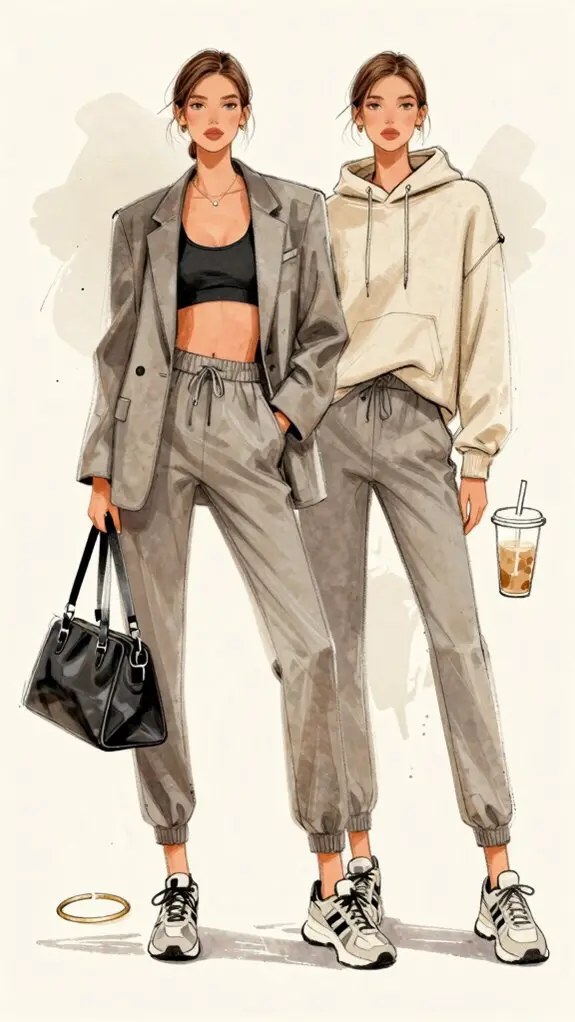
At its core, athleisure luxe strips away the pretense that expensive clothing needs to be uncomfortable—it’s the Lycra-cotton blend of high fashion and performance wear, where your leggings cost more than your dress pants and nobody questions it. You’re buying into a philosophy that rejects the stiletto-or-sneaker binary, embracing instead what fashion editors breathlessly call “effortless elegance” (though we all know the effort involved).
This is casual chic weaponized for boardrooms and brunch alike, where a $200 Lululemon Align tank pairs seamlessly with tailored blazers. The aesthetic demands technical fabrics, elevated silhouettes, and that specific matte finish that screams “I could run a marathon but I’m getting oat milk lattes instead.” It’s luxury that stretches, literally and metaphorically. The key to mastering this look lies in earth tones and neutrals that create a foundation for mixing high-end pieces with performance basics.
Key Pieces
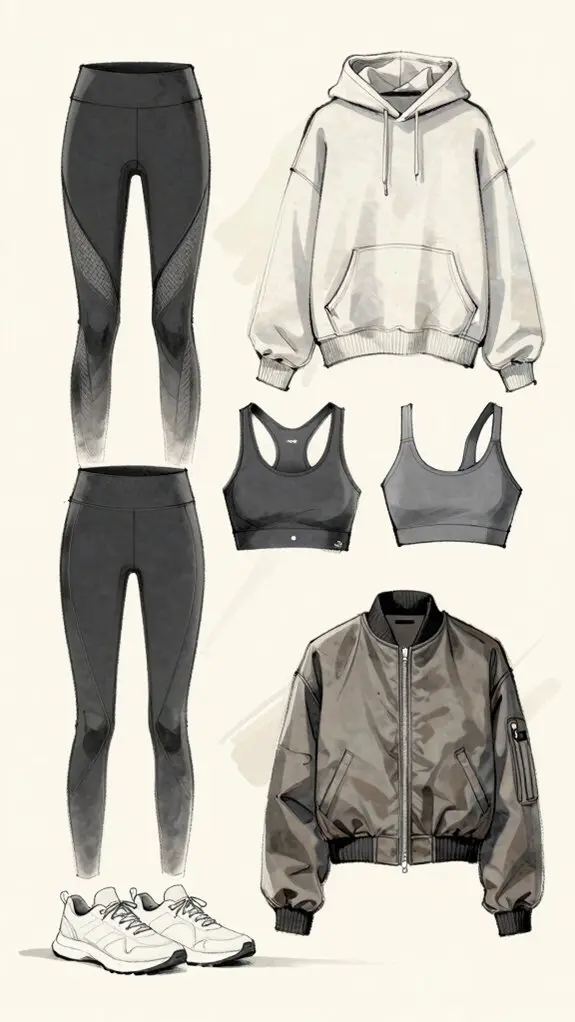
You’ll need performance fabrics that actually perform—moisture-wicking technical blends, four-way stretch materials, breathable mesh panels—not the cheap polyester that pills after one wash.
The silhouettes should be sleek enough to wear outside the gym without looking like you’re actively fleeing a boot camp class, think tapered joggers instead of baggy sweats, structured hoodies rather than shapeless pullovers.
Your elevated basics, those perfectly cut leggings with strategic seaming, that buttery-soft bomber jacket, form the foundation of a wardrobe that shifts seamlessly from morning reformilates to afternoon coffee runs without requiring a complete outfit overhaul. Brands like Girlfriend Collective offer compressive high-performance fabrics made from recycled materials that deliver both sustainability and studio-ready style.
Performance fabrics
Because athleisure’s entire premise rests on versatility—that mythical ability to move from downward dog to downtown drinks without a costume change—the fabrics themselves have become the real MVPs of this fashion revolution. You’re not just buying spandex anymore; you’re investing in engineered textiles that pull double duty.
Modern performance fabrics deliver what traditional materials can’t:
- Four-way stretch that moves with your body during hot yoga, then holds its shape through dinner
- Moisture wicking properties that keep you dry whether you’re crushing burpees or crushing deadlines
- Breathable construction with laser-cut ventilation that doesn’t scream “gym rat”
These aren’t your mom’s workout clothes. The technical innovations—compression weaves, antimicrobial treatments, temperature regulation—transform activewear into legitimate streetwear, no apologies necessary.
Sleek silhouettes
Five key pieces form the foundation of any respectable athleisure wardrobe, and they’ve all undergone serious refinement since the yoga-pants-as-daywear phenomenon first horrified your grandmother circa 2012. These minimalist designs now feature sophisticated accents that elevate them beyond gym class refugees.
| Piece | What Makes It Work |
|---|---|
| Tapered joggers | Clean lines, no baggy ankles |
| Sculpted leggings | Strategic paneling, not compression sausage casing |
| Streamlined bomber | Lightweight tech fabric meets structured tailoring |
| Fitted crop hoodie | Shows waist, ditches the shapeless tent |
| Sleek sneaker | Monochrome colorways, architectural sole design |
You’ll notice each piece prioritizes proportion over performance stats. The silhouettes hug without strangling, drape without drowning. That’s the difference between looking athletic and looking intentional.
Elevated basics
While mainstream athleisure has democratized comfort, the elevated basics that separate gym tourists from style investors all share one pivotal trait: they cost more because they’re actually engineered differently. Premium materials—think Japanese terry cloth that weighs precisely 280 GSM, four-way stretch ponte that returns to shape after 300 wash cycles, merino wool so fine it doesn’t itch—transform basic silhouettes into elevated essentials worth their markup.
Your foundation pieces should include:
- A perfectly weighted crew neck sweatshirt in bonded scuba fabric that drapes without clinging
- High-waisted leggings with compressive panels strategically placed for actual shaping, not just marketing copy
- An oversized cashmere-blend hoodie that looks deliberately expensive, not accidentally sloppy
These aren’t interchangeable with their Target equivalents, and pretending otherwise just reveals you haven’t felt the difference yet.
Transition Styling
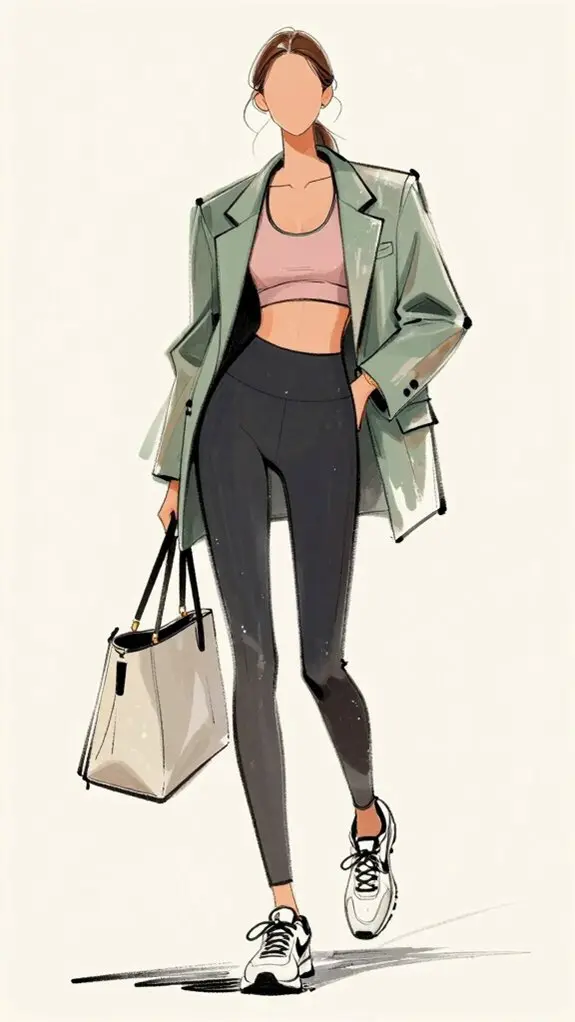
Transition Styling
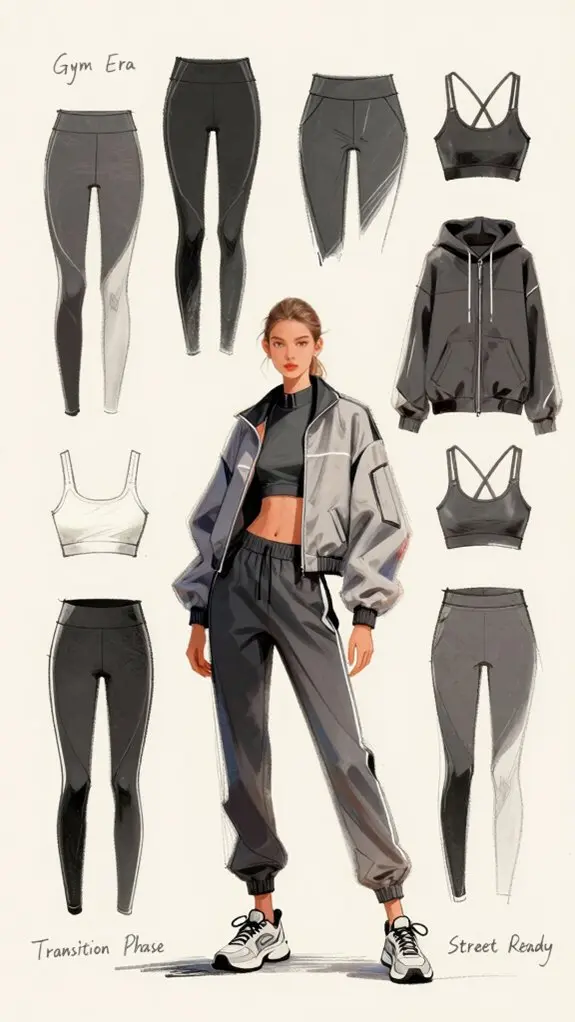
The art of shifting athleisure from gym to street isn’t about carrying a separate outfit in your tote bag—it’s about strategic layering, intentional accessories, and understanding which pieces can legitimately function in both worlds. You’ll need a sleek bomber jacket, structured blazer, or longline coat that transforms your workout leggings into something resembling actual pants. Swap your gym sneakers for leather high-tops, add a crossbody bag instead of that ratty backpack, and suddenly you’ve achieved casual chic appearances without breaking a sweat (well, metaphorically). For a polished approach that works in creative professional settings, try layering a blazer over a hoodie with white sneakers to nail the smart-casual balance.
The real secret? On the go versatility means investing in moisture-wicking fabrics that don’t scream “I just left SoulCycle,” neutral colorways that blend seamlessly with denim or tailored pieces, and maintaining enough self-awareness to recognize when your sports bra shouldn’t be your only top.
Brand Guide
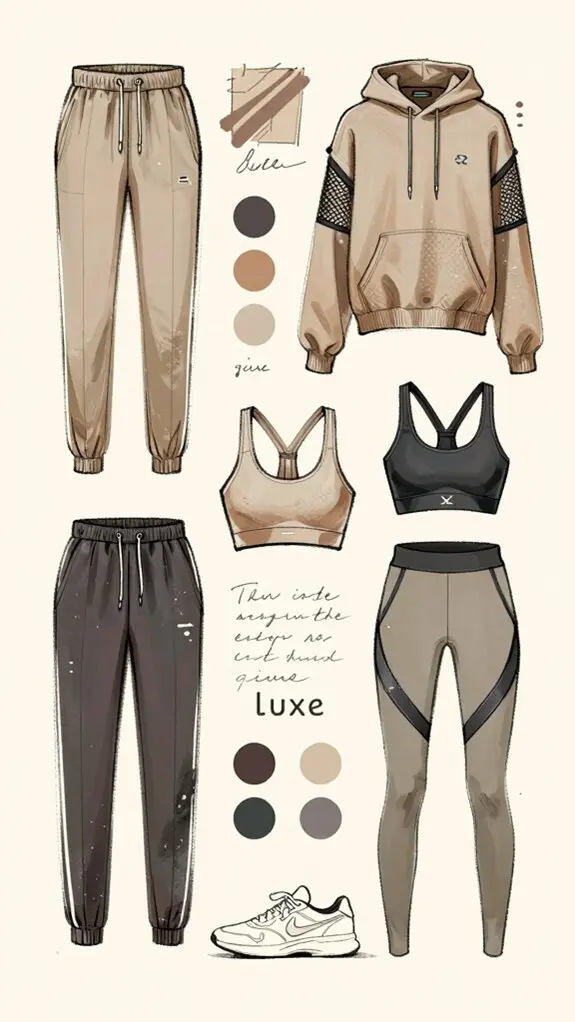
Lululemon, Alo Yoga, Outdoor Voices, Vuori, Athleta, Girlfriend Collective, Sweaty Betty, P.E Nation—once you’ve mastered the styling formula, you’ll need to know which brands actually deserve your paycheck. Not all athleisure is created equal, and the difference between a $98 legging that pills after three washes versus one that lasts five years matters when you’re building a capsule wardrobe.
Watch for brand partnerships with designers who understand technical fabrication, not just Instagram aesthetics. The best brand collaborations marry performance innovation with genuine style vision—think Adidas x Stella McCartney, not whatever fast-fashion crossover drops next week.
Key quality indicators:
- Flatlock seaming that lies completely flat against your skin during movement
- Four-way stretch fabric with compression that doesn’t create muffin-top demarcation lines
- Moisture-wicking technology that actually prevents sweat stains, not marketing-speak nonsense
Just as caviar leather offers unmatched durability for luxury handbags that withstand daily use, premium athleisure fabrics should maintain their structure and appearance through years of rigorous wear.
Frequently Asked Questions
How Do I Wash Technical Fabrics Without Damaging Them?
You’ll want to use cold water, gentle machine wash settings, and skip the fabric softener usage entirely—that stuff coats synthetic fibers, blocking their moisture-wicking magic.
Turn pieces inside out, avoid harsh detergents (your Lululemon doesn’t need bleach), and air dry whenever possible. High heat literally melts elastic fibers, which explains why your favorite leggings lose compression.
Think of technical fabrics like relationships: they require delicate handling, consistent care, and absolutely zero shortcuts if you want longevity.
What’s the Price Difference Between Athleisure and Regular Activewear?
You’re looking at Gatsby-level wealth disparity here. Luxury activewear pricing hits $100-300 per piece—Lululemon, Alo, Outdoor Voices—while regular gym wear from Target, Old Navy, or Amazon runs $15-40. That’s a 500% markup for moisture-wicking fabric and a logo.
Sure, you’ll find affordable athleisure options that blur the line, brands like Athleta or Gap’s collaboration pieces, but the premium labels bank on you wanting that elevated, street-ready aesthetic that screams “I invest in myself.”
Can I Wear Athleisure to a Business Casual Office?
You can absolutely wear athleisure to business casual offices—if you’re strategic about it. The key’s choosing convertible athleisure styles that read polished, not post-spin-class: structured joggers in ponte fabric, sleek bomber jackets, tailored hoodies.
Pair them with leather loafers, minimalist jewelry, and you’ve got a balanced workwear look that respects office culture while staying comfortable. Skip anything overly technical, logo-heavy, or obviously designed for working out.
Context matters, obviously—read your specific office’s vibe first.
How Long Do Quality Athleisure Pieces Typically Last?
Quality pieces should last you 2-3 years with regular wear, assuming you’re following proper storage techniques like hanging leggings instead of balling them up.
The ideal fabric composition matters hugely—look for blends with at least 15% spandex or elastane for recovery. Brands like Lululemon engineer fabrics that maintain compression through 100+ washes, while fast-fashion dupes pill after month three.
You’ll know it’s done when waistbands roll, seams pucker, or that sleek finish becomes permanently fuzzy.
Are There Sustainable Athleisure Brands Worth Considering?
You’ve got solid options if you’re willing to invest. Girlfriend Collective uses recycled water bottles, Patagonia delivers ethical manufacturing practices you can actually verify, and Outdoor Voices prioritizes sustainable material options without sacrificing style.
Reformation’s activewear line looks effortlessly cool while maintaining transparency about their supply chain. Yes, you’ll pay more upfront, but these pieces won’t fall apart after three months like fast-fashion alternatives. Consider it paying for longevity, not just trendy performance wear that’ll end up in a landfill.
Conclusion
You’ve mastered athleisure luxe when you can literally roll out of bed, throw on your Alo set, and look like you’ve stepped off a Milan runway—no effort required. The gym-to-street conversion isn’t just about swapping sneakers for slides anymore; it’s a complete lifestyle shift that’s redefined modern dressing. Mix technical fabrics with tailored pieces, layer strategically, and recollect: the best outfit is one that moves with you, not against you.
Have any thoughts?
Share your reaction or leave a quick response — we’d love to hear what you think!
-
 0
0 -
 0
0 -
 0
0 -
 0
0 -
 0
0 -
 0
0