 Lena
Lena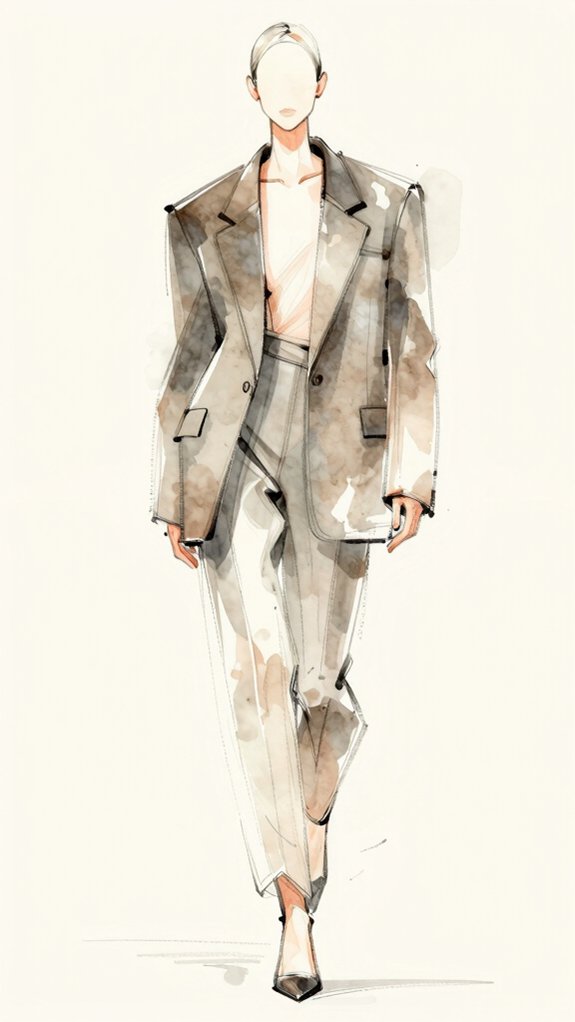
The uniform—whether it’s a blazer, a button-down, or those perfectly creased trousers—has always been fashion’s great equalizer, stripping away the arbitrary rules about who gets to wear what. Individuals have likely observed that androgynous style isn’t about looking like everyone else or erasing your identity, it’s about claiming the freedom to dress from both sides of a completely made-up divide. So what happens when you stop asking permission?
Movement Background
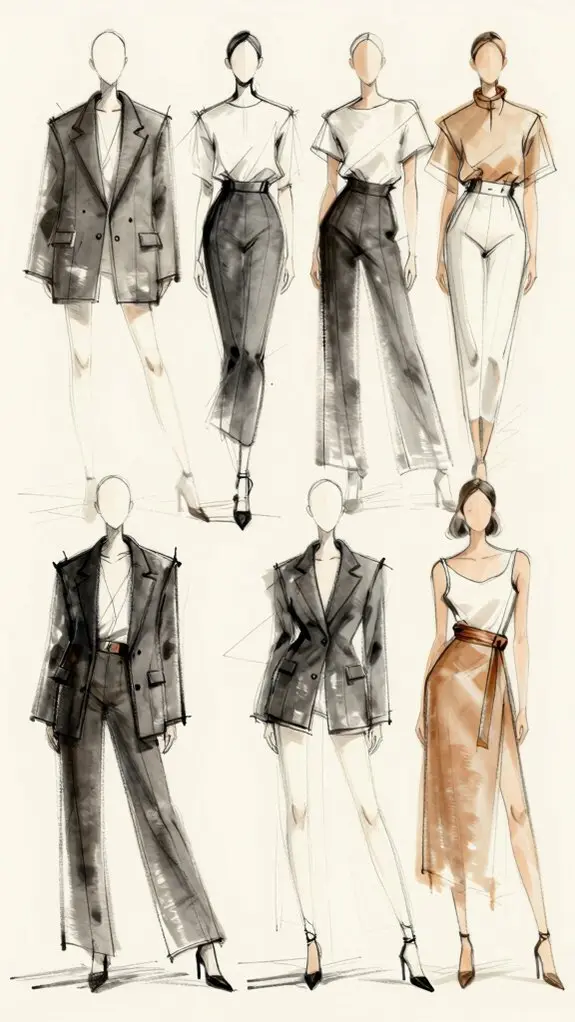
Androgynous fashion didn’t spring up overnight like some TikTok trend—it’s been building, breaking, and rebuilding itself for over a century, often in direct defiance of whatever moral panic happened to be gripping society at the time. You can trace its cultural origins back to the 1920s flappers who chopped their hair and flattened their chests, then through Marlene Dietrich’s scandalous tuxedos in the ’30s, David Bowie’s glam-rock experimentation, and Prince’s lace-and-leather combinations.
These historical influences weren’t just aesthetic choices—they were deliberate challenges to the gender binary that kept (and still keeps) people neatly categorized. Each era produced its own rebels who understood that clothing could be weaponized against convention, that style could communicate what words couldn’t, that fashion was never really about fabric. This spirit of defiance lives on in today’s fashion landscape, where the industry is shifting away from minimalism toward a renewed sense of softness and new maximalism that celebrates personal expression over rigid gender categories.
Design Philosophy
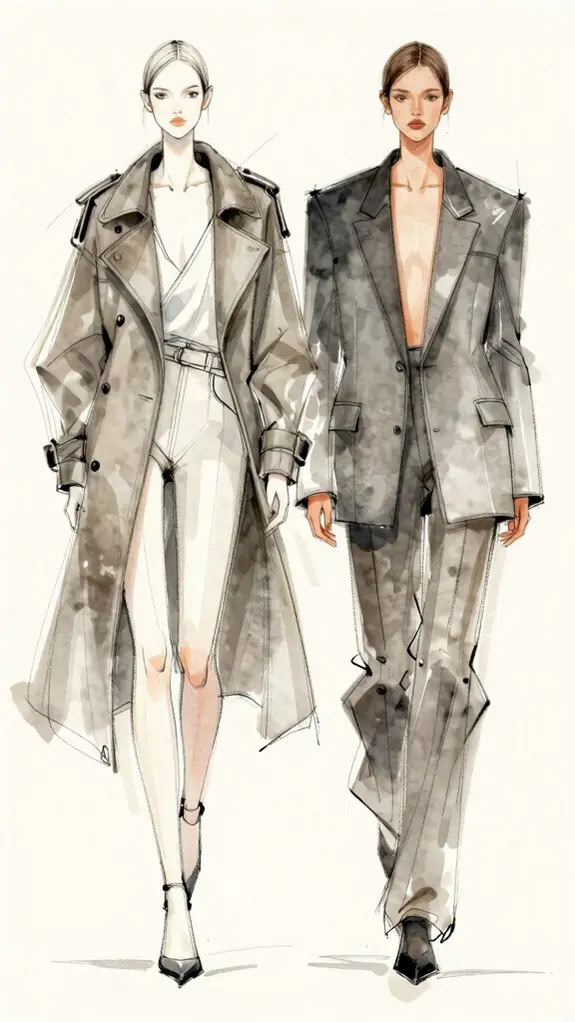
How do you design clothing that doesn’t assume the wearer’s gender before they’ve even tried it on? Androgynous designers start by ditching the arbitrary rules—no more “flattering” cuts that presume everyone wants an hourglass silhouette or broad shoulders. They’re creating garments that prioritize creative expression over conformity, using straight silhouettes, adjustable closures, and fabrics that drape rather than cling.
Brands like Telfar and Official Rebrand build collections around modularity, letting wearers decide how pieces interact with their personal identity instead of forcing predetermined narratives. It’s not about making everything baggy and shapeless (though sometimes that works). It’s about acknowledging that bodies exist on spectrums, that style shouldn’t require you to tick a box labeled M or F before you’re allowed to participate in fashion. This philosophy shares DNA with the minimalist aesthetic, which similarly rejects excess in favor of clean silhouettes and intentional design choices.
Essential Elements
You’ll need three core components to build an androgynous wardrobe that actually works: tailored suiting that emphasizes structure over curves, minimalist silhouettes that reject gendered embellishments, and a palette controlled by blacks, grays, whites, and earth tones.
Think of designers like Phoebe Philo at Céline (2008-2018) or the perpetual cool of Yohji Yamamoto, who’ve proven that removing gender markers doesn’t mean removing sophistication—it often amplifies it. These aren’t arbitrary aesthetic choices; they’re deliberate rejections of the ruffles, pastels, and body-conscious cuts that fashion has long used to enforce the binary. A classic trench coat layered over crisp basics exemplifies this philosophy perfectly, offering structured sophistication without gendered embellishments.
Tailored suiting
Tailored suiting remains the backbone of gender-neutral dressing, a uniform that’s spent centuries straddling the line between masculine authority and universal practicality. You’ll find power in refined fabrics like wool gabardine, cashmere blends, and crisp cotton that drape without clinging, creating silhouettes that emphasize structure over curves.
The magic lies in structured shapes—sharp shoulders, clean lines, intentional proportion—that communicate competence without demanding conformity to either pole of the gender binary. Think Marlene Dietrich in her 1930s tuxedos, or more recently, Janelle Monáe’s signature black-and-white ensembles that’ve become her personal armor.
When you invest in quality tailoring, whether it’s a blazer with genuine horn buttons or trousers with hand-finished hems, you’re buying into a language that transcends tired conventions about who gets to wear what.
Minimalist silhouettes
Why complicate what doesn’t need complication? Minimalist silhouettes strip androgynous fashion down to its essential geometry—clean lines, intentional proportions, and shapes that don’t scream for attention. You’re working with flowing layers that create movement without fuss, draped garments that fall naturally across the body’s landscape. Think Jil Sander’s 1990s collections, where restraint became revolutionary.
| Silhouette Type | Key Feature | Effect |
|---|---|---|
| Straight-cut | Parallel lines | Eliminates curves |
| Oversized | Extra volume | Creates ambiguity |
| Cocoon | Rounded shape | Soft structure |
| Column | Vertical drop | Lengthens form |
This isn’t about erasing yourself—it’s about refusing to perform gender through clothes. The power lies in what you don’t add, what you deliberately leave out, allowing the wearer’s presence to fill the space instead.
Neutral colors
The grayscale spectrum—black, white, gray, beige, navy, cream—forms androgyny’s foundational palette, and there’s nothing accidental about it. These neutral colors refuse to participate in gendered color coding, the kind that’s plagued us since the 1940s when marketers decided pink meant girl and blue meant boy. You’re choosing visual ambiguity when you embrace soft tones and muted hues.
Consider why neutrals pervade androgynous wardrobes:
- They prioritize form over decoration, letting silhouettes speak louder than chromatic statements
- They’re inherently versatile, mixing across traditional menswear and womenswear without friction
- They signal intentionality, not indifference—curating a beige wardrobe takes discipline
Muted hues become radical precisely because they’re understated. You’re not screaming; you’re whispering something revolutionary about identity, one taupe blazer at a time.
Wardrobe Building
Building an androgynous wardrobe doesn’t require burning your entire paycheck at some minimalist boutique in Brooklyn—though the fashion industry would certainly prefer you think otherwise. Start with basics: well-fitted jeans, tailored blazers, crisp white shirts. You’re creating a foundation, not collecting Instagram fodder.
Focus on sustainable materials like organic cotton and Tencel—they’ll outlast fast fashion garbage by years, maybe decades if you’re lucky. Versatile accessories transform everything: a leather belt, minimalist watch, structured tote. Gender-neutral doesn’t mean boring; it means intentional. Classic loafers make an excellent addition, as brands like Vagabond deliver exceptional quality with designs that read as expensive without the luxury markup.
Thrift stores hide gems between the polyester nightmares, and vintage shops offer quality that modern retailers forgot how to manufacture. Build slowly, deliberately. Each piece should work with five others, creating combinations that actually reflect who you’re instead of who TikTok insists you should become.
Styling Freedom
Styling Freedom
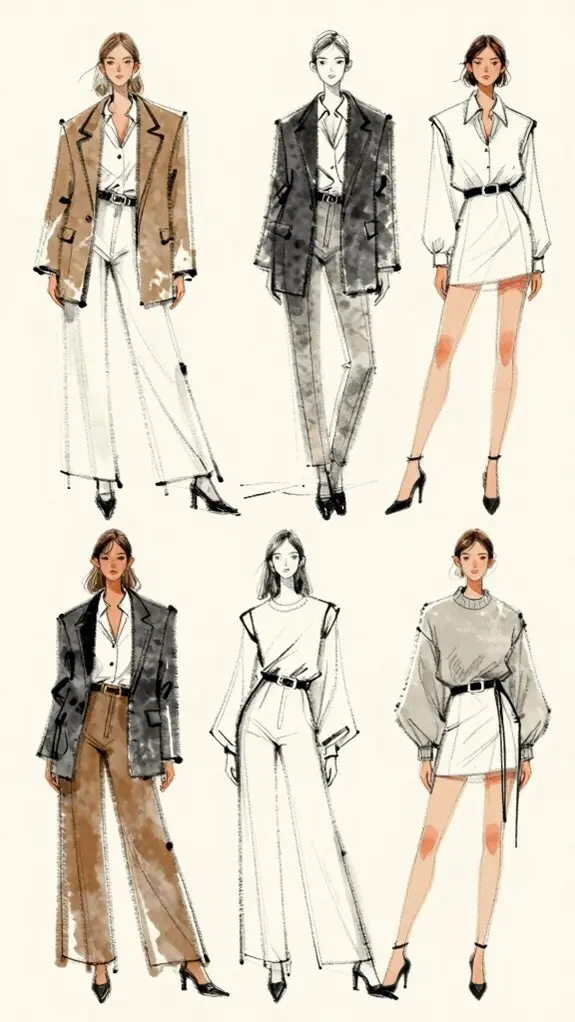
Once you’ve assembled the wardrobe, you’ll discover that actual styling—the art of combining pieces, playing with silhouettes, breaking arbitrary rules about what “should” go together—offers liberation that most people never experience. Personal expression becomes your playground, not someone else’s prescription.
Personal expression becomes your playground, not someone else’s prescription—styling offers liberation that most people never experience.
Consider how styling creates social empowerment:
- Oversized blazers paired with fitted pants challenge proportion rules that fashion magazines perpetuate
- Delicate jewelry worn with workwear dismisses the tired notion that accessories must match your “gender presentation”
- Mixing textures freely—silk with denim, leather with lace—creates visual interest without performing for anyone’s approval
The casual cool formula of pairing oversized, structured pieces with delicate fabrics like lace creates the kind of modern tension that feels authentic rather than costume-like.
You’re not dressing for categories anymore. You’re building outfits that reflect your internal landscape, which is infinitely more interesting than whatever Pinterest thinks you should wear.
Frequently Asked Questions
Where Can I Buy Affordable Androgynous Clothing?
You’ll find solid options through online androgynous stores like TomboyX, Wildfang, and Kirrin Finch, though they’re pricier than you’d hope.
For genuinely affordable pieces, local thrift shopping becomes your best friend—men’s sections offer oversized button-downs and blazers, while women’s racks hide tailored trousers.
ASOS and Uniqlo stock decent basics that won’t demolish your budget. Mix vintage finds with strategic H&M purchases, and you’ve created a wardrobe that defies binary expectations without requiring trust fund money.
How Do I Determine Sizing for Gender-Neutral Pieces?
Sizing’s less maze, more choose-your-own-adventure—you’ve got options. When determining gender neutral sizing, check each brand’s chart since “medium” varies wildly between companies.
Look for inclusive sizing options that list measurements in inches or centimeters, not arbitrary S-M-L labels. Try pieces on if possible, because androgynous cuts prioritize shoulders and hips differently than gendered clothes.
Don’t stress perfection; tailoring exists for a reason, and oversized fits often work better than struggling into something restrictive.
Which Celebrities Are Known for Androgynous Fashion?
You’ll find incredible inspiration in Ruby Rose’s androgynous aesthetic, which helped launch her career when she appeared in Orange Is the New Black.
Ezra Miller’s gender bending looks consistently challenge red carpet conventions, pairing gowns with facial hair, structured suits with dramatic makeup.
Tilda Swinton’s ethereal, architectural style defies categorization entirely.
Janelle Monáe rocks sharp tuxedos and experimental silhouettes.
Billy Porter rewrites fashion rules constantly, proving that your style doesn’t need traditional gender markers to make powerful statements about identity.
Can Androgynous Fashion Work for All Body Types?
Absolutely, you can rock androgynous style regardless of your shape. The key’s finding flattering silhouettes that work with your proportions, not against them—oversized blazers, tailored trousers, structured shirts.
Unfortunately, inclusive size options remain frustratingly limited in many androgynous brands, which is honestly ridiculous in 2024. Focus on fit over arbitrary gender categories, experiment with layering, and recollect that confidence matters more than conforming to someone else’s narrow vision of what “androgynous” should look like.
How Do I Explain My Androgynous Style to Family?
Picture the conversation before it occurs—your grandmother’s confused expression, your dad’s awkward silence.
Now, let’s rewrite that scene. You’ll find success through open communication with family, framing your style as self-expression rather than rebellion. Share fashion icons they might recognize—think Tilda Swinton, David Bowie, or Janelle Monáe—to bridge generational gaps.
Finding common ground means emphasizing comfort and authenticity over shocking them. Start small, answer questions honestly, and recollect: they’re learning your language, and that takes patience, not perfection.
Conclusion
You’ve explored the foundations, dissected the philosophy, and assembled your arsenal of pieces—now comes the real work. Clothes truly make the man, or woman, or whomever you’re becoming that day. Your wardrobe isn’t a declaration or manifesto; it’s simply how you move through the world when you’re not performing gender for anyone’s comfort. Wear what feels right, not what fits someone else’s narrative about who you should be.
Have any thoughts?
Share your reaction or leave a quick response — we’d love to hear what you think!
-
 0
0 -
0
-
0
-
0
-
0
-
0


