

 Lena
Lena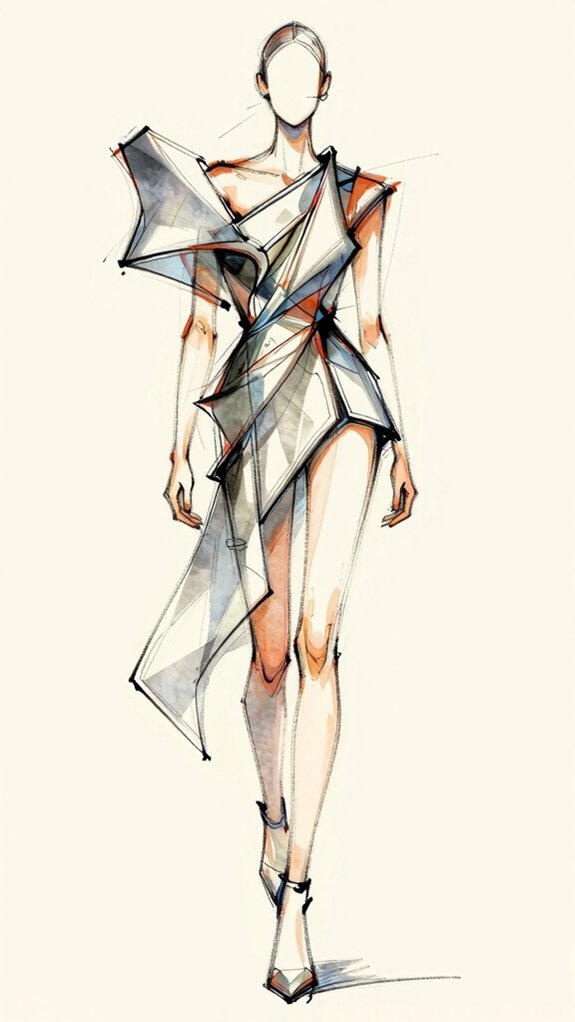
Picture a model draped in shredded fabric that barely resembles clothing, lurching down a runway like some post-apocalyptic creature—that’s avant-garde fashion making its point. You may have encountered these collections on your feed and wondered if designers have lost their minds, creating garments nobody could actually wear to, well, anywhere. But here’s the thing: they’re not trying to dress you for brunch. These pieces exist to provoke, challenge, and occasionally horrify, pushing fashion beyond commerce into something closer to manifesto.
Historical Context
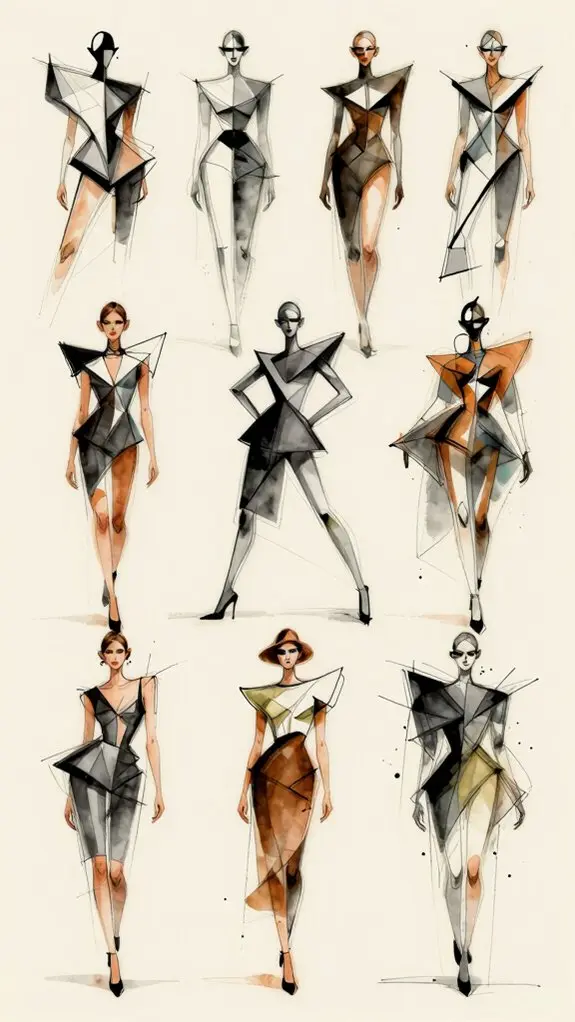
While mainstream fashion tends to follow predictable cycles—hemlines rise and fall, colors rotate through the Pantone catalogue, silhouettes expand and contract like some capitalist accordion—avant-garde fashion has always operated by a different set of rules, or perhaps by no rules at all.
You’ll find its roots in the aftermath of World War I, when designers like Elsa Schiaparelli rejected conventional beauty standards. These cultural influences weren’t just aesthetic choices—they were rebellions against socioeconomic factors that dictated who could wear what.
The 1960s brought Comme des Garçons and Yohji Yamamoto, designers who understood that clothing could be conceptual art. By the 1980s, Martin Margiela was deconstructing garments entirely, exposing seams and linings like anatomical studies. Each era’s avant-garde reflected its particular anxieties. Today’s experimental designers continue to challenge conventions, standing in stark contrast to movements like the clean girl aesthetic that prioritize polished minimalism and simple quality basics.
Design Philosophy
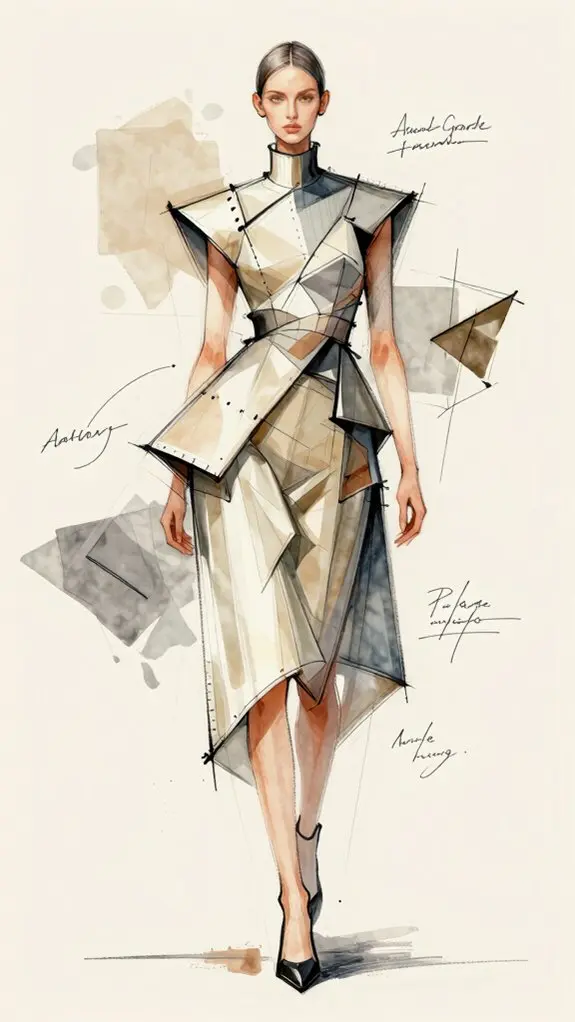
At the heart of avant-garde fashion lies a fundamental rejection of utility—these aren’t clothes designed to make you look thinner, taller, or more employable at your corporate job. Instead, you’re encountering thought provoking narratives stitched into fabric, wearable manifestations of ideas that challenge what clothing even means.
Avant-garde fashion strips away utility’s comfort, demanding you confront clothing as philosophy rather than flattery.
Designers in this space operate as cultural philosophers who’ve traded dissertations for draping. Their work functions as sociopolitical commentary, questioning capitalism, gender norms, beauty standards, and power structures through silhouette and texture.
Core principles include:
- Form supersedes function—wearability becomes optional
- Challenging aesthetic conventions through deconstruction, asymmetry, or distortion
- Provoking emotional or intellectual responses rather than desire
- Embracing imperfection, rawness, or deliberately “unfinished” elements
You’re not meant to understand it immediately; discomfort indicates it’s working. This stands in stark contrast to heritage houses like Chanel, where effortless sophistication and timeless elegance remain the guiding principles rather than provocation.
Defining Characteristics
You’ll recognize avant-garde fashion by its refusal to play by the rules—those wildly unconventional silhouettes that make you wonder if gravity still applies, materials that wouldn’t look out of place in a science lab (think Iris van Herpen’s 3D-printed dresses or Hussein Chalayan’s fiberglass bodices), and a conceptual approach that treats clothing as commentary rather than commodity.
These aren’t garments designed to make you look good at brunch; they’re wearable manifestos that challenge everything from gender norms to consumer culture, often leaving fashion editors scrambling to describe what they’re actually witnessing on the runway.
This same spirit of artistic rebellion extends to dimensional nail art, where sculptural elements and encapsulated designs transform fingertips into miniature galleries of wearable expression.
The defining characteristics all point to one truth: avant-garde designers prioritize artistic vision over commercial viability, creating pieces that belong as much in museums as they do in wardrobes.
Unconventional silhouettes
Since the human body has maintained roughly the same proportions for the past 200,000 years, you’d think we’d have figured out the “optimal” way to drape fabric over it by now—but avant-garde designers treat that assumption like a challenge rather than a constraint. They’re creating dramatic shapes that make traditional tailoring look quaint, almost apologetic.
You’ll recognize these abstract proportions immediately:
- Exaggerated shoulders extending far beyond your natural frame, creating architectural cantilevered effects
- Asymmetrical hemlines that defy gravity’s expectations, sometimes dragging behind you like ceremonial trains
- Inflated volumes transforming garments into sculptural bubbles, cocoons, or geometric monuments
- Distorted waistlines placed at your collarbone, hips, or eliminated entirely
These silhouettes don’t flatter—they provoke, question, reimagine what clothing can become when liberated from convention’s suffocating embrace.
Innovative materials
The fashion industry’s material palette used to be reassuringly predictable—cotton, wool, silk, maybe some leather if you were feeling luxurious—but avant-garde designers have turned fabric sourcing into something closer to experimental chemistry than traditional textile manufacturing. You’ll find garments constructed from mushroom mycelium, lab-grown bacterial cellulose, and even bioplastics derived from algae, materials that sound more like science fiction than runway reality.
Iris van Herpen famously collaborates with biochemists to create dresses from 3D-printed silicone and laser-cut polymers, while Stella McCartney champions sustainable fabrication through synthetic spider silk (yes, really) and regenerated ocean plastics. This isn’t just aesthetic novelty—it’s ethical manufacturing with actual consequences, pushing fashion beyond its wasteful reputation into something resembling environmental accountability, though skeptics rightfully question whether luxury pricing undermines accessibility.
Conceptual approach
Where traditional fashion treats clothing as wearable products meant for everyday consumption, avant-garde designers approach garments as three-dimensional philosophical statements, conceptual art pieces that happen to drape over human bodies rather than hang on gallery walls.
You’ll recognize this conceptual exploration through:
- Narrative-driven collections that tell stories about identity, mortality, technology, or social constructs
- Deliberate unwearability as a statement against mass consumption
- Abstract expression through exaggerated silhouettes that challenge bodily proportions
- Philosophical manifestos embedded in runway presentations, transforming fashion shows into performance art
Rei Kawakubo’s “lumps and bumps” collection (Spring/Summer 1997) exemplified this approach, creating grotesque body distortions that questioned beauty standards. These aren’t clothes you’d wear grocery shopping—they’re wearable theses.
Key Designers
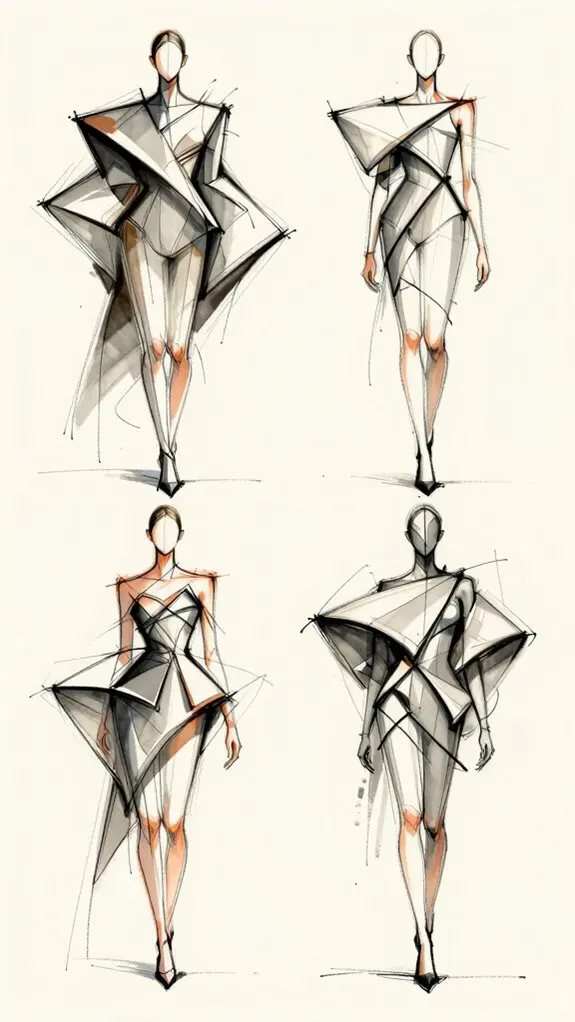
Although fashion history loves its origin myths, avant-garde design didn’t emerge from a single visionary’s fever dream—it evolved through a constellation of radical thinkers who’d rather set fire to convention than follow it. You’ll find Rei Kawakubo of Comme des Garçons deconstructing the female form in 1981, Martin Margiela turning jackets inside-out like some kind of sartorial anarchist, and Yohji Yamamoto draped in existential black before anyone called it a mood.
These weren’t just designers—they were philosophers with needle and thread. Today’s emerging talents continue this rebellion, drawing global influences from Tokyo’s street culture to Antwerp’s conceptual rigidity, proving that avant-garde isn’t a destination you reach, it’s a permanent state of productive dissatisfaction with everything fashion pretends to be. In contrast to avant-garde’s deconstructive ethos, trends like the Coquette Aesthetic embrace rococo elegance and hyper-feminine details that celebrate rather than challenge traditional notions of beauty.
Wearable Applications
Most people don’t actually want to walk around looking like a deconstructed concept. That’s where accessible technology meets functional aesthetics, transforming runway experiments into clothes you’d wear to brunch. Think of it as avant-garde’s greatest hits album, remixed for real life.
Asymmetrical cuts borrowed from Yohji Yamamoto become interesting blazers, not architectural statements. Unexpected fabric combinations create texture without screaming “art project”. Exaggerated proportions get scaled down—oversized sleeves that fit through doorways. Deconstructed details appear as exposed seams or raw hems, subtle nods to rebellion. Even wide-leg trousers outfits demonstrate this principle, where voluminous silhouettes from the runway translate into everyday proportion play with structured blazers and streamlined tops.
You’re fundamentally wearing diluted rebellion, fashion’s experimental edge softened into something your boss won’t question. It’s compromise, sure, but compromise that lets you feel interesting without requiring a manifesto.
Frequently Asked Questions
How Much Do Avant-Garde Fashion Pieces Typically Cost?
You’re looking at anywhere from $500 to $50,000+ per piece, depending on the designer’s clout and production costs. Limited availability drives prices sky-high—when Rei Kawakubo or Yohji Yamamoto creates something intentionally unwearable, scarcity becomes the point.
Entry-level avant-garde from emerging designers might hit your wallet around $800, while established houses like Maison Margiela or Comme des Garçons command thousands. It’s art you wear, so yeah, you’ll pay gallery prices for clothes that confuse your relatives.
Where Can I Buy Authentic Avant-Garde Clothing?
About 73% of avant-garde pieces sold globally now come through digital channels rather than traditional retail. You’ll find authentic pieces at online fashion boutiques like SSENSE, Dover Street Market, and Farfetch, which curate emerging designers alongside established names.
Independent designer studios, like Comme des Garçons’ webstore or Rick Owens’ official site, sell directly to you, cutting middlemen. Visit Grailed for secondhand treasures, though authentication’s tricky. Your best bet? Research designers first, then track down their stockists.
How Do I Style Avant-Garde Pieces for Everyday Wear?
You’ll want to start by mixing statement pieces with minimalist staples—think a dramatic Rick Owens jacket over simple black jeans, nothing fancy. The trick isn’t wearing everything at once, trust me.
Try incorporating avant-garde accessories for a subtle flair: sculptural jewelry, architectural bags, unusual shoes. These pieces let you dip your toes into experimental fashion without looking like you’re cosplaying a Comme des Garçons runway.
Balance is everything here.
What Body Types Work Best With Avant-Garde Fashion?
avant-garde fashion celebrates diverse body shapes, rejecting the fashion industry’s tired obsession with one “ideal” form. You’ll find designers like Rei Kawakubo and Yohji Yamamoto creating pieces that drape, cocoon, and transform bodies rather than conform to them.
The secret isn’t your measurements—it’s finding tailored silhouettes that honor your proportions. Whether you’re petite, curvy, or tall, experimental fashion adapts to you, not the other way around.
Can Avant-Garde Fashion Be Sustainable and Ethically Produced?
You’ll find that sustainable avant-garde fashion isn’t just possible—it’s thriving, with 73% of experimental designers now prioritizing eco-conscious practices.
Your favorite boundary-pushing brands excel at innovative material usage, transforming discarded textiles, deadstock fabric, and even agricultural waste into wearable art. They’re minimizing textile waste through zero-waste pattern cutting and made-to-order production models.
Think of designers like Marine Serre, who’ve built entire collections around upcycled materials, proving that environmental responsibility actually enhances creative experimentation rather than limiting it.
Conclusion
You have likely noticed avant-garde pieces seeping into mainstream collections—those asymmetrical hems, exaggerated proportions, deconstructed seams you’re suddenly seeing everywhere. It’s no coincidence. What starts on runways as unwearable art inevitably trickles down, stripped of its radical edge but retaining its visual DNA. You’re witnessing fashion’s perpetual cycle: rebellion becomes inspiration becomes commodity. Even your preferred fast-fashion retailer, whether they’ll admit it or not, owes something to these experimental pioneers who dared to ask, “Why not?”
Have any thoughts?
Share your reaction or leave a quick response — we’d love to hear what you think!
-
 0
0 -
0
-
0
-
0
-
0
-
0


