

 Lena
Lena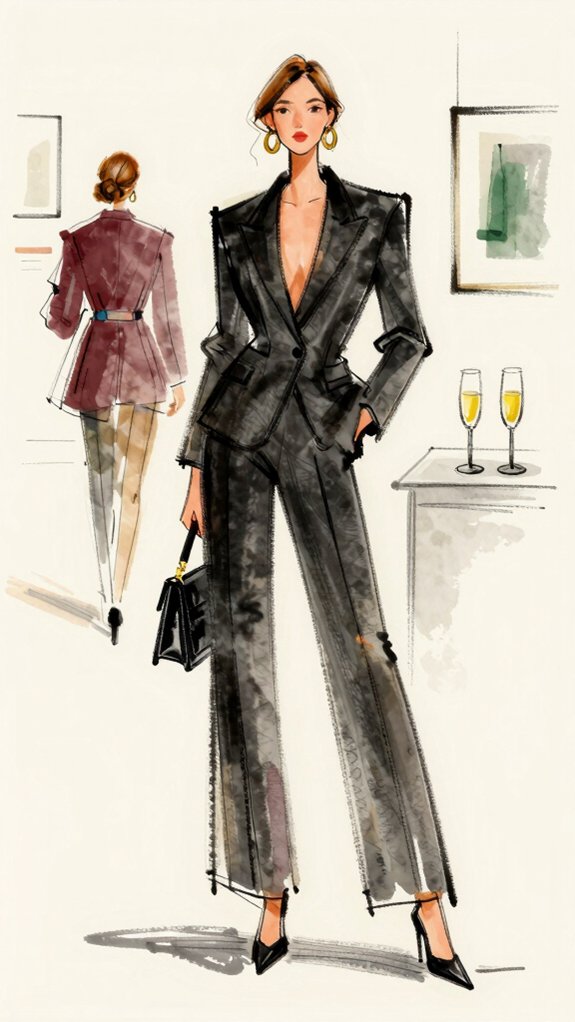
You’ve seen them at every contemporary art opening from Chelsea to Charlottenburg, nursing their wine with studied nonchalance, dressed like they raided Susan Sontag’s closet and a Bauhaus professor’s wardrobe in one calculated thrift run. This isn’t dark academia’s romantic library aesthetic—it’s sharper, more urban, less concerned with appearing bookish than with projecting the kind of effortless intellectualism that suggests you know exactly why that blank canvas costs $40,000. The uniform writes itself, but the attitude?
Aesthetic Definition
What exactly does “gallery opening style” mean when you’re scrolling through fashion tags or standing in your closet trying to decode the dress code on that intimidating invitation? It’s that effortlessly intellectual look—think architect meeting art critic, where your outfit suggests you’ve got opinions about spatial dynamics and aren’t afraid to share them.
You’re aiming for dimensional perspective here, literally and figuratively: layered textures, interesting silhouettes, pieces that create visual depth. The aesthetic demands conceptual interpretation from observers, making them wonder if your vintage blazer-sneaker pairing is commentary on high-low culture or just what felt right that morning.
It’s deliberately understated yet unmistakably considered, projecting creative sophistication without screaming “I tried too hard.” You’re curating yourself, basically. This aesthetic borrows heavily from dark academia’s rich color palette and vintage-inspired layering while adding a more contemporary, gallery-ready edge.
Cultural Influences
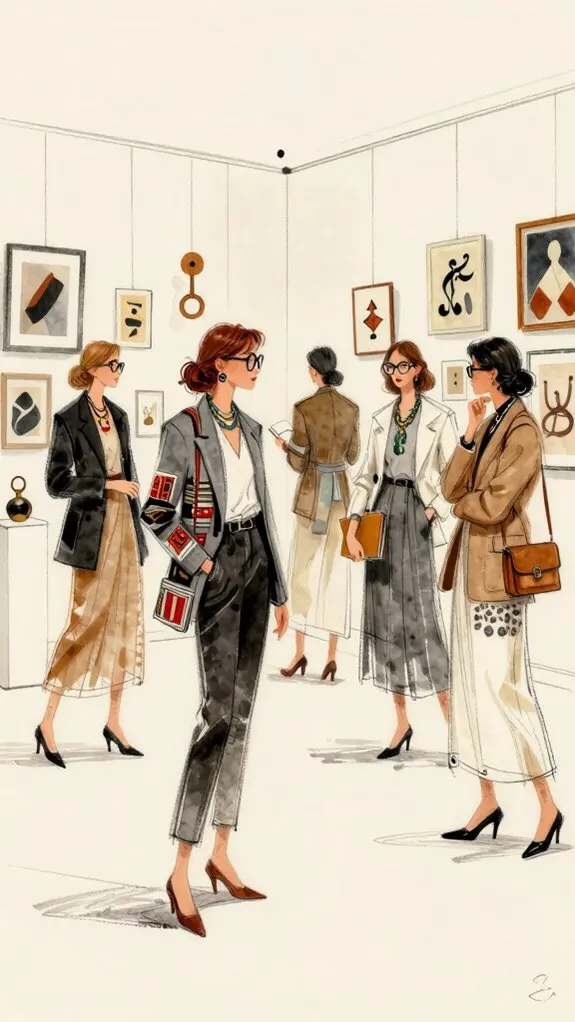
Since the 1960s SoHo art scene fundamentally invented the blueprint—artists wearing paint-splattered jeans to their own exhibitions, collectors in turtlenecks pontificating about form—gallery opening style has absorbed influences from every subsequent art world epicenter.
The 1960s SoHo uniform—paint-splattered denim and turtlenecks—established gallery opening conventions that subsequent art capitals would systematically dismantle and reimagine.
You’ll notice Berlin’s anarchic, thrift-store minimalism bleeding into Bushwick openings, Tokyo’s meticulous layering informing West Coast looks, Lagos’s vibrant textile heritage trends reshaping what “art world sophistication” even means.
The globalization isn’t just aesthetic borrowing (though let’s be honest, that’s happening too); it’s genuine community engagement with diasporic artists who’ve transformed white-cube conventions.
Seoul’s Frieze debut in 2022 proved you don’t need European validation anymore. Korean street style’s creative spirit—balancing academic prep with unexpected pops of color and intentional casualness—has become a reference point for gallery-goers seeking that effortlessly cultivated look. Contemporary gallery style reflects this shift: purposefully eclectic, politically conscious, refusing monolithic definitions of cultivated taste.
Characteristic Features
Characteristic Features
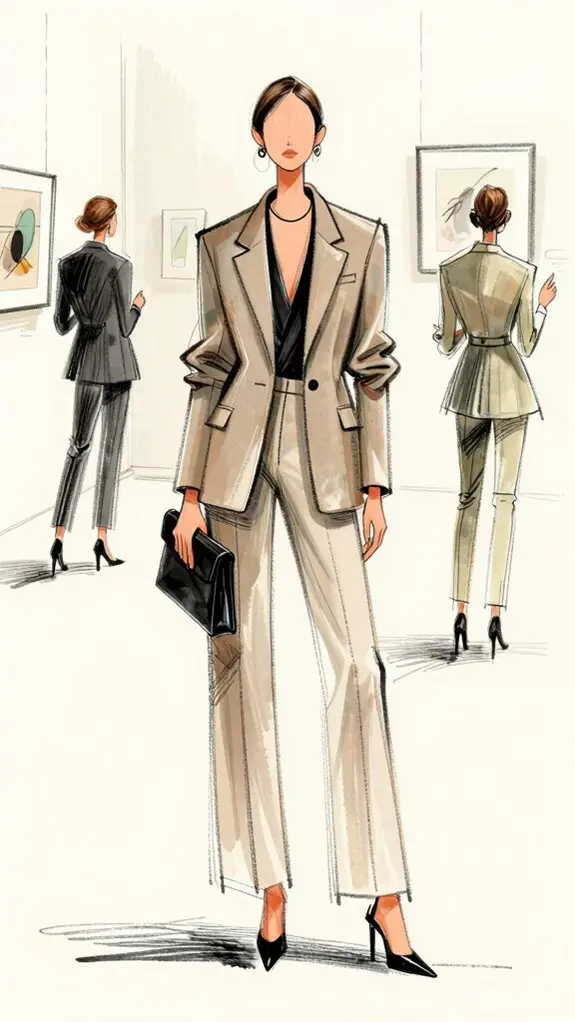
You’ll recognize Gallery Opening Style by its reliance on three core elements: architectural silhouettes that borrow from modernist design principles, a monochrome base that typically means black, white, gray, or navy, and carefully selected statement pieces that do all the talking.
Think of it as a uniform that signals you’re serious about art without trying too hard—the oversized blazer with sharp shoulders, the perfectly tailored trousers that pool just right at the ankle, the sculptural jewelry that costs more than most people’s rent.
This isn’t about throwing on whatever’s clean; it’s a calculated approach to dressing that communicates cultural literacy, financial access, and an understanding that sometimes the most powerful statement is knowing when to strip everything back to the essentials. When opting for an all-white ensemble, the color’s associations with minimalism and confidence align perfectly with the intellectual sophistication gallery openings demand.
Architectural silhouettes
How does a building announce itself before you’ve even walked through the door? You’re reading its silhouette, whether you realize it or not. Gallery architecture speaks through structural proportions that mirror the art inside—sharp angles for contemporary spaces, flowing curves for installations that embrace organic textures.
Consider what you’re actually seeing:
- Clean geometric volumes that frame your anticipation
- Cantilevered overhangs creating dramatic shadow play
- Glass facades revealing (or concealing) interior mysteries
- Brutalist concrete slabs making unapologetic statements
- Repurposed industrial bones wearing their history proudly
You’ve walked past the cookie-cutter storefronts, those architectural afterthoughts. But a gallery? It’s performing before you enter, using negative space, materiality, and proportion to signal: something deliberate happens here. The silhouette isn’t decoration—it’s your first curatorial experience.
Monochrome base
Once you’ve stepped past that architectural statement, the interior reveals its own discipline: walls, floors, ceilings—all rendered in whites, grays, blacks, or that particular shade of greige that’s haunted contemporary galleries since the mid-2000s. This monochrome base isn’t accidental—it’s the color palette that lets art breathe, that refuses to compete with whatever’s hanging on those pristine surfaces.
You’ll notice how material textures do the heavy lifting here: polished concrete floors that echo your footsteps, matte walls that absorb light rather than reflect it, exposed beams painted glossy black for contrast. It’s minimalism as performance, creating a blank canvas for human curation. The palette whispers refinement, suggesting you’re serious about looking, not just scrolling.
Statement pieces
Against all that calculated neutrality, the gallery-opening aesthetic demands at least one object that refuses to behave—something oversized, unexpected, or flagrantly sculptural that announces itself the moment you walk in. This is where accessory selection becomes an act of curatorial defiance.
Consider these statement-making strategies:
- Architectural jewelry that doubles as wearable sculpture (think chunky resin cuffs, brutalist silver bangles)
- Bags that contradict the outfit’s restraint—a patent leather clutch against matte wool
- Glasses with exaggerated frames that frame your face like a Rothko
- Shoes in materials nobody expected (plexi heels, velvet oxfords)
- One garment in a color that breaks your monochrome oath entirely
Color palette experimentation happens here, not everywhere. You’re not abandoning minimalism; you’re punctuating it, showing you understand composition well enough to violate it intentionally.
Essential Items
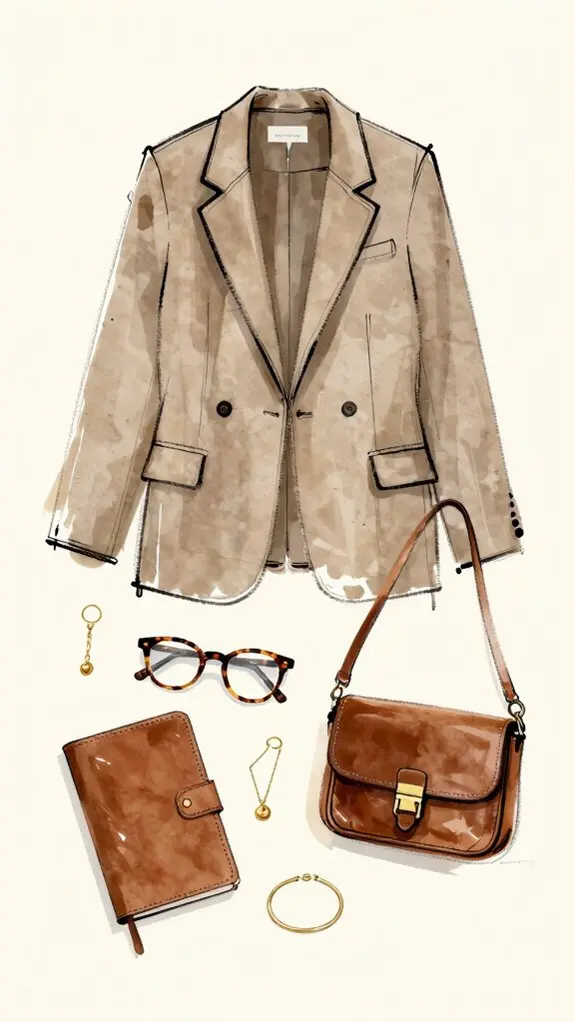
Building out your gallery opening wardrobe starts with one non-negotiable foundation: a pair of comfortable, architecturally interesting shoes that won’t leave you hobbling after three hours of standing on concrete floors. You’ll need pieces that work hard, look effortless, and telegraph your cultural literacy without screaming desperation.
| Category | What You Actually Need |
|---|---|
| Base Layer | Black turtleneck, tailored trousers |
| Outerwear | Structured blazer with evocative textures |
| Finishing Touches | Refined accessories: minimal jewelry, leather bag |
Think investment pieces, not trends. A well-cut blazer justifies its cost over thirty openings, while that trendy vinyl jacket you wore once collects dust. For an edgy twist on traditional suiting, consider a terracotta linen and leather suit that pairs unexpected fabrics for visual interest perfect for artist talks and creative industry meetings. Your wardrobe should whisper sophistication, not shout insecurity.
Styling Approach
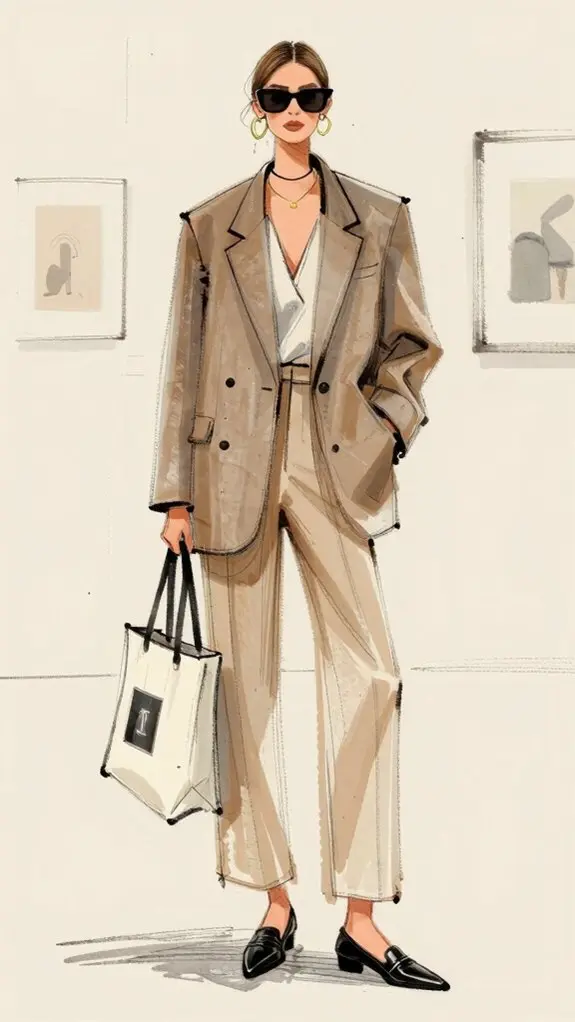
The pieces matter less than how you wear them, and anyone who’s watched a 23-year-old gallerist in head-to-toe Comme des Garçons get upstaged by a ceramicist in vintage Levi’s and a perfectly draped scarf knows this instinctively. You’re aiming for minimal elegance, not costume party desperation.
The fundamentals of curated simplicity include:
- Rolling your sleeves with intention (not because you’re hot)
- Leaving your top button undone, always
- Tucking in front only, if you must tuck at all
- Letting your jacket hang off one shoulder while you gesture
- Wearing your bag cross-body, never clutched
Master the art of proportion play by pairing structured, oversized pieces against flowing silhouettes to create an effortless model-off-duty aesthetic. You’re composing a look that suggests you threw it together between reading Artforum and texting your dealer, even if you spent forty minutes adjusting that collar.
Frequently Asked Questions
How Do I Network Effectively at Gallery Openings Without Seeming Pushy?
You’ll master networking by making genuine connections through observation, not self-promotion. Start casual conversations about the actual artwork—ask someone what they think about that perplexing installation in the corner, you know, the one with the taxidermied peacock.
Listen more than you talk, recall names, follow up genuinely. Don’t treat people like LinkedIn profiles with champagne flutes.
The best relationships emerge when you’re curious about others’ perspectives, not desperately distributing business cards like some kind of corporate evangelical missionary.
What’s the Appropriate Budget for Building an Artsy Academia Wardrobe?
Picture worn leather messenger bags, vintage blazers with paint-stained cuffs, perfectly imperfect linen shirts—you’ll need less than you think. Start with $300-500 for a minimalist capsule wardrobe that’ll carry you through countless openings.
Focus on sustainable fabric options like secondhand wool coats, organic cotton basics, and one statement vintage piece that screams “I understand Bauhaus.” Quality trumps quantity here; three well-chosen pieces beat ten fast-fashion disasters every time.
Can I Wear This Style to Job Interviews in Creative Industries?
You’ll absolutely nail creative industry interviews with this aesthetic—it’s practically designed for professional attire considerations in design studios, publishing houses, and agencies.
The style’s inherently casual yet polished look reads as thoughtful, cultured, and detail-oriented, exactly what creative directors want.
Just avoid anything too costume-y or pretentious; swap the vintage brooch for understated jewelry, keep the layers intentional rather than excessive, and you’re demonstrating cultural awareness without screaming “I’m trying too hard.”
How Do I Avoid Looking Pretentious When Adopting This Aesthetic?
73% of people find fashion pretentious when wearers seem uncomfortable in their clothes. So here’s your fix—own it with casual confidence, not apology.
Mix your vintage blazer with worn jeans, let your tote bag show actual use, and for God’s sake, don’t explain your outfit unprompted. Subtle sophistication means looking like you got dressed for yourself, not an audience.
Authenticity, frankly, is wearing what makes you feel smart without announcing it.
Where Can I Find Affordable Alternatives to Designer Artsy Academia Pieces?
You’ll find budget-friendly options at thrift stores, estate sales, and vintage shops where authentic pieces hide between outdated blazers. Uniqlo, COS, and Everlane offer affordable minimalist basics that work beautifully as foundations.
Poshmark and Depop have designer thrift store finds at fraction prices, often barely worn. Your local university’s vintage stores, secondhand bookshops, and even eBay yield surprising treasures—oversized linen shirts, wool trousers, leather satchels. It’s actually more authentic than buying everything new anyway.
Conclusion
You’ve mastered the minimalist moves, the calculated cuts, the perfectly placed pieces that prove you’re not trying too hard—except you absolutely are, and that’s the point. This aesthetic asks you to approach style as seriously as someone studies a Rothko, blending borrowed bohemian bits with barely-there branding. So step into those statement spaces, channel your creative confidence, and curate yourself carefully. Consider your closet the canvas.
Have any thoughts?
Share your reaction or leave a quick response — we’d love to hear what you think!
-
 0
0 -
 0
0 -
 0
0 -
 0
0 -
 0
0 -
 0
0