

 Lena
LenaIndividuals have likely scrolled past those effortlessly chic Nordic outfits and pondered why their closet resembles a chaotic explosion in comparison. Fret not, one is not the sole individual. Scandinavian minimalism is not merely about owning fewer items—it’s a comprehensive philosophy that began gaining momentum in the 1950s when the remainder of us were occupied with hoarding bell-bottoms. This approach’s distinguishing characteristics, and why your wallet might genuinely express gratitude.
The Story Behind Scandinavian Style
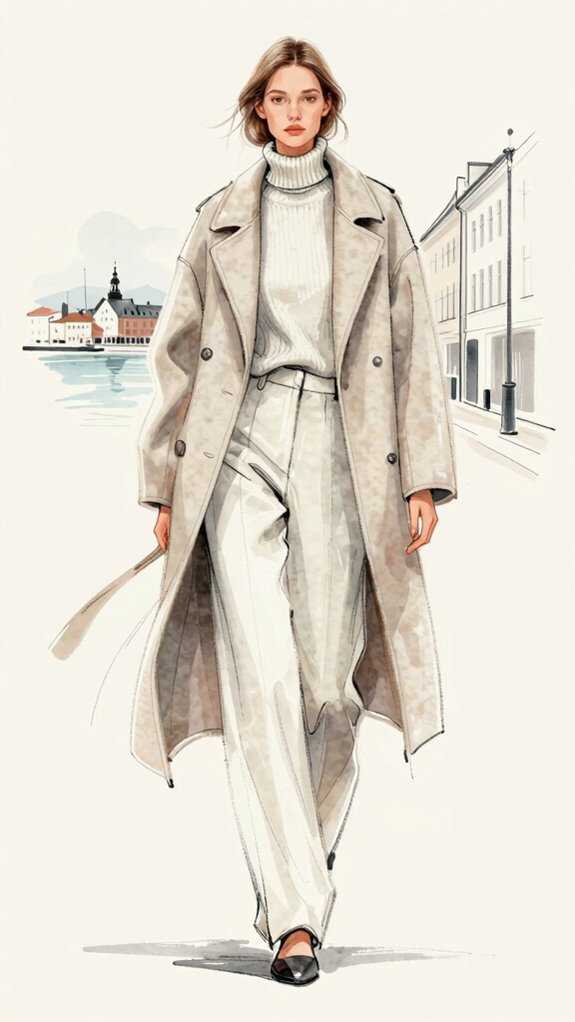
Five countries in Northern Europe completely changed how the world thinks about getting dressed. Denmark, Sweden, Norway, Finland, and Iceland developed a fashion philosophy rooted in practicality and beauty. You see, harsh winters and limited daylight forced these cultures to prioritize function over flash.
The movement gained momentum in the 1950s, and it hasn’t slowed down since. You’re looking at a region that embraced sustainable materials long before they became trendy hashtags. These Nordic designers championed slow fashion when everyone else was chasing weekly trends. This approach has inspired modern movements like the clean girl aesthetic, which emphasizes quality over quantity and simplicity over complexity.
Here’s what makes it personal for you: this style invites you to build a wardrobe that actually lasts. No more impulse buys collecting dust in your closet. Just intentional pieces that work together beautifully, season after season.
Essential Pieces Every Scandi Closet Needs
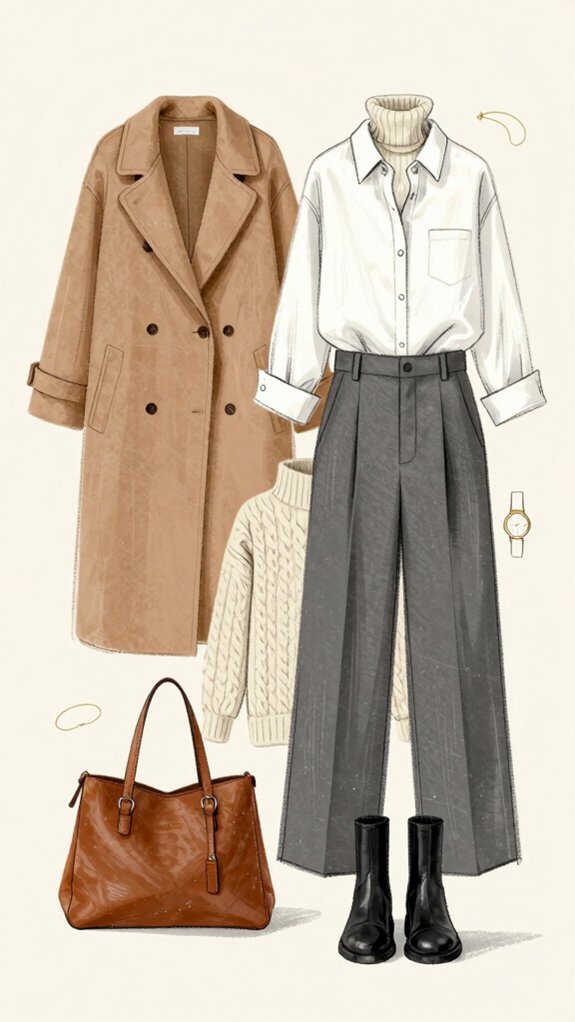
Building a Scandinavian wardrobe isn’t about buying everything at once, it’s about investing in pieces that actually work together. You’ll want to focus on three key areas: layering basics that you can mix and match, a coat that handles everything from coffee runs to actual winter, and knitwear that doesn’t pill after two washes.
Neutral layering is a key strategy for building a winter minimalist wardrobe that creates depth and visual interest without relying on bold colors.
Let’s break down what’s actually worth your money and what you can skip.
Layering basics
When you’re trying to nail Scandinavian style, layering isn’t just about staying warm—it’s the entire foundation of how these outfits actually work. You’ll want to master seasonal layering by starting with thin, fitted pieces closest to your body, then building outward with slightly looser items.
Think of strategic minimalism as your secret weapon here. You’re not piling on random clothes—you’re creating intentional depth. A fitted turtleneck under a relaxed knit sweater, topped with a structured coat, gives you three distinct layers that actually make sense together.
The magic number? Aim for three to four layers maximum. Any more and you’ll look bulky instead of effortlessly cool. Each piece should serve a purpose, whether that’s warmth, texture, or visual interest. No filler allowed.
The coat situation
Let’s be honest—your coat does about 80% of the heavy lifting in Scandinavian style. When it’s freezing outside, nobody sees your carefully curated outfit underneath. They see your outerwear, period.
You’ll want two types in your rotation: statement coats for those days you want to look put-together, and weather proof outerwear for when the sky decides to attack you. I spent $340 on a wool-blend camel coat three years ago, and it still looks fresh. That’s roughly $113 per year—not bad for something I wear constantly from October through April.
The Scandinavian secret? Invest in neutral tones like black, navy, or camel. They’ll match everything you own, which means less decision-making on groggy mornings.
Knitwear worth owning
How many sweaters does one person actually need? Honestly, fewer than you’d think. I used to own twelve sweaters, and I only ever reached for the same three.
Here’s what actually works: two to three cozy wool sweaters in neutral tones. That’s it. One cream, one gray, maybe one in a deeper shade like navy. These become your versatile layering pieces throughout those long, dark winters.
Look for quality over quantity here. A $150 merino wool sweater that lasts eight years beats buying $40 replacements every season. The math just makes sense.
Skip the trendy patterns and chunky novelty knits. They’re fun for exactly one winter, then they collect dust. Classic ribbed or cable-knit styles never feel dated.
Color Theory: Beyond Black and White
Why do people assume Scandinavian fashion means owning fifty black sweaters and calling it a day? Here’s the truth: vibrant minimalism actually thrives on muted tones like dusty rose, sage green, and warm camel. You’re not abandoning simplicity by adding color, you’re enhancing it.
Think about subtle color contrasts in your wardrobe. Pair a soft gray knit with cream trousers, or try navy against pale blue. I spent months wearing only black before discovering that a $45 terracotta sweater completely transformed my closet. It worked with everything I already owned.
The key is sticking to two or three accent colors that complement each other. For a fresh take, consider butter yellow, a sunshine shade with warm undertones that complements virtually every skin tone and pairs beautifully with neutrals you likely already own. You’ll create outfits that feel fresh without the chaos. Your wardrobe stays cohesive, just more interesting.
How Scandinavians Accessorize
Where minimalism really shines is in how Scandinavians approach accessories, and it’s surprisingly different from what you’d expect. You won’t find jewelry boxes overflowing with tangled necklaces here. Instead, you’ll notice one quality watch, maybe a simple gold band, and that’s genuinely it.
The secret lies in functional simplicity. Every piece needs to earn its spot in your rotation. Think a structured leather bag that works for both coffee runs and client meetings, or a wool scarf that actually keeps you warm during brutal winters. A rich chocolate brown suede tote exemplifies this philosophy perfectly, offering versatility with both warm and cool tones while transitioning seamlessly from casual outings to professional settings.
When choosing minimalist accessories, focus on versatility over variety. I’ve learned that owning three perfect pieces beats twenty forgettable ones every time. Your accessories should whisper, not shout. Let that single statement piece do the talking while everything else quietly supports your overall look.
Where to Find Authentic Scandi Style
You don’t need a trust fund to nail Scandinavian style, and that’s honestly the best news I can share with you today. From budget-friendly spots like H&M and Uniqlo to mid-tier gems like COS and Arket, you can build a solid capsule wardrobe without crying at checkout.
If you’re ready to splurge on authentic Scandinavian designers like Acne Studios or Ganni, those investment pieces will last you years, not just seasons. Brands like Posse offer neutral-hued vests that add instant structure and sophistication while maintaining that effortless Nordic aesthetic.
Affordable options
Tracking down authentic Scandinavian style doesn’t have to drain your bank account, and trust me, I’ve learned this the hard way after spending $200 on a single “minimalist” sweater that pilled after three washes.
You’ll find several budget conscious brands that nail the Nordic aesthetic without the premium price tag. H&M’s premium basics line offers clean silhouettes starting around $25, while Uniqlo’s collaboration pieces capture that understated elegance for under $50. COS during sale season is basically a treasure hunt worth taking.
Here’s my approach: embrace quality over quantity by investing in one versatile piece monthly rather than five trendy items. I spent $89 on a structured blazer last spring, and it’s now my most-worn item. Your wardrobe becomes authentically Scandinavian when each piece actually earns its spot.
Mid-tier brands
Once you’ve mastered the budget basics, stepping up to mid-tier brands opens a whole new world of Scandinavian style. Think COS, Arket, and Filippa K, where pieces typically run $80-200. Yes, your wallet will feel it, but here’s the thing about quality vs. quantity: that $150 sweater will outlast five $30 ones.
I spent three months saving for my first COS coat, and honestly, it was worth every penny. These brands take sustainable production seriously, so you’re not just buying clothes—you’re investing in pieces that don’t trash the planet.
Look for their seasonal sales, where prices drop 30-50%. Sign up for newsletters (your inbox will survive, promise). Most mid-tier Scandi brands ship internationally, making authentic Nordic style surprisingly accessible wherever you live.
Scandinavian designers
While mid-tier brands deliver great value, diving into actual Scandinavian designer labels takes your Nordic wardrobe to another level entirely.
Pioneering Scandinavian designers like Acne Studios, Ganni, and Cecilie Bahnsen have shaped how we think about minimalism today. You’ll pay more, obviously. A single Acne Studios sweater runs $300-500, but the craftsmanship genuinely shows.
Don’t sleep on up and coming Scandinavian creatives either. Designers like Saks Potts and Holzweiler offer fresh perspectives while staying true to Nordic roots. I’ve found their pieces on sale for 40% off during end-of-season clearances.
Your best strategy? Follow these designers on Instagram, sign up for newsletters, and patiently wait for sample sales. I scored a Ganni dress for $89 last spring using exactly this approach.
Frequently Asked Questions
How Does Scandinavian Minimalism Differ From Japanese Minimalism in Fashion?
You’ll discover the secret lies in their roots. Scandinavian minimalism wraps you in cozy functionality, while Japanese minimalism draws you into serene simplicity. Both cultural influences shape distinct design aesthetics—one warm, one meditative.
Can Scandinavian Minimalist Style Work in Warmer Tropical Climates?
Yes, you can absolutely embrace this aesthetic in tropical settings. You’ll make climate adaptations by choosing breathable linens and lighter fabrics while maintaining clean silhouettes. Focus on minimalist accessorizing—it’s your secret to effortless, understated elegance anywhere.
Is Scandinavian Fashion Sustainable and Environmentally Friendly?
Yes, you’ll find Scandinavian fashion embraces sustainability wholeheartedly. You’re supporting brands that prioritize sustainable materials used in Scandinavian clothing and champion the circular economy of Scandinavian fashion brands—making your wardrobe choices feel deeply meaningful and connected.
How Much Should I Budget for a Complete Scandinavian Wardrobe Makeover?
You’ll want to budget $1,500-$3,000 for quality wardrobe essentials that’ll last you years. Your budget breakdown should prioritize investment pieces—think timeless coats, versatile knits, and well-crafted basics you’ll genuinely love wearing.
Do Scandinavians Follow Seasonal Fashion Trends or Stick to Timeless Pieces?
You’ll find Scandinavians prioritize timeless wardrobe essentials over seasonal fashion shifts. They invest in quality pieces you’ll treasure for years, creating a curated closet that feels personal and effortlessly connected to your authentic self.
Conclusion
You don’t need to overhaul your entire wardrobe overnight. Think of Scandinavian minimalism as a compass, not a rulebook. Start with one quality piece this month, maybe a $60 wool sweater that’ll last five winters instead of one. Your closet will slowly transform from a chaotic jungle into a curated collection where everything plays nicely together. Trust me, your future self will thank you.
Have any thoughts?
Share your reaction or leave a quick response — we’d love to hear what you think!
-
 0
0 -
 0
0 -
 0
0 -
 0
0 -
 0
0 -
 0
0