

 Lena
Lena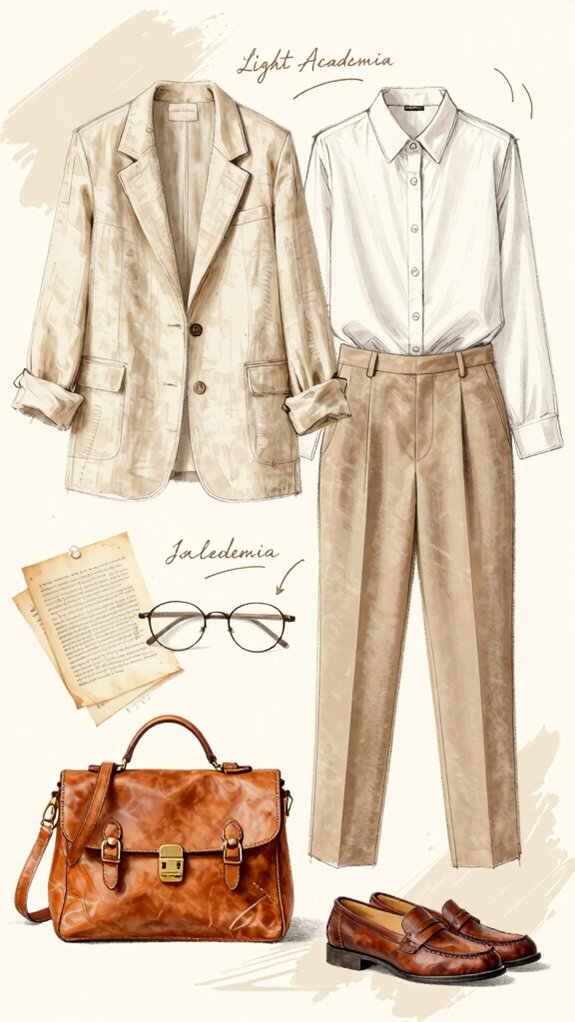
When Emma Chamberlain traded her coffee-stained hoodies for cream cardigans and started romanticizing library visits on TikTok, she wasn’t just switching aesthetics—she was tapping into Light Academia‘s core appeal. Individuals have likely observed this softer, sunlit cousin of Dark Academia taking over your feed, all natural lighting and linen shirts, vintage typewriters positioned just so. It’s aspirational intellectualism without the Gothic doom, productivity porn meets European summer fantasy. But here’s what most people miss about why it actually works, and why critics can’t stand it:
Distinction from Dark Academia

While Dark Academia romanticizes Gothic architecture, dead poets, and the kind of obsessive studying that takes place at 2 AM with nothing but candlelight and existential dread, Light Academia offers something decidedly less brooding—think open windows, morning coffee, and the radical notion that learning doesn’t require you to dress like you’re perpetually attending a funeral in Victorian England.
You’ll notice the aesthetic leans academic versus bohemian, favoring structured environments over artistic chaos, while simultaneously choosing minimalistic versus maximalistic approaches to decoration (fewer skulls, more succulents). If Dark Academia’s rich dark colors and vintage-inspired layered scholarly looks feel too heavy, Light Academia swaps in creams, whites, and soft neutrals that still honor the intellectual tradition.
Where Dark Academia whispers about forbidden knowledge in shadowy libraries, Light Academia practically shouts about accessible education in sun-drenched study spaces. It’s the difference between romanticizing your own intellectual suffering and actually enjoying the process of learning—revolutionary, honestly.
Core Visual Elements
You’ll recognize Light Academia immediately by its sun-drenched palette of creams, beiges, and warm whites that practically beg to be photographed during golden hour—think linen tablecloths at a Parisian café rather than the dark wood paneling of a Victorian library.
The aesthetic prizes natural light above all else, flooding spaces through gauzy curtains and tall windows until everything looks like it’s been hit with the perfect Instagram filter (which, let’s be honest, it probably has).
Texture matters here too, but you’re looking at soft cottons, worn leather journals, and delicate lace rather than anything remotely heavy or oppressive.
When it comes to wardrobe, wide-leg linen trousers in neutral tones have become a cornerstone of the Light Academia look, offering that perfect balance of comfort and timeless elegance.
Cream and beige tones
The palette of light academia lives and dies by its dedication to cream and beige tones, those soft, muted neutrals that somehow manage to look both expensive and lived-in at the same time. You’re looking at ecru, champagne, sand, wheat—basically every shade that paint companies invent fancy names for when “off-white” won’t command a premium price.
This cohesive color palette creates what design blogs love calling cozy minimalism, though there’s nothing particularly minimal about owning seventeen beige cardigans. These tones photograph beautifully in natural light, which explains their Instagram dominance, and they reference the aged paper of vintage books, the worn leather of library chairs, the faded photographs in family albums.
It’s nostalgia, commodified and color-matched.
Natural light emphasis
Natural light doesn’t just illuminate light academia spaces—it practically *is* the aesthetic, the difference between a curated intellectual fantasy and someone’s depressing beige room. You need those sunshine filled spaces flooding through tall windows, preferably mullioned, casting geometric shadows across your worn hardwood floors.
Think Cambridge library reading rooms, not fluorescent-lit dorm cells. The airy environments you’re creating depend entirely on maximizing natural illumination—position your desk perpendicular to windows, hang sheer curtains (never blackout), and remove anything blocking light flow.
Morning sun hitting cream walls creates that coveted golden-hour-all-day effect, while afternoon rays make dust motes look like atmospheric intellectualism instead of neglected housekeeping. Without proper natural lighting, you’re just cosplaying poverty with vintage books.
Softer textures
Why does everyone obsess over the visual elements of light academia while completely ignoring what makes those Pinterest boards actually *feel* inviting? It’s the textures, obviously. You need cozy fabrics that beg to be touched—linen curtains that billow softly, wool blankets draped over library chairs, cotton tea towels hanging in sunlit kitchens.
The aesthetic lives in textural contrasts: smooth leather book spines against rough burlap tote bags, delicate lace doilies on weathered wood tables, silk ribbons marking pages in cloth-bound journals. Without these tactile elements, you’re just photographing empty rooms with good lighting.
The softness matters because light academia romanticizes comfort alongside intellectualism, suggesting that serious thinking doesn’t require ascetic minimalism but rather invites you to curl up, stay awhile, actually enjoy the learning process.
Key Clothing Items
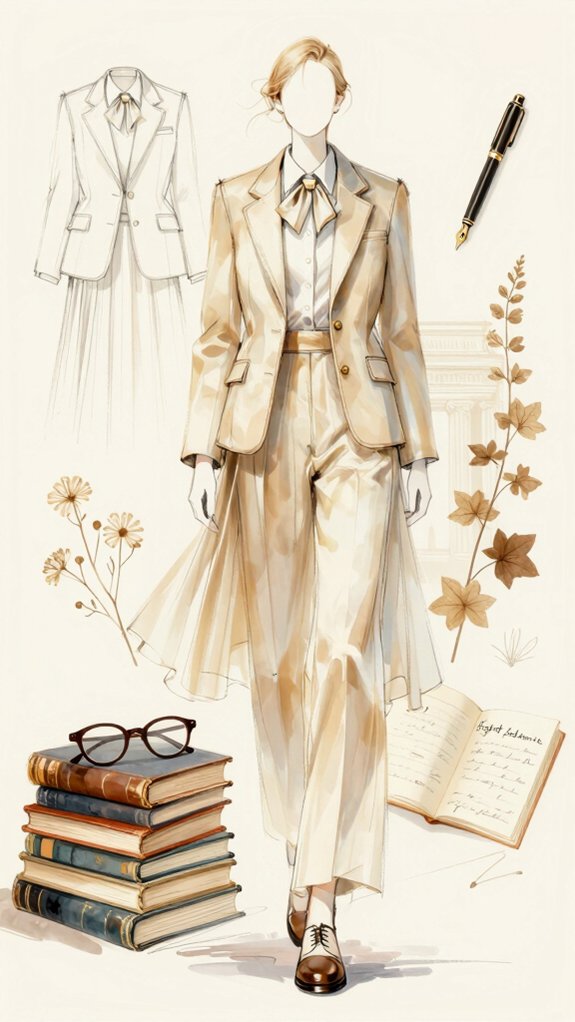
Building a light academia wardrobe doesn’t require raiding your trust fund or hunting through dozens of vintage shops, though both activities have their charm. Start with cream-colored button-downs, high-waisted trousers in beige or light gray, and those pleated skirts that somehow make your study spaces feel more intentional.
You’ll want cardigans, naturally—oversized ones that drape over your learning materials without looking sloppy. Add oxford shoes, loafers, or Mary Janes in tan leather. Linen blazers work beautifully here, especially in champagne or ivory. For a romantic twist, consider pairing your structured pieces with a sheer white lace maxi skirt to create that modern contrast between delicate femininity and scholarly refinement.
Don’t overlook the accessories: leather satchels, silk scarves, delicate gold jewelry. The trick isn’t buying everything at once but curating pieces that actually complement each other, creating that effortlessly intellectual vibe without screaming “I bought this entire aesthetic on Pinterest.”
Accessorizing the Look
Accessories transform light academia from “borrowed my sibling’s closet” into something with actual personality—the difference between wearing beige and inhabiting an aesthetic. You’ll need vintage inspired pieces that don’t scream “costume”: wire-rimmed glasses (prescription optional, judgment inevitable), leather satchels worn soft at the edges, fountain pens you’ll actually use.
Statement accessories matter here—think cameo brooches, pearl earrings, silk scarves tied at the throat like you’re perpetually running late to the library. A silk bandana styled as a neck scarf adds an elevated, luxurious feel that transitions seamlessly from afternoon lectures to evening poetry readings. Gold watches with Roman numerals work better than smartwatches (the irony of aesthetic authenticity requiring technological sacrifice isn’t lost on anyone). Stack delicate rings, carry cloth tote bags printed with museum logos, wear lockets containing nothing because sentimentality takes effort. The goal: looking intellectually disheveled, not accidentally homeless.
Lifestyle Integration
Lifestyle Integration
Living light academia means curating experiences like you’re the protagonist in a coming-of-age film set at Cambridge, except you’re probably in a studio apartment in Austin. You’ll haunt coffee shops with decent lighting, attend museum exhibitions on weekdays when crowds thin out, and yes, actually read those books stacked beside your bed. This isn’t performance—it’s personal expression through intentional choices that align with your intellectual curiosities.
The lifestyle embraces cozy minimalism: quality over quantity, substance over spectacle. You’re buying used textbooks for pleasure reading, visiting botanical gardens for sketching practice, listening to lo-fi while researching topics nobody asked you to research. It’s romanticizing education without the crushing debt (hopefully). Your wardrobe follows the same philosophy, built on a cohesive neutral color palette of whites, creams, beiges, and soft grays that complement your scholarly pursuits.
Think morning journaling sessions, afternoon library visits, evening language practice via Duolingo. You’re building rituals that make learning feel less like obligation, more like devotion.
Frequently Asked Questions
What Is the Origin and History of Light Academia Aesthetic?
You’ll trace light academia back to 2020’s pandemic era, when dark academia‘s moody libraries needed lightening up. The emergence of minimalist style merged with scholarly aesthetics, swapping Gothic gloom for cream-colored cardigans and sunlit study spaces.
The rise of pastel color palettes—think champagne, beige, ivory—reflected Gen Z’s craving for optimism during lockdown scrolling. Tumblr and Pinterest users, exhausted by darkness, romanticized brighter university life, creating this softer, more accessible academic fantasy that still honors intellectual pursuit.
How Do I Start Building a Light Academia Wardrobe on a Budget?
You don’t need family money to look intellectually refined. Start with budget friendly outfit ideas: cream sweaters, beige trousers, Oxford shirts from clearance racks.
Master secondhand shopping tips by hitting Goodwill’s vintage section for tweed blazers, visiting Poshmark for discounted loafers, scouring Depop for pleated skirts. Mix thrifted pieces with H&M basics, pair your grandmother’s cardigan with modern jeans.
The aesthetic thrives on worn-in charm anyway, so pre-loved clothing actually enhances your scholarly, slightly rumpled appeal.
Which Books Are Essential for Light Academia Enthusiasts?
You’ll want classic literature selections like Austen’s *Pride and Prejudice*, Wilde’s *The Picture of Dorian Gray*, and Plath’s poetry—they’re foundational, honestly.
Don’t sleep on education focused non fiction either: *The Secret History* straddles both worlds beautifully.
Add Fitzgerald, the Brontës, and Mary Oliver’s essays to your stack.
It’s less about completing some arbitrary checklist and more about what genuinely sparks your intellectual curiosity, makes you think deeper.
Can Light Academia Work in Warm Climates or Tropical Regions?
You’ll thrive in warm climates, you’ll adapt with ease, you’ll discover light academia isn’t climate-locked. Incorporating natural elements—think rattan chairs, potted palms, open windows—transforms your space authentically.
Adapting color palettes means swapping heavy tweeds for linen whites, creams, soft khakis that breathe. Your aesthetic lives in morning coffee on breezy verandas, handwritten notes beneath ceiling fans, botanical sketches of local flora.
Light academia’s intellectual heart beats everywhere, regardless of temperature.
What Study Spaces Best Embody the Light Academia Aesthetic?
You’ll find the aesthetic thrives in sunlit library alcoves with wooden tables, vintage reading lamps casting warm glows over worn pages.
Think cozy study nooks tucked beneath arched windows, where morning light streams across linen cushions and stacked notebooks.
Your minimalist workspace design should embrace clean lines—a simple desk, brass accents, potted herbs—nothing cluttered or chaotic.
University courtyards with stone benches work too, where you’re surrounded by ivy-covered walls, distant chapel bells, intellectual possibility hanging thick in the air.
Conclusion
You’ve built your Light Academia world—now live in it. This aesthetic isn’t a costume you wear between TikTok scrolls; it’s a compass guiding you toward intentional learning, thoughtful consumption, and spaces that actually inspire you. Will you cultivate genuine curiosity, or just curate another Pinterest board? The choice matters. Light Academia works when it’s lived, not just liked. Transform your environment into a sanctuary where intellectual growth thrives naturally, authentically, and consistently.
Have any thoughts?
Share your reaction or leave a quick response — we’d love to hear what you think!
-
 0
0 -
 0
0 -
 0
0 -
 0
0 -
 0
0 -
 0
0