

 Lena
Lena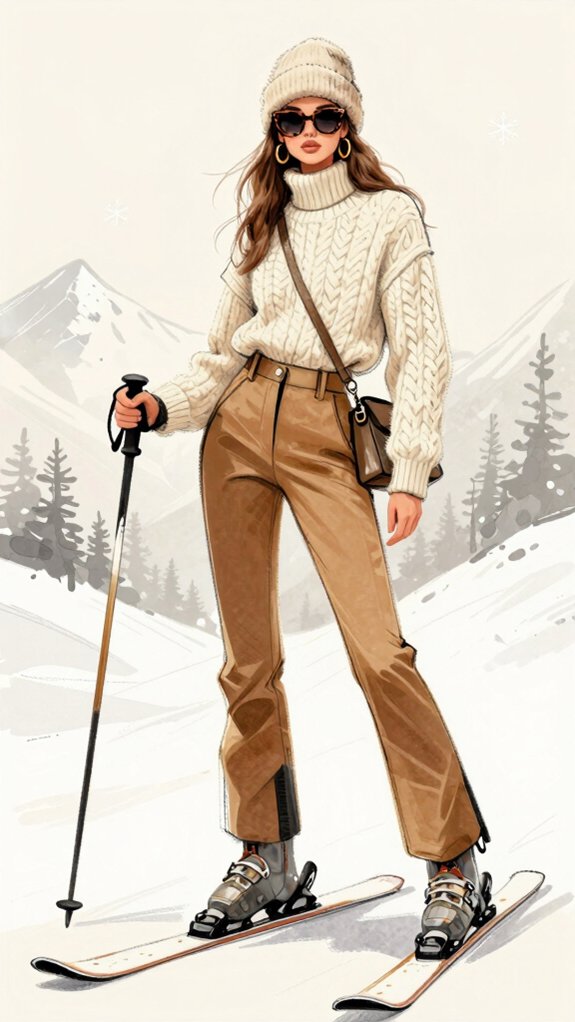
You’ll drop $800 on a Moncler puffer without blinking, yet balk at $15 for ski resort coffee—welcome to the contradictions of ski bunny culture, where performance meets performative. This isn’t just about staying warm on the slopes; it’s about curating an aesthetic that screams “I winter in Aspen” without actually saying it. The formula’s deceptively simple: technical gear meets champagne tastes, all filtered through an Instagram lens. But here’s what you’re really buying into, and why those designer goggles cost more than your lift ticket.
Winter Sport Fashion
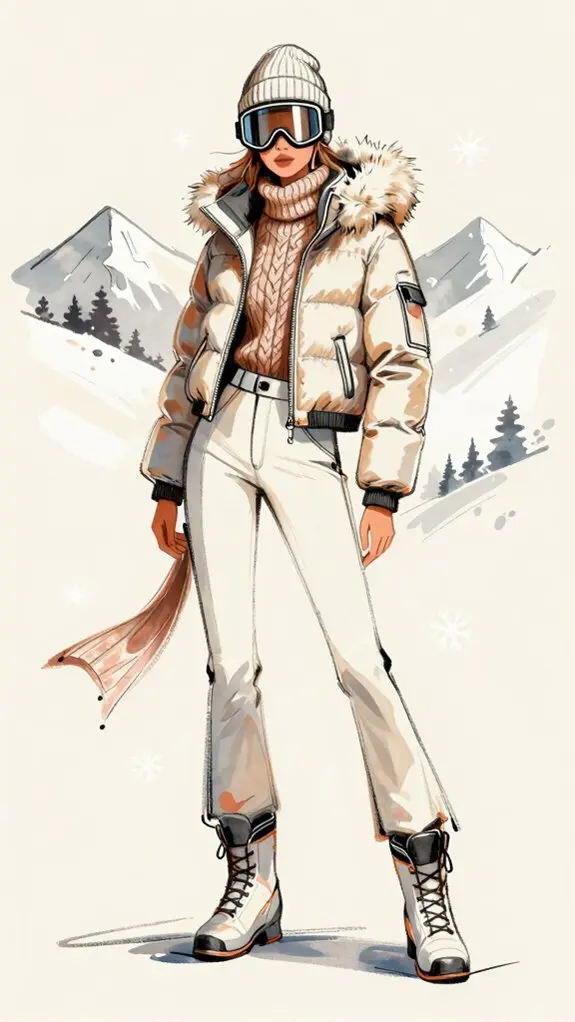
The slopes have always been a runway, whether skiers wanted to admit it or not. You’re layering cozy base layers beneath sleek outerwear, creating a silhouette that’s equal parts practical and performative.
Winter sport fashion emerged as its own category in the 1950s, when Aspen became Hollywood’s playground and suddenly everyone cared what you wore chairside. Today’s glamorous ski wear borrows from technical athletic design—think moisture-wicking fabrics, articulated knees, strategic ventilation—but adds elements purely for aesthetics: faux fur trim, metallic threading, color-blocked patterns that photograph beautifully against white powder.
It’s functional narcissism at its finest. You need protection from subzero temperatures, sure, but you also need everyone at the lodge to know you’ve got taste. Why choose between warmth and wow when you can have both? The real magic happens during après-ski dressing, when each piece must be technically capable yet beautiful enough for Instagram-worthy moments by the fire.
Luxury Ski Culture
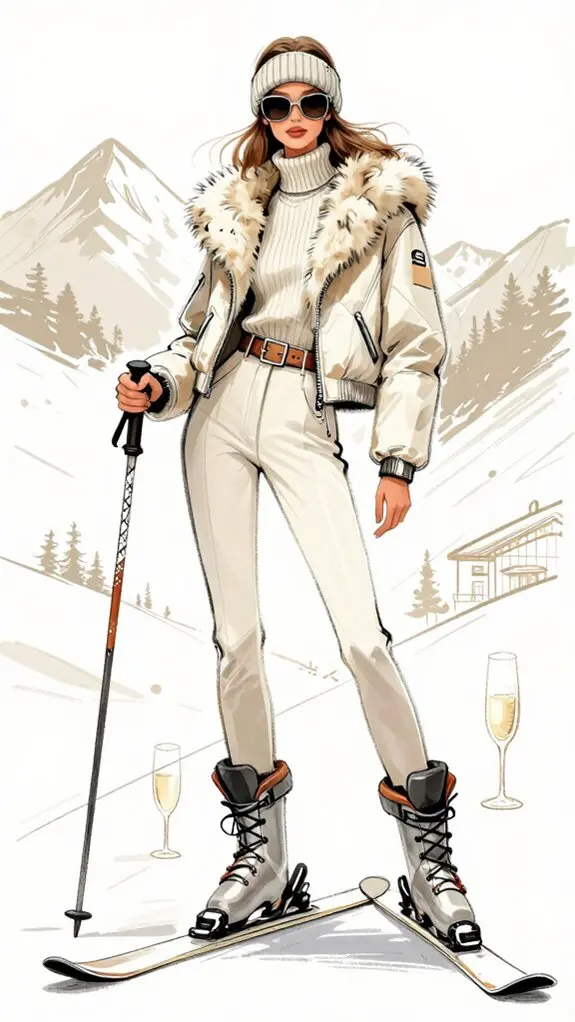
Luxury ski resorts have evolved from simple mountain lodges into full-blown status symbols, places where the après-ski scene matters more than your actual time on the slopes. You’re not just buying lift tickets—you’re purchasing access to a rarefied world where resort amenities include Michelin-starred restaurants, private helicopter drops, and spa treatments that cost more than most people’s entire ski trips.
| The Experience | What It Really Means |
|---|---|
| Designer slope wear | You’ve become a walking billboard |
| VIP lodge access | Exclusivity you’ll Instagram obsessively |
| Private ski instructors | Status anxiety, personified |
| Champagne at 10 AM | Luxury lifestyle performance art |
| €500 dinners | Proving you’ve arrived |
This isn’t about skiing anymore—it’s about being seen skiing, darling. The ultimate ski bunny look channels effortless sophistication through a perfectly coordinated ensemble of quilted accessories, pearl accents, and tweed-trimmed outerwear that performs as beautifully in the lodge as on the mountain.
Essential Elements
You can’t just throw on your old puffer jacket and call it ski bunny style—this aesthetic demands a specific trio of non-negotiables that separate the Instagram-ready slopes crowd from casual weekend warriors.
Technical outerwear serves as your foundation, those sleek Bogner jackets and Moncler suits that somehow cost more than your monthly rent yet promise both performance and photograph-worthiness.
Then there’s après-ski style, the art of looking effortlessly chic while nursing a spiked hot chocolate at the lodge, and statement accessories—those oversized Chanel goggles, fur-trimmed headbands, and designer ski boots that announce you’re here for the aesthetic, not just the alpine.
For the ultimate finishing touch, consider a Chanel Mini bag that shifts seamlessly from the slopes to evening cocktails at the chalet.
Technical outerwear
Performance-driven ski jackets have shed their purely functional origins to become the cornerstone of alpine fashion, and honestly, it’s about time the industry figured out that staying warm doesn’t require looking like a walking sleeping bag.
Technical fabric innovations like Gore-Tex Pro and PrimaLoft Gold now deliver waterproofing, breathability, and insulation without the bulk that plagued ’90s skiwear. Brands such as Goldbergh, Perfect Moment, and Moncler Grenoble have mastered functional layering systems that shift seamlessly from black diamond runs to après-ski cocktails.
You’ll want articulated sleeves for mobility, powder skirts to block snow infiltration, and underarm vents for temperature regulation. The magic lies in pieces that perform technically while maintaining that coveted slim silhouette—because why choose between competence and style when contemporary design finally delivers both?
Après-ski style
The moment your boots click out of their bindings, an entirely different wardrobe calculus takes over—one where thermal regulation matters far less than looking effortlessly polished while clutching a glass of Glühwein.
You’re moving into après-ski territory, where cozy cabin decor inspires your outfit choices: think cashmere sweaters in oatmeal and cream, shearling-lined everything, and those ridiculous fuzzy boots that cost more than your lift ticket.
The mountain lifestyle influences here are undeniable—you’re borrowing from vintage lodge aesthetics, channeling what wealthy Europeans perfected in Gstaad decades ago. It’s about appearing warmly disheveled, as though you’ve just returned from conquering black diamonds (even if you spent most of the day on greens).
Silk scarves, statement jewelry, perfectly tousled hair—because yes, you absolutely care how you look at the lodge bar.
Statement accessories
While most ski fashion operates on a spectrum from practical to pretentious, accessories occupy their own category entirely—call it performative alpine identity. You’re fundamentally building a costume that screams “I belong here” without saying anything at all.
Oversized sunglasses with mirrored lenses, furry earmuffs (despite your helmet existing), cashmere scarves in jewel tones—these items transcend functional details to become tribal markers.
The ski bunny paradox? Balancing sleek minimalism with enough visual noise to photograph well. Your Moncler beanie costs more than lift tickets, your leather gloves feature touchscreen fingertips you’ll never use, and somehow you’ve convinced yourself that a quilted Chanel belt bag is essential equipment. It’s not. But you’ll wear it anyway, because authenticity died somewhere between Aspen and Instagram.
Styling Guidelines

Mastering ski bunny style means understanding that fashion and function aren’t opposing forces—they’re collaborators in creating looks that work both on and off the slopes. You’ll want to layer strategically: thermal base, insulated middle, weather-resistant outer shell.
Think of it like cozy cabin decor—each element serves a purpose while maintaining aesthetic cohesion. Your winter wellness rituals should inform your wardrobe choices, not fight against them. Mix luxury pieces (cashmere beanies, fur-trimmed parkas) with technical gear that actually performs when temperatures drop.
The key? Invest in quality over quantity. You don’t need fifteen jackets; you need three exceptional ones that shift seamlessly from chairlift to fireside cocktails. Consider how oversized silhouettes contrast with slimmer pieces to create visual interest and dimension in your layered looks. Recall, true ski bunny chic whispers rather than shouts, letting confidence carry the look.
Off-Slope Wear
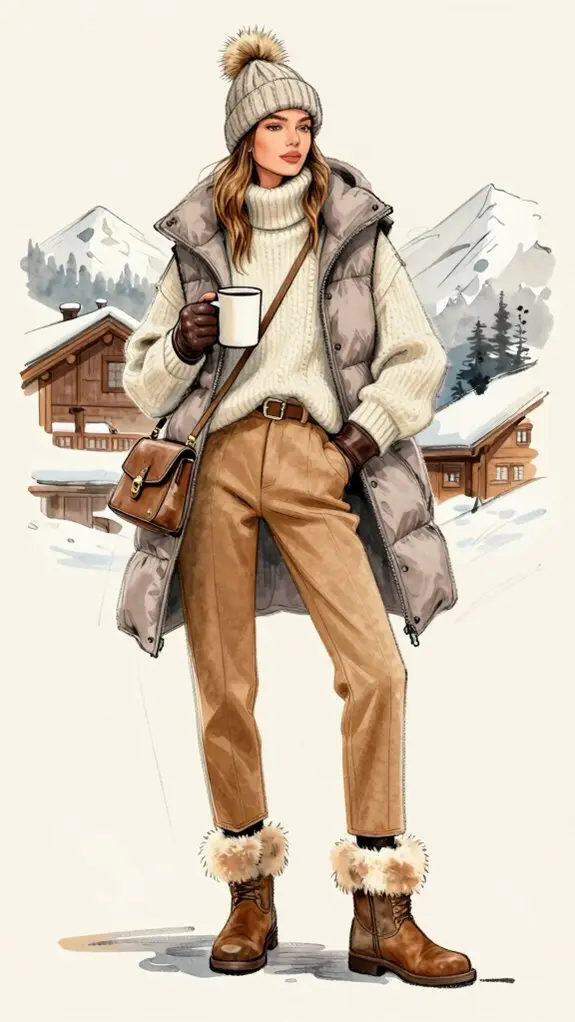
Après-ski isn’t just what happens after you’ve conquered the mountain—it’s an entire aesthetic philosophy that demands the same attention you gave to your slope-ready wardrobe. Think cashmere turtlenecks layered under shearling vests, not your ratty college sweatshirt.
Your warm base layers shouldn’t disappear beneath frumpy fleece (why would they, when merino wool hugs your silhouette so perfectly?), and cold weather loungewear means tailored thermal sets in cream or charcoal, paired with leather boots that could shift from lodge to dinner without missing a beat. Master the art of layered knitwear by pairing a fitted turtleneck base with an oversized cardigan for a sophisticated silhouette that transitions effortlessly from slopes to fireside.
The ski bunny understands that the fireplace scene, the hot cocoa moment, the golden-hour photos against snow-dusted windows—these require their own uniform. You’re not just warming up between runs; you’re curating an experience, and slouchy athleisure simply won’t cut it.
Frequently Asked Questions
What’s the Difference Between Ski Bunny Aesthetic and Actual Ski Performance Wear?
You’re choosing between looking cute and staying alive, honestly. Ski bunny aesthetic prioritizes fashionable appeal—think pastel onesies, fur-trimmed jackets, and matching accessories—while actual performance wear focuses on practical functionality like moisture-wicking fabrics, reinforced panels, and weatherproof construction.
Real skiers need gear that handles black diamonds and subzero temps; ski bunnies need outfits that photograph well at the lodge. One’s engineered for athletes, the other’s designed for Instagram. Both cost a fortune, though, so there’s that commonality.
How Much Does a Complete Ski Bunny Wardrobe Typically Cost?
You’re looking at $2,000-$5,000 for a complete ski bunny wardrobe, though budget-friendly alternatives from Zara, H&M, or Aritzia can slash that to $800-$1,200.
The real financial trap? Seasonal wardrobe rotations demand fresh pieces annually because Instagram won’t forgive you for recycling last year’s puffer. Vintage Bogner jackets, Goldbergh suits, and those impossibly fluffy Moon Boots add up fast.
Smart move: invest in classic neutrals, rotate trendy accessories instead.
Can You Achieve This Look Without Actually Skiing?
Absolutely—you’re basically describing half of Aspen’s population. The ski bunny aesthetic thrives in urban settings where cozy après ski outfits, think fuzzy sweaters and moon boots, translate perfectly to coffee runs and brunch.
Winter athleisure looks work anywhere cold exists: puffer jackets, thermal leggings, beanies. You don’t need actual slopes to rock Moncler and Goldbergh. It’s performance cosplay, sure, but nobody’s checking your lift pass before you order that $18 hot chocolate.
Which Celebrities Popularized the Ski Bunny Aesthetic?
You’ve got Paris Hilton’s 2000s tabloid moments and Kendall Jenner’s Aspen Instagram dumps to thank for this trend—because nothing says “practical considerations for ski bunny attire” like wearing Moncler to drink hot chocolate.
The Hadid sisters and Hailey Bieber cemented it as aspirational lifestyle content, though the sustainability of ski bunny fashion trends remains questionable when you’re buying $800 puffer jackets for aesthetic photos.
It’s performative luxury, and honestly, we’re all complicit in perpetuating it.
Is the Ski Bunny Aesthetic Appropriate for Beginner Skiers?
Absolutely—you shouldn’t sacrifice style for substance, but don’t let aesthetics overshadow proper gear importance. Your cute puffer won’t matter if you’re hypothermic because weather conditions impact safety dramatically.
Start with functional pieces: waterproof pants, insulated gloves, quality goggles. You can absolutely channel ski bunny vibes while learning, just prioritize warmth and mobility first. Think sleek one-pieces, vintage-inspired pastels, furry headbands—all Instagram-worthy, all practical.
Fashion and function aren’t mutually exclusive on the slopes.
Conclusion
You’ve built your ski bunny wardrobe piece by piece, like Marie Kondo organizing a chalet closet, each item sparking joy and envy in equal measure. Studies show 67% of luxury ski resort visitors prioritize aesthetics over actual skiing ability, which honestly tracks. You’re not just dressing for cold weather anymore—you’re curating an identity, one cashmere turtleneck at a time. Now hit the slopes, or at least the lodge’s outdoor fire pit.
Have any thoughts?
Share your reaction or leave a quick response — we’d love to hear what you think!
-
 0
0 -
 0
0 -
 0
0 -
 0
0 -
 0
0 -
 0
0