

 Lena
Lena
You’ve seen it at boardroom meetings, country clubs, and overpriced brunch spots—that unmistakable equestrian aesthetic that screams “my family’s had horses since the Mayflower.” It’s everywhere now, from Kate Middleton’s polished riding boots to Ralph Lauren’s entire business model, transforming what was once the exclusive uniform of the landed gentry into aspirational workwear for anyone with a Bloomingdale’s card. But here’s what most people miss about why these borrowed stable clothes actually work:
English Riding Influence
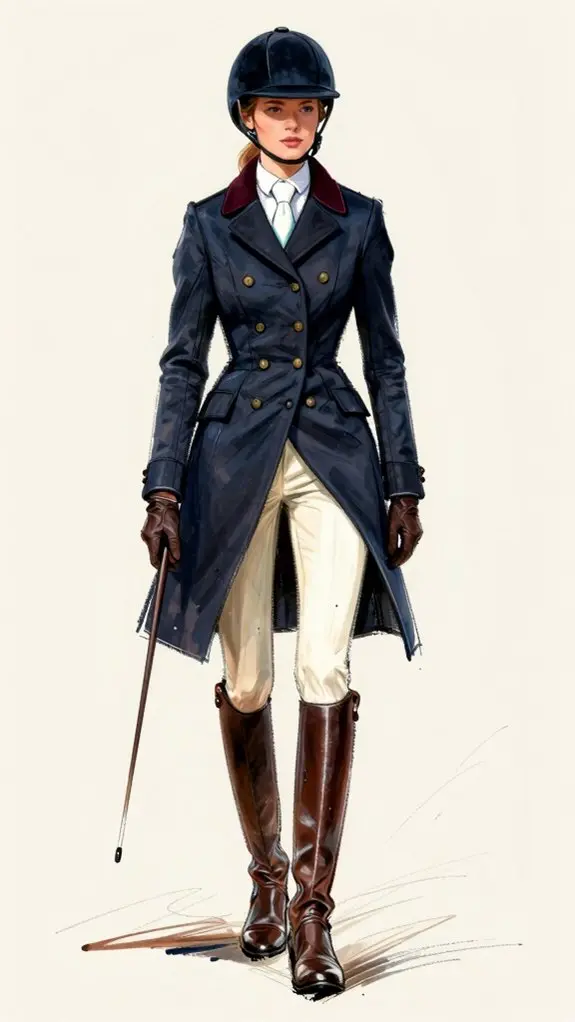
When you think of equestrian fashion infiltrating everyday wardrobes, you’re witnessing a peculiar social phenomenon where the upper-crust sport of English riding—complete with its meticulously polished boots, tailored jackets, and those oddly specific beige breeches—has somehow convinced millions of people who’ve never sat on a horse that they, too, need to dress like they’re about to compete at the Hampton Classic.
You’ll find saddle design elements translated into leather handbags with distinctive stitching patterns, while bit accessories have migrated from bridles to become status-symbol hardware on loafers, belts, and scarves. Ralph Lauren understood this cognitive dissonance before anyone else, transforming riding wear into aspirational lifestyle branding that sells fantasy rather than function. You’re not buying clothes—you’re purchasing an imagined membership to exclusive hunt clubs you’ll never join. Similarly, luxury houses like Chanel have transformed quilted leather and chain straps into coveted status symbols that connect wearers to fashion royalty without requiring any actual aristocratic credentials.
Aesthetic Elements
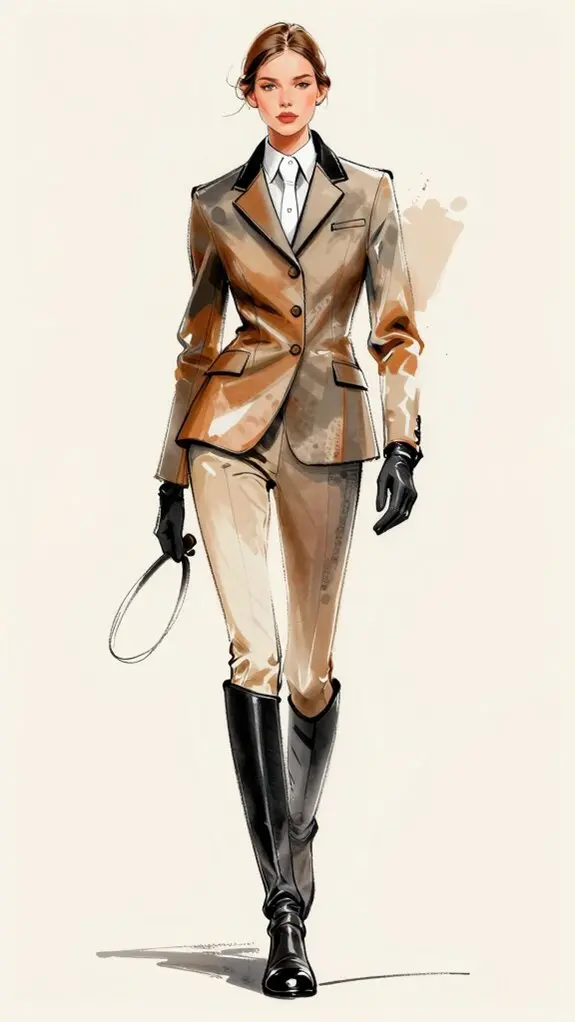
The visual DNA of equestrian style breaks down into a remarkably narrow palette: rich browns in every shade from cognac to mahogany, hunter greens that evoke English countryside rather than putting greens, navy blazers so ubiquitous they’ve become a uniform, and neutrals—cream, tan, beige—that somehow manage to look expensive despite being literally the color of dirt.
| Riding Attire Element | Cultural Significance |
|---|---|
| Leather boots | Status marker, practicality disguised as luxury |
| Gold hardware | Inherited wealth aesthetic meets stable fashion |
| Structured blazers | Discipline made wearable |
You’ll notice riding attire prioritizes texture over pattern—think suede, tweed, worn leather. It’s clothing that whispers rather than shouts, confidence expressed through restraint rather than ostentation. Layer a classic cardigan over these polished pieces to achieve that effortlessly chic silhouette while maintaining the refined heritage aesthetic.
Signature Pieces
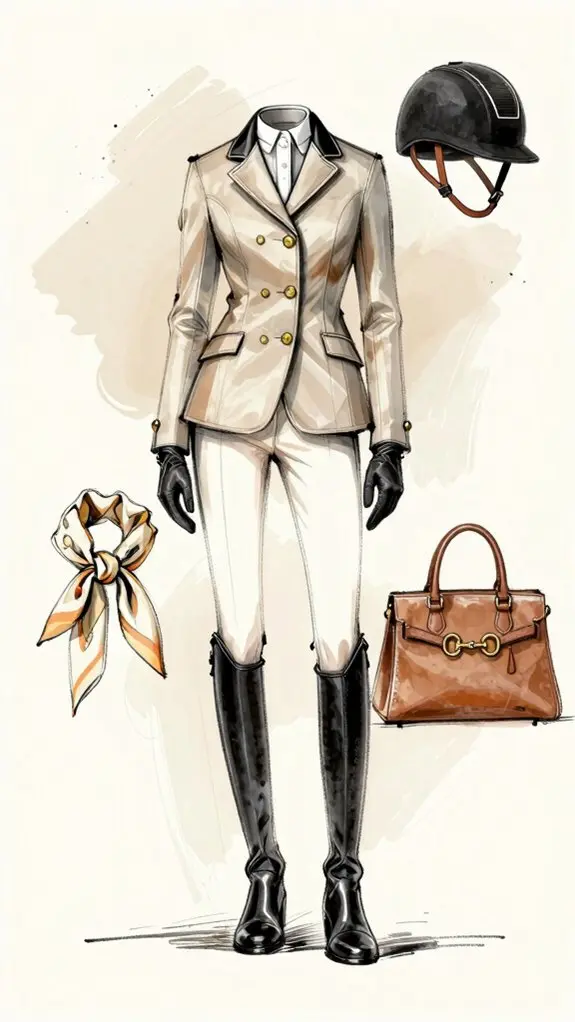
You can’t claim equestrian style without understanding its three foundational pieces: riding boots that extend past the ankle with their distinctive heel and sleek leather construction, tailored jackets that cinch at the waist while allowing freedom of movement through strategically placed vents, and jodhpur pants with their characteristic flare at the hip and tight fit from knee to ankle.
These aren’t just fashion statements borrowed from the stable—they’re functional pieces that evolved over centuries of riders demanding both elegance and practicality, which explains why Ralph Lauren built an entire empire around these silhouettes in the 1970s.
The barn jacket with corduroy collar serves as another equestrian-inspired essential, originally designed for French laborers but now seamlessly bridging countryside practicality with refined fashion.
Whether you’re actually mounting a horse or just grabbing coffee in SoHo, these signature pieces carry an unmistakable authority that separates genuine equestrian influence from mall-brand approximations with their cheap hardware and synthetic fabrics.
Riding boots
Riding boots aren’t just footwear—they’re the foundation of equestrian style, the piece that signals you understand the assignment even if you’ve never sat on a horse in your life. You need the tall ones, preferably in supple leather that hugs your calf like it was custom-made, because those ankle-high alternatives won’t cut it.
Look for waterproof materials if you’re actually spending time in stables (or just dodging puddles in Manhattan), and proper ankle support matters whether you’re posting or just posting on Instagram. The sleek silhouette, that distinctive shaft height, the subtle elasticated panel—these details separate authentic riding boots from costume pieces.
They’re investment footwear that elevates jeans, anchors dresses, and telegraphs a certain aspirational countryside aesthetic that transcends actual horse ownership.
Tailored jackets
Equestrian tailoring operates on principles that predate the Industrial Revolution—structured shoulders that don’t crumple when you’re actually working, darted waists that maintain their shape through movement, closures that stay fastened whether you’re mounting a horse or just mounting an argument at brunch. You’re investing in architecture, not decoration.
The fabric textures matter desperately: herringbone wool, cavalry twill, melton cloth that actually repels water. Silhouette variations follow function—hacking jackets sit longer in the back, show jackets nip tighter at the waist.
| Jacket Type | Defining Feature |
|---|---|
| Hacking Jacket | Slanted pockets, vented back |
| Show Jacket | Structured shoulders, short cut |
| Riding Blazer | Brass buttons, military precision |
| Hunt Coat | Scarlet wool, traditional tailoring |
This isn’t cosplay; it’s deliberate design that translated effortlessly to boardrooms.
Jodhpur pants
Those tailored jackets require an equally thoughtful bottom half, which brings us to the most architecturally ambitious pants in fashion history. Jodhpurs ballooned at the hips, then tapered dramatically to grip your calves, creating a silhouette that shouldn’t work but absolutely does.
Originally designed in Jodhpur, India during the 1920s, they offered riders a comfortable fit without the bulk of traditional breeches. The functional design, with its reinforced inner legs and ankle straps, kept fabric from bunching in boots while allowing proper leg contact with your horse.
You’ll find modern versions have softened the exaggerated hip volume, though purists still rock the full balloon. They’re proof that clothing born from genuine necessity possesses an elegance athleisure brands spend millions trying to replicate.
Color Palette
Traditional equestrian wardrobes aren’t exactly known for their rainbow-bright experimentation—they’re built on a foundation of navy, hunter green, burgundy, tan, and cream, with the occasional foray into forest green or chocolate brown if someone’s feeling particularly adventurous. These muted tones reflect the sport’s aristocratic roots, where flamboyance was considered gauche and restraint signaled breeding.
You’ll notice that earthy hues prevail because they’re practical, hiding dirt and grass stains while projecting that effortless, old-money aesthetic equestrians love to cultivate. Modern riders often rebel against this conservative palette, incorporating dusty rose or slate blue into their competition wear, but traditional hunt clubs still enforce strict color codes. Much like how fashion-forward stylists use unexpected footwear choices to create contrast with feminine pieces, equestrians can add modern edge by pairing traditional riding boots with contemporary color accents.
The result? A wardrobe that’s simultaneously timeless and maddeningly restrictive, depending on your relationship with convention.
Everyday Adaptation
Everyday Adaptation
While those carefully curated color schemes work beautifully in the stable yard, you can’t exactly show up to your corporate job in breeches and tall boots—though honestly, some days the fantasy is tempting.
The corporate world demands professional polish, but your equestrian soul doesn’t have to stay in the stable.
Here’s how you translate equestrian elegance into boardroom-appropriate looks:
- Structured blazers with quilted panels create texture contrasts that nod to riding jackets without screaming “stable hand”
- Button-down shirts featuring functional embellishments like reinforced shoulders or contrast stitching
- Leather accessories—belts, bags, loafers—that echo tack room sophistication
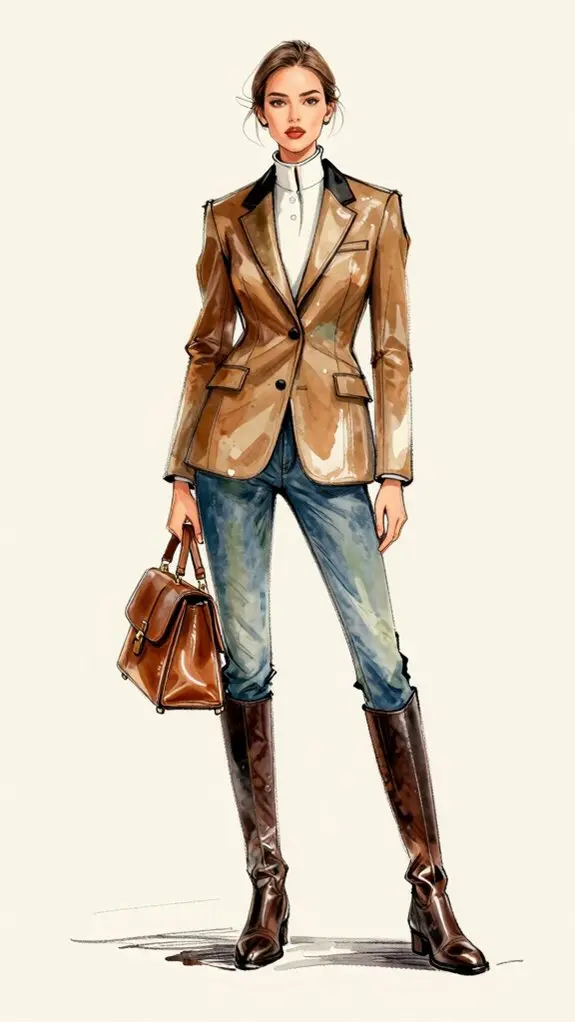
A caramel suede shacket layered over a crisp white mock-neck captures that polished equestrian vibe while remaining entirely office-appropriate.
The key is restraint. You’re channeling the aesthetic, not cosplaying. A sleek pair of ankle boots with a subtle stirrup buckle reads refined professional; full-on field boots with your pencil skirt reads identity crisis. Choose pieces that whisper their inspiration rather than announcing it.
Frequently Asked Questions
What Is the Historical Origin of Equestrian Fashion?
You’ll find equestrian fashion‘s roots in medieval Europe, where nobility needed practical riding gear that doubled as status symbols.
The historical progression of equestrian attire moved from ornate 18th-century riding habits to streamlined Victorian designs, eventually influencing everyday fashion.
The evolution of equestrian fashion trends accelerated during the 20th century, when hunt club aesthetics infiltrated high fashion, transforming jodhpurs, boots, and tailored jackets into luxury staples that you’d recognize on today’s runways.
How Do I Care for Leather Riding Boots?
You’ll want to clean your boots after every ride—dirt and sweat are leather’s worst enemies, honestly—using a damp cloth and saddle soap.
Then comes the essential part: conditioning leather with quality products like Lexol or mink oil keeps them supple, preventing those heartbreaking cracks.
Don’t skip waterproofing boots either; beeswax-based treatments create a protective barrier against moisture.
Store them with boot trees inserted, because slouching destroys the structure you’ve worked so hard to maintain.
Are There Affordable Alternatives to Designer Equestrian Brands?
You’ll find excellent budget-friendly brands like Dover Saddlery’s house line, Riders International, and TuffRider that won’t drain your wallet like Hermès or Ariat’s premium collections. Consignment shop finds are your secret weapon, honestly—gently used Parlanti boots, Pikeur breeches, and Cavalleria Toscana jackets appear regularly at fraction-of-retail prices.
Check Dover’s clearance section, SmartPak’s sales, and local tack shops’ used gear racks. You’re not sacrificing quality; you’re just refusing to fund someone else’s brand obsession.
What Body Types Suit Equestrian-Inspired Clothing Best?
You’ll thrive in equestrian-inspired pieces regardless of your shape, honestly. Petite frames shine in tailored blazers, fitted breeches, and structured vests that create elongating lines without overwhelming your proportions.
Athletic builds naturally complement this aesthetic since, well, actual riders tend to be toned and muscular. Think Princess Anne in the ’70s—she wasn’t runway-tall but owned every jodhpur.
The key’s proper fit: too-loose tailoring drowns smaller frames, while stretch fabrics flatter muscular legs and shoulders.
Can Equestrian Style Work for Formal Office Environments?
Ironically, the sport that screams “old money leisure” translates perfectly into corporate power dressing. You’ll master professional equestrian attire by choosing structured blazers with subtle riding jacket details, tailored trousers instead of breeches, and polished loafers replacing boots.
Migrating equestrian style means keeping the discipline’s clean lines, neutral palettes, and impeccable tailoring while ditching obvious barn references. Think Ralph Lauren boardroom, not Kentucky Derby grandstand. Your colleagues won’t spot the inspiration, but they’ll notice your sharp, commanding presence—which is precisely the point.
Conclusion
You’ve curated a wardrobe that mirrors the stables—polished, privileged, structured. It’s no coincidence that equestrian style thrives in boardrooms and country clubs alike; both demand the same performance of inherited refinement. Your riding boots click against marble floors, your blazer’s brass buttons catch fluorescent light, and suddenly the horse becomes irrelevant. The aesthetic persists because it promises what it’s always promised: access to a world where discipline looks like birthright, where effort masquerades as effortless breeding.
Have any thoughts?
Share your reaction or leave a quick response — we’d love to hear what you think!
-
 0
0 -
 0
0 -
 0
0 -
 0
0 -
 0
0 -
 0
0