

 Lena
Lena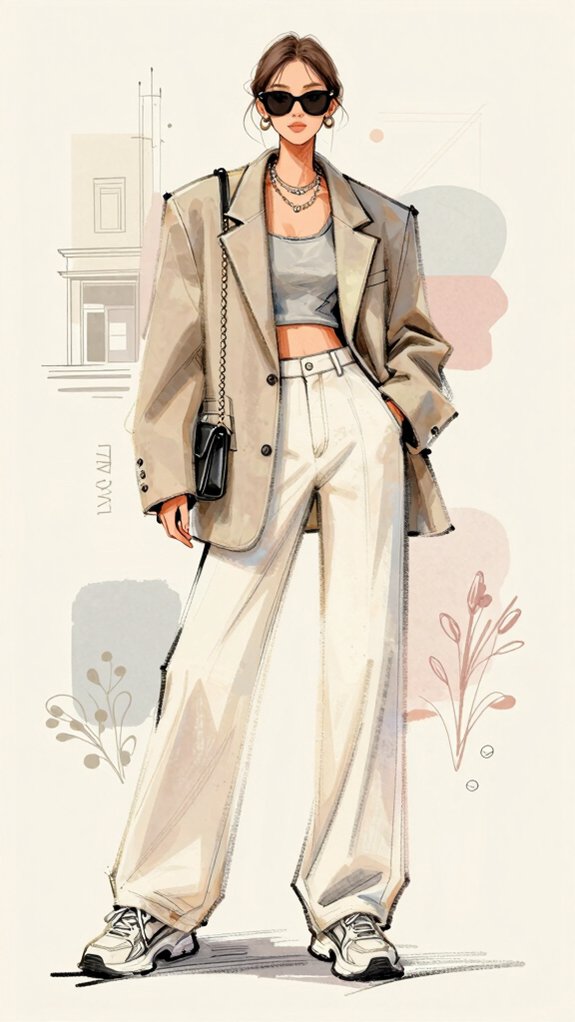
You’ve seen the Instagram posts, the TikTok hauls, the sudden proliferation of oversized blazers and tucked-in tees in your own closet—but Korean fashion isn’t just another aesthetic trend cycle. It’s a calculated cultural export that’s rewriting Western style codes, from Seoul’s Gangnam district to your local Zara, and understanding *why* it works requires looking beyond the surface-level minimalism everyone keeps talking about.
K-Pop and K-Drama Influence
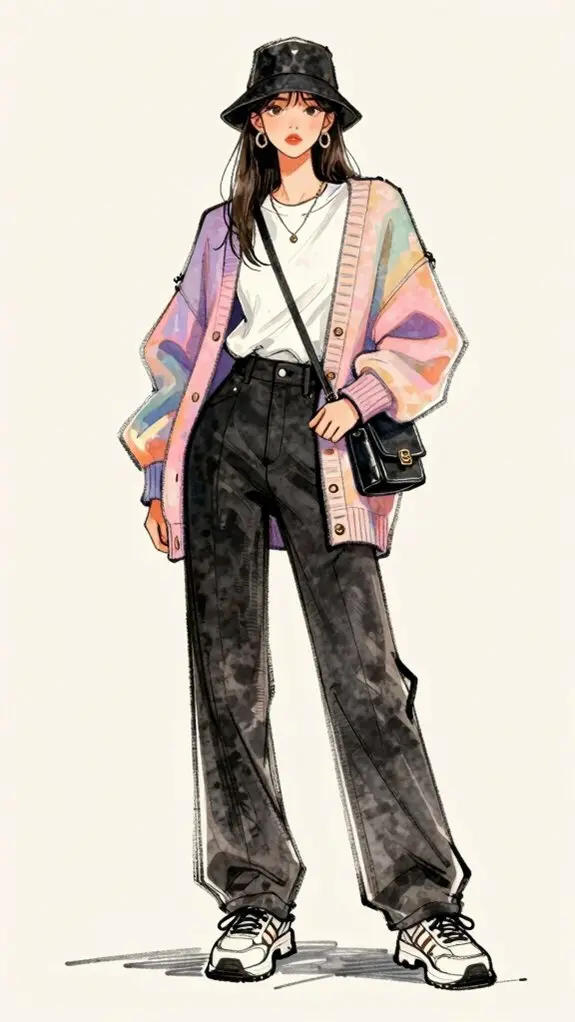
When BTS wore Gucci to the Grammys in 2019, something shifted in the global fashion consciousness—suddenly, millions of fans weren’t just listening to K-pop, they were dissecting every seam, buckle, and accessory choice their idols made. This wasn’t passive admiration; it became active mimicry, a form of cultural identity borrowed and adopted across continents.
Individuals have likely observed oversized blazers, bucket hats, and chains everywhere—that’s not coincidence, that’s celebrity influence amplified through TikTok algorithms and Instagram feeds. Korean dramas like Crash Landing on You and Squid Game reinforced these aesthetics, making everyday viewers crave those effortlessly layered looks.
The result? Fast fashion brands scrambling to replicate Seoul street style, proving that entertainment isn’t just content anymore—it’s a legitimate fashion pipeline. This mainstream explosion built upon the foundation of ulzzang style, which emerged from early 2000s Korean social media culture where users shared selfies paired with outfit photos that emphasized youthful innocence and approachable elegance.
Contemporary Trends
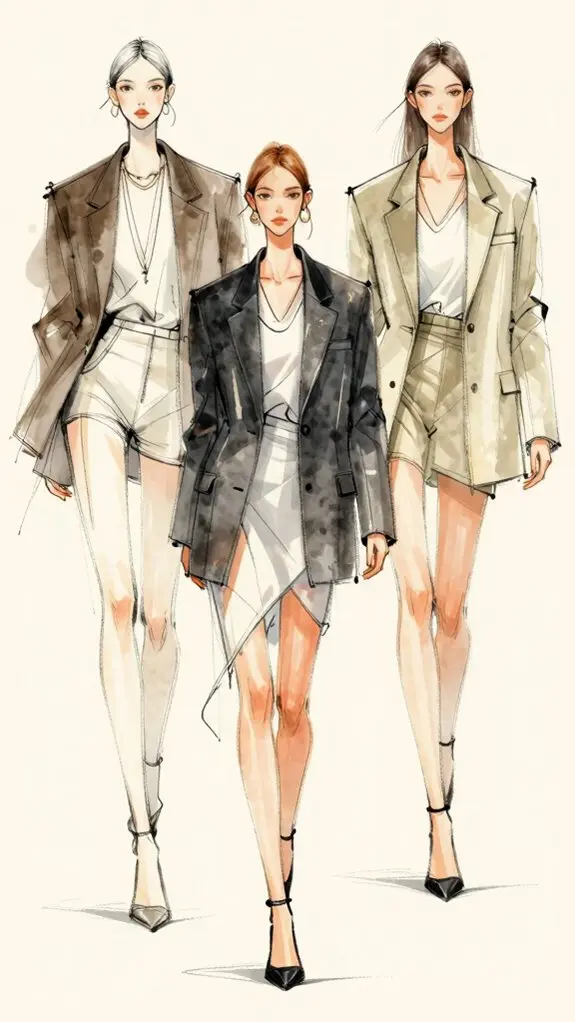
Right now, in 2026, Seoul’s streets showcase something fashion editors are calling “office siren meets Y2K nostalgia”—a contradictory blend that somehow *works* when Korean influencers pair low-rise cargo pants with structured blazers and those impossibly tiny shoulder bags that can’t fit more than a credit card and lip gloss.
You’ll notice the shift away from strict minimalist aesthetics toward maximalist layering, though Korean designers maintain their signature restraint through neutral palettes and clean silhouettes. The office siren aesthetic itself draws from Bayonetta’s sharp suits and rectangular glasses, blending professional power with edginess that resonates with women navigating modern workplace dynamics. The key? Everything remains functional yet fashionable—those oversized outerwear pieces have actual pockets, the chunky sneakers provide genuine arch support. It’s fashion that acknowledges you’ve got places to be, emails to answer, and a subway commute that won’t wait for your aesthetic vision.
Signature Elements
You’ll notice three elements that define Korean fashion’s global appeal: the artful chaos of oversized layering, where a structured blazer sits over a baggy sweater over a crisp white shirt (each piece intentionally visible), the strategic deployment of cute details like Peter Pan collars, cartoon character accessories, and ribbon ties that somehow work on adults without feeling juvenile, and the fearless street style mix that pairs luxury brand sneakers with vintage denim and tailored pieces.
These aren’t random choices—they’re calculated moves that Korean designers, influencers, and everyday fashion enthusiasts have refined since the mid-2010s Hallyu wave made Seoul a legitimate fashion capital. The genius lies in how these signature elements create outfits that photograph exceptionally well, a critical factor in an era where your OOTD needs to perform on Instagram, TikTok, and Xiaohongshu simultaneously. Underpinning these bold choices is a foundation of soft, muted tones—creamy whites, gentle pinks, and sage greens—that create visual harmony and keep even the most layered looks from feeling chaotic.
Oversized layering
As Korean fashion carved out its global identity in the late 2010s, oversized layering emerged as the aesthetic’s most recognizable signature—a deliberate rejection of the body-conscious silhouettes that governed Western runways and fast fashion chains.
You’ll notice how Korean designers stack proportions like architectural blueprints, pairing baggy trousers with voluminous coats, oversized knits draped over loose shirts. This isn’t careless dressing—it’s calculated spatial design that creates movement, mystery, and that coveted minimalist aesthetic without clinging to your frame.
The asymmetric silhouettes prevent monotony: one sleeve longer, hemlines staggered, necklines slipping off-shoulder. Brands like Ader Error and Andersson Bell built entire empires on this philosophy, proving you don’t need skin-tight clothes to make a statement. Sometimes hiding your shape says more than revealing it.
Cute details
While oversized silhouettes characterize Korean fashion’s structural language, it’s the deliberately precious details—bows, ribbons, cartoon embroidery, pastel piping, miniature fruit charms dangling from zippers—that soften the minimalist edge and inject personality into otherwise stark compositions. You’ll spot these playful embellishments everywhere, from Seoul’s Hongdae district to your Instagram feed, transforming basic pieces into conversation starters.
These whimsical accessories aren’t childish; they’re strategic disruptions of fashion’s self-serious pretensions:
- Heart-shaped buttons on blazers
- Cartoon character patches adorning denim jackets
- Pearl-studded barrettes securing messy buns
- Gingham ribbons tied around straw bags
- Tiny appliqué clouds floating across sweater sleeves
This cuteness operates as cultural armor, letting you embrace vulnerability without sacrificing sophistication—a distinctly Korean negotiation between kawaii influence and metropolitan polish.
Street style mix
Korean street style doesn’t follow rulebooks—it collides them, creating outfits that pair ₩2 million won designer hoodies with thrifted grandpa cardigans, chunky Skechers with tailored trousers, and somehow makes the chaos look intentional. You’ll spot this deliberate disorder in Hongdae, where art students layer oversized blazers over graphic tees, finishing with minimalist accessories—a simple silver chain, maybe wire-rimmed glasses—that anchor the madness.
The magic isn’t random though. It’s calculated rebellion against fashion’s supposed coherence, mixing vibrant colors (neon greens clashing with burnt oranges) that shouldn’t work but do. High meets low. Streetwear crashes into corporate. Gender lines blur. This isn’t accidental styling; it’s cultural commentary dressed as personal expression, proving that Korean fashion’s real genius lies in making contradictions feel like revelations.
Brand Landscape
The fashion ecosystem that’s emerged from Seoul over the past decade operates on a fundamentally different logic than its Western counterparts, one where independent designers can become household names without ever courting major department stores, and where streetwear brands built on Instagram can command the same cultural capital as heritage luxury houses.
Seoul’s fashion revolution: where Instagram streetwear brands hold equal cultural weight to century-old luxury houses, no traditional gatekeepers required.
You’ll find luxury brand popularity coexisting with homegrown labels earning growing global recognition—Ader Error, Andersson Bell, Wooyoungmi—names that weren’t on anyone’s radar five years ago.
Key players shaping Korea’s fashion market:
- Gentle Monster: Eyewear brand that’s redefined retail experience architecture
- Thisisneverthat: Streetwear collective bridging Korean sensibility with global appeal
- Low Classic: Minimalist womenswear challenging Scandinavian dominance
- Matin Kim: Designer proving conceptual fashion needn’t sacrifice wearability
- Kkokdam: Heritage craftsmanship meeting contemporary silhouettes
Even unexpected brands like Paloma Wool have found their way into Korean street style, demonstrating how Seoul’s fashion scene actively absorbs and reinterprets global labels through its own aesthetic lens.
Styling Approach
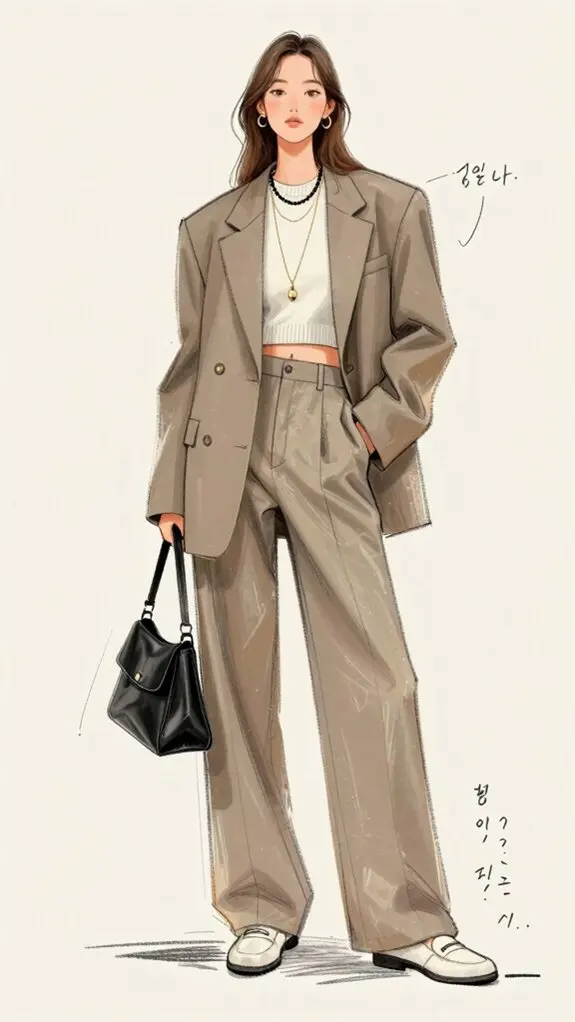
Understanding these brands matters less than understanding how Koreans actually wear them, because Seoul’s street style operates on an entirely different grammar than the mix-and-match eclecticism you’ll see in London or the logo-heavy maximalism that characterizes Tokyo’s Harajuku district.
Korean styling champions a minimalist aesthetic that’s deceptively complex—you’re layering textures, proportions, and silhouettes rather than patterns or colors. A single outfit might pair an oversized blazer with cropped trousers and chunky sneakers, creating visual interest through shape alone.
Functional versatility drives every choice: that wool coat works for both office meetings and weekend cafés, those ankle boots shift seamlessly from day to night. This approach mirrors how smart casual work outfits rely on neutral tones and structured silhouettes that transition effortlessly between professional and personal settings. It’s fashion that refuses to announce itself loudly, preferring instead to whisper its sophistication through impeccable tailoring and thoughtful restraint.
Frequently Asked Questions
Where Can I Buy Authentic Korean Fashion Brands Online Internationally?
You’ll find authentic K-fashion at Kooding, YesStyle, and Kream, which ship internationally and stock emerging Korean designers alongside established brands. Follow Korean fashion influencers on Instagram—they often drop discount codes and reveal where they actually shop.
W Concept’s another solid option, offering curated selections from Seoul’s independent labels. Don’t sleep on Coupang or Gmarket either; they’re basically Korea’s Amazon, shipping globally with surprisingly reasonable fees. Just verify seller ratings first, obviously.
What Are the Best Korean Fashion Websites That Ship Worldwide?
You’ll want to bookmark Kooding, YesStyle, and StyleNanda for your online shopping experience—they’ve mastered international shipping, though you’re gambling with sizing considerations since Korean brands run notoriously small.
W Concept offers higher-end pieces if you’re feeling bougie, while Coupang and Stylenanda ship globally with decent tracking.
Always size up twice, check measurements obsessively, and accept that return shipping’ll cost you. Worth it for authentic K-fashion that’ll make your wardrobe infinitely cooler, honestly.
How Do I Determine My Size When Ordering Korean Clothing?
Sizing Korean clothes is like deciphering a secret language—you’ll need conversion charts for Korean sizes since they run noticeably smaller than Western standards. Check each brand’s specific size measurement guidelines, measuring your bust, waist, and hips in centimeters (not inches, babe).
Most sites provide detailed charts, but here’s the truth: when you’re between sizes, always size up. Korean fashion prioritizes slim fits, so don’t let the numbers mess with your head—it’s just different scaling.
Are Korean Fashion Trends Suitable for Different Body Types?
Korean fashion trends can work for different body types, though honestly, the industry struggles with body diversity representation. You’ll find slim-fit silhouettes dominating runways and Instagram feeds, which isn’t exactly encouraging if you’re outside Korean beauty standards.
However, some brands are finally embracing inclusive sizing options—look for labels like Ader Error and Muzikiz that offer looser, oversized cuts. The trick is finding pieces that prioritize style over conformity, letting you adapt K-fashion aesthetics to your unique shape.
What Is the Average Price Range for Korean Fashion Items?
Like telegraphing your shopping budget to Seoul, you’ll find K-fashion spans diverse price ranges that’ll either thrill or terrify your wallet. Fast-fashion giants like Stylenanda, Chuu, and Mixxo offer affordable price points—think $15-40 for basics, $50-80 for statement pieces.
Mid-tier brands (Ader Error, Gentle Monster) push $100-300, while luxury labels like Wooyoungmi demand designer pricing. The beauty? You’re not locked into one tier, so you can mix high-low pieces without anyone questioning your fashion literacy or bank account.
Conclusion
You’ve absorbed the essentials—K-pop’s visual revolution, the drama-fueled street style takeover, those calculated oversized silhouettes that somehow look effortless. Korean fashion isn’t just influential; it’s practically rewriting global style codes from Seoul’s Gangnam district outward. You’ll notice its fingerprints everywhere now, from your local Zara’s sudden obsession with boxy blazers to Instagram’s endless parade of minimalist layering. The question isn’t whether you’ll adopt K-style elements, but which ones you’ll claim first.
Have any thoughts?
Share your reaction or leave a quick response — we’d love to hear what you think!
-
 0
0 -
0
-
0
-
0
-
0
-
0


