

 Lena
Lena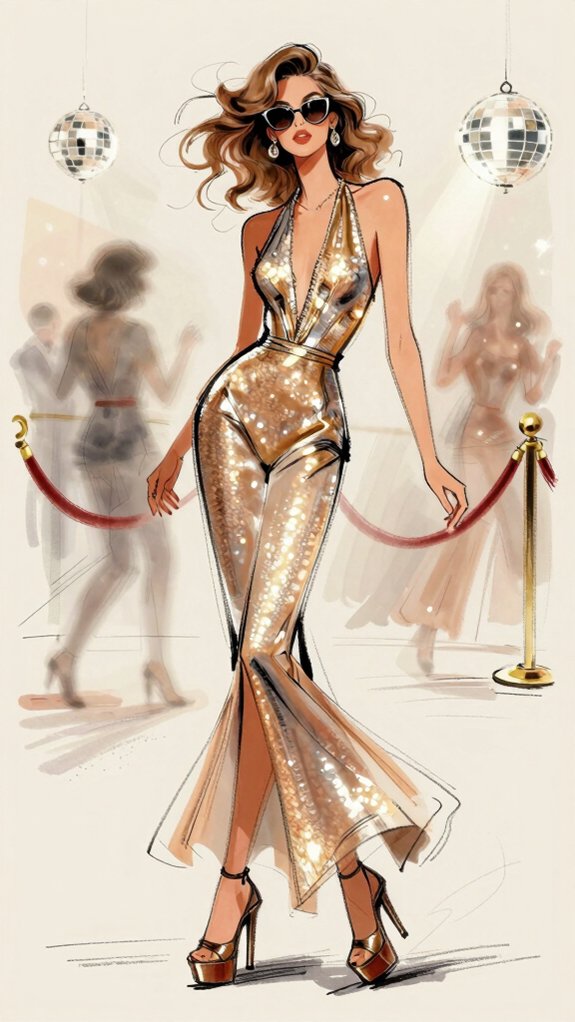
You’ve seen the photos: Bianca Jagger on a white horse, Liza Minnelli in a halter jumpsuit, Andy Warhol surveying the chaos from the balcony. Studio 54 wasn’t just a nightclub that opened in 1977, it was a glittering fever dream where fashion became costume, costume became armor, and everyone performed their most fabulous self under strobes that could make sequins look like liquid mercury. The question isn’t what made disco style so intoxicating—it’s why we can’t stop trying to recreate it.
1970s Club Culture
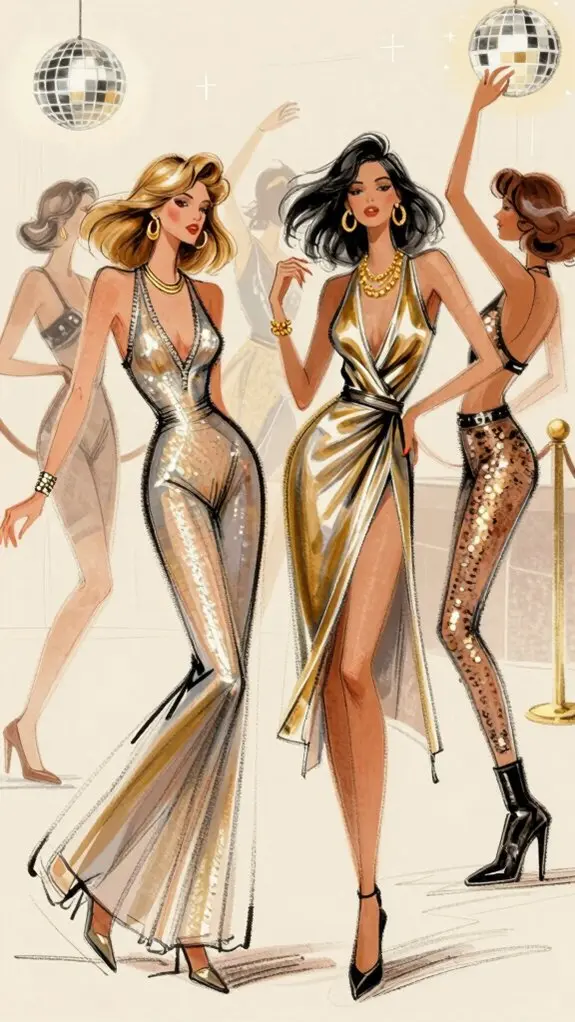
While Studio 54 gets most of the historical glory, the club scene of the 1970s was far more diverse, democratic, and geographically scattered than nostalgia merchants would have you believe. You’d find packed dance floors in Detroit, Philadelphia, and Miami—not just Manhattan’s velvet-rope establishments.
The real action happened in neighborhood spots where neon lighting flickered over linoleum, where working-class kids, queer communities, and Black and Latino dancers created the actual soundtrack of disco before Billboard caught on. These weren’t celebrity playgrounds; they were sweaty, unpretentious spaces where the music mattered more than your last name.
Studio 54’s exclusivity was the exception, not the rule, and frankly, that’s what made disco revolutionary—it belonged to everyone else first. Today’s Korean street style captures a similar democratic spirit, proving that fashion innovation still thrives outside exclusive spaces and belongs to everyday people mixing creativity with practicality.
Aesthetic Characteristics
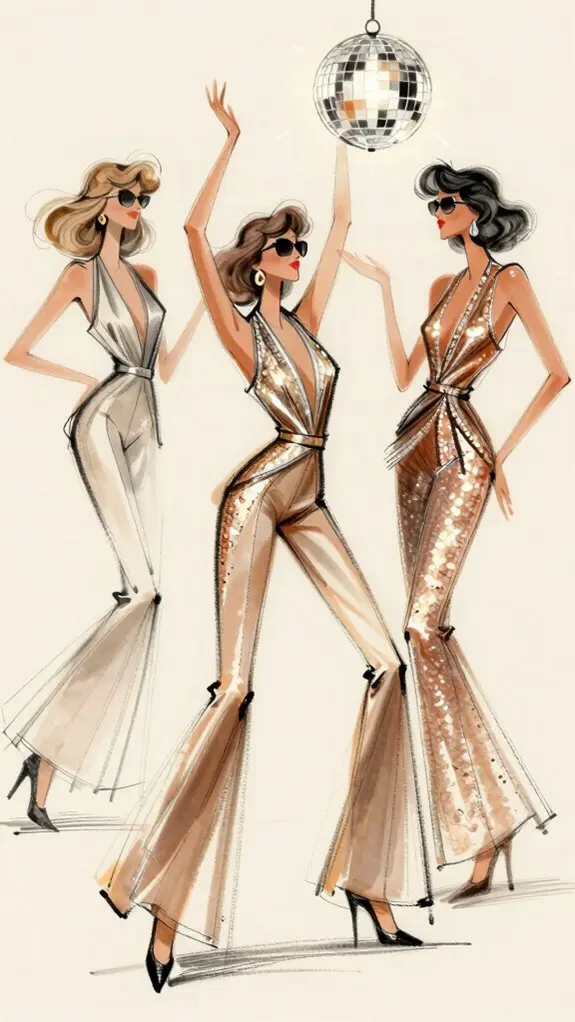
The disco aesthetic wasn’t subtle—it was mirrors, sequins, and chrome taken to their logical, glittering extreme. You’d walk into Studio 54 and find yourself multiplied infinitely in mirrored walls, fractured into a thousand reflections under the iconic mirror ball décor that became disco’s visual shorthand.
The mood lighting shifted constantly—purple to amber to electric blue—transforming dancers into silhouettes, then stars, then shadows again.
Three elements defined the look:
- Reflective surfaces everywhere (walls, ceilings, even the dance floor itself)
- Metallics and shine dominating fashion and interior design
- Theatrical lighting rigs borrowed from concert venues, not typical nightclub setups
This wasn’t decoration; it was sensory overload as design philosophy, making you simultaneously the observer and the spectacle. The sequins worn by dancers acted as small mirrors reflecting the world back, turning each person into both canvas and light source under those shifting colors.
Key Elements
You can’t talk about disco glamour without addressing the holy trinity that defined the era’s visual language: sequins and metallics that caught every spotlight beam, jumpsuits that transformed dancers into streamlined silhouettes, and platform shoes that added essential inches while anchoring the whole look.
These weren’t just fashion choices—they were functional necessities for a scene where you needed to shine under rotating mirror balls, move freely through complex choreography, and literally stand out in packed clubs like Studio 54 or Paradise Garage.
Each element worked together to create that unmistakable disco aesthetic, the kind you’d recognize instantly in a 1977 Vogue spread or on the album cover of Chic’s “C’est Chic.”
Much like how Chanel built its legacy on celebrating delicacy, lightness, and movement, disco fashion prioritized garments that allowed bodies to flow and shimmer across the dance floor.
Sequins and metallics
Sequins and metallics weren’t just decorative choices in disco fashion—they were functional necessities, engineered to transform ordinary dancers into human disco balls under the club’s ultraviolet lights and spinning mirror spheres. You needed to catch every beam, every reflection, because standing out meant survival on those competitive dance floors.
The most effective shiny accessories included:
- Lurex halter tops that clung to your body while refracting light in multiple directions
- Metallic hot pants paired with platform boots for maximum leg-lengthening shimmer
- Silver lamé wrap dresses that moved with you, creating kinetic light shows
These glitzy embellishments weren’t about subtlety—they announced your presence before you’d even ordered your first cocktail, demanding attention in an era when visibility equaled relevance.
Jumpsuits
While Studio 54’s VIP room collected celebrities like trading cards, the disco floor itself worshipped one garment above all others: the jumpsuit. You’d slip into these statement making silhouettes and suddenly possess the superhero confidence of Cher descending those Bob Mackie-designed stairs.
The jumpsuit’s genius lay in its democratic appeal—it flattered curves, elongated legs, and moved with you through the hustle’s demands. Halston’s silk versions featured plunging necklines that grazed navels, while less expensive iterations added bold shoulder pads that transformed secretaries into warriors.
The one-piece eliminated the anxiety of separates riding up during ambitious dance moves, a practical concern that somehow elevated into high fashion. It’s the reason Bianca Jagger could ride that white horse through Studio 54’s entrance without wardrobe malfunctions.
Platform shoes
The physics-defying platform shoe turned every disco dancer into an amateur stilt-walker, and somehow this became not just acceptable but essential. You couldn’t simply walk into Studio 54 in regular heels, not when everyone else was towering three, four, sometimes five inches above the dance floor. The platform democratized height in ways stilettos never could, offering stability while you grooved under the mirror ball.
Consider the platform’s practical magic:
- Height without the ankle-breaking tilt of traditional stilettos
- Built-in drama that complemented your feathered accessories and metallic jumpsuit
- Shock absorption for hours of non-stop dancing
These weren’t just shoes; they were architectural statements, turning your legs into columns of disco-ready glamour that said you’d arrived, literally elevated above the ordinary.
Color Palette
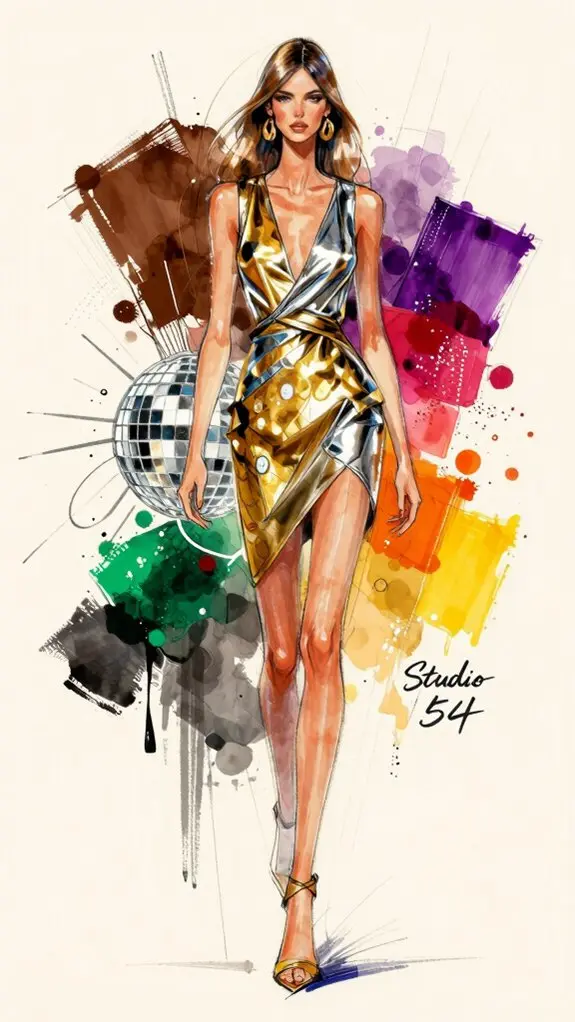
Disco’s color palette burst onto the scene like a supernova of metallics, jewel tones, and light-reflecting surfaces that transformed everyday people into walking mirror balls. You weren’t just wearing clothes—you were reflecting light, catching attention, demanding to be seen under those rotating spots at Studio 54.
Silver lamé, gold sequins, electric blue, hot pink, and emerald green occupied the dance floor, creating vibrant contrasts that photographers like Bill Bernstein captured in grainy, atmospheric perfection. The psychology was simple: nightlife required luminosity, and disco delivered it through holographic fabrics, mirror-chip embellishments, and anything that could bounce light back into the crowd. Today’s fashion has embraced a softer approach to joyful dressing, with butter yellow delivering sunshine in a way that feels both timeless and fresh for 2025.
Your statement accessories—chunky gold chains, oversized sunglasses worn indoors, rhinestone-encrusted everything—amplified this reflective philosophy. Why blend in when you could literally sparkle?
Modern Disco
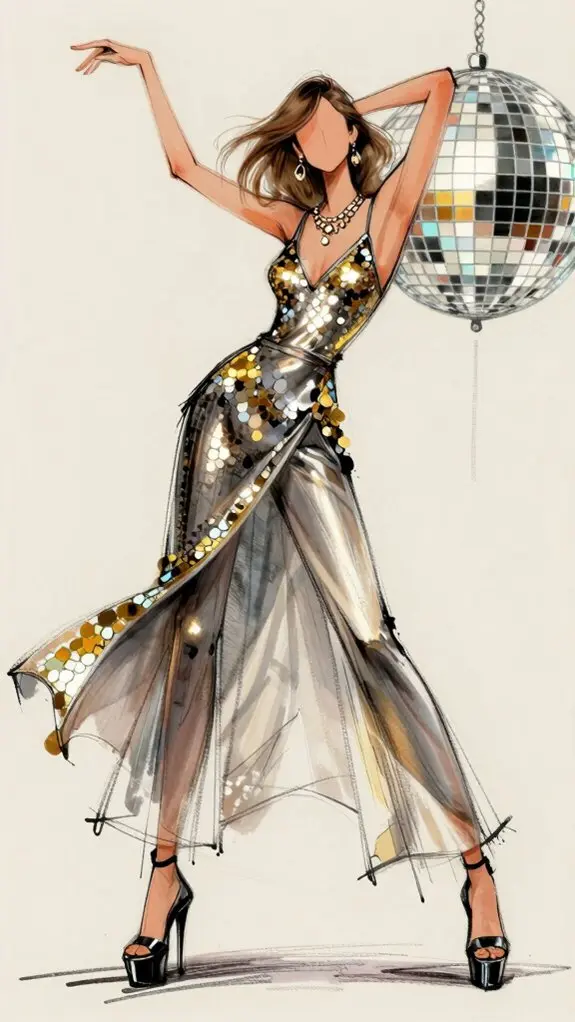
Since approximately 2019, disco’s aesthetic DNA has been resurrected, remixed, and repackaged for Instagram feeds and TikTok videos, proving that what glitters really doesn’t fade away—it just waits for the right cultural moment to reemerge.
Disco never died—it simply hibernated in sequined storage, waiting for the perfect algorithm to resurrect its shimmer.
You’ll notice today’s disco revival isn’t about literal recreation. It’s about capturing that dance floor energy through filtered lens flares, holographic fabrics, and strategically placed mirror balls. Retro dance music pulses through brands like Rotate Birger Christensen and The Attico, who’ve built entire collections around Studio 54’s hedonistic promise.
Modern disco manifests through:
- Metallics paired with athleisure silhouettes
- Body-conscious cutouts meeting sustainable fabrics
- Platform shoes (thankfully) returned to their rightful throne
The trick? You’re channeling the vibe, not cosplaying the era. For a playful nod to the era’s exuberance, consider how polka dot accessories like silk scarves and statement bags can add retro flair to your disco-inspired ensemble.
Frequently Asked Questions
What Should I Wear to a Modern Disco-Themed Party?
You’ll want sequins, obviously—think jumpsuits, metallic fabrics, wide-leg pants that actually move when you do. Contemporary disco fashion means borrowing from the ’70s without looking like you raided your grandma’s closet, so pair vintage-inspired pieces with modern silhouettes.
Don’t skip disco inspired accessories: platform heels, oversized sunglasses, statement jewelry that catches light. The goal? Looking effortlessly glamorous while secretly planning your entrance, because honestly, what’s disco without a little calculated drama and shimmer?
How Can I Recreate Studio 54 Makeup at Home?
You’ll want to master glitter eyeshadow techniques by patting metallic shades onto your lids with your finger, not brushing them on, which prevents fallout and creates that wet-look intensity Bianca Jagger wore.
Layer dramatic false lash application by stacking two sets of lashes, focusing on outer corners for that feline lift.
Don’t forget: blend everything seamlessly, because Studio 54’s mirror ball lighting was unforgiving, honey, and you’re aiming for glamorous excess, not amateur hour.
Where Can I Buy Authentic Vintage Disco Clothing Today?
You’ll find authentic disco pieces at affordable vintage disco clothing stores like Beyond Retro, Wasteland, and Beacon’s Closet in major cities.
Online, reputable online vintage disco clothing vendors including Etsy’s curated sellers, The RealReal, and Vestiaire Collective offer verified ’70s gems—though you’ll pay premium prices for Halston or Diane von Furstenberg originals.
eBay’s surprisingly solid if you’re patient enough to wade through polyester nightmares.
Local estate sales remain underrated goldmines for uncovering actual Studio 54-era treasures.
What Hairstyles Were Most Popular at Studio 54?
Hair became a crown of ambition, reaching skyward like the glittering disco ball itself.
You’d spot feathered hairstyles everywhere—think Farrah Fawcett’s wings meeting Halston’s jet-set crowd. Towering bouffants commanded attention too, teased to architectural heights with enough Aqua Net to puncture the ozone layer.
Men rocked the shag, grew it long, let it flow. Afros celebrated natural texture, while others chose sleek, center-parted glamour. Your hair wasn’t just styled—it was engineered for maximum drama under those strobing lights.
How Much Did It Cost to Enter Studio 54?
there weren’t any, technically. You’d think getting past Steve Rubell’s velvet rope would cost you, but admission was free—the real price was meeting impossible dress code requirements and his arbitrary whims.
Your wallet opened inside, though, where drinks ran steep and cocaine flowed freely. The actual cost? Your dignity, standing outside for hours while Rubell decided if you were fabulous enough to grace his dance floor.
Conclusion
you’re chasing Studio 54’s rebellious sparkle while scrolling through carefully curated Instagram feeds, hunting for vintage Halston on resale apps. The disco era rejected conformity through glitter and platforms, yet you’ve turned it into another aesthetic checkbox, another Pinterest board. But maybe that’s fine—you’re keeping the sequins alive, even if you’ll never experience Bianca Jagger’s horse trotting through those legendary doors. Sometimes revival beats extinction.
Have any thoughts?
Share your reaction or leave a quick response — we’d love to hear what you think!
-
 0
0 -
0
-
0
-
0
-
0
-
0


