

 Lena
LenaThe tomboy aesthetic has been around long enough to have a history, and it’s a good one. Katharine Hepburn was making trousers look dangerous and beautiful in the 1930s. Janelle Monáe built an entire visual identity out of the tuxedo. What keeps this look alive isn’t trend cycles — it’s the fact that it actually solves a problem: how to get dressed in a way that feels like you, without the performance.
The core of it is menswear borrowing done with intention. Oversized button-downs, straight-leg jeans with real pockets, blazers that prioritize function. Not shapeless, not sloppy — structured and considered in a way that looks effortless from the outside but requires you to understand proportion on the inside.
Getting this aesthetic right isn’t about buying a capsule wardrobe in one afternoon. It’s about learning what actually fits your body, your life, and your version of the look. A blazer that works for someone six feet tall needs different tailoring than it does on someone petite. The principles hold regardless — it’s the execution that needs to be personal.
What follows is a proper breakdown of how the aesthetic actually works: what defines it structurally, how to balance the masculine and feminine tension that makes it interesting, and how to build it without starting from scratch or spending money you don’t have.
Oversized Blazers and Straight-Leg Jeans: What Tomboy Dressing Actually Means
The tomboy aesthetic has a clear structural logic: menswear silhouettes, considered proportions, and a deliberate refusal to perform hyperfemininity. Oversized button-downs worn half-tucked, straight-leg jeans with actual pocket depth, blazers cut for function over decoration — these are the building blocks. It traces back through decades of icons and exists now as a distinct counterpoint to softer aesthetics; where something like Tomato Girl Summer leans into flowing silhouettes and coastal delicacy, tomboy dressing chooses sneakers over stilettos, minimal jewelry, and hair that doesn’t require half a bottle of product to stay in place.
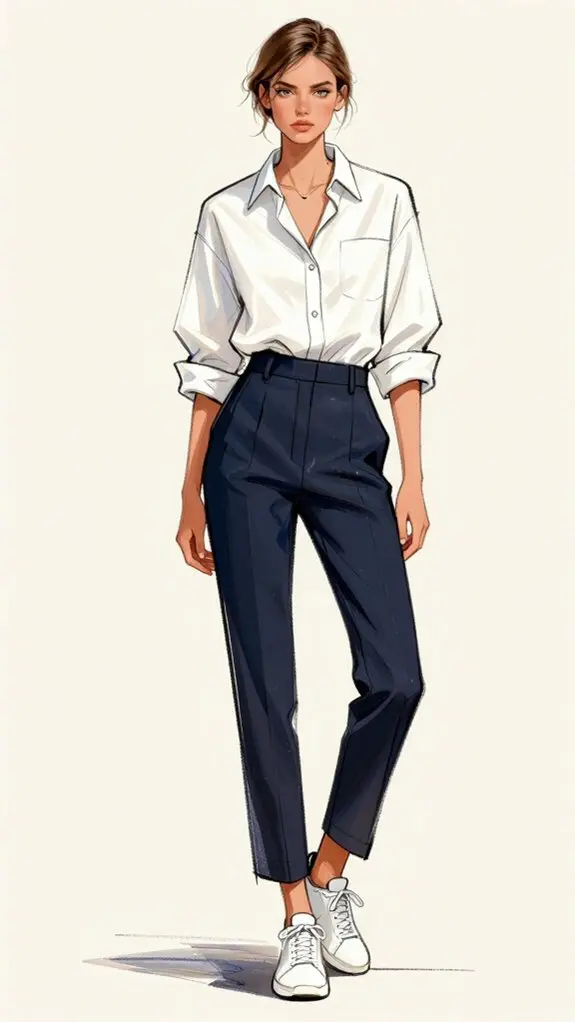
Proportion is where most people go wrong when they first try this look. An oversized shirt worn with equally baggy trousers reads as accidental rather than intentional — the volume needs somewhere to resolve. Slim-cut trousers or clean straight-leg jeans underneath a boxy top give the eye a clear line to follow, and that contrast is what makes the silhouette feel thought-through rather than thrown-on. Once you internalize that one rule, the rest of the dressing gets significantly faster.
Fabric is the thing most guides skip over, and it matters more here than in almost any other aesthetic. Menswear staples — crisp cotton, sturdy denim, wool suiting — have a weight and drape that registers differently on the body than the flimsy polyester blends that fill fast fashion racks. The whole quiet-confidence energy this look depends on is immediately undercut by fabric that looks cheap under light. Buy secondhand if you need to keep costs down, but prioritize getting the material right before worrying too much about cut or color.
A Silk Camisole Under a Boxy Blazer: Mastering Masculine-Feminine Contrast
Balance in tomboy dressing means creating just enough tension that the look feels alive rather than like a uniform. One deliberately feminine detail against a backdrop of masculine structure does all the work — a silk camisole beneath a boxy blazer, delicate gold hoops with a worn-in Carhartt jacket, a thin chain visible above a crisp Oxford collar. The goal is a look that keeps people slightly off-balance, uncertain whether to file it as androgynous or polished or effortless, because it’s actually all three at once. The practical move most guides skip: start with a denim vest over basics as your anchor piece, because it handles the structural heavy lifting while leaving room for the rest of the outfit to soften around it.
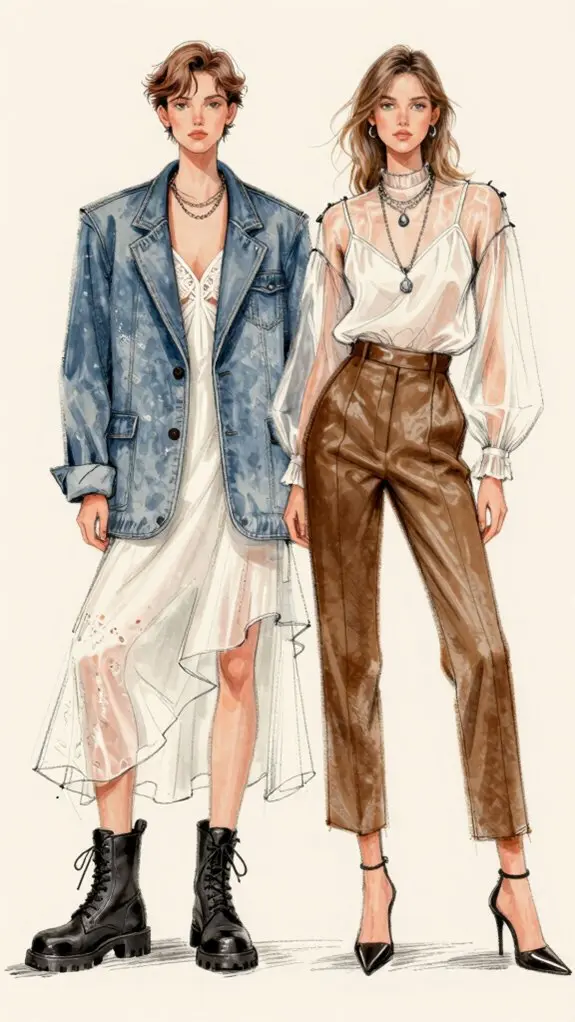
This balance clicks for everyone, but it lands particularly hard for people who’ve always felt like traditionally feminine dressing was a performance they were watching from outside themselves. If you’ve ever put on a flowy dress and felt vaguely like you were wearing a costume, this is the aesthetic that might finally feel like your actual clothes rather than someone else’s idea of what you should look like. Proportionally, most bodies read best with volume on one end of the outfit and a cleaner line on the other — structure on top with a leaner silhouette below, or wide-leg trousers with a tucked or fitted top. Never both ends heavy at the same time.
The blazer specifically is the workhorse piece of this entire aesthetic, and it earns that status. It makes jeans look intentional. It elevates a basic white tee into something deliberate. It works from coffee to a work presentation without changing anything else about your outfit. Buy the best one you can find secondhand, check that the shoulders sit exactly right before anything else, and if they need a centimeter of adjustment get them tailored — shoulder tailoring is relatively inexpensive and completely transforms how a jacket reads on the body.
Making It Work: Execution Over Inspiration
Pulling off this aesthetic in practice is more nuanced than the Pinterest boards suggest. The real skill is in layered textures and color tension — crisp cotton against worn denim, smooth leather meeting a chunky knit, charcoal pieces grounded with cream or olive softened with rust. You’re not building a monochrome uniform here. A completely grey-on-grey look can work, but only if there’s enough contrast in texture to keep it from reading flat. Calculated juxtaposition is the whole engine of this look, and that requires actual thought about what you’re putting next to what.
Color mixing is where a lot of people get nervous and default to all-black, which is safe but limiting. The tomboy palette is actually rich — army greens, warm browns, dusty blues, off-whites, burgundy, camel. The trick is keeping the saturation low and the tones earthy so pieces play well together without looking like a mood board. Once you have three or four colors that consistently work for you, building outfits gets fast and intuitive.
A final practical note on building this wardrobe without losing your mind or your savings: the men’s section is legitimately your friend. Flannels, Oxford shirts, straight-leg chinos, and denim jackets often fit beautifully and cost significantly less than the women’s equivalent. Size down at least one size, try things on without assumptions about how they should fit, and approach the rack like a treasure hunt. The best tomboy pieces are usually the ones that weren’t marketed to you at all.
Key Pieces
You’ll build your tomboy wardrobe around three foundational pieces that’ve defined the aesthetic since k.d. lang strutted onto the music scene in the ’90s: oversized button-downs that swallow your frame, straight-leg jeans that reject the body-con tyranny of fast fashion, and sneakers that actually let you run for the bus without calculating your risk of a sprained ankle.
These aren’t just clothes—they’re a deliberate rejection of the idea that femininity requires discomfort, restriction, or constant awareness of how your body looks from every angle.
The magic happens when you take these masculine staples and pair them with something unexpectedly feminine—an oversized blazer with a lace maxi creates the kind of tension that makes an outfit feel modern rather than costume-y.
Start here, and you’re not following trends; you’re claiming space in a style tradition that’s always understood comfort and confidence aren’t mutually exclusive.
Oversized shirts
Since button-ups and tees have spent decades trapped in the menswear section, oversized shirts represent the tomboy aesthetic’s most accessible entry point, a wardrobe staple that’s been borrowed, stolen, and permanently claimed from boyfriends, brothers, and thrift store racks since at least the ’90s.
Three ways to style your oversized shirt:
- Half-tucked into high-waisted jeans – creates definition while maintaining that relaxed fit
- Layered over a fitted tank or bralette – unbuttoned for cozy vibes without drowning your silhouette
- Knotted at the waist with bike shorts – athletic-meets-casual for running errands
You’re fundamentally wearing a tent, but that’s the point. The relaxed fit offers breathing room, literally and metaphorically, rejecting the suffocating expectations that women’s clothing should cling, reveal, or restrict. It’s rebellion disguised as comfort.
Straight-leg jeans
That oversized shirt needs a bottom half that won’t compete for attention, and straight-leg jeans have become the tomboy aesthetic’s most dependable anchor since skinny jeans finally, mercifully lost their stranglehold on women’s denim around 2019.
You’re looking for something that balances masculine ease with a subtle fitted waistline that actually acknowledges you have a body underneath all that fabric. The magic happens in the proportions: these jeans create clean, uninterrupted lines from hip to ankle, especially when you add cuffed hems that show off your sneakers or boots.
They’re not trying to sculpt you into something you’re not, which is precisely why they work. Think Levi’s 501s, vintage Wranglers, or any pair that treats your legs like actual cylindrical limbs rather than aspirational chopsticks.
Sneakers
The sneaker anchors everything else you’ve assembled, and it needs to look like you’ve owned it long enough to forget you’re wearing it. Here’s what works:
- Classic canvas low-tops – Think Converse Chuck Taylors, worn enough that the rubber’s yellowing slightly, because pristine white sneakers scream “trying too hard.”
- Retro athletic silhouettes – New Balance 574s, Nike Cortez, Adidas Sambas: models your dad might’ve actually worn in 1987, not limited edition sneakers that cost three hundred dollars.
- Skate shoes with actual wear – Vans Old Skools that show you’ve lived in them, ignoring seasonal sneaker trends entirely.
The goal isn’t collecting sneakers like investments; it’s finding one pair that becomes invisible through repetition, comfort replacing conscious choice.
Styling Techniques
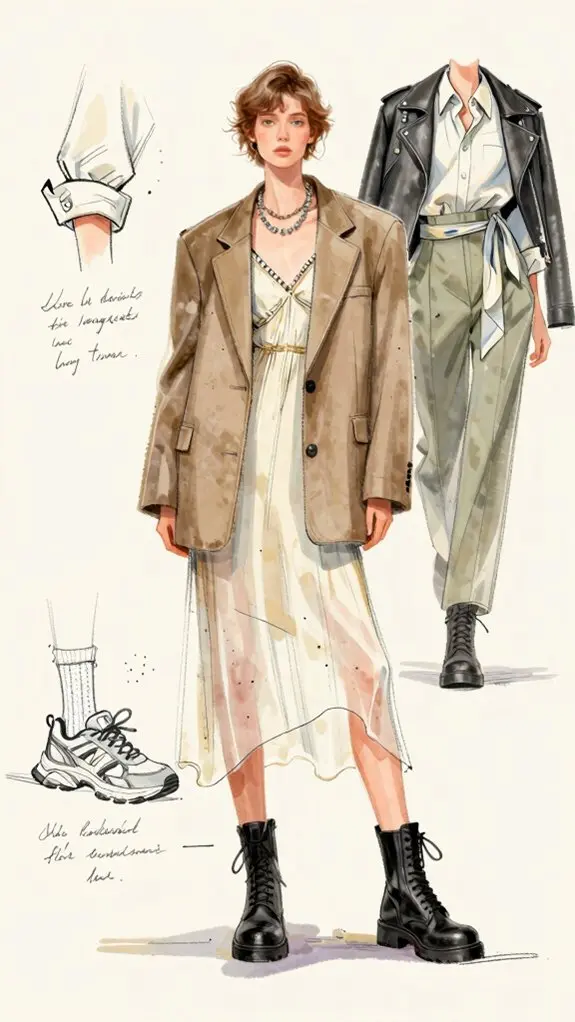
Mastering tomboy style isn’t about throwing on any old oversized hoodie and calling it a day—it’s about intentional choices that balance masculine-coded pieces with elements that reflect your personal edge. Start by mixing textures: pair a structured blazer with distressed denim, or soften cargo pants with silk. Incorporating accessories transforms basic outfits—chunky chains, leather cuffs, minimalist rings—into something distinctly yours.
| Base Piece | Texture Mix | Accessory Pairing |
|---|---|---|
| Blazer | Soft cotton tee | Silver chains |
| Cargo pants | Satin camisole | Leather watch |
| Denim jacket | Ribbed tank | Studded belt |
| Button-up | Knit sweater | Minimalist rings |
Layer strategically—cropped jackets over longer shirts create dimension without drowning your frame. Roll sleeves, half-tuck shirts, cuff pants deliberately. For an unexpected twist, try mixing your masculine pieces with polka dot accessories like silk scarves or structured bags to add playful sophistication without compromising your edge.
Personal Expression
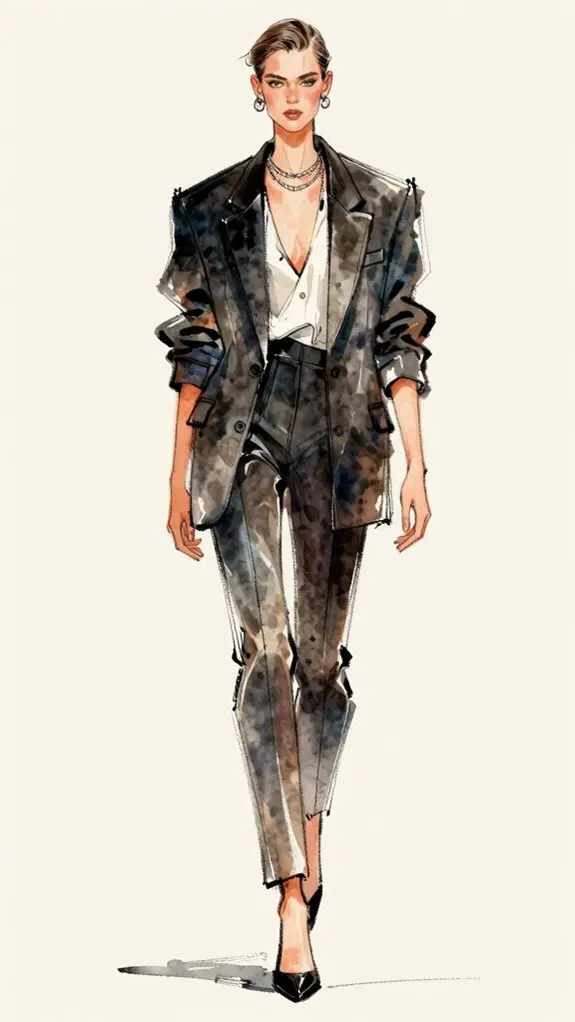
Personal Expression
Your individuality emerges when you stop following rulebooks:
- Mix unexpected textures—pair that oversized Carhartt jacket with a silk slip dress because *you* find the contrast compelling, not because some influencer did it first.
- Reject the binary entirely—confidence comes from owning pieces that confuse people trying to categorize you.
- Prioritize comfort without apologizing—if Doc Martens make you feel invincible, wear them everywhere.
- Embrace proportion play mastery by pairing longer coats with wide-leg trousers to create a streamlined silhouette that feels authentically yours.
The tomboy aesthetic becomes yours when you strip away performance anxiety and dress for the person staring back in the mirror.
FAQ
Where can I shop for affordable tomboy aesthetic clothing?
Thrift stores like Goodwill, Buffalo Exchange, and local vintage shops are the best starting point — the men’s section especially, where oversized flannels, blazers, and straight-leg jeans cost a fraction of their women’s-section equivalents. Depop and Poshmark have curated secondhand finds that save you the rummaging. H&M and Uniqlo work for basics, but secondhand gives you the authentic worn-in quality this aesthetic needs without spending serious money.
How do I transition my wardrobe to tomboy style gradually?
Swap one piece at a time rather than overhauling everything — trade your fitted tee for an oversized button-down, layer a blazer over a dress you already love, grab a pair of straight-leg jeans to replace skinny ones. You’ll quickly figure out what feels like you and what’s just cosplay. The pieces you keep reaching for are the ones worth building around.
What hairstyles work best with the tomboy aesthetic?
Short cuts with texture — mullets, shaggy undercuts, choppy bobs — are the obvious classics because they match the deliberate effortlessness of the rest of the look. Longer hair works too, worn loose and undone or pulled back in something functional. Find a stylist who understands texture and isn’t going to over-polish it — tomboy hair should look lived-in, not freshly blown out.
Can the tomboy aesthetic work for formal or professional settings?
A sharp blazer, tailored trousers, and an androgynous Oxford shirt is a boardroom-ready combination that reads as polished and authoritative. The aesthetic doesn’t disappear in formal settings — it just gets more refined. Invest in quality fabric and good tailoring, add one deliberate detail like a silk pocket square or delicate jewelry, and you’re presenting with more intention than most people in the room.
What’s the difference between tomboy aesthetic and androgynous style?
Tomboy style borrows from masculine codes while still reading as feminine — it’s the tension between the two that gives it energy. Androgynous style aims more deliberately at gender neutrality, erasing the contrast rather than playing with it. Tomboy dressing is less about blurring gender and more about choosing which parts of masculine dressing actually serve you.
How do I get proportions right in tomboy outfits?
The core rule: volume on top means a cleaner line on the bottom, and vice versa — never both ends heavy at the same time. An oversized blazer earns its volume when the trousers underneath are straight and not baggy. Once you internalize this, getting dressed becomes genuinely fast.
Are there tomboy-specific styling tips for petite frames?
Oversized pieces work on petite frames, but they need a clear anchor point — a tucked shirt or a cinched waist — to avoid swamping the silhouette. Straight-leg rather than wide-leg pants tend to elongate more effectively. Monochromatic color runs also help, creating an unbroken vertical line that reads as taller without sacrificing the relaxed volume that makes this aesthetic feel right.
What are the key accessories for the tomboy aesthetic?
Minimal and intentional — a thin chain necklace, small hoops, a signet ring, a good leather belt. A baseball cap or beanie can shift an outfit’s register from polished to relaxed instantly. One or two deliberate details rather than layering everything at once; the restraint is what makes it look considered.
How do I explain my tomboy style to conservative family members?
You don’t owe anyone a detailed defense of your wardrobe — you’re dressing in a way that feels confident and authentic. If pressed, the decades-long legacy of Katharine Hepburn and Janelle Monáe makes a fairly efficient point: menswear-inspired dressing has never undermined femininity or presence. Brief, confident, then change the subject.
Have any thoughts?
Share your reaction or leave a quick response — we’d love to hear what you think!
-
 0
0 -
 0
0 -
 0
0 -
 0
0 -
 0
0 -
 0
0