

 Lena
Lena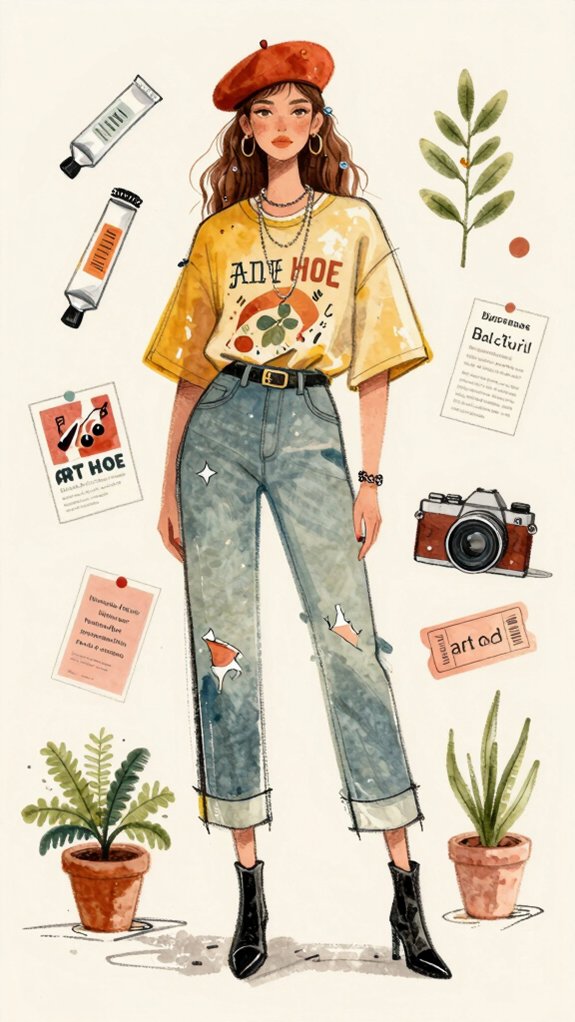
Like Duchamp’s urinal forcing the art world to reconsider what counts as legitimate expression, the Art Hoe Aesthetic—born from Mars and Jam’s 2015 Tumblr rebellion—challenges who gets to claim the title of “artist.” You don’t need an MFA or gallery connections to participate in creative culture, just paint-stained thrift store jeans and the audacity to believe your relationship with art matters. The movement’s real power, though, lies in what it refuses to apologize for.
Social Media Origins
The Art Hoe aesthetic didn’t emerge from a gallery opening or a fashion runway—it crystallized on Tumblr in 2015 when two Black teenagers, Mars (@alien_grrrl) and Jam (@trashqueennn), created the hashtag #ArtHoeCollective as a deliberate act of reclamation and resistance.
You’ll find its DNA in the way online communities transformed self-expression, rejecting the chiefly white art world’s gatekeeping through digital portfolios that showcased creativity without permission slips or institutional validation. The movement spread rapidly across Instagram, Twitter, and later TikTok, building a visual language that centered marginalized voices—particularly queer people of color—who’d been systematically excluded from traditional artistic spaces.
What started as two friends sharing their aesthetic evolved into something genuinely radical: accessible art appreciation that didn’t require gallery memberships, art history degrees, or code-switching. Unlike the old money aesthetic with its emphasis on investment pieces and minimal logos, Art Hoe celebrated thrifted finds, DIY creativity, and bold artistic expression as markers of cultural value.
Artistic Philosophy
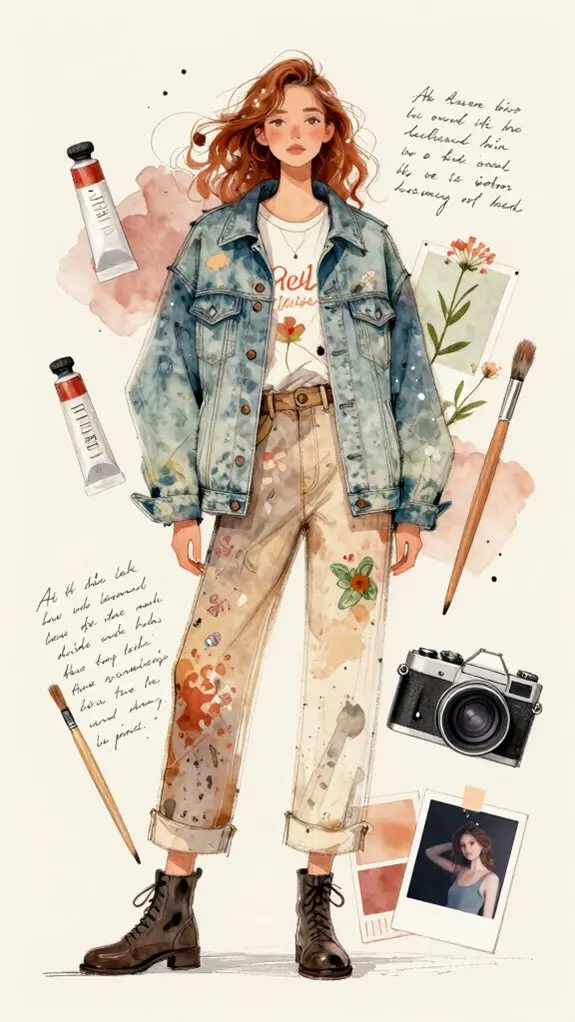
At its core, Art Hoe philosophy rejects the notion that art appreciation belongs exclusively to people who can afford MoMA memberships or pronounce “Bauhaus” correctly—it’s democratization through deliberate casualness, treating van Gogh’s “Sunflowers” with the same reverence you’d give your friend’s film photography or a really good doodle in someone’s journal margins.
Art shouldn’t require a trust fund or art history degree—if it speaks to you, it’s yours to love.
This artistic mindset operates on three foundational principles:
- Accessibility over exclusivity: Museums aren’t gatekeepers; your Instagram feed is
- Process over perfection: The sketch matters as much as the finished piece
- Personal connection over critical consensus: If it moves you, it’s valid
You’re encouraged to develop a creative mindset that values curiosity over credentials, where learning about Frida Kahlo happens through Pinterest deep-dives at 2 AM rather than art history lectures you’d probably sleep through anyway. Much like the renewed appreciation for femininity driving trends like the Coquette Aesthetic, Art Hoe represents Gen Z’s reclamation of creative expression on their own terms through social media platforms.
Signature Elements
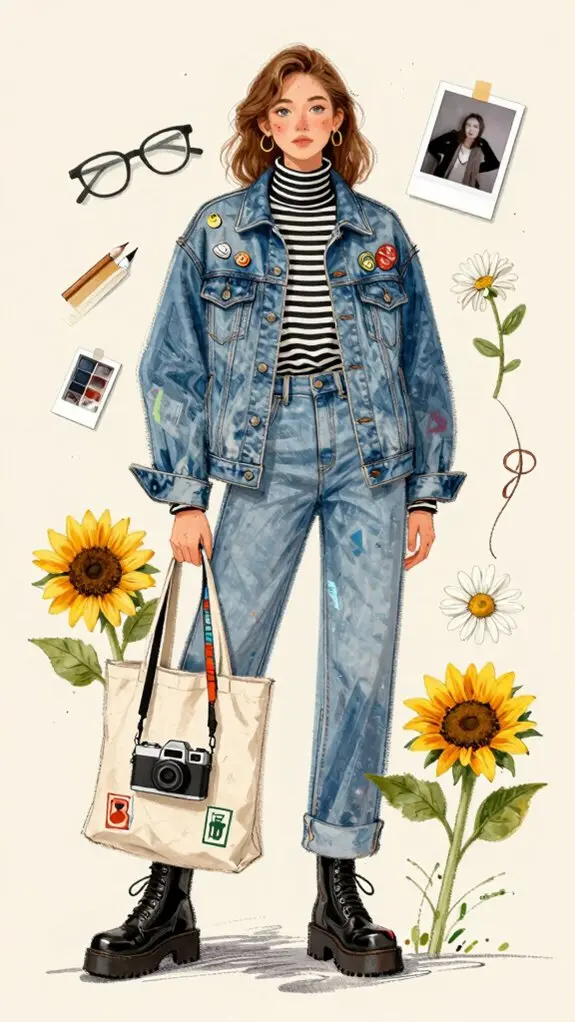
You’ll recognize an art hoe by their paint-splattered thrift store finds, those seemingly accidental Jackson Pollock homages on vintage denim that signal creative credibility whether the stains came from an actual studio session or a carefully orchestrated DIY project.
The color palette skews aggressively bright—think sunflower yellows, Van Gogh blues, cherry reds—creating a visual loudness that screams “I’m interesting” in every Instagram post.
These vintage pieces, usually sourced from Goodwill or your mom’s closet circa 1994, get transformed into wearable art statements that blur the line between authentic artistic expression and performative aestheticism.
A denim vest layered over basics like a white tee becomes the perfect canvas for this aesthetic, where the vest adds structure to an otherwise simple outfit while inviting paint splatters and DIY embellishments.
Paint-splattered clothing
While most fashion subcultures treat pristine garments as the goal, Art Hoe turned Jackson Pollock chaos into everyday wearwear. You’re not accidentally ruined your favorite jeans—you’ve transformed them into wearable galleries featuring unique patterns that nobody else owns. These unexpected textures emerge from actual creative sessions, not manufactured distressing from Urban Outfitters.
Creating your paint-splattered pieces involves three distinct approaches:
- Authentic studio wear from legitimate art-making sessions, bearing acrylic splatters, charcoal smudges, and dried watercolor stains
- Intentional customization using fabric paints, bleach, and spray techniques to simulate creative chaos
- Thrifted finds from actual artists, carrying histories you’ll never fully know
The authenticity debate matters here. Did those splatters happen organically while you worked on your AP Art portfolio, or did you carefully stage them for Instagram? The difference reveals everything about your relationship with creativity itself.
Bright colors
Those paint splatters might’ve happened in muted grays and earth tones, but the Art Hoe movement exploded in the opposite direction—saturated yellows that hurt to look at, Crayola-straight-from-the-box blues, and reds so aggressive they demanded attention from across campus hallways.
You weren’t supposed to match; you were supposed to clash intentionally, layering colorful accents until your outfit became its own gallery installation. Vibrant patterns collided with zero regard for traditional coordination rules—floral shirts under striped overalls, polka-dot socks peeking from paint-stained Vans.
The aesthetic rejected minimalism’s beige-on-white tyranny, insisting that self-expression required visual volume. Why whisper when you could scream through color? Every outfit became an act of defiance against conventional fashion’s boring restraint, transforming bodies into walking, breathing declarations to maximalist joy.
Vintage finds
Thrift stores became the aesthetic’s spiritual homeland, those fluorescent-lit repositories of discarded decades where genuine Art Hoes spent Saturday mornings elbow-deep in musty bins, hunting for the perfect 1970s corduroy jacket or oversized button-down that some accountant wore to the office in 1986. These thrifted treasures weren’t just budget-friendly alternatives—they were rebellion against fast fashion’s soulless uniformity.
Your shopping list prioritized:
- Oversized denim jackets (preferably with mysterious stains that told stories)
- Vintage tees from bands you’d never heard of
- Mom jeans that retail stores would later sell for $80
The appeal went beyond aesthetics. Upcycled creations transformed forgotten garments into personal statements, each piece carrying history, character, and the smug satisfaction of spending $4 instead of $40.
Accessorizing
Accessories transform the art hoe aesthetic from a basic appreciation of color and cultural touchstones into a fully realized visual identity, functioning as the punctuation marks that complete the sentence of an outfit. You’re not just throwing on jewelry—you’re curating statement pieces that telegraph your creative sensibilities to anyone paying attention.
Layered necklaces, preferably mismatched metals and lengths, create visual interest without overwhelming your vintage band tee. Enamel pins clustered on denim jackets announce your allegiances, whether that’s Frida Kahlo, @diet_prada, or your local poetry collective. Round wire-frame glasses work even if your vision’s perfect.
Beaded bracelets, friendship-style, stack up your forearms like artifacts from summer camp mixed with your grandmother’s estate sale. Luxe metal hair cuffs can elevate even a basic ponytail into an intentional statement piece that becomes the focal point of your entire look. The trick? Making intentional choices look effortlessly accumulated, as if your accessories found you, not vice versa.
Personal Expression
Personal expression through the art hoe aesthetic isn’t about following a checklist—it’s about weaponizing visual culture to broadcast your interiority before you’ve said a word. You’re engaging in identity exploration that runs deeper than vintage tees and mom jeans, using fashion, art references, and cultural heritage as shorthand for the complexities you can’t articulate yet.
Consider how you’re actually communicating:
- Your thrifted Frida Kahlo shirt signals feminist politics, Latinx pride, and appreciation for surrealist symbolism simultaneously
- Museum selfies announce intellectual curiosity without seeming pretentious (theoretically)
- Handmade jewelry from your grandmother’s country connects diaspora identity with contemporary indie aesthetics
This isn’t shallow—it’s constructing a visual language for whoever you’re becoming, mixing high culture, nostalgia, and deliberate authenticity into something unmistakably yours. Even your approach to double denim styling becomes a canvas for self-expression, whether you’re layering an oversized utility jacket over straight-leg jeans or pairing a chambray shirt with an unexpected pop of color.
Frequently Asked Questions
How Did the Art Hoe Aesthetic Influence Mainstream Fashion Brands?
You’ve watched the art hoe aesthetic completely reshape how brands think about color—inspired mainstream color palettes shifted from minimalist beige to bold yellows, primary reds, forest greens. Urban Outfitters, &Other Stories, and even Zara started selling those vintage turtlenecks and mom jeans you obsessed over on Tumblr.
The movement impacted high fashion collaborations too, with designers like Batsheva Hay bringing prairie dresses and artistic references to runway shows, proving your aesthetic wasn’t just internet escapism but genuine cultural influence.
What Are Common Criticisms of the Art Hoe Movement?
You’ve most likely seen it happen—like observing a stunning garden get overrun by tourists taking selfies. The movement’s faced significant backlash over cultural appropriation concerns, particularly when Caucasian creators controlled spaces while borrowing from Black and Latinx art traditions without credit.
Critics also highlighted the lack of diversity in who actually got recognition and brand deals, exposing how mainstream acceptance often whitewashed the aesthetic’s multicultural roots, leaving original contributors in the shadows.
How Do You Photograph Art Hoe Style Content Effectively?
You’ll want natural lighting—golden hour’s your best friend, but overcast days work beautifully too. Shoot minimalist compositions: frame your subject against clean backgrounds, whether that’s a white wall or open sky.
Keep your edits subtle, leaning toward warm, film-inspired tones rather than heavy filters. Focus on authentic moments—hands holding paintbrushes, sketchbooks sprawled on bedsheets, thrifted finds arranged thoughtfully. The goal’s capturing genuine creative energy, not overly curated perfection, so don’t stress about making everything look too polished.
Can the Art Hoe Aesthetic Work in Professional Settings?
Why shouldn’t you bring your authentic self to work? You can absolutely adapt art hoe aesthetics through corporate attire adaptations—think colorful vintage blazers, statement earrings, patterned socks with oxfords.
Workplace aesthetic integration works when you understand your office culture, balancing self-expression with professionalism. Start subtle: artistic pins on blazers, unique notebooks, desk plants.
Tech companies, creative agencies, and startups embrace this more readily than finance or law. Your aesthetic doesn’t disappear at 9 AM; it just gets a professional polish.
What’s the Difference Between Art Hoe and Soft Girl Aesthetics?
You’ll notice art hoe centers on diverse artistic influences—think museum selfies, Van Gogh worship, paint-splattered overalls—while soft girl leans cutesy, pastel, and deliberately delicate.
Art hoe’s your subjective individual expression through creative references and intellectual posturing; soft girl’s more about performing innocence with strawberry accessories and peachy aesthetics.
Both emerged from different corners of 2010s internet culture, but art hoe demands you engage with actual art (or at least pretend to), whereas soft girl’s purely vibes-based, no cultural homework required.
Conclusion
You don’t need a gallery opening or a Parsons degree to stake your claim in the creative world. The Art Hoe Aesthetic, like the Harlem Renaissance before it, proves that marginalized voices create their own spaces when establishment doors stay locked. Your paint-stained thrift jeans and color-blocked vintage tees aren’t just outfits—they’re declarations. You’re not waiting for permission to call yourself an artist anymore. You’re already making art.
Have any thoughts?
Share your reaction or leave a quick response — we’d love to hear what you think!
-
 0
0 -
 0
0 -
 0
0 -
 0
0 -
 0
0 -
 0
0