

 Lena
Lena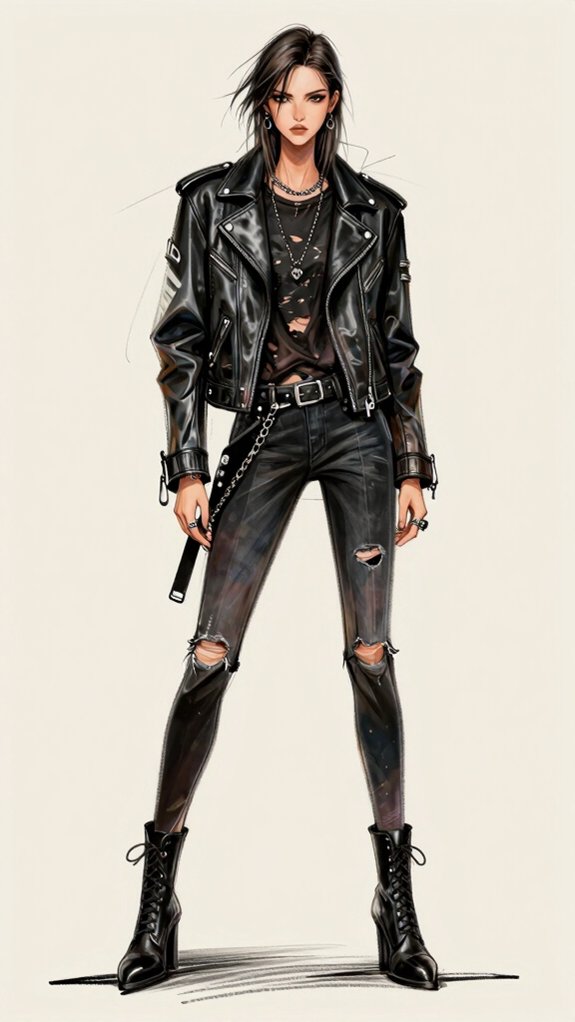
The rockstar aesthetic isn’t just clothing—it’s armor, attitude, and rebellion stitched into every seam. You’ve seen it replicated a thousand times, from Zara’s pathetic attempts at distressed leather to your cousin’s overpriced Saint Laurent jacket, yet the real thing remains stubbornly elusive. What separates authentic rock style from expensive cosplay? It starts with understanding that record executives didn’t just sell music in the ’60s and ’70s—they manufactured entire identities, carefully calibrated visual codes that fans could decode, worship, and ultimately purchase.
Music Industry Influence
The rockstar aesthetic didn’t materialize out of thin air—it was deliberately manufactured, refined, and weaponized by record labels who understood that selling music required selling an entire lifestyle. You’ve seen it play out countless times: unknown artists transformed into cultural phenomena through strategic creative branding that positions them as rebels, prophets, or sex symbols.
Labels invested heavily in stylists, photographers, and publicists who crafted carefully curated personas—think Malcolm McLaren engineering the Sex Pistols’ anarchist image or Colonel Tom Parker packaging Elvis as the dangerous-but-safe heartthrob. This calculated approach to fan engagement wasn’t cynical manipulation (well, not entirely), but rather shrewd recognition that audiences crave mythology alongside melodies.
The leather jackets, the smashed guitars, the carefully tousled hair—all deliberate choices designed to sell you transcendence. Much like how Coco Chanel transformed black from mourning wear into a symbol of rebellious sophistication, rock stylists repurposed working-class garments into uniforms of cultural defiance.
Era-Specific Styles
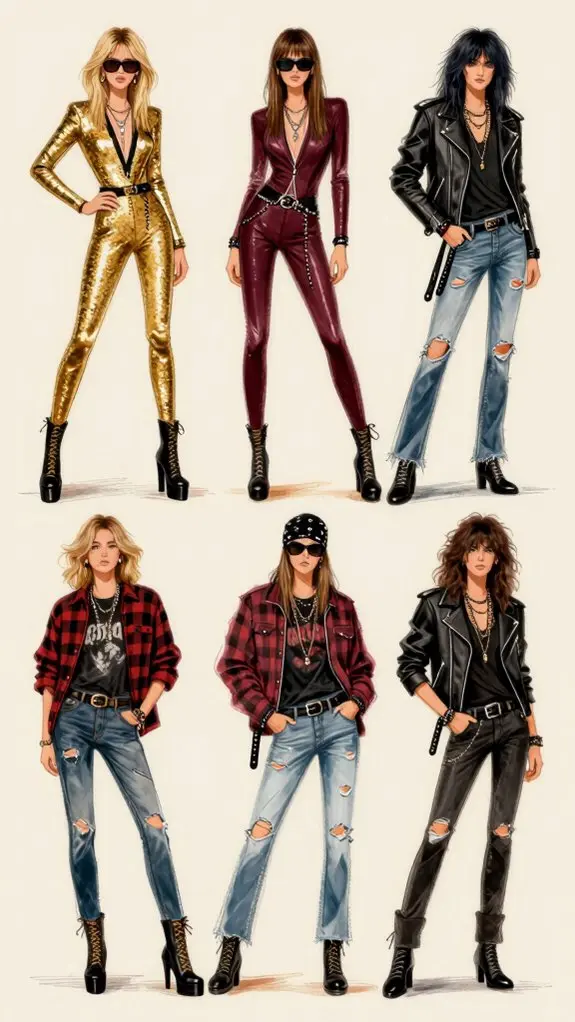
While the basic blueprint remained consistent—outsider makes noise, society clutches pearls, teenagers swoon—each decade stamped its own visual signature onto the rockstar template, reflecting whatever that era feared, fetishized, or desperately needed to rebel against.
The rockstar formula stayed constant—society scandalized, youth mesmerized—while each generation dressed its rebellion in whatever aesthetics terrified parents most.
You’ll notice how performance persona development evolved through distinct phases:
- 1950s-60s: Elvis’s dangerous hips gave way to The Beatles’ mop-tops, then Hendrix’s psychedelic fringe—each iteration pushing boundaries while maintaining just enough commercial appeal to infiltrate mainstream consciousness.
- 1970s-80s: Punk’s safety pins collided with glam’s glitter, creating genre blending influences that ranged from Bowie’s alien personas to Madonna’s provocateur chic.
- 1990s-2000s: Grunge’s deliberate slovenliness rejected hair metal’s excess, while hip-hop’s bling culture rewrote rockstar opulence entirely. Today’s musicians often channel that same rebellious energy through elevated athleisure styling—pairing black leggings with leather jackets and chunky sneakers for a look that bridges athletic comfort with rock edge.
Your aesthetic choices weren’t accidental—they were cultural battlegrounds.
Key Components
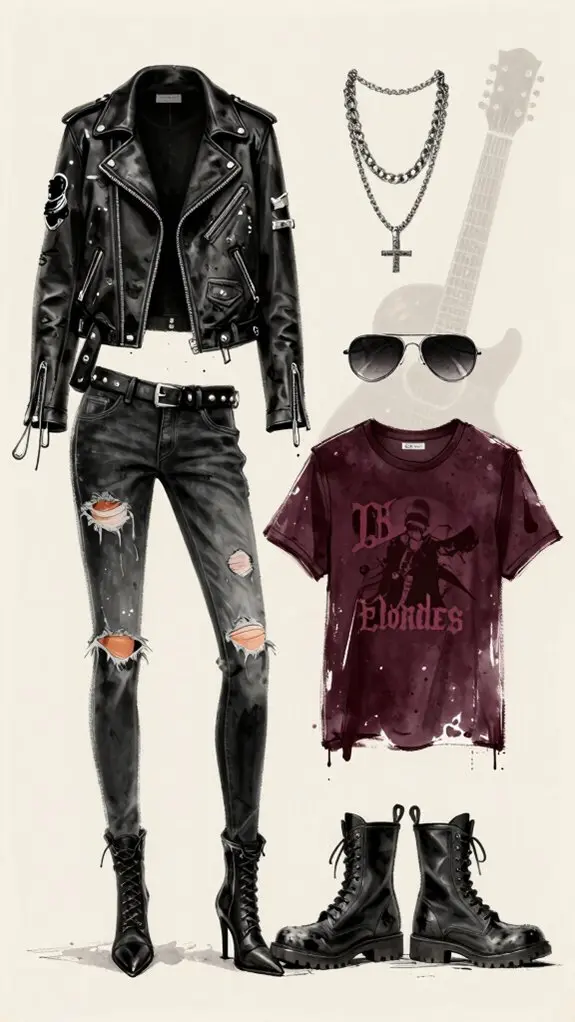
Key Components
You can’t construct an authentic rockstar aesthetic without understanding its foundational trinity: leather and denim form the armor, band merchandise serves as both cultural passport and declaration of allegiance, and statement accessories—chunky rings, layered chains, worn-in boots with actual stories behind them—transform the uniform into something personal.
These aren’t just clothes you throw on; they’re signifiers that separate the kids who actually lived in record stores from the ones who discovered Led Zeppelin through a Target t-shirt in 2019. The difference matters because rockstar style, unlike the sanitized “alt” aesthetics flooding TikTok, emerged from necessity, rebellion, and the practical demands of touring in vans that smelled like cigarettes and broken dreams. For those ready to commit fully to the denim component, mastering the double denim trend through strategic wash matching and proportion play elevates the look from dated to deliberately iconic.
Leather and denim
Nothing screams rebellion quite like the unholy marriage of leather and denim, two fabrics that’ve carried the torch of rock and roll defiance since Marlon Brando made a motorcycle jacket look dangerous in 1953. You’re building a uniform that speaks louder than amplifiers, combining vintage silhouettes with distressed textures that tell stories of late-night gigs and backstage chaos.
Your essential combinations include:
- Black leather jacket over stonewashed denim – the Ramones blueprint that never fails
- Leather pants paired with a denim vest – think Jim Morrison’s Miami incident, minus the arrest
- Double denim with leather boots and belt – Johnny Cash’s prisoner-of-style approach
These materials age beautifully, earning their worn-in authenticity through actual living, not pre-fabricated factory distressing.
Band merchandise
Band tees transform the rockstar aesthetic from costume into cultural statement, serving as both identity markers and conversation starters that announce your musical allegiances before you’ve said a word. You’re not just wearing cotton, you’re broadcasting credibility, and the merch design strategies behind these shirts reveal calculated authenticity.
Vintage tour tees from the ’70s and ’80s command premium prices because they represent genuine participation in rock history, while contemporary band collaborations with streetwear labels like Supreme or Bravado blur merchandise into high fashion territory. The oversized fit matters, the distressed printing matters, even the tag matters when you’re curating legitimacy. Authentic vintage finds beat Hot Topic reproductions every time, though modern artists like Tyler, The Creator understand that innovative merch design strategies can create collectible cultural artifacts rather than disposable promotional materials.
Statement accessories
Rings, chains, and leather cuffs function as punctuation marks in the visual grammar of rockstar style, transforming ordinary outfits into declarations of rebellion through strategic metalwork and deliberate excess.
You’re building personal branding through carefully chosen statement pieces that tell your story before you open your mouth. Consider these essentials:
- Skull rings and signet jewelry – Keith Richards made chunky silver rings synonymous with guitar gods, stacking them across both hands like trophies from aesthetic battles won.
- Layered chain necklaces – Mix lengths, textures, and pendant styles (dog tags, crosses, vintage lockets) to create visual depth that catches stage lights and camera flashes.
- Studded leather cuffs and belts – Rob Halford weaponized BDSM aesthetics, proving that subversive accessories become mainstream once rock legends claim them.
Your accessories aren’t decorative afterthoughts—they’re territorial markers, silent manifestos worn against your skin.
Building the Look
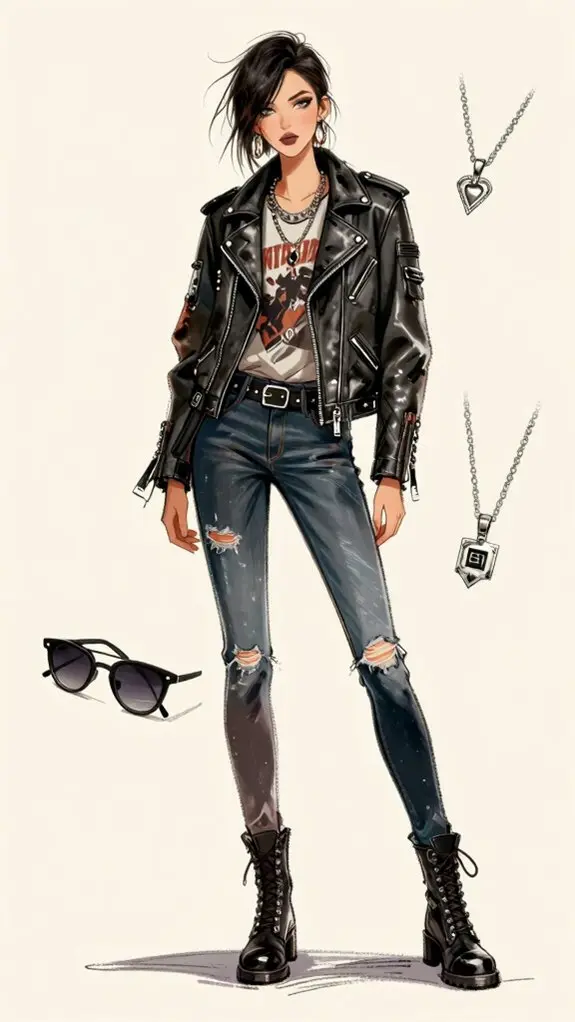
When you’re assembling a rockstar aesthetic, you’re not just throwing on ripped jeans and calling it a day—you’re constructing a visual identity that communicates rebellion, authenticity, and cultural awareness before you even open your mouth.
Start with versatile silhouettes that work across contexts: a well-fitted leather jacket shifts from dive bar to photo shoot, while slim-cut pants balance the volume of oversized band tees. Color coordination matters more than you’d think—Keith Richards understood that black, denim, and silver created a coherent palette that never felt costumey.
Layer intentionally, mixing textures like vintage cotton with structured leather, soft knits with distressed denim. Consider how flared jeans from the 1970s became synonymous with rock legends like Farrah Fawcett and Jane Birkin, proving that silhouette choice defines an era’s sound as much as its look. Your foundation pieces should feel lived-in, not fresh off the rack, because authenticity reads instantly through fabric, fit, and strategic wear.
Modern Rock Style
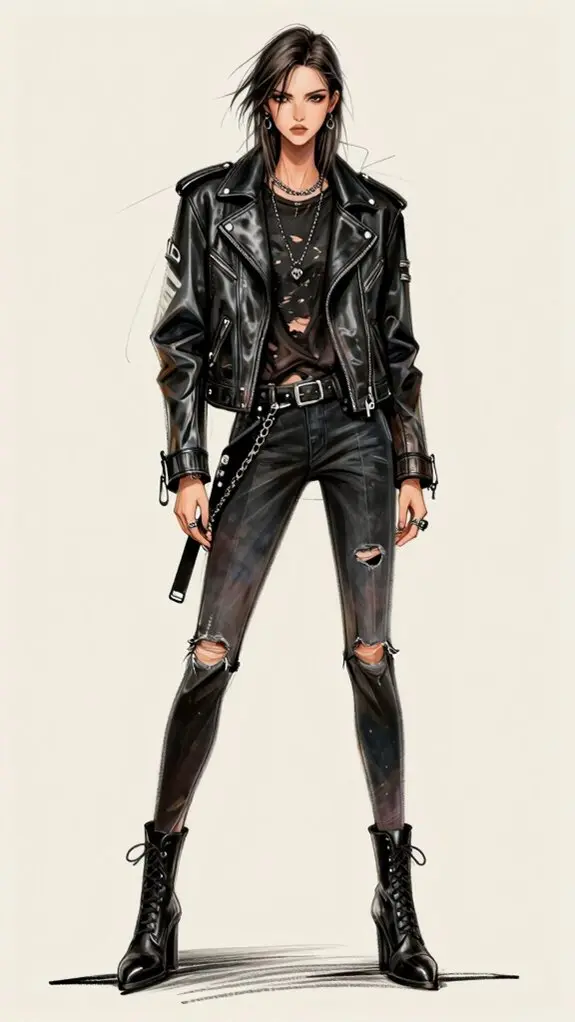
Today’s rock aesthetic doesn’t live in a vacuum sealed in 1975—it’s absorbed streetwear drops, high fashion collaborations, gender fluidity, and the internet’s democratization of style references that previous generations couldn’t access without raiding their older sibling’s closet or hunting through thrift stores for hours.
Rock fashion evolved from analog scarcity to digital abundance—mixing luxury brands with thrift finds that algorithms surface instead of serendipity.
You’re watching artists make bold fashion choices that blend Gucci with Goodwill, Supreme with vintage band tees. Modern live performance attire reflects this mashup mentality:
- Oversized silhouettes paired with statement jewelry that reads from the back row
- Designer sneakers replacing traditional boots, merging comfort with cache
- Androgynous tailoring that rejects the gender binary your parents’ generation enforced
The result? Rock style that’s simultaneously more accessible and more expensive, more inclusive yet somehow still exclusive. This evolution mirrors fashion’s broader shift toward new maximalism and personal style, moving away from the quiet luxury that dominated recent seasons.
Frequently Asked Questions
What Budget Is Needed to Achieve an Authentic Rockstar Aesthetic?
You don’t need millions—budget planning starts around $200-500 for minimalist wardrobe essentials that’ll nail the look. Think vintage band tees ($15-30), secondhand leather jackets ($80-150), worn denim, and beat-up boots.
The secret? It’s never been about money, honestly. Kurt Cobain raided thrift stores, and Keith Richards wore the same shirt for weeks. Authenticity trumps price tags every time, so invest strategically in versatile pieces that actually reflect your personality, not some manufactured image.
How Do I Adapt Rockstar Style for Professional Workplace Settings?
73% of hiring managers admit they’d overlook minor dress code expectations violations for talented candidates who demonstrate confidence. You can totally rock (pun intended) subtle leather accents, dark fitted blazers, and Chelsea boots while respecting personal grooming guidelines—keep hair styled but edgy, swap band tees for textured button-downs in black or burgundy, and add silver rings sparingly.
It’s about channeling Keith Richards’ swagger through tailored pieces that whisper rebellion rather than scream it.
Which Hairstyles Are Most Iconic in Rockstar Fashion History?
You’ll recognize rockstar hair immediately: David Bowie’s lightning-bolt Ziggy mullet, Joan Jett’s jet-black shag, Prince’s perfectly coiffed jheri curl. These hairstyles defy gravity and social convention alike.
Think Slash’s impossible top hat-crowned curls, Kurt Cobain’s unwashed grunge mane, Amy Winehouse’s towering beehive. Flowing locks that captivate—like Robert Plant’s golden cascade or Stevie Nicks’ wild witch waves—become inseparable from the music itself, transforming rebellion into visual poetry that’s instantly, unmistakably rock ‘n’ roll.
Can Rockstar Aesthetic Work for Different Body Types and Ages?
Absolutely—though fashion magazines would have you believing only twenty-something waifs can pull off leather jackets.
Here’s the truth: body positivity in rockstar style means finding what fits *your* frame, whether you’re channeling Joan Jett or Lemmy’s unapologetic swagger. Age appropriate styling doesn’t mean abandoning edge; it’s about adapting it. You’re not trying to cosplay as your teenage self—you’re evolving the aesthetic with confidence, quality pieces, and refusing society’s boring timeline for when you should “settle down” sartorially.
Where Can I Find Affordable Alternatives to Expensive Rockstar Clothing?
You’ll score authentic pieces at second hand clothing stores like Buffalo Exchange, Goodwill, and local vintage shops, where real rockstars actually shopped before they got rich.
Fashion rental services such as Nuuly and Rent the Runway let you rotate designer leather jackets and statement pieces without the commitment.
Thrift stores remain your best bet, honestly, because that worn-in Levi’s jacket carries more street cred than anything fresh off Nordstrom’s rack, and it costs maybe fifteen bucks.
Conclusion
You’ve got the blueprint—leather jacket, vintage band tee, boots that’ve seen better days. Now it’s about making it yours, not cosplaying Kurt Cobain at a Halloween party. The rockstar aesthetic spreads like wildfire through fashion, music, and culture, constantly reinventing itself while honoring its roots. Mix high and low, new and old, but keep it authentic. Because nothing screams “poser” louder than trying too hard to look effortless.
Have any thoughts?
Share your reaction or leave a quick response — we’d love to hear what you think!
-
 0
0 -
 0
0 -
 0
0 -
 0
0 -
 0
0 -
 0
0