

 Lena
LenaYou’ve seen the safety pins, the ripped fishnets, the leather jackets covered in hand-painted slogans—but do you actually understand what punk fashion meant when Vivienne Westwood and Malcolm McLaren opened SEX on King’s Road in 1971, or why kids today still reach for studded belts and combat boots? This isn’t just about looking edgy for your Instagram feed. Punk transformed clothing into protest, turning thrift store rejects and hardware store supplies into a middle finger aimed directly at polite society, and that transformation demands explanation.
Movement History
Defiance. That’s what punk fashion screamed from the grimy clubs of 1970s London and New York, where economic collapse, political apathy, and suffocating social norms pushed working-class kids to create something deliberately ugly, confrontational, and impossible to ignore.
You’ve got Vivienne Westwood and Malcolm McLaren’s SEX boutique selling bondage gear as streetwear, the Ramones turning ripped jeans into uniforms, and kids safety-pinning their clothes together because they couldn’t afford proper repairs—necessity became aesthetic rebellion.
The fashion evolution moved fast: cultural influences ranged from fetish wear to military surplus, transforming thrift-store rejects into weapons against mainstream conformity. This embrace of utility-focused design from army surplus stores laid groundwork for how functional military pieces would eventually climb from street rebellion to high fashion runways decades later.
Anti-Establishment Principles
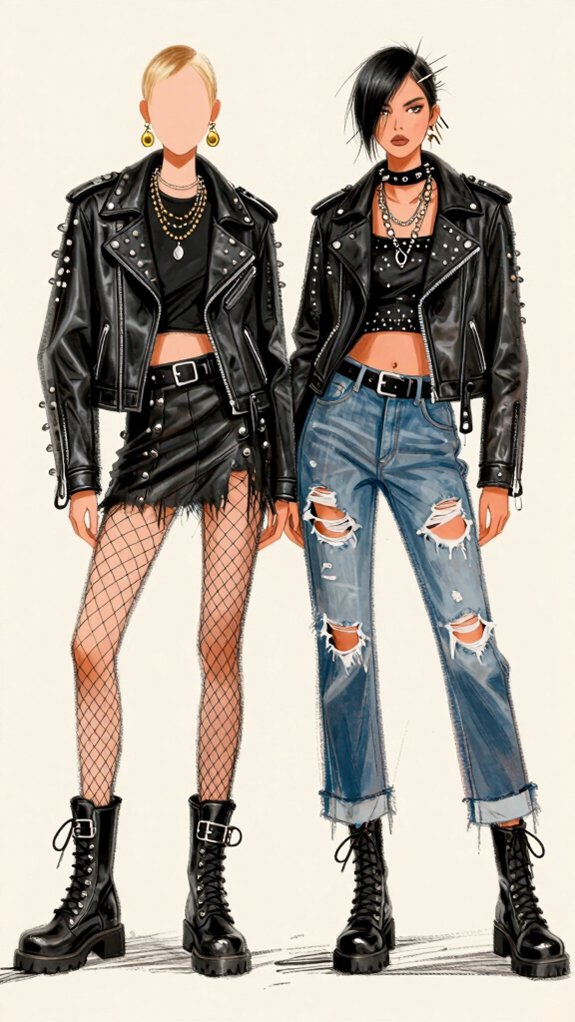
The clothes were never just clothes. Every ripped shirt, every spiked collar, every swastika armband worn to shock your grandmother—these weren’t fashion choices in any traditional sense, they were middle fingers aimed at every institution that claimed authority over young lives.
Punk’s aesthetic wasn’t about looking good; it weaponized appearance as societal critiques made visible. You wore bondage gear to the supermarket, safety pins through your cheek, deliberately ugly combinations that made conservatives clutch their pearls. This was political activism through wardrobe, rejecting capitalism’s demand that you consume properly, dress respectably, behave predictably.
Malcolm McLaren understood this, turning his Sex boutique into an arsenal where alienated kids could armor themselves against a society that had already written them off as disposable. In stark contrast, today’s Coquette Aesthetic embraces the very refinement and elegant femininity that punk so aggressively rejected.
Iconic Elements
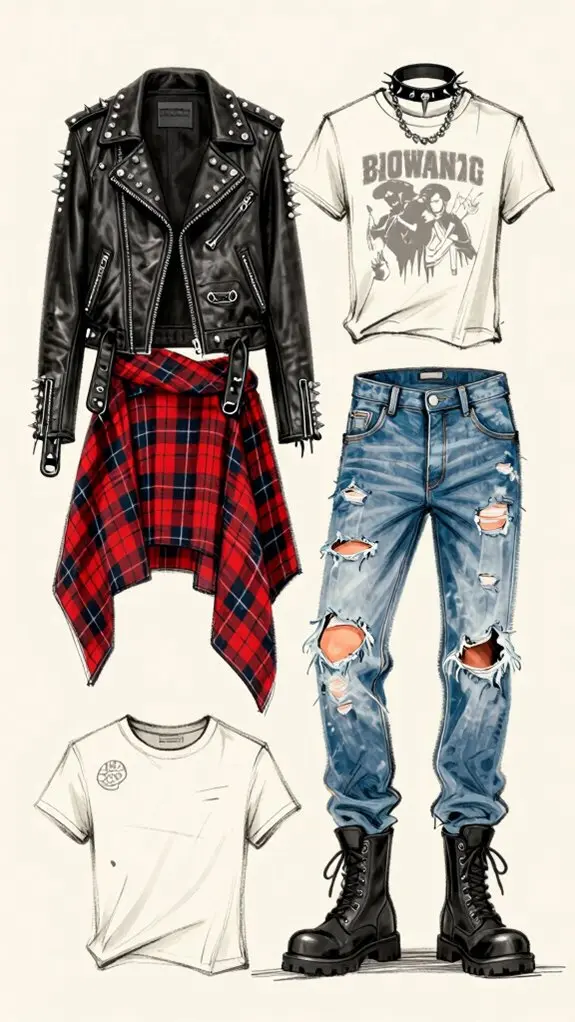
You can’t talk about punk without acknowledging the uniform that came to define rebellion itself: leather jackets worn like armor against conformity, safety pins repurposed from their domestic origins into badges of deliberate dysfunction, and studded accessories that transformed everyday fashion into something vaguely threatening.
These weren’t just aesthetic choices pulled from thin air—they were carefully constructed signals that you’d rejected the polyester leisure suits and bell-bottoms your parents were still clinging to in the mid-1970s.
What started as necessity, kids literally holding their ripped clothes together with hardware store supplies, became the visual language of an entire counterculture movement.
Today’s style icons prove that brown suede jackets can channel that same rebellious spirit when paired with animal prints and statement accessories for a softer take on edge.
Leather jackets
Your jacket demands motorcycle customization—studs, patches, spray paint, anything that screams you’ve claimed it as yours. Hunt thrift store treasures religiously; vintage Schott, Lewis Leathers, or even department store knockoffs gain credibility through wear, tear, and personal modifications.
A pristine jacket? That’s cosplay. Authentic punk leather looks lived-in, smells like cigarettes and sweat, tells stories through scuffs and safety pins. It’s protective coloring that simultaneously attracts and repels attention—exactly the contradiction punk thrives on.
Safety pins
Nobody planned for safety pins to become punk’s most recognizable symbol—they emerged from necessity, desperation, and a distinctly British working-class resourcefulness that viewed functional objects as fashion statements. You couldn’t afford proper fasteners for your ripped clothes? Safety pins held everything together while simultaneously announcing your poverty as a badge of honor.
Vivienne Westwood and Malcolm McLaren elevated these utilitarian scraps into deliberate provocations at SEX boutique, piercing them through cheeks, ears, noses—anywhere conventional society deemed inappropriate.
The creative uses expanded beyond mere clothing repair: you’d string them into chains, attach them to leather jackets in elaborate patterns, use them as earrings, brooches, even collar stays. Each pin represented rejection of consumer culture’s polished aesthetic, transforming mundane hardware-store supplies into aggressive anti-fashion declarations.
Studded accessories
Metal studs transformed punk from scrappy DIY rebellion into armored warfare against suburban complacency—if safety pins whispered “I’m broke and dangerous,” studded leather screamed “I’m weaponized.” The hardware came straight from industrial suppliers, automotive upholstery shops, and saddle-makers: conical spikes, pyramid studs, round dome rivets in chrome, nickel, or blackened steel.
You’d hammer them into everything: jackets, metal spiked belts, wristbands, chokers, even boots. The aesthetic borrowed from bondage gear and motorcycle culture, creating a uniform that looked simultaneously sexual and threatening. Studs added weight, texture, and genuine menace to otherwise ordinary clothing. They complemented asymmetric hemlines and torn fabric, transforming thrift-store finds into armor. Each stud placement became intentional—spelling out band names, creating geometric patterns, or simply clustering wherever your hammer landed after three beers.
DIY Culture
At its defiant core, punk has always been about making something from nothing, transforming safety pins into jewelry, ripped T-shirts into statements, and suburban garages into revolutionary spaces. You don’t need a fashion degree to customize your leather jacket with bleach and band patches salvaged from the thrifting culture that’s sustained the music scene since the Ramones first plugged in at CBGB.
Vivienne Westwood herself started by deconstructing existing garments, not sketching runway designs. Grab fabric paint, stencils, studs from the hardware store—whatever’s cheap, accessible, rebellious. The entire point is rejecting consumer culture’s polished offerings, creating something authentically yours that can’t be mass-produced by corporations trying to package your resistance. This juxtaposition of casual masculine elements against traditionally feminine pieces creates the kind of tension that keeps punk fashion feeling modern rather than costume-like.
DIY isn’t just aesthetic; it’s ideology, proof that you’ve opted out of their system entirely.
Modern Punk Style
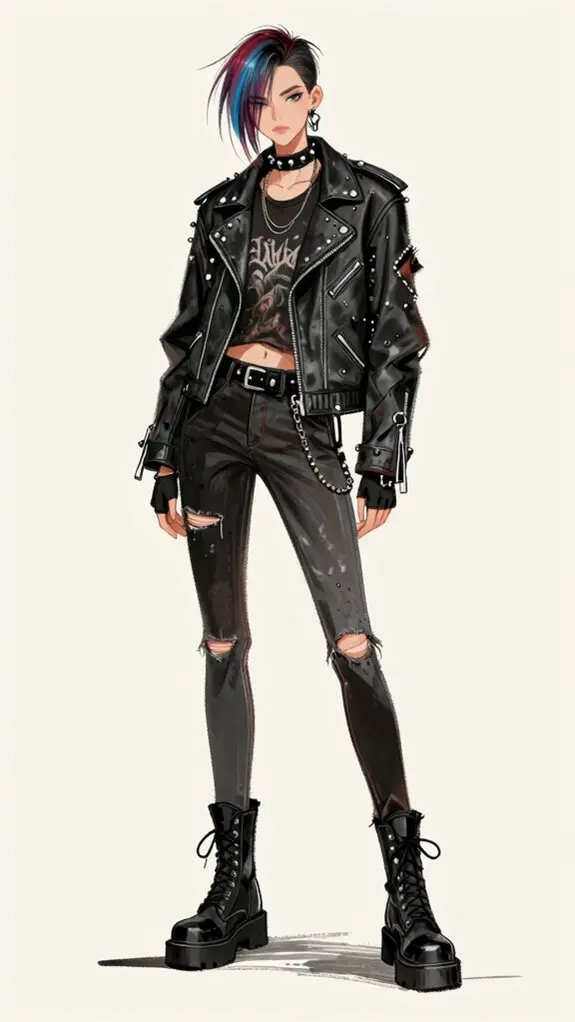
While TikTok aesthetics and Instagram influencers have diluted punk into another curated commodity—complete with $300 pre-distressed band tees from Urban Outfitters—the spirit hasn’t disappeared, it’s just migrated to unexpected territories.
You’ll find it in underground experimental music collectives, decentralized digital communities rejecting algorithmic conformity, and yeah, even in the wildly inconsistent outfits that’d make Vivienne Westwood both cringe and nod approvingly.
Modern punk isn’t about studded leather anymore—it’s about rejecting whatever’s being sold back to you as rebellion. That nonconformist attitude now manifests through creative self expression that refuses categorization, whether you’re remixing thrifted finds with homemade patches or deliberately clashing patterns that’d give fashion editors migraines. The uniform changed, but the refusal to wear one didn’t. This DIY ethos stands in stark contrast to today’s curated aesthetics like the clean girl aesthetic or old money style, where the whole point is polished conformity to a specific visual formula.
Frequently Asked Questions
Where Can I Buy Authentic Punk Clothing on a Budget?
You’ll find authentic punk pieces at vintage thrift stores like Goodwill, where DIY legends were born, not manufactured. Scour local shops for band tees, leather jackets, and flannel—they’re dirt cheap compared to mall counterfeits.
Online, check Depop, Poshmark, and eBay for affordable deals from real people, not corporate vampires monetizing rebellion. ThredUp works too, though you’ll need patience sorting through suburban castoffs.
Recall, true punk’s about customizing what you’ve got, ripping, safety-pinning, and making something yours—not buying pre-distressed garbage at Urban Outfitters.
How Do I Style Punk Fashion for a Professional Workplace?
You’ll master workplace punk style by toning down the rebellion without losing your edge. Start with a professional punk balance: swap safety pins for subtle band pins on blazer lapels, trade torn fishnets for structured leather accessories, and choose dark button-downs instead of graphic tees. Keep your Dr. Martens, just polish them.
The key’s strategic restraint—a single statement piece, like studded oxfords or a slim leather jacket, maintains authenticity without triggering HR’s dress code radar.
What Shoes Work Best With Punk Outfits?
Your punk aesthetic is a phoenix rising from corporate ashes, and it needs the right foundation. Platform boots and chunky combat boots aren’t just footwear—they’re your armor against conformity, babe.
Doc Martens remain the gold standard since the ’60s, their air-cushioned sole offering comfort during long workdays while maintaining that rebellious edge. Demonia platforms add height, drama, and unapologetic attitude. Steel-toed options blend safety with subversion, proving you can honor workplace dress codes without sacrificing your anarchist soul.
Can Older Adults Wear Punk Fashion Without Looking Inappropriate?
You’re never too old for punk—it’s about attitude, not age appropriate styling filtered through society’s boring rules. Debbie Harry rocked fishnets at sixty, Vivienne Westwood designed punk pieces into her eighties, and Iggy Pop still goes shirtless.
Generational perspectives shift, but rebellion doesn’t have an expiration date. Adapt the aesthetic to your comfort level: leather jackets, band tees, and boots work at any age. Own it fiercely, ignore the pearl-clutchers, and recollect punk was always about defying expectations.
How Do I Care for and Maintain Studded Leather Jackets?
Like Sid Vicious’s jacket that survived decades of abuse, you’ll need proper leather cleaning techniques to keep yours immortal. Wipe studs weekly with a dry cloth—tarnish spreads fast.
Use leather conditioner monthly, but avoid studs (it corrodes metal). For stud maintenance tips, tighten loose prongs with pliers before they’re lost forever. Hand-clean with saddle soap, never machine wash.
Store flat or on padded hangers. Your jacket’s survived mosh pits; don’t let neglect kill it.
Conclusion
You’ve studied the safety pins, admired the torn fishnets, maybe even bought a pre-distressed leather jacket from Urban Outfitters for $200—how authentically rebellious. The irony? Punk’s anti-establishment rage has become another marketable aesthetic, neatly packaged and Instagram-ready. But here’s the thing: punk was never about perfecting the look. It was about rejecting perfection entirely. So go ahead, rip your own clothes, challenge your own conformity, or just admit you’re shopping for a costume.
Have any thoughts?
Share your reaction or leave a quick response — we’d love to hear what you think!
-
 0
0 -
 0
0 -
 0
0 -
 0
0 -
 0
0 -
 0
0