

 Lena
Lena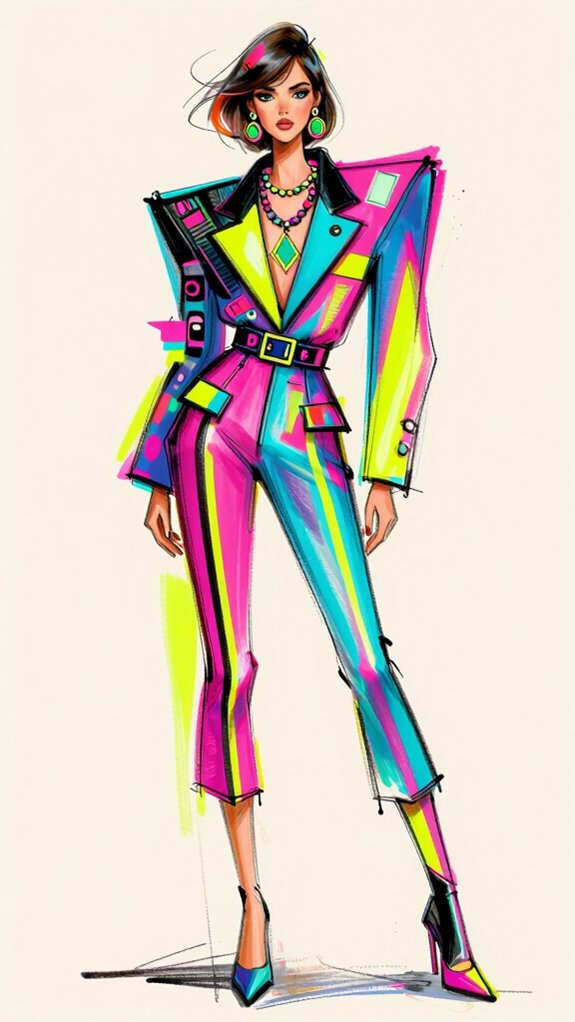
You’ve seen the photos—those electric pinks, aggressive shoulder pads that could take out an eye, and enough hairspray to puncture the ozone layer (which, let’s be honest, it probably did). The ’80s weren’t subtle, they were a decade-long argument between corporate boardrooms demanding power suits and streets pulsing with neon rebellion. But here’s what most people miss about this aesthetic clash: it wasn’t actually a contradiction at all.
Decade Overview
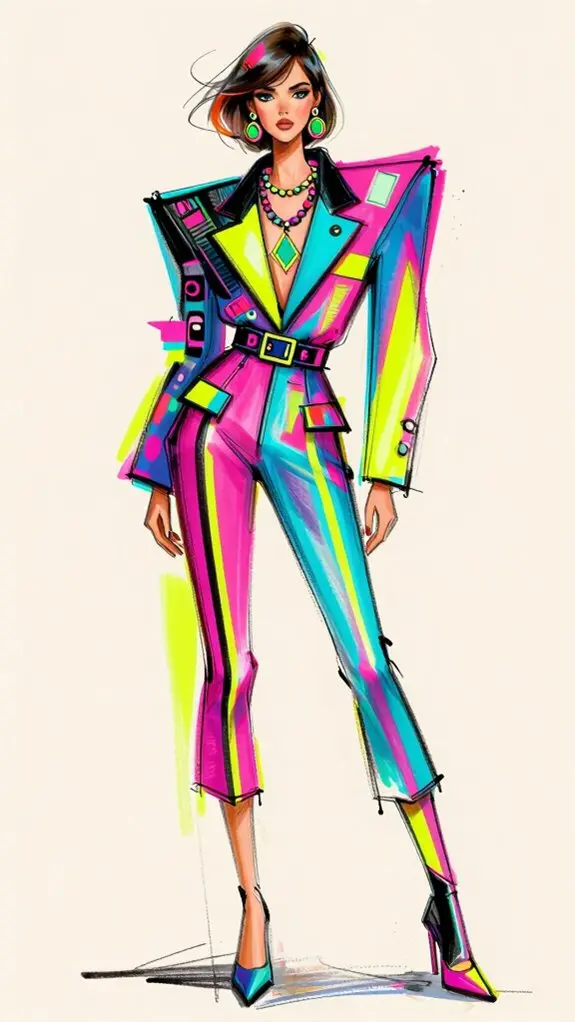
The 1980s didn’t whisper—it screamed in day-glo pink and electric blue, a decade that rejected the earth tones and restraint of the ’70s with the subtlety of a synthesizer solo. You couldn’t escape its cultural zeitgeist if you tried—MTV launched in 1981, transforming music into a visual medium, while shoulder pads expanded to architectural proportions that would make a linebacker jealous.
The pop culture influence was omnidirectional: Wall Street’s Gordon Gekko made “greed is good” a mantra, Madonna turned lace gloves into statements, and Prince proved purple could be masculine. Everything was bigger, bolder, louder. You wore your ambition on padded shoulders, your rebellion in ripped denim, your optimism in neon. Subtlety? That died somewhere between Rubik’s Cubes and Reaganomics. Yet even amid the excess, Chanel’s timeless color palette and effortless sophistication offered a counterpoint that would outlast the decade’s flashiest trends.
Dual Style Movements
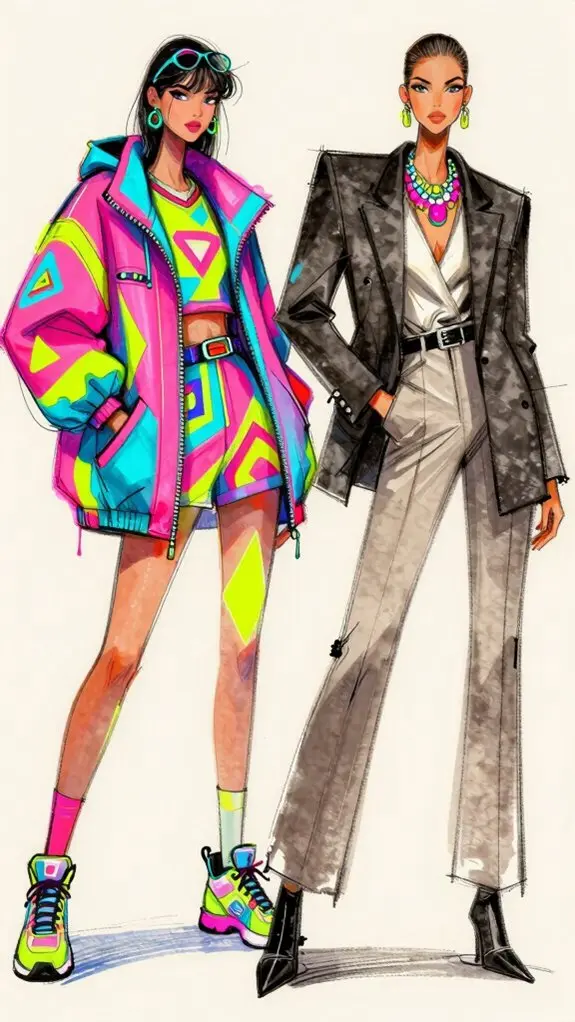
Two warring tribes claimed the ’80s fashion landscape, and somehow they coexisted without annihilating each other—corporate power dressing on one side, dressed for hostile takeovers in sharp-shouldered blazers and pencil skirts, and punk-influenced street style on the other, safety-pinning its way through thrift stores and underground clubs.
You’d find investment bankers strutting past mohawked kids without flinching, both convinced they owned the decade. These eclectic combinations weren’t contradictions—they were the point.
Wall Street demanded shoulder pads that could intimidate entire boardrooms while downtown kids ripped fishnets and sprayed their hair into gravity-defying sculptures. The real genius was juxtaposing contrasts so extreme they created their own aesthetic language, making the ’80s the last decade where businesswomen and club kids occupied completely different fashion universes yet somehow defined the same era. While neon ruled the streets, the corporate world often relied on monochromatic black and white ensembles that communicated competence and timeless authority.
Key Elements
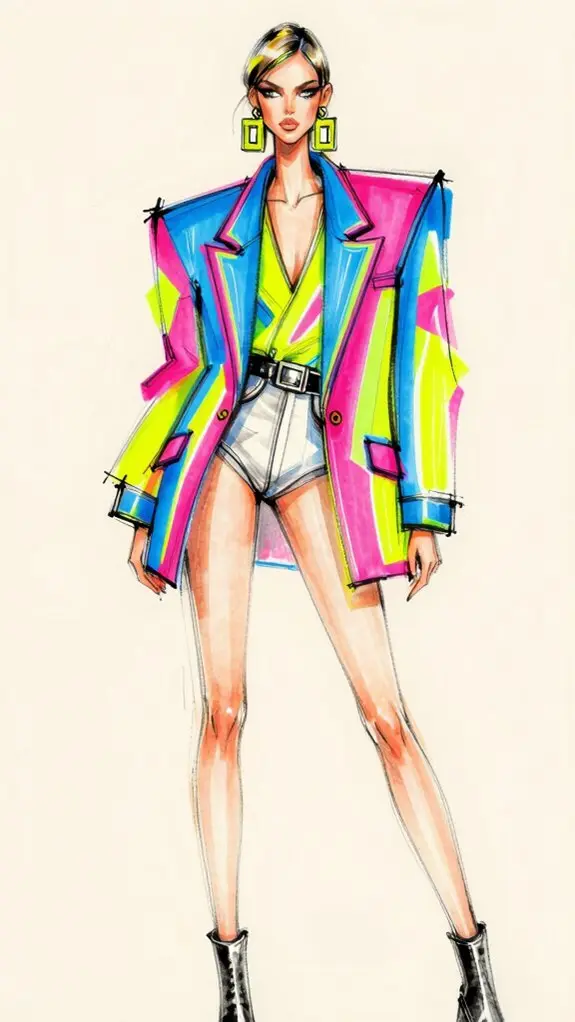
You can’t understand the ’80s look without grasping its three core pillars: the riot of bold colors and geometric patterns that made everyone look like they’d raided a highlighter factory, the oversized blazers with shoulder pads so aggressive they could double as furniture, and the athletic influences that turned track suits and sneakers into legitimate street wear.
These weren’t just fashion choices—they were power moves, visual declarations that screamed confidence whether you were closing a deal on Wall Street or breakdancing in the Bronx. The decade took maximalism to its logical extreme, transforming bodies into architectural statements through volume, contrast, and unapologetic brightness that made subtlety look like cowardice. While today’s streetwear aesthetic channels athletic-inspired pieces and bold graphics, it owes much of its DNA to those pioneering ’80s looks that first legitimized sporty elements as high fashion.
Bold colors and patterns
Electric fuchsia, acid-wash denim, and geometric prints that could induce migraines—if the 80s had a visual mission statement, it was basically “more is more, and subtlety is for cowards.” Color coordination took a backseat to color chaos, with fashion designers and everyday people alike throwing together combinations that would’ve made earlier generations clutch their pearls: hot pink with electric blue, neon yellow with purple, orange with everything.
You’d layer these vibrant textures without hesitation:
- Animal prints mixed with polka dots and stripes simultaneously
- Oversized blazers featuring shoulder pads paired with metallic leggings
- Color-blocked windbreakers that practically glowed in daylight
The era demanded you pile on statement accessories—chunky jewelry, fingerless gloves, multiple belts—creating visual overload that somehow worked. Pattern clashing wasn’t just accepted; it was celebrated as creative rebellion.
Oversized blazers
The oversized blazer didn’t just overwhelm 80s fashion—it weaponized the human silhouette, transforming everyday professionals into angular, shoulder-padded warriors ready to storm the boardroom. You couldn’t escape those statement shoulders, jutting out like architectural achievements, declaring dominance before you’d even opened your mouth.
Designers like Giorgio Armani and Donna Karan understood the assignment: exaggerated proportions weren’t about fit, they were about power. The blazer swallowed you whole, intentionally, making your actual body irrelevant beneath yards of fabric and foam padding.
Women especially adopted this armor, fighting for C-suite recognition in a man’s world. You’d pair your oversized blazer with slim-fit trousers or pencil skirts, creating that iconic inverted triangle that screamed “take me seriously.” The bigger the blazer, the bigger your ambitions.
Athletic influences
While boardrooms demanded shoulder pads and power suits, the streets were busy appropriating athletic wear into everyday fashion, blurring the lines between gym and social life in ways that would’ve horrified previous generations.
You couldn’t escape the sportswear inspiration flooding mainstream culture. High impact silhouettes borrowed from aerobics classes, tracksuits, and basketball courts suddenly became acceptable brunch attire:
- Leggings and leg warmers paired with oversized sweatshirts created that perfectly disheveled post-workout look
- Windbreakers in electric colorways turned heads whether you’d actually broken a sweat or not
- Tennis shoes (specifically Adidas Superstars and Nike Air Jordans) graduated from functional footwear to status symbols
Jane Fonda’s workout videos sold seventeen million copies, transforming athletic gear into aspirational fashion. The message was clear: looking fit mattered more than actually being fit.
Essential Pieces
Building an authentic 80s wardrobe doesn’t require raiding every vintage store in your city, though it certainly helps. You’ll want blazers with shoulder pads—the broader, the better—because nothing says power like looking ready to tackle someone.
Shoulder pads weren’t fashion—they were architecture, transforming blazers into power statements that dared anyone to underestimate you.
Acid-wash denim, high-waisted everything, and oversized sweaters form your foundation. Statement pieces matter here: think geometric earrings, bold belts, and anything featuring Memphis design elements (those squiggly lines weren’t just aesthetic accidents).
Master layering techniques by pairing slouchy tees under structured jackets, or throwing leg warmers over leggings. Don’t forget the accessories that complete the look: scrunchies, fingerless gloves, Ray-Ban Wayfarers. For a utility-forward edge, incorporate cargo pants with their military roots that were gaining traction during this era and have since evolved into luxury wardrobe staples.
Mix neon with neutrals, pair athletic wear with dress clothes—the decade thrived on contradictions, and your wardrobe should too.
Styling Balance
Collecting every shoulder-padded blazer and neon accessory won’t save you if you wear them all at once—that’s costume, not style. The secret? Restraint. Pick one statement piece, then dial everything else back.
Consider these approaches:
- Bold blazer with minimalistic accessories: Let those shoulder pads speak, pair with simple gold hoops
- Neon accent against neutrals: One electric pink belt transforms basic black jeans and white tee
- Color coordination over chaos: Match your eyeshadow to your blazer, not your entire rainbow wardrobe
You’re channeling an era, not recreating a museum exhibit. The ’80s worked because people understood focal points—Madonna’s lace gloves mattered precisely because she didn’t wear seventeen competing accessories. For a softer take on bold accessories, try a silk bandana tied at the neck to add vintage flair without overwhelming your look. Choose your moment, commit fully, then step away from the closet.
Frequently Asked Questions
What Celebrities Best Embodied the 80S Neon and Power Dressing Aesthetic?
You can’t discuss ’80s aesthetic without bowing to Madonna’s iconic looks—lace gloves, neon bracelets, and those shoulder pads that could’ve doubled as landing strips. She owned the power dressing game.
Meanwhile, Michael Jackson’s vibrant stage outfits, from sequined military jackets to that red leather “Thriller” ensemble, defined electric glamour. Princess Diana mastered elegant power suits, while Joan Collins in “Dynasty” practically weaponized her wardrobe. These icons didn’t just wear the decade—they *were* it, honey.
How Can I Incorporate 80S Aesthetics Without Looking Costumey?
Picture an Instagram filter set to “subtle nostalgia.” You’ll nail modern 80s by choosing subtle color palettes—think dusty rose blazers instead of electric fuchsia—and focusing on silhouette experimentation with structured shoulders, tapered pants, high waists.
Keep it minimal: one statement piece per outfit, never full Reagan-era cosplay. The secret’s restraint, babe. Those exaggerated proportions work brilliantly when you’re not drowning in neon and animal print simultaneously.
Modern fabrications help too—swap shiny polyester for quality wool blends.
Where Can I Buy Authentic Vintage 80S Clothing Pieces Today?
You’ll find the best authentic pieces through thrift store shopping in older neighborhoods—think Goodwill, Salvation Army, and local consignment shops where Baby Boomers are finally purging their closets. Vintage clothing markets and specialized online platforms like Etsy, Depop, and Poshmark offer curated selections, though you’ll pay premium prices.
Estate sales are goldmines if you’re willing to hunt. eBay’s still surprisingly solid for specific designer pieces, particularly those iconic power blazers and statement accessories that defined the era.
What Makeup Looks Complement 80S Neon and Power Dressing Styles?
Want your face to match that electric energy? You’ll need bright eyeshadow looks in fuchsia, cobalt, and turquoise, blended with zero subtlety across your lids.
Pair them with bold lip color choices like cherry red or hot pink—think Madonna’s “Material Girl” era, not Instagram’s “natural glam.”
Don’t forget frosted finishes, heavy blush swept toward your temples, and defined brows that mean business. The goal isn’t understated; it’s unapologetic confidence that commands attention before you’ve even spoken.
Are There Modern Brands Recreating Authentic 80S Aesthetic Pieces?
You’ll find several retro inspired brand collections nailing the vibe—Urban Outfitters’ collaboration lines, ASOS’s COLLUSION range, and Zara’s periodic throwback drops capture that electric energy authentically.
The high fashion 80s revival’s even stronger at luxury houses: Saint Laurent, Balmain, and Versace consistently channel those power shoulders, bold metallics, and unapologetic excess in their runway shows. These aren’t cheap knockoffs, they’re legitimate reinterpretations that understand the era’s maximalist spirit, angular silhouettes, and fearless color blocking without feeling costumey.
Conclusion
you’ve spent decades mocking shoulder pads, neon windbreakers, and Miami Vice pastels, yet you’re literally wearing an oversized blazer right now. The ’80s aesthetic you dismissed as tacky excess has infiltrated your wardrobe, your Instagram feed, your entire cultural consciousness. Those geometric patterns you ridiculed? They’re “vintage” now, which is just a polite way of saying everything old becomes new again when we run out of original ideas.
Have any thoughts?
Share your reaction or leave a quick response — we’d love to hear what you think!
-
 0
0 -
 0
0 -
 0
0 -
 0
0 -
 0
0 -
 0
0