

 Lena
Lena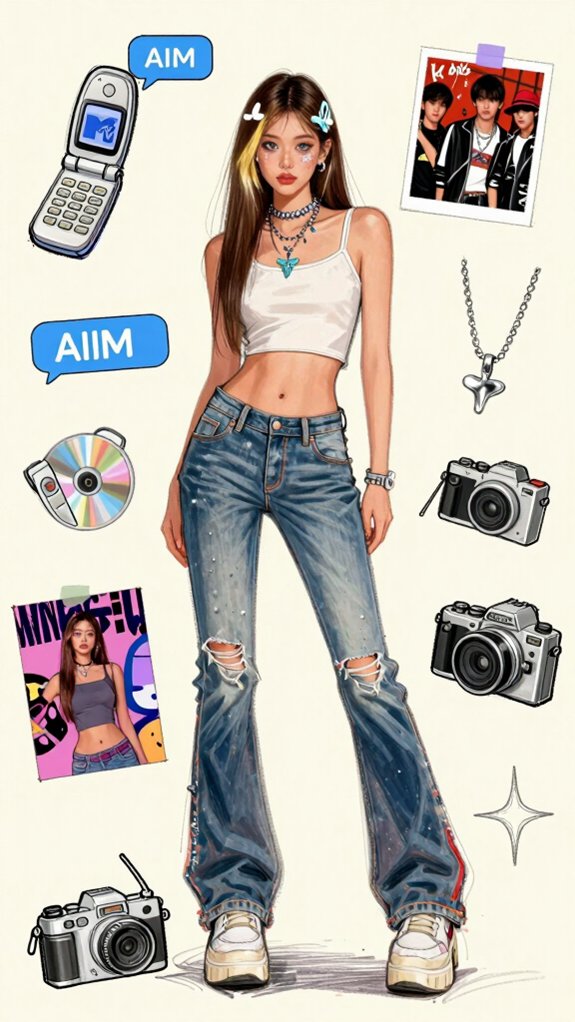
You’ve seen it everywhere—the return of butterfly clips, baby tees, and those impossible low-rise jeans your older sister swore she’d never wear again. But here’s what’s actually interesting about Y2K nostalgia: it’s not just fashion recycling itself like it always does. This time, Gen Z’s recalling an era they barely recollect, one that believed the future would be shiny, optimistic, and vaguely edible-looking (hello, iMac colors). The question is whether you’re chasing authenticity or just another algorithm-fed trend.
Cultural Background
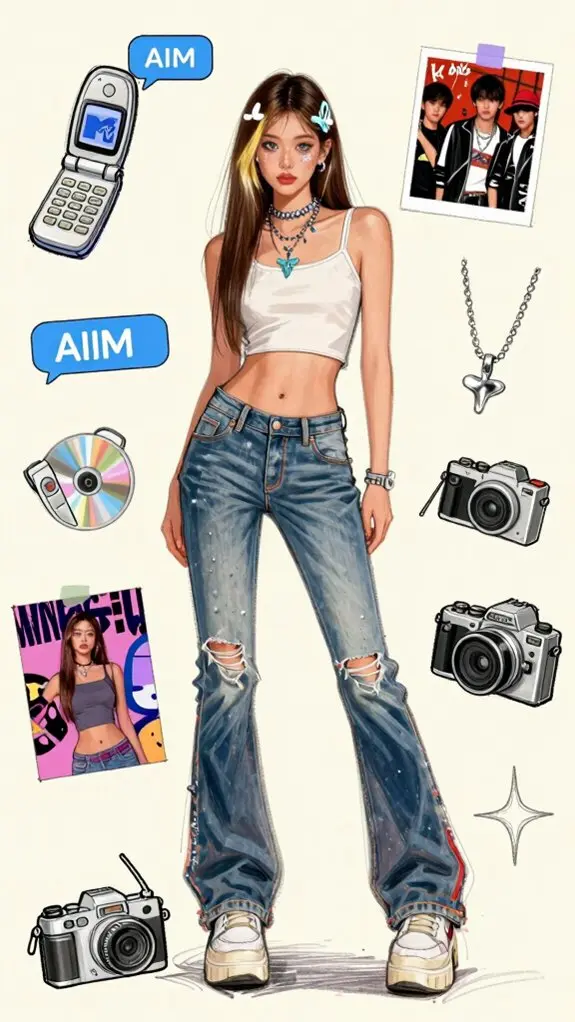
The late 1990s didn’t just stumble into optimism—it sprinted headfirst into it, fueled by dot-com billions, a seemingly invincible stock market, and the intoxicating promise that the internet would democratize everything from knowledge to wealth.
You couldn’t escape the zeitgeist: emerging technologies like DVD players, Palm Pilots, and those chunky iMacs in Bondi Blue saturated homes while AOL’s “You’ve Got Mail” became America’s favorite sound. Cultural influences ranged from *The Matrix’s* cyberpunk philosophy to Britney’s crystallized abs, all reflecting society’s weird cocktail of technological utopianism and millennial anxiety.
Y2K itself—that apocalyptic non-event—perfectly captured the era’s contradictions. We feared computers would destroy civilization at midnight, then partied anyway, because what else could you do? Today’s Gen Z has developed a renewed appreciation for femininity through nostalgic aesthetics that echo the playful, hyper-feminine styles of that optimistic era.
Defining Features
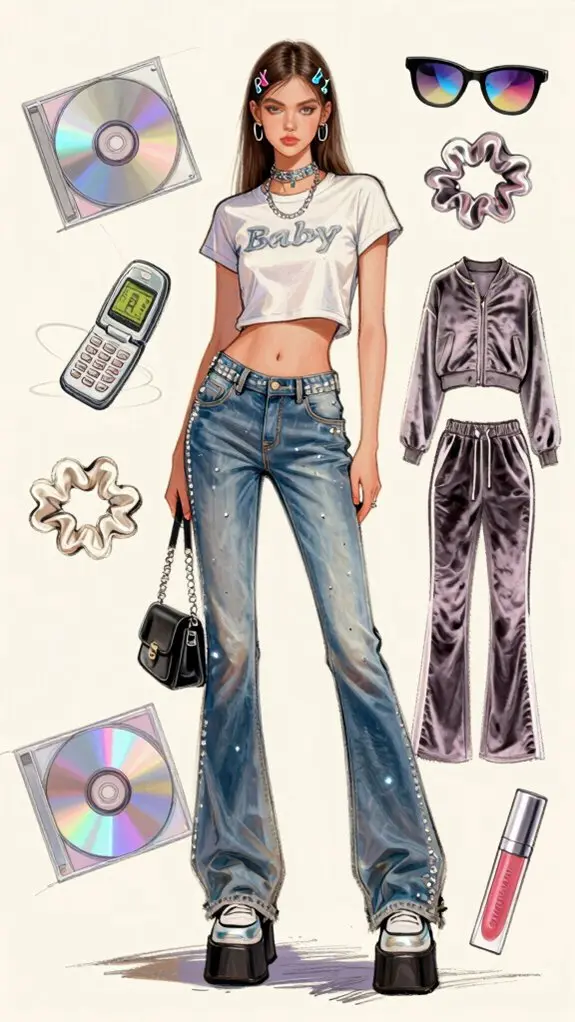
You’ll recognize Y2K fashion instantly by its unholy trinity of defining features: low-rise jeans that sat somewhere between your hip bones and complete indecency, metallic fabrics that made everyone look like they’d raided a spacecraft’s cargo hold, and mini bags so impractically tiny they couldn’t fit a flip phone, let alone today’s smartphones.
These weren’t just trends—they were cultural markers of an era that genuinely believed we’d all be living in chrome-plated futures by 2010. The aesthetic’s obsession with futurism, technological optimism, and a certain rebellious disregard for practical clothing (who needs pockets anyway?) created a visual language that’s now impossible to separate from the late ’90s and early 2000s zeitgeist. Interestingly, today’s fashion has swung in the opposite direction, with bootcut and flared jeans making a massive comeback as the modern silhouette embraces a baggier, more relaxed fit through the thigh.
Low-rise denim
Low-rise jeans sat precariously on the hips of an entire generation, clinging to the body at a point that would’ve scandalized anyone over thirty and mystified anyone under fifteen today. You couldn’t escape them—they occupied every mall, music video, and magazine spread from 1999 to 2006.
The variations seemed endless:
- Distressed denim with strategically placed rips along the thighs
- Patchwork denim featuring contrasting fabric inserts
- Bell-bottom flares that dragged across dirty floors
- Ultra-low bootcuts paired with visible thongs
Britney, Christina, and Paris made them synonymous with early-2000s rebellion, though calling a four-inch zipper “rebellious” feels generous now. These jeans required constant vigilance, a specific body type, and the kind of confidence that only Y2K’s particular brand of body-conscious fashion could demand.
Metallic fabrics
While low-rise denim exposed unprecedented amounts of midriff, another material emerged to catch and reflect every camera flash, transforming clubgoers and pop stars into walking disco balls. Metallic fabrics controlled, governed, or directed Y2K fashion with an intensity that suggested we’d collectively decided the future should look like aluminum foil.
You couldn’t escape these shiny textiles, whether Christina Aguilera wore reflective materials in “Come On Over Baby” or your classmate showed up to homecoming in a silver halter top from Wet Seal. The aesthetic screamed optimism, a belief that technology would make everything sleeker, shinier, literally brighter. Brands like bebe and BCBG mass-produced these futuristic pieces, making space-age fashion accessible to anyone with sixty dollars and questionable taste, though we’d argue the taste was actually perfect.
Mini bags
Function surrendered to fashion the moment someone decided a bag should hold exactly three items: a lip gloss, a credit card, and your audacity. Y2K’s mini bags weren’t about practicality—they were wearable declarations that you’d transcended basic needs like carrying your phone, wallet, and keys simultaneously.
This versatile accessory came in four dominant forms:
- Baguette bags (thank you, Fendi)
- Bedazzled wristlets dripping with rhinestones
- Butterfly-adorned pouches that screamed Claire’s Accessories
- Metallic shoulder bags roughly the size of a Altoids tin
The playful functionality was entirely theoretical. You’d watch Paris Hilton carry a Chihuahua and a sequined clutch, wondering which held more utility. These bags forced prioritization—choose your essentials wisely, because your entire life won’t fit. That constraint, ironically, became the appeal.
Key Pieces
Key Pieces
The uniform of Y2K fashion revolved around a surprisingly tight roster of essentials, each one engineered to telegraph your fluency in millennium-era cool. You couldn’t survive 2002 without mastering this equipment list, really.
| Item | Purpose |
|---|---|
| Low-rise jeans | Maximum hip bone exposure, minimum coverage |
| Velour tracksuits | Casual luxury that screamed “I’m rich but comfortable” |
| Butterfly clips | Strategic hair sectioning, bonus: looked vaguely futuristic |
| Baby tees | Crop tops for the commitment-phobic |
Cargo pockets weren’t just storage solutions—they were architectural statements dangling from your thighs, their military roots stretching back to WWII when the US Army’s Airborne division enlarged them to carry more equipment. Trucker hats, inexplicably beloved by celebrities who’d never driven trucks, completed the look. Von Dutch capitalized brilliantly on this irony, charging premium prices for working-class cosplay that Paris Hilton somehow made aspirational.
Color and Pattern Guide
Owning the right pieces meant nothing if you assembled them in earth tones like some kind of Gap-shopping amateur. Y2K demanded commitment to a specific chromatic rebellion that made your parents wince.
Your color palette required:
- Baby pink and baby blue – pastel palettes occupied everything from flip phones to eyeshadow
- Metallics – silver outperformed gold, obviously, because we were living in the future
- Hot pink and lime green – often together, because subtlety perished in 1999
- Holographic everything – if it didn’t reflect rainbow light, why bother
Abstract patterns mattered equally. Think tribal prints nobody could actually trace to any tribe, zebra stripes, butterfly motifs, and those weird geometric shapes that covered every Limited Too shopping bag. Clashing wasn’t just acceptable—it proved you understood the assignment. A printed bandana featuring geometric designs or bold graphics became the perfect accessory to tie together these chaotic color combinations.
Contemporary Styling
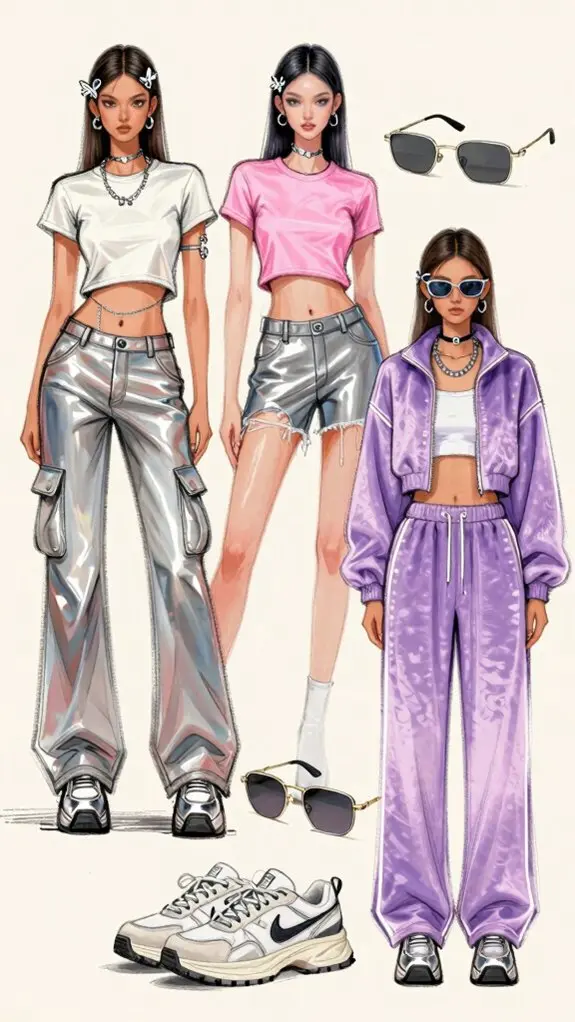
Resurrecting Y2K fashion in 2024 requires surgical precision, not costume-party enthusiasm, because there’s a canyon-wide difference between understanding an aesthetic and looking like you’re attending a theme party.
You’ll want to cherry-pick elements—a butterfly clip here, low-rise denim there—while grounding them in contemporary silhouettes that actually make sense today. Think retro minimalism rather than head-to-toe recreations of Britney’s “Oops” era wardrobe.
The secret lies in mixing early 2000s glamour with modern proportions, pairing that metallic cami with tailored trousers instead of cargo pants, or wearing those tiny sunglasses as an accent piece, not your entire personality. Balance is everything; you’re channeling an era, not trapped in amber from it. The same proportion play principles that make lace skirts feel modern—pairing delicate pieces with oversized or structured tops—apply perfectly to updating Y2K staples for today’s aesthetic.
Frequently Asked Questions
What Celebrities Popularized Y2K Fashion in the Early 2000S?
You couldn’t escape Paris Hilton’s iconic looks—velour tracksuits, low-rise jeans, and tiny designer dogs became her signature. Britney Spears’ denim on denim style, especially that unforgettable matching outfit with Justin Timberlake, defined the era’s fearless fashion experimentation.
Christina Aguilera brought edgier vibes with cargo pants and bandanas, while Destiny’s Child rocked coordinated metallics. These celebrities didn’t just wear Y2K fashion; they embodied it, turning butterfly clips, trucker hats, and bedazzled everything into cultural imperatives you’d to follow.
Where Can I Buy Authentic Y2K Pieces Today?
You’ll find authentic Y2K pieces through online vintage stores like Depop, Vinted, and The RealReal, where sellers curate actual early-2000s inventory. Thrifted clothing pieces from Goodwill, Buffalo Exchange, or local consignment shops offer better deals, though you’ll need patience to dig through racks.
Etsy’s vintage section works too, but verify seller authentication. Skip fast-fashion “Y2K-inspired” knockoffs—they’re missing that essential lived-in quality, the wear patterns that separate genuine relics from corporate nostalgia-mining.
Is Y2K Aesthetic Sustainable or Considered Fast Fashion?
Think of Y2K fashion like a thrift store treasure hunt—you’re literally rescuing Juicy Couture tracksuits from landfills. Authentic Y2K shopping is inherently sustainable since you’re buying secondhand, but here’s where it gets messy: when brands manufacture *new* Y2K-inspired pieces without eco-friendly manufacturing methods or sustainable textile choices, it’s just fast fashion wearing a Von Dutch trucker hat.
You’re either genuinely recycling 2000s culture or you’re funding another trend cycle that’ll dump polyester into oceans.
How Much Do Vintage Y2K Items Typically Cost?
You’ll find vintage Y2K clothing condition dramatically affects pricing—expect $15-40 for basic tees and tanks, while pristine designer pieces (think Juicy velour tracksuits, Von Dutch trucker hats) fetch $80-300+.
Online resale market trends show Depop and Poshmark sellers charging premiums for “authentic” early-2000s pieces, though you’re often just paying nostalgia tax.
Rare items like archived Baby Phat or Bebe bedazzled everything can hit $500, especially if influencers co-sign the trend.
Smart thrifting beats overpaying resellers.
What Music Defined the Y2K Era Aesthetic?
Picture yourself in Limited Too, “Complicated” blaring overhead while you’re clutching frosted lip gloss. That’s Y2K’s sound—you’ve got pop punk influences from Avril Lavigne, Blink-182, and Good Charlotte defining teenage angst, while emerging electronic genres like electroclash (think Fischerspooner), early dubstep, and Timbaland’s futuristic production reshaped what mainstream even meant.
Don’t forget crunk, Neptunes beats, and that weird Eurodance-meets-hip-hop hybrid. It’s messy, maximalist, and unapologetically experimental—exactly like those rhinestone-studded Razr phones you desperately wanted.
Conclusion
You’re standing at the intersection of nostalgia and innovation, where chrome meets cotton, past meets present. The Y2K aesthetic isn’t about perfect replication—it’s selective resurrection, cherry-picking the metallics and leaving behind the excess. You’ll blend then with now, pairing low-rise silhouettes with modern proportions, vintage pieces with contemporary cuts. It’s retrofuturism reclaimed, optimism revisited, a reminder that fashion’s most compelling moments emerge when we reimagine yesterday’s tomorrow through today’s lens.
Have any thoughts?
Share your reaction or leave a quick response — we’d love to hear what you think!
-
 0
0 -
 0
0 -
 0
0 -
 0
0 -
 0
0 -
 0
0