

 Lena
Lena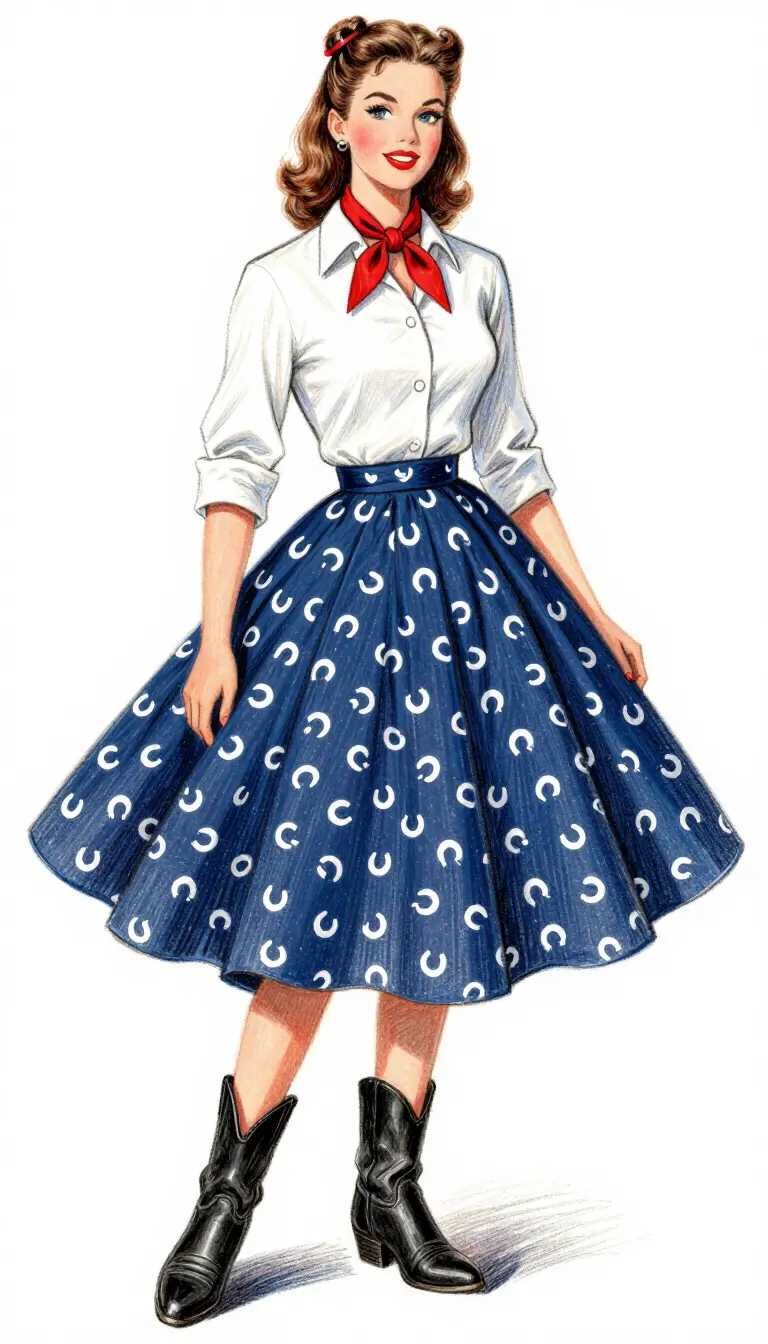
When I think about 1950s country fashion, I picture gingham picnic dresses, leather vests with fringe details, and boots that were meant to work but somehow looked effortlessly stylish. This era captured a unique moment when practical western wear merged with mainstream fashion, creating a look that still influences designers today. The best part? These vintage-inspired pieces are incredibly wearable for modern life.
If you’ve been curious about incorporating 1950s country fashion into your wardrobe, you’re in for a treat. This guide breaks down the essential elements, styling tips, and shopping recommendations to help you channel that authentic ranch-ready aesthetic with a contemporary twist.
The Golden Age of Western Fashion
The 1950s represented the peak of western-style clothing in American fashion. As people migrated west and ranch culture captured the public imagination, rodeo cowgirls like Tad Lucas and Lucyle Richards became style icons whose wardrobes influenced both Hollywood and everyday women. According to fashion historians, western prints like gingham, paisley, and plaid were transformed from purely functional workwear into fashionable dresses, shirts, and accessories that women wore for leisure and social occasions.
What made 1950s country fashion so special was its blend of femininity with practicality. Unlike the ultra-polished New Look silhouettes dominating urban fashion, country style embraced comfortable fabrics like gabardine, rayon, cotton, and wool while incorporating charming details like embroidery, piping, and shaped pockets.
Essential Elements of 1950s Country Fashion
The Prairie Dress with Western Details
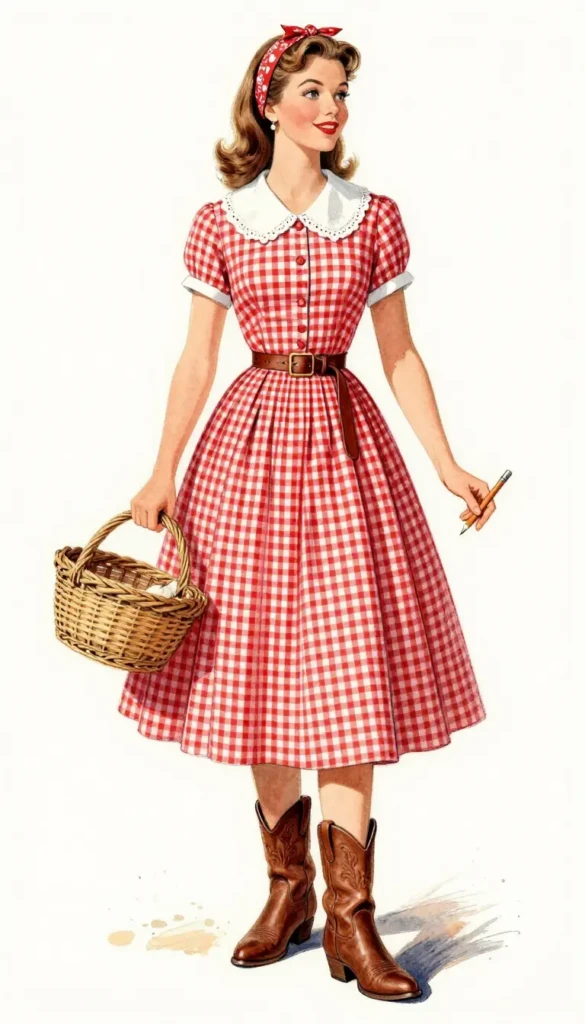
The quintessential 1950s country fashion piece was the prairie-inspired dress featuring western prints and feminine silhouettes. These dresses typically hit mid-calf and incorporated the era’s signature cinched waist with full skirts. Gingham checks in red, blue, and brown were particularly popular, as were bandana prints and horseshoe motifs.
Styling tip: Pair a gingham prairie dress with ankle boots and a denim jacket for a modern take that works for weekend brunches or outdoor events.
Embroidered Western Shirts
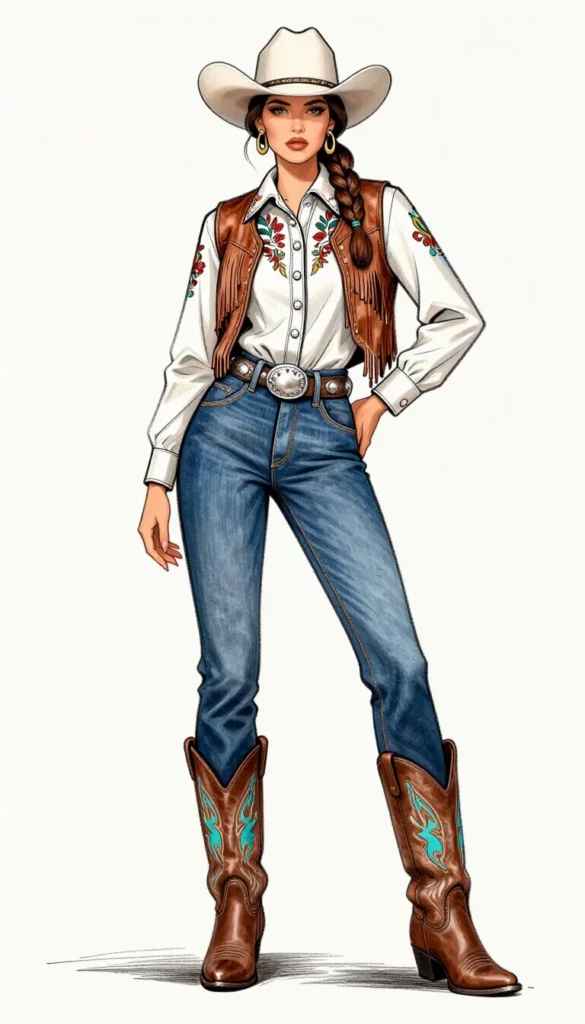
Western shirts in the 1950s featured more elaborate details than their practical ranch counterparts. Look for pieces with embroidered yokes, pearl snap buttons, and contrasting piping along the shoulders and pockets. Women often tucked these shirts into high-waisted jeans or full skirts for a polished country look.
Styling tip: Style a vintage-inspired western shirt half-tucked into baggy jeans for a relaxed contemporary outfit that honors the original aesthetic.
Leather Vests and Fringe Details
Leather and suede became prominent in 1950s country fashion, with vests, skirts, and jackets featuring western-inspired fringe. These pieces added texture and movement to outfits while remaining practical for outdoor activities. Rodeo-style leather vests often included decorative conchos and tooled leather details.
Styling tip: Layer a leather vest over a crisp white blouse and pair with light blue jeans for an outfit that bridges vintage inspiration with modern comfort.
High-Waisted Jeans and Western Pants
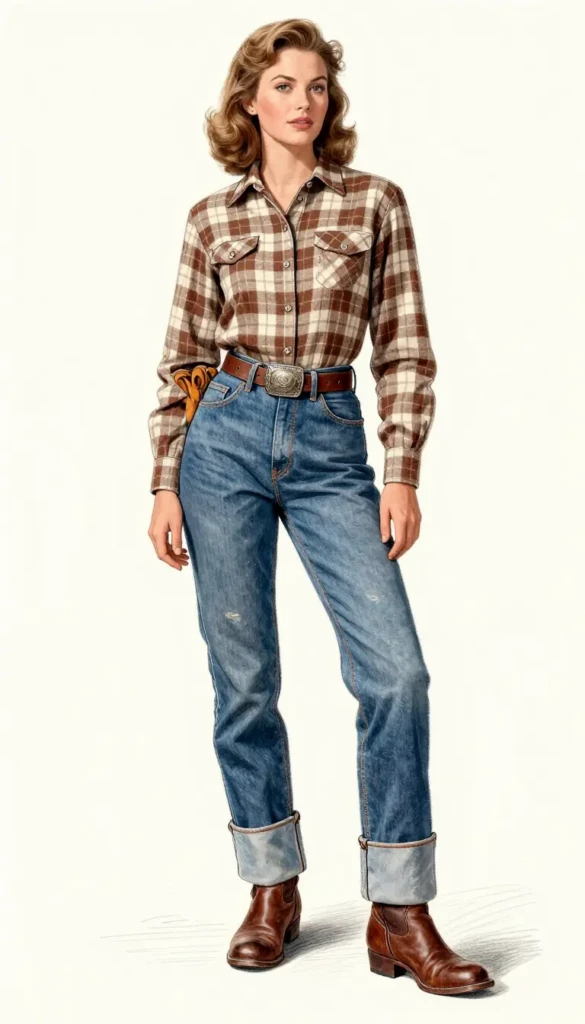
The 1950s saw the rise of Lady Levi’s, the first jeans specifically designed for women. These high-waisted styles featured shaped pockets, embroidered back details, and sometimes decorative piping. Western-style pants in gabardine also featured fitted waists with wider legs, creating a flattering silhouette.
Styling tip: Modern flare jeans capture the spirit of vintage western pants while offering updated fits that work with contemporary wardrobes.
Circle Skirts with Western Prints
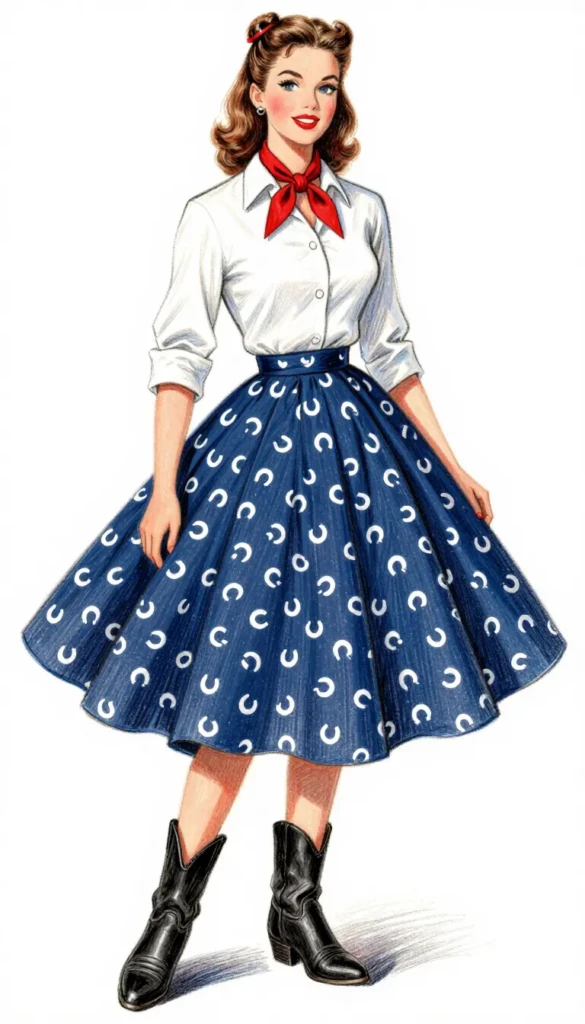
Full circle skirts in cotton featuring western motifs were perfect for square dancing, which experienced a massive revival during the 1950s. These skirts created beautiful movement and paired perfectly with fitted western shirts and boots.
Styling tip: A modern circle skirt in a western print looks fresh when styled with a tucked-in turtleneck and barn jacket for transitional weather.
Cowboy Boots and Western Footwear
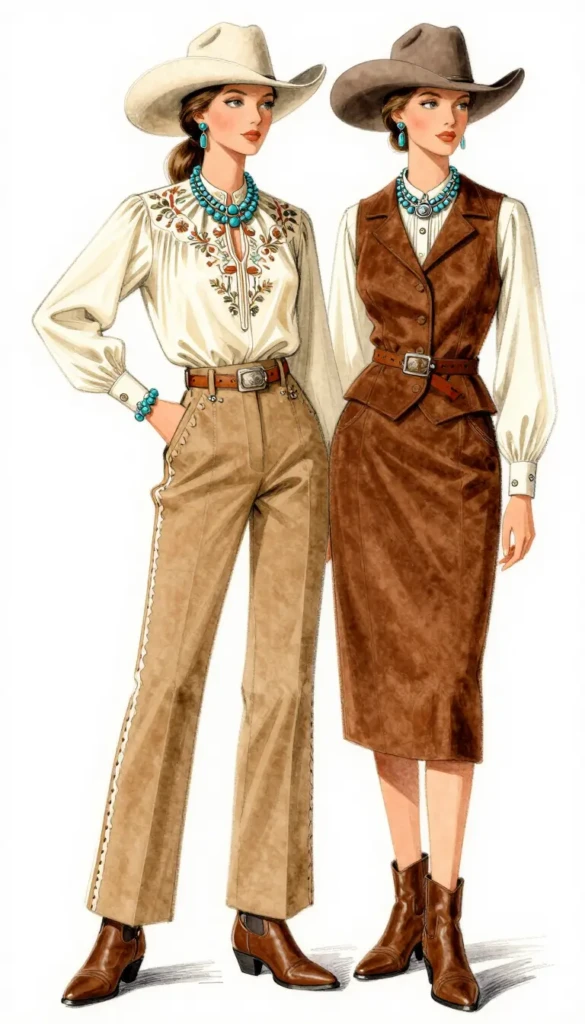
Authentic cowboy boots were essential to 1950s country fashion, but they weren’t just functional—they featured decorative stitching, inlays, and sometimes even rhinestone details. Two-tone ankle boots also gained popularity for women who wanted western style in a more versatile silhouette.
Styling tip: Pair classic western boots with a midi skirt and denim jacket for a look that channels cowgirl chic without feeling costume-like.
Bandana Accessories and Western Jewelry
Accessories completed the 1950s country fashion look. Bandanas tied around the neck, silver and turquoise jewelry, and concho belts added authentic western flair. Women also wore western-style hats for practical sun protection that doubled as a style statement.
Styling tip: Add a silk bandana in a western print to elevate simple jeans and tee combinations with vintage-inspired charm.
Modern Interpretations of 1950s Country Fashion
The beauty of 1950s country fashion is how seamlessly it translates to modern wardrobes. Contemporary designers continue drawing inspiration from this era, creating pieces that honor the original aesthetic while incorporating updated fits and fabrics.
As noted by fashion publications including Harper’s Bazaar, the 1950s were considered “the golden age” of fashion, where practical western wear merged with haute couture influences to create uniquely American styles. This cultural moment resulted in clothing that celebrated both femininity and functionality—a balance we still seek today.
Look for modern pieces that incorporate key 1950s country fashion elements: gingham and plaid patterns, embroidered details, fitted waists with fuller skirts, and western-inspired hardware like concho buttons and fringe accents. The key is choosing one or two statement pieces rather than attempting a head-to-toe vintage costume.
Shopping Guide: 1950s Country Fashion Inspired Pieces
When building a wardrobe inspired by 1950s country fashion, focus on versatile pieces that incorporate vintage details while remaining practical for contemporary life.
Luxury Investment Pieces
Frye Western Boots ($298-$498) – Authentic craftsmanship with vintage-inspired stitching and leather quality that improves with age. Their Carson Western Boot captures authentic rodeo style.
Ralph Lauren Denim & Supply Western Shirt ($148-$198) – Embroidered yokes and pearl snaps that honor authentic western heritage. As noted in fashion history, Ralph Lauren brought western wear to high fashion runways in the late 1970s.
Double RL Leather Vest ($895) – Museum-quality leather with authentic fringe and tooled details inspired by 1950s rodeo gear.
Mid-Range Essentials
Levi’s Ribcage Straight Jeans ($98) – Modern interpretation of high-waisted 1950s Lady Levi’s with updated stretch and comfort.
Free People gingham prairie dress ($128-$168) – Captures the feminine western aesthetic with modern fits that work for multiple occasions.
Tecovas The Annie Boot ($265) – Handcrafted western boots with classic stitching at accessible luxury pricing.
Budget-Friendly Options
Target Universal Thread Western Shirt ($25-$35) – Pearl snaps and western yokes at an accessible price point.
Old Navy High-Waisted Wide-Leg Jeans ($45) – Channel 1950s western pants silhouettes without the vintage price tag.
Amazon Essentials Circle Skirt ($22-$28) – Basic silhouette perfect for DIY western print styling.
Steve Madden Western Booties ($89-$119) – Modern comfort with vintage-inspired details.
Personal Verdict on 1950s Country Fashion
What I love most about 1950s country fashion is its authenticity. Unlike some vintage trends that feel purely aesthetic, this style was born from actual functional needs and evolved naturally into fashionable expressions. The clothing from this era teaches us that style doesn’t require sacrificing comfort or practicality.
Incorporating elements of 1950s country fashion into your modern wardrobe gives you permission to embrace a more relaxed, playful approach to dressing. A gingham dress isn’t trying too hard. A western shirt with jeans feels effortlessly cool. These pieces carry a sense of American optimism and can-do spirit that still resonates.
The key is selecting pieces that genuinely appeal to you rather than attempting a complete costume. Maybe it’s a pair of cowboy boots that become your signature, or perhaps a collection of bandanas that add personality to simple outfits. Start with one 1950s country fashion element and build from there, allowing your personal style to guide the journey.
FAQ: 1950s Country Fashion
What defined 1950s country fashion?
1950s country fashion combined practical western wear with feminine silhouettes popular in mainstream fashion. Key elements included gingham and plaid fabrics, embroidered western shirts, high-waisted jeans, full circle skirts, leather vests with fringe, and cowboy boots. This style emerged as ranch culture influenced Hollywood and everyday American fashion, creating looks that were both functional and stylish.
What did women wear in the 1950s country style?
Women embraced prairie dresses in gingham and western prints, embroidered western shirts with pearl snaps, high-waisted jeans (Lady Levi’s), full circle skirts for square dancing, leather vests with fringe, and authentic cowboy boots. Accessories included bandanas, silver and turquoise jewelry, concho belts, and western hats. The overall aesthetic balanced feminine details with practical ranch-inspired pieces.
How can I incorporate 1950s country fashion into modern outfits?
Start with one statement piece like cowboy boots, a gingham dress, or an embroidered western shirt. Pair vintage-inspired elements with contemporary basics—try western boots with a midi skirt and modern jacket, or style a gingham dress with minimalist accessories. Look for updated fits in vintage silhouettes, like high-waisted jeans with stretch or prairie dresses with modern lengths.
What fabrics were popular in 1950s country fashion?
Cotton gingham, plaid, and bandana prints dominated 1950s country fashion alongside gabardine, rayon, cotton, and wool for practical garments. Leather and suede became increasingly popular in the mid-to-late 1950s for skirts, vests, and jackets. These natural fibers provided comfort for ranch work while looking polished enough for social occasions.
Were cowboy boots only functional or also fashionable in the 1950s?
Cowboy boots served dual purposes in 1950s country fashion. While originally designed for practical ranch work, they evolved into fashionable statements featuring decorative stitching, leather inlays, and sometimes rhinestone embellishments. Rodeo cowgirls influenced mainstream fashion, making authentic western boots desirable for both their functionality and style appeal.
How did square dancing influence 1950s country fashion?
The square dancing revival in the 1950s significantly impacted country fashion. Full circle skirts became essential for creating beautiful movement while dancing, and matching couples’ outfits grew popular. Western-print dresses, fitted shirts, and coordinated accessories designed specifically for square dancing events influenced everyday casual wear throughout the decade.
What’s the difference between 1950s country fashion and urban 1950s style?
While urban 1950s fashion focused on Christian Dior’s polished “New Look” with structured silhouettes and luxury fabrics, 1950s country fashion prioritized comfort and functionality alongside feminine details. Country style featured natural fabrics, western prints, and practical elements like boots and jeans, whereas urban fashion emphasized tailored suits, pencil skirts, and refined elegance inspired by Parisian couture.
Can 1950s country fashion work for professional settings?
Absolutely. Modern interpretations of 1950s country fashion can be office-appropriate when styled thoughtfully. A fitted western shirt tucked into tailored trousers, a gingham dress with a blazer, or classic cowboy boots with wide leg trousers all channel vintage country style while remaining professional. Focus on quality fabrics and clean lines for work environments.
Have any thoughts?
Share your reaction or leave a quick response — we’d love to hear what you think!
-
 0
0 -
 0
0 -
 0
0 -
 0
0 -
 0
0 -
 0
0