

 Lena
Lena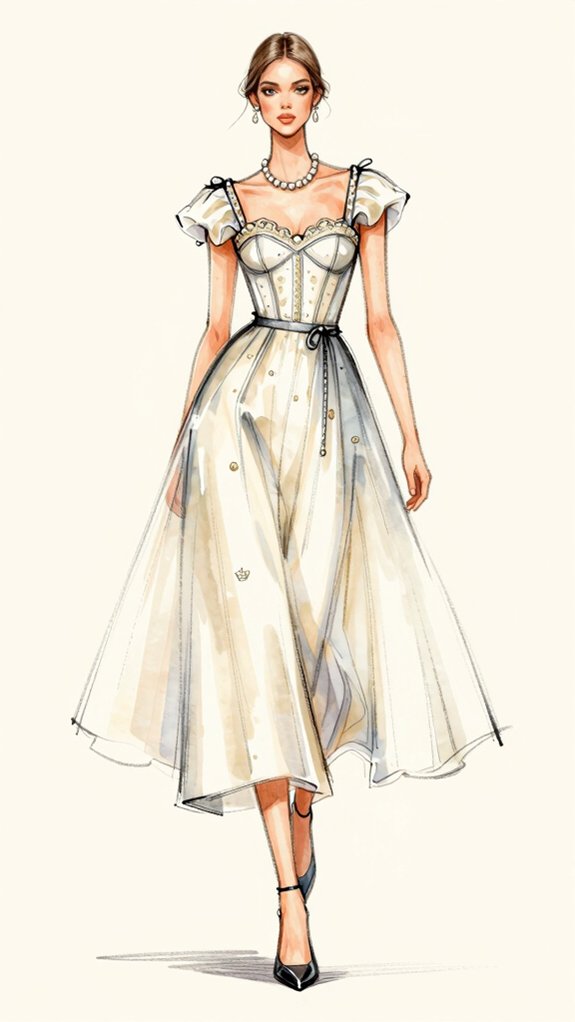
When Bridgerton’s Daphne Bridgerton swept onto Netflix screens in that empire-waist gown, you witnessed princesscore’s grip on contemporary imagination—but here’s what most people miss. This isn’t about drowning yourself in tiaras and tulle like some discount Halloween costume. Real princesscore channels the restrained opulence of European courts, where a single perfectly-placed pearl said more than a chandelier’s worth of crystals ever could. So what separates aristocratic elegance from looking like you raided a child’s dress-up box?
Aesthetic Definition
What separates royal elegance from mere opulence, from the gaudy displays of new money or the calculated glamour of Hollywood? You’ll find the answer in princesscore’s distinctive blend of regal sophistication and fairytale influences, where restraint matters as much as extravagance.
This aesthetic doesn’t scream for attention—it commands it through careful curation, through the knowing deployment of velvet, lace, and pearl accents that whisper rather than shout. Think Grace Kelly’s serene composure, not a Kardashian’s Instagram feed.
The difference lies in intentionality: princesscore embraces historical weight, drawing from actual royal courts (Versailles, Windsor, the Romanovs) while filtering these references through a distinctly feminine, often nostalgic lens. It’s aspirational without being desperately acquisitive, romantic without devolving into costume. You’re channeling centuries of inherited taste, not buying your way into relevance. Consider how Princess Diana’s “revenge dress” in 1994 demonstrated that true royal style commands attention through deliberate understatement rather than excessive embellishment.
Historical Influences
The courts of Europe’s ancien régime didn’t just inspire princesscore—they wrote its entire playbook, establishing visual codes that still dictate what registers as “royal” three centuries later. When you’re drawn to pastel silks, gilt furniture, or anything remotely Versailles-adjacent, you’re channeling centuries of court etiquette and ceremonial traditions designed to broadcast power through beauty.
Every pastel gown and gilded mirror whispers the same message: beauty has always been monarchy’s most enduring weapon.
Consider what princesscore inherited:
- Marie Antoinette’s Rococo excess (1770s-1780s), where fashion became political theater
- Victorian mourning rituals that romanticized grief into aesthetic performance
- Edwardian garden parties blending pastoral fantasy with rigid social hierarchy
These weren’t just pretty moments—they were calculated systems where appearance meant everything, status was performed daily, and femininity became an elaborate choreography. You’re not just wearing a ribbon; you’re participating in visual language refined over generations. Modern interpretations often echo these historical sensibilities through timeless elements like polka dots and romantic patterns that have maintained their aristocratic charm for decades.
Key Fashion Elements
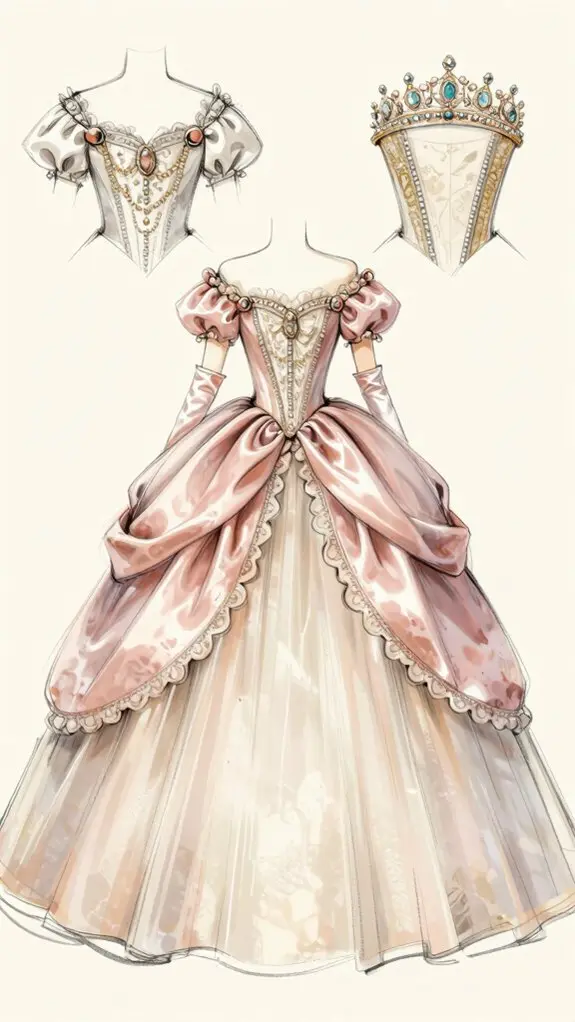
When you’re channeling royal elegance, you’re not just throwing on any dress—you’re constructing a visual narrative built on three foundational pillars: the dramatic sweep of ballgown silhouettes, the unmistakable weight and sheen of luxe fabrics like silk, velvet, and brocade, and the symbolic power of crown and tiara accessories that literally elevate your presence.
These elements work together to create what fashion historians call the “sovereignty effect,” that peculiar ability to command a room through sheer aesthetic authority rather than actual political power (though let’s be honest, the Windsors have certainly leveraged both).
You can’t fake this look with polyester and costume jewelry—royal elegance demands authenticity in materials, craftsmanship, and that intangible quality of wearing something so impractical it announces you’ve transcended everyday concerns. Much like the Chanel aesthetic that celebrates delicacy, lightness, and movement, princesscore relies on textural richness and effortless sophistication to create its enchanting effect.
Ballgown silhouettes
Grandeur doesn’t whisper—it announces itself through yards of fabric, structured bodices, and skirts that demand their own zip code. You’re not just wearing a dress; you’re commanding space, turning hallways into runways, doorways into dramatic entrances. These breathtaking silhouettes transform you into the main character, because let’s be honest, who can ignore someone in a full-skirted gown?
The anatomy of dramatic volume breaks down into three essential components:
- Fitted bodice that creates structure and contrast
- Full skirt amplified by crinolines, tulle, or horsehair braid
- Defined waistline that creates that coveted hourglass proportion
Think Cinderella at the ball, not Cinderella scrubbing floors. You’re channeling Disney’s 2015 live-action interpretation, where Lily James’s blue gown practically floated.
Luxe fabrics
Silk, velvet, brocade, duchess satin—these aren’t just fabrics, they’re status symbols wrapped around your body, whispering (or sometimes shouting) about craftsmanship, heritage, and yes, budget. Princesscore demands weight, drape, and that particular sheen only natural fibers deliver.
You can’t fake the way sumptuous velvets catch light differently depending on the nap’s direction, or how opulent embroidery requires hand-finishing that takes actual human hours (which, spoiler alert, costs money). The fashion industry’s pushed polyester princess costumes for decades, training us to accept synthetic shortcuts, but your skin knows the difference even if your Instagram followers don’t.
Real luxury fabrics breathe, move with intention, and age gracefully rather than pilling into sad little fuzz balls after three wears. They’re investments, not impulse purchases.
Crown and tiara accessories
You’ve wrapped yourself in duchess satin and hand-embroidered velvet, but let’s address the literal crown jewel of princesscore: the headpieces that separate costume from commitment. These ceremonial headpieces demand intentionality, not Amazon impulse purchases.
Consider three approaches to regal ornamental details:
- Vintage bridal tiaras from the 1920s-1950s, featuring Swarovski crystals and delicate wirework that actually stays put
- Statement hairpins clustered asymmetrically, creating implied crowns without theatrical obviousness
- Pearl-studded headbands positioned an inch back from your hairline, channeling Blair Waldorf’s restraint
The difference between “playing dress-up” and “embodying aesthetic” lies in proportion. Your tiara shouldn’t announce itself from across the room, it should reward closer inspection. Think heirloom discovered in grandmother’s jewelry box, not Spirit Halloween clearance rack.
Modern Wearability
Modern Wearability
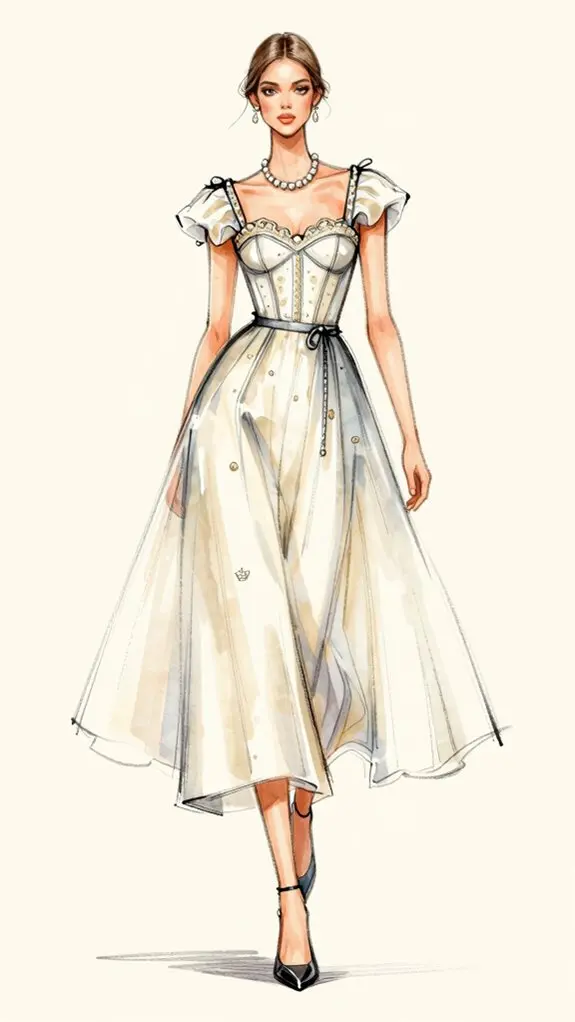
The thing about royal fashion is that it’s actually meant to be worn, not just archived behind velvet ropes and temperature-controlled glass. You don’t need a state dinner invitation to pull off princesscore’s essence—minimalist designs with contemporary embellishments translate surprisingly well to your actual life.
Think Meghan Markle’s sleek Givenchy silhouettes or Kate Middleton’s Jenny Packham gowns, both proving that royal styling works at weddings, galas, even upscale brunches. The key is restraint: one statement piece, whether it’s pearl-encrusted Mary Janes or a structured blazer with subtle brocade details, elevates your entire look without screaming “I’m cosplaying monarchy.”
Channel Carolyn Bessette Kennedy’s approach where quality fabrics and impeccable fit matter more than trend-following, proving that true elegance comes from confidence and intentionality rather than excess.
Modern princesscore respects the aesthetic’s heritage while acknowledging you’ve got places to be, people to see, and zero interest in feeling costume-y.
Color Palette Guide
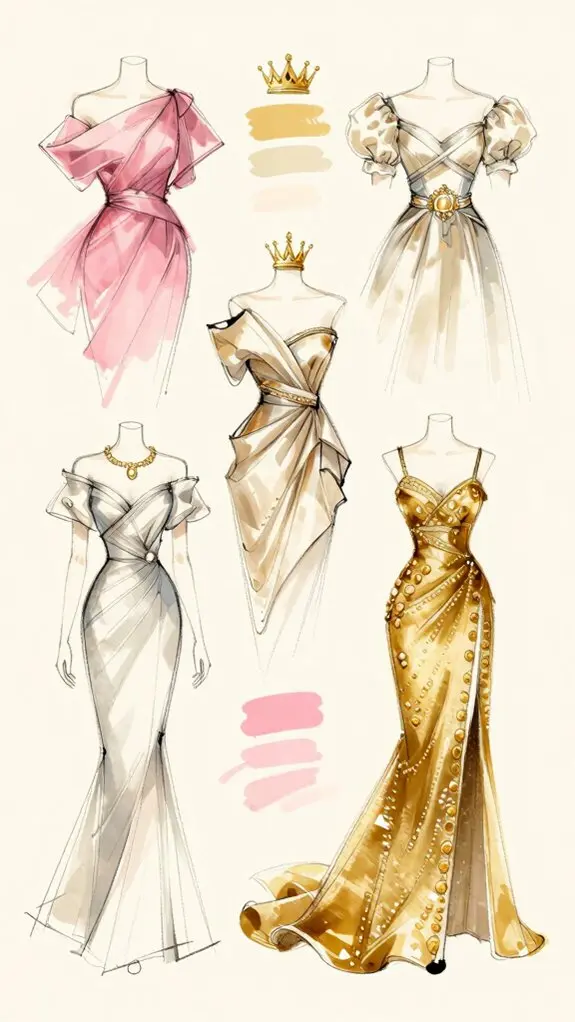
Royal color theory operates on a completely different frequency than whatever’s trending on your Pinterest board right now. You’re working with centuries of symbolism, not seasonal marketing campaigns. Pastel hues aren’t just soft—they’re strategically delicate, communicating approachability while maintaining distance. Marie Antoinette understood this instinctively.
Pastel sophistication transcends trends—it’s centuries of power dynamics distilled into strategically soft shades that whisper authority instead of screaming for it.
Your princesscore palette needs three foundational elements:
- Powder blues and blush pinks that suggest dawn light filtered through silk curtains
- Cream and champagne neutrals for grounding romantic embellishments without visual chaos
- Strategic metallics—rose gold preferred—that catch light like inherited jewelry
The psychology here matters. These colors don’t demand attention; they command it subtly, which is considerably harder to pull off. Think less Instagram filter, more Bridgerton’s costume department working with historical accuracy and modern sensibility. When incorporating white into your princesscore wardrobe, remember that clothes systematically influence wearers’ psychological processes, making you feel more confident and approachable while maintaining that ethereal royal aesthetic.
Styling for Everyday
Knowing your colors means absolutely nothing if you’re storing them exclusively for galas you’ll never attend. Princess inspired minimalism thrives in Tuesday morning coffee runs, not just Instagram photoshoots. You’re building a lifestyle, not a costume collection.
Start with these foundational swaps for casual femininity:
| Royal Element | Everyday Translation |
|---|---|
| Ball gowns | Midi skirts, flowing |
| Tiaras | Pearl hair clips |
| Satin gloves | Delicate rings |
| Court shoes | Ballet flats, pointed |
| Embroidered capes | Cardigans with detail |
Layer a cream cardigan over your jeans, add pearl studs, you’ve achieved princesscore without looking like you’re headed to Windsor Castle. When selecting your pointed flats, remember that pointed toes elongate petite frames while square toes work better for anchoring taller silhouettes. The goal isn’t replicating Diana’s wardrobe verbatim—it’s capturing that refined, effortless grace she embodied while grabbing groceries, managing three kids, existing.
Frequently Asked Questions
What Makeup Looks Best Complement the Princesscore Aesthetic?
You’ll want dewy glowing skin as your base—think Charlotte Tilbury’s Hollywood Flawless Filter or glossier balm, not matte foundation that screams corporate meeting. Romantic soft eyeshadow looks in rose golds, champagnes, and blush pinks capture that regal femininity without looking costume-y.
Add a touch of highlighter on your cheekbones, a soft pink lip (MAC’s Velvet Teddy works), and mascara that opens your eyes. Skip heavy contouring; princesses glow naturally, they don’t chisel their faces like Instagram influencers desperate for validation.
Which Celebrities or Influencers Are Known for Wearing Princesscore Fashion?
You’ll spot princesscore’s elegant ball gowns on Bridgerton’s Nicola Coughlan, who’s practically built her off-screen persona around regal femininity, and Olivia Rodrigo, who rocks sophisticated headpieces at award shows like she’s auditioning for modern royalty.
Florence Pugh champions the aesthetic too, mixing vintage romance with contemporary edge. Then there’s Selena Gomez, whose red carpet moments often channel straight-up princess energy—think tulle, tiaras, and that “I’m-actually-descended-from-nobility” confidence that makes the whole thing work.
Where Can I Buy Affordable Princesscore Clothing and Accessories?
You’ll find budget-friendly princesscore pieces at Shein, Aliexpress, and Amazon, though quality varies wildly. For thrifted princesscore fashion options, scour Depop, Poshmark, and local vintage shops—search terms like “cottage,” “romantic,” and “Victorian” yield hidden gems.
Target’s Wild Fable line occasionally drops affordable lace blouses and flowy skirts. Don’t sleep on DIY: adding pearl buttons or lace trim to thrifted basics transforms them instantly.
Estate sales are goldmines for authentic vintage brooches, cameos, and delicate jewelry that’ll elevate any outfit.
How Do I Incorporate Princesscore Into My Home Decor?
You’ll want to start with elegant furniture pieces—think tufted velvet chairs, ornate mirrors, and carved wooden bed frames that look like they’ve survived a few centuries. Layer in luxurious textiles: silk curtains, brocade throw pillows, and that faux fur throw you’ve been eyeing.
Don’t forget the details, either—crystal chandeliers, gilded picture frames, and fresh flowers in vintage vases transform any space into your personal palace, no trust fund required.
What Hairstyles Work Best With Princesscore Outfits?
Your hair is your crown—literally—so you’ll want styles that channel regal femininity. Intricate braids, whether they’re Dutch, French, or that romantic halo style Margot Robbie wore in *Barbie*, work beautifully with princesscore’s ethereal vibe.
Soft curls pinned half-up, half-down give you that timeless Grace Kelly elegance, while embellished hair clips (think pearls, crystals, butterflies) transform even simple ponytails into something worthy of a throne. The key? Polished, intentional, never rushed.
Conclusion
You’ve got the blueprint now, and like a well-curated jewelry box, you can select pieces that serve you rather than overwhelm you. Princesscore isn’t about drowning in taffeta or commissioning a replica of Catherine the Great’s coronation gown—it’s about channeling that regal intentionality into your actual wardrobe. Start with one dramatic element, whether it’s a structured silhouette, rich fabric, or statement accessory, and build from there. You’ll command attention without demanding it.
Have any thoughts?
Share your reaction or leave a quick response — we’d love to hear what you think!
-
 0
0 -
 0
0 -
 0
0 -
 0
0 -
 0
0 -
 0
0