

 Lena
Lena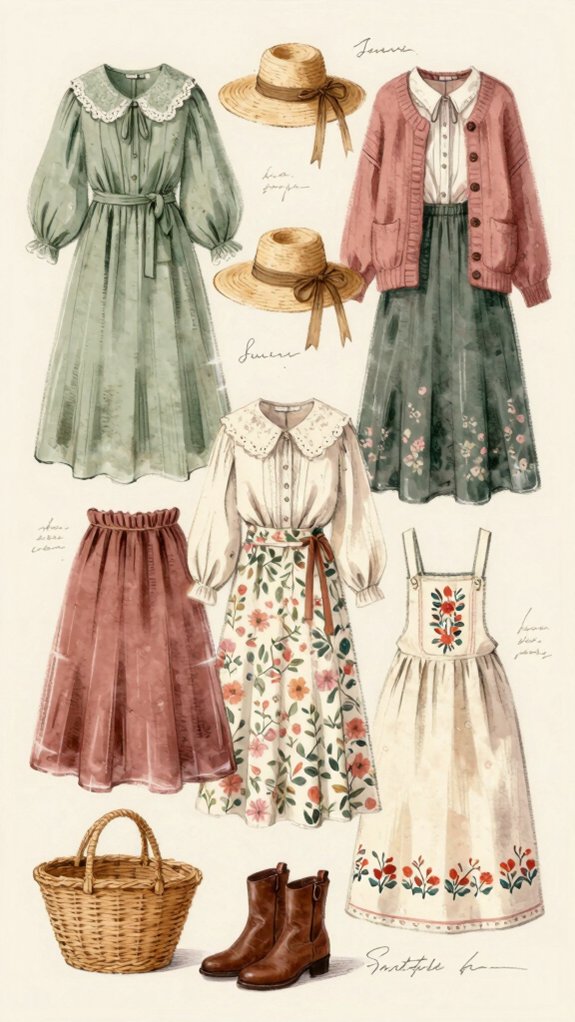
You’ve seen the prairie dresses in your Instagram feed, noticed the mushroom foraging posts multiplying, watched your friends abandon their minimalist Everlane basics for floral milkmaid tops. Cottagecore isn’t just another aesthetic trend—it’s a full-scale rejection of hustle culture, wrapped in linen aprons and tied with silk ribbons. Born from Tumblr around 2017, then exploding during lockdown when we all desperately needed somewhere, anywhere, to escape, this movement asks a pointed question: what if opting out looked this pretty?
Movement Origins
While fashion historians can’t pinpoint an exact birth certificate for cottagecore, the aesthetic coalesced online around 2017-2018, emerging from Tumblr’s romanticism communities, Instagram’s carefully curated pastoral feeds, and a collective millennial exhaustion with urban grind culture.
You’ll find cottage culture influences stretching back centuries—Marie Antoinette playing shepherdess at Petit Trianon, Victorian pastoral paintings, Laura Ashley’s floral empire. But this iteration? It’s distinctly digital, born from your generation’s craving for authenticity in an algorithmic world.
The pastoral lifestyle inspirations drew from Anne of Green Gables, Pride and Prejudice adaptations, and Studio Ghibli films, creating a fantasy where you’d bake sourdough instead of answering Slack messages. The aesthetic shares DNA with other romantic style movements, particularly the coquette aesthetic with its soft feminine details and dainty accessories.
Aesthetic Philosophy
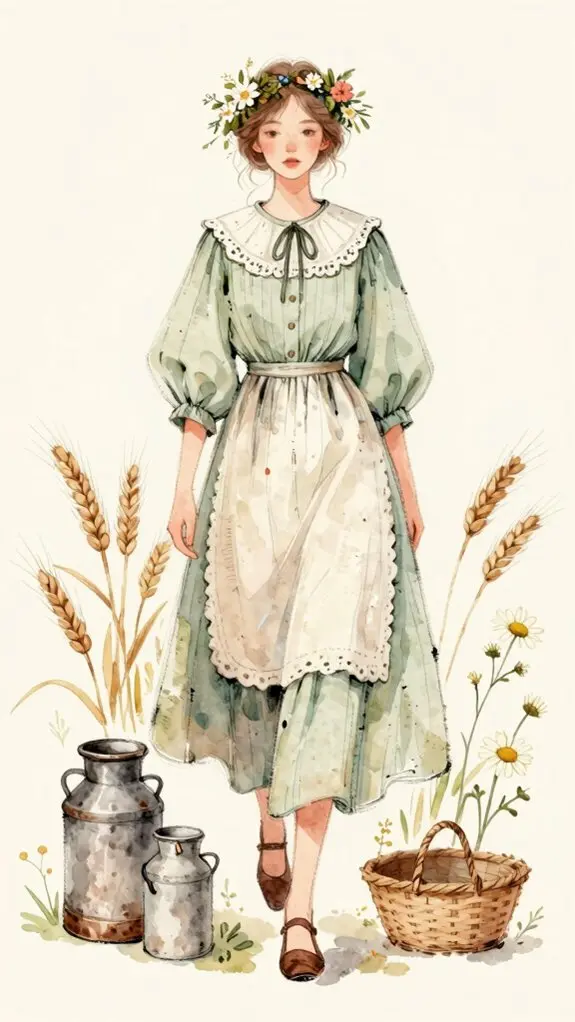
The philosophy underpinning cottagecore isn’t just about pretty dresses and flower crowns—it’s a deliberate rejection of hustle culture’s relentless productivity metrics, late-stage capitalism’s soul-crushing commodification of every waking moment, and the anxiety-inducing doomscroll that’s colonized your phone. This aesthetic merges contemplative minimalism with nostalgic traditionalism, creating a framework where you’re encouraged to bake sourdough at 2 PM on a Tuesday without guilt. Unlike fashion movements that require specific body types or substantial investments, cottagecore offers a low-commitment way to experiment with style through small, accessible additions that elevate even the most basic outfits.
| Rejected Values | Embraced Values | Physical Expression |
|---|---|---|
| Constant productivity | Seasonal rhythms | Linen aprons, bare feet |
| Digital overwhelm | Analog crafts | Handmade embroidery |
| Corporate uniformity | Individual creativity | Mismatched vintage patterns |
You’re fundamentally larping as a pre-industrial cottager, minus the actual dysentery and infant mortality.
Signature Elements
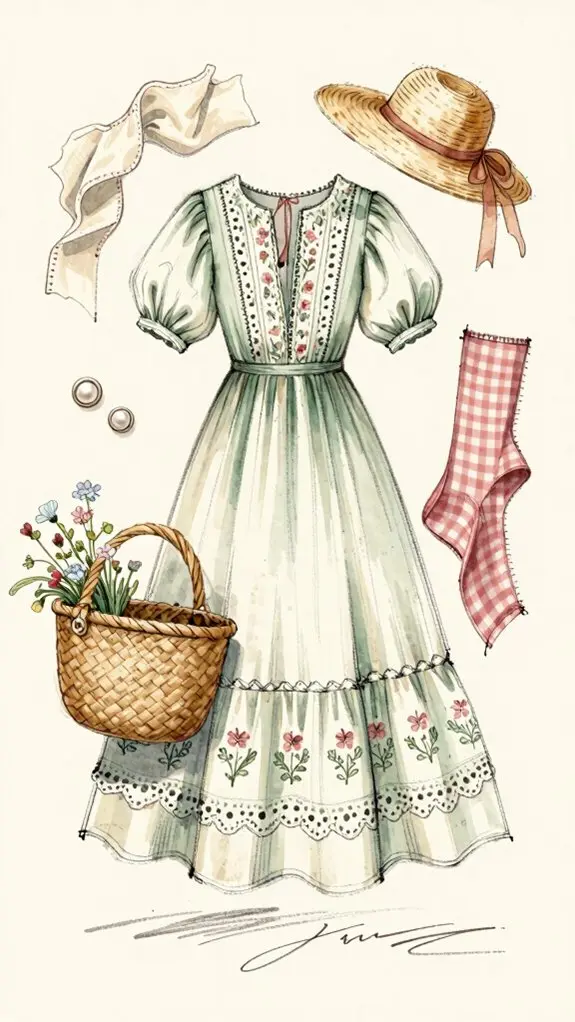
You’ll recognize cottagecore fashion the moment you spot those unmistakable floral prints cascading across prairie dresses, the kind your grandmother might’ve worn to a summer picnic in 1952, except now they’re selling for $200 at Urban Outfitters.
The aesthetic demands natural fabrics—linen, cotton, wool—because apparently polyester doesn’t photograph well against wildflower fields, and there’s something almost performative about choosing materials that wrinkle easily and require actual ironing.
Vintage details like puffed sleeves, pearl buttons, eyelet lace, and Peter Pan collars complete the look, transforming modern wearers into extras from a Merchant Ivory film who just happen to have Instagram accounts.
For those wanting to ease into the trend, pairing a textured dusty pink maxi with an oversized gray tee offers a clean girl approach to romantic dressing without full pastoral commitment.
Floral prints and prairie dresses
Nothing screams cottagecore quite like a ditsy floral print cascading down a tiered prairie dress, the kind your great-grandmother might’ve worn to churn butter or, more realistically, the kind you’ll wear to brunch while pretending your biggest concern is whether the sourdough starter is thriving. These flowing silhouettes feature puffed sleeves, smocked bodices, and enough ruffles to make Marie Antoinette jealous—all deliberately feminine accents that reject the sharp tailoring of corporate fashion.
| Print Style | Best Worn | Vibe |
|---|---|---|
| Ditsy florals | Spring picnics | Innocent |
| Bold botanicals | Garden parties | Dramatic |
| Vintage roses | Tea gatherings | Nostalgic |
The prairie dress democratizes cottagecore’s aesthetic fantasy, transforming everyone into Anne Shirley cosplayers whether they’ve actually read *Anne of Green Gables* or just scrolled past aesthetically pleasing farm content on Instagram.
Natural fabrics
Linen wrinkles if you look at it too hard, cotton breathes like it’s doing you a personal favor, and wool somehow keeps you warm without trapping you in a synthetic sweat lodge—these natural fabrics form cottagecore’s textile holy trinity, rejecting polyester’s petroleum-based grip on fast fashion with the fervor of a Victorian-era naturalist discovering a new species of moss.
You’re choosing organic materials that decompose faster than your last situationship, fabrics your great-grandmother would recognize without squinting at care labels written in chemical formulas. These eco friendly textiles connect you to pre-industrial production methods, where sheep existed before synthetic fleece pretended to replicate them.
Hemp, silk, and bamboo join the roster, each fiber carrying its own environmental credentials, its own tactile signature against your skin, reminding you that clothing once grew from earth instead of emerging from petrochemical refineries.
Vintage details
Pearl buttons march down bodices like tiny moons, lace collars frame throats with the delicacy of spiderwebs dipped in starch, and puffed sleeves billow at shoulders as if you’ve borrowed air from a different century—these vintage details transform ordinary garments into cottagecore statements, each element plucked from fashion history’s greatest hits spanning the 1890s through the 1950s.
You’ll find high waisted skirts cinching at the natural waist (goodbye, mid-rise denim hell), creating that Edwardian silhouette that suggests you might pen poetry between afternoon tea and evening strolls. Lace embellishments aren’t mere decoration—they’re architectural elements, appearing at cuffs, hems, and necklines with the purposefulness of Victorian needlework.
Ruffled aprons, covered buttons, smocking across bodices: these aren’t costumes but carefully curated anachronisms that reject fast fashion’s disposable mentality.
Building the Wardrobe
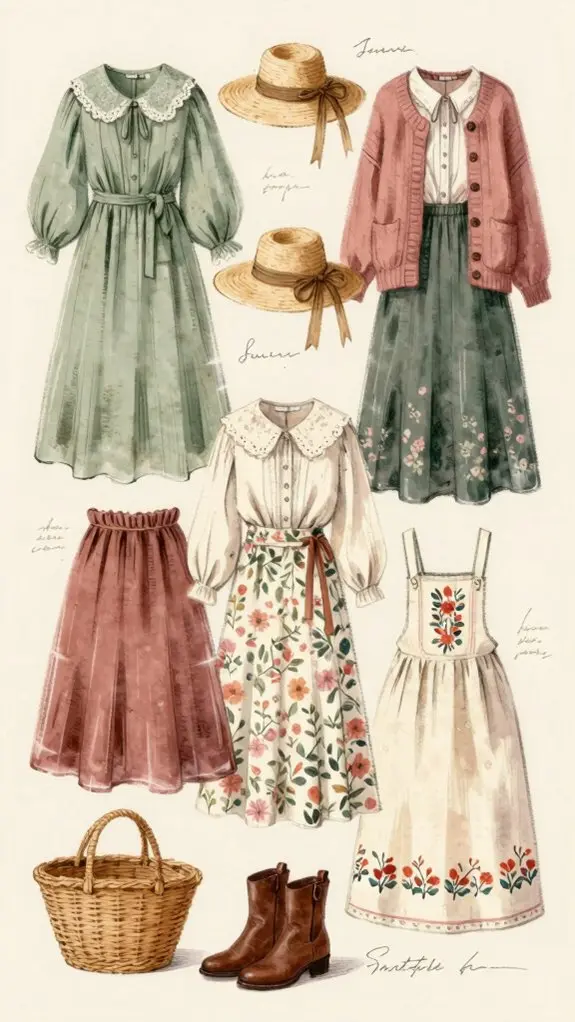
Building a cottagecore wardrobe doesn’t require you to liquidate your 401k or spend hours thrifting through musty vintage shops (though both activities have their devoted followers). Start with layering pieces that actually work in real life: a linen shirt, cotton slip dress, chunky cardigan. These aren’t costume pieces—they’re wearable foundations that move from Monday meetings to Sunday picnics.
Focus on mixing textures rather than chasing Instagram aesthetics. Pair rough burlap with soft cotton, crisp linen with flowing silk. For a modern twist on romantic pieces, try pairing an oversized blazer with a lace maxi skirt to create beautiful proportion play that feels fresh and architectural. You’ll find most cottagecore staples hiding in your closet already, camouflaged between fast fashion impulse buys. That oversized sweater? Cottagecore. Those worn-in jeans? Add a floral blouse, boom—you’re living the pastoral fantasy. The secret isn’t buying everything; it’s seeing what you’ve already got.
Seasonal Variations
Cottagecore doesn’t hibernate when the leaves fall, and anyone who thinks this aesthetic belongs exclusively to spring meadows hasn’t spent enough time scrolling through #darkacademia crossover content. Your seasonal color palettes shift from butter yellows and sage greens to burnt oranges, deep burgundies, and that specific shade of brown that makes vintage sweaters irresistible at thrift stores.
Winter demands serious layering techniques: thermal underwear beneath linen shirts, wool cardigans over cotton dresses, hand-knit scarves wrapping everything together like some kind of textile lasagna. Summer’s got its own challenges (linen wrinkles immediately, nobody warns you), while autumn remains cottagecore‘s true moment to shine. The corduroy renaissance has only strengthened this connection, bringing warmth and nostalgic texture to romantic rural silhouettes.
Spring might’ve started this trend, but fall perfected it with apple picking photo ops and an excuse to own seventeen different cardigans.
Sustainability Connection
Sustainability Connection
The thrift-shop-to-wardrobe pipeline that powers cottagecore fashion accidentally created the aesthetic’s strongest selling point: it’s substantially more sustainable than fast fashion, even when practitioners don’t particularly care about carbon footprints. You’re extending garments’ lifecycles, reducing textile waste, and sidestepping the environmental impact of mass production without needing to evangelize about it.
The aesthetic naturally gravitates toward natural fibers, vintage linens, and secondhand finds, which means you’re practicing ethical sourcing whether that’s your primary motivation or not. Sure, some brands have co-opted the look with new “cottage-inspired” collections that defeat the purpose entirely, but the movement’s DNA remains rooted in reuse and repurposing. This emphasis on mixing textures like wool, suede, and silk within a limited palette demonstrates how thoughtful material combinations can create visual interest without constant consumption.
It’s environmental activism disguised as nostalgia—and honestly, that might be its most subversive quality.
Frequently Asked Questions
Where Can I Buy Affordable Cottagecore Clothing Online?
You’ll find affordable cottagecore pieces on Etsy, where indie sellers offer linen dresses and prairie blouses that won’t destroy your budget. ASOS, Shein, and Amazon carry surprisingly decent options too, though quality varies wildly.
Thrift store finds online through Poshmark and Depop often beat fast fashion prices while offering vintage authenticity. Pair those discoveries with handmade accessories from small creators, and you’ve built a wardrobe that actually feels personal, not algorithmic.
Is Cottagecore Fashion Appropriate for Professional Work Environments?
Honestly? You’ll need to soften the aesthetic for most offices. While full cottagecore—prairie dresses, pinafores, lace collars—reads more costume than professional work attire, you can absolutely adapt elements.
Think muted florals, Peter Pan collars, vintage-inspired blouses, and midi skirts that nod to the vibe without screaming “I’m here to churn butter.” Check your workplace dress code first, obviously, but strategic styling lets you channel Anne Shirley without raising HR’s eyebrows or compromising your credibility.
How Do I Style Cottagecore Outfits for Plus-Size Bodies?
You’ll absolutely shine by embracing bold prints—think oversized florals, gingham, and toile—that celebrate cottagecore’s inherent abundance rather than shrinking from it. Focus on layering textures: a linen blouse under a knit cardigan, paired with a flowing midi skirt.
Don’t shy away from volume; cottagecore’s prairie silhouettes, empire waists, and A-line cuts naturally complement curves. Add a wide belt to define your waist if you’d like, or skip it entirely—your comfort dictates the aesthetic.
Can Men Wear Cottagecore Fashion or Is It Only for Women?
Absolutely, you can embrace male cottagecore aesthetic without hesitation. Cottagecore fashion for men isn’t some forbidden territory—it’s actually thriving through linen shirts, suspenders, rolled-up trousers, and those wonderfully worn boots that suggest you’ve been tending gardens rather than scrolling feeds.
Think Harry Styles meets a Victorian farmhand, or channel that soft pastoral vibe with cardigans, earth tones, and loose silhouettes. Gender’s just a construct anyway, so wear what makes your heart feel like it’s wandering through sunlit meadows.
What Hairstyles and Makeup Complement Cottagecore Outfits Best?
You’ll want soft waves—think loose, undone curls that look effortlessly tousled, not pageant-ready—paired with natural makeup that enhances rather than transforms. We’re talking dewy skin, rosy cheeks (cream blush works beautifully), and barely-there lips in peachy nudes or soft pinks.
Skip heavy contouring; it clashes with cottagecore’s whole vibe. Consider wispy bangs, braids woven with ribbons, or messy buns with face-framing pieces. The goal? Looking like you’ve been reading poetry in meadows, not spending hours getting camera-ready.
Conclusion
You’ve discovered that cottagecore isn’t just about prairie dresses and floral teacups—it’s a deliberate rejection of hustle culture’s exhausting demands. As the saying goes, “Stop and smell the roses,” and this aesthetic takes that literally, offering breathing room through linen aprons and hand-embroidered blouses. Whether you’re embracing sustainable vintage pieces or simply craving pastoral fantasy, cottagecore proves fashion can critique modernity while looking effortlessly romantic.
Have any thoughts?
Share your reaction or leave a quick response — we’d love to hear what you think!
-
 0
0 -
 0
0 -
 0
0 -
 0
0 -
 0
0 -
 0
0