

 Lena
Lena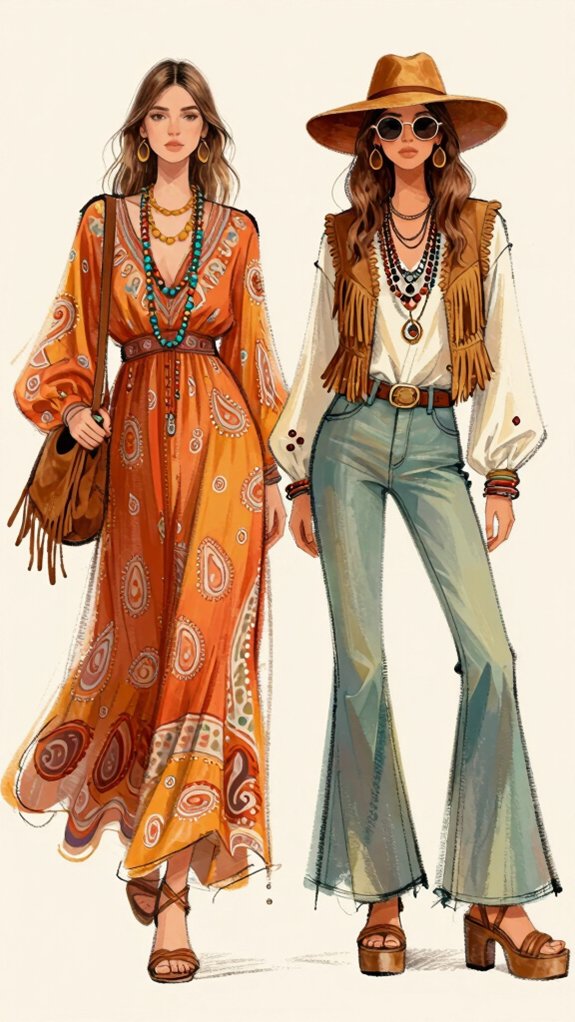
Before you dismiss ’70s boho as just another tired fashion trend, consider this: what you’re seeing on Instagram isn’t really bohemian at all. That $400 “peasant” blouse from Anthropologie, those mass-produced “vintage” flares from Zara—they’ve stripped away everything radical about the original movement. Real hippie chic wasn’t about consumption, it was about rejection, and understanding that difference matters more than you’d think when you’re trying to dress with any actual integrity.
Counterculture Roots
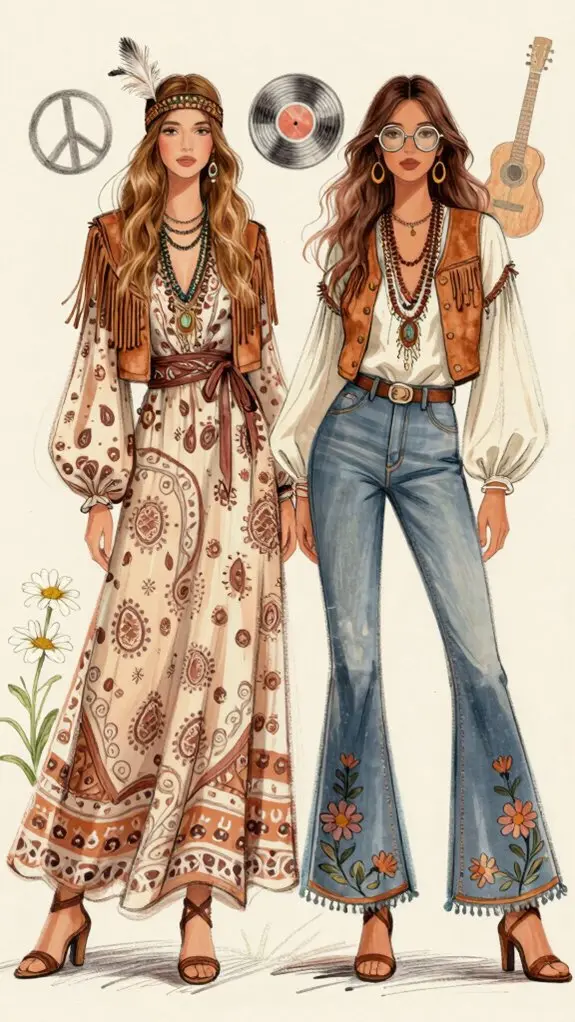
While the term “boho” gets tossed around today to describe anything with fringe and a neutral color palette, the 1970s bohemian aesthetic was born from something far more radical than your local Target’s home décor section. You’re looking at a style that emerged directly from protest movements—anti-war demonstrations, civil rights activism, feminist rallies—where young people rejected their parents’ materialism and conformity.
They weren’t just wearing peasant blouses for Instagram; they were embracing communal living, dropping out of traditional society, and challenging everything from capitalism to monogamy. The clothing choices, the handmade jewelry, the rejection of structured silhouettes—these weren’t fashion statements but political ones, visual markers of a generation determined to dismantle the establishment, one embroidered vest at a time. Today’s festival fashion has transcended the flower-crown clichés, with textural elements like fringe and crochet details serving as modern nods to that countercultural spirit.
Aesthetic Philosophy
What did beauty mean to a generation that rejected beauty pageants, cosmetics corporations, and the entire Madison Avenue machinery of manufactured desire?
Beauty wasn’t purchased from corporations—it emerged from authentic self-expression, handcrafted objects, and the courage to reject manufactured perfection.
You’ll find the answer in their philosophy: beauty came from within, from authenticity, from refusing to conform. The 70s boho aesthetic championed individualism over cookie-cutter perfection, celebrating self expression through eclectic, personal style choices that told your story.
Consider what this meant practically:
- Natural fabrics like cotton, linen, and suede replaced synthetics
- Handcrafted jewelry and vintage pieces trumped mass-produced accessories
- Ethnic textiles from Morocco, India, and Mexico created global mashups
- Imperfection became desirable, even sought-after
You weren’t buying an identity off the rack; you were curating one from thrift stores, travel souvenirs, and grandmother’s attic, mixing high and low, old and new, foreign and familiar into something uniquely yours. This same spirit lives on today, with modern bohemians embracing artisanal textures like crochet and lace that honor craftsmanship and sustainability over fast fashion.
Defining Features
You’ll recognize 70s boho by its commitment to movement and comfort—think maxi dresses that sweep the floor, peasant blouses with billowing sleeves, and wide-leg pants that rejected the structured silhouettes of previous decades. The color palette draws straight from nature’s understated moments: burnt orange, mustard yellow, chocolate brown, olive green, and that particular shade of rust that governed every album cover from 1972 to 1978.
What really sets this aesthetic apart, though, are the handcrafted touches—macramé belts, embroidered vests, fringe details on everything, crochet accents—that signaled a rejection of mass production and an embrace of artisan culture, even if most people were still buying their “handmade-looking” pieces at department stores. These artisanal textures and natural fabrics continue to define bohemian style today, proving the aesthetic’s lasting influence on fashion.
Flowing silhouettes
The bohemian silhouette of the 1970s rebelled against everything the previous decade held sacred—structured darts, nipped waists, rigid A-lines that demanded women maintain a specific shape. Instead, you got clothes that moved with your body, not against it, celebrating fluid movement through graceful lines that actually let you breathe.
These flowing designs prioritized comfort without sacrificing style:
- Maxi dresses that skimmed rather than clung, billowing as you walked
- Wide-leg palazzo pants that created dramatic movement with each step
- Peasant blouses with gathered sleeves that caught the breeze
- Kaftan-inspired tunics that draped loosely over the frame
This wasn’t just fashion—it was liberation in fabric form, rejecting the notion that women’s bodies needed correcting, constraining, or apologizing for their natural state.
Earthy tones
Nobody was asking for neon pink or electric blue in 1970s bohemian fashion—the palette drew directly from the earth itself, featuring burnt sienna, terracotta, ochre, moss green, and chocolate brown in combinations that looked like they’d been mixed from actual soil and clay. You’ll notice these neutral palettes weren’t some designer’s arbitrary choice but rather a philosophical statement about reconnecting with nature after decades of synthetic everything.
The colors matched the natural materials dominating boho wardrobes: undyed cotton, raw silk, suede, leather, and hand-woven textiles that retained their original hues. These earthy tones created a visual language of authenticity, signaling you’d rejected mass-produced fashion for something more grounded, literally.
The palette whispered rather than shouted, which was precisely the point.
Artisan details
Embroidery, macramé, beadwork, fringe, crochet trim, hand-painted fabrics, appliqués, and patchwork weren’t just decorative flourishes—they were proof you’d invested time, skill, or at minimum your hard-earned cash into something that couldn’t be replicated by a factory assembly line. This handmade craftsmanship screamed authenticity in an increasingly mass-produced world.
You showcased your bohemian credentials through textured textiles that told stories:
- Embroidered peasant blouses from Mexican villages
- Crocheted vests your aunt made (or claimed she did)
- Beaded fringe dancing across suede jacket hems
- Patchwork denim lovingly assembled from scraps
These artisan details transformed basic garments into personal statements, each irregular stitch and hand-tied knot declaring your rejection of corporate conformity. The imperfections weren’t flaws—they were features, darling.
Wardrobe Essentials
Wardrobe Essentials
Building a genuine 70s boho wardrobe means understanding that this wasn’t just about throwing on a peasant blouse and calling it a day—it was a complete rejection of the structured, synthetic fashion that characterized the previous decade.
You’ll need flowing maxi dresses in sustainable fabrics like cotton, linen, and silk (not polyester masquerading as vintage), wide-leg jeans that actually fit at the waist, not your hips, and those essential suede vests that somehow made everyone look like they’d just returned from Laurel Canyon.
The magic happened in thrifted finds—worn Levi’s, embroidered blouses from actual grandmothers, hand-tooled leather belts.
For a modern take, try pairing those wide-leg jeans with a chambray button-up and an unexpected pop of color like a chartreuse knit vest for that coveted model-off-duty vibe.
Layer everything: kimono over turtleneck over bell-bottoms, because minimalism was for the uptight establishment types they’d rejected.
Modern Interpretation
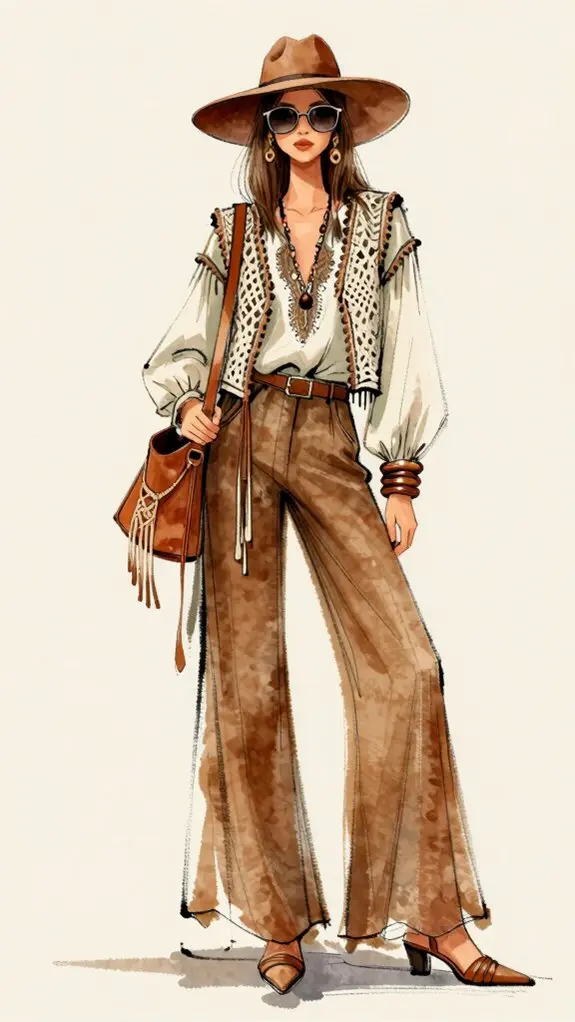
While fast fashion brands have absolutely butchered the boho aesthetic with their $12.99 “festival tops” made in factories that would horrify the original counterculture crowd, there’s actually a thoughtful way to translate 70s hippie chic into contemporary wardrobes without looking like you’re headed to Coachella circa 2014.
Your modern approach should prioritize individualistic expression over costume:
- Invest in one statement vintage piece, like authentic Levi’s bell-bottoms or a hand-embroidered vest
- Mix bohemian elements with tailored basics—think silk blouse with structured blazer
- Choose natural fabrics and earth tones that actually suit your coloring
- Skip the head-to-toe themed looks entirely
This personal style statement works when you’re selective, not when you’re trying too hard. The post-pandemic fashion landscape has loosened traditional dress codes, making it easier to incorporate utility-focused pieces like cargo-inspired elements into bohemian ensembles for a fresh take on the aesthetic. The original hippies weren’t following Pinterest boards.
Frequently Asked Questions
Where Can I Find Affordable Vintage 70S Boho Clothing Pieces Today?
You’ll score the best thrift store finds at Goodwill, Salvation Army, and local vintage shops in college towns, where curated racks hold genuine prairie dresses, crocheted vests, and those coveted flared jeans.
Online, Etsy sellers specialize in authenticated pieces, though you’ll pay more for their expertise.
Don’t sleep on estate sales, where grandma’s actual 1970s wardrobe awaits, often priced dirt cheap because nobody realizes that macramé belt is worth something now.
How Do I Avoid Looking Like I’m Wearing a Costume?
You’ll nail authentic boho style by choosing timeless pieces—quality leather bags, well-cut flares, natural fiber blouses—that’ve survived decades for good reason. Balance vintage with incorporating modern elements: pair your embroidered vest with contemporary jeans, or throw that fringe jacket over a simple tee.
Don’t go full head-to-toe Woodstock, okay? Mix eras, keep proportions current, and stick to one, maybe two statement pieces per outfit. The goal’s looking effortlessly cool, not like you’re heading to a themed party.
Can Boho Style Work for Professional Office Environments?
You’ll love this: 63% of workers now dress more casually than five years ago, making modern office appropriate boho totally viable. The trick’s balancing boho with professionalism—swap flowing maxi skirts for tailored midi lengths, ditch the fringe for subtle embroidery, and keep your accessories minimal.
Think structured blazers over peasant blouses, leather ankle boots instead of gladiator sandals. You’re creating a refined interpretation, not channeling your inner Stevie Nicks at a board meeting. Keep patterns understated, silhouettes polished.
What Hairstyles Best Complement the 70S Boho Aesthetic?
You’ll want natural waves—the kind that look like you just removed a headscarf after driving your vintage convertible. Long, center-parted hair works beautifully, especially when you enhance texture with sea salt spray or curl-defining cream.
Think Stevie Nicks circa 1977, not Instagram perfection. Braids, whether loose or woven with ribbons, add authenticity. Skip the straightener; embrace your hair’s natural movement.
The goal? Effortless texture that suggests you’ve got better things to do than fuss over perfect styling.
Is Boho Fashion Appropriate for All Body Types and Ages?
73% of women report feeling more confident in bohemian styles than structured fashion, and there’s a reason. You’ll find boho works beautifully across body types and ages because it’s built on flattering silhouettes—flowing maxis, empire waists, layered pieces that move with you rather than against you.
The universal color palette, those earthy terracottas and mossy greens, complements every skin tone. It’s about embracing your shape, not fighting it, which feels revolutionary when most fashion demands conformity.
Conclusion
You’ve spent hours scrolling through Etsy, hunting for the perfect vintage Afghan coat, and honestly, that dedication matters. The ’70s boho revival isn’t about costume—it’s reclaiming fashion as personal rebellion, mixing your grandmother’s macramé with Levi’s, challenging fast fashion’s stranglehold. You’re not just wearing clothes; you’re making choices that reject conformity, embrace sustainability, and prove counterculture aesthetics still resonate. Every fringe detail, every earth-toned layer declares your independence from trend cycles.
Have any thoughts?
Share your reaction or leave a quick response — we’d love to hear what you think!
-
 0
0 -
 0
0 -
 0
0 -
 0
0 -
 0
0 -
 0
0