

 Lena
LenaFall is the season that actually rewards having a proper wardrobe strategy. Not a Pinterest board full of outfits you’ll never wear — a real, working collection of pieces that get along with each other so well that getting dressed on a cold October morning takes four minutes, not forty.
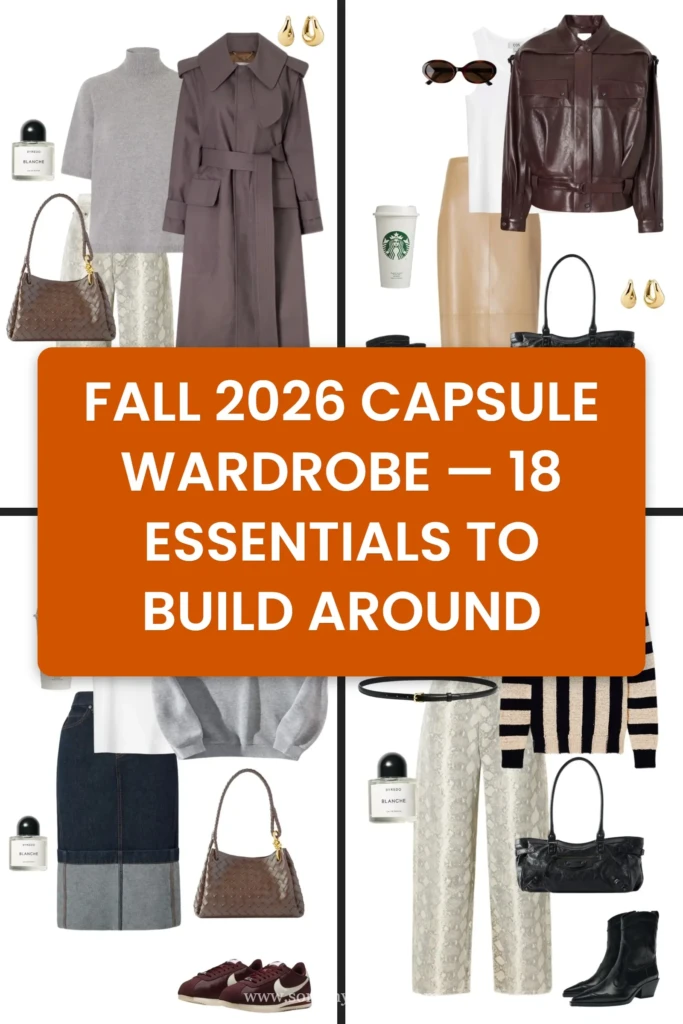
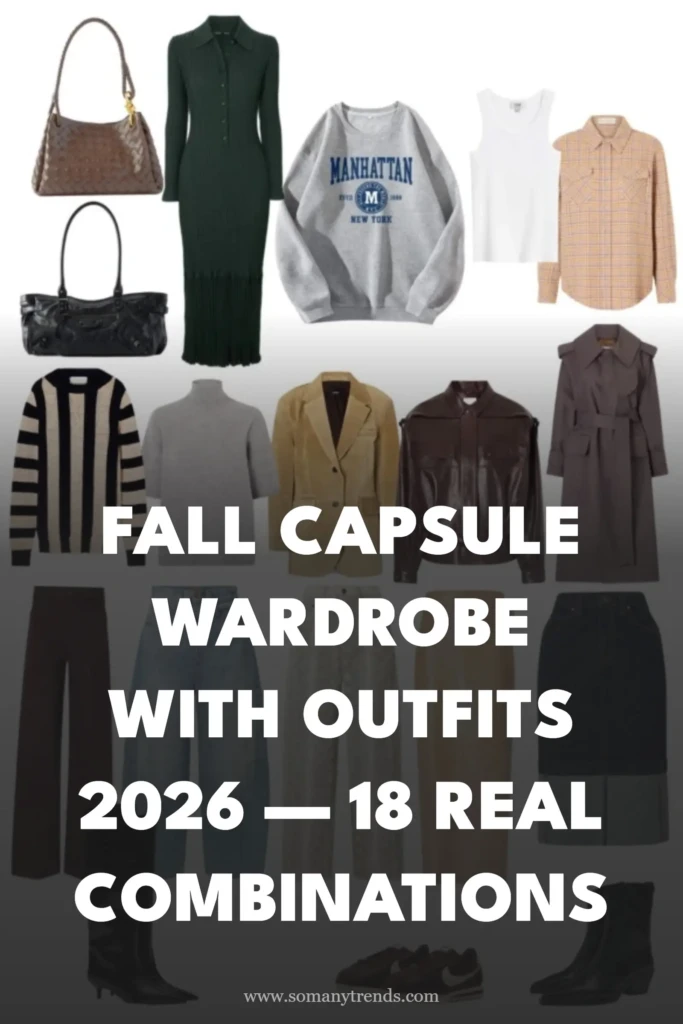
This capsule is built around 18 pieces that cover every situation from a Saturday farmers market to a Monday meeting. The palette stays in the gray, camel, brown, and cream family with a few deliberate hits of color — forest green, burgundy, navy — so everything can talk to everything else without you having to think too hard.
I’ve organized it by outfit formula rather than by item type, because that’s how real dressing works. You don’t reach for ‘a sweater.’ You reach for the thing that goes with the trousers you already pulled out. Work through these looks in order and you’ll notice the same pieces appearing over and over — that repetition is the whole point.
A note before you shop: resist the urge to buy everything at once. Start with the coat, the blazer, and the turtleneck. Those three do the heaviest lifting and once you have them, the rest of the capsule will make sense in a way it doesn’t from a flat list.
This post contains affiliate links. If you buy through these links I may earn a small commission at no extra cost to you.
Gray Turtleneck and Chocolate Wide-Leg Trousers as Your Daily Base
A gray turtleneck paired with chocolate brown wide-leg trousers is the closest thing fashion has to a cheat code. The tones are neutral enough to anchor every other piece in this capsule, but the contrast between smooth fine-knit and structured trouser fabric gives the outfit enough visual tension that it never reads as boring.
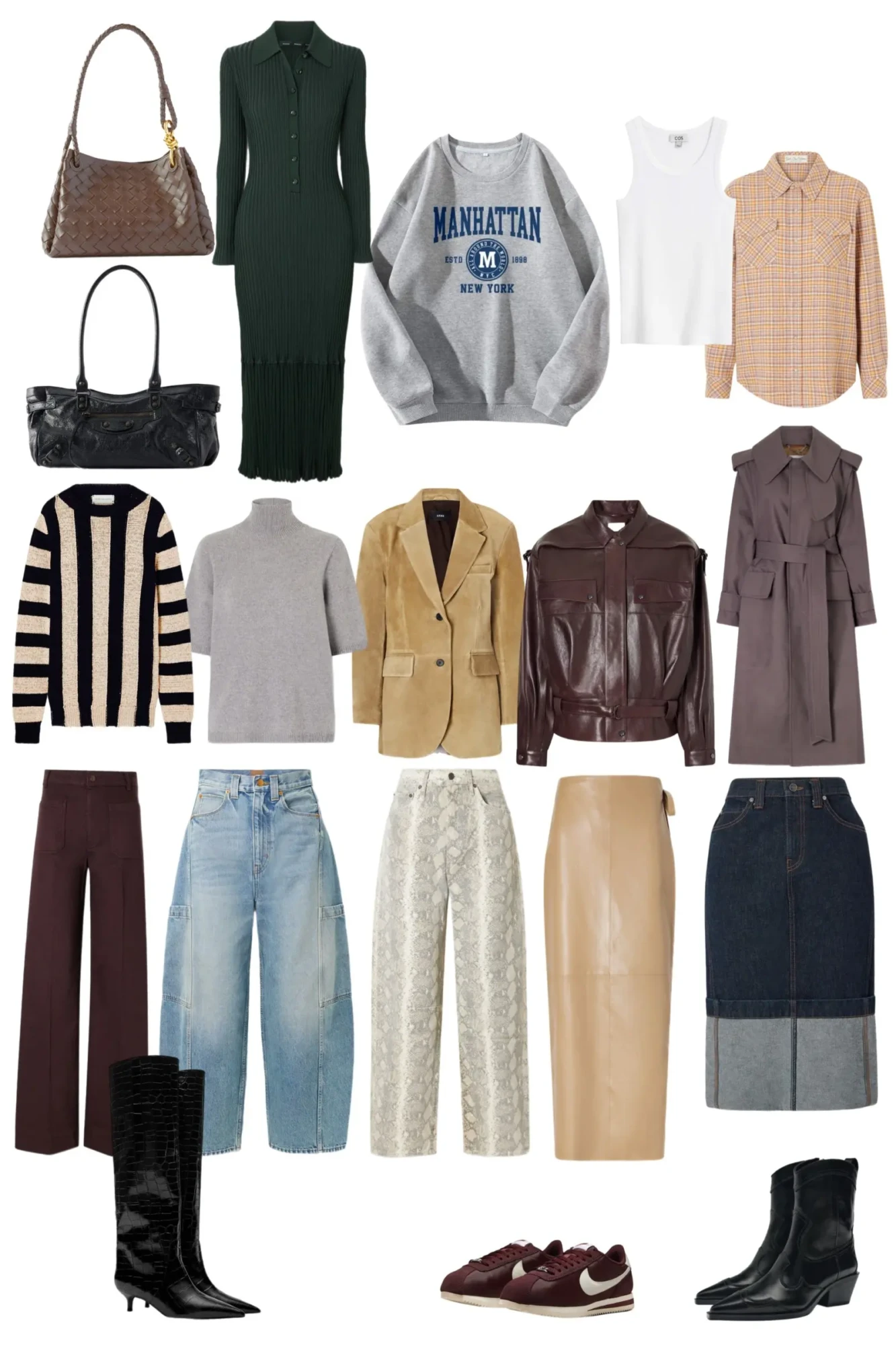
For the trousers, a 32-inch inseam worn with a two-inch heel creates that slightly pooling, elongated effect that makes wide-leg pants look intentional rather than just too long. If you’re petite, don’t hem them short — have them taken up just enough to graze the floor in heels and break cleanly in flats.
The turtleneck tuck matters more than most people realize. A full tuck looks too polished for this combination; a half-tuck reads sloppy. Thread the front of the turtleneck loosely into the waistband and leave the back out — that asymmetry is what makes it look like you dressed with intention.
Camel Blazer Over Snake-Print Trousers and Black Boots
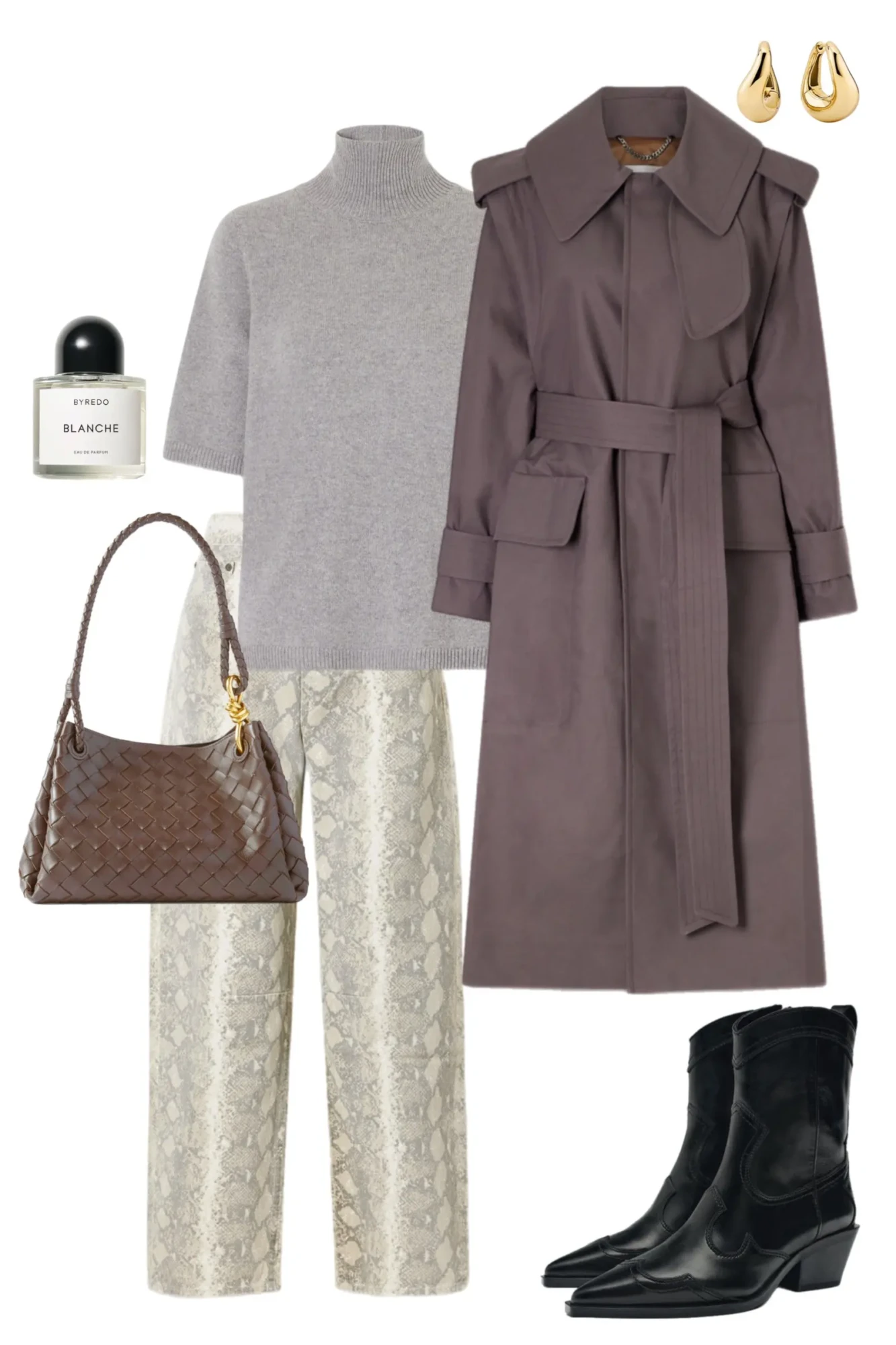
An oversized camel blazer is the single piece that can make snake-print trousers feel elegant rather than eccentric. The camel picks up the warm tan tones in most snake prints and softens what might otherwise read as too much, which is exactly why this pairing works so consistently across the fall season.
Size up at least one full size in this blazer — the borrowed-from-the-boys proportion is doing real structural work here, creating a clean shoulder line that makes the whole outfit look considered. A blazer that fits properly looks corporate; one with an intentionally loose fit looks expensive.
Black boots, whether ankle or knee-high, are the right call with this combination because they ground the snake print without adding another pattern to manage. A chunky lug sole keeps the whole thing feeling modern rather than dressed-up, which is the tone this capsule is aiming for.
Taupe Trench Over Gray Sweater and Cream Snake-Print Trousers
A taupe trench coat worn open and slightly draped over a gray sweater and cream snake-print trousers is one of those outfits that photographs well and also genuinely works in real life — two things that don’t always overlap. The trench does more for this look than a wool coat ever could because its structure adds polish without adding weight.
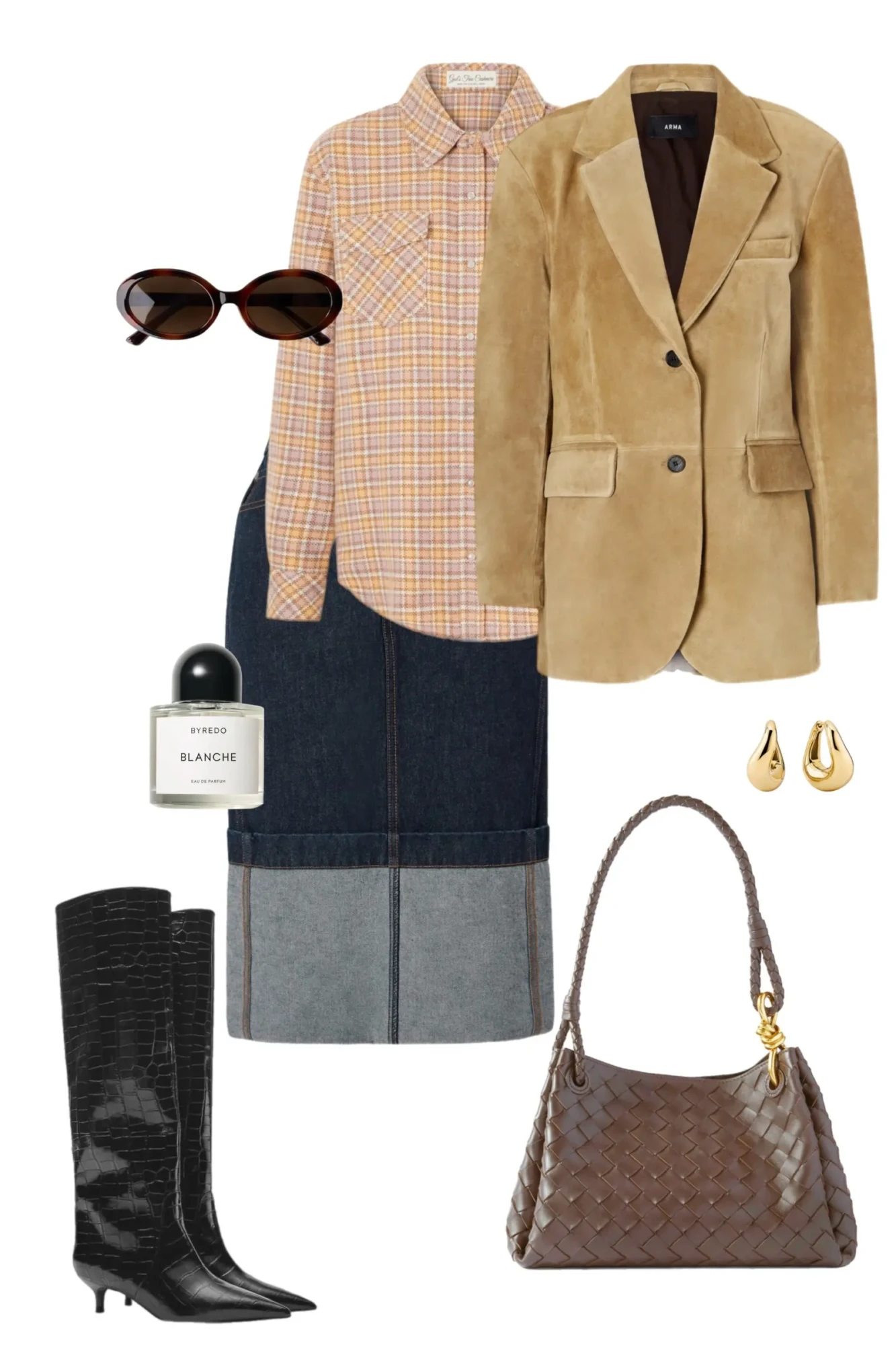
Never fully button a trench coat unless rain is actually involved. The open, flowing silhouette is what gives this look its effortless quality — belted loosely at the waist is the maximum commitment you should make. A stiff, buttoned-up trench reads like a costume rather than a considered outfit.
I’d choose a good trench over a wool coat for this capsule without hesitation. It covers September through November comfortably, layers over chunky knits without looking stuffed, and transitions from day to evening without any adjustments. That kind of versatility is exactly what a capsule wardrobe needs from its outerwear.
Gray Manhattan Sweatshirt with Denim Patchwork Skirt and Burgundy Sneakers
A graphic sweatshirt — specifically a Manhattan or any city-print variation — paired with a denim patchwork skirt and burgundy sneakers is the weekend outfit that keeps a capsule wardrobe from feeling too serious. The burgundy sneakers are doing more work than they get credit for, tying into the fall palette without feeling forced.
The half-tuck rule applies here too: tuck only the front of the sweatshirt into the skirt waistband, leaving the back and sides loose. This preserves the slouchy silhouette while creating enough waist definition that the outfit doesn’t look like you borrowed clothes from someone two sizes larger.
Denim patchwork skirts tend to be stiff when new, so wash yours before the first wear and let it soften up. Once it does, the varied indigo tones in the patchwork become far more interesting against the gray sweatshirt than a plain denim skirt would be.
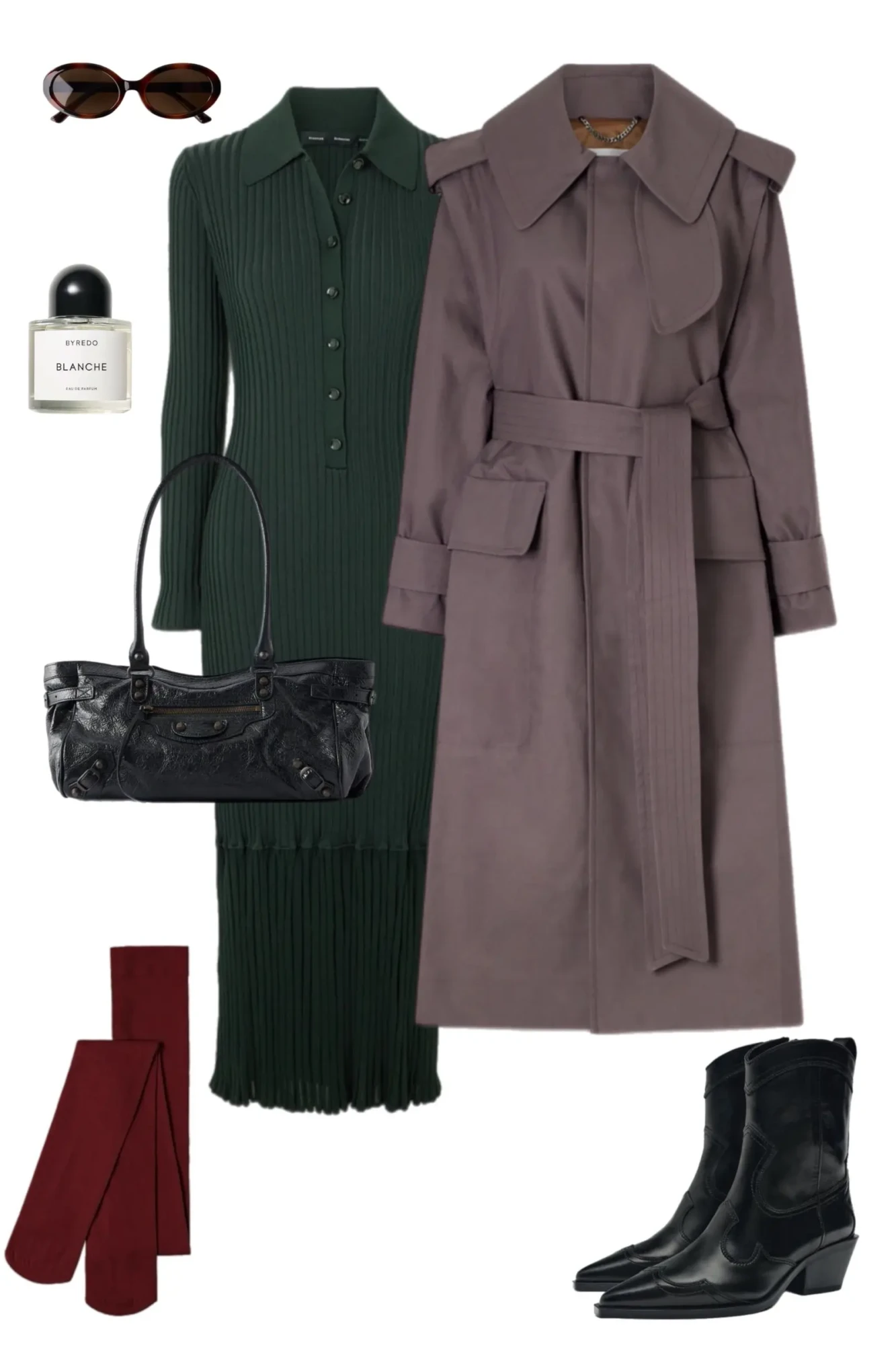
Forest Green Ribbed Midi Dress Under a Taupe Trench with Black Boots
A forest green ribbed dress solves the fall dressing problem of wanting to look put-together with zero effort. Throw the taupe trench over it and pull on black boots and the outfit is done — genuinely, completely done, with no accessories required because the color and texture handle all of that on their own.
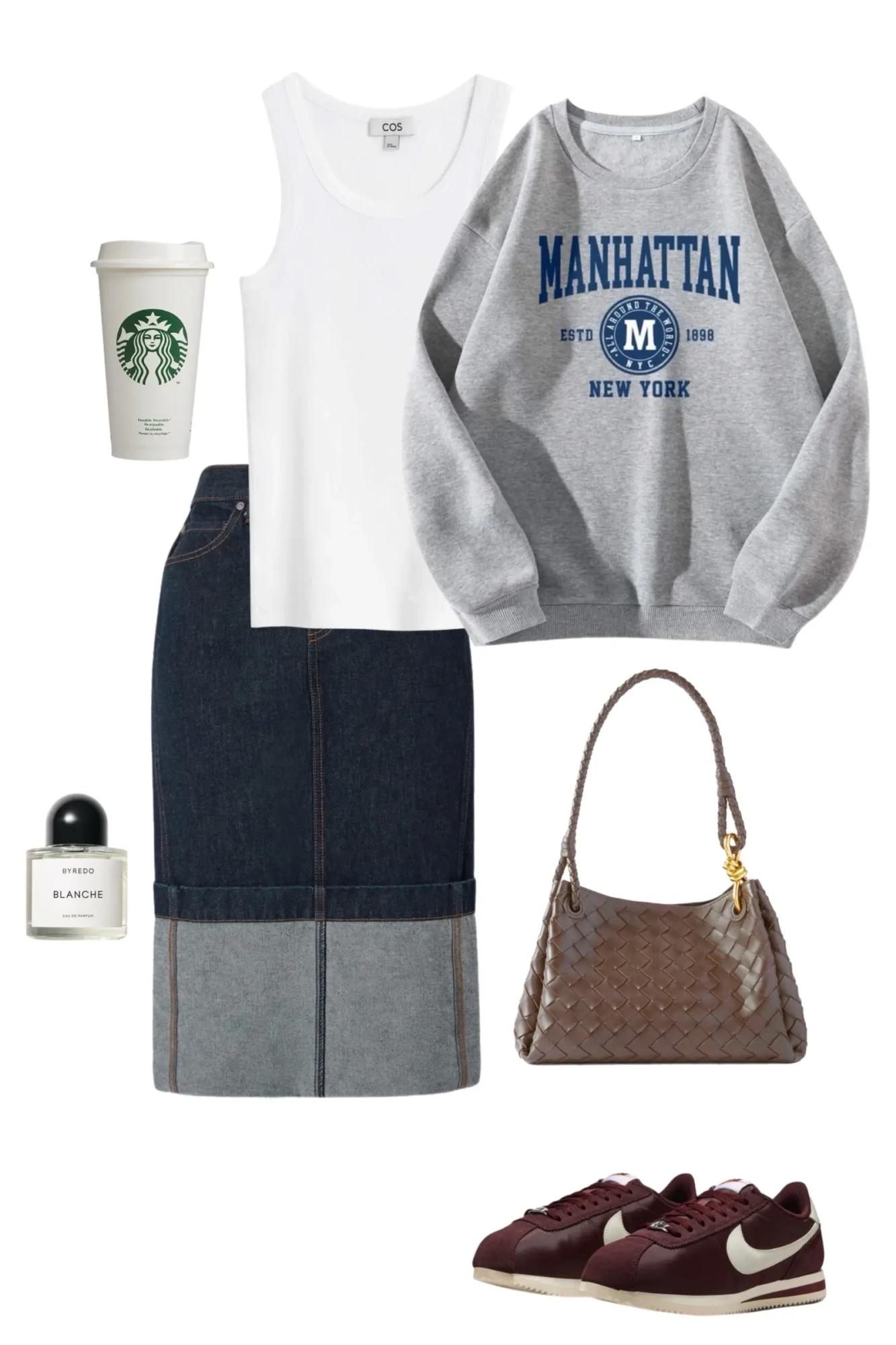
Midi length that hits at mid-calf is the most useful length for this kind of layering because it shows enough boot to feel intentional without that awkward knee-length cut that makes coats look stumpy. If you can only own one knit dress this fall, make sure it hits that mid-calf point.
Ribbed fabric in a heavier weight will keep its shape through repeated wearing better than a thin jersey knit — look for cotton-modal blends or merino, which bounce back after a day’s wear without looking limp by afternoon. Hand wash or a gentle machine cycle will keep the ribs defined through the whole season.
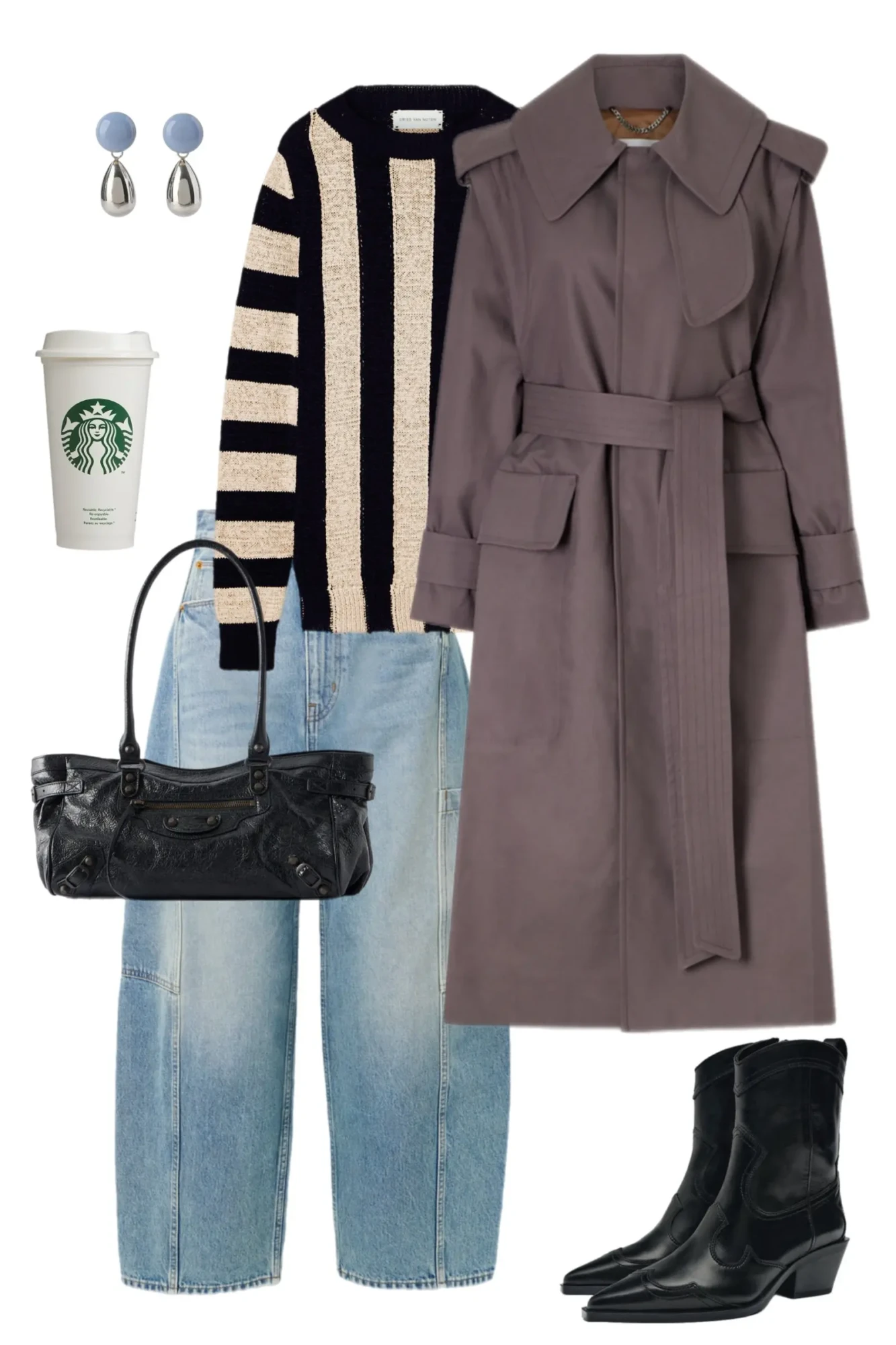
Navy Striped Cardigan Layered Under a Trench Over Wide-Leg Jeans
A navy and cream striped cardigan layered under — not over — a taupe trench coat with wide-leg jeans is the kind of outfit that looks like it required thought but actually happens almost automatically once you understand the layering logic. The stripes add enough pattern interest that the jeans don’t need to do anything interesting at all.
Layering the cardigan under the trench rather than over it is the key move here. It creates a cleaner silhouette and avoids the puffed-out bulk that happens when two oversized pieces stack on top of each other. The trench lapels frame the cardigan collar, and that layered neckline reads as intentional rather than chaotic.
The one combination to avoid is pairing an oversized cardigan with an oversized coat — you’ll disappear into fabric. One of the two layering pieces needs to be more fitted, and in this case the cardigan can be relaxed as long as the trench has some structure to its shoulders.
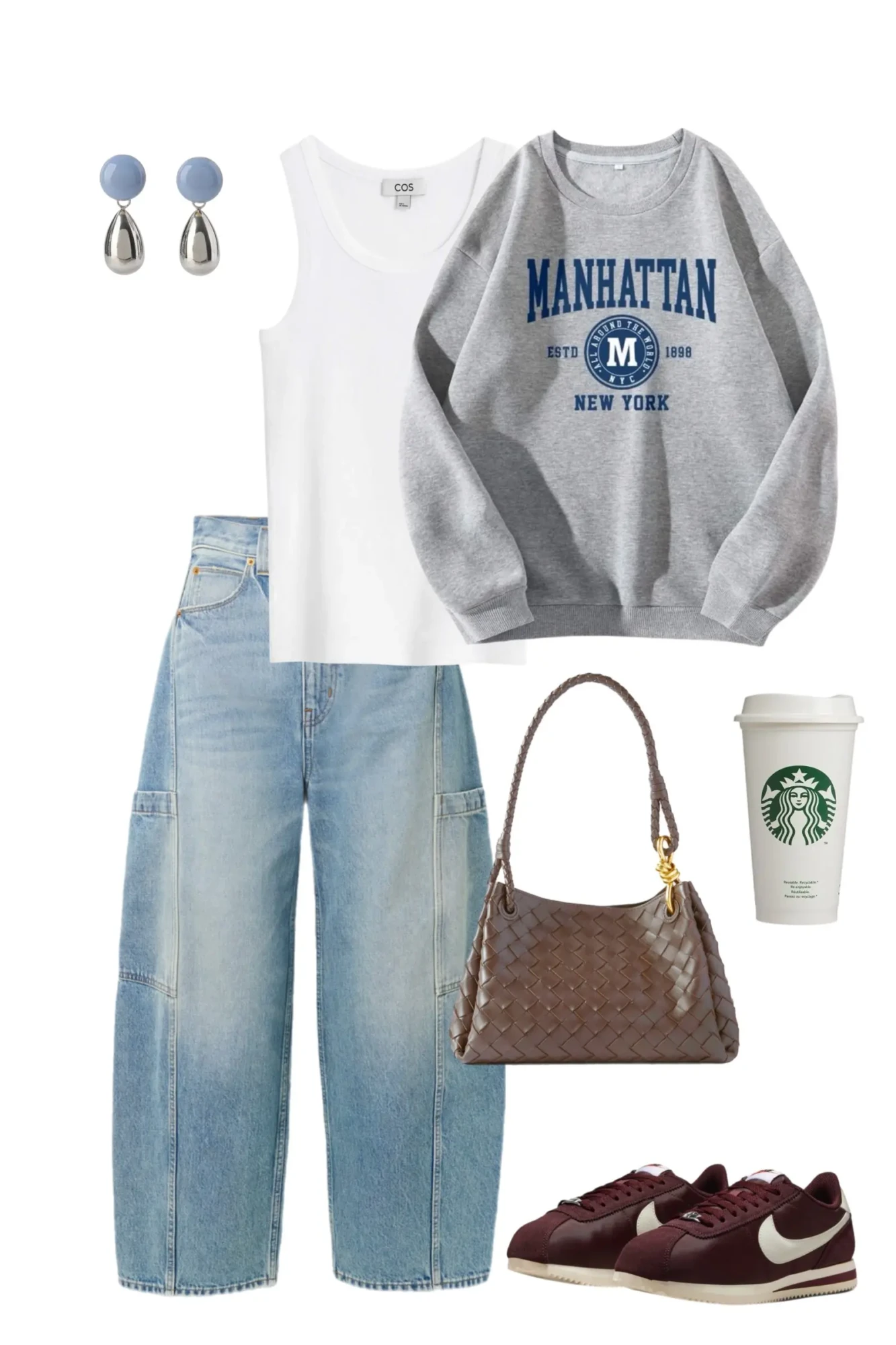
White Tank Visible Under Gray Sweatshirt with Wide-Leg Jeans
Letting a white tank peek out from under a gray sweatshirt with wide-leg jeans is the styling detail that separates people who dress with intention from people who just got dressed. It’s a small thing — an extra centimeter or two of white at the neckline and hem — but it makes the whole outfit look deliberate.
Choose a tank that runs about two inches longer than your sweatshirt hem so the white shows consistently as you move. A tank that’s exactly the same length will show intermittently depending on how you’re sitting or walking, which looks accidental rather than styled.
Wide-leg jeans in a medium wash are the right bottom for this combination — dark wash feels too dressed-up for the sweatshirt’s casual energy, and very light wash can look wintery before its time. A medium indigo balances the gray of the sweatshirt without either piece dominating.
Gray Turtleneck, Camel Leather Skirt, and Matching Blazer in Tonal Dressing
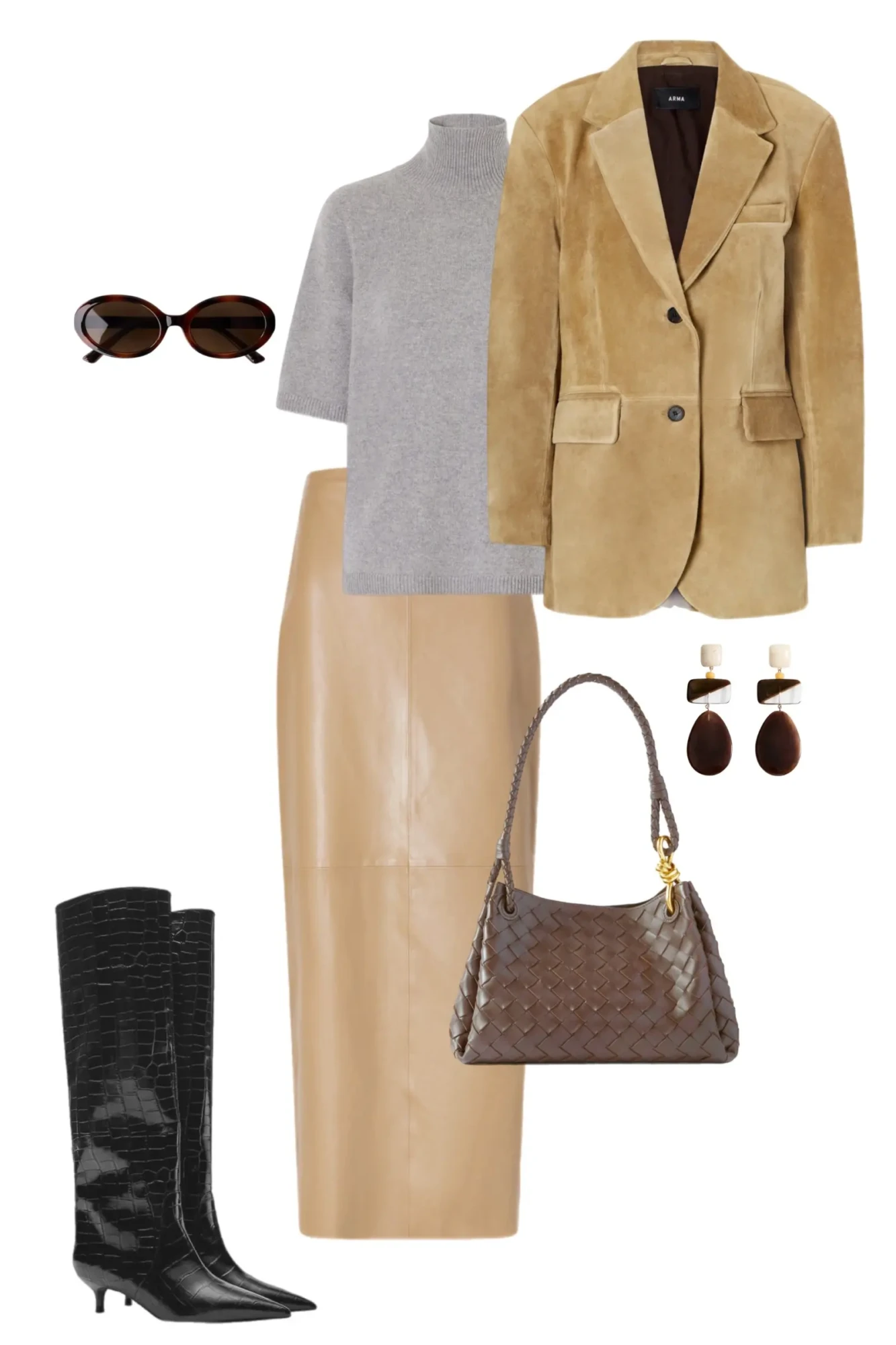
A gray turtleneck with a camel leather skirt and a camel blazer is a masterclass in tonal dressing — pulling everything into the same color family so that the outfit’s interest comes entirely from texture contrast rather than color contrast. Smooth leather against nubby knit against structured blazer fabric is genuinely more sophisticated than most pattern mixing.
The trick with monochrome dressing is varying the textures aggressively while keeping the hues closely related. Don’t pair a matte camel knit blazer with a matte camel suede skirt — there’s nothing for the eye to land on. Pair shiny leather with flat knit and you’ve got a real outfit.
This combination also happens to be one of the easiest to dress up or down with accessories. A leather tote and loafers keep it daytime-professional; swap in heeled boots and a small shoulder bag and it works for dinner. That flexibility is why tonal dressing belongs in every fall capsule wardrobe.
Camel Blazer with White Tank, Snake-Print Trousers, and a Straw Hat
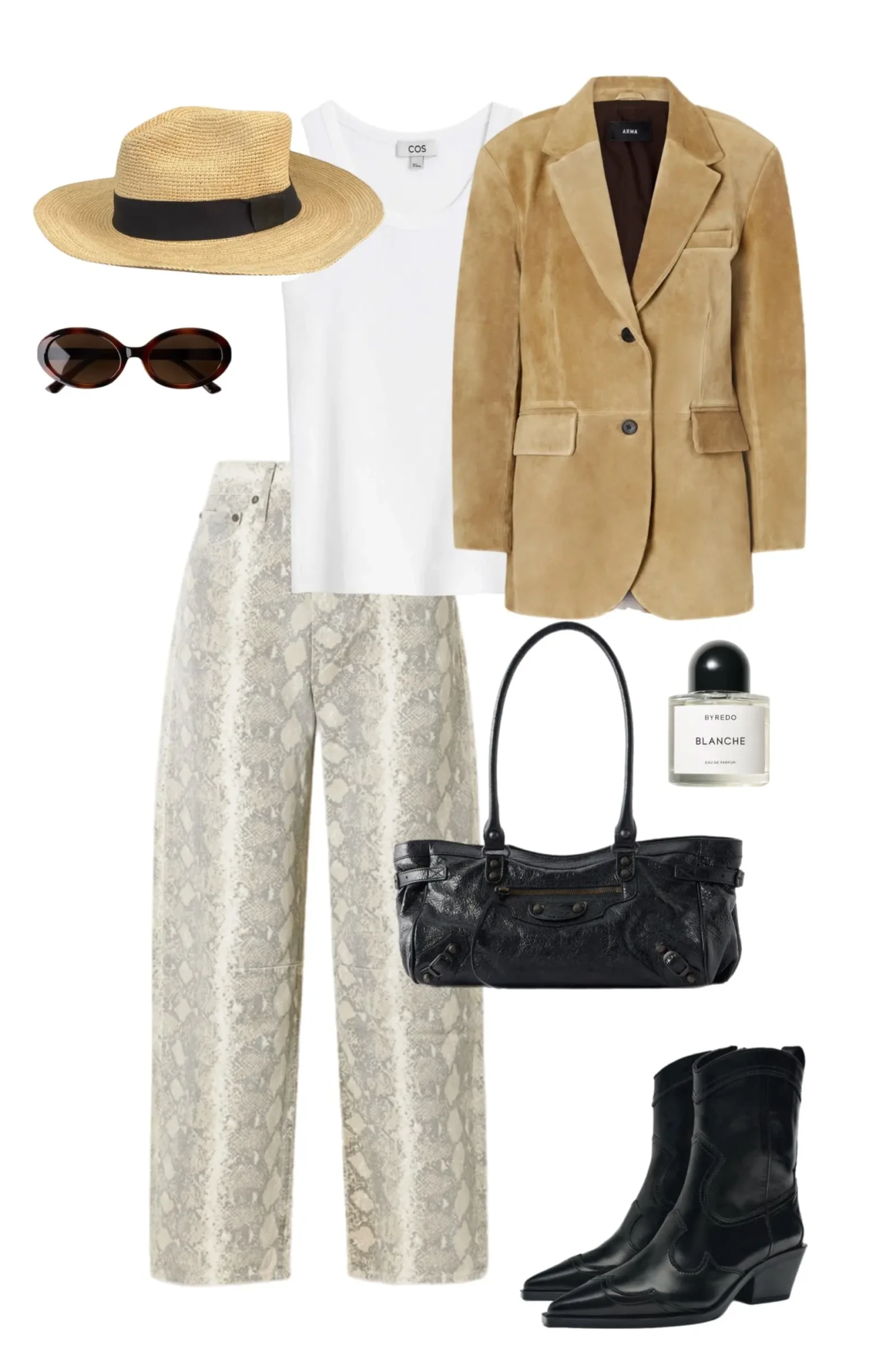
A camel blazer over a white tank with snake-print trousers and a straw hat is proof that fall doesn’t have to feel heavy. Early September dressing is about bridging summer’s lightness with autumn’s palette, and this combination does that perfectly — the straw hat is technically a summer piece, but paired with these earth tones it reads as early fall without any effort.
A straw hat with a slightly wider brim works better here than a floppy beach hat — you want structure, not vacation. The hat should feel like an accessory that belongs with the blazer, and a floppy one disrupts the polished proportions of the rest of the outfit.
Once October hits and the hat feels out of place, this outfit still works completely — just remove the hat and let the blazer-over-tank combination stand on its own. That’s the value of building looks where the accessories are additions rather than structural elements.
Orange Gingham Shirt Under a Brown Leather Jacket with Light Wash Jeans
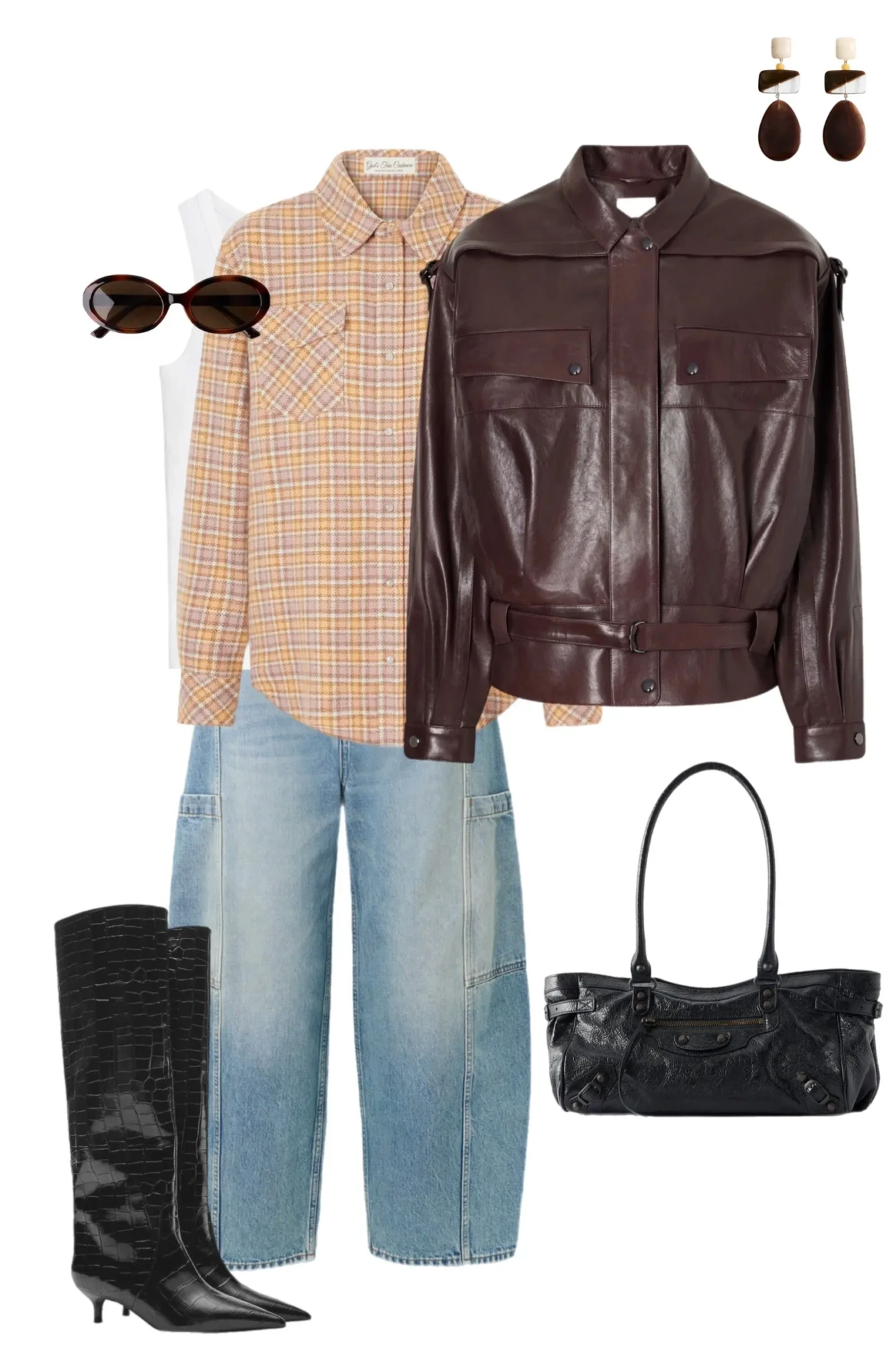
An orange gingham shirt layered under a brown leather jacket with light wash jeans brings personality into a capsule wardrobe that could otherwise feel too safe. The gingham’s orange sits squarely within the fall color story — it’s warm, it’s earthy, and it makes the brown leather look richer rather than heavy.
Scale matters when mixing prints with leather. A smaller gingham check balances against the jacket’s strong silhouette; an oversized gingham print competes with it and neither piece wins. Think of the shirt as a textured layer rather than a pattern statement and choose accordingly.
Light wash jeans are specifically the right call here because they reflect light upward and stop the lower half from looking weighed down. Dark jeans plus a brown leather jacket can feel heavy and autumn-gloomy; light denim keeps the whole thing feeling fresh even as the temperature drops.
Navy Striped Sweater with Snake-Print Trousers for Pattern Mixing Done Right
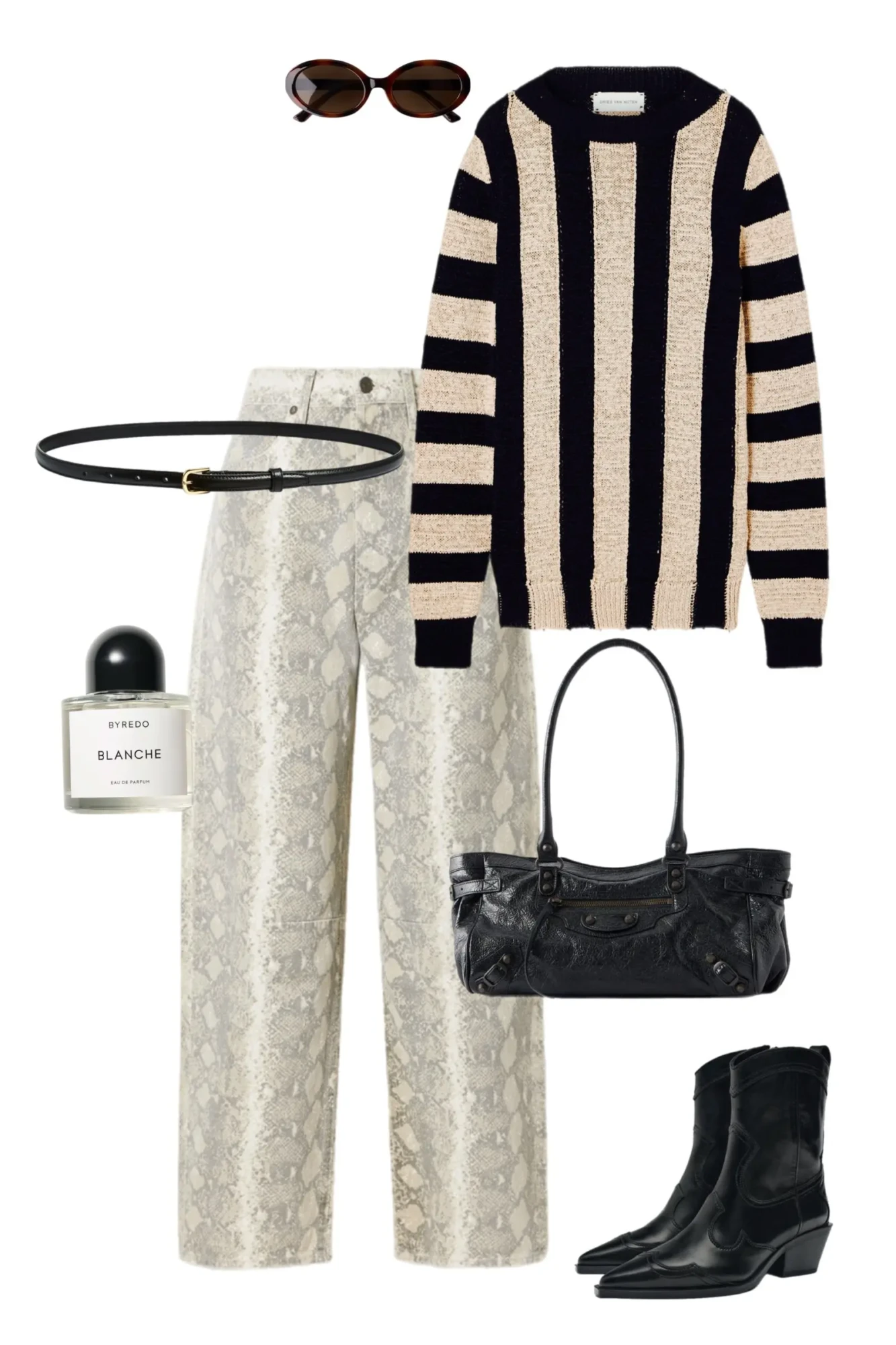
A navy and cream striped sweater worn with snake-print trousers is the pattern-mixing combination that looks harder than it is. Both prints live in the same navy-and-neutral color palette, which is the entire reason they work together — when the colors agree, the patterns can disagree in scale without causing visual chaos.
The key principle here is contrast in scale: thick stripes against a small, tight snake pattern. If both prints were the same scale, they’d compete. Because one is bold and graphic and the other is fine and organic, the eye reads them as complementary rather than clashing.
This combination is also a good way to get more wear out of both pieces individually. The striped sweater works with plain trousers or jeans; the snake-print trousers work with solid tops. Together they make an interesting outfit; separately they each pull weight with simpler pairings.
White Tank Tucked into Chocolate Trousers Under a Taupe Trench
A white tank tucked loosely into chocolate brown trousers, worn under a taupe trench coat, is the fall outfit that proves restraint is a style skill. There is nothing flashy happening here — it’s entirely about proportion, color cohesion, and the quality of the individual pieces, which means every element needs to be right.
The tuck should be loose rather than pulled tight — you want a slight blousing of fabric above the trouser waistband, not a crisp military tuck. That relaxed drape is more flattering on almost every body type because it doesn’t create tension across the midsection.
What makes this outfit work is the deliberate warmth gradient: cool white at the top, warm chocolate in the middle, warm taupe wrapped around the outside. The palette flows rather than jumps, which is why the look feels cohesive even though nothing technically matches.
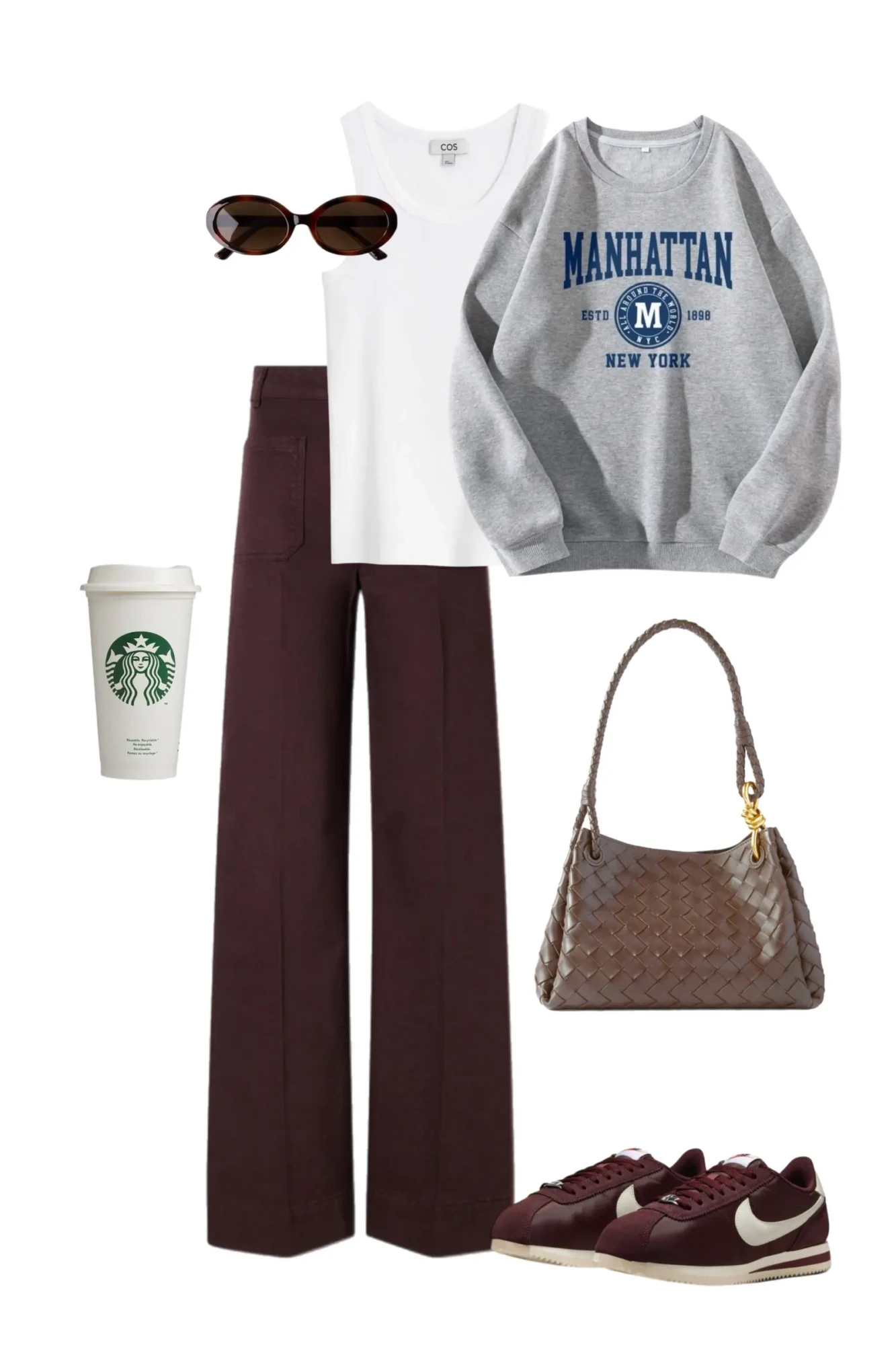
Gray Sweatshirt Over White Tank with Chocolate Brown Trousers for Weekends
A gray sweatshirt layered over a white tank with chocolate brown trousers is the weekend uniform this capsule was built around — comfortable enough to actually wear on a lazy Saturday, but put-together enough that you don’t feel like you’ve given up on yourself. The visible tank at the neckline is the detail that keeps it looking intentional.
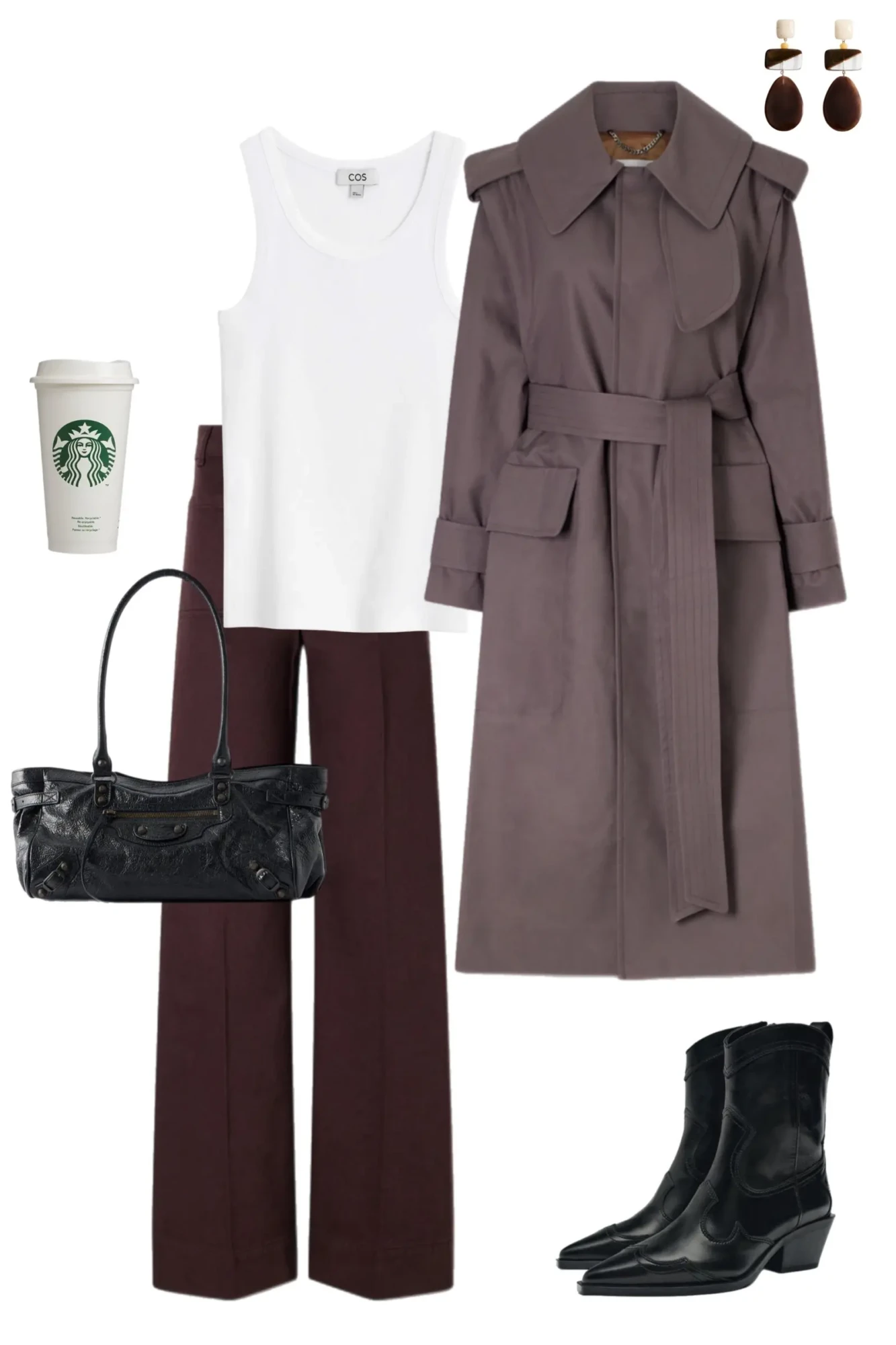
Size down in the sweatshirt if you’re layering it over a tank — you want a relaxed fit, not an overwhelming one. The tank should peek out cleanly at the neckline and ideally at the hem too, which means the sweatshirt shouldn’t be so large that it obliterates any sense of proportion.
One specific thing to avoid: don’t layer a loose-fit tank under a loose-fit sweatshirt. Choose one fitted piece to anchor the look. In this case, the tank should be relatively close-fitting so that the sweatshirt is the relaxed element and the tank provides structure underneath.
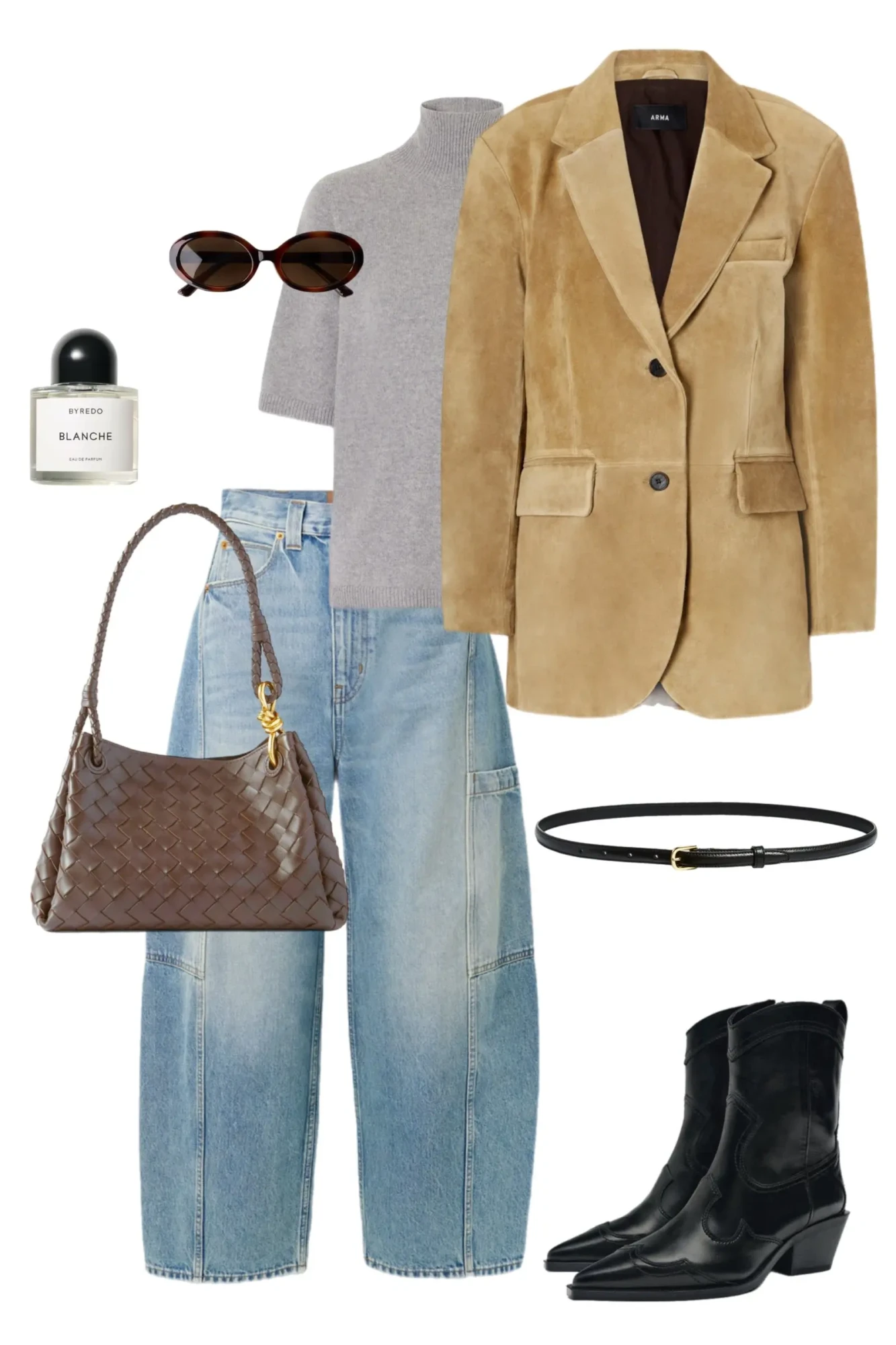
Gray Turtleneck with Carpenter Jeans and a Camel Blazer
A gray turtleneck with light wash carpenter jeans and a camel blazer is how denim earns its place in a sophisticated capsule wardrobe. The cargo pockets and utility details of carpenter jeans give them enough visual interest to hold their own against the structure of the blazer — plain straight-leg jeans would feel less intentional in this combination.
Light wash denim is deliberate here, not accidental. A dark wash would make the jeans feel like they’re trying to pass as trousers, which undermines the whole point of choosing a utility-detail jean. The contrast between the casual light denim and the structured camel blazer is where the outfit’s personality lives.
Carpenter jeans tend to run slightly wide in the leg, which means they pair best with a blazer that has defined shoulders rather than a soft, unstructured one. The shoulder structure of the blazer balances the relaxed lower half and keeps the overall silhouette from looking shapeless.
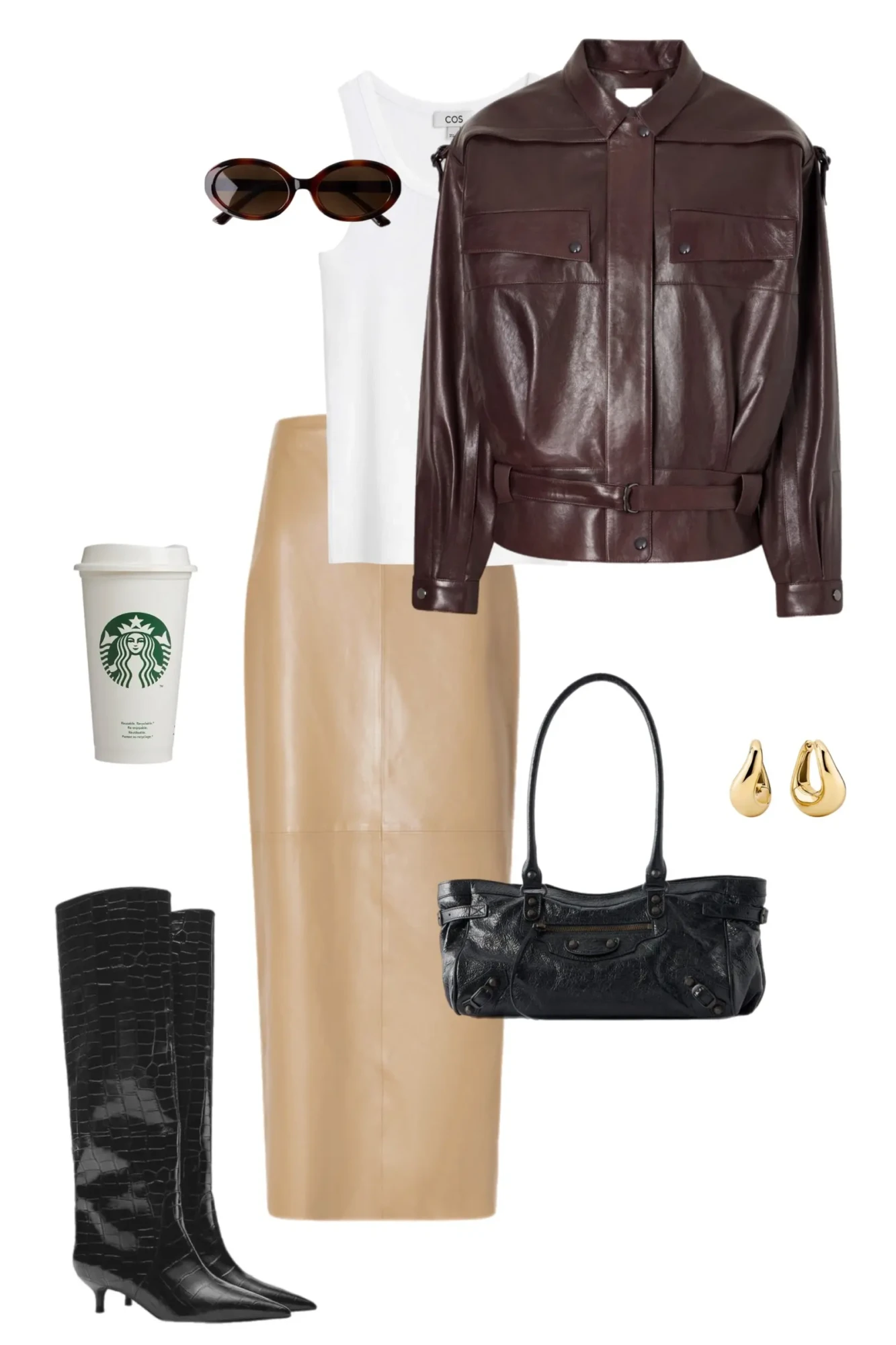
Brown Leather Jacket Over White Tank with a Camel Leather Skirt
A brown leather jacket over a white tank with a camel leather skirt is the effortlessly cool fall outfit that benefits enormously from the texture contrast between fitted leather and whatever the skirt’s fabric is doing below. The all-neutral palette lets the silhouette and materials do all the talking.
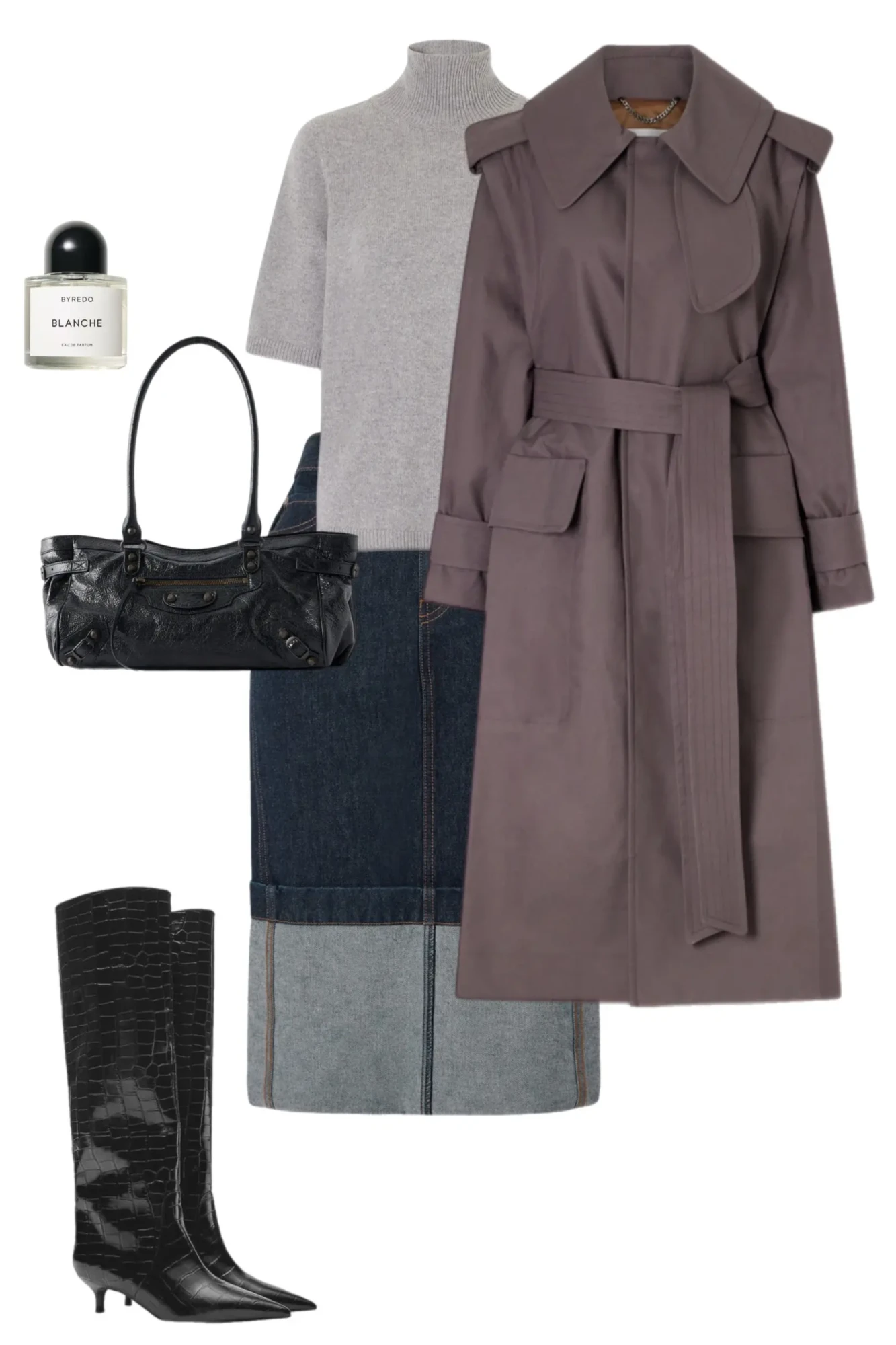
The proportions here are critical: a fitted leather jacket over a flowing skirt, not a structured one. If both the jacket and skirt are rigid, the outfit reads as stiff rather than cool. A skirt with some movement — a slight A-line or a fabric with drape — balances the leather jacket’s structure perfectly.
Leather care matters if you’re going to build outfits around it. Condition a genuine leather jacket at the start of every fall season and wipe it down with a damp cloth after wearing — the natural oils from your hands and collar will build up and dull the finish over time if you don’t.
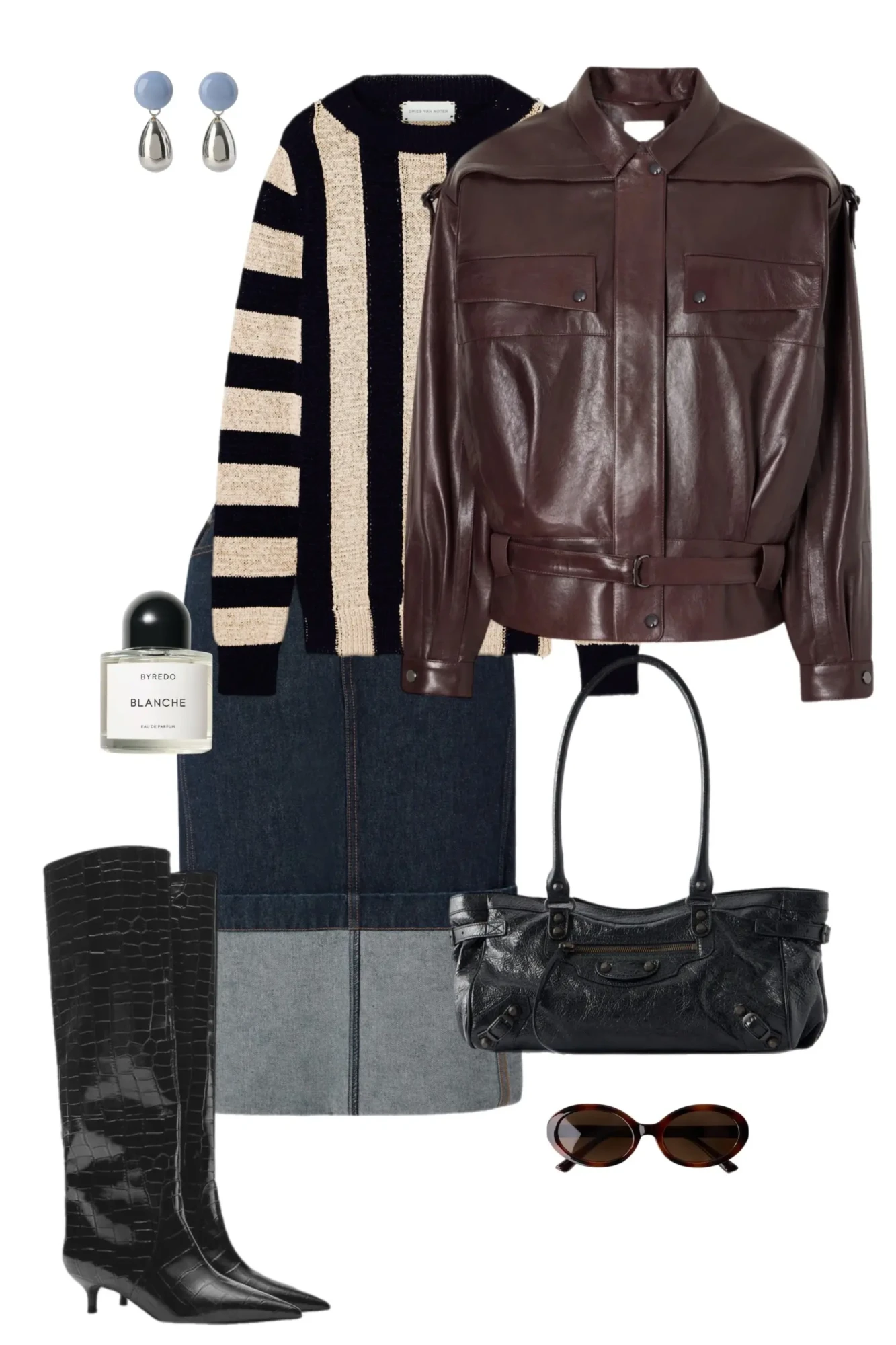
Brown Leather Jacket Over Navy Striped Sweater with a Denim Skirt
A brown leather jacket over a navy and cream striped sweater with a denim skirt handles multiple textures and patterns in one look without becoming visually chaotic, and the reason is simple: every piece stays within the same brown-navy-cream color story. The leather adds edge, the stripes keep things playful, and the denim grounds it all.
When layering leather with patterned knitwear, the color connection between the two is what makes or breaks the outfit. Brown leather with navy stripes works because both have warmth and depth. Brown leather with a bright, high-contrast pattern would feel like two separate outfits fighting for attention.
A denim skirt — especially one with a slight A-line cut — is a genuinely useful capsule piece because it bridges the gap between the leather jacket’s edge and the sweater’s coziness. It’s casual enough to soften the leather, structured enough to give the outfit shape.
Gray Turtleneck with Denim Patchwork Skirt and Camel Blazer
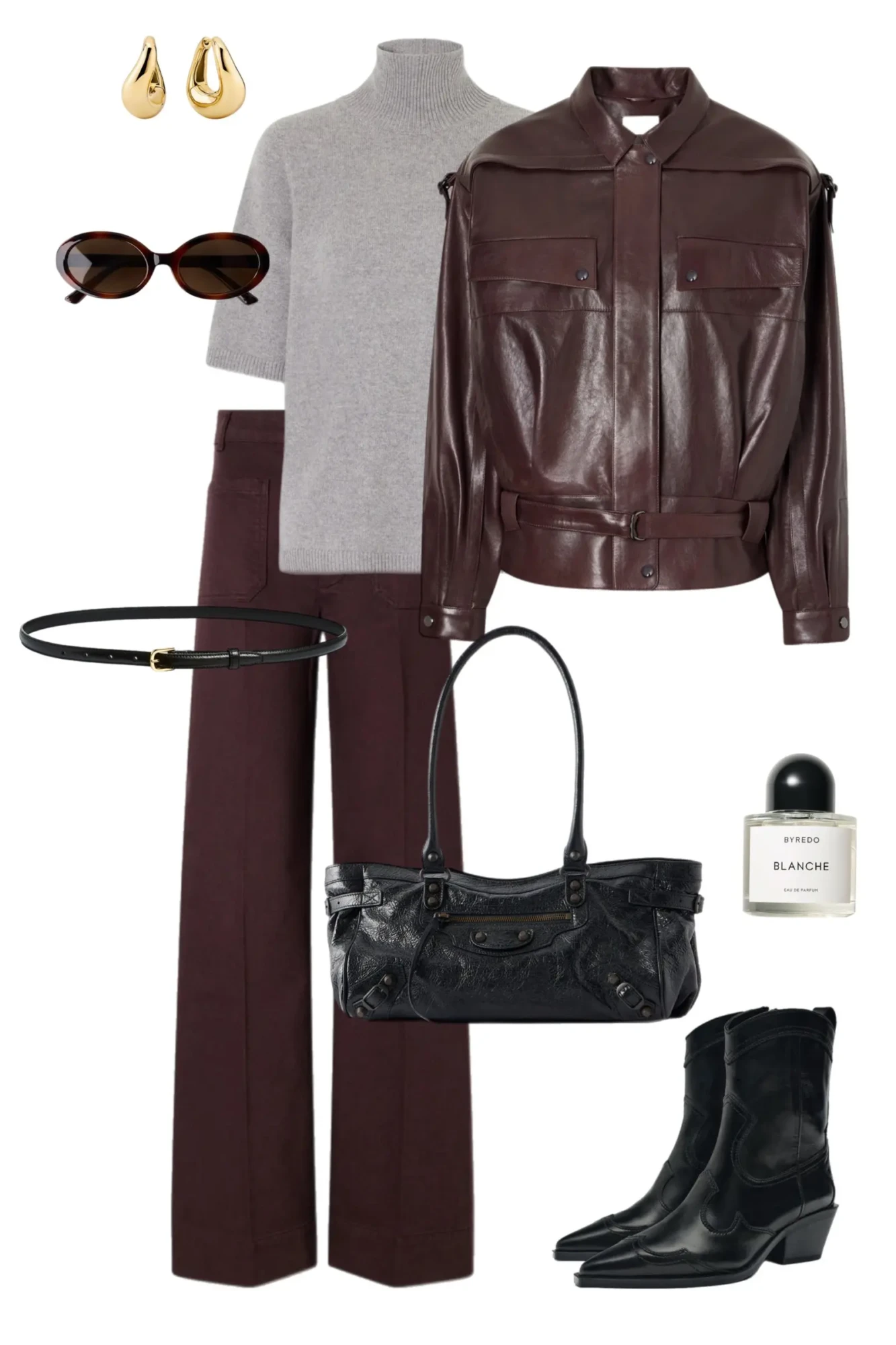
A gray turtleneck with a denim patchwork skirt and a camel blazer is the combination that proves a blazer’s ability to elevate almost any casual piece into something that reads as polished. The turtleneck does the sophistication work at the top; the blazer reinforces it; the denim skirt keeps the whole thing from taking itself too seriously.
A cropped blazer is specifically the right choice with a high-waisted skirt because it hits right at the waist and creates the longest possible leg line. A longer, hip-grazing blazer with a skirt chops the body in half visually and loses the proportional advantage that makes this combination work.
The patchwork denim skirt is more interesting than a plain denim one because the tonal variations in the patches add texture that works with both the knit turtleneck and the structured blazer without looking like it’s trying to be a statement piece on its own.
Gray Turtleneck, Light Wash Jeans, Camel Blazer, and Brown Accessories
A gray turtleneck with light wash jeans, a camel blazer, and brown accessories is the complete capsule formula in one outfit — every element is from the neutral palette, every piece works with every other piece, and the brown accessories tie the camel and gray together without requiring anything flashy. Invest in camel blazers and brown leather bags as your anchor pieces and everything else in this capsule will fall into place around them.
This outfit is the one I keep coming back to because it genuinely requires no thought. The turtleneck and jeans are the foundation, the blazer elevates it, and the brown accessories — a belt, a bag, boots — create visual continuity through the warm tones. It’s a formula, and formulas work.
The light wash jeans do specific work here: they prevent the gray-and-camel combination from feeling heavy or autumnal-gloomy. That touch of lighter color at the bottom reflects light and keeps the overall palette feeling fresh rather than muddy, which matters more as the season gets darker.
How to Build and Buy a Fall Capsule Wardrobe Without Starting Over Every Year
Start with the three pieces that do the most heavy lifting: a structured outerwear coat or trench, a blazer, and a turtleneck. These three will appear in more outfits than anything else in this list, which means they justify a higher spend-per-wear than anything you’d replace seasonally. Get these right and the rest of the capsule builds itself around them.
Shop your existing wardrobe before buying anything new. Pull out everything you own in the gray-camel-brown-cream palette and see what’s actually missing. Most people already own more of a capsule wardrobe than they realize — they just haven’t organized it with intention. A denim skirt you haven’t worn in two years might be exactly the piece that connects your new blazer to your old turtleneck.
Add layers gradually as the season progresses rather than buying the full capsule in August. Light blazers and cardigans work for September when temperatures are still fluctuating. Add heavier sweaters and your trench in October. Save the full coat and thick knits for November. Buying seasonally means you’re not storing pieces that won’t get worn for six weeks, and you can actually gauge what you need as the weather shifts.
Every piece you add should work with at least three things you already own before you buy it. This is the rule that prevents a capsule wardrobe from turning into a collection of orphan pieces that each only work in one specific outfit. Hold the new item up to your existing wardrobe — mentally or literally — and count the combinations. If you can’t reach three, put it back.
18 Pieces, Endless Combinations, One Cohesive Fall Wardrobe
A fall capsule wardrobe works because it forces you to make decisions in advance rather than in front of your closet at 7 a.m. when you’re half-awake and running late. Every outfit in this guide uses pieces that already belong to the same color story and the same styling logic, which means the combinations aren’t lucky accidents — they’re the predictable result of intentional buying. If you want to explore more options and build out your specific version of this wardrobe, pieces that actually talk to each other, gray turtleneck sweaters, chocolate brown wide-leg trousers, and camel trench coats are solid places to start looking for the hero pieces that will anchor everything else.
The goal was never 18 separate outfits. It was 18 pieces that create 40-plus combinations so that getting dressed in fall feels like possibility rather than pressure. Start with the trench, the camel blazer, and the gray turtleneck. Add the pieces that make sense for your life. Wear everything at least three times before deciding it doesn’t work — capsule wardrobes reveal their logic over time, not all at once.
FAQ
How many pieces do I actually need for a fall capsule wardrobe?
Aim for 15–20 pieces total — roughly 5–7 tops, 4–5 bottoms, 2–3 jackets or blazers, 2–3 pairs of shoes, and a few accessories. Quality matters far more than quantity here; 15 pieces you love will always outperform 30 pieces you’re indifferent to.
What colors work best for a fall capsule wardrobe?
Stick to 3–4 colors that genuinely work together: gray, brown, and cream as your neutrals, plus one accent like burgundy or forest green. That constraint is what makes everything mix and match without planning.
Which pieces are worth spending more money on?
Outerwear, blazers, and shoes — they carry the most visual weight and get the heaviest wear. Save on basics like tanks and tees that you’ll rotate out more frequently anyway.
How do I transition the capsule from early fall to late fall?
Add weight gradually: light blazers and cardigans in September, heavier knits and your trench in October, full coats and substantial boots by November. Buying all at once means you’ll have pieces sitting unworn for weeks.
Can I include patterns in a capsule wardrobe?
Absolutely, but limit yourself to one or two pattern types — stripes and snake print work well together because they differ in scale and share a neutral base. Patterns should stay within your main color palette so they mix with everything rather than functioning as statement pieces.
What’s the biggest mistake people make building a capsule wardrobe?
Buying pieces in isolation without checking how they work with what they already own. Every new addition should work with at least three existing pieces before you commit — if it can’t reach that threshold, it’s not a capsule wardrobe piece.
Do I need to buy everything at once to make a capsule wardrobe work?
No — and honestly you shouldn’t. Start with the three highest-impact pieces (outerwear, blazer, turtleneck) and add from there as you identify what’s actually missing from your rotation.
How do I know if my capsule wardrobe is actually working?
You should be able to get dressed in under five minutes on a normal morning without feeling like you have nothing to wear. If you’re still standing in front of your closet confused, either pieces are missing or the ones you have aren’t genuinely mixing with each other.
Can I build a fall capsule wardrobe on a tight budget?
Yes — prioritize spending on the blazer and coat, then shop secondhand or mid-market for basics like tanks, jeans, and knitwear. The key pieces that make a capsule wardrobe feel expensive are the structured, outerwear-level pieces, not the foundational layers underneath.
Have any thoughts?
Share your reaction or leave a quick response — we’d love to hear what you think!
-
 0
0 -
 0
0 -
 0
0 -
 0
0 -
 0
0 -
 0
0