

 Diana
Diana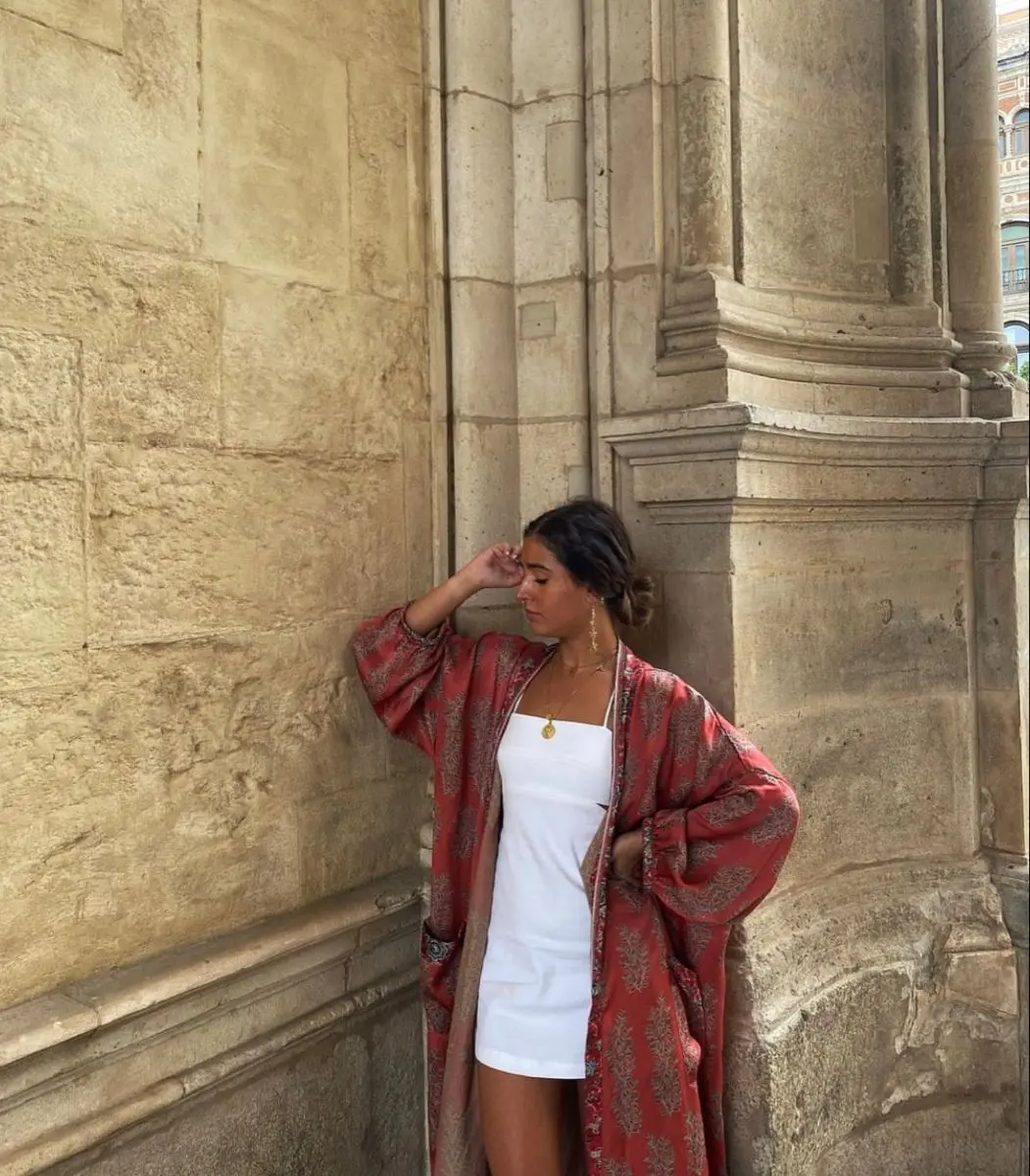
Jaipur will overwhelm you in the best possible way — the pink-washed walls, the riot of marigold garlands, the carved sandstone everywhere you look. Your clothes have to work harder here than anywhere else, because the backdrop is genuinely competing with you. Get the balance right and you look like you belong in a coffee-table book. Get it wrong and you’re sweating through a synthetic sundress by 9am, ducking out of temple courtyards because your shoulders are bare.
I’ve spent time researching what actually works in Rajasthan’s heat, and the answer is almost always the same: natural fabrics, a loose silhouette, and at least one layering piece you can throw on when you step into a shrine or a palace interior. Linen, cotton, rayon — these breathe. Polyester does not, and you will know it. The city sits at around 35°C in shoulder season and higher in summer, so fabric choice isn’t a style preference, it’s a survival strategy.
The other thing nobody tells you is that Jaipur is incredibly photogenic, which means you’ll want outfits that move well and have some visual weight — a bold print, a flowing sleeve, an interesting layering moment. Plain basics look flat against those ornate doorways. You don’t need to go full maximalist, but a printed pant or an embroidered detail pays off enormously in photos.
These 20 outfit ideas cover everything from early-morning palace visits to rooftop dinners and chaotic bazaar afternoons. I’ve noted which looks are smartest for temple dress codes, which hold up in the heat longest, and which ones will make your travel photos look genuinely effortless. Pack from this list and you’ll feel appropriate, comfortable, and — this part matters — actually like yourself.
The Essential Jaipur Outfit Aesthetic
20 Jaipur Outfit Ideas That Work
Sage Kimono over Cream Camisole with Terracotta Wide-Leg Pants
This is the kind of outfit that makes you feel like you planned it for months even if you threw it on in ten minutes. The olive-green kimono layers over a cream camisole, and the terracotta wide-leg pants anchor everything with that warm, earthy tone that Jaipur’s architecture practically demands. Striped flat sandals are the right call — you’ll be on your feet for hours crossing palace courtyards and cobbled lanes.
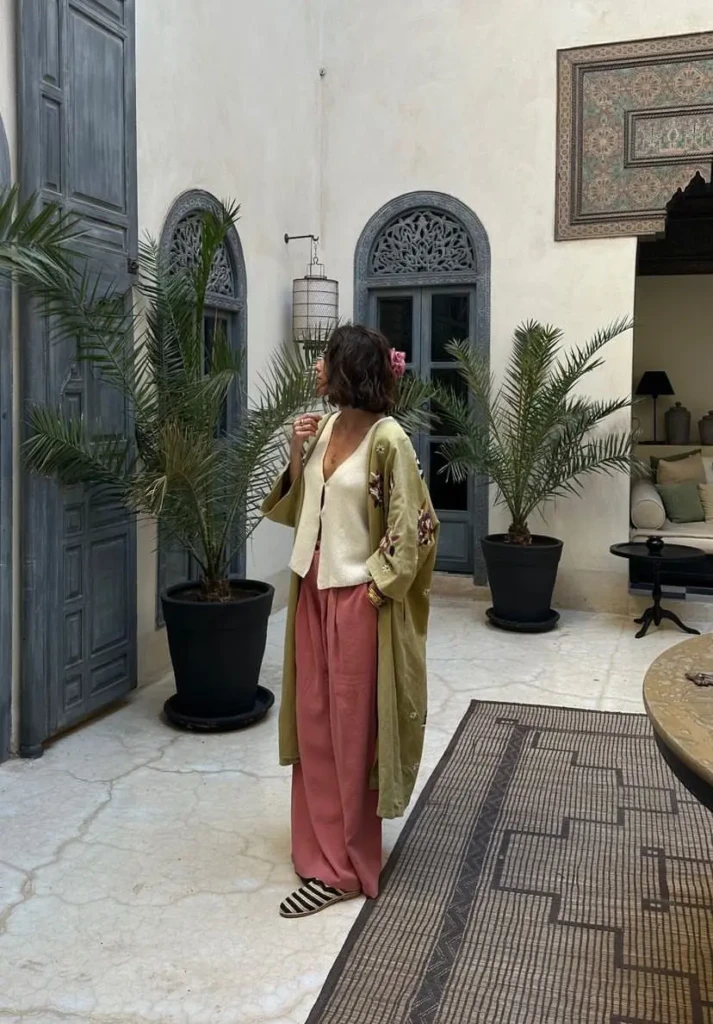
Let the kimono sleeves fall naturally rather than pushing them up — the relaxed drape is the whole point, and it photographs beautifully framed against carved archways or ornate doorways. The olive and terracotta palette sits in quiet harmony with the pink sandstone without trying to match it, which is exactly the sweet spot you want.
This silhouette is also genuinely practical for Jaipur’s dress codes. The camisole underneath means you’re covered if you remove the kimono in the heat, and the wide-leg pants handle the no-shorts rule at religious sites without any fuss. It’s a one-and-done outfit that takes you from morning sightseeing to a casual heritage hotel lunch.
Yellow and Cream Paisley Maxi Dress for Sightseeing and Heritage Dinners
Sometimes the best outfit is a single great piece, and this yellow and cream paisley maxi dress with its deep V-neckline is exactly that. The mixed pattern bands give it visual complexity without requiring any styling effort, and the flowing length keeps you cool and covered simultaneously — a genuine win in Jaipur.
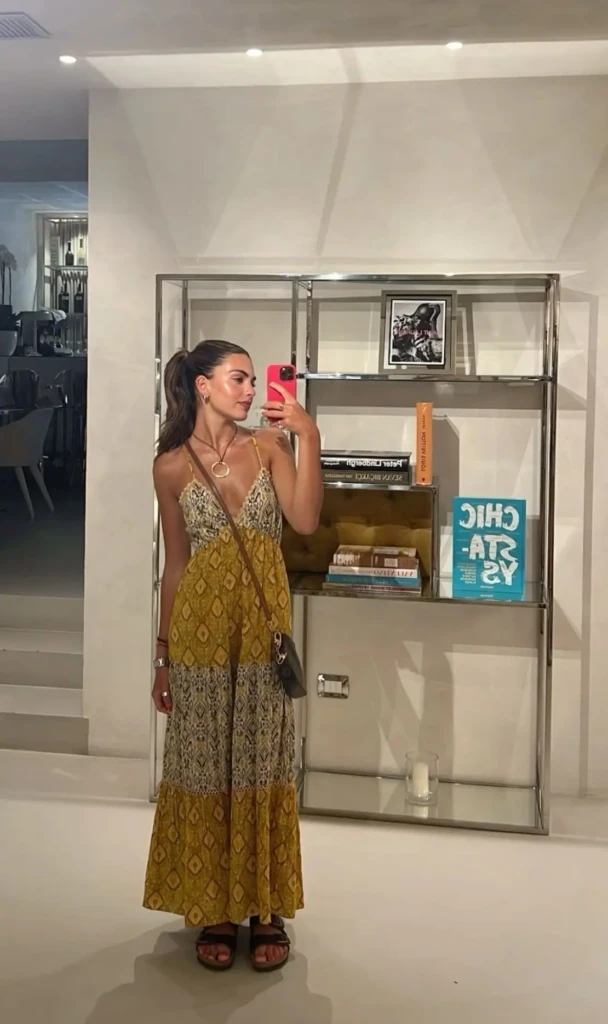
Simple brown flat sandals are all you need here; adding more accessories would tip it into overdone territory. The yellow reads warm and sunny against pink buildings, and the paisley motif has an obvious resonance with the block-print textile traditions you’ll see everywhere in the markets.
This dress earns its place in the suitcase because it transitions easily from daytime sightseeing to an evening at a rooftop restaurant or a heritage hotel dining room. Throw a thin scarf over your shoulders for cooler evenings or for entering more conservative spaces, and the look still holds up completely.
Diagonal-Stripe Mini Dress with Bell Sleeves, Gladiator Sandals, and Woven Bag
This diagonal-striped mini dress brings a more contemporary energy to the Jaipur outfit lineup — the bell sleeves give it that vintage-bohemian twist that feels right in a city full of artisanal craft. The woven bag with a red detail and gladiator sandals complete the look without overcomplicating it.
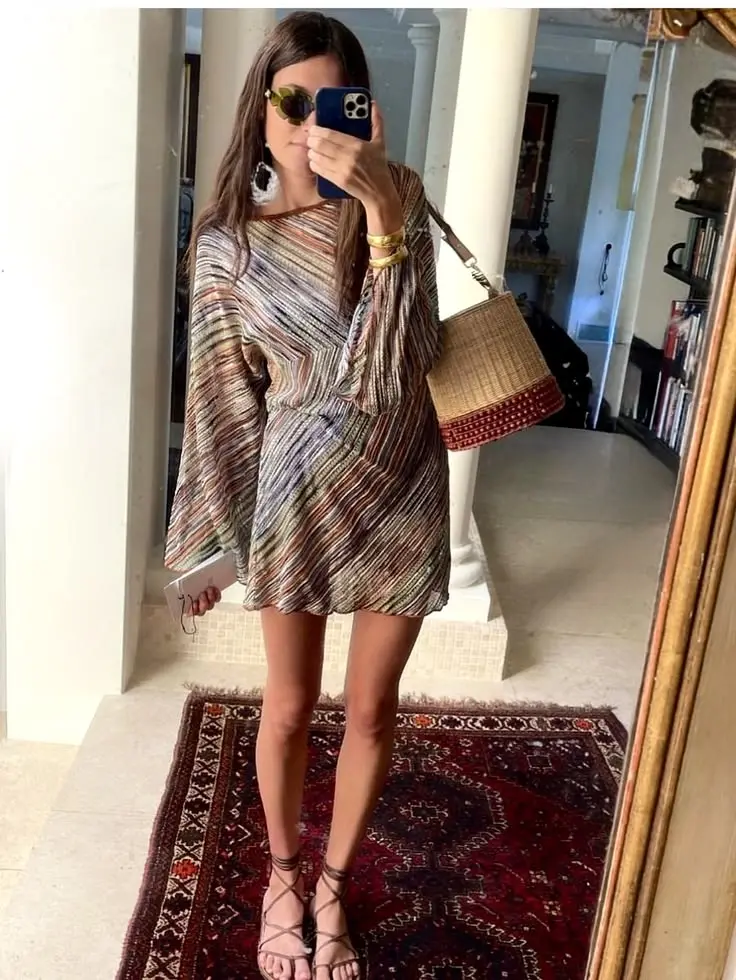
The rule with bold diagonal patterns is to resist the urge to add more pattern. One great woven bag does more for this outfit than three competing accessories ever could. Keep the jewelry minimal — a single delicate necklace or nothing at all — and let the dress carry the look.
The mini length works fine for general exploring but pack a lightweight sarong if you’re planning temple visits; it ties around your waist in seconds and means you don’t have to change your whole outfit. The bell sleeves already handle the shoulder coverage side of the modesty equation neatly.
Crisp White Linen Shirt Tucked into Sunburst-Print Wide-Leg Pants
This combination is the one I’d reach for on a day that starts at Amber Fort and ends at a textile shop in the old city. The white linen shirt — slightly undone, sleeves rolled, tucked loosely into vibrant printed pants featuring sunburst medallions in warm oranges and burgundies — looks polished without looking like you tried. The woven crossbody bag adds that artisanal texture the look needs.
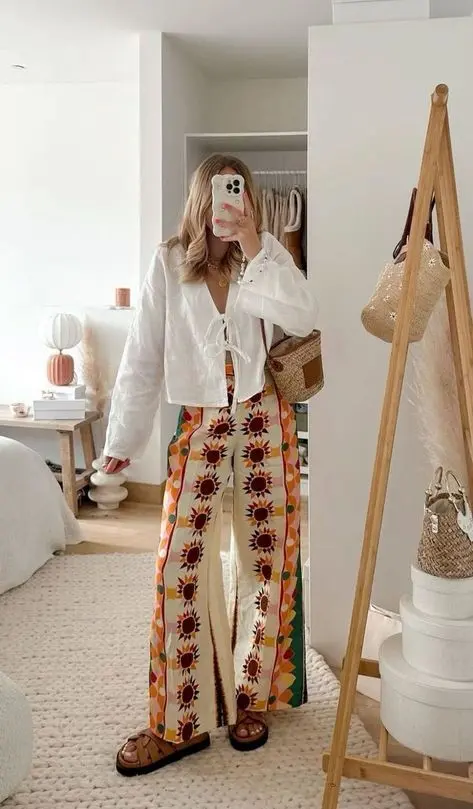
Leave the top two or three buttons open and roll the sleeves to just below the elbow — that slightly undone quality is what makes the whole thing look effortless rather than stiff. Tucking the shirt in emphasizes the print on the pants, which is the star of this outfit and deserves to be seen.
White linen is Jaipur’s best friend if you’re willing to accept that it will need a wash after a full day out. The fabric breathes, it photographs clean and bright against colorful backdrops, and it elevates even the simplest of printed bottoms. A woven crossbody keeps your hands free for markets — practical and good-looking at once.
Coordinating Burgundy and Mustard Paisley Maxi Dress and Kimono Set
If you want to look like you’ve stepped into a vintage travel photograph — the kind shot in the 1970s by someone with excellent taste — this coordinating set is it. The paisley maxi dress and matching kimono in burgundy, mustard, and cream tones create that layered bohemian moment that feels completely at home against Jaipur’s ornate architecture.
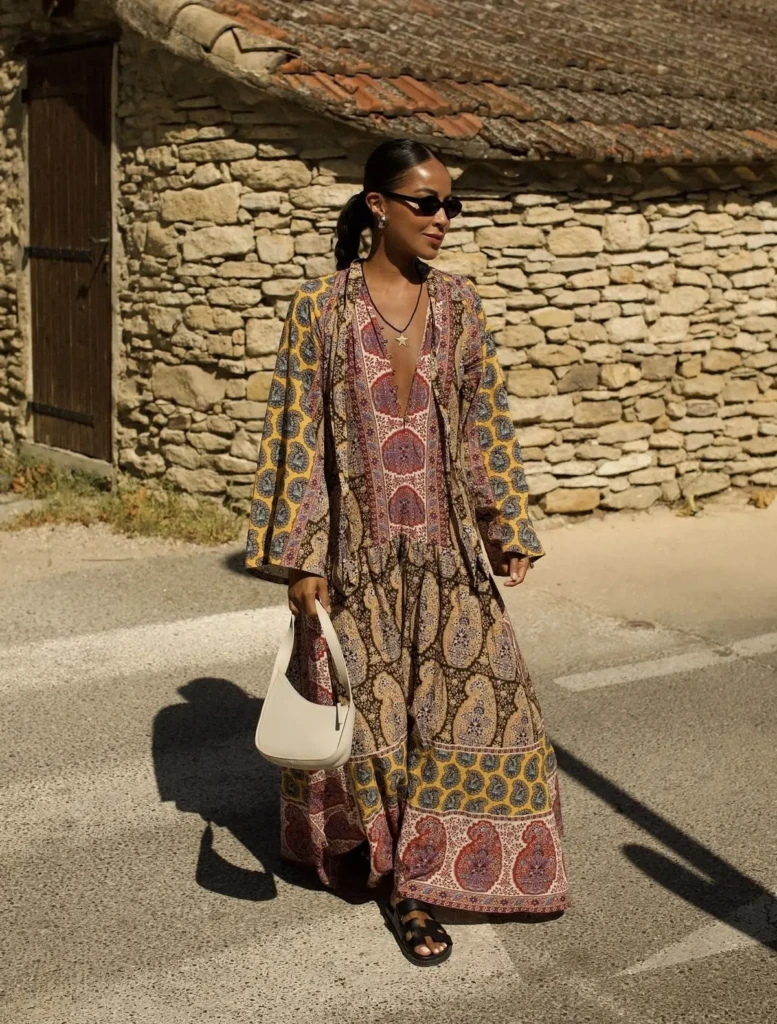
Dark, simple sandals are the only right choice here — the set has so much going on in the best possible way that your footwear needs to disappear. Barely-there strappy sandals or flat dark leather slides both work. Anything with embellishment will fight the fabric.
Coordinating sets like this also travel extremely well because both pieces earn their place independently. Wear the kimono over a white tank on a different day, or pair the maxi dress with a plain denim jacket for a completely different look. Two outfits for the price of one in your suitcase is always a win.
Black and Tan Floral Block-Print Blouse with Cuffed Boyfriend Jeans
Not every Jaipur outfit needs to be a dress or a flowing set, and this look proves it. The black and tan floral-print blouse — that block-print quality is unmistakably Rajasthani in spirit — paired with cuffed boyfriend jeans and slides creates a casual but considered look that’s perfect for wide-leg trouser alternatives.
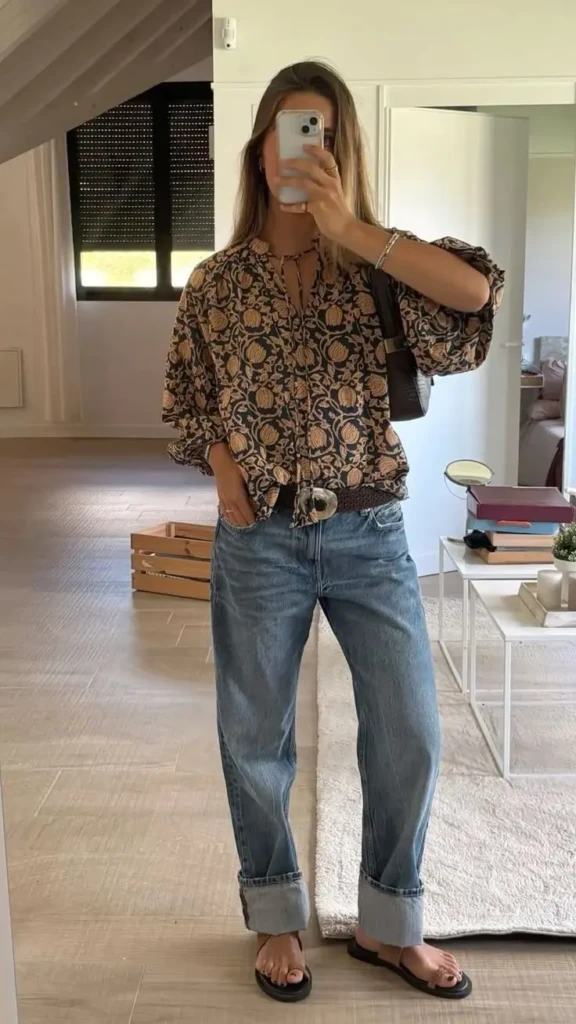
Cuffing the jeans to just above the ankle does two things: it keeps you slightly cooler and it gives the silhouette a cleaner, more deliberate proportion. Slides are the smart sandal choice when you’re covering ground in markets, because cobblestones and uneven streets are relentless and you want something you can walk miles in without thinking about it.
This is the kind of outfit that works beautifully for the late-morning window — after the worst of the heat but before you’re ready to go back and change. The jeans will feel warm by afternoon, so save this combination for cooler days or plan your itinerary around air-conditioned stops in the middle of the day.
Rust Embroidered Puff-Sleeve Top with Cream Linen Skirt and Pointed Mules
This is elevated bohemian without the effort usually required to achieve it. The rust-colored embroidered top with dramatic puff sleeves does all the heavy lifting, and the cream linen skirt keeps the bottom half clean and uncluttered. The pointed-toe mules add a polish that feels unexpected in a travel context — in the best way.
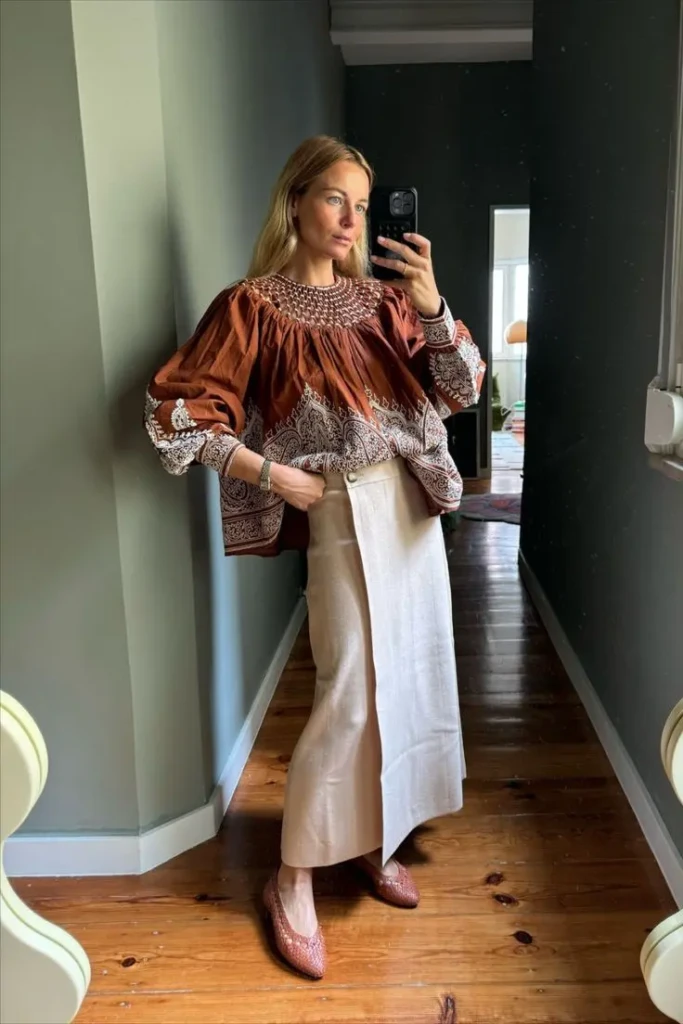
Light linen in cream or ivory photographs particularly well in Jaipur’s bright light — the fabric catches the sun and creates a softness that looks genuinely beautiful in photos. The flowing skirt moves well against a windy rooftop or an open courtyard, which means candid shots tend to come out looking almost editorial.
The puff sleeves handle shoulder coverage for temple visits without requiring an additional layer, which matters more than it sounds when you’re switching between outdoor heat and indoor cool multiple times in one day. This outfit works from morning sightseeing right through to a slightly smarter dinner without changing a single piece.
Folk-Art Embroidered Vest over White Tank and Burnt-Orange Wide-Leg Pants
This three-piece combination threads together artisanal craft and easy dressing in a way that feels genuinely Jaipur-appropriate. The embroidered vest — those folk-art motifs feel directly connected to the textile traditions you’ll encounter in every market — layers over a simple white tank, with burnt-orange wide-leg pants grounding the look. A woven basket bag finishes it neatly.
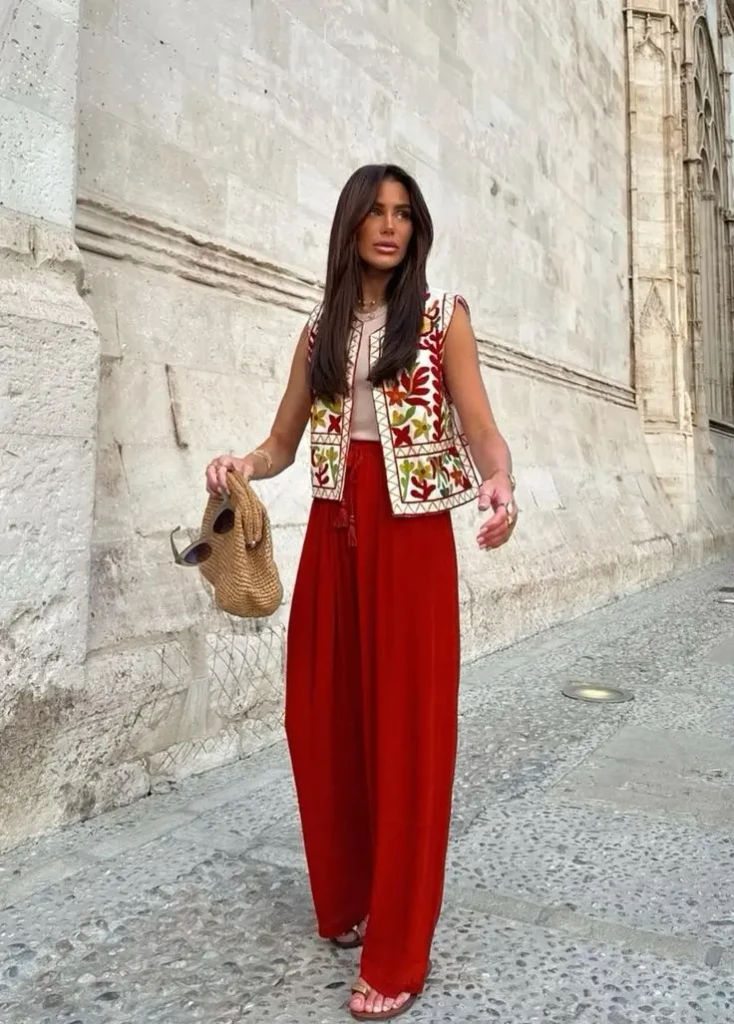
The vest is the smartest temple-visit strategy in this entire list. It adds shoulder coverage instantly and comes off in seconds when you step back into full sun. You’re not carrying a scarf, not adjusting a kimono — just unbutton and done. Slip-on sandals complete that easy, low-fuss approach.
The burnt-orange pants are doing a lot here — they warm up the white tank and echo the embroidery tones in the vest, making the whole outfit feel more intentional than its separate parts suggest. If you find embroidered vests in Jaipur’s markets (and you will), this is exactly the way to style one without it looking costume-y.
Rich Burgundy and Gold Paisley Kimono over Black Shorts for Rooftop Evenings
For rooftop dinners or evening outings when the temperature finally drops, this dramatic paisley kimono in burgundy, gold, and orange tones over simple black shorts creates a silhouette that genuinely stops people. The wide sleeves are the statement — let them be exactly that.
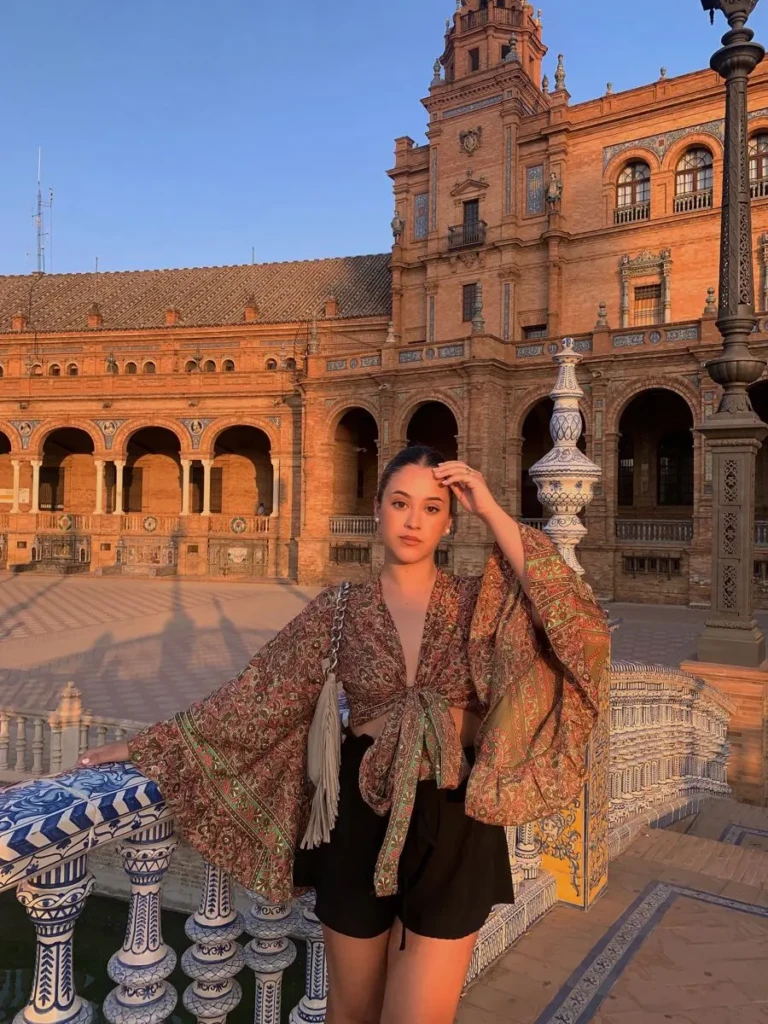
The formula is intentionally simple underneath: plain black shorts, minimal shoes, nothing competing with that kimono. When you put on a piece this visually rich, your only job is to keep everything else quiet. A barely-there sandal or a simple black slide is all that’s needed.
This is the outfit that photographs best at the golden hour — the warm burgundy and gold tones pick up the light in a way that feels almost cinematic against Jaipur’s rooftops and distant fort silhouettes. It also handles the dramatic temperature drop that can happen after sunset, since the kimono adds a genuine layer of warmth without looking like you’ve thrown on a cardigan in a panic.
Yellow Multi-Stripe Long-Sleeve Kaftan for Hot Afternoons and Casual Evenings
Kaftans are possibly the most intelligently designed travel garment that exists, and this yellow and multi-striped long-sleeve version is a perfect example. Modest, genuinely comfortable, and effortlessly chic — it covers you appropriately for conservative spaces while the volume and loose weave keep the heat from building.
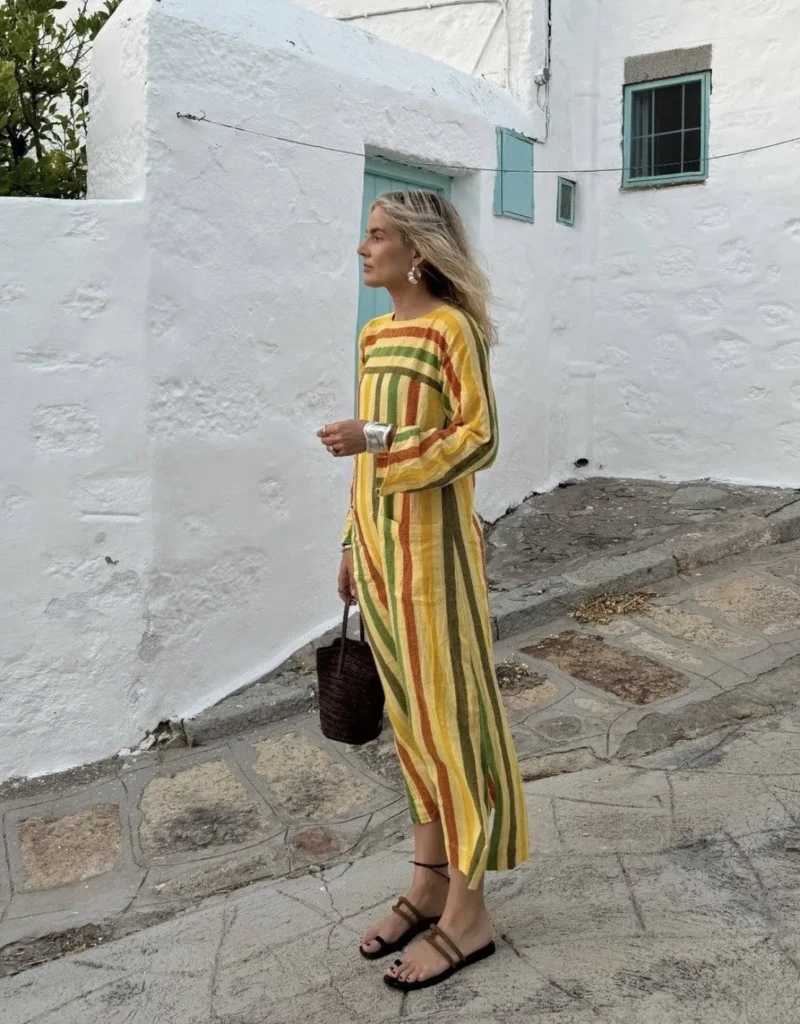
A brown basket bag is the right pairing because it adds natural texture without creating another pattern to navigate. The stripes are doing enough visual work; you want your accessories to settle down. Flat sandals in tan or cognac leather keep the warm-toned palette cohesive.
The long sleeves sound counterintuitive in Rajasthani heat, but loose sleeves in a lightweight fabric actually provide sun protection that makes a real difference over a full day of sightseeing. This silhouette is ideal for the hottest part of the afternoon when you need to cover up but can’t face anything fitted.
Olive Silk Camisole with Geometric Print Wide-Leg Pants and Gold Jewelry
This is the evening outfit in the collection — simple, polished, and a little sophisticated. The olive silk camisole fits close to the body, which creates a clean contrast with the volume of the olive and yellow geometric print wide-leg pants. Layered gold jewelry and a quilted black clutch push it firmly into dinner territory.
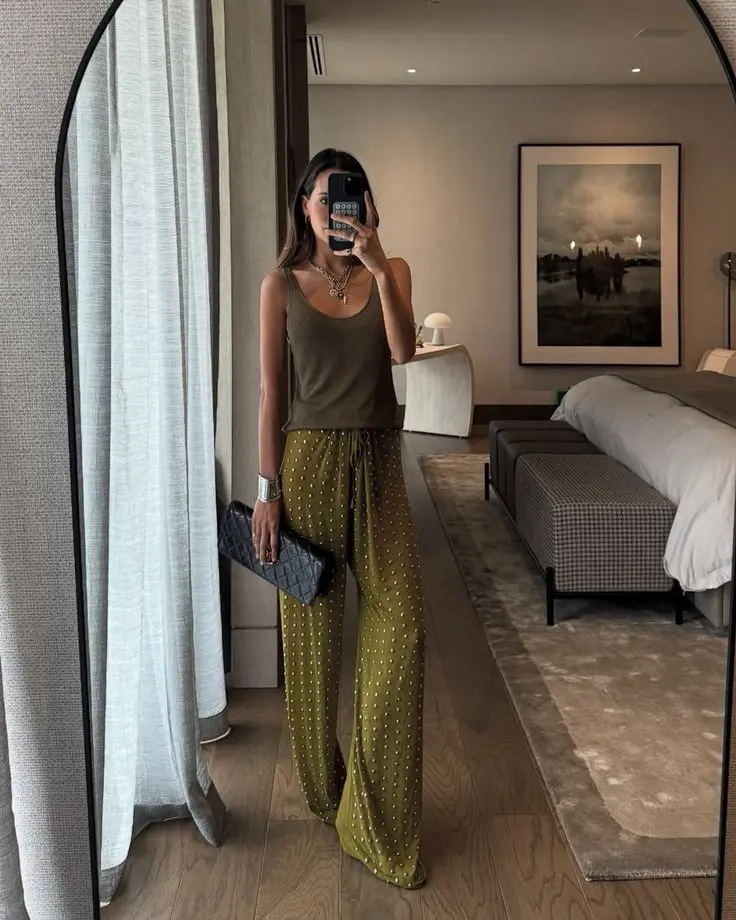
When the pants are this much of a statement, the top needs to recede — fitted and single-toned is exactly the right call. The olive in the camisole picks up the ground color in the pants, so the outfit reads as intentional and coordinated rather than thrown together from separate pieces.
This works particularly well for heritage hotel restaurants or evening drinks on a terrace. The wide-leg silhouette stays cool even as evening temperatures ease off, and the gold jewelry catches candlelight well. Heeled sandals or embellished flats would elevate it further if the setting warrants it, though the outfit works flat too.
White Tank Tucked into Butter-Yellow Pleated Maxi Skirt with Woven Hat
There’s something about the simplicity of this combination that makes it incredibly effective. A crisp white tank tucked into a butter-yellow pleated maxi skirt is uncluttered and elegant — the kind of look that doesn’t need to try. The woven basket hat adds practicality (genuine sun protection) and the yellow perforated bag ties the color story together.
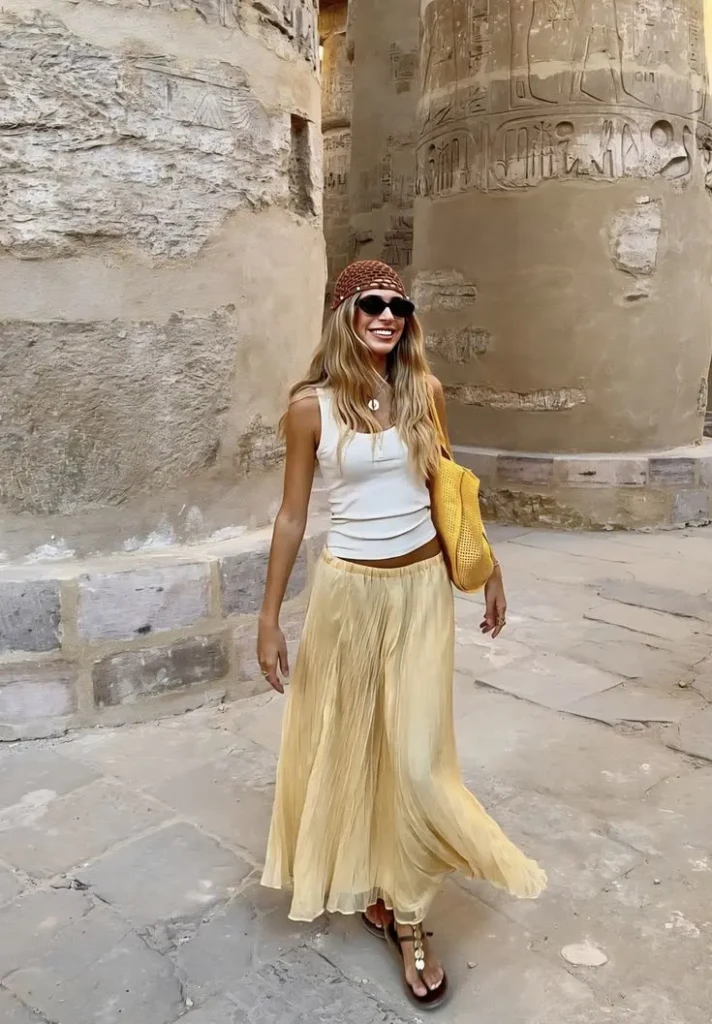
Pleated maxi skirts are built for movement, and movement is everything in travel photography. This is explicitly the outfit you wear in front of Hawa Mahal — the pleats fan out beautifully when you walk or turn, and the yellow picks up the warm tones in the pink sandstone in a way that feels almost designed for that backdrop specifically.
The white tank keeps the top half neutral so the skirt’s silhouette and color read clearly. Flat sandals or simple slides are all you need — the outfit is already doing its job. This is also one of the most heat-appropriate looks in the list because the pleated maxi creates airflow around your legs while the tank keeps your torso unencumbered.
Chocolate Linen Duster over White Tank and White Wide-Leg Linen Pants
This is the most sophisticated outfit in the collection, and it earns that distinction by doing something unusual: a monochromatic white base under a rich chocolate-brown linen duster creates a contrast that feels intentional and refined. The woven clutch and a pendant necklace are the only embellishments it needs.
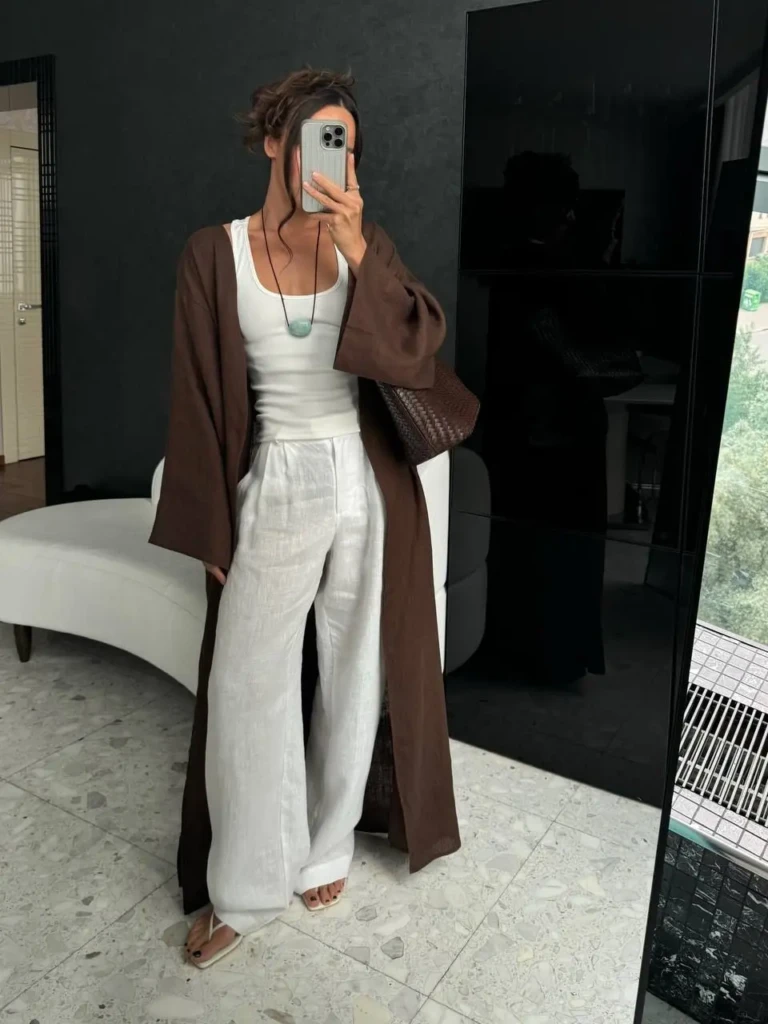
Long dusters serve a practical double function in Jaipur — they provide meaningful sun protection along your arms and back during the hottest hours, and their length and coverage make them appropriate at religious sites with conservative dress requirements. The dramatic vertical line they create in photos is a bonus, not the point.
Linen on linen works here because the tones are clearly separated: the crisp white of the pants and tank reads differently from the warm chocolate of the duster. Both pieces breathe well, and the all-linen approach means this outfit is among the most genuinely cool-feeling options for high-heat days. It irons up beautifully for evening if needed.
Flowing White Maxi Dress with Colorful Orange and Pink Embroidery
There’s a purity to a white embroidered peasant dress in a city as visually loud as Jaipur — it becomes the quiet contrast that makes everything around it pop. This flowing white maxi features orange, pink, and yellow embroidered motifs along the sleeves and hem that feel directly connected to the artisanal craft traditions you’ll encounter in every market stall. Paired with a yellow mini crossbody and a basket bag, it’s ideal for a morning of bazaar exploring.
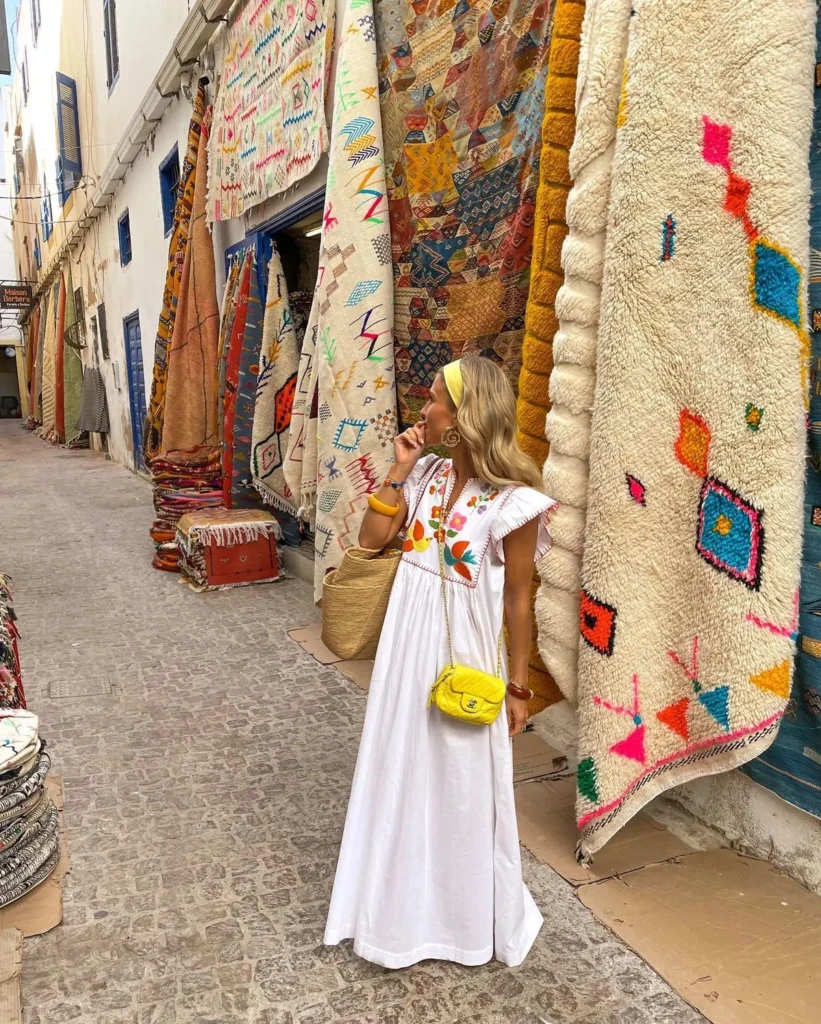
White dresses photograph strikingly against Jaipur’s colorful buildings and layered textile displays in the markets — the contrast is sharp and the embroidered details provide that visual connection to local craftsmanship that makes travel photos feel authentic rather than touristy. The color story in the embroidery (orange, pink, yellow) mirrors the palette of the city itself.
The practical caveat with white in an Indian market context is that dust and dye are everywhere. Wear this one earlier in the trip before your bag accumulates spice residue and indigo smudges, or save it for palace visits where the surroundings are cleaner. A yellow crossbody keeps your hands free for fabric-handling in shops, which you will absolutely be doing.
Burgundy Paisley Kimono Layered over a Simple White Slip Dress
This layered combination is more refined than it looks — the burgundy paisley kimono over a simple white slip dress has a delicacy that the more maximalist outfits in this list don’t. It reads elegant rather than bohemian-costumed, which makes it versatile across different settings throughout the day.
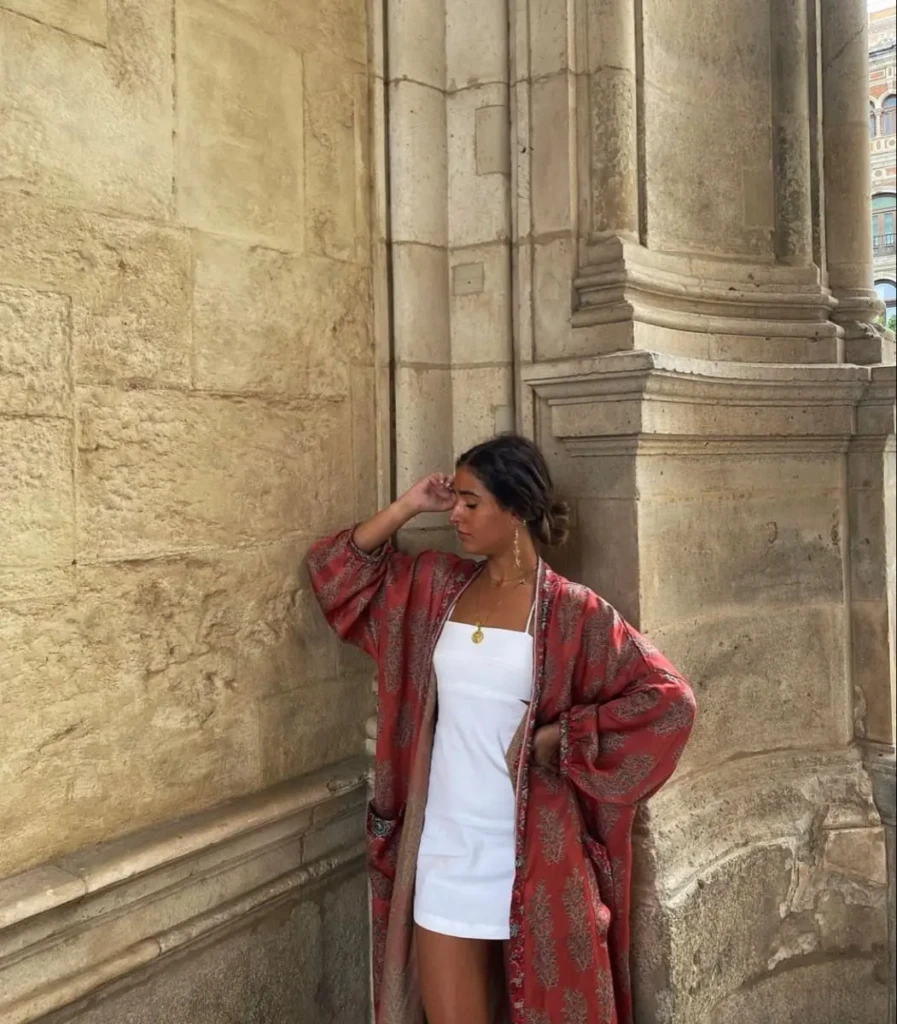
The layering logic here is genuinely smart for Jaipur’s variable conditions. At peak heat, remove the kimono and you’re in a cool, modest slip dress. When you enter a shadowed palace interior or a temple, throw the kimono back on for both coverage and warmth — those thick stone walls can be surprisingly cool. You’re carrying your modesty layer on your body rather than in your bag.
The white slip underneath keeps the color palette from becoming heavy, and it ensures the burgundy and gold of the kimono stay vivid rather than getting lost in a darker base. This is a good evening choice as well — the combination reads dressed-up enough for a heritage hotel restaurant without requiring heels or additional accessories.
Blue and White Embroidered Vest with Wide-Leg Jeans for Long Walking Days
When you need a full day of walking comfort but you don’t want to look like you’ve prioritized function over everything else, this combination is the answer. The blue and white embroidered vest top brings artisanal character, the wide-leg jeans provide the coverage and ease of movement you need, and the cream bag keeps everything neutral and low-effort.
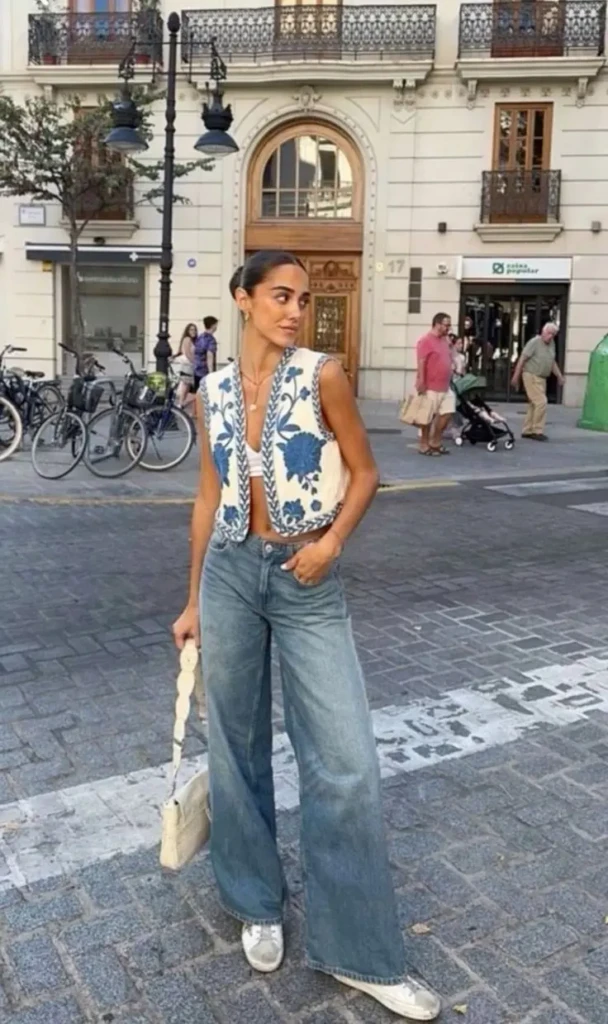
Embroidered tops and denim are one of those combinations that always works in a bohemian travel context because the craft element in the top lifts the casualness of the jeans into something more considered. This reads well in markets, at casual cafes, and even for a relaxed afternoon visiting workshops or studios.
Wide-leg jeans are the smarter Jaipur denim choice over skinny or straight cuts because the roomier leg allows for better airflow and feels less oppressive as temperatures climb. Plan this outfit for a morning that starts before the heat peaks — by early afternoon you’ll want to be in something lighter, so structure your itinerary accordingly.
Charcoal Kimono Robe and Wide-Leg Pants with Orange Clutch and Coral Mules
Monochromatic dressing in charcoal sounds muted for a city as vivid as Jaipur, but this look proves the approach can absolutely hold its own. The charcoal kimono-style robe with matching wide-leg pants is elevated entirely by an orange clutch, layered gold necklaces, and coral mules — the accessories do exactly what a pop of color is supposed to do without the whole outfit feeling shouted.
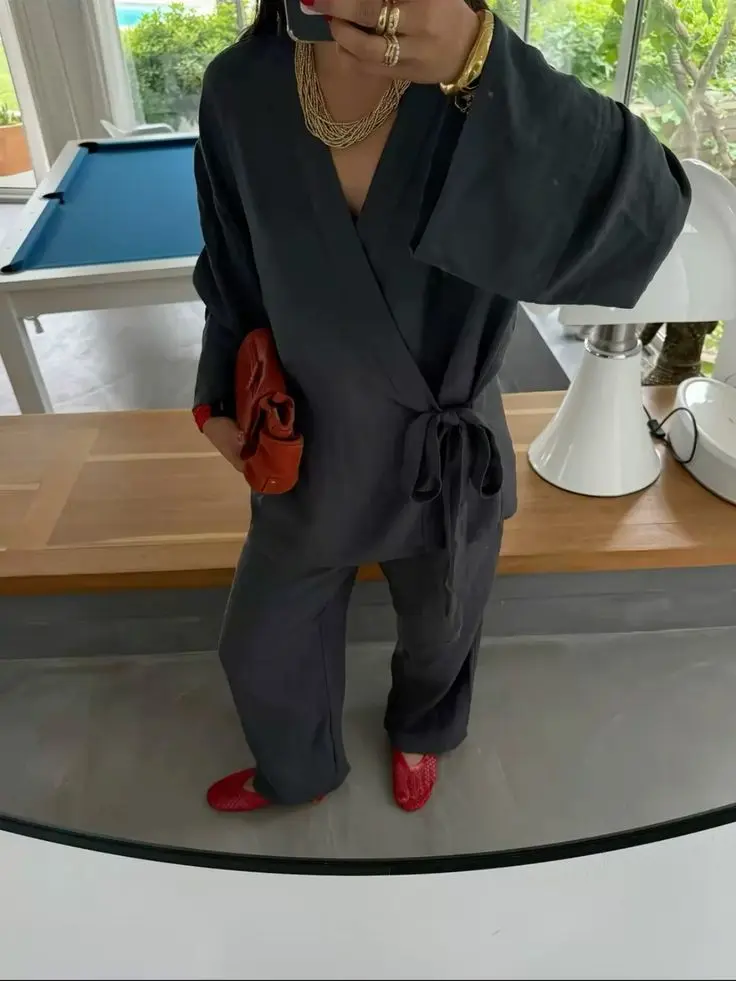
The coral shoes are the detail that makes this outfit work. Without them it would be elegant but flat; with them, the whole silhouette feels warm and alive. That’s the principle of monochromatic dressing — keep the base quiet, then make one specific choice that brings it to life. One color, one spot, total commitment.
This is the outfit for upscale dining or a sophisticated evening at a heritage hotel — it has a polish that the more relaxed bohemian looks in this list don’t quite reach. The kimono-robe silhouette is also comfortable enough that you won’t be tugging at your clothes all through dinner. Texture in the fabric — even a subtle weave — adds visual interest that compensates for the lack of print.
White Graphic Tee with Blue Patterned Shorts, Woven Crossbody, and Layered Necklaces
Some days in Jaipur you just need to be comfortable without thinking too hard about it, and this is that outfit. A white graphic tee with blue and white patterned shorts keeps things youthful and relaxed, while layered necklaces and a woven crossbody maintain the bohemian sensibility without any effort.
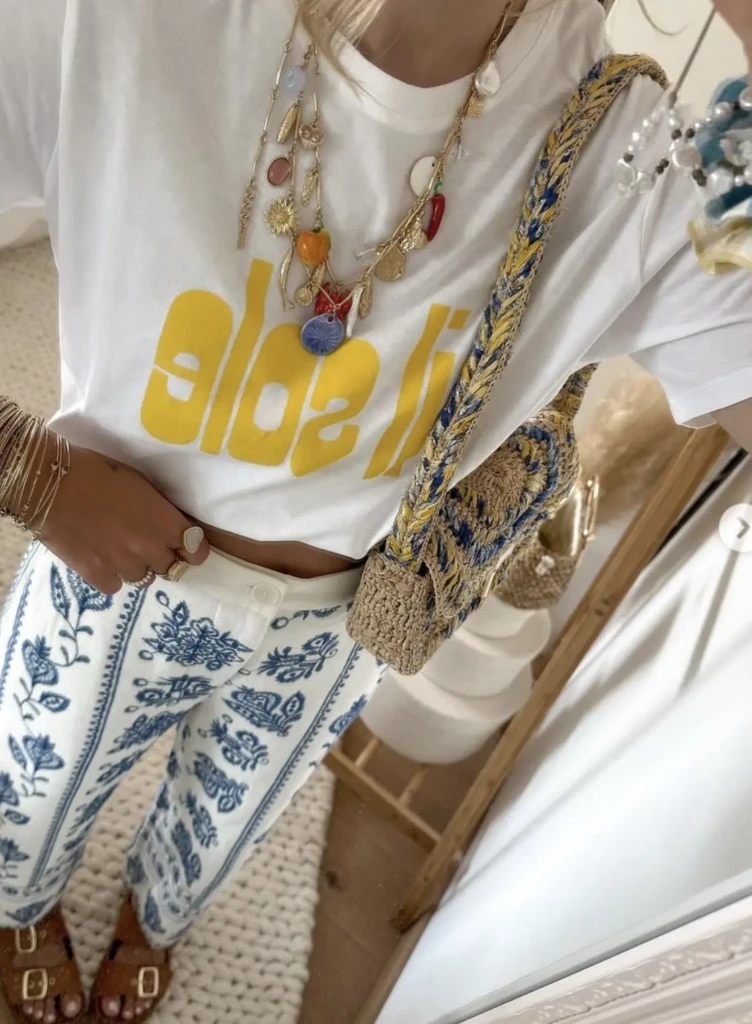
The trick here is mixing a relaxed piece — the plain tee — with something more artisanal, like the patterned shorts and the woven bag. That contrast is what prevents the look from reading as generic tourist rather than considered traveler. The necklaces do a similar job of adding intention to an otherwise very casual base.
This is a good choice for a lower-key sightseeing day or a morning spent slowly working through a market without a fixed agenda. Keep a lightweight scarf in your bag for temple visits — the shorts will need covering, and the tee’s sleeves are short enough that some sites might ask for shoulder coverage too.
Oversized Brown Shirt with Cream Crochet Midi Skirt and Suede Bag
The texture play in this combination is what makes it interesting — an oversized brown shirt against a cream crochet midi skirt creates a contrast between something relaxed and structured and something delicate and handcrafted. The brown suede bag and flip-flops keep everything grounded and holiday-appropriate.
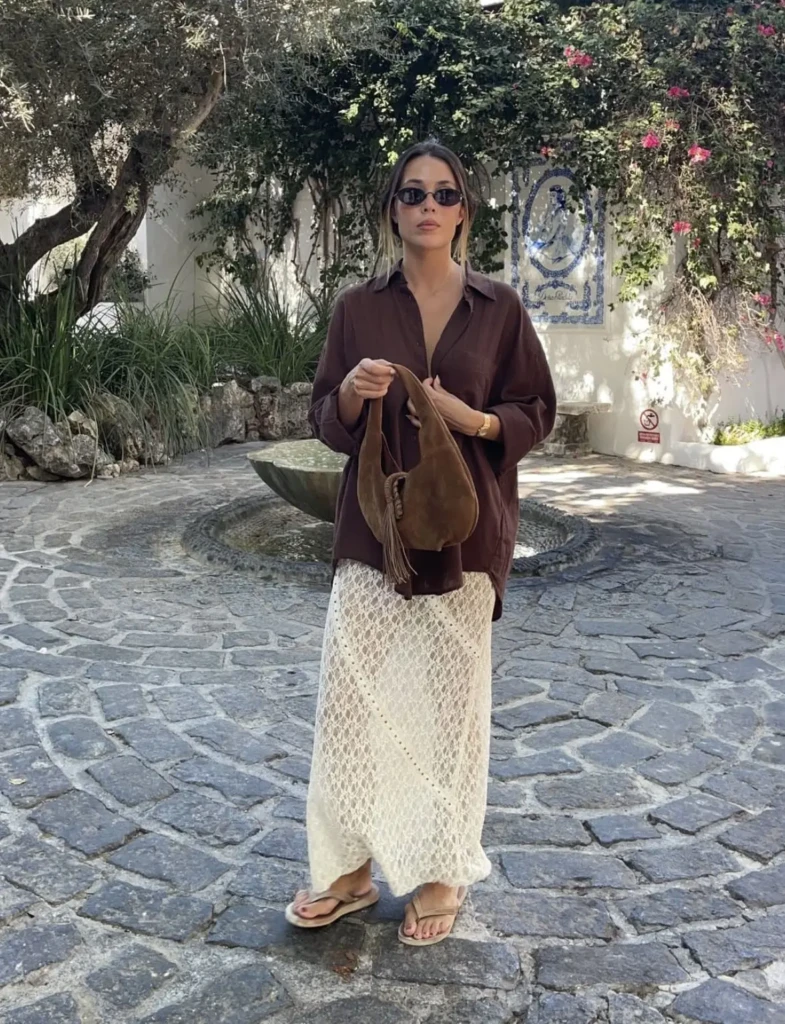
Crochet fabric is genuinely one of the best choices for Jaipur heat because the open weave allows airflow in a way that most solid fabrics simply can’t. It looks gorgeous in photos as well — the texture catches light and casts tiny shadows that give the skirt visual depth even in bright midday conditions.
The oversized shirt gives you styling options throughout the day: wear it open over a tank when it’s hottest, button it up and tuck it loosely when you need coverage, or tie it at the waist for a cropped-jacket effect. That versatility is genuinely useful when your day takes you from an outdoor market to an air-conditioned museum and back again.
White Tunic and Pants Set with Blue and Yellow Floral Embroidery for Temple Visits
This is the most temple-ready outfit in the entire list, and it earns that designation by combining everything the situation requires: full coverage, natural fabric, and a respectful aesthetic that still looks considered and personal. The white tunic and matching pants set features blue and yellow floral embroidery throughout, and beaded slippers finish the look with a traditional touch.
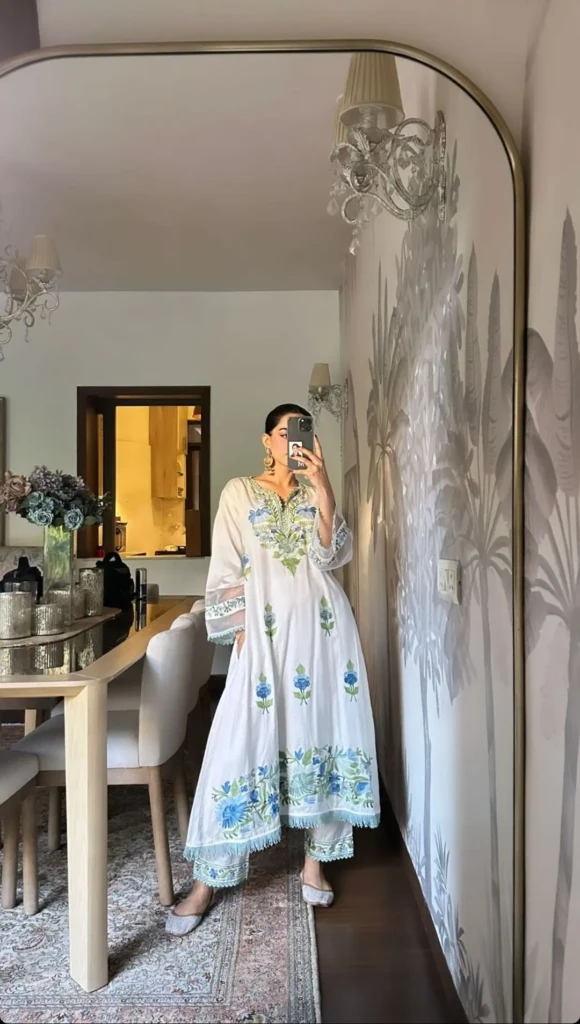
Tunic sets are a genuinely smart packing choice because both pieces are individually useful. The tunic works over jeans or palazzo pants on a different day; the white pants pair with the embroidered vest or any of the printed tops in this list. You’re packing two flexible pieces instead of one single-use outfit.
The embroidery here connects directly to the craft traditions that make Jaipur worth visiting in the first place — the same skilled handwork you’ll see in market stalls and heritage textile workshops is present in the garment you’re wearing. There’s something right about that for a place so deeply tied to artisanal making. Slip-on beaded footwear is also practical wisdom: temple visits require removing shoes repeatedly throughout the day, and nothing slows that down like a lace-up.
How to Pack a Jaipur Wardrobe That Actually Works
The capsule approach genuinely earns its reputation here. Pack three pairs of pants (one printed, one linen in a neutral, one jeans), four tops (two white or cream, two printed or embroidered), two maxi dresses, and two kimono or duster-style layering pieces. From those twelve items you can construct well over twenty distinct outfits, which covers a week-long trip without touching your weight allowance ceiling. The key is committing to a color family — earth tones, warm jewel tones, and whites all play together — so nothing refuses to combine with anything else.
Fabric selection is genuinely non-negotiable in Rajasthan. Pack linen, cotton voile, rayon, and lightweight cotton — anything with natural fiber content that releases heat rather than trapping it. Synthetics feel punishing after thirty minutes outdoors in peak season, and even in cooler months the afternoon sun is intense. If you’re buying clothes specifically for this trip, run a quick touch test: if it feels even slightly plasticky, leave it.
Shoes deserve more thought than people give them. Two pairs of flat sandals minimum — one strappy, one slide — and one pair of slightly smarter embellished flats for evenings. The slide sandal is specifically useful for temple visits where you’re removing footwear multiple times; strappy sandals with multiple buckles become genuinely tedious by the fourth temple of the day. A fold-up tote bag takes up almost no space and is invaluable when you inevitably buy more than you planned in the textile markets.
Accessories can stay minimal because Jaipur’s markets will solve that problem for you once you arrive. Pack a couple of gold necklaces, a versatile scarf in a warm neutral, and a woven crossbody. Budget space in your bag for what you’ll pick up — a block-print scarf here, a pair of beaded earrings there. The city is one of the best places in the world to source exactly the kind of artisanal accessories that make every outfit in this list look more complete.
Dress Well, Move Freely, Photograph Everything
The through-line in all twenty of these outfits is the same: natural fabrics, a loose silhouette, at least one layering piece, and enough visual interest to hold their own against Jaipur’s extraordinary backdrops. That’s a simple framework, and it works. You can adapt it in a thousand directions — toward more dressed-up or more casual, more color or more neutral, more traditional or more contemporary — and it will still serve you well. For more outfit inspiration and styling ideas for your trip, check out Harper’s Bazaar’s coverage of boho fashion, and for packing resources that cover the practical side of dressing for Rajasthan, Who What Wear’s guide to boho style and summer airport outfit planning are both worth your time.
Come back from Jaipur having bought at least one piece in the markets — a printed scarf, a block-print kurta, a pair of mojari slippers. Wearing something made there, in the city where you bought it, is a different thing entirely from wearing something sourced from a fast-fashion retailer weeks before you left home. The craft is extraordinary, the prices are reasonable, and the story you’ll be able to tell about where it came from is worth more than any styling advice I could give you.
FAQ
What should I wear to temples and palaces in Jaipur?
Covered shoulders and knees are the baseline requirement at most religious sites. Wide-leg pants with a lightweight long-sleeve shirt, a flowing maxi dress, or a kimono layered over a tank and pants all work well. Many temples require removing shoes, so prioritize sandals that slip on and off easily — buckled strappy sandals are slower than you’d think when you’re doing it for the fifth time.
Are jeans appropriate for Jaipur outfits?
Yes, but choose wisely. Wide-leg or boyfriend jeans paired with embroidered tops, block-print blouses, or simple tanks create comfortable and stylish combinations. Denim holds heat more than linen or cotton, so save jeans for cooler morning outings or days that include air-conditioned stops — they’ll feel heavy by midafternoon in peak season.
What colors work best for Jaipur?
Earth tones (terracotta, olive, cream, brown), warm jewel tones (burgundy, mustard, burnt orange), and crisp whites all photograph beautifully against Jaipur’s pink sandstone architecture. These palettes complement the city’s backdrop rather than competing with it. Bold patterns in these color families create that signature bohemian aesthetic that works so well in travel photography here.
Can I wear shorts in Jaipur?
Shorts aren’t prohibited in general, but longer options feel more culturally appropriate and are significantly more comfortable at historical and religious sites. If you prefer shorts, choose styles that hit mid-thigh or longer and pair them with a flowing top. Save shorter cuts for pool time or casual hotel lounging.
What shoes should I pack for Jaipur?
Two pairs of flat sandals at minimum — one strappy, one slide — plus a smarter option for evenings like embellished flats or low heeled sandals. Alternate between pairs day to day so neither gets uncomfortably worn in. Anything that slips on and off without fuss is an advantage for the constant shoe-removing that temple visits require.
How do I stay both modest and cool in Jaipur’s heat?
Lightweight natural fabrics — linen, cotton voile, rayon — are the answer. Wide-leg silhouettes provide full coverage while allowing airflow, and loose fits actually keep you cooler than tight clothes by allowing air to circulate next to your skin. Kimono-style layers over simple tank tops give you modesty on demand without adding real warmth.
Should I buy traditional Indian clothing for my Jaipur trip?
It’s a beautiful idea and not at all necessary — the Western bohemian pieces in this list work perfectly well. That said, if you find a kurta or block-print palazzo pants in the markets that genuinely appeal to you, wear them. Just be thoughtful about traditional religious or ceremonial garments and avoid wearing those as fashion.
How many outfits should I pack for a week in Jaipur?
One outfit per day plus one spare gives you breathing room. A capsule of three pairs of pants, four tops, two dresses, and two layering pieces creates well over twenty combinations without overpacking. Commit to a cohesive color palette so everything mixes freely, and leave space in your bag for market finds.
What bag styles work best in Jaipur?
Woven crossbody bags and basket bags are the most useful — they keep your hands free for market browsing and hold up well against heat and dust. A small structured clutch covers evening occasions. Avoid pale leather or suede bags for market days; the dust and occasional indigo dye in fabric stalls are unforgiving.
Have any thoughts?
Share your reaction or leave a quick response — we’d love to hear what you think!
-
 0
0 -
 0
0 -
 0
0 -
 0
0 -
 0
0 -
 0
0