 Lena
Here is the thing about interviews: he has about seven seconds to look like the person they already want to hire, and you are the one holding the hangers. I put together 25 looks that do the talking for him, from a navy suit to an olive overshirt for the startup crowd, with the fit and fabric notes I would give a friend. If you want to shop the pieces, I have searches ready for each one, like a navy slim suit.
This post contains affiliate links — if you buy through them I may earn a small commission at no extra cost to you. As an Amazon Associate I earn from qualifying purchases.
In this article
Navy Suit With a Light Blue Shirt
If he owns one suit, make it this one, because navy reads as trustworthy in every industry. Look for a wool or wool-blend fabric that holds its shape after a long morning of sitting and standing.
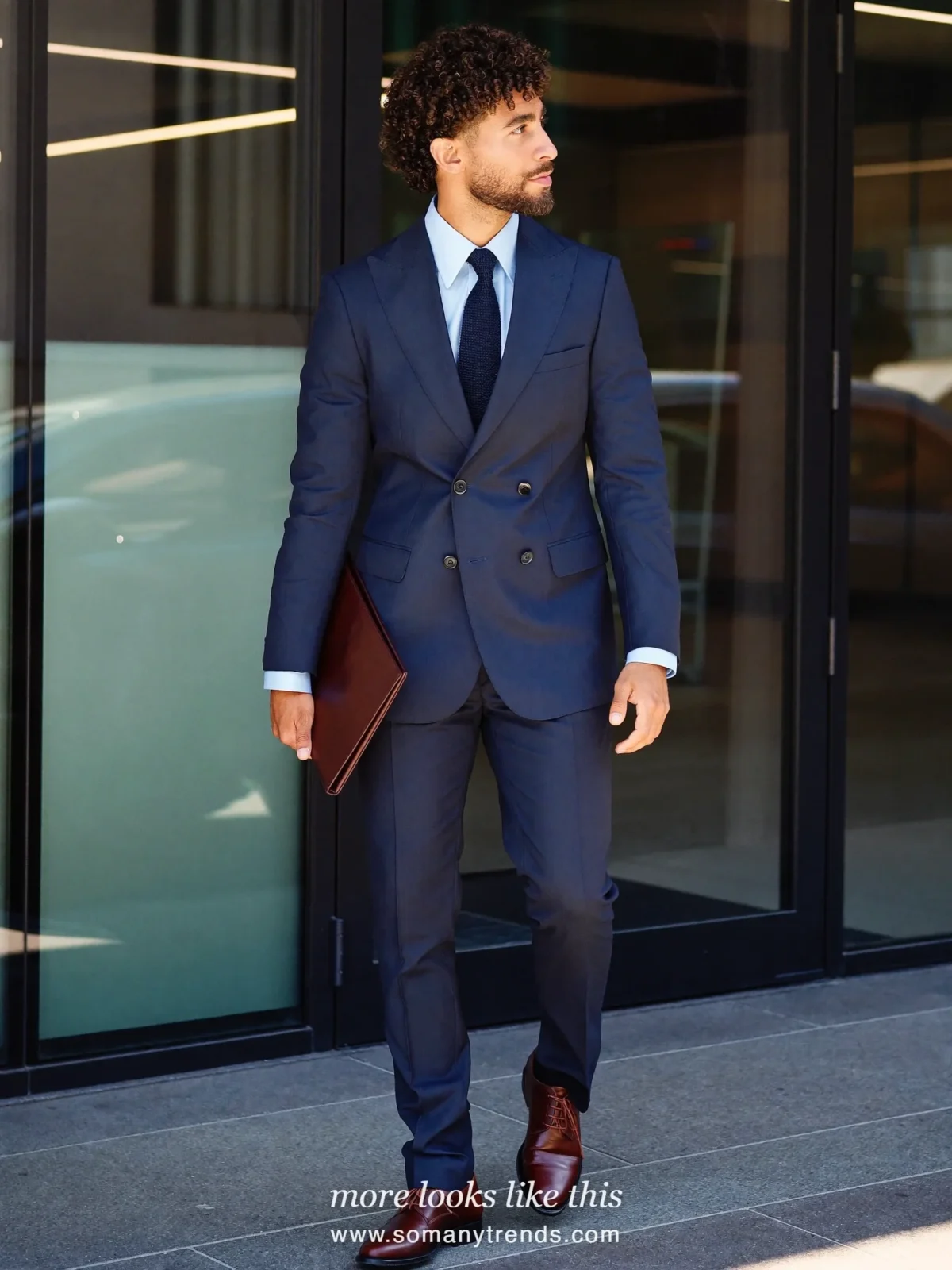
Light blue under the jacket is softer than white and flatters almost every skin tone. A navy tie keeps it quiet, so the conversation stays about him.
Check that the jacket shoulder ends exactly where his shoulder does and that a half inch of shirt cuff shows.
Charcoal Suit With a Crisp White Shirt
Charcoal is the corporate answer when navy feels too expected, and it looks sharper in an office with lots of glass and gray light. Pair it with a white shirt that has a firm, structured collar so it stands up under the jacket.
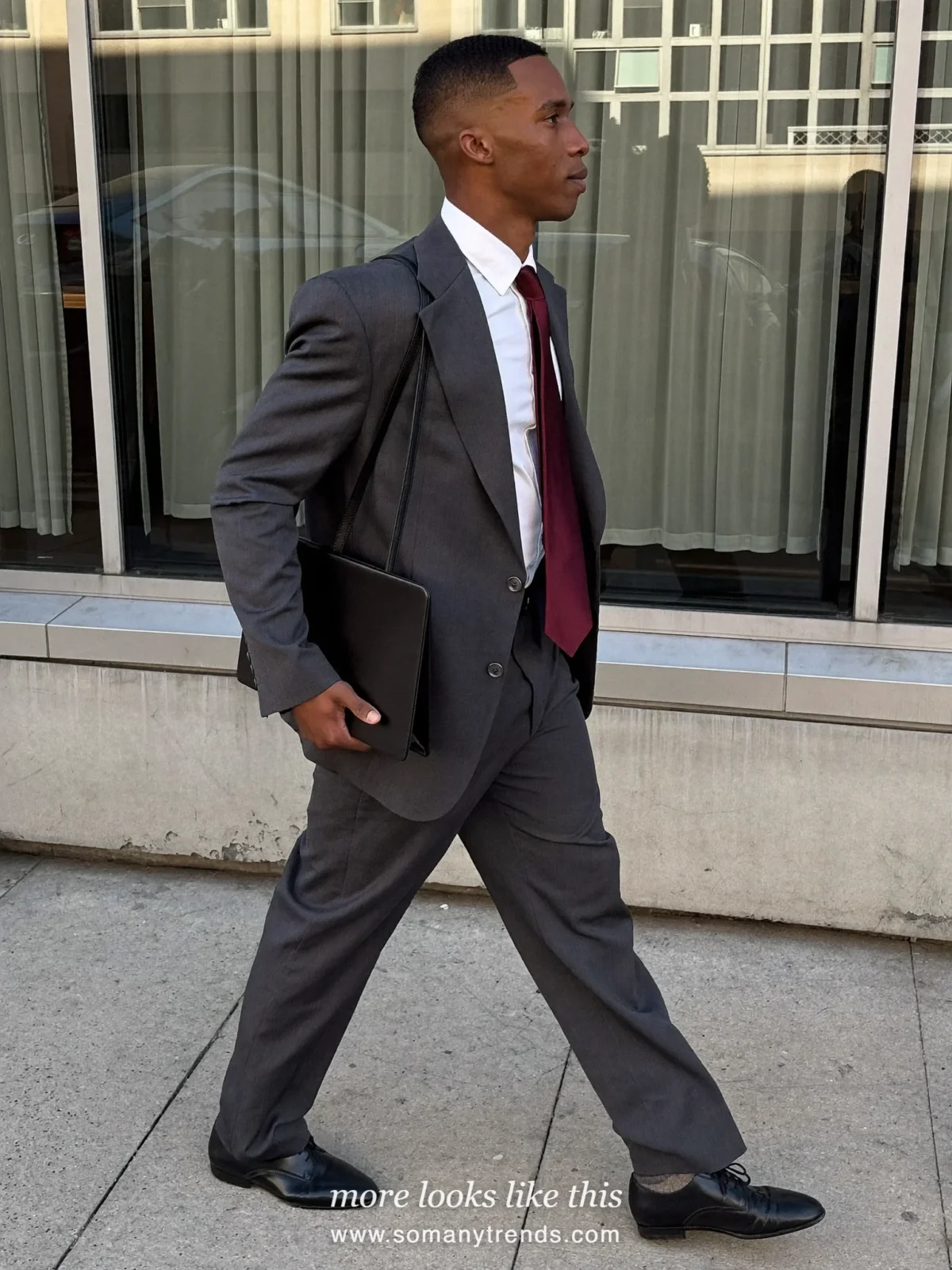
Keep the tie slim and in a deeper tone, like burgundy, for one deliberate hit of color. Black leather shoes with a belt to match finish it cleanly.
A fine wool in a matte finish beats anything shiny, which looks cheap in daylight.
Grey Crewneck Over a Shirt With Navy Pants
This is the interview look for offices that say business casual but mean it. A fine-gauge gray crewneck sweater over a collared shirt looks thoughtful without a jacket.
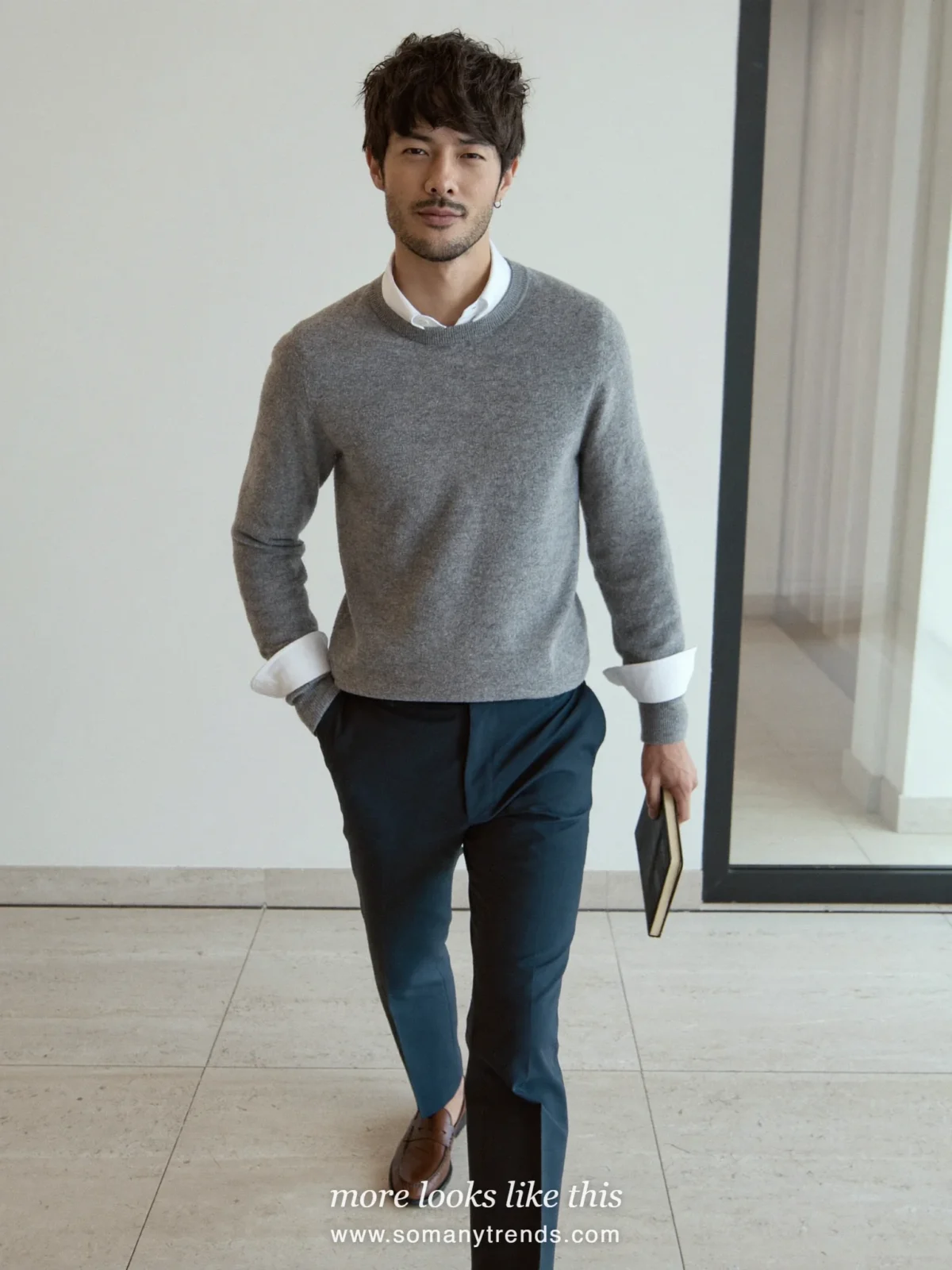
Let the shirt collar and a thin band of cuff show. Navy pants with a slight break at the shoe keep the whole thing tidy.
Pick merino or a cotton-cashmere blend, because cheap acrylic pills and shows it up close.
Sweater Vest, White Shirt, Brown Pants
For an editorial or design interview, a sweater vest says he has taste without trying to shock anyone. A navy or charcoal knit over a white shirt is the safest version.
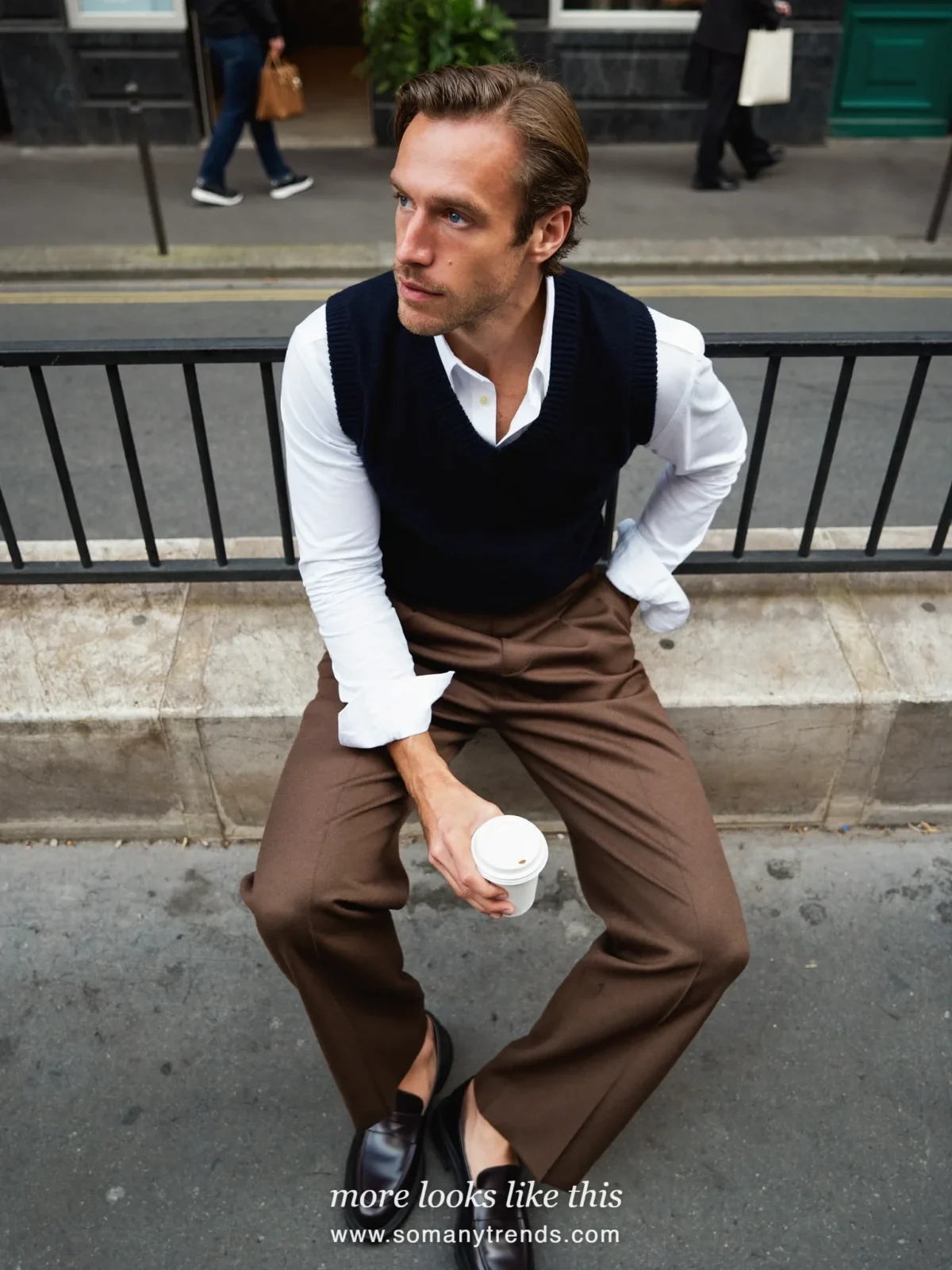
Brown pleated pants warm up the outfit and move it away from the usual gray suit uniform. Keep the pants slightly relaxed but never baggy.
Leave the shirt cuffs loose and unbuttoned at the wrist, so the sleeves pool softly against the knit and the whole look feels relaxed rather than stiff.
Green Suit for a Creative Job
When the job is in a studio, a forest green suit shows personality before he says a word. Keep everything else restrained so the color is the one bold choice.
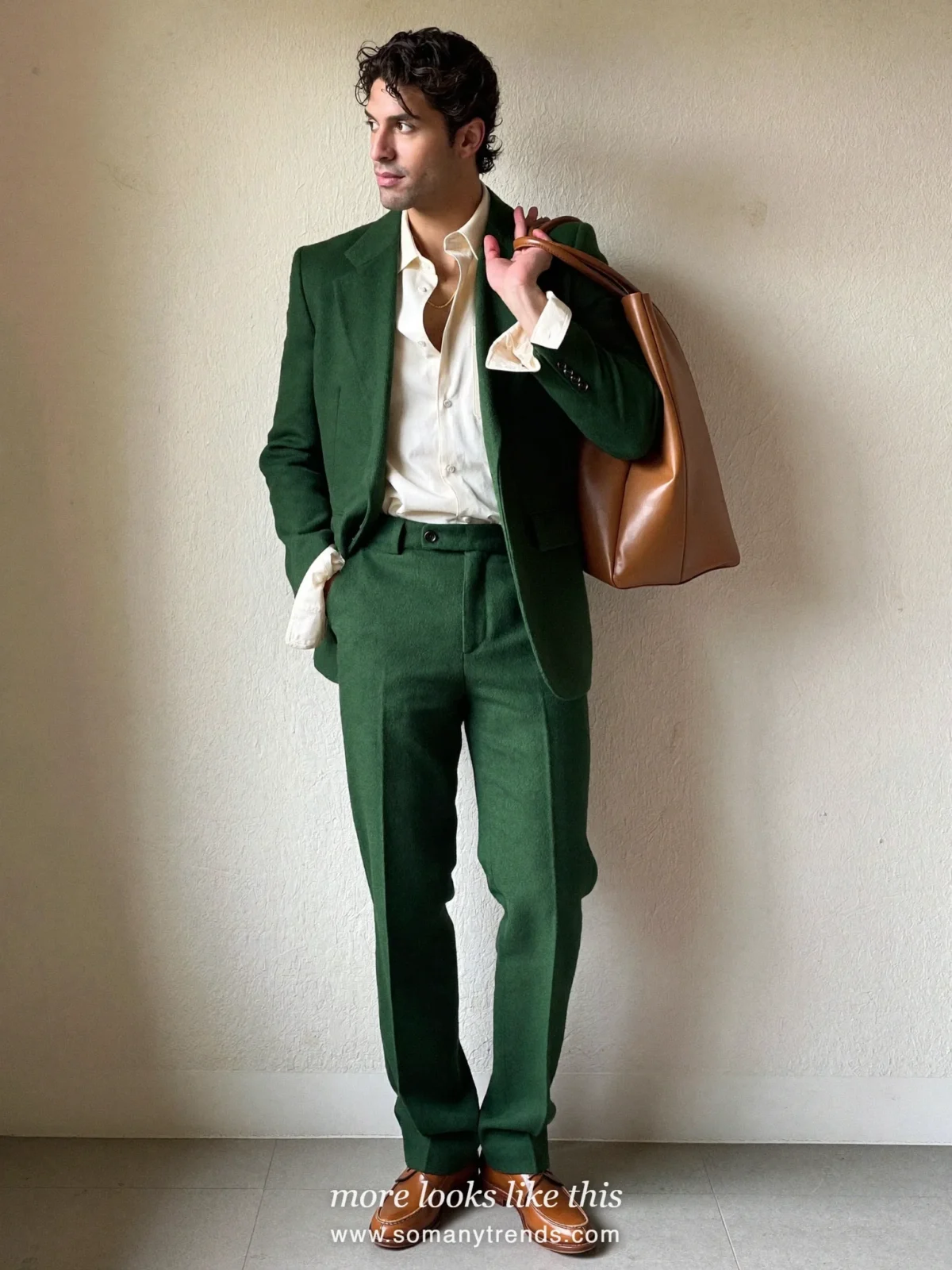
A cream or white shirt and no tie make it feel confident rather than costume-like. Brown leather shoes echo the earthy tone.
Choose a deep, slightly muted green, not an emerald, which reads loud on video calls.
Black Knit Polo With Brown Pleated Pants
A fine black knit polo is the smart-casual surprise for creative and tech interviews. It sits close without clinging and replaces the shirt and tie.
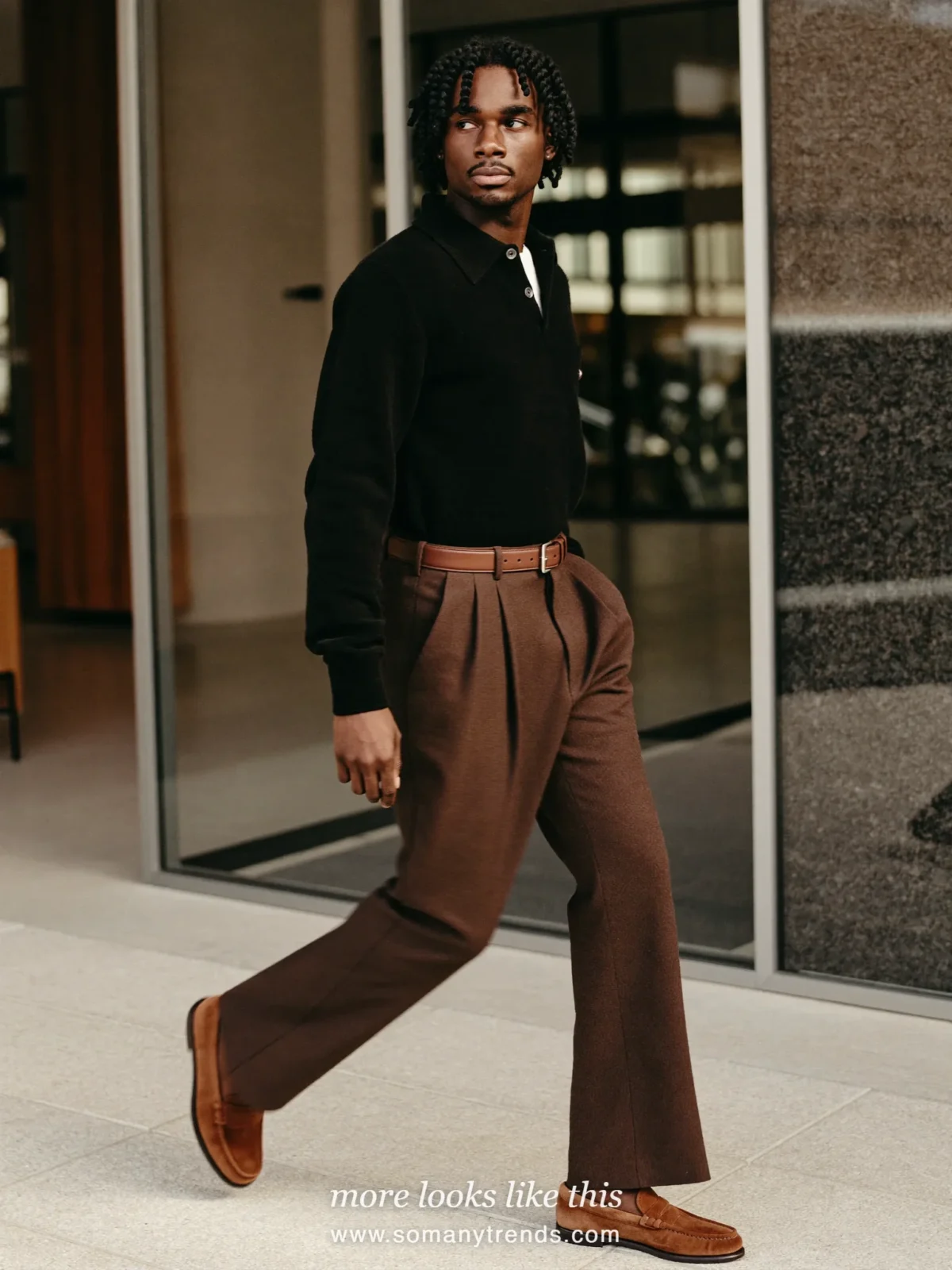
Brown pleated pants give it depth and keep the black from feeling severe. Add a brown belt that matches the shoes.
The knit should be thin and drape well, never thick like a golf shirt.
Light Blue Shirt, Dark Tie, Gray Pants
Not every interview needs a jacket, and this is the answer for a warm day or a conservative office that skips it. Stand out through the details: a crisp shirt and a well-chosen tie.
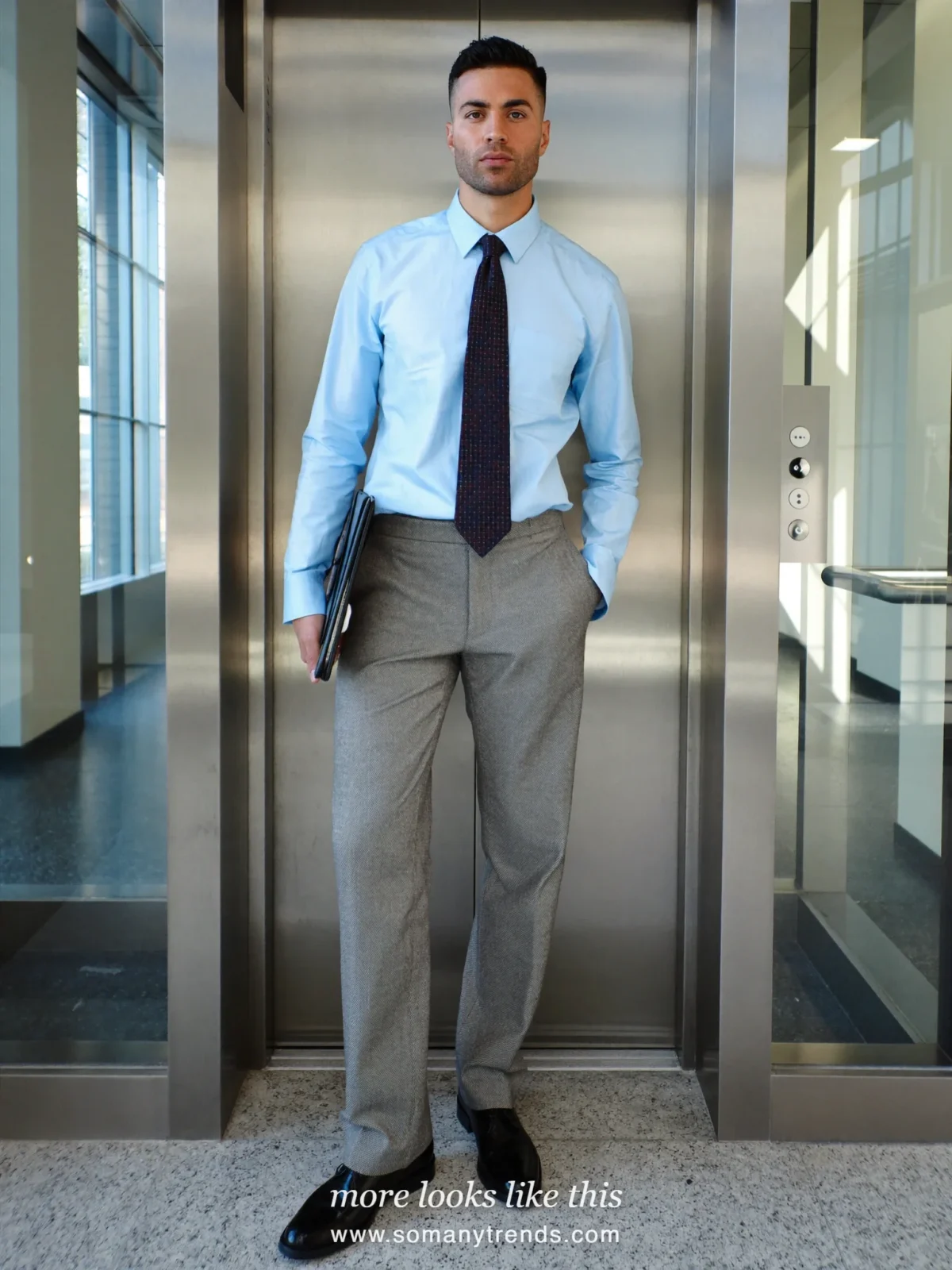
A dark navy or forest tie against light blue is a confident pairing. Gray pants keep it formal enough without a suit.
Press the shirt the night before, because a wrinkle is the first thing a stranger sees.
Navy Blazer With Gray Flannel Pants
This is the combination for the interview that says smart casual and means it. A navy blazer and gray flannel pants look polished without the weight of a full suit.
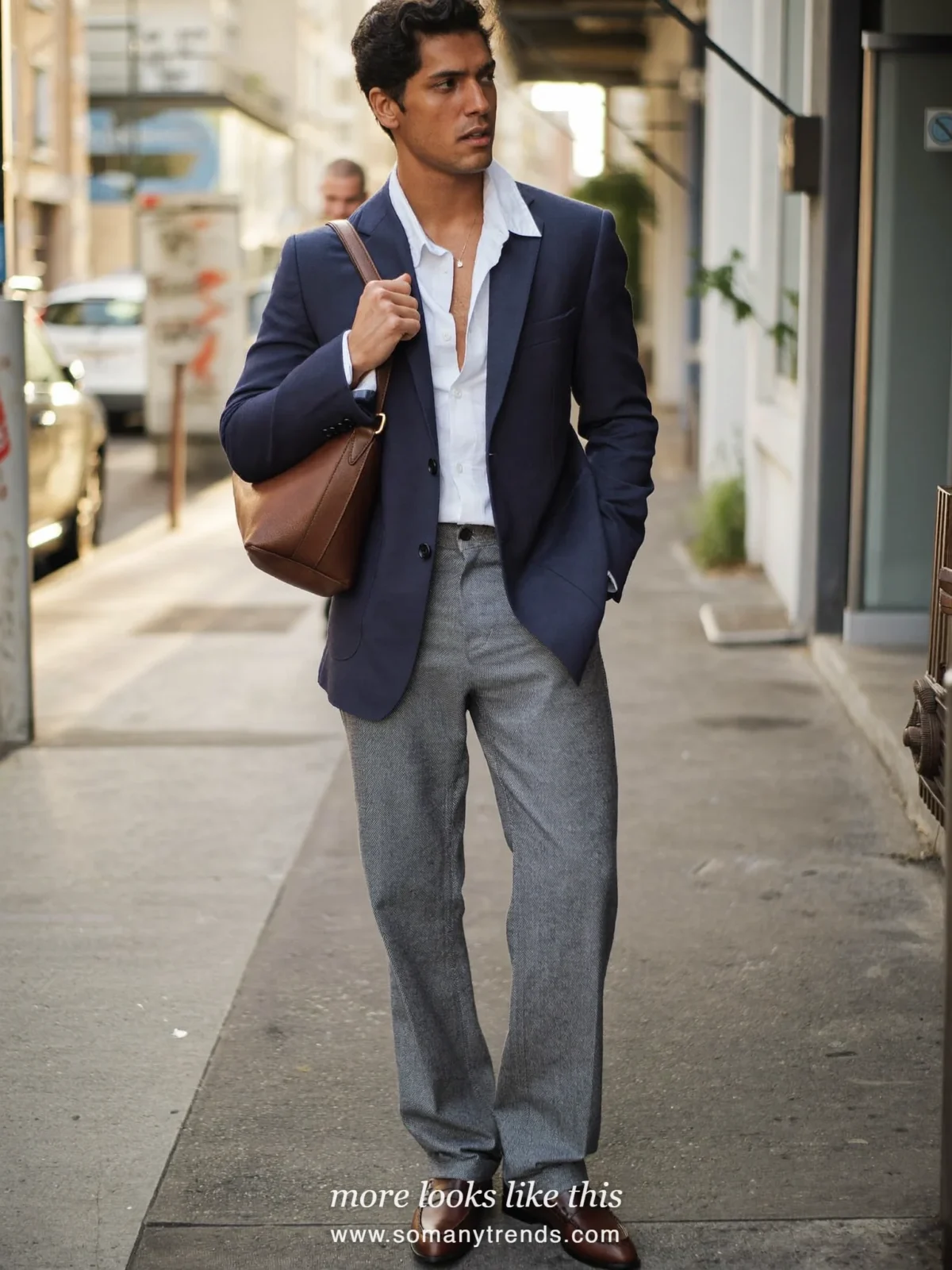
Flannel adds texture and warmth, which is welcome on a cold morning. A white or light blue shirt underneath keeps it crisp.
Choose a blazer with soft shoulders so he can move comfortably and still look put together.
White Shirt With an Olive Overshirt
For a startup or tech interview, an olive overshirt over a white tee or shirt is relaxed but clearly considered. It replaces the blazer without looking lazy.
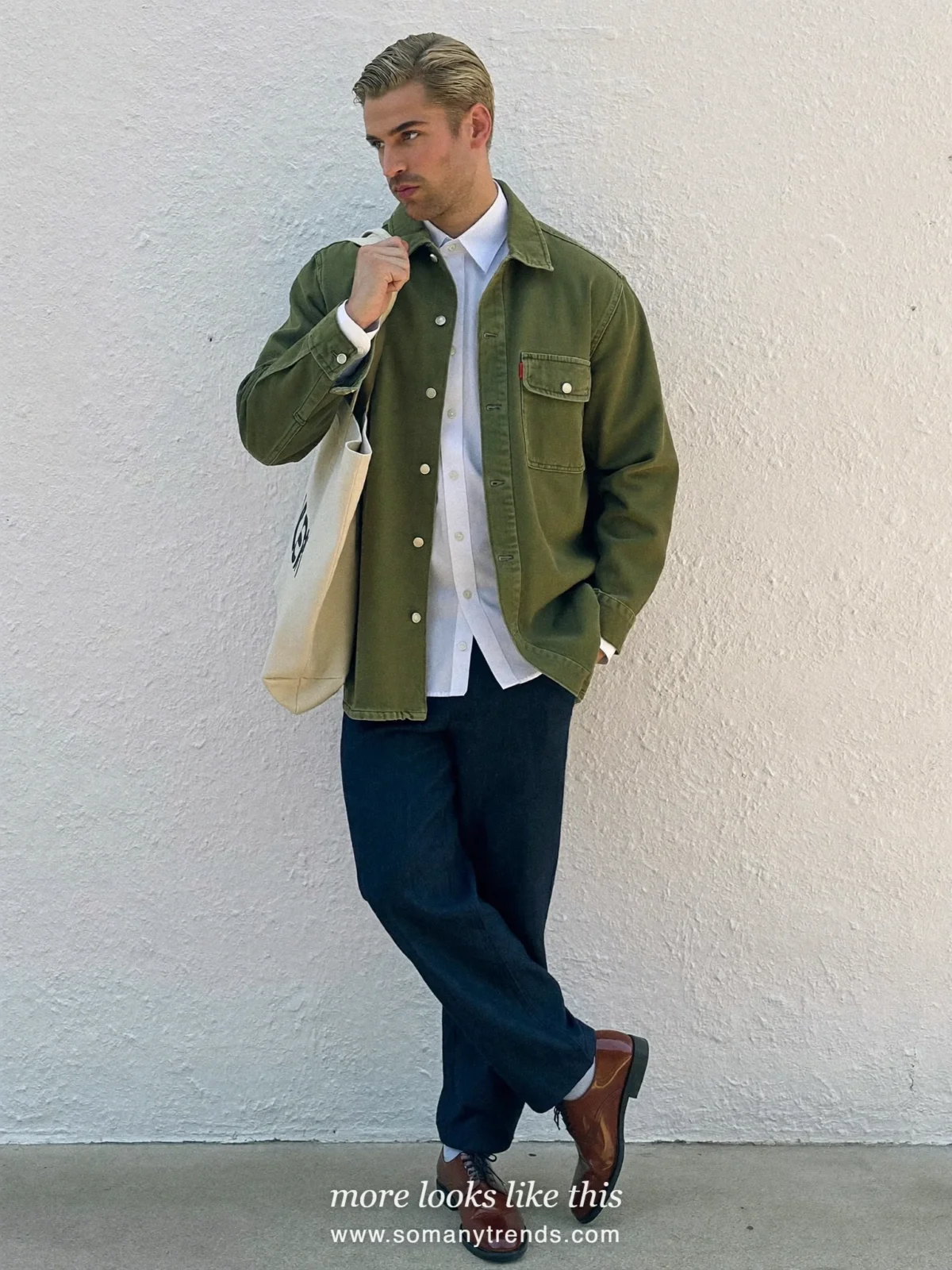
Pair it with dark chinos so the olive stays the star. Clean leather shoes lift the outfit above everyday weekend wear.
Keep the overshirt structured with a heavier cotton so it holds its shape.
Camel Blazer and Navy Pants for a Warm Office
A camel blazer is the unexpected piece that makes a hiring manager remember him. It works best in lighter wool or a linen blend for spring and early fall.
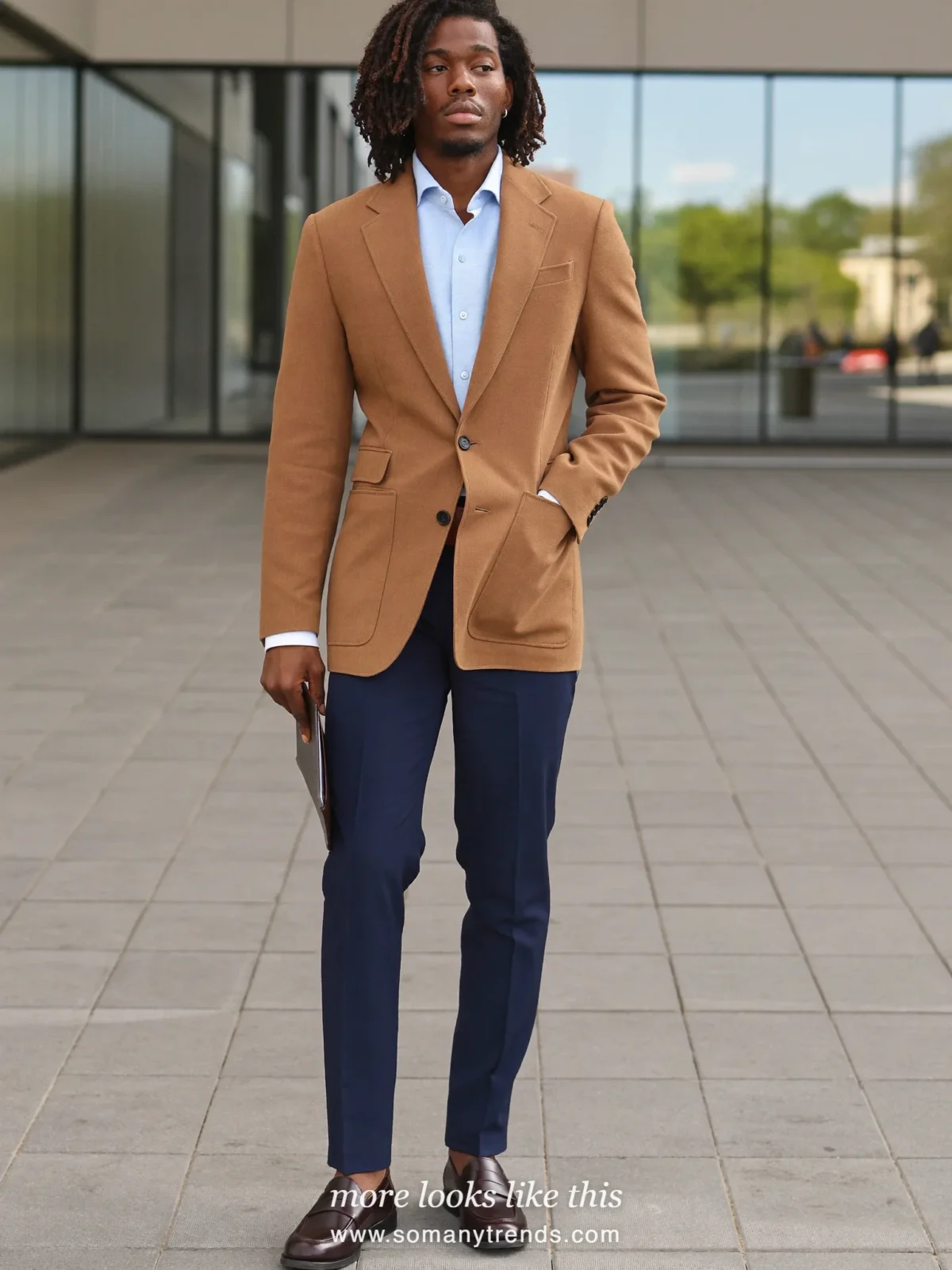
Navy pants ground it and a pale blue shirt keeps the palette calm. Dark brown shoes tie everything together.
Make sure the camel is a muted tan, not a bright orange-toned shade.
Double-Breasted Navy Suit for a Finance Role
A double-breasted suit says he is serious about the job. It is more formal than a two-button, so save it for banks, law firms and senior roles.
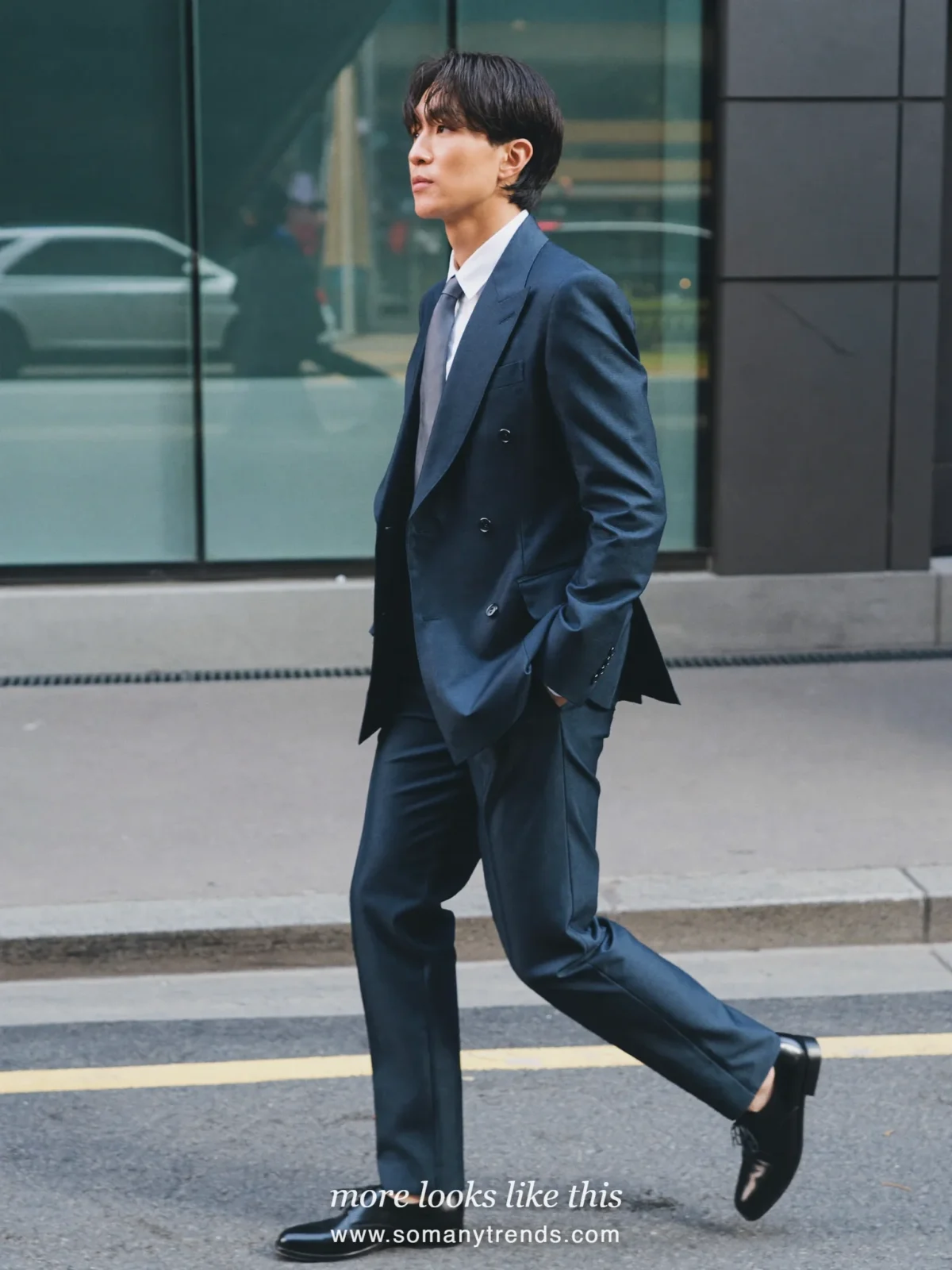
Keep it buttoned when he stands and add a white shirt with a gray tie. Black shoes finish the conservative look.
The cut should hug the chest and waist without pulling at the buttons.
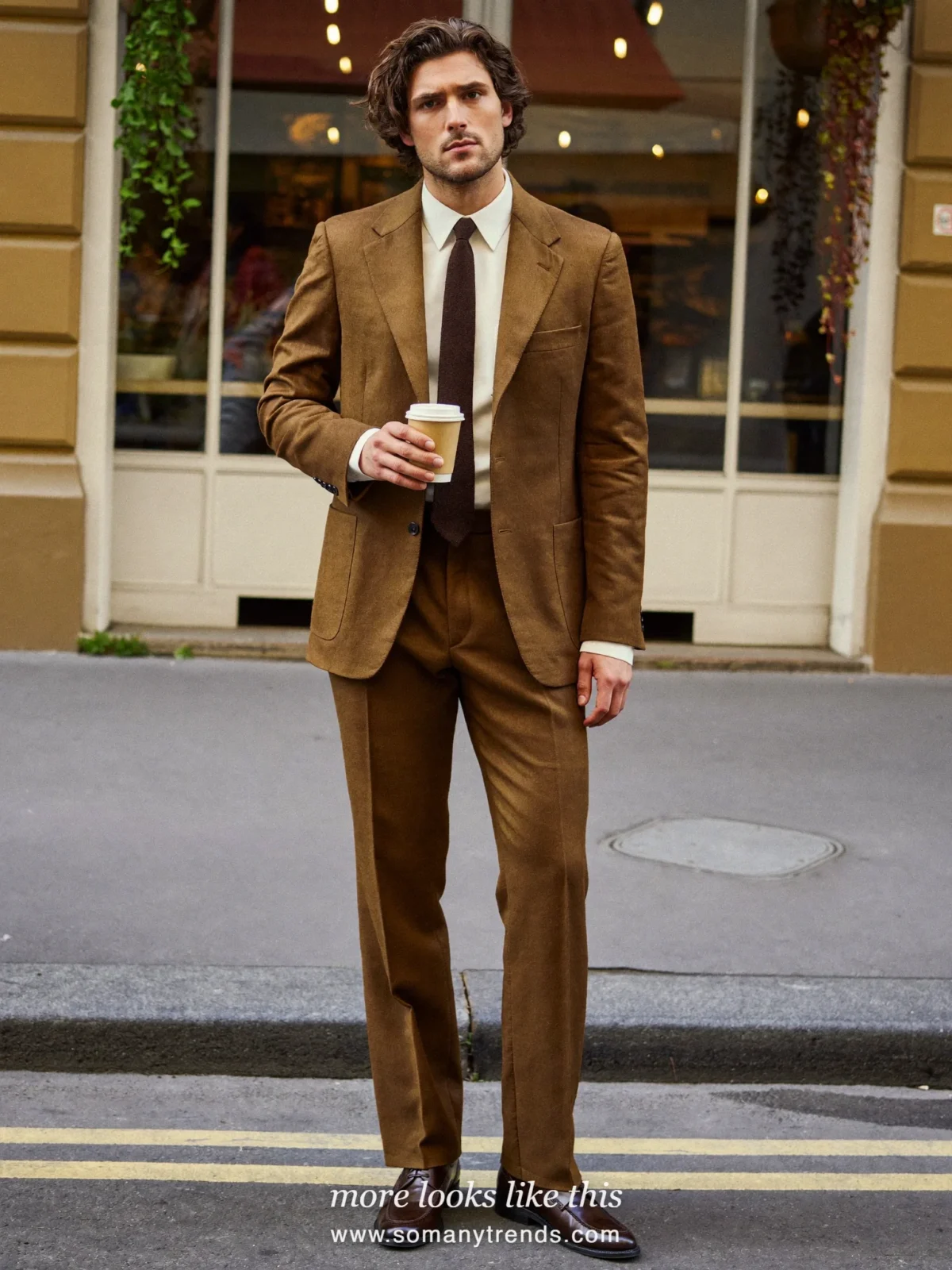
Brown Suit for a Confident Edge
A mid-brown suit is the underrated choice that stands out in a sea of navy. It suits creative agencies, sales and any role where warmth helps.
🛍 Shop This Look
Go with a cream or light blue shirt and a knit tie in a deeper brown. Brown shoes in the same family keep it deliberate.
Pick a matte wool in a rich chocolate or tobacco shade rather than a flat milk-chocolate tone.
Light Gray Suit With a Navy Knit Tie
A light gray suit looks fresh and modern, perfect for spring interviews and bright offices. It photographs well and feels less heavy than charcoal.
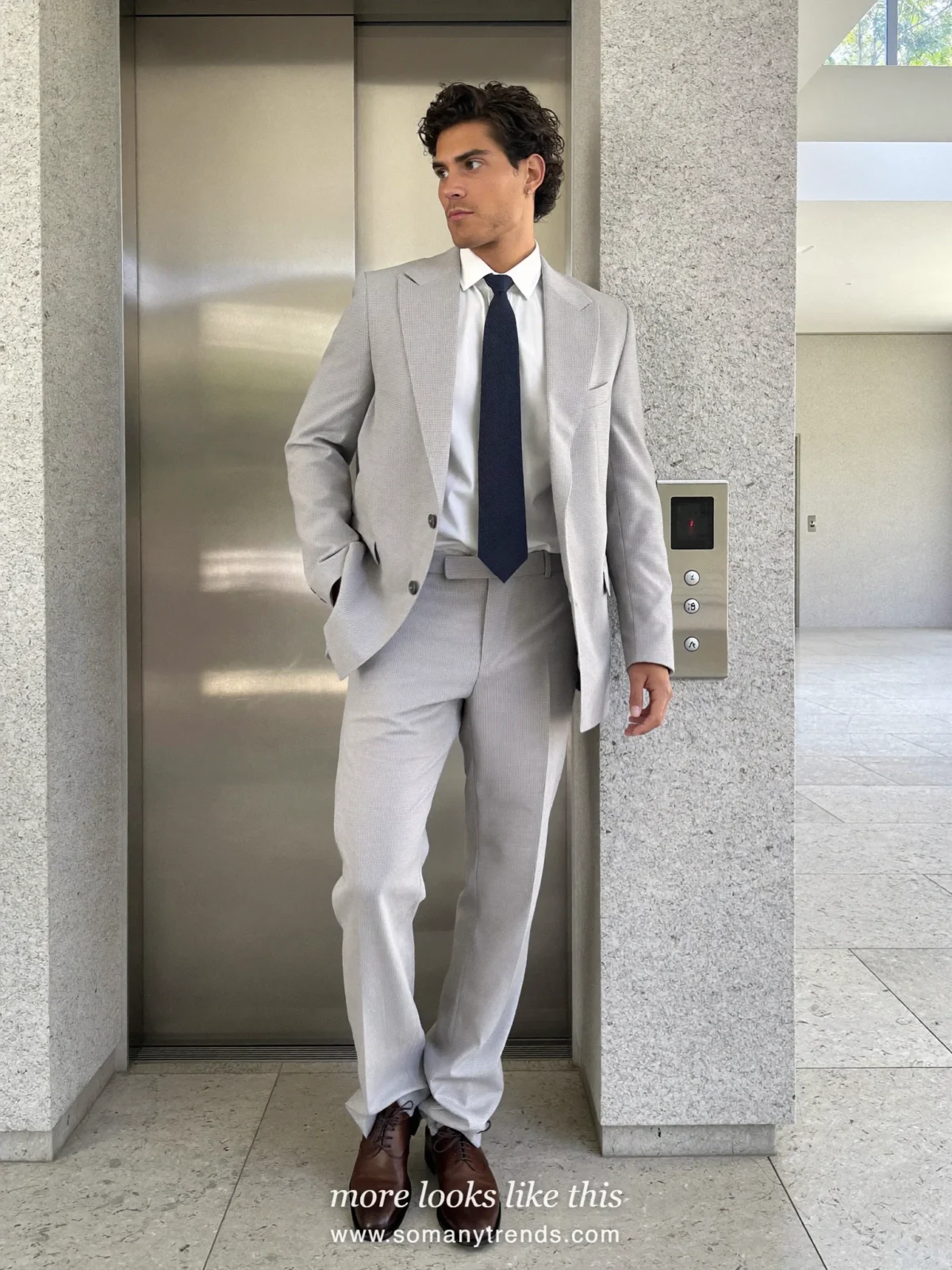
A white shirt and a navy knit tie add contrast without fuss. Brown shoes warm it up and keep it from looking cold.
Keep the fit trim, as a loose light suit can look sloppy very quickly.
How to Choose Fit and Fabric
Pick wool or a wool blend for suits, because it holds its shape through a long day. The jacket shoulder should end where his shoulder ends, with half an inch of shirt cuff showing. Pants sit at the waist with a slight break or none. Linen and cotton blends breathe in warm weather, and velvet or satin lapels belong to evening, not interviews.
Pinstripe Suit for a Law Office
A fine pinstripe adds authority and looks right in legal, finance and consulting. Keep the stripe subtle so it reads as texture, not pattern.
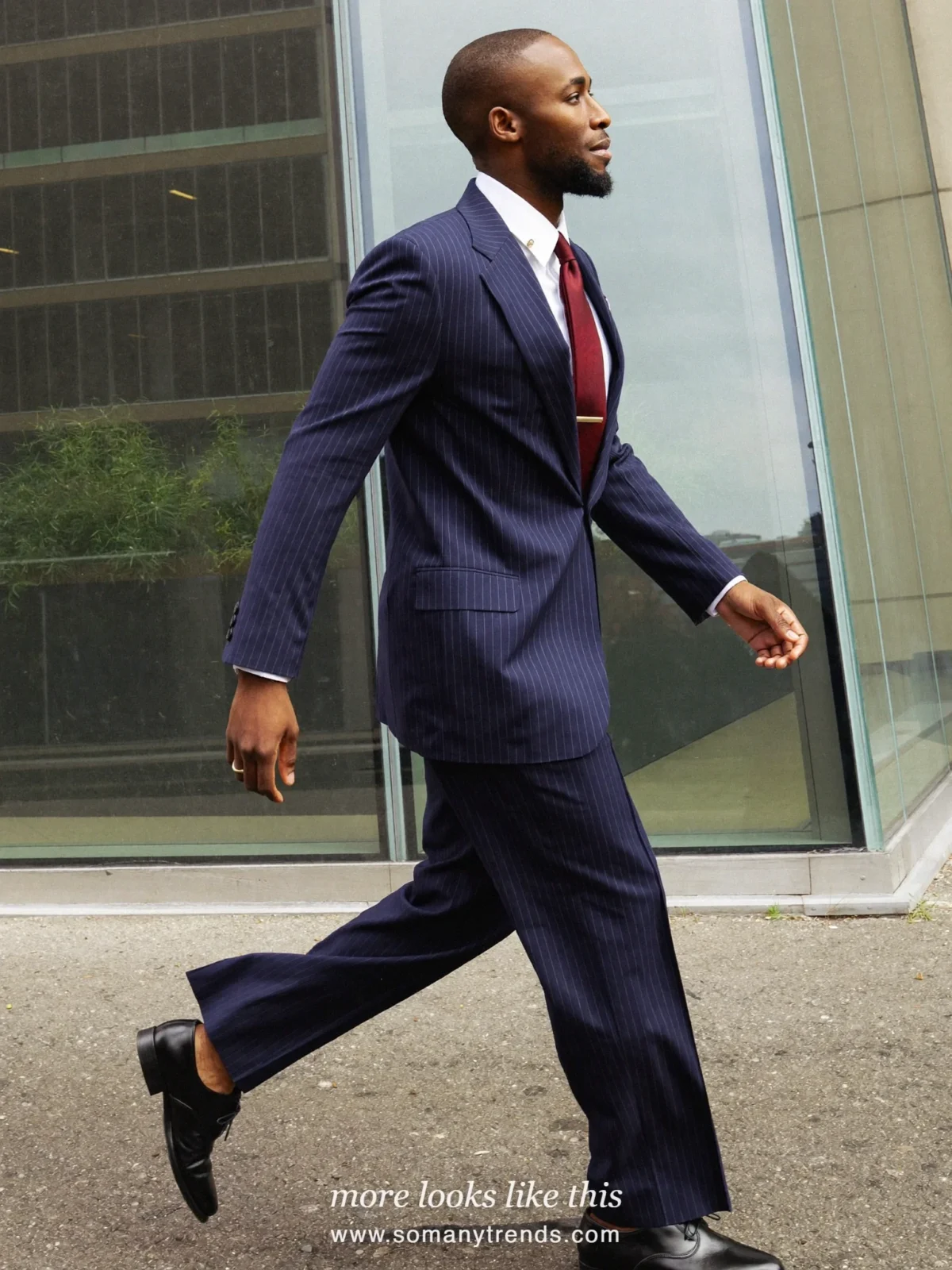
With a plain white shirt and a solid tie, the stripe stays elegant. Black oxfords are the traditional finish.
Avoid wide, bold stripes, which tend to feel costume-like on a first meeting.
Gray Blazer With Dark Jeans
Dark, clean denim is acceptable for a casual office when it is paired with a blazer. This is the right answer for a design studio or a young company.
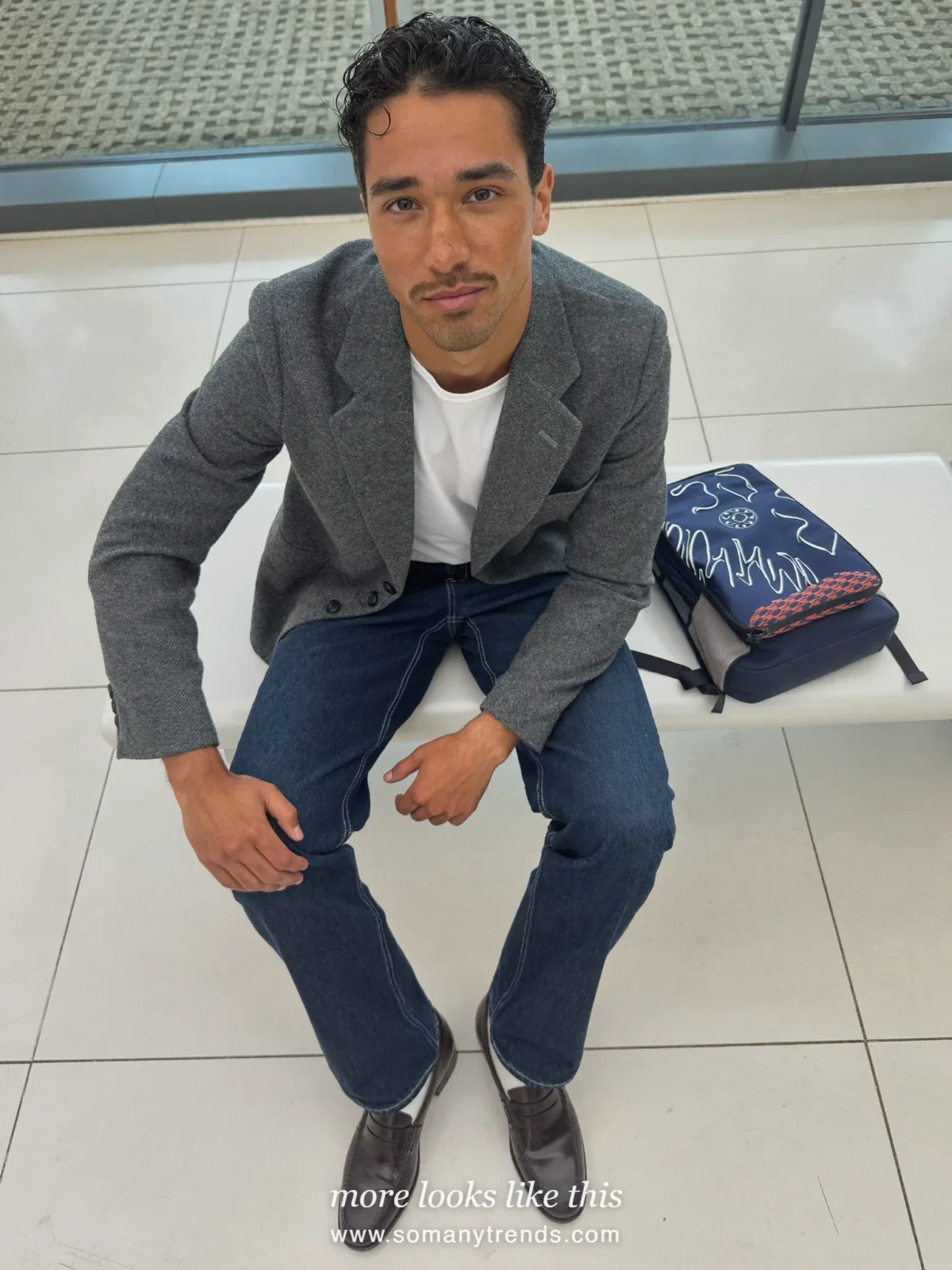
Choose a gray blazer and a white tee or fine knit underneath. Leather shoes, not sneakers, keep it interview-ready.
The jeans must be dark, uniform and free of rips or fading.
Burgundy Knit Tie With a Gray Suit
One deliberate accent is what separates a good outfit from a forgettable one. A burgundy tie on a gray suit gives that bit of warmth.
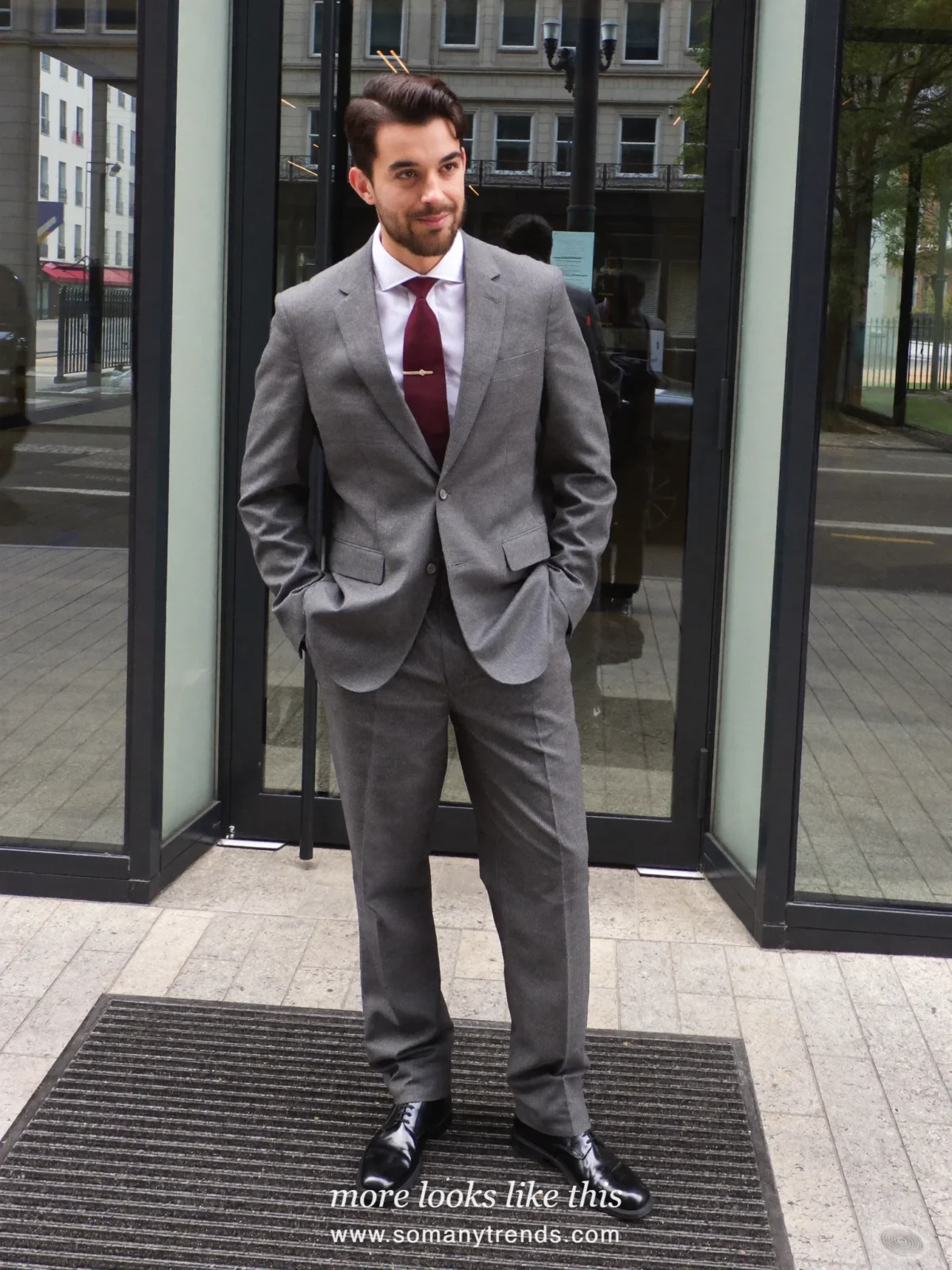
Choose a knit or a matte silk with a slim width. A white shirt keeps the focus on the color.
Match the belt to the shoes and keep the socks dark so nothing distracts.
Navy Turtleneck Under a Charcoal Blazer
A fine knit turtleneck replaces the shirt and tie and suits design, media and tech interviews. It is the polished alternative for a man who dislikes ties.
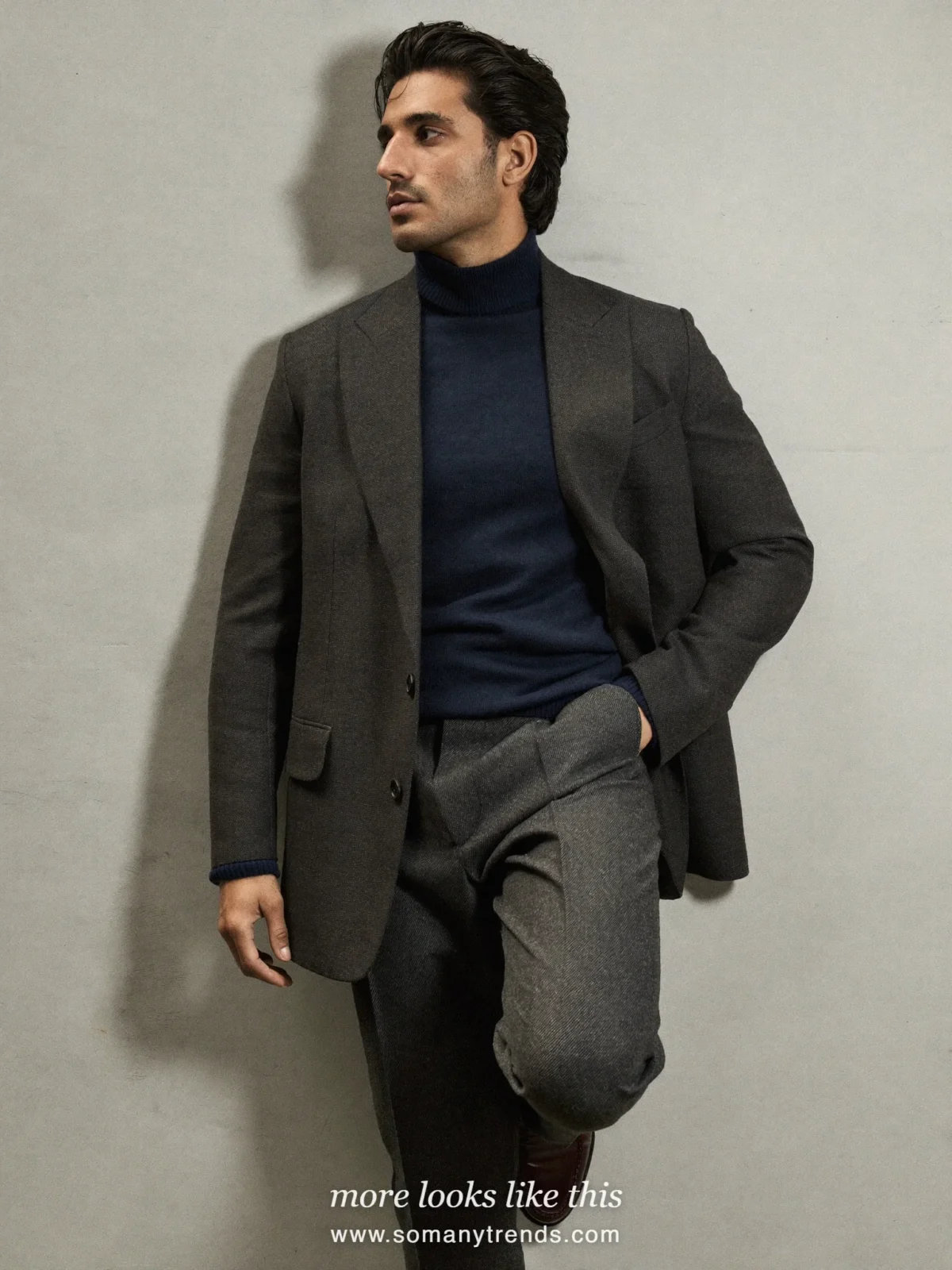
Layer it under a charcoal blazer for structure. Matching gray trousers and dark brown leather shoes complete the look.
Choose a thin merino so the neck lies flat and does not bunch under the jacket.
Glen Check Blazer With Navy Pants
A subtle glen check adds personality to a blazer without losing the formality. It suits agencies, marketing and sales roles.
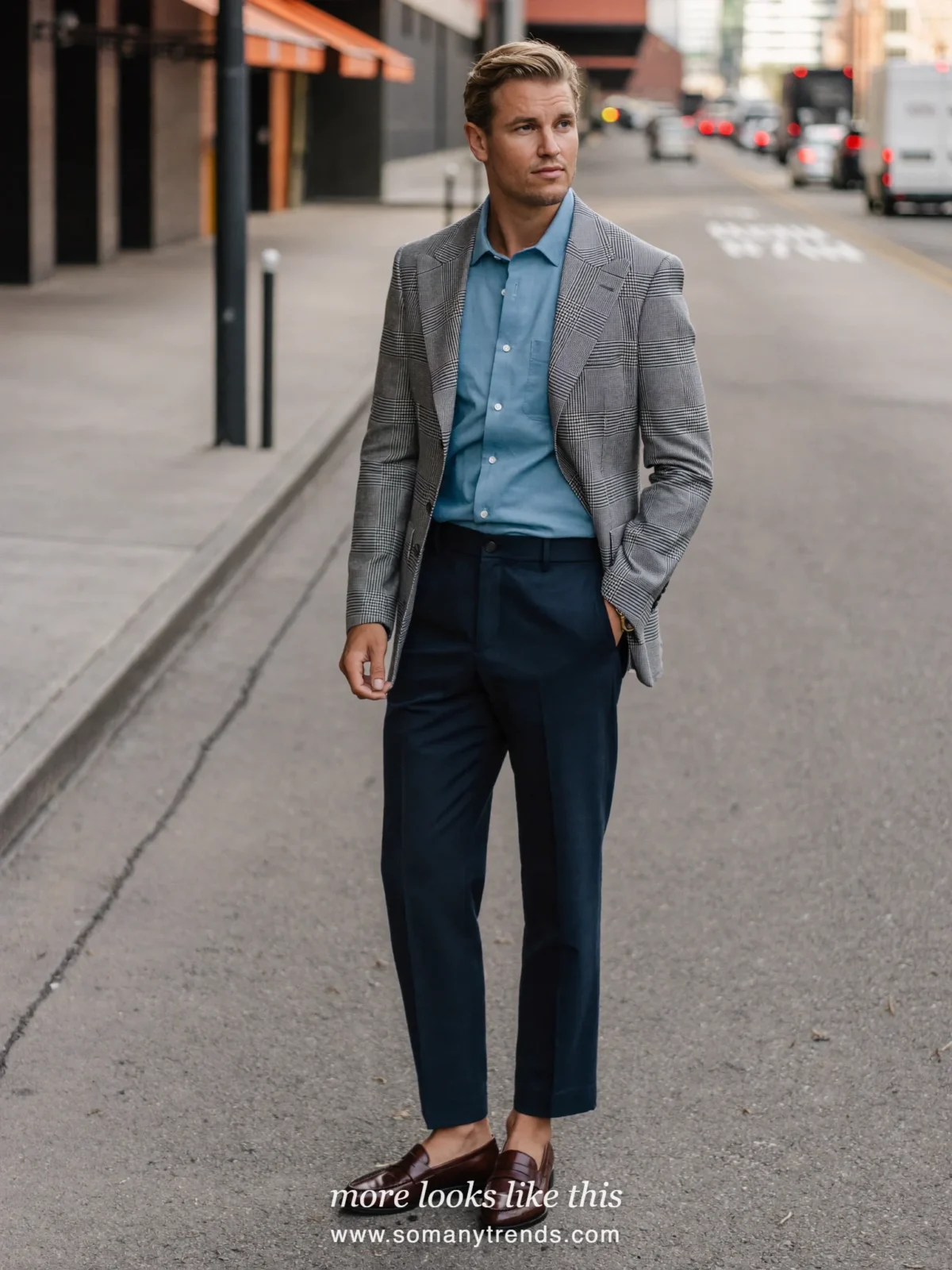
Pair it with a plain light blue shirt and navy pants to let the pattern breathe. A knit tie is optional and adds polish.
Keep the check small and low-contrast, so it reads as texture from a distance.
Olive Chinos With a Navy Blazer
This is the relaxed interview for a creative or startup office where a full suit would feel stiff. Olive chinos soften a navy blazer in an easy way.
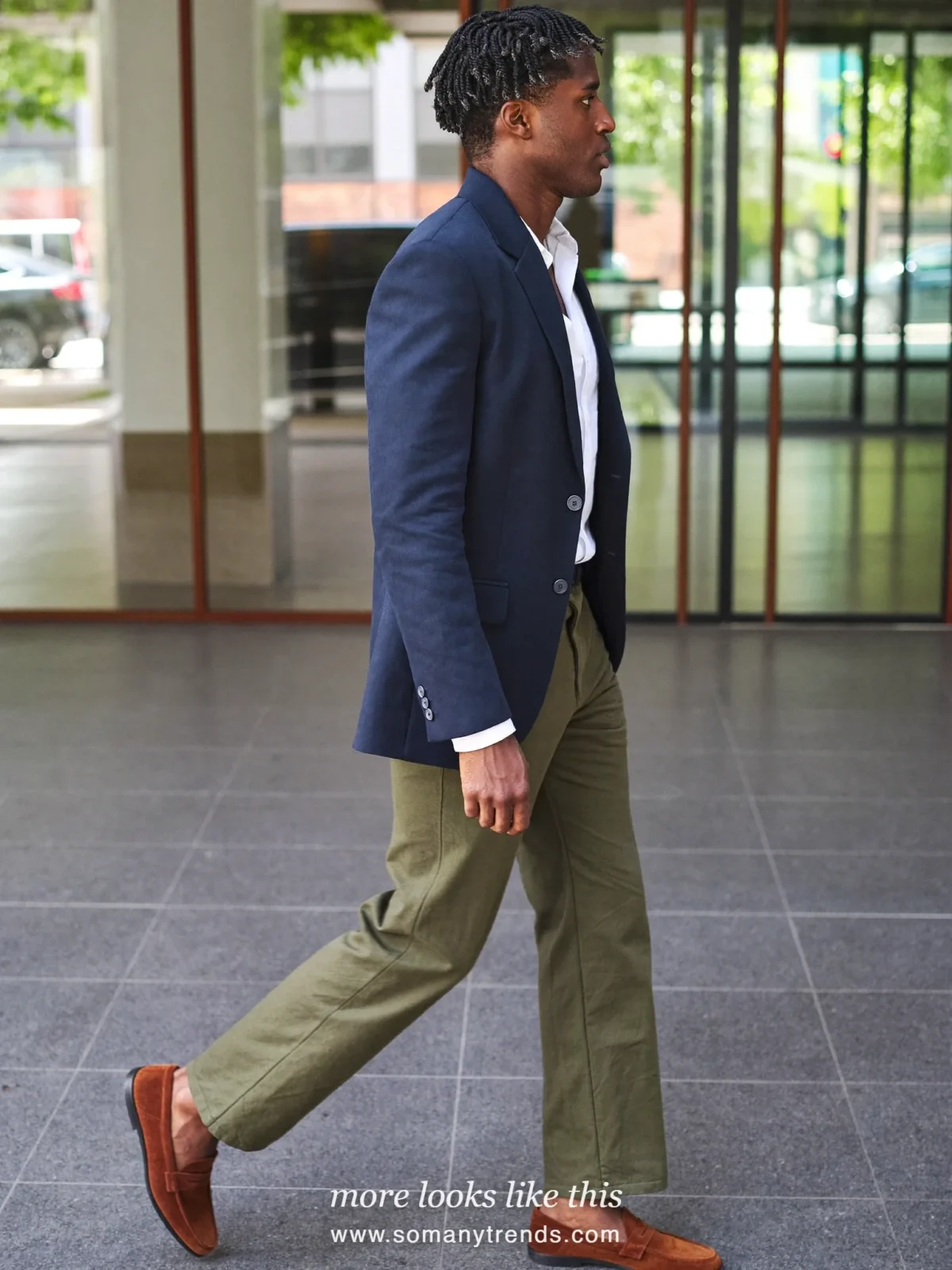
A white or light blue shirt keeps it crisp. Brown loafers or suede derbies lock in the earthy palette.
Make sure the chinos are pressed and hit the shoe with a clean break.
Cream Knit Polo With Charcoal Pants
A cream knit polo with charcoal pants is a calm, modern interview outfit for design and tech. It is soft but clearly dressed up.
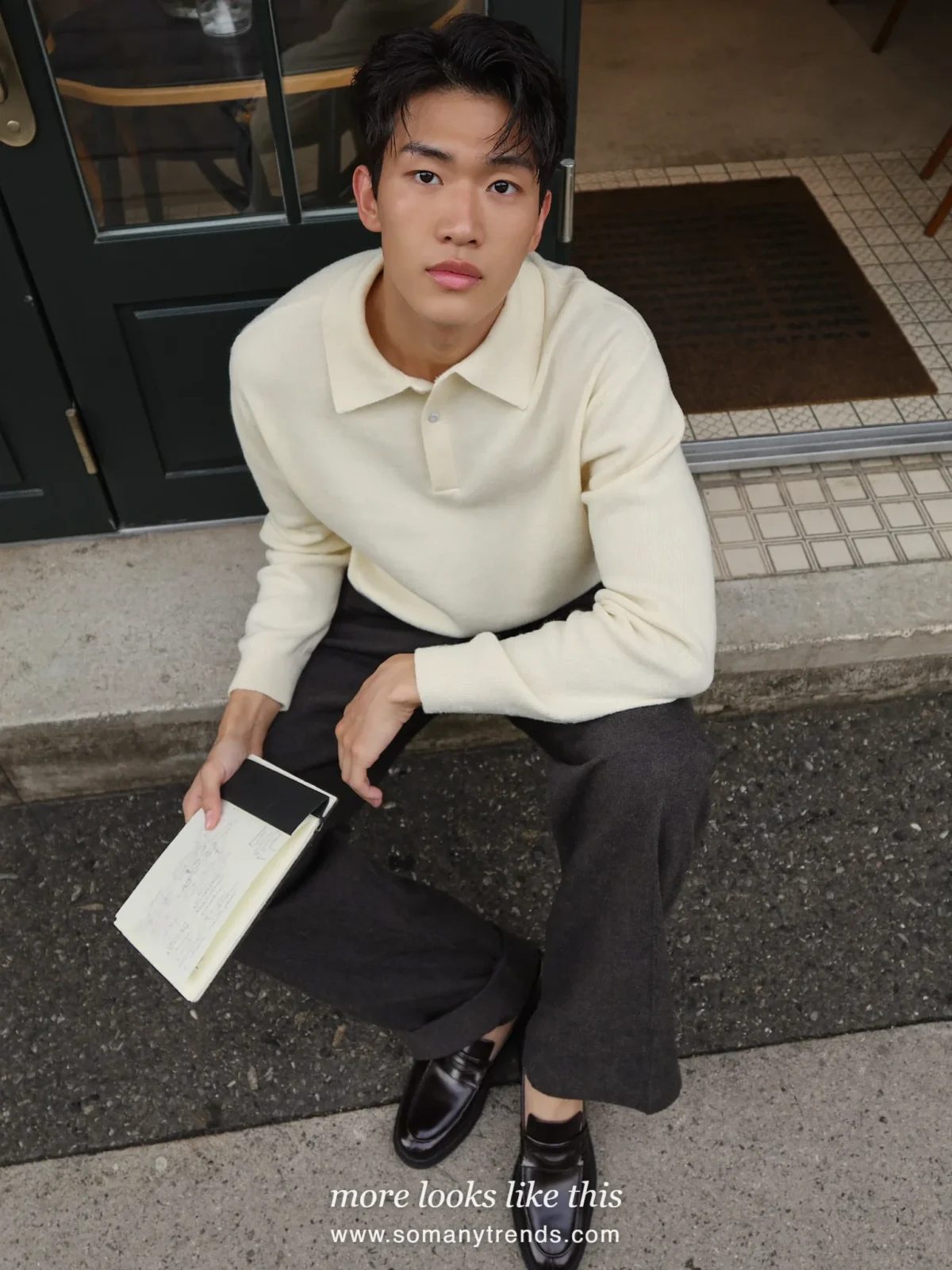
Pick a fine knit that drapes, not a thick pique. Add a gray blazer over it if the office is cold.
Leather shoes in dark brown pull the whole outfit together.
Tan Suit for a Summer Interview
A light tan suit in a cotton or linen blend is right for warm-weather interviews. It looks relaxed but intentional.
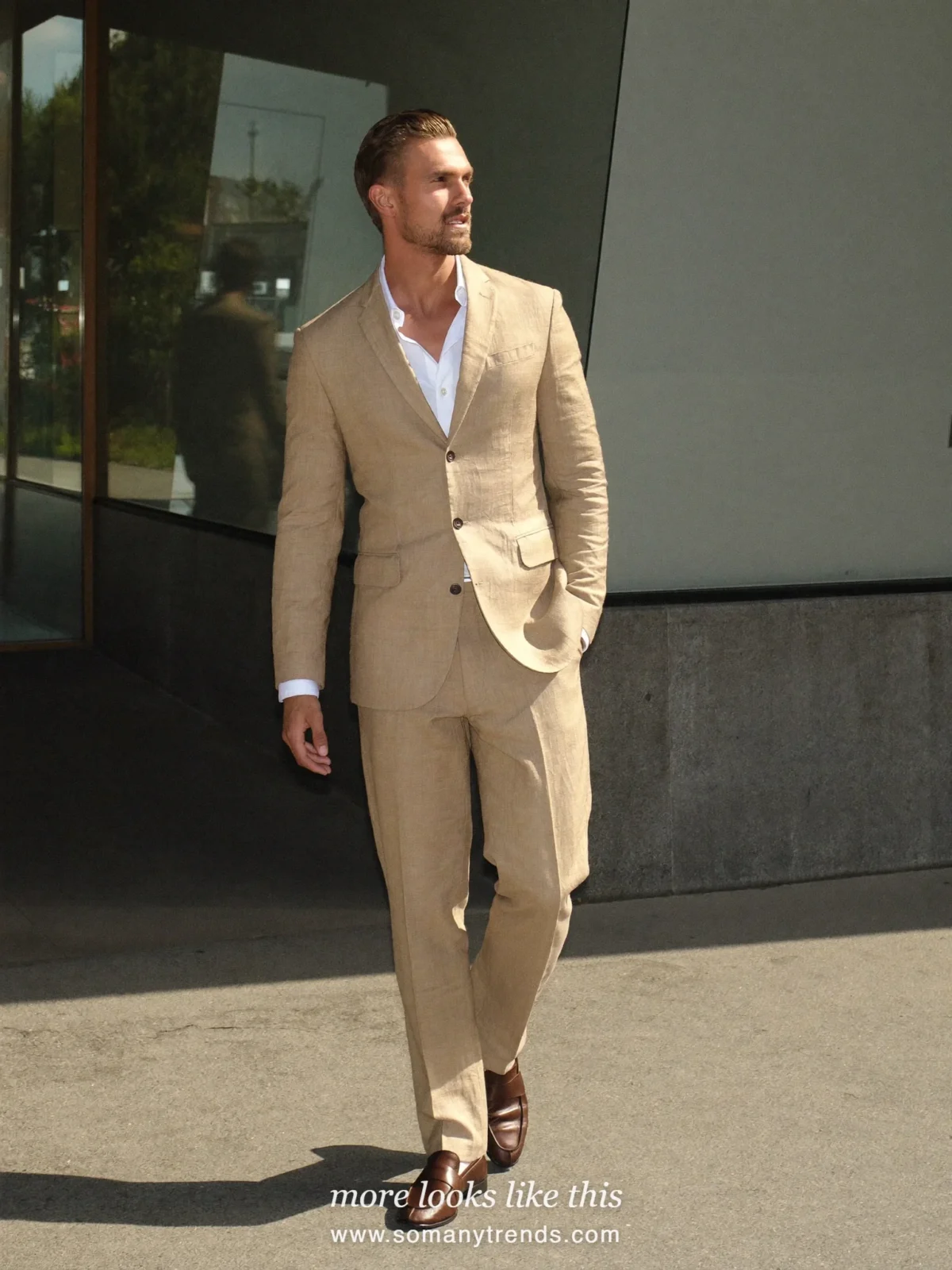
Pair it with a white shirt and no tie for a clean, open look. Brown loafers finish it.
Linen wrinkles, so choose a blend and steam it before he leaves.
Polished Black Derbies With a Navy Suit
Shoes are the detail a hiring manager notices on the way out. Black derbies with a navy suit are classic and correct for a formal office.
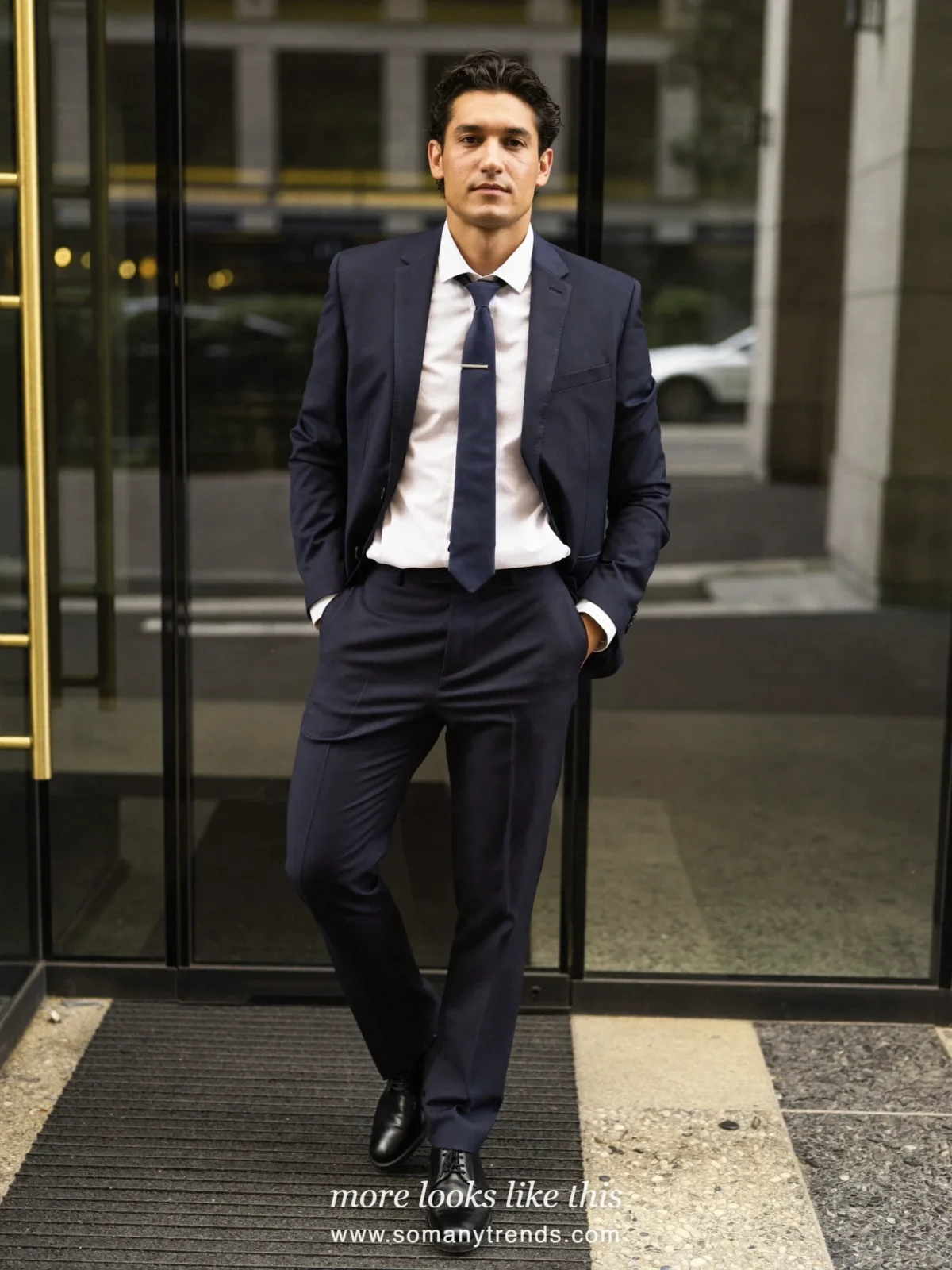
Polish them the night before and make sure the heels are not worn down. A matching black belt ties it together.
Keep the socks dark and long enough that no skin shows when he sits.
Brown Loafers With a Gray Suit
Brown loafers soften a gray suit and make it feel modern. This is the shoe choice for creative and mid-formal offices.
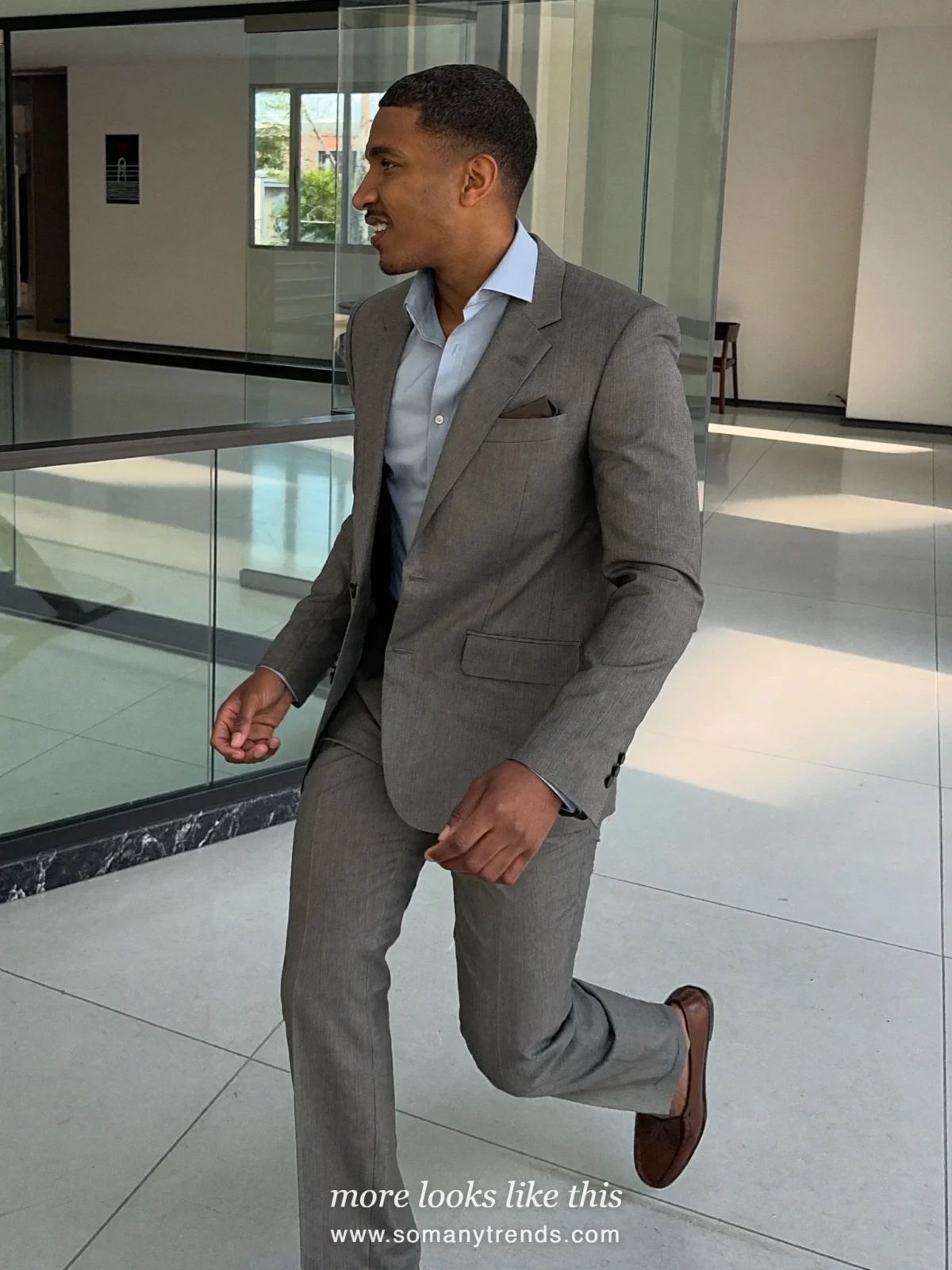
A dark brown suede or smooth leather both work, and the belt should match the tone. Skip the tassels unless the office is clearly traditional.
A pocket square in a muted color adds a small finishing detail.
Suede Chelsea Boots With Dark Pants
For a creative interview, a clean pair of suede Chelsea boots is a sharper alternative to loafers. They suit a studio or an agency.
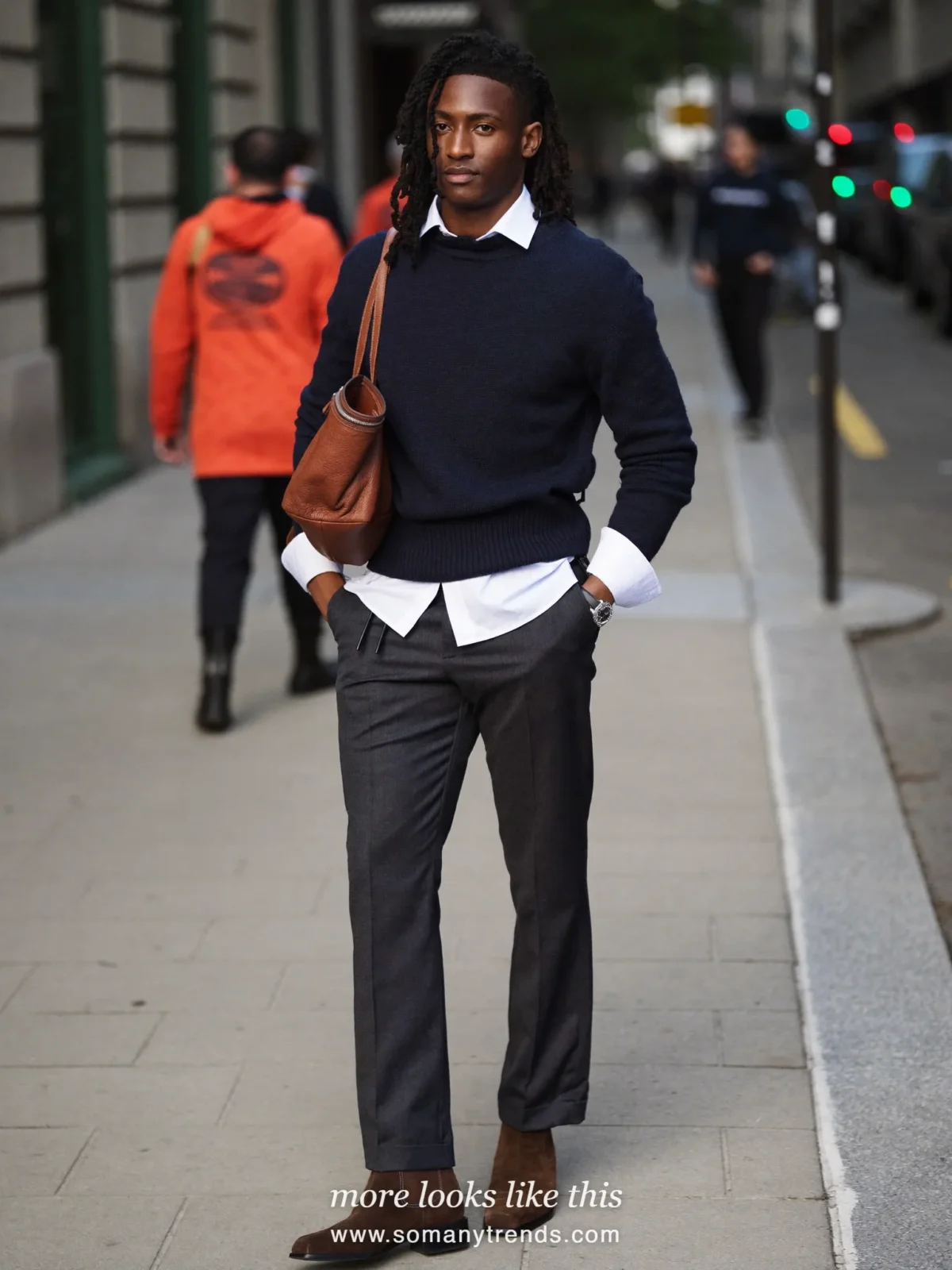
Pair them with slim dark pants and a navy knit so the boots stand out. Brush the suede so it looks fresh.
Avoid anything chunky or heavily soled, which looks too casual for a first meeting.
Final Check: Watch, Belt and Bag
The last details are what pull an outfit together. A simple watch, a belt that matches the shoes and a clean leather bag say he is organized.
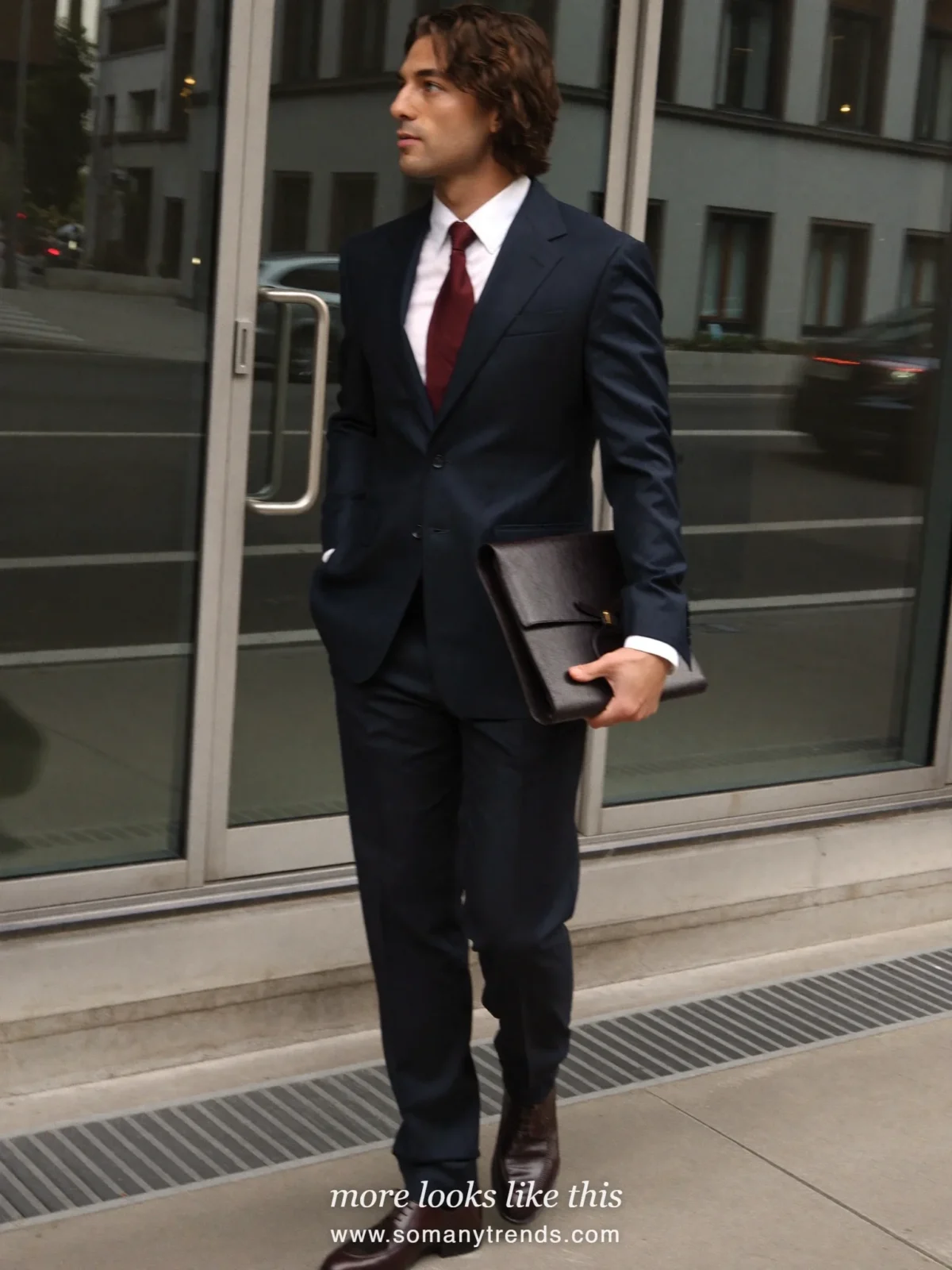
Keep the metal tones consistent and skip anything with a visible logo. A slim leather portfolio is better than a bulky backpack.
A crisp shirt and a quick last look in the lobby window complete the preparation.
One Last Thing
The best interview outfit is the one he forgets he is wearing, because it fits and he feels like himself. Choose one look from the navy suit to the olive overshirt, and let him walk in calm.
FAQ
What color suit is best for a job interview?
Navy and charcoal are the safest and most respected choices for almost every industry. Both look sharp, flatter most skin tones and pair easily with a white or light blue shirt.
Does he have to wear a tie to an interview?
For corporate, finance and law interviews, yes, a tie is expected. For creative and tech roles, a knit polo, turtleneck or open collar under a blazer is often just as appropriate.
Which shoes work best with an interview outfit?
Polished leather oxfords, derbies or loafers in black or brown are the safest options. Match the belt to the shoes and avoid sneakers unless the company is clearly very casual.
How should an interview suit fit?
The jacket shoulder should end exactly at his shoulder, with about half an inch of shirt cuff showing. Pants should sit at the waist with a slight break at the shoe and no pulling or sagging.
What should he wear for a creative or startup interview?
A blazer or an overshirt with dark chinos or pants, a clean shirt or fine knit and leather shoes is the right balance. It looks relaxed but clearly considered, which is exactly the point.
Have any thoughts?
Share your reaction or leave a quick response — we’d love to hear what you think!
-
 0
-
 0
-
 0
-
 0
-
 0
-
 0