

 Lena
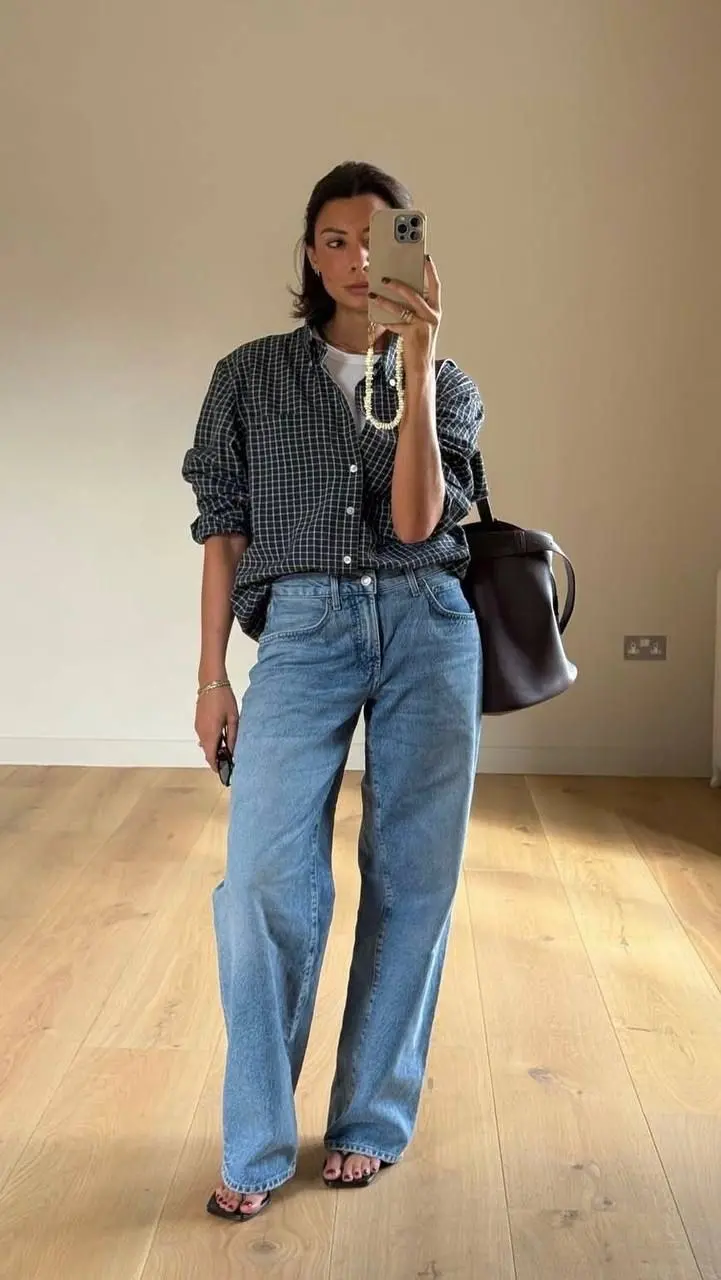
LenaEvery few years denim does a hard reset, and 2026 is one of those years where the reset feels genuinely seismic. The silhouettes are shifting, the washes are changing, and honestly, the whole philosophy of what a good pair of jeans should do for your body is being rewritten from scratch.
I’ve been tracking these swaps on the runway and on actual streets for months now, and what strikes me most is how coherent the direction is. It’s not chaos — it’s a clear move away from body-conscious, high-stretch fits toward jeans that have real structure, real proportions, and a certain effortless authority. The kind of jeans that look good whether you’re rushing through a market or sitting across from someone you want to impress.
Some of these swaps will feel like a revelation the moment you try them. Others might require a small mental adjustment, especially if you’ve been loyal to the same fit for a decade. Either way, knowing what’s shifting — and why — means you can shop smarter and build a denim wardrobe that actually feels current without replacing everything you already own.
This isn’t about chasing trends for the sake of it. It’s about understanding what’s working right now and why certain cuts and details are suddenly making women look so much more stylish in their off-duty moments. Read through all eight swaps and I promise at least two of them will make you want to clear out a drawer.
This post contains affiliate links. If you buy through these links I may earn a small commission at no extra cost to you.
Light-Wash Straight-Leg Jeans for That Effortless French Girl Look
Out go the ultra-stretchy skinny jeans that promised comfort and delivered constant anxiety about every contour they revealed — the visible panty lines, the post-lunch regret, the sitting-down panic. In comes the light-wash straight-leg, and it’s not a subtle upgrade, it’s a full attitude shift. As Who What Wear notes this season at this point light-wash jeans are basically a spring uniform, the kind of piece that instantly makes everything around it feel fresher and more alive, like you’ve just stepped outside into slightly better weather. The proportions are the whole point — room to breathe from hip to ankle while still keeping a clean, intentional line. Pair them with crisp white tees for that nonchalant French-girl energy, or elevate them with silk blouses and pointed-toe flats when the occasion calls for it.
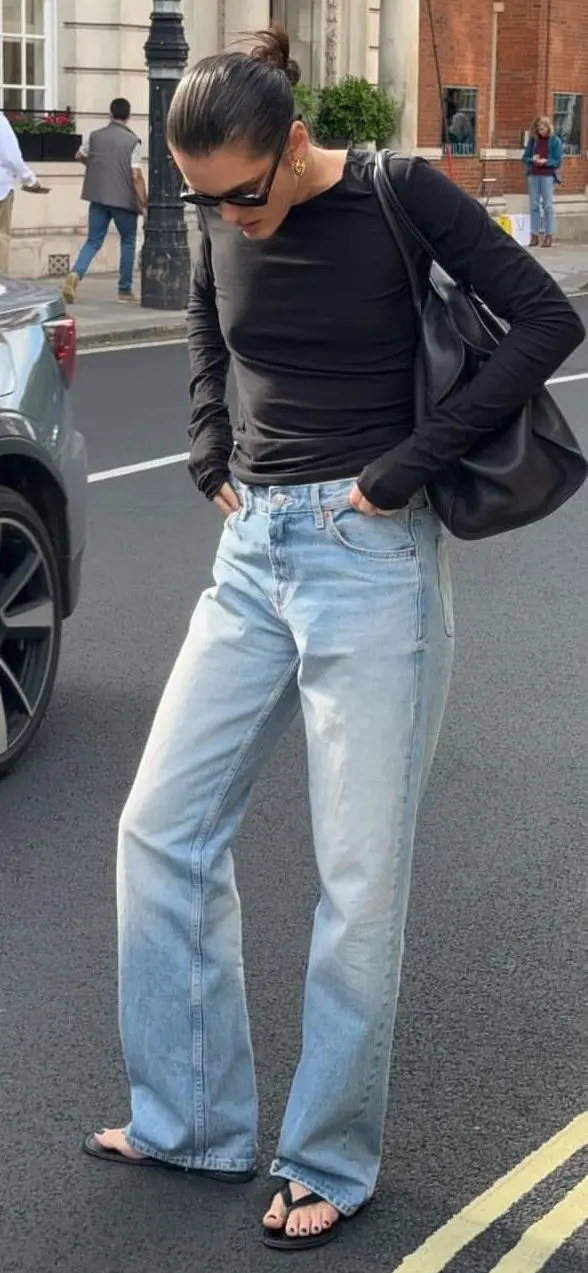
The single most important styling trick with straight-leg jeans is the tuck. Always, always tuck your top in — even just the front — to define your waist and signal that the looser leg is a choice, not an accident. Without that anchor at the waist, the whole thing can read as shapeless, and you lose the effortlessness you were going for.
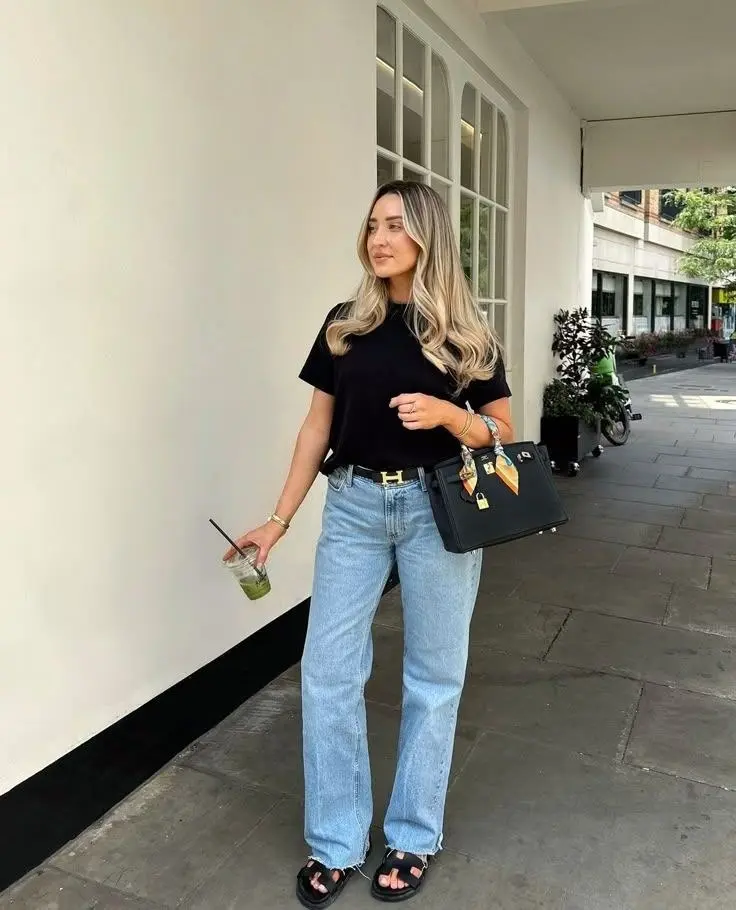
Fit-wise, these work across body types in a way skinny jeans genuinely never did. The straight leg creates a vertical line that elongates without clinging, which means they’re particularly forgiving at the thigh and knee — the two places stretch denim tends to go wrong. Look for a fabric weight that’s substantial enough to hold the silhouette through a full day of wear.
Brown and Colored Denim as the New Alternative Neutral
Out goes the default blue denim everyone owns in basically the same mid-wash shade — safe, predictable, and honestly a little invisible at this point. In comes brown denim, ranging from deep chocolate to a warm carob, and it’s earned its reputation as 2026’s most versatile alternative neutral fast. WWD reported on the runway trends showing denim bottoms picking up a real dose of spring energy with saturated color, as seen on the Chloé runway in vibrant lavender and in Maria McManus’ rose-hued bottoms. For a more wearable entry point, try cream knits styled with camel coats for a tonal moment that reads quietly expensive. If you’re ready to commit to color, start with one pair in sage green or dusty rose and treat it exactly like you’d treat a neutral — for color coordination inspo, our burgundy outfit guide is worth bookmarking.
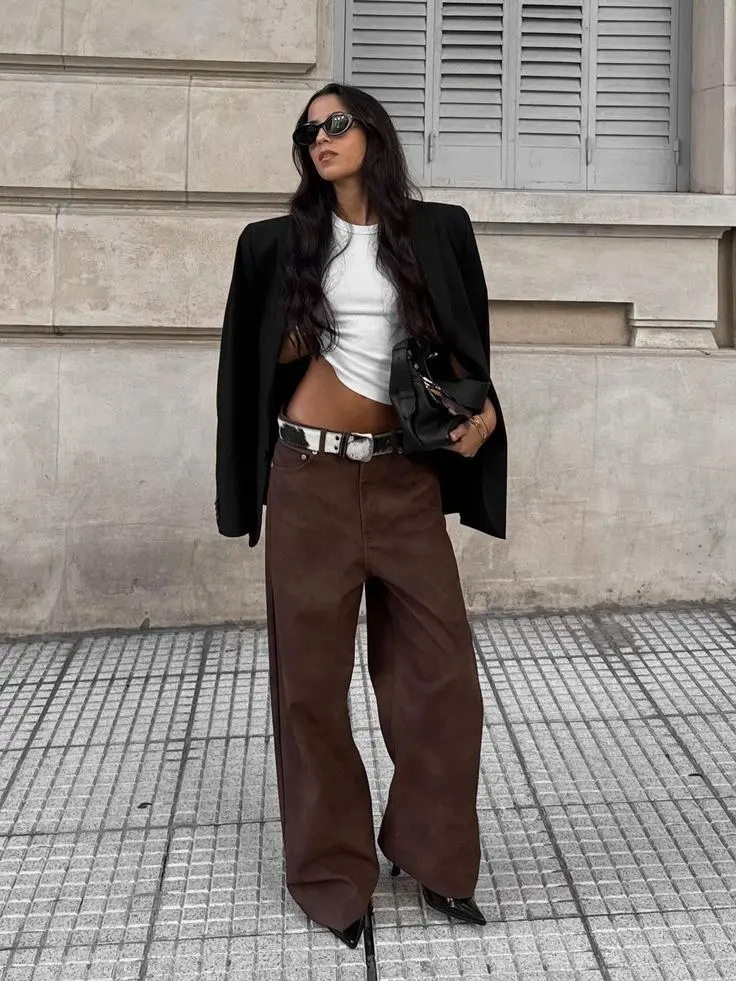
Brown denim earns its place in the wardrobe because it behaves like a neutral while still doing something visually interesting. It pairs easily with cream, ivory, tan, and rust — essentially the entire warm side of your wardrobe — and it photographs beautifully in natural light, which is more of a practical consideration than I’d like to admit.
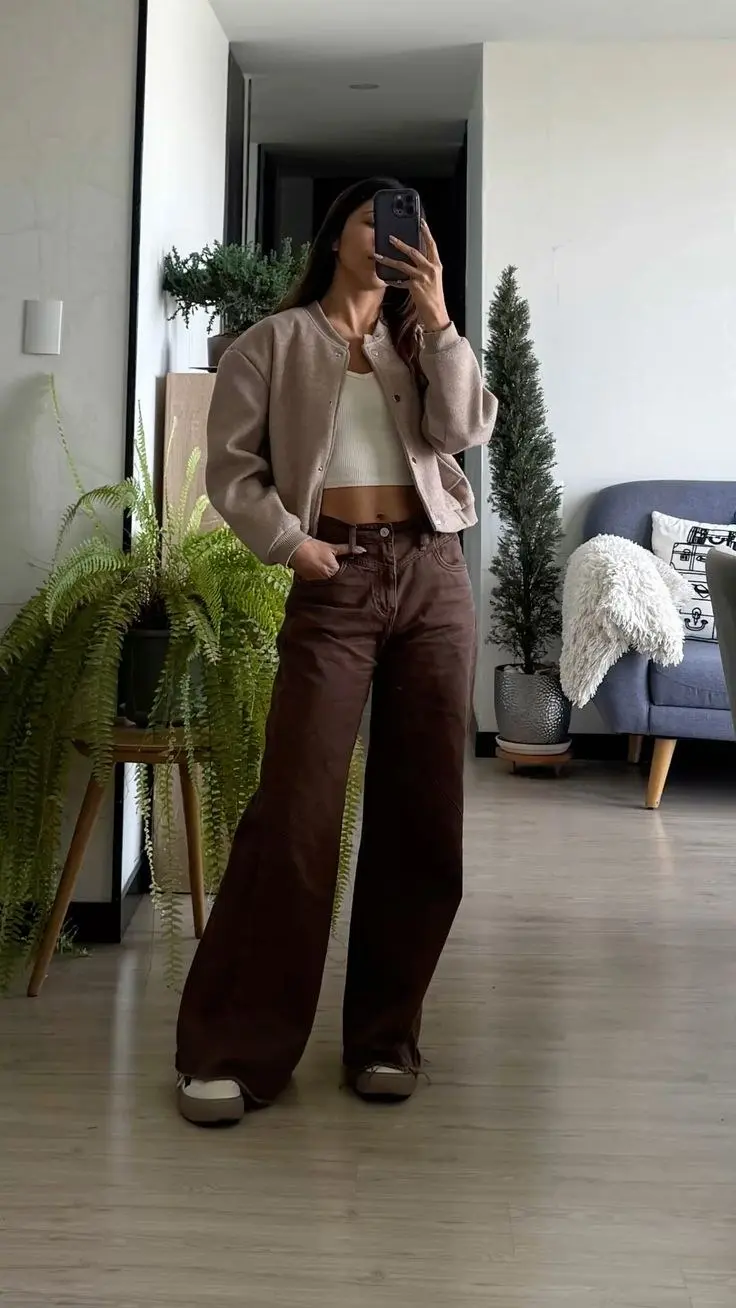
Colored jeans require exactly one thing from you: confidence. Wear them like you’ve owned them for years, not like you’re road-testing a trend. Keep the rest of your outfit quiet — a simple white tee, a relaxed blazer, clean sneakers — and let the color do its work without competing with anything else in the look.
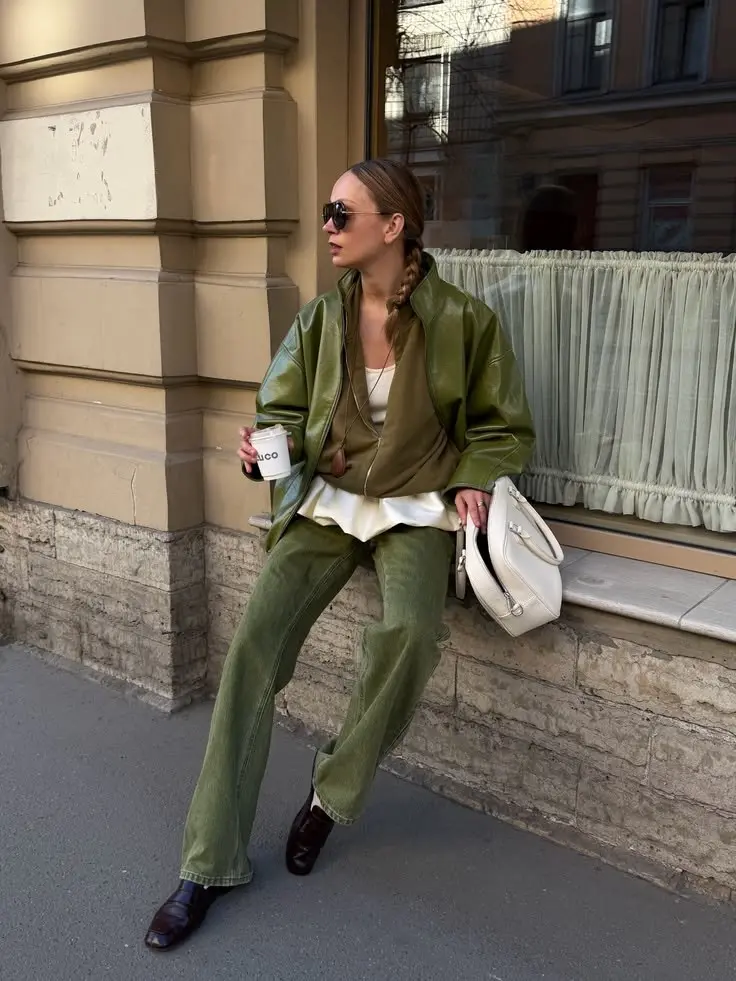
High-Waisted Jeans That Actually Create the Proportions You Want
Out go mid-rise jeans that hit at the widest part of your torso and somehow made every top look slightly wrong — you spent years tugging them up and pulling your top down, never quite landing on the proportions you were after. In comes the high-waist, sitting at or above your natural waist, and it genuinely changes the geometry of a look in a way that feels almost unfair. High-rise jeans create an hourglass shape regardless of your natural proportions, and the tucking options they open up are endless. French-tuck a loose button-down for a casual, slightly editorial feel, or go for a full tuck with a fitted tee when you want clean, sharp lines. Pair them with pointed-toe ankle boots and your legs will look significantly longer than they did this morning — our clean girl outfits guide breaks down exactly how to play this proportions game.
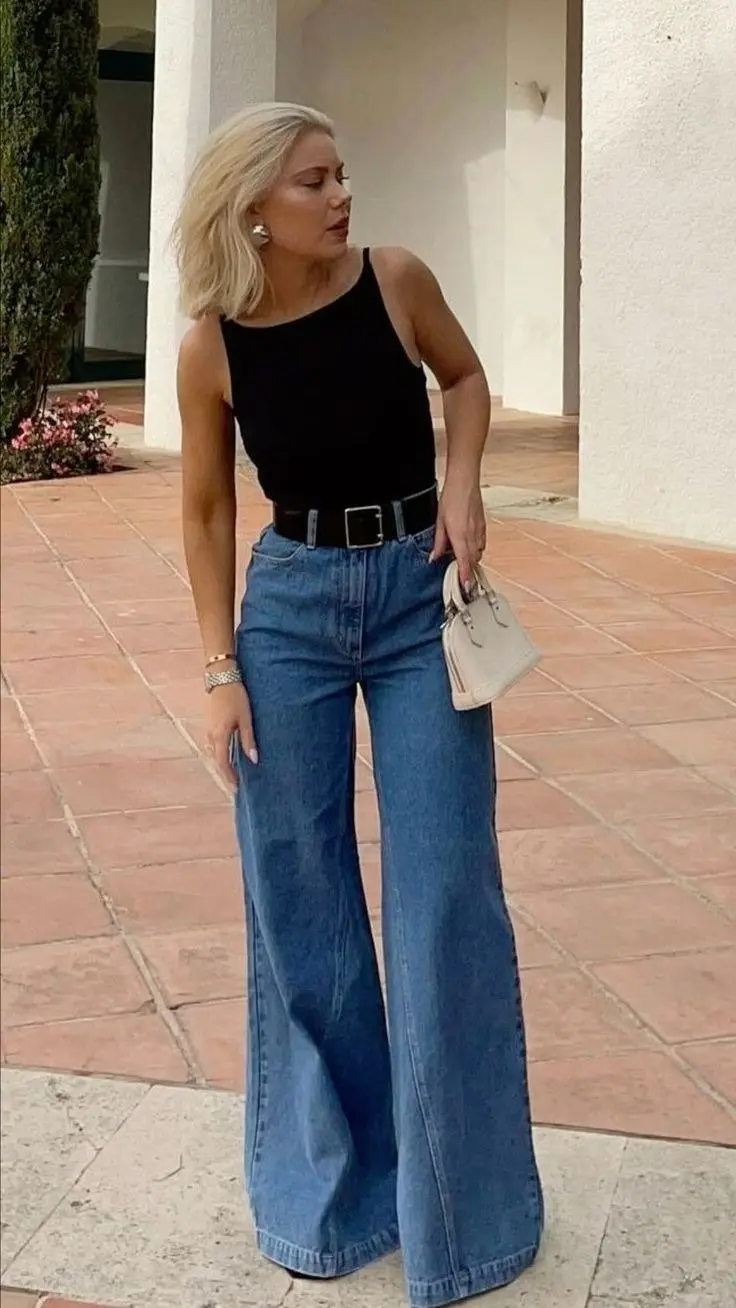
The reason high-waisted jeans feel so flattering on so many different bodies is structural — by anchoring the look at the narrowest part of your torso, they create a clear visual break that makes both the top and bottom of the outfit read better. It’s basic proportion theory, but denim finally catching up to it makes a real difference in how put-together a casual outfit looks.
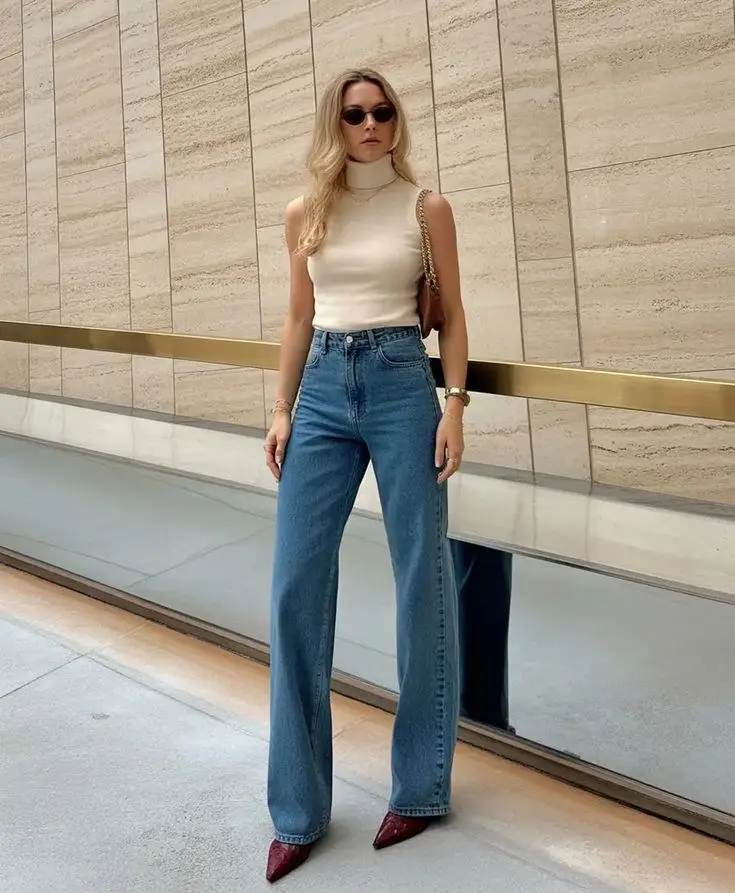
One thing to get right: the rise should actually hit your natural waist, not just sit higher than mid-rise but still below your belly button. That in-between zone is where a lot of ‘high-rise’ jeans end up living, and it defeats the whole purpose. When you find a pair that sits properly, the change in how your tops fall and drape is immediate and obvious.
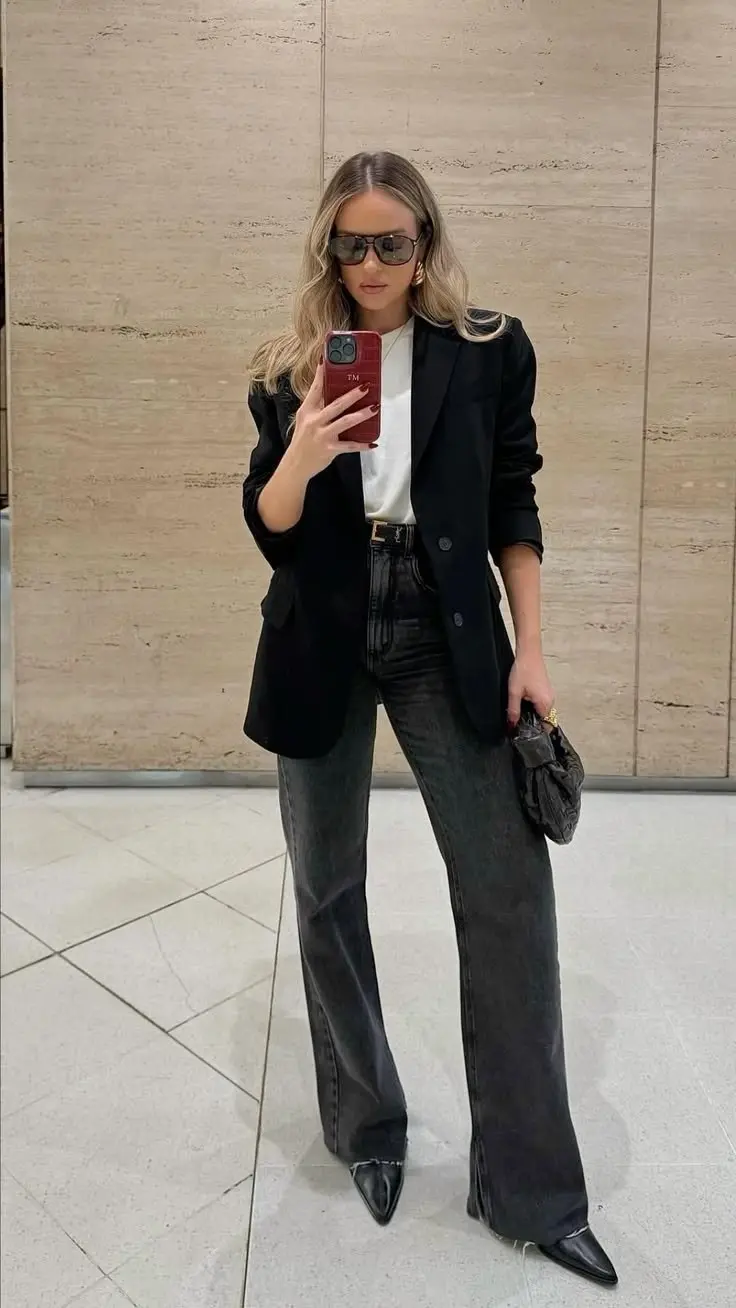
Baggy and Barrel-Leg Jeans for a Relaxed, Modern Silhouette
Out go jeans cut to hug every curve and leave zero room for movement, comfort, or that extra slice of pizza. The sitting-down panic, the constant adjusting, the moral courage required to bend over — all of that is done. In come baggy and barrel-leg silhouettes where comfort is a major factor, but it’s the visual logic of the look that’s really driving the trend. Porter Magazine explains how barrel-leg jeans have become a favourite with fashion editors specifically for that off-kilter shape that juts out at the hips and feels architecturally interesting rather than just loose. Balance the volume with fitted ribbed tanks on top, or lean into drama with a chunky oversized knit. The styling move that surprises people: these jeans look exceptional with kitten heel mules — the delicacy of the shoe makes the volume feel intentional and polished rather than sloppy. For more proportion ideas, our bootcut styling guide is the right place to start.
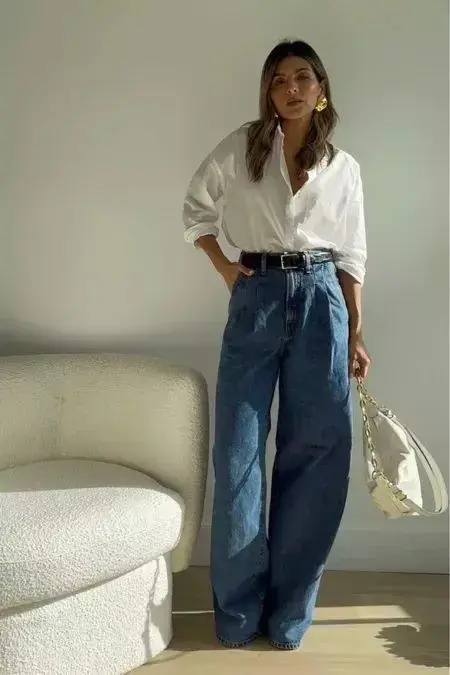
Barrel jeans in particular have a sculptural quality that wide-leg jeans don’t quite replicate — the shape curves outward at the thigh and then narrows back toward the ankle, which creates a silhouette that looks considered from every angle. They’re not for everyone temperamentally, but if you’re drawn to clothes that have a point of view, these jeans deliver that feeling more than almost anything else in the current denim landscape.
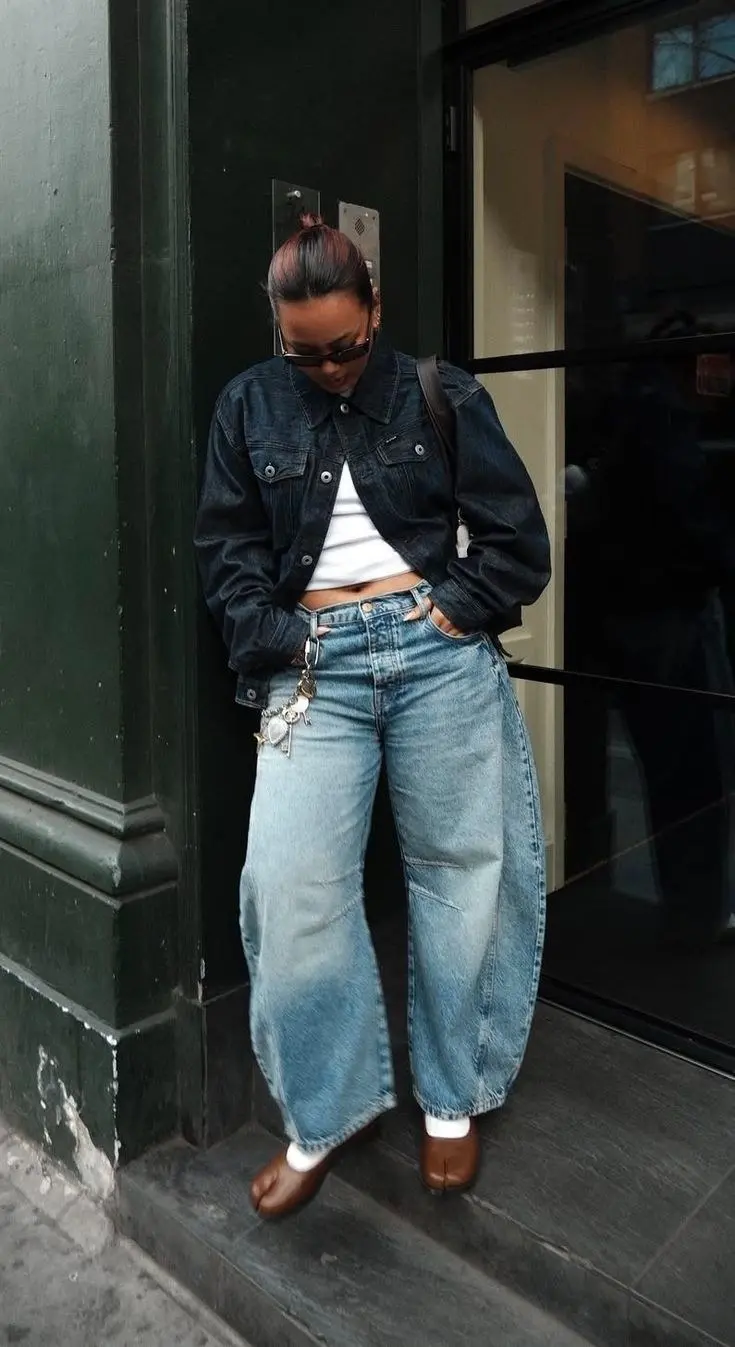
The fit principle to understand here is that the volume is doing the work, so everything else should be proportionally slimmer. Fitted tops, structured blazers, narrow belts — anything that gives the eye a clean anchor at the top half so the generous leg doesn’t overwhelm the whole look. Baggy top and baggy bottom is a specific aesthetic choice that requires real commitment; most people are better served by contrast.
Raw-Hem and Frayed-Edge Jeans Balanced with Tailored Pieces
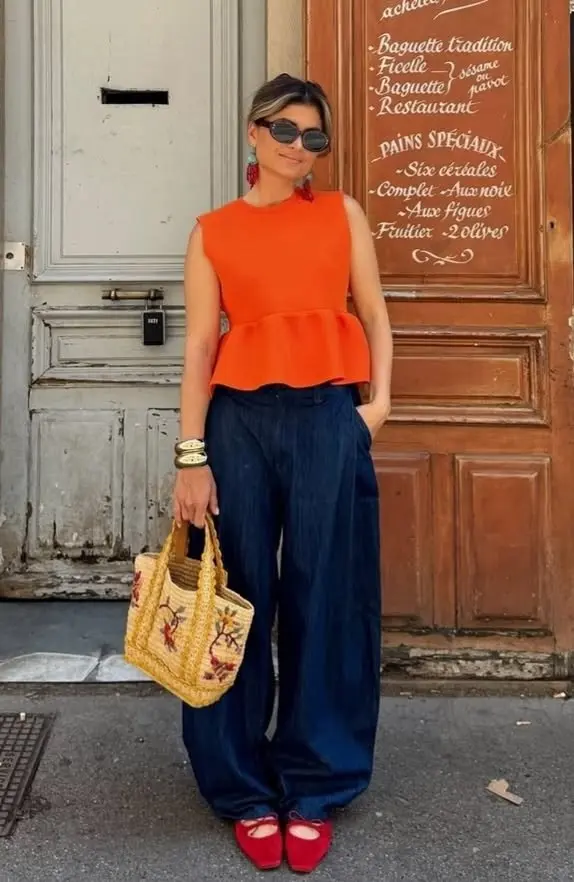
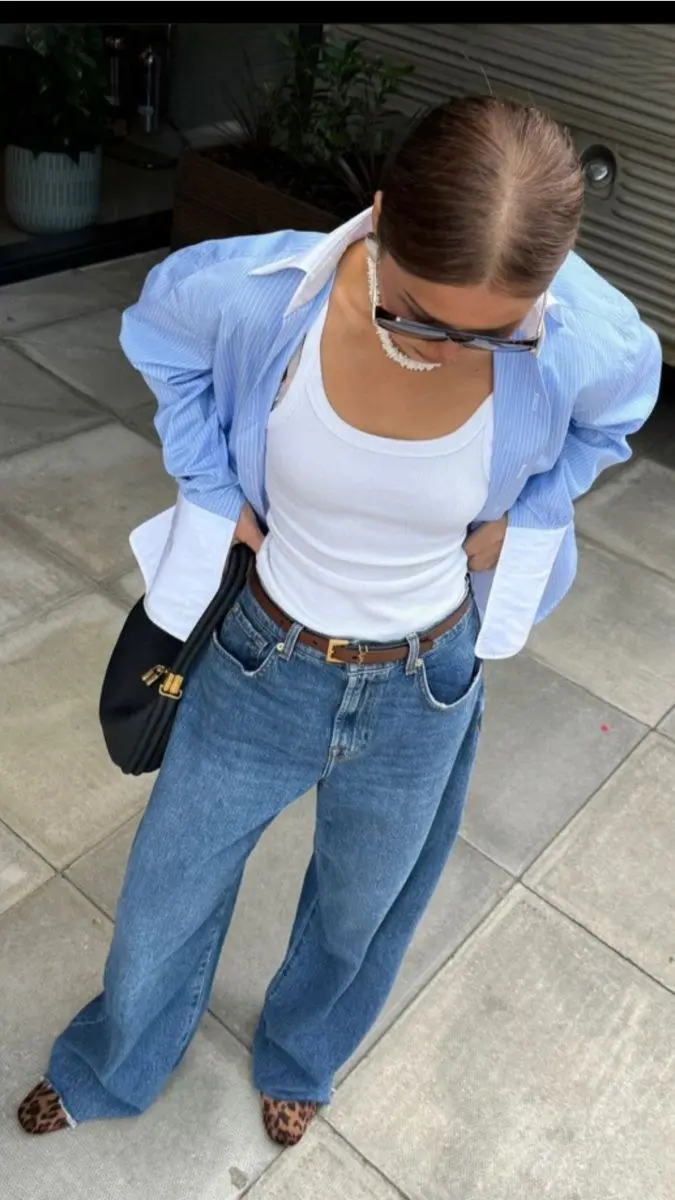
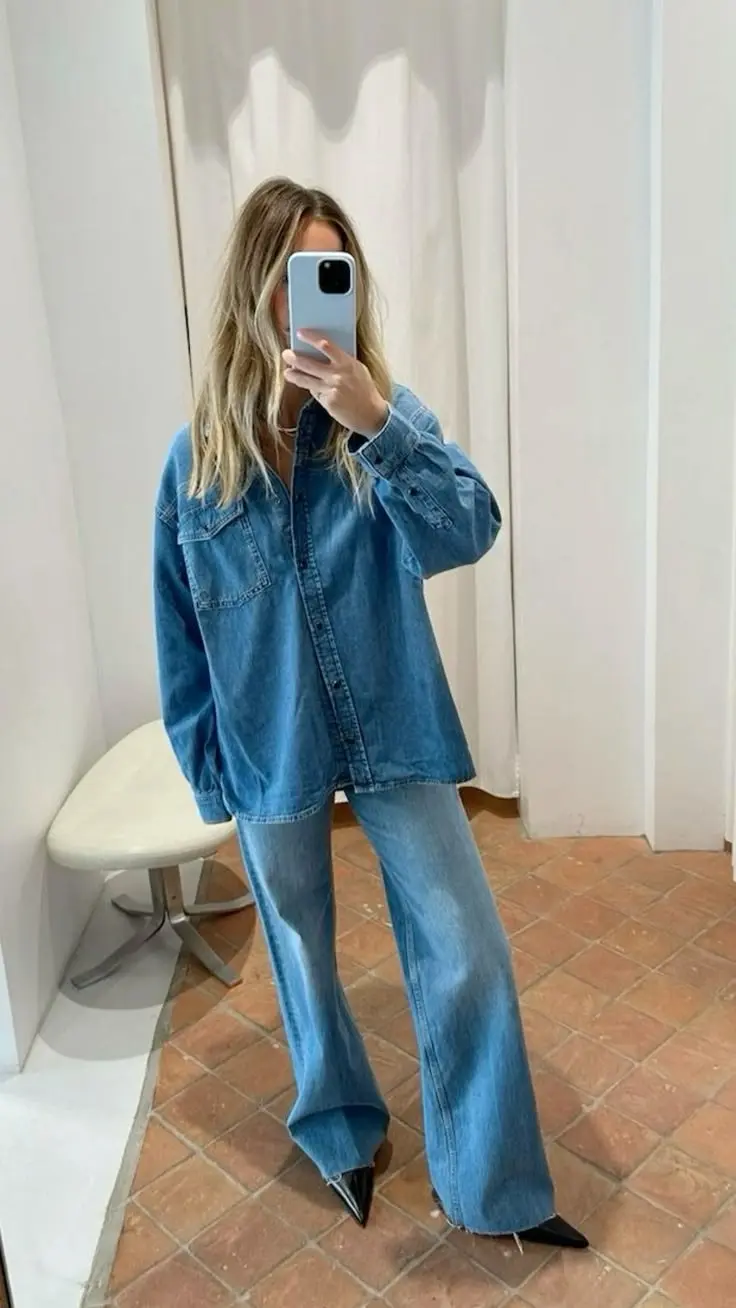
Out go perfectly hemmed jeans that looked crisp and polished but somehow sterile, like they’d never actually lived in the world — never caught on a door, never walked through a wet street, never carried the evidence of a real life. In come raw-hem jeans, and the early adopters are doing something smart with them: pairing the frayed edge with tailored basics and actual heels, which creates a high-low tension that feels more intentional than either element would alone. The fray adds texture and movement, a suggestion of ease that expensive clothes often lack. Try the contrast approach — pair your undone hems with structured blazers and pointed pumps for maximum push-pull energy. For something more relaxed, white sneakers and a cropped sweater keep it grounded. Our casual chic guide goes deeper on balancing polished and undone elements if you want to experiment further.
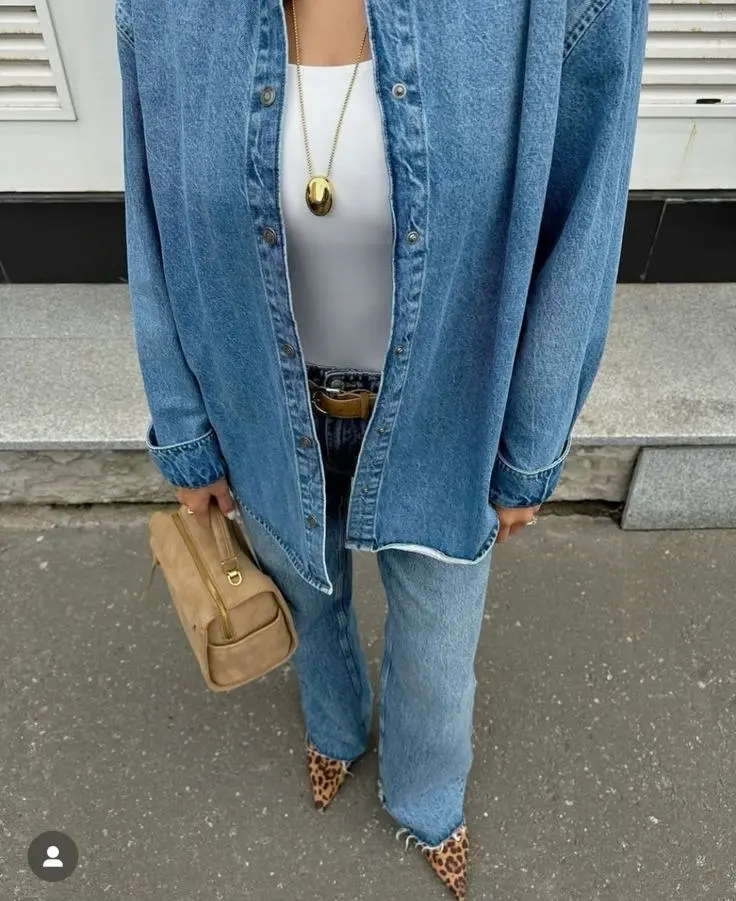
The fray itself matters more than people realise when they’re shopping. A subtle raw edge — maybe a centimetre of loose threads — reads as intentional and cool. A dramatic, aggressive fray that climbs several inches up the leg starts to look dated quickly, like the distressed jeans trend it’s meant to replace. Look for raw hems that have been cut cleanly and allowed to fray naturally rather than engineered to look destroyed.
Care is simpler than you’d expect: wash inside out in cold water and skip the dryer, which accelerates fraying beyond the point you actually want. The hem will evolve a little with each wash, which is part of the appeal — but if you want to control how far it goes, a quick trim with sharp scissors every few months keeps it looking purposeful rather than neglected.
Rigid 100% Cotton Denim That Holds Its Shape and Builds Character
Out goes super-stretchy denim that felt like athletic wear wearing a disguise — comfortable in theory, but it bagged out after a single wear and never had the visual weight to anchor a real outfit. In comes rigid 100% cotton denim, and the appeal in 2026 is specifically about craft and individuality: jeans that hold their silhouette all day, that develop creases and fades unique to how you move and sit, that become genuinely yours over time. Real denim has a presence that stretch blends simply can’t replicate. Style rigid jeans with soft cotton basics to soften the structure at the top, or go classic with leather loafers for a combination that genuinely improves with age. Our loafers styling guide has more timeless pairings to consider.
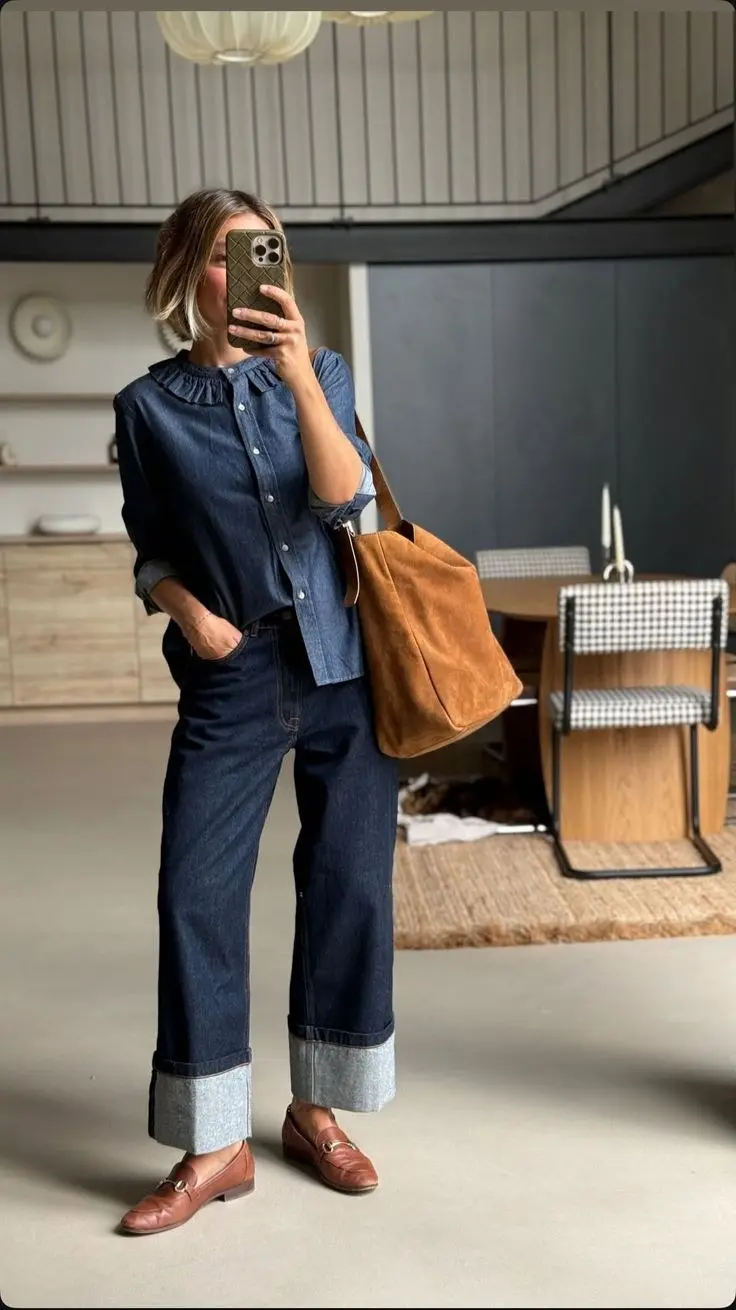
The break-in period is real, and it’s worth understanding before you buy. Rigid denim doesn’t stretch to accommodate you the way a 2% elastane blend does, so the fit you have on day one is approximately the fit you’ll have long-term — it’ll soften and mold to your body, but it won’t get meaningfully bigger. Buy your actual size, wear them around the house for a few evenings before committing to a full day out, and trust the process.
The payoff for that initial adjustment is jeans that look better at six months than they did on day one — and significantly better at two years. The fade lines at the knees, the wallet impression in the back pocket, the slight whisker at the hips — all of it maps your specific body and your specific life in a way that fast denim never does. There’s a reason raw denim has a devoted following, and once you own a pair you understand it completely.
Crystal Studs and Clean Embellishments Instead of Artificial Distressing
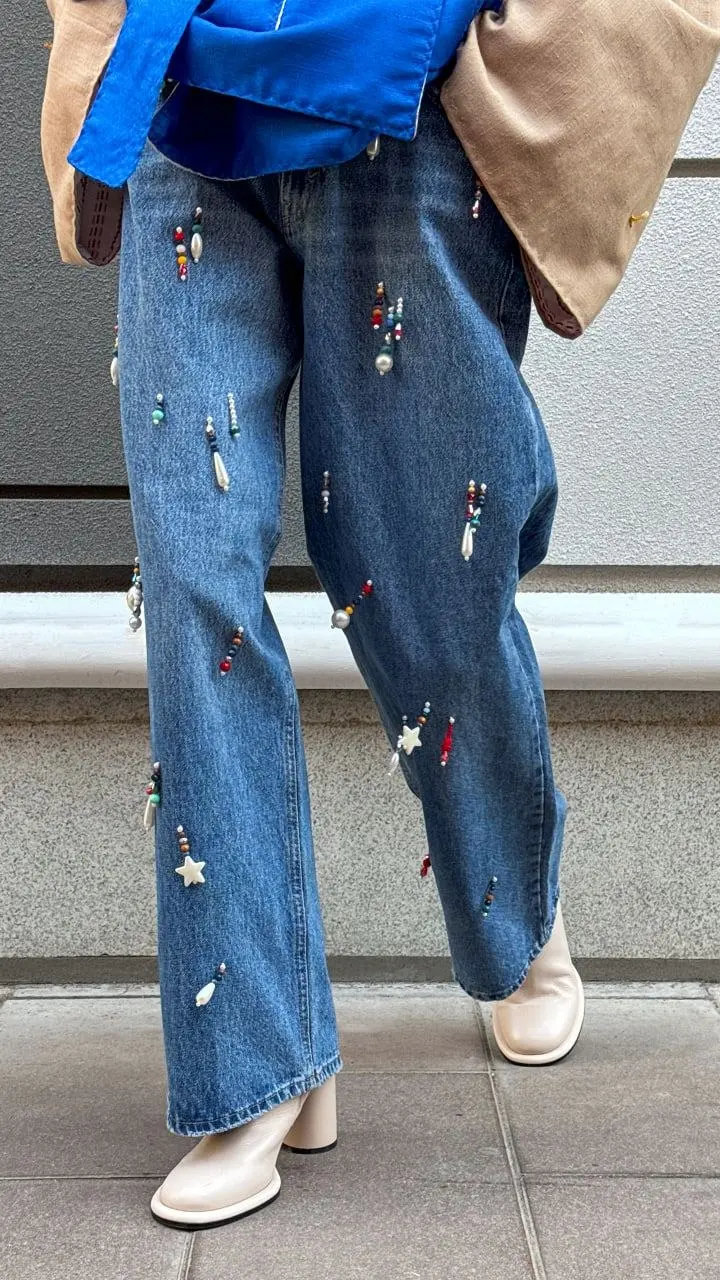
Out go heavily distressed jeans with strategic rips and artificial aging that cost more than pristine pairs but looked like they’d been worked over by a very artistic cheese grater. The try-hard energy of manufactured damage was always the problem — it wanted to look effortless and never quite did. In come clean embellishments: crystal details, subtle metal hardware, minimal embroidery, and heavy slate denim with considered stud placement. The goal is playful edge that feels intentional rather than damaged. Let the details be the star by building the rest of the outfit around simplicity — black silk camisoles and minimal gold jewelry paired with embellished denim is exactly the right move, keeping everything else quiet so the detail reads as a luxe choice rather than noise.
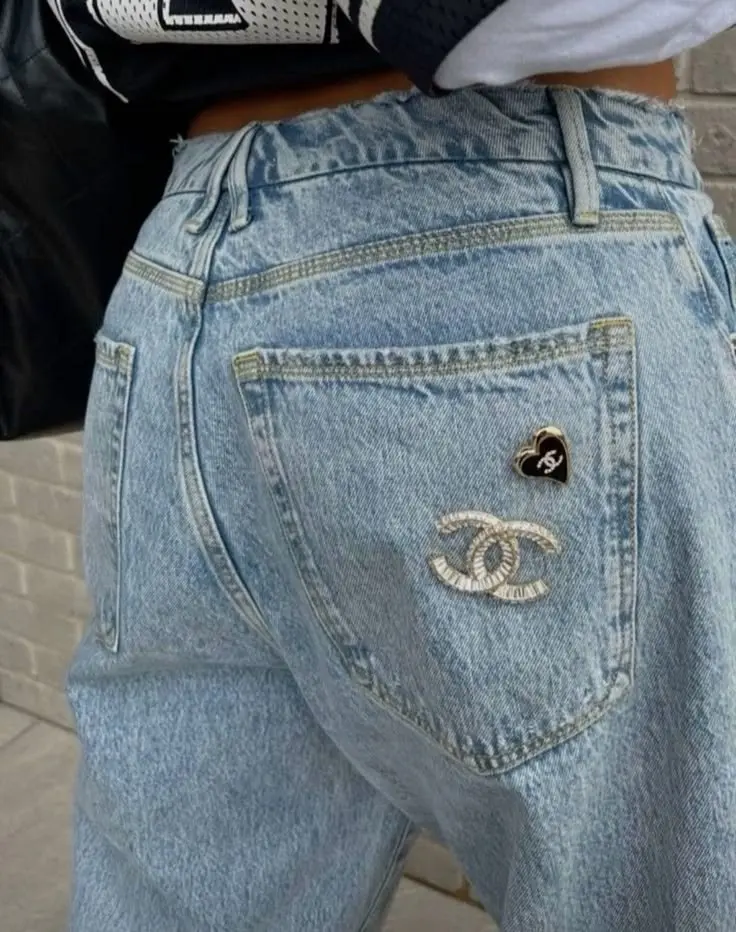
The key distinction between embellishments that work and ones that feel costume-y is restraint and placement. A row of small studs along the outer seam, or a scatter of crystals at the pocket corners — these are details that catch light without announcing themselves from across the room. The moment the embellishment becomes the first thing anyone notices about your outfit, it’s done too much.
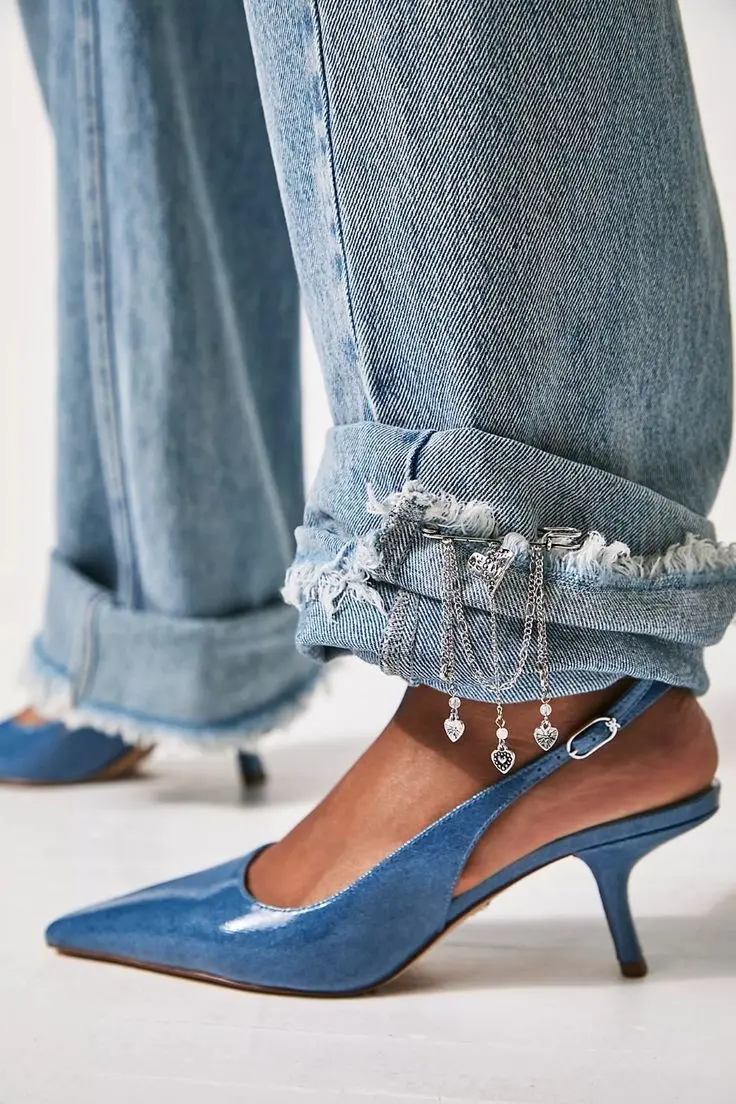
Embellished denim is genuinely versatile once you commit to the contrast principle: the more detailed the jeans, the simpler everything else needs to be. A plain white shirt, a simple cashmere top, a classic trench — any of these let the jeans do what they’re designed to do. Trying to match elaborate detail with elaborate detail just creates a look that exhausts the eye.
Drainpipe Jeans for Sleek, Tailored Precision When It Counts
Out goes the idea that one jean style should democratically serve every occasion and every body — that one cut can be casual Friday and Saturday market and Tuesday meeting and somehow always be right. In comes precision thinking about denim, and drainpipe jeans are the clearest expression of that: slim, elongated, clean-lined, sitting between skinny and straight-leg and offering a tailored silhouette with a genuinely elongating effect. Porter explains makes the case for why precision matters in 2026 denim specifically. These are jeans for when you want to look sharp, not jeans for when you want to look comfortable — style them with crisp button-downs and pointed-toe heels for meetings that actually matter. Think of them as the denim equivalent of your best blazer. Our office siren guide covers exactly how to style precision pieces so the whole look feels cohesive rather than stiff.
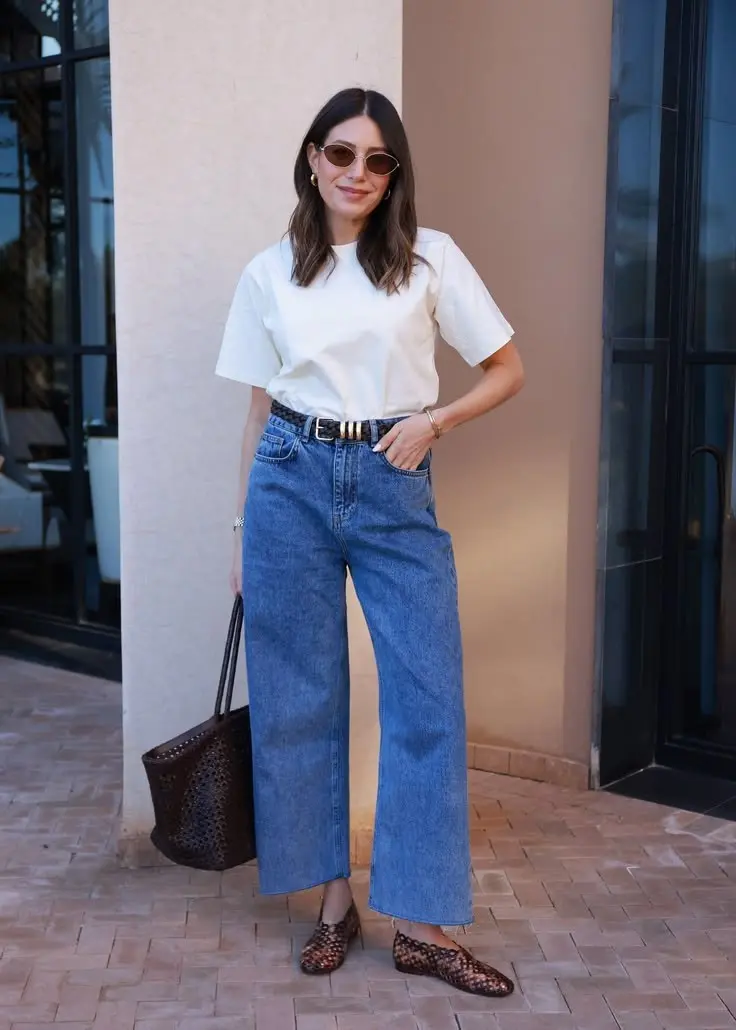
Drainpipe jeans are honest about what they’re for, which is what makes them useful. They’re not trying to be versatile or universally flattering — they’re a specific tool for a specific moment, and when that moment arrives they do the job better than anything else in your wardrobe. If you have longer legs, they’ll look exceptional. If you’re petite, pair them with a pointed heel and a clean tuck and they’re still a strong option.
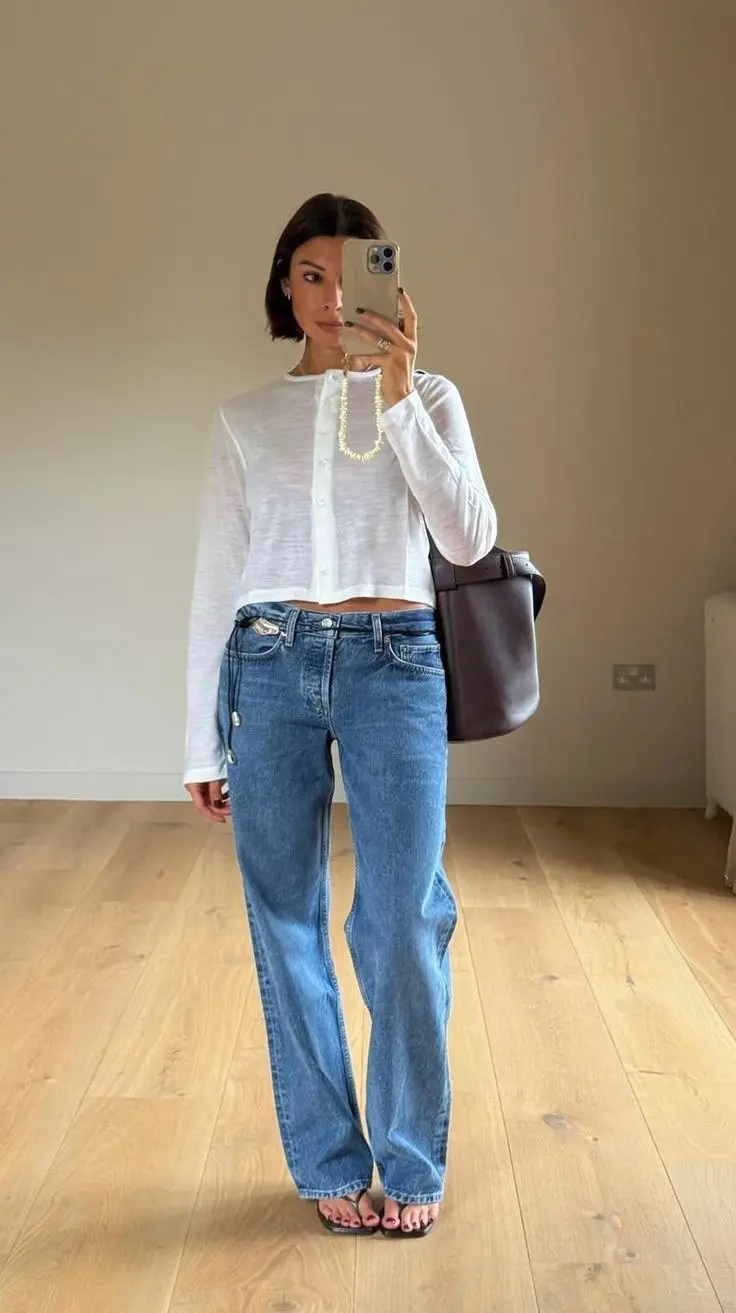
The commitment they require is actually their greatest strength as a styling tool. Because they’re sleek and intentional by nature, they force the rest of your outfit to meet the same standard — you can’t throw on sloppy shoes or an oversized everything and have it work the way it might with looser denim. That constraint is clarifying. It pushes you toward sharper choices across the board, and the result is usually one of those outfits where everything just clicks.
What I Actually Think
The biggest shift in jeans trends 2026 isn’t about following rules – it’s about understanding that different silhouettes serve different purposes in your life. The three swaps that give you the most impact for the least effort? Start with high-waisted light-wash straight-legs for everyday ease, add one pair of brown or colored jeans for when blue feels boring, and invest in rigid cotton denim that actually holds its shape. Everything else is just nice to have.
What excites me most is how these trends prioritize intention over trends-for-trends-sake. We’re moving past the idea that one jean should do everything, embracing the fact that your denim wardrobe can be as nuanced as the rest of your style. The future of jeans isn’t about finding the perfect pair – it’s about building a small collection of purposeful pieces that actually work for how you live.
FAQ
Are skinny jeans completely out of style in 2026?
They’re not banned, but they’re no longer the default, and wearing them without intention will read as behind the curve. The shift is toward straight-leg, barrel, and drainpipe silhouettes that offer more visual interest and, honestly, more comfort — most women who make the switch don’t look back.
How do I style colored jeans without looking like I’m in costume?
Treat them exactly like you’d treat a neutral — pair brown jeans with cream and camel, sage green with white and beige, dusty rose with ivory and tan. Keep everything else simple and wear the color confidently, like it’s been in your wardrobe for years, not like you’re testing something for the first time.
What’s the actual difference between barrel jeans and wide-leg jeans?
Barrel jeans have a curved, architectural shape — wider at the thigh and upper leg, then narrowing back toward the ankle — which creates a sculptural silhouette. Wide-leg jeans maintain roughly the same width from hip to hem. Barrel jeans are more structured and directional; wide-leg jeans are more relaxed and classic.
How tight should rigid cotton jeans fit when I buy them?
Comfortably, from day one — not tight. Rigid denim softens and molds to your body over time but doesn’t stretch the way elastane blends do, so buy your true size. If you can’t sit down or feel restricted standing still, size up.
Can shorter women wear high-waisted jeans successfully?
Absolutely — high-waisted jeans are actually one of the better tools for creating the appearance of longer legs. The keys are tucking in your top to define the waist clearly, and pairing with pointed-toe shoes to extend the leg line as far as possible.
What shoes work best with frayed-hem jeans?
Contrast is the principle: polished shoes like pointed pumps or sleek ankle boots balance the raw edge and make the whole look feel intentional rather than unfinished. White sneakers work well for casual outfits. Avoid very chunky or heavily distressed shoes — you want one undone element, not two.
Are drainpipe jeans flattering on shorter legs?
They’re most effortless on longer legs, but they work on shorter frames too when styled carefully — a pointed heel and a clean top tuck create the elongating effect you need. If they feel like too much of a commitment, straight-leg jeans deliver a similar sleekness with more universal ease.
How do I care for raw-hem jeans to stop the fray getting out of control?
Wash inside out in cold water and always air dry — heat accelerates fraying significantly. If the hem starts creeping further than you want, a quick trim with sharp scissors keeps it looking intentional. Some evolution is expected and part of the appeal; runaway fraying usually means too much heat in the wash.
Is the brown denim trend actually wearable day-to-day or just editorial?
It’s genuinely wearable — brown denim pairs with the warm neutrals most people already own in abundance: cream, camel, tan, rust, olive. It functions as a true neutral once you stop thinking of blue denim as the default, and the tonal outfits it enables have a quiet, pulled-together quality that photographs extremely well.
Have any thoughts?
Share your reaction or leave a quick response — we’d love to hear what you think!
-
 0
0 -
 0
0 -
 0
0 -
 0
0 -
 0
0 -
 0
0